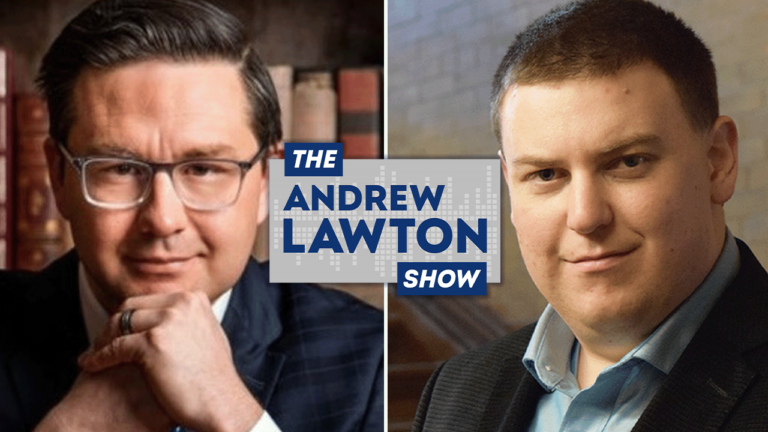
In the aftermath of the shooting death of an Ontario police officer, Conservative leader Pierre Poilievre is slamming Prime Minister Justin Trudeau for Liberal legislation that softened rules around bail conditions.
Plus, will 2023 be Trudeau’s final year as prime minister and leader of the Liberals? Many Canadians are hoping so.
And Trudeau is warning Canadians that 2023 will be “tough” as the Canadian Taxpayers Federation has sounded the alarm about five incoming tax hikes in 2023.
Tune into The Daily Brief with Anthony Furey and Harrison Faulkner!
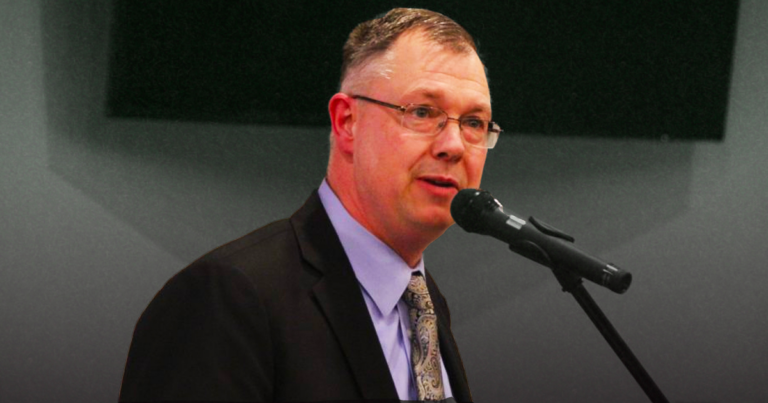
John Carpay, the President of the Justice Centre for Constitutional Freedoms (JCCF), has been charged by Winnipeg Police for obstruction of justice and has turned himself in to Calgary Police.
Winnipeg Police issued the charges on December 30, 2022, in relation to a June 2021 incident where Carpay hired a private investigator to conduct surveillance on a number of Manitoba government officials, including the Chief Justice of Manitoba Glenn Joyal. Carpay turned himself in immediately after learning of the warrant for his arrest.
In a statement issued by the JCCF, they assert that the charges against Carpay are “unexpected and without explanation,” as the incident in question occurred more than a year and a half before charges were laid.
“The Justice Centre is deeply disappointed by the decision of Winnipeg Police to lay a criminal charge for events that took place more than 18 months ago and that are already being dealt with appropriately,” reads the JCCF statement.
On July 12, 2021, Carpay apologized to Chief Justice Joyal for surveilling him, saying that his decision “constituted a failure to treat the Court with candour, fairness, courtesy and respect.”
Carpay took a seven week leave of absence from his position after the incident, although at the time he denied that hiring the PI had anything to do with his duties with the JCCF and said he had not discussed the surveillance with any staff or board members.
Carpay also denied that the private investigator was hired in relation to a case being heard by the Manitoba Court of Queen’s Bench, where the JCCF represented seven churches that were fined for holding church service in spite of provincial Covid-19 restrictions. On October 21, 2021, Chief Justice Joyal upheld the provincial lockdown policies.
Carpay says he took it upon himself to conduct surveillance on Manitoba government officials in an effort to expose the violation of Covid-19 government mandates and measures by said government officials.
“Mr. Carpay’s decision to conduct surveillance of Manitoba government officials followed a number of high-profile instances where those who imposed and enforced lockdown restrictions were themselves found violating their own rules, partying on rooftops, ignoring rules about face masks and social distancing, and jetting off to exotic holiday locations to countries without Covid restrictions,” reads the JCCF statement.
According to the JCCF statement, Carpay’s sole bail condition states that Carpay is not allowed to contact Manitoba Chief Justice Joyal.
Prior to the announcement of the charges, Carpay was already facing a disciplinary hearing with the Law Society of Manitoba in relation to his surveillance of the judge. The hearing is scheduled for early February.
Marshall Smith has had a long and bumpy road to political success.
The chief of staff to Alberta’s new premier and key advisor on the United Conservative Party (UCP) government’s addiction and recovery file, Smith spent four years on the streets of Vancouver struggling with addiction.
In the years before he hit his downturn, Smith was working in the BC Attorney General’s ministry where he developed a reputation as a “pretty effective organizer.” It wasn’t long until he was invited to join then-BC Premier Gordon Campbell’s team at the legislature.
Smith says he had a normal, good upbringing. And he drank like any high school kid did. Only when his friends stopped drinking, “I didn’t.”
He progressively drank more though, and the environment of politics back then, with a bar in each legislature office, didn’t help. Not to mention the stress of securing the 2000 Olympic Bid.
He tried cocaine for the first time at a nightclub in Victoria in 2002.
“That was quite an experience as it is for most people…and that really sort of replaced drinking as a problem substance for me,” Smith said during an in-depth conversation with True North.
His cocaine use went from “every weekend” to “every day” until he was in Vancouver one night and couldn’t find any. So, when someone offered him methamphetamine, he took it.
It quickly replaced his cocaine use.
That began a downhill spiral in which Smith was no longer able to hold his job. The province rescinded his appointment and he “took off his suit and tie and vanished into the streets of Vancouver.”
He would go on to spend four and a half years on the streets as a homeless drug addict.
“It’s really very devastating, very hard, very cold,” he recalls. “You become very unhealthy sleeping outside and eating out of garbage cans. There’s no pretty picture to be painted there.”
As Smith succumbed to addiction, people came in and out of his life. He swapped old friends for new ones who lived a similar lifestyle to him.
“As you devolve deeper and deeper into alcoholism and addiction, less and less people want to be around you,” Smith says.
He would have sporadic contact with his family, including his mother who supported him the whole way through. Smith says a family experiences a profound loss of control as they witness one of their loved ones “kill themselves in slow motion.”
But living on the streets, Smith says people with addiction don’t realize they have a problem because it’s a disease of denial and delusional thinking.
“I believed that I was just fine. And no matter how crazy things got, I would justify to myself that I was just fine.”
Smith didn’t get treatment until he had a couple run-ins with the law and two Vancouver constables officers offered him treatment or jail. At this point, he was so unwell it was painful just to walk down the street.
He had reached the point in his illness where, as he puts it, the consequences were beginning to outweigh the benefits. And when that happens, he says addicts are given clarity — and an opportunity.
“If I didn’t have that ultimatum given to me, I probably would not be alive.”
Smith went to a publicly funded treatment centre in Maple Ridge B.C., and left after 35 days. Now, 17 years clean, Smith attends mutual support meetings to this day.
“I’m sitting here talking to you today as the chief of staff to the premier of Alberta. Those are the gifts that recovery has given me.”
He returned to government, eventually catching the eye of former UCP leader and Alberta premier Jason Kenney, who brought him to Alberta as the lead in the Mental Health and Addictions office.
“I love Alberta,” Smith says. “I think that I’m much more at home here in Alberta with conservatives than I ever was in British Columbia.”
Smith says his appointment as chief of staff “without a question” signifies the seriousness with which the premier considers the addictions crisis. And, he says, there’s been a change in how addictions are viewed, which guides the systems of implementation.
“Simply, our view is that people have the right to recover and get well. They have the right to individual choice and the freedom of choice. They have the right to be unencumbered in their pursuit of a better life for themselves.”
In an effort to help people pursue a better life, they need access to treatment. Smith says the province is decades behind on building what’s called recovery communities — treatment which focuses on recreating addicts’ communities in a healthy way.
The province has plans to build 11 more facilities. Construction has started on five, and a Red Deer location with 75 beds is opening next month. The facilities cost $20 million to build and can serve 600 people per year.
Smith says his message is that recovery works and that his life is living proof of it.
“It’s been a long distance to travel from where I was to here.
“For those that are out there suffering or having difficulty with this, know not only is recovery possible, but you can get your life back and go on to do great things.”
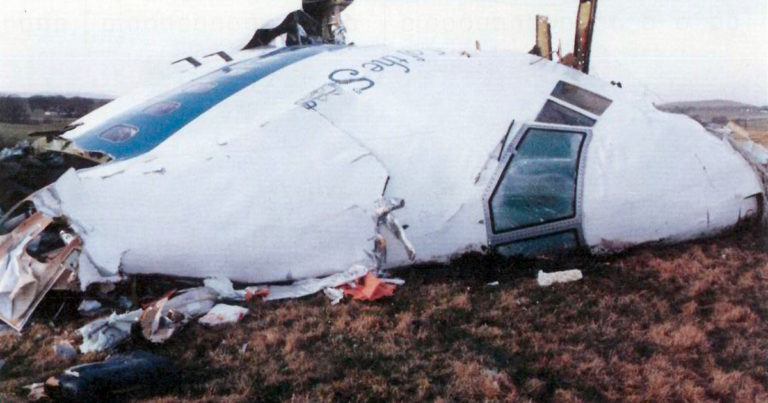
A few days before Christmas in 1988, Pan-Am Flight 103 was blown out of the sky over Lockerbie, Scotland, in an act of international terrorism that killed 259 people in the air and 11 on the ground.
It remains the worst ever act of terrorism in Great Britain’s history.
Then based in London as the Toronto Sun’s European bureau chief, I was one of the first journalists to arrive on the scene — the air was permeated with the stink of jet fuel for kilometres on end, and a huge crater on the edge of town had burned into the ground by a still-smouldering wing.
Now word from the U.S. Justice Department has come down that a Libyan intelligence official accused of making the bomb that brought down Pan Am Flight 103 over a farmer’s field in that small Scottish town has been taken into U.S. custody and will face federal charges in Washington.
The only person to have been convicted over the atrocity was Abdelbaset Ali Mohmed al Megrahi, who was jailed for life in 2001 and released on compassionate grounds in 2009 after being diagnosed with advanced prostate cancer. He died three years later.
The arrest of Abu Agela Masud Kheir Al-Marimi is a significant milestone in the decades-old investigation into the attack.
American authorities in December 2020 announced charges against Masud, who was in Libyan custody at the time. Though he is the third Libyan intelligence official charged in the U.S. in connection with the attack, he will be the first to appear in an American courtroom for prosecution.
The Libyan government initially balked at turning over the two other men, al-Megrahi and Lamen Khalifa Fhimah, before ultimately surrendering them for prosecution before a panel of Scottish judges sitting in the Netherlands as part of a special arrangement.
Fhimah was acquitted.
U.S. officials did not say how Masud came to be taken into U.S. custody, but in late November, local Libyan media reported that Masud had been kidnapped by armed men (CIA?) on November 16 from his residence in Tripoli.
He is expected to soon make an initial court appearance in Washington on charges leveled two years ago in which federal prosecutors charged Masud, specifically, with the destruction of an aircraft resulting in death and destruction of a vehicle of interstate commerce with an explosive.
At the time the charges were announced, then-Attorney General William Barr, who helped lead the initial investigation during his first stint as U.S. attorney general, said a “breakthrough” in the case came in 2016, when federal investigators learned that Masud, a long-suspected co-conspirator, had been arrested and interrogated by Libyan authorities in 2012 after the collapse of the Moammar Gadhafi regime.
A copy of the interview and other evidence was provided to U.S. authorities, allegedly linking Masud to the assembly of the explosive.
According to court documents, the operation had been ordered by Libyan intelligence officials, and Gadhafi thanked Masud for “the successful attack on the United States.”
U.S. officials believe Masud was also involved in the 1986 bombing of the LaBelle Discotheque in Berlin, West Germany, which killed two American service members and a Turkish woman.
The New York-bound Pan Am flight exploded over Lockerbie less than an hour after takeoff from London’s Heathrow Airport on Dec. 21, 1988. Citizens from 21 different countries were killed. Among the 190 Americans on board were 35 Syracuse University students flying home for Christmas after a semester abroad.
When I left Lockerbie on that Christmas Eve 32 years ago, my taxi drove by the sad but poignant spectacle of hundreds of discarded Christmas trees already littering the streets of the town.
Christmas would not be celebrated in Lockerbie that year, nor in the traditional way for years to come.
The Trudeau government has announced that by 2035, every major passenger vehicle sold in Canada will need to be electric. But is Canada ready for this drastic change?
In his latest video, Anthony Furey questions if Canada’s energy infrastructure can sustain the surge in electric vehicles. In California, the government asked electric vehicle owners to stop charging their cars because the state couldn’t handle the demand for energy – will the same thing happen in Canada? Further – despite all the talk about “greener vehicles,” what about the environmental impact of mining for critical minerals needed to manufacture electric vehicles?
What do you think? Is Canada ready for electric vehicles?
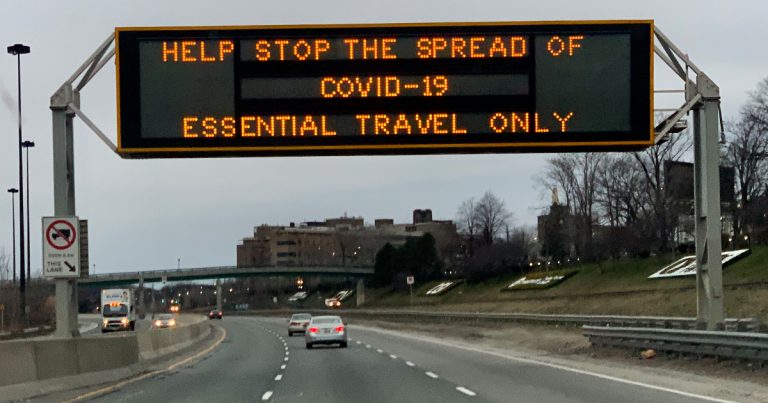
As Canadians gather for the holidays, chatter on social media suggests that people remain unsure how to minimize the risk of Covid-19 and prevent transmission to loved ones. But before we reach for the masks and hand sanitizer, reapply footprints on the floors and polish our plexiglass barriers—and especially before governments reach for blanket policies such as school closures and assembly restrictions—let’s ask if what we did the first time made sense in light of what we now know about the actual risks posed by Covid-19.
Simply put, government policies to manage the virus were not particularly reasonable nor responsive to the highly differentiated risks of Covid-19, and disregarded what was known about the dubious utility of most proposed policies.
Why? Mainly because policymakers often viewed Covid-19 as a uniform threat to a population at uniform risk, when in fact it was not. Arguments that “we didn’t know” these things at the time are, by the way, non-starters.
The physical characteristics, mode of transmission, infectivity, transmissivity and severity of Covid-19 risks were pretty well understood by late-spring 2020. And the ineffectiveness of our most iconic (and controversial) measure—donning masks—was known to be useless for stopping viral exposure for more than a decade before the pandemic.
So what did we know about the differentiated risks of Covid-19 and what does that imply about what we should and should not have done?
First, the risk of exposure/infection should have been understood as uniform among populations, as basic biology predicts that any airborne virus will be well-distributed among the global population before it’s widely detected or measured. Stopping the spread was a non-viable concept from the start.
The risk of severe illness (thus, hospitalization) stratified sharply by age. If you were older than the standard reference population of 18-29 year-olds, you were more likely to be hospitalized. But you were only twice as likely to need hospital if you were under 50. If you were 50-64, you were at three times the risk; if you were 64-74, five times the risk; if you were 75-84, the risk was eight times, and if you were over 84, the risk was 15-fold. If you were over 84, your risk of death was 340 times that of the reference group.
Simply put, the older a person was, the higher the risk of hospitalization. Again, this was eminently predictable from prior knowledge of age-related frailty and from experience with respiratory viruses that affect humans.
Looking back, our biggest mistake, socially and governmentally, was in treating the risks of Covid-19 as if they affected everyone in society equally. The group-mentality responses (lockdowns, closures, etc.) were wildly inappropriate given the actual stratified individual nature of risks.
However, those inappropriate measures caused massive economic damage, which will linger for years if not decades, to a population already fighting serious illness. And social harms that we’re still only beginning to understand.
So here are some thoughts going forward. First, let’s not make the same mistakes. Let’s accept that Covid-19 poses unique risks to individual people, heavily stratified by age, and that we’re not “all in this together” nor is this a group struggle where we attack each other for not following the crowd.
Covid risk is a matter of individual risk management. Manage your risk rationally. If your risk is high, be more diligent about protecting your body’s resilience and general health. Stay home when you’re sick, minimize exposure opportunities by avoiding crowds, and get vaccinated if the pros and cons are right for you.
Covid-19 risk is differentiated. Let’s treat it that way, this holiday season and beyond.
In the aftermath of the shooting death of an Ontario police officer, Conservative leader Pierre Poilievre is slamming Prime Minister Justin Trudeau for Liberal legislation that softened rules around bail conditions.
“Trudeau brought in C-75. No one forced him to do it,” Poilievre said during an interview with True North. “He passed it and he stood by it ever since. Trudeau has introduced laws to reduce sentences for violent gun offences, and that too will make life more dangerous.”
Poilievre, appearing on The Andrew Lawton Show, had previously made similar points during a Friday press conference where he spoke about Liberal soft-on-crime legislation in relation to the killing of Ontario Provincial Police Constable Grzegorz Pierzchala.
Last Tuesday, Pierzchala was killed when he stopped to check on a vehicle in a ditch near Hagersville, Ontario.
Randall McKenzie and Brandi Crystal Lyn Stewart-Sperry have each been charged with first degree murder in the death.
Court documents sourced by the Canadian Press revealed that McKenzie had initially been denied bail in December 2021 for charges that included assaulting multiple individuals including a peace officer. He also faced multiple weapons related charges. McKenzie was later granted bail in June 2022 following a review. Yet a warrant was then issued for his arrest after he failed to show up for an August court date.
Bill C-75 was first introduced by the Liberals in 2019 with a view to reduce delays and backlogs in the courts system. Many critics pointed out at the time that it was effectively a “catch and release” system that would bring about much more lenient bail conditions.
Poilievre also told Lawton that Trudeau’s new firearms legislation, that’s been criticized by provincial governments and police chiefs, will also harm public safety.
“The other thing he’s doing is making life more dangerous by diverting police resources away from public safety towards persecuting trained and tested, vetted, and licensed law abiding firearms owners,” Poilievre said. “So you’re going to have millions of dollars, and actually billions if you include the cost of buybacks, spent going after the people who are least likely to commit a crime.”
From the Coutts blockade to Jason Kenney stepping down as UCP leader and Danielle Smith taking the reins, Albertans have witnessed a tumultuous year in Alberta politics.
On the final episode of The Alberta Roundup for 2022, Rachel looks back at the top stories of 2022 and explains how they impacted Albertans throughout the year.
Tune into The Alberta Roundup with Rachel Emmanuel!
After the slaying of an Ontario Provincial Police officer by an offender allegedly out on bail, Conservative leader Pierre Poilievre has said Justin Trudeau is to blame for making bail easier to get and focusing his government’s efforts on “persecuting” law-abiding gun owners rather than going after criminals. Poilievre joined True North’s Andrew Lawton to discuss.
A father of a high school student in the Waterloo Region District School Board (WRDSB) recently sent me an e-mail from the boy’s resource teacher signed with an entire paragraph of land acknowledgements.
The signature by the resource teacher – situated over rainbow flag colours – indicates she lives and works ”on the traditional territory of the Haudenosaunee, Anishinaabeg and Chonnonton peoples.”
She also claims that she lives and works “on lands situated on the Haldimand Tract, lands promised to, and stolen from, the Six Nations that includes ten kilometres on each side of the Grand River.”
The teacher is located at Laurel Heights Secondary School, renamed in March of this year from its original name when it opened in 2004, Sir John A. Macdonald.
This is so typical of many who work for the WRDSB under activist education director Jeewan Chanicka.
“It’s really insane,” the dad said. “The whole board is doubling down on this woke nonsense.”
Still, the fact that the dad contacted me, as others have in the past year, is a step in the right direction, especially considering school board issues – particularly trustee elections – have traditionally flown under the radar.
During 2022 some parents, like this dad, have at long last awakened to how much woke ideology has taken over Canadian school boards, particularly in Ontario and B.C. It’s been driven largely by leftist politicians who get a toehold in politics through their local school boards.
The Canadian wake-up call is far from the activism now seen south of the border where a movement called Moms for Liberty – created by Tiffany Justice and Tina Descovich – have taken on school boards across the United States.
However there is hope for Canada.
In Vancouver BC, five candidates running under the ABC (A Better City) banner won trustee positions. They’ve already voted to return police liaison officers to a dozen high schools next fall.
During the last Ontario school board elections in October a variety of parent groups sprung up out of nowhere, endeavouring to fight leftist dogma.
While none of the most-known candidates featured by True North won positions, it is telling how threatened the leftist teachers unions and trustee incumbents, teachers unions, legacy media and assorted activists felt by their candidacies. These trustees were subjected to attacks on their integrity, their messaging twisted and were subject to accusations that they were “far right” and “transphobic.”
Chanel Pfahl, a 29-year-old lesbian teacher who is under investigation by the Ontario College of Teachers for speaking out against critical race theory on a private Facebook page, was the target of such attacks during her candidacy in Ottawa.
Pfahl, reached prior to Christmas, said she wasn’t surprised to be misrepresented because she’s been dealing with this form of “intolerance” since she dared stray from the rules of “woke orthodoxy” as a teacher working in Barrie back in 2020.
“They resorted again and again to labelling me as some kind of regressive intolerant being,” she said, noting the legacy media chimed in.
She said she ran because she was trying to encourage an appreciation for “free expression and open debate” to make kids more resilient and willing to challenge ideas.
Catherine Kronas, who ran for the Hamilton-Wentworth District School Board, found the election an “excellent opportunity” to alert the community about harmful school policies.
She said so many voters were relieved to discuss their concerns at the door and recognized that someone was willing to stand up to protect students.
“Parents in Ontario are waking up to the woke rot that is destroying education in the province,” she said.
Peter Wallace not only ran for trustee but created an entire website – blueprintforcanada.ca – outlining what is wrong with education in Canada and how to improve it.
He says since the October election, his website continues to attract interest – mostly by word of mouth.
Sometime in January, he says an American-themed version of the same platform will be launched. He’s also in the planning stages of a new website targeting university students to “counter perspectives to the relatively one-sided social justice narratives” being taught in university programs.
Wallace says he’s also working with several trustee candidates who share his concerns about education and “woke ideology.” He’s hoping they can operate collaboratively to “challenge these ideas” in public.
He’s “cautiously optimistic” about the next year as he sees the legacy media “losing its stranglehold on public discourse.”
He believes it will become difficult for the legacy media to continue ignoring the increasing number of reports of children de-transitioning and young adults openly expressing regret about being harmed by medical gender affirmative care policies.
“I look forward to an interesting year ahead,” he says.
Pfahl says she’s certainly not backing down from the fight anytime soon.
The same goes for Kronas.
“We are just at the start of fighting woke activism in schools. I will continue to fight and organize with other parents to hold HWDSB accountable,” she said.
“It’s time for more people to step up to defend education in Ontario. There is too much at stake.”