CAMPUS WATCH: Seven notable stories from 2022

Wokeness continued to prevail in Canadian colleges and universities in 2022, with cancel culture, reverse racism and Covid hysteria plaguing campuses across the country. 

True North has compiled seven notable stories that took place on Canadian campuses this year.

  1. Western University imposing a booster mandate 

Western University in London, Ontario announced in late August that they would be mandating three Covid vaccine doses for students, staff and visitors, in addition to requiring masks in “instructional spaces”. This made Western the first Canadian university to impose a wide scale booster mandate. 

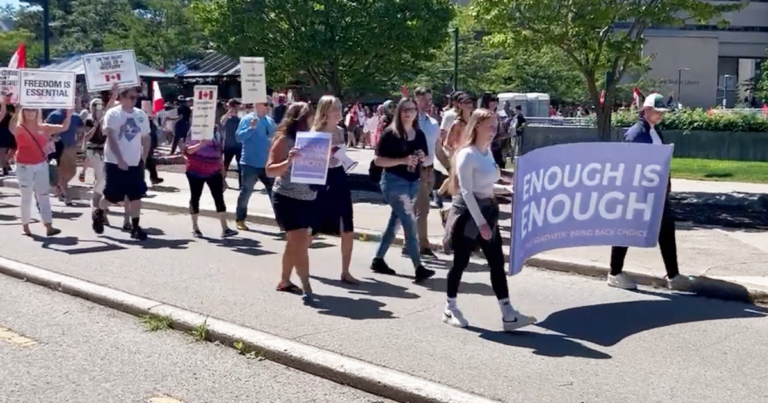
The school received backlash from students, as well as politicians and health experts. A campaign called Enough is Enough was started by Western student Kendra Hancock, which organized a large protest against the mandate in late August. The university’s student union, on the other hand, refused to oppose the booster and mask mandates.

Western ended up moving the deadline to get boosted from Oct. 1 to Jan. 9 amid Health Canada’s approval of the “bivalent” Covid vaccine. The university then quietly dropped the vaccine mandate on Nov. 29, to the relief of many students.

  1. Laval University job posting excluding white men 

Quebec City’s Laval University received widespread backlash in the spring over a job posting for a Canada Research Chairs (CRC) position that excluded able-bodied white men. The university claimed that the latter was being done to meet diversity requirements.

Various politicians denounced the posting, including several Coalition Avenir Quebec (CAQ) ministers, Quebec opposition party leaders, and even Federal Liberal MPs Joel Lightbound and Anthony Housefather. Furthermore, Conservative MP Pierre Paul-Hus and People’s Party of Canada leader Maxime Bernier had told True North they were opposed to the university’s actions.

College Dawson professor Frederic Bastien filed a human rights complaint against the university and the Canada Research Chairs Program this fall, claiming discrimination against because he is a white male. The Quebec National Assembly also unanimously passed a motion that expressed support for merit-based hiring while denouncing race and gender quotas.

  1. Guelph University defending racially segregated Yoga class

Racial segregation in the name of “anti-racism” was common on Canadian campuses in 2022, as highlighted by True North’s Campus Watch reporting. 

A dramatic story unfolded after Canadian journalist Jonathan Kay called out a racially segregated “Restorative Yoga” Session taking place at the University of Guelph on Twitter. The latter was being hosted by Selam Debs, who describes herself as an “antiracism educator, an anti-oppression coach, a social justice advocate,” among other things.

Debs fired back at Kay for calling out the event, claiming he was “harmful” and said the way her “sacred” segregated yoga class was “attacked and targeted” was itself a form of racism and white supremacy. Several progressive accounts also took to twitter to defend Debs while hitting back at Kay – who later described the situation to True North as “crazy”.

In response to the controversy, the University of Guelph issued a statement saying “safe spaces are created to give people from equity-deserving groups support, a sense of well-being and a chance to heal.” The university also said Debs had been invited to “provide a safe, healing space for Black students, faculty, and staff to share their lived experiences and learn about the supports available to them at U of G.”

  1. McMaster University holding a “Black Graduation ceremony”

Hamilton’s McMaster University held a special racially segregated graduation ceremony for “Black identifying students” this spring. The ceremony was however separate from the main convocation and attendance was not mandatory for black students.

Black Student Success Centre manager, Faith Ogunkoya, who organized the ceremony, told CBC that “the whole day was about celebrating and centering Blackness.” Among other things, it featured the singing of “Lift Every Voice and Sing”, a hymn that has been dubbed as the “Black National Anthem”

It should be noted that McMaster was not the first Canadian University to hold a racially segregated graduation ceremony. The University of Toronto hosted a ceremony dedicated to black students back in 2017. 

  1. George Brown colleging requiring that students state they “benefited from genocide”

Toronto’s George Brown college made international headlines after it required that students sign an online waiver declaring they are settlers or displanted people who benefited from the “colonization and genocide of Indigenous people” to be able to gain access to their classes.

“As settlers or the displanted, we benefit from the colonization and genocide of the Indigenous peoples on this land. In order to engage in resistance and solidarity against the past and present injustices inflicted on the Indigenous people of this land, it is imperative we constantly engage in acts of awareness and decolonization,” the waiver read.

Not agreeing to the statement resulted in students ultimately being denied access to their online courses. 

  1. Mount Royal University cancelling hockey to be “inclusive”

Calgary’s Mount Royal University announced in August that it was cancelling its ice hockey intramural amid working towards “achieving an accessible and inclusive program where all feel they belong.” The university noted that while evidence shows ice hockey creates a sense of belonging for some, there are “critical areas that require improvement.”

“Upon completion of these assessments it was determined that Ice Hockey intramurals be put on hold until we can implement strategies to ensure the ice hockey program we could potentially put forward in the future is equitable, inclusive, and accessible to program participants,” said the University in a Statement.

Former hockey player and student Conor Monaghan slammed the university’s decision, telling The Counter Signal that “cancel culture is playing a big factor in this. Rather than having a conversation with the participants involved, the university has decided to completely extinguish ice hockey.”

  1. Ryerson university changing its name to TMU 

After announcing intentions to rename the school in 2021 following years of debate, Toronto’s Ryerson University revealed in April 2022 that it would now be called Toronto Metropolitan University (TMU). 

The name change came amid leftist activists accusing Egerton Ryerson, a Methodist minister and educator who is a prominent figure in early Canada, of being responsible for the residential school system. Ryerson did not invent the system.

Prior to the school being renamed, a statue of Egerton Ryerson on campus had been toppled, and students and faculties had begun referring to the school as “X University.”

While many on the left, including NDP leader Jagmeet Singh, shared their happiness with the decision to cancel Ryerson, others criticized the move.

With files from True North’s Andrew Lawton, Cosmin Dzsurdzsa and Rachel Emmanuel.
BONOKOSKI: It boggles the mind that alleged cop killer was out on bail

One would hope that the judge who released alleged cop-killer Randall McKenzie on bail is today feeling a deep sense of remorse over the learning of a tragic life-and-death lesson.

It boggles the mind that any judge would see fit to give him bail.

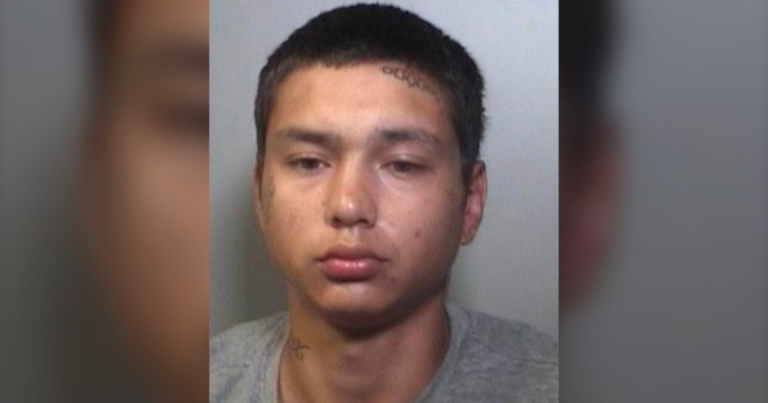
When the 25-year-old McKenzie, now in custody for the first-degree murder of a rookie OPP officer, along with his girlfriend, Brandi Crystal Lyn Stewart-Sperry, 30, of Hamilton, was cut loose, he was facing several firearms offences — including shunning an already imposed lifetime ban on guns — as well as the assault on a police officer.

McKenzie’s bail at that time carried a number of conditions, including the long-shot odds that he remain in his home, as well as the already redundant order not to possess any firearms.

When he failed to show up for court in September, a warrant was issued for his arrest.

That decision to grant bail to McKenzie, an Indigenous member of the Mississaugas of the New Credit First Nation, set fate’s ball in motion.

OPP Commissioner Thomas Carrique told a news conference late Wednesday night that his anger is largely due to the fact that the man accused of killing Const. Grzegorz (Greg) Pierzchala was out on bail on criminal charges, including assaulting a police officer.

“I’m outraged by the fact that McKenzie was out on bail and had the opportunity to take the life of an innocent officer,” Carrique said. “I know that there is a lot of interest in ensuring that, to see that changes are made, where possible, so that people charged with violent offences that are firearms-related are not in that position moving forward.”

It is a decades-old refrain but one which Parliament has persistently ignored.

Pierzchala, 28, was shot and killed while responding to a call about a car in a ditch along Indian Line Road, just west of Hagersville in southwestern Ontario, at about 2:40 p.m. Tuesday. He was transported to West Haldimand General Hospital in Hagersville, where he died.

It was his first day on the job post-probation. Carrique said Pierzchala was “ambushed” and never stood a chance.

A National Parole Board document, to warrant excuses, noted McKenzie experienced the negative impacts of colonialism.

“Your biological parents struggled with alcohol and were neglectful,” it said. “You believe your adopted grandfather may have attended residential school … You have suffered abuse, experienced addiction and have been disconnected from your family and cultural community. These losses and negative experiences are likely linked to your offending.”

A frustrated Carrique called Pierzchala’s death preventable, noting he is the fourth officer in Ontario to be fatally shot since September.

“This should have never happened. Something needs to change. Our police officers, your police officers, my police officers, the public deserve to be safeguarded against violent offenders who are charged with firearms-related offences,” he said. “I’m outraged by the fact that McKenzie was out on bail and was provided the opportunity to take the life of an innocent officer.”

In a written statement to The Canadian Press, McKenzie’s family expressed their condolences to Pierzchala’s family.

“We wish them healing and peace,” the statement said.

They said McKenzie had some challenges growing up, got into the wrong crowd in high school and began abusing drugs at a young age.

“Everyone is having a difficult time processing this and is extremely hurt,” the statement said. “Intergenerational trauma is a real thing.”

McKenzie’s family said they have been bombarded with hateful messages since the shooting. The statement said they are being called “savages and trash and disgusting and that we should rot.”

“We are not horrible people,” it said.

Fake News Friday | The Fake News Awards

2022 is coming to an end – what better way to welcome the new year than awarding the Fake News Awards!

From a sustained epidemic of ‘Poilievre Derangement Syndrome’ that took over the legacy media, to the systemic racism of crossword puzzles, to the several hate crime hoaxes during the Freedom Convoy, we were all subjected to far too much fake news this year.

True North Insiders were given the opportunity to pick the worst fake news story of the year and the winner was unanimous.

Tune into the last episode of Fake News Friday of 2022 with Andrew Lawton and Harrison Faulkner to find out who won!

BECOME A TRUE NORTH INSIDER

The 10 biggest stories of 2022

2022 was a major year for Canadians. It was a year full of protests, global conflict and political leadership changeups.

Domestically, Canada saw some delayed easing of Covid-19 mandates and restrictions as the rest of the world moved quicker to open up. 

Prime Minister Justin Trudeau also faced some of his biggest challenges yet – including the nationwide Freedom Convoy protest movement. 

On the world stage Russia’s invasion of Ukraine set the world into disarray. 

These are the top 10 most influential stories of 2022 and what they might mean for the upcoming year. 

Danielle Smith passes the Sovereignty Act 

In a major attempt to shake up the federal-provincial balance of power, Alberta Premier Danielle Smith’s government passed the Sovereignty Act on Dec. 8 – ten days after the law was tabled. 

Smith promised during her campaign to replace outgoing premier Jason Kenney that she would use the legislation to reinforce Alberta’s jurisdiction over things like policing and managing its own natural resources. 

The federal government has indicated that they would challenge the law on constitutional grounds setting up a possible showdown between Alberta and Ottawa in 2023. 

Ultimately, whether Alberta continues its fight with the federal government is largely dependent on the outcome of the 2023 provincial election as NDP leader and Smith’s main opponent, Rachel Notley, has called on the Trudeau government to revoke the act should it become law. 

Trudeau’s invocation of the Emergencies Act and its aftermath

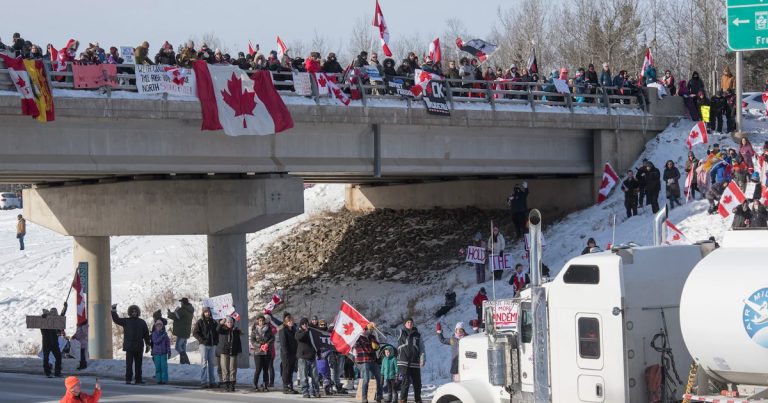
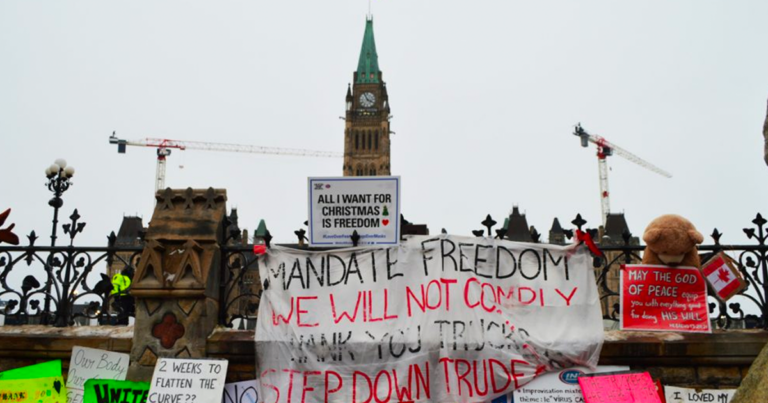
On Feb. 14, Prime Minister Justin Trudeau invoked the Emergencies Act to quash peaceful Freedom Convoy protestors who had set up in the nation’s capital for weeks to demonstrate against federal Covid-19 mandates. 

What began as a protest movement by truckers opposed to a cross-border vaccination requirement ballooned into a nation-wide movement that ultimately ended with federal, provincial and local police authorities arresting demonstrators en masse. 

The Liberal government’s use of the law, which allowed police to freeze the bank accounts of protesters and their sympathizers led to international condemnation of Trudeau including while he was present in the European Parliament.

As required by law, the federal government commenced the Public Order Emergencies Commission to investigate whether the conditions required to declare an emergency were met. Commissioner Paul Rouleau’s findings are expected to be presented in February 2023.

Pierre Poilievre elected leader of the Conservatives 

Carleton MP Pierre Poilievre was elected leader of the federal Conservatives on Sept. 10 in a sweeping victory that saw him take 68% of the vote on the first ballot. 

Poillievre’s election was seen by many as a break from the progressive side of the party. Throughout the campaign, Poilievre maintained his support for Freedom Convoy protestors which saw him face many attacks from the legacy media and the Liberals. 

As the year closes, polls show the Conservatives maintain a slight lead over the governing Liberals. Without an election scheduled until 2025, however, Poilievre has a long path ahead of him to woo voters. 

Elon Musk hints at Bill C-11 challenge

After taking over Twitter as the company’s CEO in April, Elon Musk has indicated on several occasions that he’s opposed to the Liberal government’s internet regulation law, Bill C-11. 

Most recently, Musk said in response to a tweet by True North fellow Andrew Lawton that Bill C-11 and other laws are an attempt to “muzzle” Canadians.

Musk’s ardent free speech approach to running the platform has prompted both Canadian politicians and journalists to express outrage over the changes at Twitter.

Although Musk has expressed interest in handing off the CEO position to a successor, as Bill C-11 reaches the final stages of the legislative process, social media companies will continue to ramp up their opposition to the regulatory scheme. 

Queen Elizabeth II passes away 

Canadians gathered across Canada to mourn the passing of Queen Elizabeth II earlier this year. 

At the age of 96 and while surrounded by her family the late Queen was declared dead on Sept. 8, 2022. With her passing, King Charles III immediately assumed the throne. 

Canadian Prime Minister Justin Trudeau and other prominent current and former politicians attended the state funeral of the late queen soon after her passing. 

In May 2023, King Charles III will hold his coronation alongside the Queen Consort. Additionally, Canadians can expect the printing of a new currency bearing the monarch’s portrait next year. 

Russia invades Ukraine

On Feb. 24, Russian troops crossed the border into Ukraine. The war has had repercussions on Canada’s supply chain including making the cost of fertilizer even more unaffordable. 

Canada responded to the invasion by issuing major sanctions against Russia and even closing the country’s airspace to Russian planes. 

Some Canadians also jumped at the opportunity to serve on the front-lines of the war. As exclusively reported by True North, the Honorary Consulate of Ukraine in Vancouver indicated thousands had expressed interest in joining the country’s volunteer legion. 

Without any sign that hostilities will end, Canadians can expect to see further global disruptions as a result of the Russia-Ukraine war. Canada will also face further pressure to expand its natural resource development to offset the world’s reliance on Russian oil and gas. 

Veterans offered assisted suicide

Nation-wide discussion about assisted suicide reached a heightened level this fall after it was revealed that several veterans, including a paralympic athlete were offered doctor-assisted suicide by Veterans Affairs. 

In August it was first reported that an official with the department had inappropriately suggested assisted suicide to a veteran seeking mental health treatment. 

Veteran Affairs eventually acknowledged the mishap and apologized, however, during testimony before the Senate, veteran Christine Gauthier explained how she was told to seek assisted suicide also when requesting a chair lift in her home. 

The debacle has drawn international criticism and forced Prime Minister Justin Trudeau to halt further \opening up further access to assisted suicide to those with mental health issues. 

Ottawa lifts unvaccinated travel ban

In June, the federal government officially lifted its vaccine requirement for domestic and international travel. 

After nearly a year of banning millions of Canadians from boarding a plane or train, the Liberal government rescinded the policy due to pressures from the travel industry. 

On top of that the Liberal government also walked back on mandating the use of the ArriveCAN application for travel, which many blamed for severe airport delays across the country. 

When reversing the policies, the Liberals left room for a potential return to mandates should the pandemic situation worsen. Since the pandemic has not been declared over by global health authorities, the federal government could still employ new measures to fight any future spread of Covid-19. 

Vancouver elects new mayor

In October, Vancouverites rejected the policies of former progressive mayor Kennedy Stewart by electing Ken Sim. 

Throughout his campaign, Sim presented himself as the law and order candidate, promising to hire 100 additional police officers to combat surges in crime in the city. During his first few months in the position, Sim approved a motion to require police to wear body cams by 2025.

In 2023, city council will hash out the exact details of Sim’s hiring plan and allocate appropriate budget resources to recruiting new police officers and mental health workers.  

Oakville prosthetic breast teacher causes international scandal

When news broke that a teacher at Oakville Trafalgar Highschool wore oversized prosthetic breasts to class, it became an international sensation. 

The teacher’s antics led to several protests outside of the school, with students expressing discomfort about the teacher’s presence. 

As for administrators, the Hamilton Wentworth School District has stood by the teacher, even giving them a full-time security detail. The Ontario government has since asked education ministry authorities to review dress codes for staff as a result of the incident. 

OP-ED: Trudeau’s five tax hikes will harm the middle class in 2023

Franco Terrazzano is the Federal Director of the Canadian Taxpayers Federation

Prime Minister Justin Trudeau promised to govern for “the middle class and those working hard to join it.” Canadians can be forgiven if we feel he’s forgotten that promise. 

Whether it’s the nurse working at the hospital, the mom that commutes an hour to work each day or the newcomers to Canada that opened a small business, middle-class Canadians will feel the pain of Trudeau’s five tax hikes in 2023. 

In the new year, any worker making above $66,600 will be forced to pay an extra $255 through the mandatory Canada Pension Plan tax. That worker will also have to pay an extra $50 through the Employment Insurance tax. 

The total payroll tax bill for a nurse making more than $66,600 will be $4,756 in 2023. That’s a lot of money and it would otherwise cover nine months of payments on the SUV she needs to drive to work at the hospital. 

Every business owner will also have to fork over $5,157 in payroll taxes for each middle-class worker they employ. That’s enough to give that worker an eight per cent raise. Or, it’s enough money to give the college-aged son who works at the family business after school a nice year-end bonus. 

Trudeau is also raising the carbon tax to 14 cents per litre of gas on April 1, 2023. The government claims that “families are going to be better off” with its carbon tax and rebates. 

But that math doesn’t add up. How is the government going to tax everyone, then skim some off the top to pay for 330 new carbon tax bureaucrats and still make everyone better off?  The Parliamentary Budget Officer shows the carbon tax will cost the average family between $402 and $847 in 2023 even after the rebates.

Even if you did receive more back in rebates, that would mean someone else would need to get less. Who are you taking money from? Maybe it’s the mom who moved to Port Hope to raise her kids but still commutes to Richmond Hill and back for work. 

Trudeau is also imposing a second carbon tax through fuel regulations next year.

The government’s number crunchers say “lower and middle-income” Canadians will feel the most pain from the second carbon tax as fuel prices rise. That includes “households currently experiencing energy poverty,” such as “single mothers” and “seniors living on fixed incomes.”

By 2030, Trudeau’s two carbon taxes could add 50 cents per litre to the price of gasoline. 

You could be forgiven if all these tax hikes drive you to drink. 

Maybe you had a tough week at work. The kids could be driving you nuts, or maybe you just need a little extra holiday cheer to get through dinner with the in-laws. But when you pick up the case of Keith’s, bottle of pinot or mickey of rum, Trudeau will be taking an extra 6.3 per cent from you through his alcohol tax hikes next year. 

These tax hikes have consequences for real people. And the more Trudeau spends, the more he needs to take.

But is the nurse’s life better when the government gives $295 million to the Ford Motor Company? Is the working mom’s life less stressful when the governor general spends more than $1 million on a week-long trip to the Middle East? Does the small business benefit when the CBC hands out $51 million in bonuses and raises during a pandemic? 

Here’s the simple truth: hard-working Canadians, middle class and not, are paying too much tax because the government wastes too much money. 

Franco Terrazzano is the Federal Director of the Canadian Taxpayers Federation

Alberta first province to announce permanent fuel tax relief program beginning next year

After a number of provinces implemented fuel tax relief during record high oil prices earlier this year, Alberta is the first province to announce a permanent fuel tax relief program.

Under former premier Jason Kenney, the United Conservative Party government suspended its 13 cent-per-litre fuel tax on April 1. That tax was partially reinstated in October, to 4.5 cents per litre on gas and diesel, as oil prices fell below $100 USD per barrel.

In a broadcast to the province last month, Smith said the entire fuel tax relief program will return for six months. That relief begins on Jan. 1, 2023, and will run to June, after which time the province will implement its permanent fuel tax relief program.

Alberta Finance Minister Travis Toews said beginning July 1 the permanent program will return to the current system of providing fuel tax relief based on the price of West Texas Intermediate oil.

“The measure is just one of a number we’ve brought forward to help Albertans deal with the higher cost of living,” he said in a Dec. 2o statement. “It’s relief we’re able to provide thanks to our strong fiscal situation, which is helping us fulfil our commitment to make life more affordable.”

Albertans have seen about $850 million in fuel tax savings since the program began earlier this year. 

Ontario Premier Doug Ford announced last month that he’ll extend the province’s gas tax cut for another year. He introduced a tax cut of 5.7 cents per litre on July 1,which was set to expire on Dec. 31.

Newfoundland and Labrador reduced its provincial fuel tax by almost half earlier this year as a temporary measure. 

Last month, Nova Scotia Finance Minister Allan MacMaster said he can’t cut into the 15.5 cents tax per liter tax on gasoline or diesel because the federal government won’t allow it. 

“They’ve just simply said we can’t do it.” MacMaster said. “There is a federal document that you cannot go and offset the carbon pricing because it would defeat the purpose of what they’re trying to do, which is trying to raise the price of fuel, so people stop buying it.”

Federal Immigration Minister and Nova Scotia MP later told the CBC that MacMaster  is free to follow the lead of other provinces and cut provincial fuel taxes. 

In March, Saskatchewan Premier Scott Moe said his government isn’t actively looking at reducing or eliminating the fuel excise tax.

“Alberta is much more reliant on the oil price than we are in Saskatchewan. We have a much more diversified natural resource-based economy,” he said. 

That same month, Quebec Finance Minister Eric Girard said it’s a “bad idea” to reduce gas prices. He said the increase in fuel prices could help Quebec in its energy transition.

“My God! What a bad idea,” he said in response to the suggestion.

Ratio’d | Ratio of the Year Award Show

0

For the final episode of Ratio’d for 2022, Harrison Faulkner hands out the much-anticipated Ratio of the Year award to the politician with the worst tweets and takes on social media this year.

Two competitors – Jagmeet Singh and Omar Alghabra – came away this year with THREE Ratio of the Week Awards, topping the charts! But only one can be the true winner of the Ratio of the Year award! Who will it be?

Tune in to the latest episode of Ratio’d with Harrison Faulkner to find out!

The Rupa Subramanya Show | Looking back at the Freedom Convoy (ft. Benjamin Dichter)

The Freedom Convoy was the biggest story of 2022 – the historic protest influenced the end of Covid mandates and lockdowns, exposed the bias of the legacy media and concluded with never-before-used war measures by the Trudeau government.

Joining The Rupa Subramanya Show today is one of the lead organizers of the Freedom Convoy Benjamin Dichter. Rupa and Benjamin discuss the origins of the Convoy, the inner operations of the protest, attempts to work with the government and police, plus much more.

Tune into the first part of Rupa’s interview with Benjamin Dichter!

SUBSCRIBE TO THE RUPA SUBRAMANYA SHOW

Ottawa Police tweets shredded by international pushback

With the one year anniversary of the Freedom Convoy quickly approaching, True North journalists look back on their reporting from the period.

The Ottawa Police Service (OPS) had put out multiple Twitter announcements, including some that contained threats, during the unprecedented crackdown against peaceful Freedom Convoy protesters following Prime Minister Justin Trudeau invocation of the Emergencies Act. 

OPS’s tweets not only received scrutiny from Canadians, but also some unflattering international attention, including from prominent figures. True North’s Elie Cantin-Nantel monitored the social media backlash the OPS received. 

“While I was not surprised to see Canadians react to the Ottawa Police’s concerning and threatening tweets, having prominent, high-profile figures of the American conservative movement whom I have followed and admired for years, such as Dave Rubin, Kayleigh McEnany and Ted Cruz, call out Ottawa’s local force for its conduct was a stark reminder that the world was watching.”

Cantin-Nantel says he found the situation to be “very sad,” noting that “the aggressive takedown of the Freedom Convoy by the Trudeau government will unfortunately leave a stain on Ottawa and Canada’s reputation for years to come.”

How police tactics backfired on social media

Twitter announcements put out by the Ottawa Police Service (OPS) during last weekend’s crackdown on Freedom Convoy protesters have received some unflattering international attention.

As law enforcement moved in on the Ottawa demonstrators, the OPS continually put out statements –  some containing threats –  in order to deter protesters and to keep residents of the city updated on the situation…

BONOKOSKI: Canada’s family doctor crisis is only getting worse

Back in the mid-1990s, the Ontario cottage-country village of Kinmount (Pop. 500) found itself without a family doctor.

So the town authorities set out with a plan. They raised thousands of dollars, put together a turnkey doctor’s office in advance and then advertised hither and yon, including signs along the highway heading in and out of town about the search for a family physician.

As I wrote at the time, it paid off with Dr. Elena Mihu, who’s been there ever since.

According to the Globe and Mail, the town of Wheatley in southwestern Ontario (Pop. 2,868) will lose its only family doctor on Dec. 31, when David Eaton retires.

The Thamesview Family Health Team with which Dr. Eaton is affiliated asked the Ontario Ministry of Health for funding last year for a nurse practitioner to care for his 1,600 patients until a doctor can be found.

That money has yet to arrive.

There is nothing new in this, of course. As the Globe recently reported, one in six family doctors are nearing retirement age, leaving potentially millions of Canadians in health care limbo because the younger generation of doctors tend to shy away from family practices.

Around Christmas two years ago here in Ottawa, we lost our primary-care doctor to retirement and it took a year or more of hard slogging to find his replacement but not his equal.

We had been spoiled by exemplary service and familiarity. There was a comfort zone that built up over time, and then suddenly it was gone.

A Canadian Medical Association (CMA) comparison of job postings to newly qualified family physicians shows that Canada does not have the capacity to absorb those leaving the profession – 6,819 were 65 and older in 2021.

Government recruitment websites advertised full-time positions for 2,571 family doctors in December, the CMA data show. But only 1,461 completed the postgraduate supervised training required to become licensed family doctors in 2021 – a gap that has doubled over the past two years.

The Globe focused on Jane Pritchard, a 73-year-old family doctor in Toronto who wants to retire but cannot find anyone to take over her 900 patients. ‘I stay awake at night, wondering what’s going to happen to them if they don’t have a family doctor,’ she told the newspaper.

Right now, she divides her time between caring for patients at a drop-in centre for women in downtown Toronto; refugees and immigrants from Latin America, including some who speak only Spanish, at her office; and 20 patients in their homes.

The aging family physician workforce amplifies Canada’s crisis in primary care, adding looming retirements to dwindling interest in family medicine among medical school graduates and a critical shortage of doctors. As older doctors retire, many cannot find younger colleagues to take over their practices. 

“There are many places across the country that are struggling to recruit,” said Alika Lafontaine, president of the CMA. “Primary-care practice is in a really tough spot right now.”

A wave of retirements not only leaves more patients without a family doctor, Dr. Lafontaine said, it further strains hospitals and nursing homes, where many of these physicians also work.

According to the Globe, much of the decline in the share of younger doctors can be traced to 1992, when provincial health ministers agreed to cut medical school admissions as part of a plan to curtail mounting health care costs.

A Canada-wide 10% reduction in admissions in the 1993 academic year left the country with fewer doctors entering postgraduate training for the first time, beginning with the graduating class of 1997.

And so here we are today, with a doctor crisis that will only get worse.