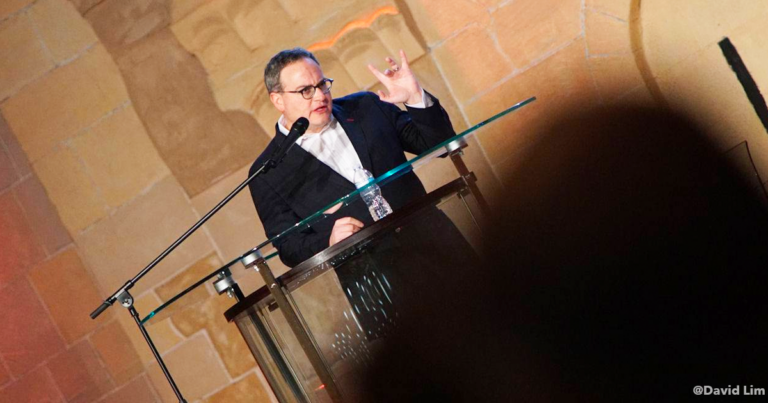
When Sun News Network went off the air in 2015, it looked like the end of conservative media in Canada. But Ezra Levant launched a new company from his living room. Nearly eight years later, Rebel News has 50 staff in sites around the world, and has influenced a wave of independent media. In this interview with True North’s Andrew Lawton, Levant talks about why he chose media over politics, why Rebel has succeeded where Sun News failed, and why independent media is the future.
The Canadian Taxpayers Federation (CTF) has sounded the alarm about five incoming tax hikes in 2023.
Tax hikes will include a carbon tax increase, an alcohol escalator tax, hikes to Employment Insurance and more, according to the report New Year’s Tax Changes.
“Tax hikes will give Canadians a hangover in the new year,” said CTF federal director Franco Terrazzano.
“Canadians can’t afford gas or groceries and the government is making things worse by hiking taxes.”
The Canada Pension Plan will see increases of up to $225 for employers, meanwhile Employment Insurance contributions will go up about $50 for workers and $70 for employers.
On average Canadians can expect to pay payroll taxes of up to $4,756 a year beginning next year.
“The federal government is raising the basic personal amount for income taxes. However, because of the payroll tax hikes, anyone making $40,000 or more in 2023 will pay higher federal income-based taxes than in 2022,” the CTF explained in a press release.
Two carbon tax hikes will also be in effect. The federal carbon tax will go up by 14 cents per litre of gas beginning on April 1, 2023 costing households up to $847 with rebates taken into account.
Beginning on July 1, 2023 the Liberal fuel regulation carbon tax will go into effect charing up to 13 cents per litre by 2030.
“Other countries are cutting taxes, but Ottawa is sticking Canadians with higher bills,” said Terrazzano.
“Prime Minister Justin Trudeau needs to stop wasting so much money and cut taxes.”
Additionally, taxes on alcohol will go up by 6.3% in April of next year.
While touring eastern Canada, Conservative leader Pierre Poilievre blasted the Liberal government over the alcohol tax and other increases.
“So, if the carbon tax is enough to drive you to drink, well you’ll pay more tax when you do that too,” said Poilievre while at a local brewery.
It is easy to forget that the Emergencies Act vote took place after protesters in Ottawa had been cleared and the Freedom Convoy had come to a forceful and abrupt end. Seven days after the historic invocation of the Emergencies Act and two days after police began forcing protesters out of Ottawa, the Emergencies Act went to a vote in the House of Commons. Trudeau – having turned the Emergencies Act vote into a confidence vote on his government was staring his political future in the face. With a slim Liberal minority, Trudeau would’ve lost the vote had he not managed to secure unanimous support from Jagmeet Singh’s NDP.
“The fact that the Trudeau government’s invocation of the Emergencies Act passed a vote in the House of Commons two days after protesters were forcibly cleared from Wellington Street and blockades at border crossings had been cleared for more than a week will serve Canadian history as a shameful example of when politicians put their careers over the interests of the people,” Harrison Faulkner said.
“It’s particularly shameful when the slimmest minority government in Canadian history relied on the NDP – once a political party that prided itself on standing up for civil liberties – to carry themselves over the line in a confidence vote.”
“When Pierre Trudeau invoked the War Measures Act in 1970, Tommy Douglas, then the leader of the NDP said that Canada would look back on the invocation ‘as a black Friday for civil liberties in Canada.’ In 2022, Jagmeet Singh did not hesitate to approve the suspension of civil liberties for all Canadians over a protest that had already been quashed.”
Parliament approves the Emergencies Act for the first time in history
Prime Minister Justin Trudeau’s decision to invoke the Emergencies Act passed a vital vote in the House of Commons on Monday thanks to the parliamentary support of Jagmeet Singh and the New Democratic Party (NDP).
185 MPs voted in favour of the act with 151 against…
As the Liberal government moves to increase a number of taxes in the coming year and fears of a recession continue to grow, Prime Minister Justin Trudeau is warning Canadians that 2023 will be “tough.”
The cost of living grew significantly throughout the last year – impacting essential items such as food, fuel and medicine.
In a year-end interview with Global News, Trudeau was asked about the gloomy economic forecast for 2023. The PM answered, “Next year is going to be tough, too. It’s going to be a tough year.”
“The coming winter is going to be tough for people, and that’s where we need to continue to pull together.”
Trudeau pointed to “direct supports” from the government, such as the GST rebate, dental care and rental support, as ways the government is helping struggling Canadians.
However, critics of the government have pointed out that the feds will increase a number of taxes in the new year, which will impact the wallets of Canadians who are already reeling from the inflation crisis.
The Canadian Federation of Independent Business is warning that scheduled 2023 payroll tax hikes will mean that every Canadian will see $305 less in take-home pay on the first day of the year.
Beginning on Jan. 1, Canada Pension Plan premiums will go up to 7.3%, costing up to $255 more in contributions per employee. On the same day, Employment Insurance premiums will increase by 5.2%.
In addition, the Trudeau government’s controversial carbon tax is expected to increase in 2023.
According to the Canadian Taxpayers Federation, the federal government is giving Quebec a “special deal” on carbon taxes while the rest of the country has to fork up 14 cents per litre of gas by next year.
All provinces besides Quebec will have to raise the carbon tax on fuel to 37 cents per litre by 2030.
As reported by True North, some Canadian farmers will have to pay upwards of $136,000 a year by 2030 should the Liberal government continue to raise the carbon tax.
While the Christmas season is supposed to be a time of joy and celebrations, more Canadians than ever are struggling to afford holiday spending due to the rising cost of living. BMO’s Real Financial Progress Index found that 77% of those surveyed said their Christmas shopping has been impacted by growing inflation.
After the Trudeau government opened membership in the Canadian Armed Forces (CAF) to permanent residents to curry new recruits, the CAF says it received hundreds of applications in November.
However, getting prospective recruits into uniform could take up to two years.
The CAF says more than 2,400 people submitted applications in November, which the commander of the Canadian Forces Recruiting Group Nick Roby told Global News was unexpected.
“I’ll be honest with you, it has been a bit of a surprise to us as to how much uptake the permanent resident initiative has taken,” said Roby.
“And we are obviously super excited about the opportunity.”
The new measure went into effect on Oct. 18. In addition to opening the door to permanent residents, the CAF has launched a campaign to persuade them to pursue a military career.
“To grow and meet the challenges of tomorrow, the Canadian Armed Forces needs to recruit, train, and retain diverse talent in Canada. This talent includes permanent residents, who will bring great enthusiasm, experience, and knowledge to the Defence Team,” said Chief of the Defence Staf Gen. Wayne Eyre in a statement.
Despite the significant increase in applications, prospective recruits will have to wait years to get into uniform.
Challenges relating to security screenings of permanent residents will pose a significant obstacle for new applicants. While it takes approximately eight months to vet a Canadian citizen, Roby said the wait is longer for permanent residents because many applicants have lived outside of Canada.
“We would expect the process will take longer. Every file is reviewed on an individual basis,” Roby said. “We’re estimating it can take up to 18 to 24 months.”
The military is struggling to find recruits to fill 71,500 positions needed to maintain training and bases, man naval vessels and participate in operations domestically and abroad.
As of Jan. 2022 nearly 1,000 unvaccinated CAF members were facing formal proceedings for refusing to follow a Covid-19 vaccine mandate. Over 1,300 personnel have also requested exemptions, which were recently denied by a Federal Court.
Despite lifting the vaccine mandate, the military has indicated it will continue with disciplinary procedures for those who held out against vaccination.
The majority of Canadians want Prime Minister Justin Trudeau to take “a walk in the snow” in the new year, according to a new Ipsos poll.
The poll found that 54% of Canadians believe Trudeau should step down as Liberal leader and that Canada should have a new prime minister.
In April 2023, Trudeau will have been prime minister for eight years, serving as Liberal Party of Canada leader for a decade.
Canadians across all provinces held the belief that 2023 should be Trudeau’s final year as prime minister, with Quebec as the exception – Alberta (65%), Atlantic Canada (57%), Saskatchewan and Manitoba (56%), Ontario (56%), British Columbia (54%) and Quebec (43%).
Despite the widely held belief of Canadians, the poll found that just 27% of Canadians believe Trudeau will actually step down.
The Ipsos poll was conducted between December 14 and 16, 2022 on behalf of Global News. A sample of 1,004 Canadians aged 18+ was interviewed.
With a rumoured general election in the new year, Trudeau has indicated that he will stay on as Liberal leader to take on Conservative leader Pierre Poilievre.
In recent weeks, the Trudeau government’s multiple ethics violations have regained the spotlight after it was revealed that International Trade minister Mary Ng awarded a close friend a government contract for media training.
In response, on the heels of the government’s sixth ethics breach, Trudeau told CTV News that “it sucks” when members of his government violate ethics laws.
Trudeau said the fact that the public knows about the scandals means the system is working.
The last three years have not been great for civil liberties in Canada, but this year takes the cake with the government invoking the Emergencies Act to crackdown on peaceful protesters in Ottawa. Justice Centre for Constitutional Freedoms president John Carpay joined True North’s Andrew Lawton to talk about the state of civil liberties in Canada in 2022 and what’s on the horizon in 2023. Carpay and Lawton also talk about the big picture issues like freedom, individual autonomy, and why the left-right spectrum no longer holds.
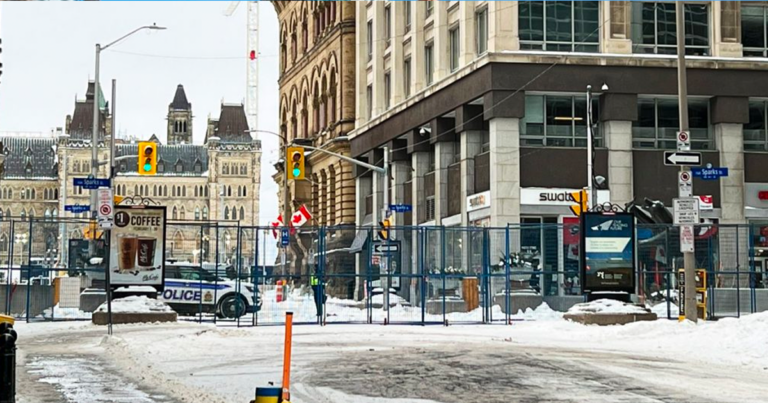
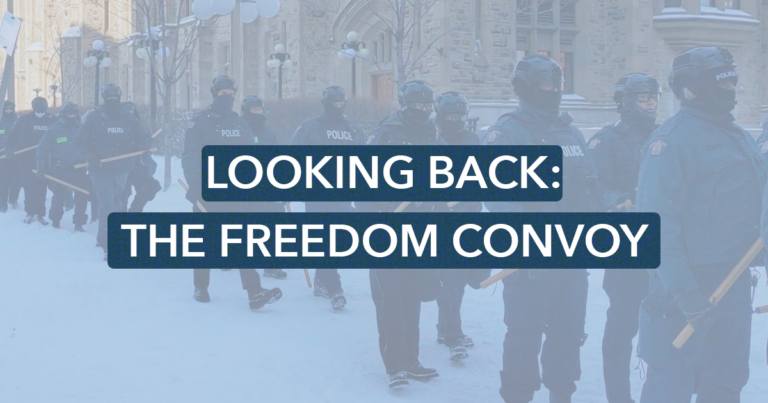
It took police less than two days to expel the Freedom Convoy protesters from Ottawa, using mounted police, chemical irritants and tear gas. With the Emergencies Act in play, police first focused on clearing the Rideau and Sussex intersection, before swiftly moving west along Wellington St., eventually pushing protesters away from Parliament Hill. Legacy media coverage was slanted against the Convoy and often blatantly inaccurate, which is why True North’s audience sought out unfiltered live footage from the ground.
True North journalist Andrew Lawton was in Ottawa for the convoy’s final weekend, documenting protester and police movements, and even getting pepper sprayed while engaging in journalism near the front line.
“A lot of the protesters felt invincible heading into the weekend,” Lawton said. “It was a long weekend and they were accustomed to thousands of supporters coming in on Fridays and Saturdays. This time, police made sure that didn’t happen. Piece by piece, block by block, they pushed the protesters out, without ever explaining why even pedestrians were not allowed to assemble to continue their peaceful protest when all the trucks were gone.”
True North’s live reporting in Ottawa
Police have moved in on Freedom Convoy protesters in Ottawa. Many have already been arrested and there were cases of protesters being beaten and trampled.
True North’s Andrew Lawton is reporting live on the scene…
Canadians living in the prairies are growing increasingly disillusioned with federalism, a new poll suggests.
A Leger for the Association for Canadian Studies report found that just 21% of Canadians living in Saskatchewan and Manitoba think there’s more advantages than disadvantages to federalism.
Results are five points higher in Alberta at 28%. That’s down five percentage points since July 2020 — just months into the Covid-19 pandemic — when a similar question was asked.
The number of Canadians who feel there are more benefits to federalism rises to 35% in Ontario and BC and to 39% in Atlantic Canada. Quebecers are most satisfied with federalism at 40%.
Broken down by party, Liberal supporters by far think there’s more advantages to federalism than disadvantages at 54%. That number drops to 33% for Green supporters and 32% for New Democrats supporters. Next come the Conservatives at 31%, followed by the Bloc Québécois at 20% and the People’s Party of Canada (PPC) with 20%.
Broken down by party support, 48% of Liberal supporters agree that relations are good between their province and the federal government, compared to 40% of NDP supporters, 34% of Conservatives, 25% of Greens, 23% of Bloc supporters and 16% of PPC voters.
The poll revealed that Albertans are the proudest Canadians at 65.2%. Next came the prairies at 64.2%, Atlantic Canada at 61.7%, Ontarians at 60% and Quebecers at 42.8%.
Across the country, Canadians are feeling less like the federal government and provinces work well together. Just 15% of Albertans think relations between Ottawa and their government are good, down five points from two years earlier.
While that number rises to 18% in Manitoba and Saskatchewan, it dropped significantly from 29% two years ago.
Quebecers dropped two points from 30% in 2020, while Ontario dropped from 62% to 37% and BC dropped two points to 54%.
The Leger poll, conducted between Nov. 11- 13, polled 1,537 Canadians using an online panel. A margin of error cannot be associated with the poll, but a probability sample of the same size would have a margin of error of plus or minus 2.5%, 19 times out of 20.
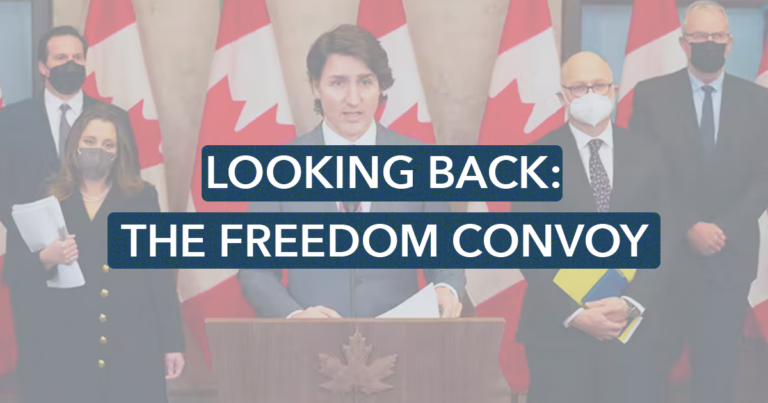
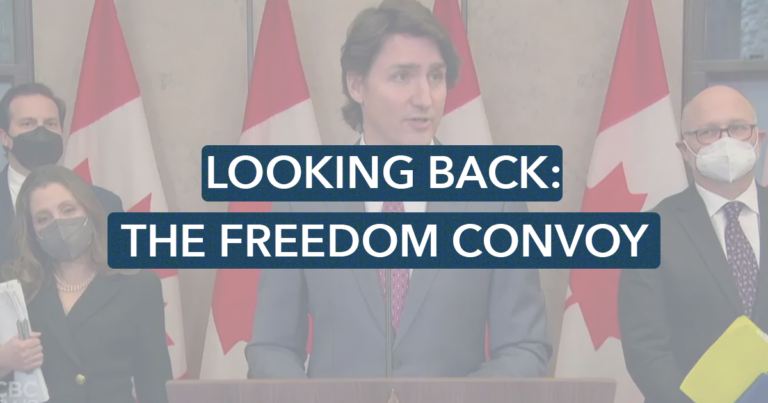
With the one year anniversary of the Freedom Convoy quickly approaching, True North journalists look back on their reporting from the period.
Even one year after the fact, Prime Minister Justin Trudeau continues to be called out for his handling of the Freedom Convoy by international voices.
The biggest scathing Trudeau received was in March of this year when delivering a speech before the European Parliament in Brussels. A handful of Members of European Parliament from Croatia, Germany, Romania and elsewhere called the prime minister out in a very public fashion over his use of the Emergencies Act to clamp down on peaceful protesters at home.
“I don’t think I’ve ever seen a prime minister so widely reviled globally over a domestic policy decision in my lifetime,” said Dzsurdzsa.
“It just goes to show how much of an insular image Canadians are presented of the Liberal leader by the legacy media. Coverage in Canada of the prime minister’s scathing was slow and dismissive – opting instead to attack the character of Trudeau’s critics.”
“I think it really opened up a lot of people’s eyes to the media’s bias.”
Looking back, one year later
Figures from around the world are standing with Canadian protestors who oppose Covid-19 mandates after Prime Minister Justin Trudeau invoked the Emergencies Act to quash peaceful demonstrations.
International journalists, authors, politicians, broadcasters and celebrities have savaged Trudeau over the authoritarian move.
The criticisms come from varied countries including the US, UK, France, Brazil and the Netherlands. Their common theme is a distaste for Trudeau’s excessive powers and his attempt to strip Canadians of their right to peaceful assembly…