The Trudeau government has unveiled its long-waited Indo-Pacific Strategy – and Xi Jinping is not going to be happy with it.
The 26-page document outlines the government’s plan to boost military and cyber security, protect Canadian critical minerals from Chinese state-owned enterprises and discusses enhanced relations with Taiwan.
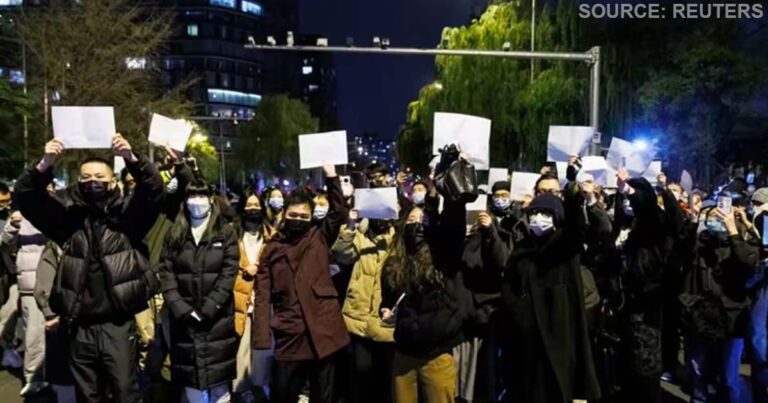
But that’s the least of China’s problems right now, as protesters take to the streets in large-scale numbers to oppose the government’s strict Covid Zero measures. The world is watching as scenes not witnessed since Tiananmen Square in 1989 start to unfold.
Plus, British Columbia-based credit union has launched Canada’s first-ever “carbon tracking” Visa card. Is this something consumers actually want?
Tune into The Daily Brief with Anthony Furey and Jasmine Moulton!
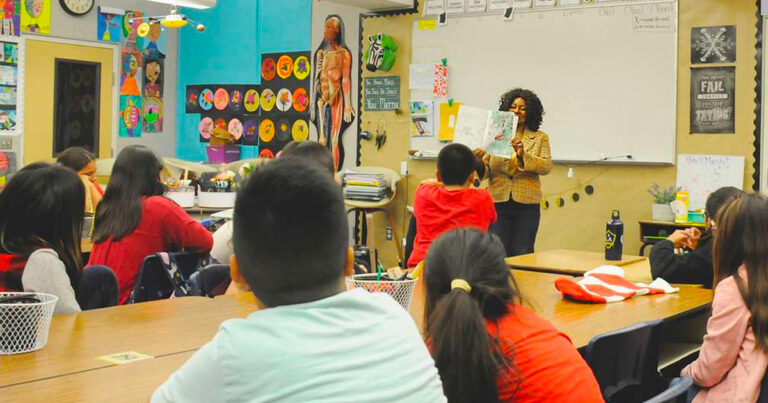
Jen Mackey was so concerned about the age appropriateness of a book recently read to her son’s class by his Durham District School Board (DDSB) teacher, she went online to see if other parents felt the same way.
She told True North 90% of those who responded to her online questions, agreed that the book was “inappropriate” for Grade 1 students.
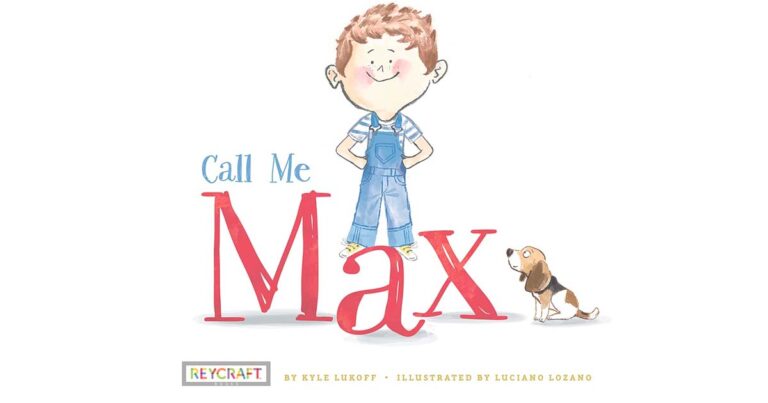
The book is titled “Call me Max” and tells the story of a young girl who wants the teacher to call her a boy’s name –Max– which is the start of his “journey” as he makes new friends and reveals his identity to his parents.
The book, one of several written by transgender author Kyle Lukoff, is described as an “age appropriate” introduction to what it means to be transgender.
But Mackey doesn’t agree.
She says it was recently read in her son’s Grade 1 social studies and health class, although she learned when she asked that it was “taught above and beyond what was required” for Grade 1 – that it’s not part of the curriculum for his age.
She said she doesn’t think her son really understands the concept and didn’t “articulate it well” but somehow knew it was important to tell her about the book.
She adds that he “rarely” gives details about events in school “unless they are of some meaning to him.”
When she asked her son how he felt about the book, his response was that his teacher told him about it “so it must be true.
Mackey said the book wasn’t appropriate for kids her son’s age because “it cannot be easily explained or understood.”
The same book caused quite a stir in an Austin, Texas school last year when it was read to a Grade 4 class.
But at the DDSB there seemed to be no awareness by inside sources of the book being read and board officials did not respond to a request for comment.
Mackey says she brought up the issue at a parent-teacher interview the day after it was read.
She was shown another “age-appropriate” book on gender identity called “My Shadow is Pink” about a boy who sees his shadow as pink. But the main character’s father doesn’t support him until the end of the book and still sees his shadow as blue.
It is described as “an important book for a new generation of children (and adults alike) which exemplifies the concepts of unconditional love, respect and positive parenting.”
The teacher at the parent-teacher interview talked a lot about acceptance and affirmation, says Mackey, and that there are transgender children attending the school.
“I sensed she was feeling defensive so I didn’t expand on my thoughts and decided to sit with it and ask for other opinions online to see if there were other parents that felt as I did,” she told True North.
Not surprisingly 90% of parents who responded to her unscientific survey felt it inappropriate.
No kidding.
Shame on any school board – and I’ll bet the DDSB is not the only one – that has tried to force feed these concepts to six-year-olds and other elementary school kids.
Lucky for Mackey her son told her about the book.
Often that’s not the case and school officials are certainly not prepared to be transparent about what they’re reading to kids.
It yet again points to the need for parents to be as fully involved as possible in their childrens’ curriculum and to demand information if school officials obfuscate.
I’m willing to bet that if parents start to speak up, these kind of “readings” won’t be happening quite so often.
Are you a parent concerned about content at your kids’ school? Email us at [email protected]
With no acknowledgment of its chicanery, the Liberal government of Prime Minister Justin Trudeau is now covertly gunning for grandpa’s varmint rifle as though it tops the gangbanger’s wish list.
In committee last week for a pending gun control bill, Liberal MP Paul Chiang introduced an amendment that would effectively criminalize millions of firearms currently in use with Canadian hunters.
The amendment proposes to ban “a firearm that is a rifle or shotgun, that is capable of discharging centre-fire ammunition in a semi-automatic manner and that is designed to accept a detachable cartridge magazine with a capacity greater than five cartridges of the type for which the firearm was originally designed.”
Also tabled was a 478-page amendment banning thousands of additional Canadian firearms by name. This included the SKS, a Soviet-designed surplus rifle that has long been a favourite of Canadian sports shooters, with around 200,000 owners.
It’s a massive expansion of a gun control bill that was initially pitched mostly as a way to prevent the sale of Canadian handguns into criminal hands. Literature accompanying the first draft of Bill C-21 made no mention of plans to target legally-owned long guns.
Semi-automatic rifles and shotguns are extremely common as Canadian hunting arms, which is why firearms advocates say the ban would apply to millions of guns currently in active use with Canadian hunters and sport shooters.
“The majority of Canada’s 2.2 million licensed firearms owners will now be criminalized, should these amendments to Bill C-21 become law,” read a statement by Tony Bernardo, executive director of the Canadian Shooting Sports Association.
Tracey Wilson with the Canadian Coalition for Firearms Rights called it the “largest gun ban in Canadian history.”
The Liberals, of course, hold very few seats in the prairies—zero, for example, in Saskatchewan—where hunting is ingrained in the Canadian heritage.
Fact is, the Liberals have been caught in their trickery, but could care less.
In May 2020, Trudeau announced an immediate ban on what he called “military-style assault weapons.” The Liberals portrayed this as taking “weapons of war” off the streets.
“You don’t need an AR-15 to take down a deer,” Trudeau famously said.
If he had stopped there, arguments against would have been muted and likely over by now. But he didn’t.
His true sights honed in last week with that amendment. His target has vastly expanded to include grandpa’s groundhog rifle.
Public Safety Minister Bill Blair called it an “evergreen law,” which means it will automatically update like a smart phone overnight.
This makes it even more outrageous.
It means you could go to bed one night as a law-abiding citizen and wake up in the morning as a criminal—as in owning a now-banned weapon.
Without a vote and without a say.
In a column for the CBC, Toronto lawyer Jay Nathwani wrote, “the policy is not merely a failure on its own terms, as gun control; more importantly, it is the kind of policy that is corrosive of trust among Canadians.”
In his remarks, Trudeau asserted that firearms designed “to kill the largest number of people in the shortest amount of time” have “no place” in Canada.
“Most Canadians would agree with that sentiment,” wrote Nathwani, “but many might not be aware that the law already addresses what is arguably the most significant risk: magazine capacity.”
So the new law will be a vast overkill.
In the end, it still doesn’t explain why and how grandpa’s varmint rifle fits in.
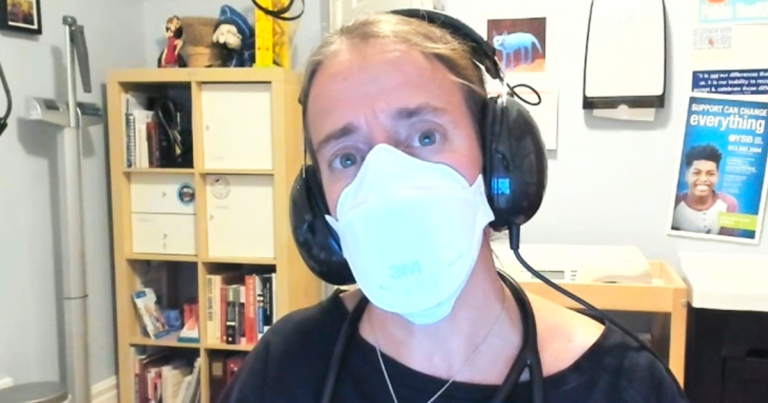
A desperate attempt by mask-obsessed trustee Dr. Nili Kaplan-Myrth to mandate masks in Ottawa schools failed this week after many parents and students spoke out against the controversial measure.
The board intended to vote on Kaplan-Myrth’s motion on Tuesday but was subject to disruption and protest by angry parents. The meeting eventually happened on Thursday and after countless amendments to the initial motion to water it down, Kaplan-Myrth’s attempt to impose masks on students, staff and faculty ultimately failed.
True North’s Anthony Furey says we just witnessed the last gasps of the Covid Crazies.
The Liberal government recently announced an amendment to Bill C-21, which would broadly increase the range of firearms prohibited by the legislation. Rod Giltaca of the Canadian Coalition for Firearms Rights joined True North’s Andrew Lawton to discuss Bill C-21, the impact it would have on legal gun owners, and how some provinces are pushing back.
The Edmonton Public School Board (EPSB) is conducting a student demographic survey focused on gender identity, sexual orientation – similar to a controversial Toronto one that was recently shelved.
The survey, ongoing from Nov. 1 to Dec. 16, pledges to advance anti-racism, diversity, equity, and inclusion. According to the EPSB, the survey is meant to “identify barriers and inequities and inform actions the division will take to enhance student success.”
The website listing what the survey will probe students on includes a student’s gender identity, racial, ethnic and religious identity, and the sexual orientation of students in grades 7-12. Some voices think this goes too far.
Esme Vee, Founding Member of Canadian Women’s Sex-Based Rights, says that she and her organization are “concerned about the indoctrination of children through the public school system,” in what she describes as an anti-scientific theory that has been taken as settled fact by school boards across the country.
“We’re opposed to public institutions asking minors intrusive and inappropriate questions about their sexual orientation. Thankfully, parents are becoming aware of the serious implications of these trends in education, and are beginning to ask questions and speak up for their children.”
The student survey is a part of the EPSB’s Anti-racism and Equity plan to help racial minorities and Indigenous peoples through an anti-racism and equity lens.
The seeks to provide Edmonton’s teachers with anti-racism, equity and inclusion learning resources, form hiring practices through an anti-racism and equity lens, along with the student demographic survey.
While it is not clear what sort of policies would result from the information collected in the survey, the EPSB has said that they will be learning from other organizations that have done similar work. After a similar study, the Toronto District School Board (TDSB) decided to eliminate class streaming, where students would select classes based on their difficulty.
Recently, Canada’s school boards have been under increasing scrutiny for their widespread inclusion of radical left-wing theories to inform the educational practices of teachers and the school board at large.
The TDSB was recently slammed for rolling out a similar survey and was forced to delay it after the questions and census research principles were made public.
In response to an article criticizing the TDSB, a concerned citizen pointed out that Toronto’s progressive teaching agenda is starting to bleed over into Edmonton.
“Please help parents here in Edmonton,” writes Monica Marchand. “They are putting out a survey like this but parents are not allowed to see the questions. The school board refuses.”
Please help parents here in Edmonton. They are putting out a survey like this but parents are not allowed to see the questions. The school board refuses.
This year, the country saw multiple municipal elections across numerous provinces where school board trustee candidates ran on an anti-woke platform opposing the introduction of extreme race politics and gender ideology into schools.
Does your child attend the Edmonton Public School Board? We want to know what you think. Contact us at [email protected].
For six weeks, Canadians tuned into the Public Order Emergency Hearings (POEC) to hear the testimonies of key figures from the government, the convoy and police to decide whether the invocation of the Emergencies Act on Feb. 14 was justified.
The Commission heard from convoy organizers Tamara Lich, Chris Barber, Brigette Belton, Benjamin Dichter and James Bauder. Politicians included Ottawa Mayor Jim Watson as well as top Cabinet members such as Public Safety Minister Marco Mendicino, Minister of Justice David Lametti, Deputy Prime Minister Chrystia Freeland and Prime Minister Justin Trudeau.
All witnesses were given time to explain their position and to be cross-examined in order for the Commission to have the information it needs to inform its report.
What happens next?
While the Commission may have appeared like a courtroom setting to many Canadians looking on – and Commissioner Paul Rouleau is indeed an Appeals Court Judge – there will be no fines, charges or any other repercussions brought upon anyone involved. The Commission had no legal teeth and was not tasked with probing or judging potential wrongdoing.
The next steps will instead see the Commission examine the evidence given in testimonies and assess whether the invocation of the Emergencies Act was appropriate.
As outlined in the Order in Council, the Commission must examine the measures taken, with respect to:
The evolution and goals of the convoy and blockades, their leadership, organization and participants,
The impact of domestic and foreign funding, including crowdsourcing platforms,
The impact, role and sources of misinformation and disinformation including the use of social media,
The impact of the blockades, including their economic impact, and
The efforts of police and other responders prior to and after the declaration.
The Commissioner will be asked to set out “findings and lessons learned” and whether the Act requires modernization.
The Policy Phase of the Public Order Emergency, in which the Commissioner will call on nearly 50 experts from various fields to develop relevant recommendations and improvements to existing legislation, will start on November 28.
Criminal law, policing powers, freedom of expression, and peaceful protests will be discussed in these discussions.
“I look forward to hearing the thoughts and views of the experts and the discussion and analysis of these key policy issues,” said Commissioner Paul Rouleau. “This will assist the Commission in considering what recommendations to make on the use of and potential modernization of the Emergencies Act and on any areas where we consider further study or research should be undertaken.”
The Commissioner must submit to the Governor in Council a final report, including findings and recommendations, no later than Feb. 6 2023.
A report of the inquiry must be presented in the House of Commons and the Senate of Canada before February 20, 2023.
Earlier this month, world leaders from nearly 200 different countries descended upon Egypt for the United Nations COP27 climate conference. The annual summit has been criticized by many, who claim the event to be nothing more than a “greenwash”. ClimateDepot.com’s Marc Morano joined True North’s Andrew Lawton to discuss what he observed at COP27, why he thinks it’s a waste of time, and how climate alarmists are trying to control our lives.
This week on the Alberta Roundup with Rachel Emmanuel, Rachel discusses Alberta Justice Minister Tyler Shandro’s call for Ottawa to remove RCMP Commissioner Brenda Lucki, saying the province has lost confidence in her.
Also on the show, Alberta Premier Danielle Smith has made good on her promise to ban mask mandates in schools. The premier also ended fully remote online learning.
Finally, a Liberal Minister and Edmonton MP is calling Smith’s proposed sovereignty act “an attack on Canadian unity.”
Rita Smith is the publisher of Road Warrior News/Taxi News.
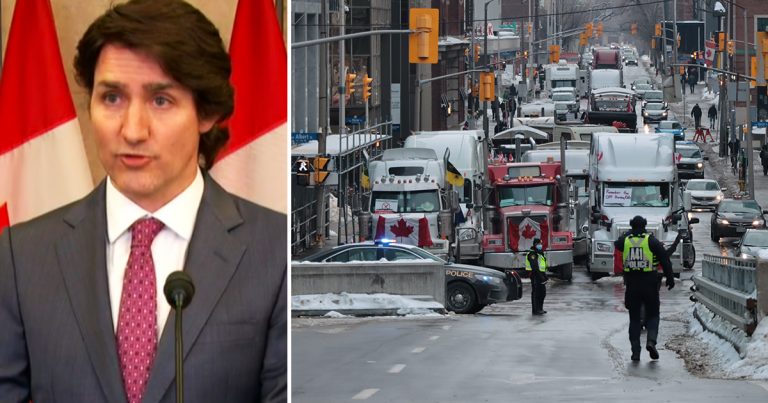
Watching hundreds of hours and dozens of witnesses at the Public Order Emergency Commission may leave viewers wondering: what exactly was Prime Minister Justin Trudeau’s objective in evoking the Emergencies Act against the Freedom Convoy?
After all, he could have cleared downtown Ottawa in exactly the same way the Ontario Provincial Police cleared the Ambassador Bridge, using the same legislative authority the OPP used in Windsor. Instead, he opted to freeze bank accounts, arrest organizers, and threaten truckers’ commercial insurance and vehicle registrations.
It’s possible that in the Freedom Convoy, Trudeau’s team saw a real, growing opposition gaining support from millions of Canadian voters and taxpayers. The Convoy raised $10 million in only a few weeks; and when the government succeeded in freezing the truckers’ GoFundMe account, Convoy organizers turned around and raised millions again on the GiveSendGo platform.
They in fact raised more money in a month than the Liberal Party raised in the entire year of 2020. That’s a frighteningly impressive fundraising ability, demonstrated by a brand-new group with no political track record.
The truckers had more than an astonishing ability to raise funds: they also enjoyed the support of millions of Canadians.
From sea to shining sea across Canada, bridges were full of hard-working Canadians waving flags and cheering the truckers on. In my own GTA community, the bridge over the 401 was lined with parents and kids; blue collar workers and laptop loners; our local Canada Post delivery person in her Canada Post van.
The first man I met walking from my car to the bridge was a 94-year-old Holocaust survivor; one woman drove three hours from Bancroft to be there.
In a clever video by former Ontario MPP Rick Nicholls, he openeda brown-paper bag lunch packed by volunteers who supported the Truckers. Observed Nicolls: “Trudeau’s problem is not the truckers. Trudeau’s problem is the Canadians packing lunches for the truckers.”
In January 2022, I interviewed Greg Lyle of Innovative Research on a survey he had just conducted with regard to the Freedom Convoy. Lyle was particularly interested in support for the truckers: “A couple of things stand out: that 31% support for the truckers’ protest is far higher than the number of people that are actually hostile or hesitant toward the vaccine, which is in the single digits.
“At 31%, you’re way, way, way above that. It’s still the minority point of view. But at 46%, there’s not a majority that oppose. It’s what we call ‘a plurality,’ but it’s not a majority.”
(Remember, Trudeau won his 2021 election with only 32% of the vote: less than one in three voters, fewer than one in seven Canadians, voted for Trudeau’s Liberals.)
In our January interview Lyle, undisputedly one of Canada’s best pollsters, made an interesting observation: “There are questions such as, ‘Is someone doing this to harvest data? So that they have a big list and no-strings-attached funding to mobilize people for the next Tory leadership, and into a government party?’
“You know, that’s a possibility. Apparently, 250,000 people signed a petition,” Lyle added.
Fast forward a few months, and Erin O’Toole, who refused to support the truckers, got booted as Conservative leader and Pierre Poilievre, who met with the truckers on the street, was in.
I’m not saying that anyone did in fact use such a list. Just that the Liberals would have been right to be nervous about such a volume of fundraising combined with so many names coming together.
Trudeau is right to fear the truckers and the hard-working, tax-paying Canadians they represent. They may well elect the next Prime Minister, no matter what the POEC decides.
Rita Smith is the publisher of Road Warrior News/Taxi News.