Ontario chief doctor says school kids to wear masks longer than everyone

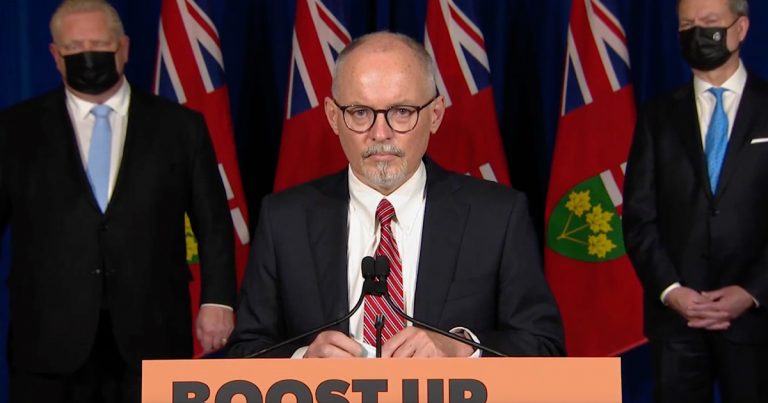
Ontario’s chief medical officer of health Dr. Kieran Moore has said that masks and other COVID-19 measures will likely remain in schools even after they are lifted for the rest of the province. 

Moore made the comments on Thursday when announcing that Ontario would review restrictions in light of other provinces’ decision to lift them.

“We’re reviewing all public health measures and making recommendations to the government,” said Moore. “My initial feeling is that we keep measures in the school setting to ensure that parents have confidence, workers have confidence and students have confidence to go to school.” 

“So I anticipate that the measures that we may remove at a societal level will remain in the school setting a bit longer to maintain that safety protocol.” 

The province is currently examining when it could do away with masking and proof-of-vaccination, among other measures. 

Despite experts’ warnings that masks are harmful to childhood development, Ontario students from Grades 1 to 12 are currently required to wear non-medical masks indoors at all times.

Canadians were outraged in October to find out that students at the Toronto District School Board (TDSB) were also being told not to speak during lunch breaks in order to stop the spread of COVID-19. 

One parent, Teresa Ostrom, said she worried about her child’s ability to socialize as a result of the policy. 

“I just felt so sad for the kids,” she said. “They’ve missed out on so much and especially so much unstructured socialization, which is what chatting with friends during lunch is, so it just seemed like one more thing taken away from them.”

The TDSB cited the advice of Toronto Public Health as the reason for the measure.

Kids have been one of the hardest-hit demographics when it comes to the consequences of COVID-19 measures. 

Mental health issues have surged among youth over the past year. In Ontario, the Toronto Hospital for Sick Children reported a 35% increase in admissions for eating disorders among youths. 

“COVID is a great amplifier,” said SickKids executive director Christina Bartha. “In pediatrics, the mental health and eating disorder rise in numbers is, to some degree, our pandemic. This has been very significant in terms of the number of kids presenting for care, and being able to attend to that has been really challenging.”

Ontario court freezes Freedom Convoy’s access to GiveSendGo donations 

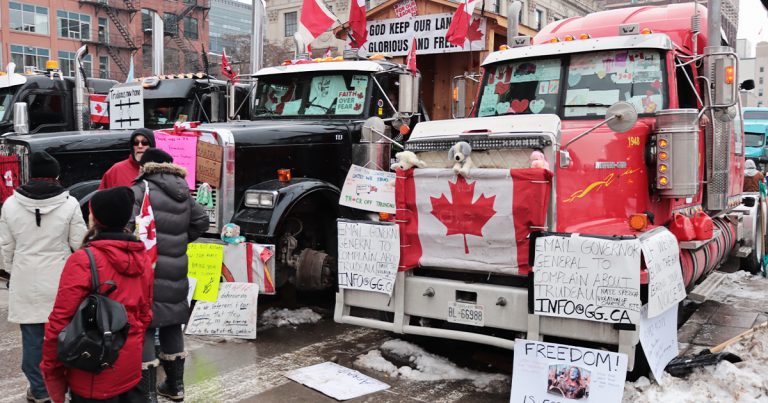
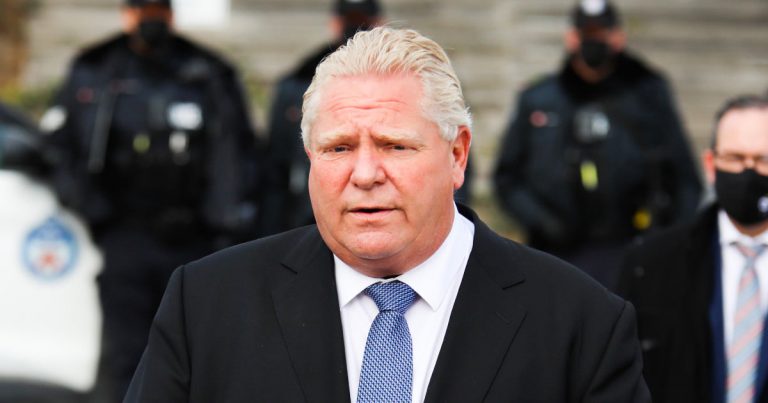
The Ontario government has secured a court order to freeze access to millions of dollars donated to the Freedom Convoy through crowdfunding platform GiveSendGo. 

Premier Doug Ford’s office said in a statement Thursday evening that the attorney general brought an application to the Ontario Superior Court of Justice under Section 490.8 of the Criminal Code of Canada. 

This application, said the premier’s office, sought to prohibit people from “disposing of, or otherwise dealing with” donations made through the Freedom Convoy and Adopt-A-Trucker pages on GiveSendGo. 

“This afternoon, the order was issued,” said the premier’s office in a statement on Thursday. “It binds any and all parties with possession or control over these donations.” 

The Freedom Convoy’s organizers and lawyer were not immediately available for comment although spokesperson Benjamin Dichter did joke about the GiveSendGo being frozen in a tweet.

“This is good for #bitcoin,” he said

On Thursday evening, GiveSendGo responded by saying “Canada has absolutely ZERO jurisdiction over how we manage our funds.”

The crowdfunding platform assured users that “all funds for EVERY campaign on GiveSendGo flow directly to the recipients of those campaigns.”

A crowdfunding page for the Freedom Convoy was set up on GiveSendGo after GoFundMe canceled the original fundraiser. 

The GiveSendGo page had raised $8.5 million US as of Thursday, the Freedom Convoy’s 19th day.

Pandemic-driven closures see business bankruptcies at 35-year high

Businesses experienced a sharp increase in bankruptcies in the last quarter of 2021 according to the Canadian Association of Insolvency and Restructuring Professionals (CAIRP).

Insolvencies were up by 36.8% across the board during last year’s fourth quarter, marking a 35-year high. The brunt of the damage was caused by closures in the food, accommodation and construction industries. 

“After nearly two years of record-low business insolvencies, the persistent uncertainty caused by the COVID situation is now forcing difficult decisions from Canadian business owners who are operating in the face of increased costs, supply chain issues and a tapering of pandemic-related government support,” said Jean-Daniel Breton, Chair of CAIRP in a news release

“The figures do not tell the whole story because owners of small, fragile companies that were surviving through low-interest rates and government support may decide to walk away rather than consider insolvency or restructuring options.”

During the period, 733 businesses commenced insolvency proceedings.

According to CAIRP, revenues have not yet returned to pre-pandemic levels for many struggling industries. 

Consumer insolvencies are also up by 5.5% compared to the previous quarter, with 22,266 individuals filing bankruptcies at the tail end of 2021. 

“We may not start to see consumer insolvencies return to pre-pandemic levels until later in 2022, as the tightening of monetary policy and interest rate hikes apply pressure to personal finances,” said André Bolduc, Vice-Chair of CAIRP.

Recent statistics show that nearly half of Canadians are struggling to pay off their debts and monthly bills. 

According to the latest MNP Consumer Debt Index, 43% of those polled reported struggling with their personal finances, while 45% were worried they couldn’t meet their living expenses. 

“Unexpected expenses are one of the biggest contributors to household financial turmoil, and many are starting the new year being dealt another round of unexpected business closures, reduced working hours or job loss, and COVID-related health concerns,” said MNP LTD president Grant Bazian. 

Trudeau catastrophically underestimated the truckers (ft. Rupa Subramanya)

The truckers are winning, and they won’t stop their protest until Canada goes back to being Canada. 

Trudeau’s instinct was to dismiss the truckers, and then to demonize them. That is turning out to be one of the most significant political mistakes in recent Canadian history. 

On today’s episode of The Candice Malcolm Show, Candice is joined by freelance journalist and columnist with the National Post Rupa Subramanya. Unlike most mainstream journalists, Rupa sought to understand the trucker convoy for herself. She went there, she interviewed 100 protesters and she saw something very different than what the media portrayed. 

Check out her wonderful article.

SUBSCRIBE TO THE CANDICE MALCOLM SHOW

OAKES: Legacy media, politicians and local police are losing their minds over the Freedom Convoy

Over the last week, people all around the world have been exposed to the deep division that exists in Canada. 

A nation generally thought of as ‘polite’ and ‘compliant’ is dealing with a major divide in the country. Does the population want to continue being ruled by emergency orders and decrees, or does it want the semblance of a fully-functioning nation back?

The country has seen the media, federal and local politicians, and now, the Ottawa police push back on the fundamental ideas and notions of a fully-functioning nation – one where the Charter of Rights and Freedoms is respected, as well as the expectation that rules and laws are debated, not enforced by emergency orders and decrees. 

The media, federal and local politicians, and now, the local Ottawa police, have slandered lawful protesters in Ottawa as “unlawful” and “dangerous.”

They have also minimized the protesting, and boiled it down to ‘you’ve been heard, now move on and let us continue with our decrees.’

Recently, Ottawa’s mayor made the remark that the protesters have had their “fifteen minutes” – a term generally used to describe ordinary individuals seeking fame and recognition but who fall short of long-lasting distinction. 

The protesters are not in Ottawa to seek their “fifteen minutes,” but to achieve change – to once again gain a semblance of normalcy other countries all across the world are achieving.

The Ottawa police have labeled the protest as “very volatile and very dangerous” while many videos show groups of people dancing, playing hockey and handing out food.

Journalists are calling trucking companies – the truckers’ employers – and acting like hall monitors in the streets of Ottawa.

Politicians are using increasingly divisive rhetoric to describe the protesters, labeling them “insurrectionists” who are engaging in “treason.”

In democracies, all sides of every argument must communicate openly and debate their ideas. For two years now, a large portion of the Canadian population has abided by the rules of those who caved in to fear and asked for more restrictions. 

But the individuals who were scared of COVID and required government measures to feel safe have never really listened to those who sought freedom and the liberty to use common sense in determining their own personal risk tolerance. 

For two years, the people who are a part of the Freedom Convoy protest played by the rules of the frightened masses. 

After less than two weeks of pushback from those who want their lives to go back to normal, politicians are fully committed to divisive rhetoric, as if the desire for freedom and common sense when it came to COVID controls was a forbidden idea. 

Where Canada goes from here is unknown, but more and more Canadians are deciding to stand up and ask questions critical of their government and of their own colleagues – like Liberal MPs Joel Lightbound and Yves Robillard have both done.

What we do know is that the Freedom Convoy has shown the extent to which the legacy media, politicians and the Ottawa police leadership have lost their minds over the last two years.

FUREY: Ontario has no plans to end its COVID-19 mandates

Provinces across Canada are ending their vaccine passport system, mask mandates and other COVID-19 restrictions. However, there are currently no plans to do the same in Ontario.

Will these mandates become a permanent fixture for Ontario residents or will the Ford government change their minds?

Anthony Furey discusses in his latest video.

Alberta government tells post-secondary schools to end COVID restrictions 

With some Alberta universities still demanding vaccine passports, advanced education minister Demetrios Nicolaides has called on the province’s post-secondary institutions to eliminate COVID-19 restrictions by March 1. 

The day after the Alberta government announced the lifting of vaccine passports, some institutions, including Red Deer Polytechnic, had immediately followed suit. Others, including the University of Calgary, had responded that their policies would remain unchanged.

“It is my expectation that all of Alberta’s universities, colleges, and polytechnics will align their COVID-19 policies and practices with that of Alberta’s government,” said Nicolaides in a letter on Thursday. “Like you, I am eager to see students returning to in-person learning without masking and proof of vaccination requirements this March.” 

Nicolaides said that post-secondary institutions would be able to return to running in-person classes without social distancing, vaccine passports and masks effective March 1. 

As students start coming back to campus, Nicolaides encouraged Alberta post-secondary institutions to promote vaccination and follow current COVID-19 measures. He thanked them for adapting to the last two years “to ensure effective teaching and learning experiences.” 

“This gives me confidence that our students will end their winter 2022 semesters in person with their classmates, while staying safe,” he said. 

Nicolaides’s remarks come as some public universities continue to demand proof of vaccination.

“There will be no immediate changes to the University of Calgary’s vaccination directive or its masking mandate,” read a university COVID update on Tuesday. “The COVIDSafe Campus protocols are not part of the Government of Alberta’s Restriction Exemption Program.”

The university added that it is looking into the new measures and would provide an update on health and safety protocols in the coming days. 

Alberta premier Jason Kenney announced at a press conference on Monday that the province would be removing restrictions in three phases in the coming weeks. 

“The last two years have taken a significant toll on Albertans’ overall health, social and economic well-being,” said Kenney. “Now that we are through the worst of the fifth wave and have achieved high vaccination rates, it is time to shift to a balanced approach where we are able to live with COVID-19 and return to normal.”

Kenney said that step one involved vaccine passports ending Tuesday. Places such as restaurants, gyms and post-secondary institutions could also operate at normal capacity limits. 

Step two, with an expected start date of March 1, would see the provincial mask mandate end and people no longer advised to work from home. 

Step three, which is to be determined, would see any restrictions in long-term care being removed. Mandatory isolation would become a recommendation rather than a requirement. 

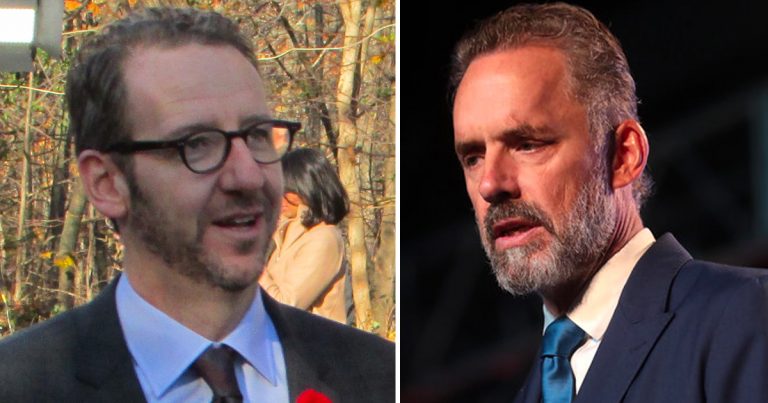
Gerald Butts threatens to sue Jordan Peterson, Peterson says bring it

After trading barbs on Twitter for three days, prominent psychologist and author Dr. Jordan B. Peterson has told Trudeau crony Gerald Butts to go ahead and try to sue him for defamation. 

“I gave Dr. Peterson three chances and a week to clean up his own room,” said Butts in a tweet on Wednesday. “He declined, so he’ll be hearing from my legal counsel shortly.” 

Butts, who was Prime Minister Justin Trudeau’s principal secretary before resigning during the SNC-Lavalin scandal in 2019, said that all proceeds after legal fees are paid will be donated to women’s domestic violence shelters in Ottawa. 

Peterson said that he is more than ready for Butts’s lawsuit. 

“My defence is firmly in place, legal and financial, so we’ll both get a chance to air our dirty laundry,” replied Peterson. “And I wouldn’t count on having too much to donate to your charitable cause when the smoke clears.”

Butts and Peterson engaged in a battle of threats on Twitter on Sunday after the former political staffer made unsubstantiated claims about the Conservative Party of Canada (CPC). 

“When this week is seen from a bit of distance, the story will be that the MAGA wing of the Conservative movement in Canada — funded largely from abroad — staged a hostile takeover,” said Butts. 

MAGA – “Make America Great Again”  – refers to the campaign slogan of former US president Donald J. Trump.

Butts has been a vocal critic of the Freedom Convoy since before it arrived in Ottawa, alleging it has connections to far-right groups. 

Butts failed to provide any evidence to support his allegation that the CPC was being funded from abroad and did not prove the party has a “MAGA wing.” Contrary to his remarks about former Conservative leader Erin O’Toole being voted out, Conservative MP Garnett Genuis said he was removed for non-ideological reasons and that it was an attempt to unite a divided party. 

Peterson, who has supported the Freedom Convoy, skewered Butts for the comment. 

“You are a stunningly corrupt and incendiary fool @gmbutts and the story will be the cowardice of your leader @JustinTrudeau and the lies of your damnable lying calumnous cronies,” said Peterson. 

Butts responded by saying that Peterson should take down the tweet. 

“I am going to be nice and give the good professor an opportunity to rethink this tweet,” he said. “That opportunity is time limited.”

True North is watching this developing story.

Poll shows trust in media, government at all-time low

The 2022 Proof Strategies CanTrustIndex has arrived, and it’s not looking good for the government or the legacy media. 

Trust in traditional institutions has declined steadily over the course of the COVID-19 pandemic, the poll found. 

The index surveyed over 1,500 Canadians from Jan. 4 to Jan. 14. 

According to the survey, governments saw a 10% drop in trust over the course of 2021-2022. Currently, only 22% of Canadians saw governments of all levels as trustworthy – down from 32% last year.

The results come at a time when more and more people are expressing dissatisfaction with governments’ response to the pandemic and are increasingly calling for an end to restrictions

Low trust impacted on all levels of government, with only 33% of Canadians seeing Prime Minister Justin Trudeau as trustworthy. The premiers scored 32% on the index, while community mayors achieved 38% trust levels. 

Meanwhile, traditional media continued to plummet as Canadians tuned out of legacy news sources. In 2022, only 35% of Canadians said they trusted traditional media, compared to 38% last year. 

When it comes to trusting certain professions, only 44% of people put faith in journalists to provide reliable information, while only half that number – 22% – trusted politicians. Medical doctors and scientists earned the highest trust levels, reporting 78% and 75% trustworthiness respectively. 

When combined, trust in non-governmental organizations (NGOs), business, media and governments continued a five-year decline, currently sitting at 34% in 2022. 

Only a single media outlet – La Presse – scored higher than 50%, with 54% of Canadians expressing trust in the organization. Meanwhile, CTV, CBC, TVA and the Globe & Mail all scored below 50%. 

In 2022, Canadians also reported a striking decline of 13% when it came to how free they felt their country was. In 2020, 73% of Canadians said the country was performing well with regard to the core value of freedom, but in 2022 that number had shrunk to 60%. 

Similarly, fewer people thought democracy was being upheld in Canada. In 2020, 65% of Canadians were satisfied with its democratic values while this year only 54% of respondents reported the same belief. 

MP blasts Liberals for treating unvaxxed soldiers worse than serial killer/rapist

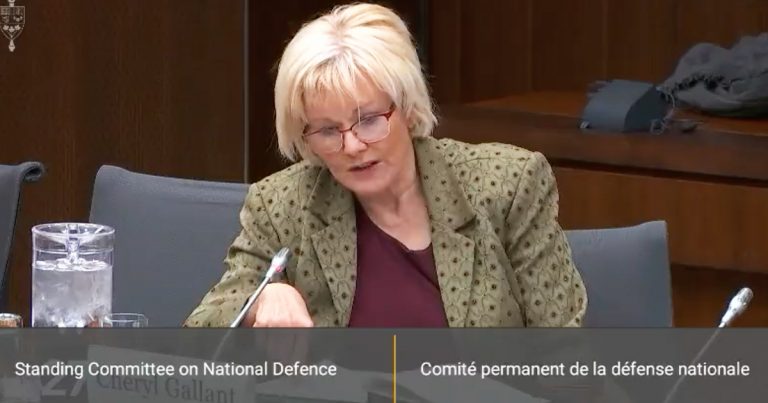
Conservative Party of Canada (CPC) MP Cheryl Gallant grilled Liberal defence minister Anita Anand over the military’s disgraceful treatment of Canadian Armed Forces (CAF) members who choose to not receive their COVID-19 shots. 

During a meeting of the Commons national defence committee on Wednesday, Gallant accused the Trudeau government of going harder on unvaccinated soldiers than on convicted serial killer and rapist former CAF colonel and Russell Williams.

“Morale is at an all time low with Canadian Forces short thousands of members, yet even those who’ve had the first COVID inoculation suffered serious adverse reactions and had cardiologists recommend foregoing subsequent injections are sent packing without earned pensions and benefits,” said Gallant. 

“Even Russell Williams was afforded his pension, so why are soldiers who’ve served honourably for decades being treated worse than a convicted serial rapist and murderer when it comes to refusing a new vaccine?” 

Williams received two life sentences in 2010 related to the sexual assaults and murders of Jessica Lloyd and Marie Comeau. Williams was also sentenced for other sexual assaults, forcible confinement and breaking and entering. Despite his grave crimes, Williams was allowed to keep his military pension worth $60,000 a year

Anand replied to Gallant’s question by reiterating the Trudeau government’s uncompromising belief in vaccines and its reliance on the advice of public health experts. 

“The Canadian Armed Forces and the Canadian government believe in the importance of vaccines as they are recommended by our public health experts. To date 98% of the Canadian Armed Forces have been vaccinated,” said Anand. 

As exclusively reported by True North, unvaccinated CAF members faced an “unsuitable for further service” discharge from the military which carries a number of career consequences

“As for those who suggest this is a punitive approach, the Canadian Armed Forces is an organization predicated on teamwork and keeping Canadians safe,” a Department of National Defence spokesperson told True North in December. 

“Members of the Canadian Armed Forces have a duty to maintain their operational readiness and preserve their ability to serve Canadians at home and support our Allies and partners abroad.”

During the committee meeting, Gallant brought up a May 2000 ruling by a military judge to uphold the right of a soldier to decline a mandated Anthrax vaccine.

“It was wrong to force military personnel with the injection of new drugs on soldiers back then according to the ruling, so what has changed since then?” asked Gallant. 

“I will reiterate that as regards to the current pandemic our government and the Canadian Armed Forces are committed to vaccines against COVID-19 which have been proven to reduce the severity of the virus,” Anand replied.