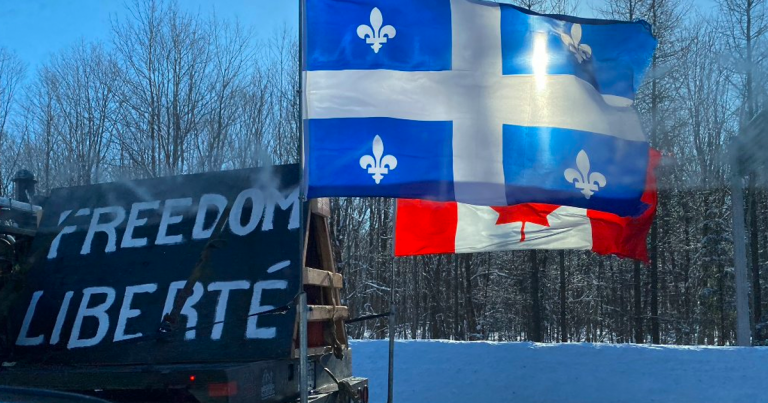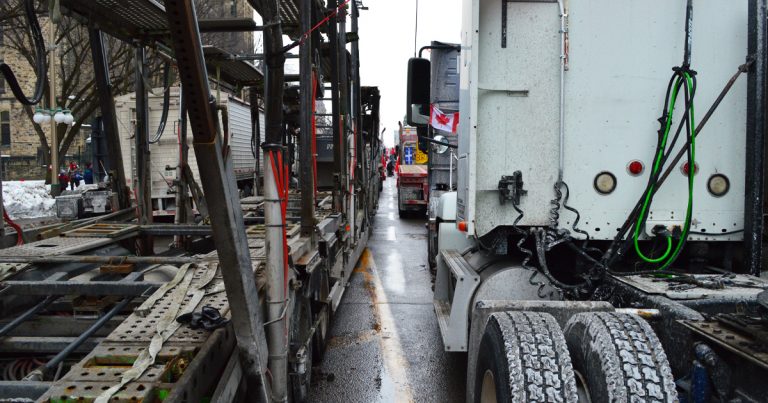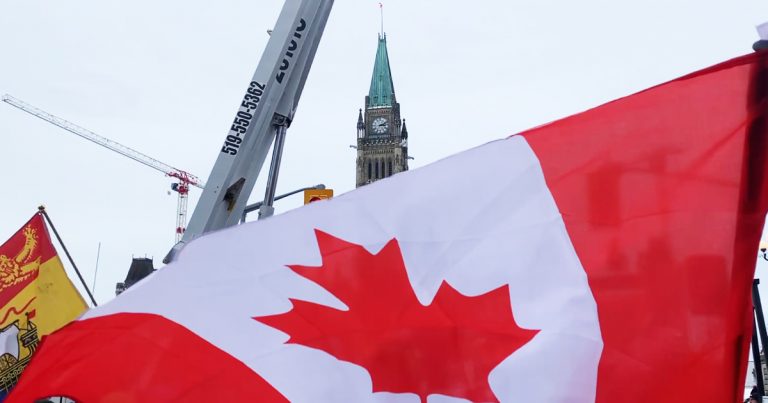
Recap of Day 18 of the Truckers for Freedom Convoy

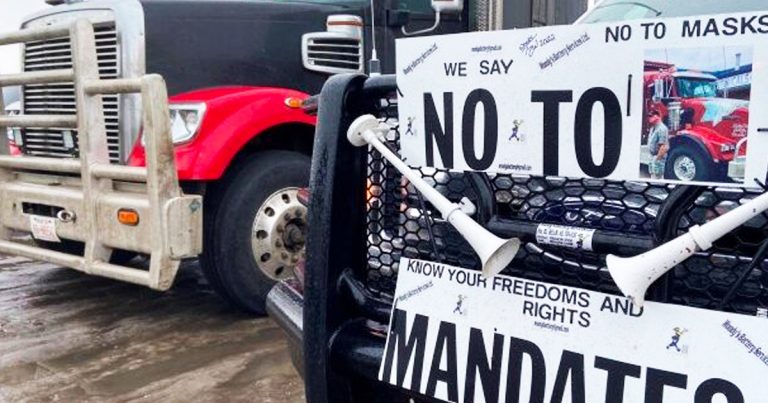
On Day 18 of the Truckers for Freedom Convoy, another Liberal MP broke rank with Prime Minister Justin Trudeau to criticize the government’s pandemic response, Ontario refused to commit to an end to vaccine passports and mask mandates and truckers in Ottawa, Windsor and Coutts stayed put.

One day after Quebec MP Joel Lightbound spoke out against his government’s handling of the COVID-19 pandemic, Liberal MP Yves Robillard also stepped forward to raise questions about Prime Minister Justin Trudeau’s response to the pandemic. 

“He (Lightbound) said exactly what a lot of us think,” said Robillard in an interview with the Hill Times on Wednesday. “I agree with everything that Lightbound said.”

In Question Period today, Conservative interim leader Candice Bergen took advantage of the growing dissent within the Liberal party, pressing Trudeau about why, rather than unite Canadians, he continues to “stigmatize, divide and wedge.”

As Alberta enjoyed its first day after the lifting of the vaccine passports, governments in Ontario and British Columbia doubled down. 

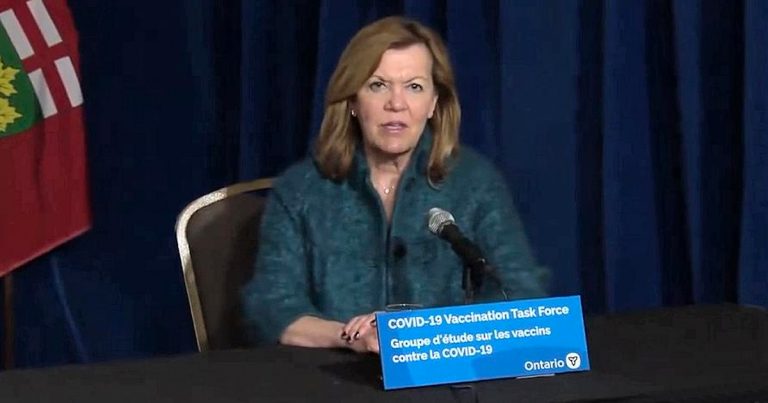
Ontario health minister Christine Elliot said during a press conference today that the Doug Ford government had no plans to lift vaccine passports and mask mandates and would instead stick to a standard, three-phase reopening plan involving capacity limits.

While other provinces were lifting mandates, B.C.’s provincial health officer Bonnie Henry announced that she would be adding to them. Henry said today that the province’s vaccine mandate for healthcare workers would be extended to include dentists, chiropractors and other health practitioners regulated by B.C.’s healthcare colleges.

“It is the vaccine mandate in health care that has made a huge difference in our ability to manage through this wave,” she said Wednesday. “This is going to be a serious respiratory illness that’s going to be with us at least for another year.”

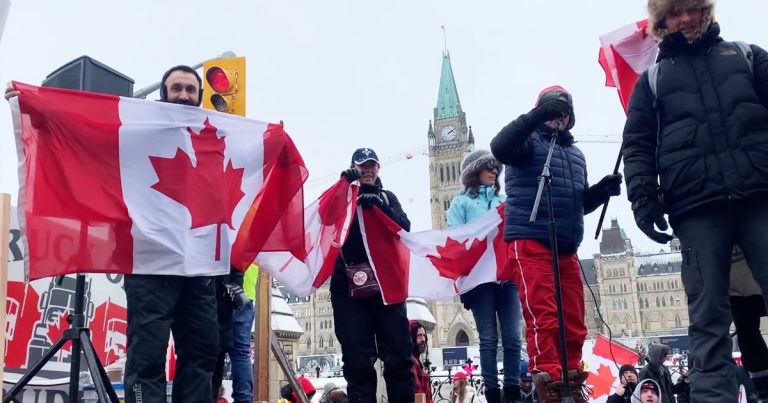
Back in Ottawa, though, protesters continued to show high spirits. Speeches continued, flags were everywhere and plenty of gas cans could be spied among the vehicles – despite the Ottawa police’s confiscation efforts.

The truckers continued to offer plenty of free food to anyone who came by. As True North’s Elie Cantin-Nantel pointed out, those were hardly the actions of terrorists and insurrectionists – as many legacy journalists and left-wing politicians keep labelling the peaceful protesters.

Meanwhile at the Detroit-Windsor border crossing  – the busiest in North America – blockades continued as truckers pushed for an end to vaccine mandates and the ongoing erosion of liberties under COVID.

Back in Alberta, the truckers who continued to blockade the Coutts, Alberta border crossing were joined by another protest outside of Milk River, 15 minutes away. 

Here, RCMP threatens the blockade with imminent enforcement action.

The Givesendgo in support of the truckers at the time this article was published had reached USD $8,038,866.
Why did the legacy media smear the Freedom Convoy? (Ft. Jonathan Kay)

The legacy media abandoned all journalistic ethics when it came to covering the Freedom Convoy. There was no honest reporting – just bad faith smears, politically-motivated character assassinations and overly hyperbolic accusations of insurrections and treason. 

Why did this happen?

On today’s episode of The Candice Malcolm Show, Candice is joined by author and journalist Jonathan Kay. Kay is no conservative, he has progressive sensibilities and even worked with Justin Trudeau to help launch his career as Prime Minister. 

But Kay is a contrarian who is incredibly critical of the legacy media and the insidious cancel culture-driven ‘woke’ left. They discuss the truckers, the dishonest media, vaccine mandates and lockdowns, Justin Trudeau and the way he’s changed since becoming Prime Minister, and how to reform the political left.

SUBSCRIBE TO THE CANDICE MALCOLM SHOW

Alberta launches complaint against CBC over anarchist producer

The Alberta government’s Canadian Energy Centre is calling on Canadians to complain to CBC Ombudsman Jack Nagler over the federal broadcaster’s decision to partner with an anarchist activist to produce a documentary on the Coastal GasLink pipeline. 

As exclusively reported by True North in January, the CBC admitted to soliciting the work of self-admitted anarchist activist and filmmaker Franklin Lopez to produce and edit the upcoming documentary Yintah.

As founder of the company sub.Media, Lopez has produced numerous anti-authority films, some of which encouraged criminal activities such as shoplifting and violence against police. 

sub.Media’s work has also been extensively referred to by extremist Antifa websites that promote the criminal activity of anonymous supporters and provide guides on how to make Molotov cocktails. 

The Canadian Energy Centre – otherwise known as Alberta’s “Energy War Room” – was set up in 2019 by Premier Jason Kenney to combat “domestic and foreign-funded campaigns against Canada’s oil and gas industry.” 

To date, 3,529 people have signed the Centre’s letter to CBC’s ombudsman over Lopez’s involvement with the public broadcaster. The letter accuses the CBC of betraying its own Journalistic Standards and Practices by creating what will likely be a one-sided documentary meant to negatively portray Canadian energy projects. 

“According to CBC’s Journalistic Standards and Practices, coverage of civil disturbances must ‘ensure the audience receives a broader context’ and ‘should avoid inflaming or aiding in any way the various sides in a confrontation’,” the letter reads. 

“But previous films produced by Lopez suggest the final product will likely paint a one-sided picture of this crucial energy project, ignoring the significant support for Coastal GasLink from Indigenous communities, along with its positive contributions.”

The letter goes on to call on CBC to ensure that filmmakers abide by its standards and provide a balanced and accurate account of the Coastal GasLink project which has received support from all of the elected First Nations councils along its route. 

 Canadian Energy Centre Chief Executive Officer Tom Olsen told True North in an emailed statement that they “are asking the CBC – because of its decision to help fund and to air this project – to make sure the filmmakers live up to CBC journalism standards and practices.” 

“The future of Canadian energy and how it impacts Indigenous communities is an important conversation to have, but it needs to ensure both sides are fairly portrayed.” 

“We are asking the CBC Ombudsman and the publicly funded broadcaster to ensure this documentary meets the standards and practices of fairness and balance. Coastal GasLink and LNG Canada are helping Canada’s economic recovery and will provide jobs, government revenues and environmental leadership for decades to come,” Olsen concluded. 

House of Commons votes narrowly to end Public Health surveillance

The House of Commons has narrowly voted to put an end to the Public Health Agency of Canada’s (PHAC) surveillance program that spied on 33 million mobile devices. 

173 MPs voted to end the program while 155 MPs wanted it to continue. 

“There was no consent given by users to allow the telecom companies to collect this data,” said Conservative MP John Brassard. “(Canadians) are becoming increasingly concerned about the expansive overreach by the government.”

The vote placed the program under suspension pending the outcomes of Commons ethics committee hearings. 

“We are simply not at the point of understanding how this data was collected, whether it was properly de-identified, what the risks of re-identification are and why the Privacy Commissioner was not involved in the process,” said Brassard.

Originally shrouded in secrecy, PHAC’s data sweep was exposed after it was revealed that the federal government put out a tender for contractors to monitor pandemic-related data for years to come. 

After the story surfaced in January, PHAC officials admitted that they had monitored the cell tower locations of millions of Canadians’ devices but claimed that the data was anonymized and stripped of all identifiable information. 

As exclusively reported by True North, experts doubt the government’s assurances. According to Ontario’s former privacy commissioner and Executive Director of Global Privacy and Security by Design Ann Cavoukian, Canadians should have “zero trust” that appropriate measures were taken to protect privacy. 

“I don’t trust any of this. Zero trust, that’s where we have to start and we have to have some privacy commissioner’s office go in and take a look at this under the hood. Audit what they’re doing,” said Cavoukian. 

After the ensuing public outrage, Canada’s privacy commissioner launched an audit into the PHAC surveillance. 

“We were not asked for advice as to whether the means taken by or on behalf of the government provided adequate safeguards against re-identification,” said Privacy Commissioner of Canada spokesperson Tobi Cohen. “The government relied on other experts to that end, which is their prerogative.” 

“Now that we have received complaints alleging violations of privacy, we will turn our attention to the means chosen to de-identify the data mobility information relied upon by the government for public health purposes.”

Ontario health minister says no plans to drop vax passports or masks 

Despite announcements from Alberta, Saskatchewan and PEI, Ontario health minister Christine Elliott has said the Ford government does not plan on ending its vaccine passport system or mask mandate any time soon. 

“We have no plans currently to drop the passport vaccination situation or masking,” said Elliott at a press conference on Wednesday. “We believe that masking is going to be important for some time to come.” 

Elliott said the Ontario government takes its advice from Ontario chief medical officer of health Kieran Moore and other medical experts. She added that Ontario has committed to “a very cautious, phased, prudent approach to opening up.” 

Ontario had announced in January that it would be lifting various COVID-19 restrictions over the following two months but made no mention of when vaccine passports or mask mandates would end. 

“The evidence tells us that the measures we put in place to blunt transmission of Omicron are working,” said Ontario Premier Doug Ford. “We can be confident that the worst is behind us and that we are now in a position to cautiously and gradually ease public health measures.” 

Ford said Ontario will take a phased approach to ending COVID-19 restrictions, with 21 days between each step. 

The first phase, which began on Jan. 31, consisted of increasing social gathering limits to 10 people indoors and 25 people outdoors; requiring places such as bars, restaurants and gyms to operate at 50% capacity; and mandating sport and concert venues operate at 500 people. 

The second phase, set to begin on Feb. 21, will see increased social gathering limits of 25 people indoors and 100 people outdoors; capacity limits ended in places such as bars, restaurants and gyms; and sport and concert venues permitted to operate at 50% capacity. 

The third phase, starting on March 14, will entail social gathering limits of 50 people indoors with no limits for outdoors and capacity limits lifted in any remaining indoor public settings. 

Ontario also announced on Wednesday that it had expanded access to free rapid test kits to people for at-home use. 

“As we continue to carefully ease public health measures, rapid tests are providing another layer of protection and offer the public an additional tool to confidently do the things they love, like visiting family or dining at their favourite local restaurant,” said Elliott in the press release. 

The announcement said Ontario will be distributing five million rapid tests each week for eight weeks through pharmacies and grocery stores across the province and 500,000 each week through community partners in vulnerable communities. 

Another Liberal MP speaks out against Trudeau’s pandemic response 

The day after Quebec Liberal MP Joel Lightbound broke rank with his own government over its handling of COVID-19, Liberal MP Yves Robillard is also raising questions about Prime Minister Justin Trudeau’s response to the pandemic. 

“He [Lightbound] said exactly what a lot of us think,” said Robillard in an interview with the Hill Times on Wednesday. “I agree with everything that Lightbound said.”

Robillard said that he spoke with Lightbound and expressed his support for him. He added that they would work together on this issue going forward. 

COVID-19 restrictions, said Robillard, have affected his own mental health as well as that of many Canadians. He said that he is even planning on seeing a doctor. 

Robillard said he is not worried about being kicked out of the Liberal caucus, claiming there are more Liberal MPs “who’ve just had enough” and who “are not going to pass the rest of our mandate like that.”

Robillard was censured in December for defying the party’s non-essential travel advisory, according to Blacklock’s Reporter. He was stripped of committee assignments after contravening party orders by travelling outside of Canada. 

Chief Government Whip Steven MacKinnon said that he was “profoundly disappointed” his colleague left Canada, but Robillard told The Hill Times that he left the country to visit family in Costa Rica because at that time, international travel was discouraged but not banned.

Lightbound spoke out against the Canadian government’s COVID-19 policies on Tuesday, including how Trudeau had delegitimized and dismissed the Freedom Convoy.

“I have enough respect for my fellow Canadians not to engage in these easy, absurd labels,” Lightbound said, referring to how the Trudeau government has painted the entire convoy movement as violent and racist.

Lightbound said that he believes his government has divided Canadians in recent months, particularly based on vaccination status. 

“I can’t help but notice with regret that both the tone and policies of my government changed drastically on the eve and during the last election campaign,” he said. 

He criticized provincial pandemic responses, citing the impacts of lockdowns on Canadians’ mental health and economic problems. 

“Not everyone can still earn money using their MacBook while at the cottage,” he said. “Some are suffering in silence and feel like they’re not heard.” 

Pierre Poilievre taps Jeremy Liedtke as campaign director

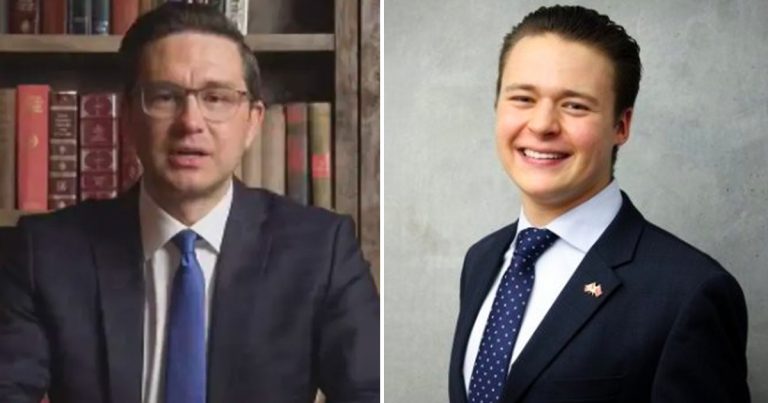
Pierre Poilievre has hired a long-time staffer and former manager of his local campaigns to run his bid for the Conservative leadership, True North has learned.

A source from Poilievre’s campaign said Jeremy Liedtke, who has worked for Poilievre since 2016, will run the leadership campaign.

The source said Poilievre “trusts (Liedtke) like family,” and stressed the campaign has made a point of getting “fresh faces” involved.

According to his LinkedIn profile, Liedtke graduated from the University of Ottawa in 2019 with a degree in communications and political science.

He managed Ontario PC candidate Goldie Ghamari’s successful campaign in Carleton – the riding Poilievre holds federally – in Ontario’s June 2018 election.

Liedtke has held a number of political positions over the years, including a 2017 internship in the Office of the Leader of the Opposition while Andrew Scheer was Conservative leader, and a 2018 election readiness internship for the Conservative Party of Canada.

Poilievre launched his campaign in a video posted on social media Saturday evening, less than a week after former Conservative leader Erin O’Toole was voted out by his caucus.

“Trudeau thinks he’s your boss,” Poileivre said in his announcement. “He’s got it backwards. You are the boss. That’s why I’m running for prime minister. To put you back in charge of your life. Together, we will make Canadians the freest people on earth.”

Poilievre is the first candidate to officially announce a campaign, but author and political commentator Tasha Kheiriddin has also said she is mulling a bid. Other rumoured candidates include Conservative MP Leslyn Lewis, who placed third in the 2020 leadership race, and Brampton mayor Patrick Brown, who led the PC Party of Ontario until stepping down in January 2018.

The convoy is making a difference, even if politicians don’t want to admit it

Since the freedom convoy has rolled into Ottawa, the Conservatives have ousted their leader, Saskatchewan has announced an end to all Covid restrictions, Alberta has ditched its vaccine passport, and Quebec has abandoned its tax on the unvaccinated and started to phase out its restrictions. Whenever any of the politicians behind these moves have been asked, they’ve said the convoy has nothing to do with it, but that honking you hear in the distance begs to differ. What do you think?

In this first ever live edition of The Andrew Lawton Show, Andrew talks about the convoy effect and the political response and takes your comments and questions live.

SUBSCRIBE TO THE ANDREW LAWTON SHOW

CANTIN-NANTEL: Quebecers are rallying behind the freedom convoy

I have been on the ground covering the Freedom Convoy protests in Ottawa for the last two weekends, and I noticed that about half the protesters are Quebec francophones. 

Despite having one of the highest vaccination rates among provinces, Quebec has the strictest COVID-19 restrictions in Canada. Its government response to the latest Omicron wave was also one of the harshest in the Western world

Some of the restrictions the Quebec government has imposed on its people include hospitality and fitness lockdowns, vaccine mandates that limit access to groceries, and a harsh, police-enforced curfew. 

I spoke with protesters from Quebec this weekend and asked them why they decided to make the trip to Ottawa. The people I talked to include an Indigenous woman, a union member and a nurse.

Ottawa police call child services, have not ruled out removing truckers’ children

Ottawa Police Services (OPS) have enlisted child protective services for advice on how to deal with the kids present in the trucker convoy. 

According to estimates, over 100 truckers brought their children along for the demonstrations. Children’s Aid Society was called in to advise officers on how to handle the situation as the city prepares a crackdown on the peaceful protestors.

“Almost 25 per cent of the 418 trucks have children living in them — children who could be at risk during a police operation,” said OPS Deputy Chief Steven Bell. 

Police have not ruled out removing the children from their parents and guardians but claim that they’re not at that stage yet. 

“We’re not at the stage of looking to do any sort of enforcement activity around that,” Bell told reporters. 

“We just think it’s an important factor that complicates and makes this an even more challenging operation.”

On Tuesday, Ottawa Mayor Jim Watson met with cabinet ministers to discuss shipping in an additional 1,800 law enforcement personnel to help break up the freedom convoy. 

According to Bell “all options remain on the table” when it comes to routing the protestors. 

“That’s why we’ve made the large ask we have, so that we can have the presence we need to successfully, expeditiously and quickly end this occupation,” said Bell.

Legal steps have been taken to ban anyone from providing material assistance to the convoy, and police have moved to seize fuel and dismantle structures erected in the downtown core. 

Support for the convoy and their demand to end all COVID-19 restrictions and mandates has grown and now includes long-time Liberal MP Joel Lightbound.

“I have enough respect for my fellow Canadians not to engage in these easy, absurd labels,” Lightbound said, referring to Trudeau’s claims that the convoy were violent and racist.

“I can’t help but notice with regret that both the tone and policies of my government changed drastically on the eve and during the last election campaign.”

A recent poll found that 44% of vaccinated Canadians sympathized with the trucker convoy’s frustrations.

The Freedom Convoy in Ottawa entered its 18th day on Wednesday.