Quebec bans unvaccinated from buying groceries at Walmart, Costco

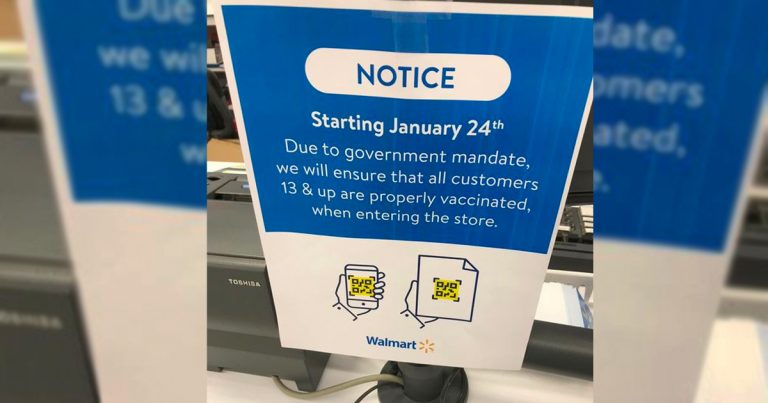
Unvaccinated Quebecers over 12 years old are now banned from buying groceries at big box stores including Walmart and Costco, while people wishing to access pharmacies inside those outlets will require a store escort.

This comes as Quebec’s new vaccine requirement for retail stores over 1500 square meters took effect today. 

While the new mandate explicitly excluded grocery stores and pharmacies, the Quebec government said they did not consider groceries to be Walmart and Costco’s “principal activity.” 

The box-store ban comes despite statistics showing that Walmart and Costco are among the top three places where Canadians get their groceries. 

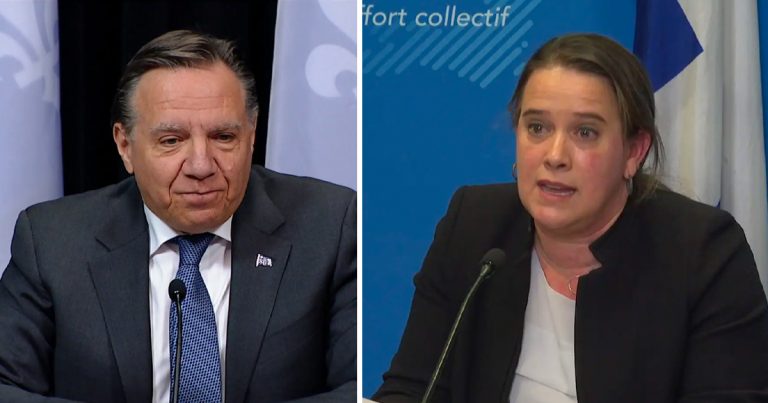
Quebec’s health minister Christian Dubé is standing by the measure, claiming that the goal is to protect “both the vaccinated and the non-vaccinated.”

An exemption was added for pharmacies located inside big box stores after pharmacy leaders raised concerns in a letter to the government.

Unvaccinated people who wish to access those pharmacies must be accompanied by a store employee, who will ensure they make no other purchases.

Unvaccinated Quebecers are now subject to the harshest government restrictions in Canada, and some of the strictest in the world. Quebec also requires vaccine passports at government-run liquor and cannabis stores, and a “significant” health tax is on the way. The government also announced that Quebecers would require a third jab for their vaccine passports to remain valid. 

At one point, the Quebec government even considered banning the unvaccinated from regular grocery stores and pharmacies that offer delivery, but it appears they have abandoned the idea.

While some Quebecers interviewed by the mainstream media appeared supportive of Legault’s new policy, others took to Twitter to express their outrage.

Cinema CEO and TV Personality Vinenzzo Guzzo condemned the policy, saying that those who have chosen not to be vaccinated will be subject to humiliation.

Conservative Party of Quebec leader Eric Duhaime called on vaccinated Quebecers to not abandon those who are unvaccinated, and to unite against a government that’s becoming increasingly authoritarian.

A statement on Costco’s website states that as per their Code of Ethics, they are required to comply with the law wherever they operate. 

However, that hasn’t stopped Canadians from calling for a boycott of the chain, with some even cutting up their membership cards. 

While Quebec is the first province to restrict grocery shopping for the unvaccinated, it was not the first to propose the idea.

New Brunswick’s COVID-19 winter plan initially incentivized grocery stores to require proof of vaccination. However, the government backtracked after mass outrage.

When Quebec’s government first announced its vaccine passport system in July 2021, it stated that the passports would not apply to public or essential services. 

It now appears this is no longer the case.
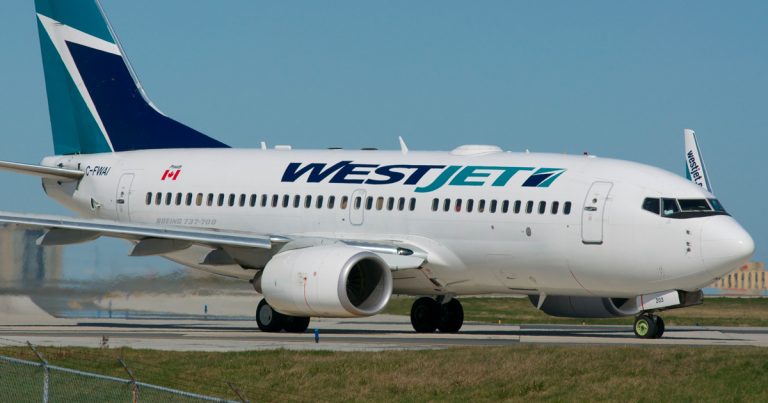
Safety Board tight-lipped about two pilots’ in-flight health emergencies

The Transportation Safety Board (TSB) is citing privacy concerns and regulations after refusing to provide details concerning two WestJet pilots, one who collapsed in-flight and another who ended up hospitalized.

The two incidents occurred on separate flights.

On Dec. 6, 2021, a pilot flying from Calgary to Atlanta on WestJet flight 1590 had a health emergency and collapsed as passengers with medical training were in attendance. The flight was forced to turn around with a replacement pilot over southeastern Alberta and land at the Calgary International Airport where EMS crews were present. 

An Air Traffic Control (ATC) recording obtained by True North reveals that a query was made by the flight to “confirm that EMS is standing by” and that their “patient just got worse.” A defibrillator was also mentioned in local reports.

“WestJet 1590 medevac just confirmed that tower paramedics are all waiting at the gate. You should be good to go,” Calgary ATC responded. 

Upon landing, although EMS crews made contact with the flight around 1:25 p.m., paramedics did not see the patient and summarily left the scene. 

Several weeks later on Dec. 27, 2021 another pilot became incapacitated on WestJet flight 656 travelling from Calgary to Toronto and was forced to land in Winnipeg. According to ATC records, the flight’s first officer suddenly became ill and could no longer perform normal flight duties, needing to be replaced by another captain on board. 

Recordings also indicate that ATC inquired about the age and gender of the pilot but was told by the flight deck that they would “get back to (them).” Upon landing the first officer was seen by EMS and taken to a local hospital. 

WestJet has refused to reveal the causes behind both incapacitations as well as the current conditions of either pilot. True North reached out to WestJet for further comment but did not receive a response by the deadline. 

Upon contacting the TSB, True North was told that the matter was currently being investigated. 

“In both cases the events were classified as class 5 occurrences in accordance with the TSB Policy on Occurrence classification. A class 5 occurrence investigation has little likelihood of identifying new safety lessons that will advance transportation safety. The investigation is limited to data gathering and the data are recorded for statistical reporting and future analysis,” said TSB communications team lead Alexandre Fournier. 

“The TSB does not comment or provide protected information or information of confidential nature.”

According to Air Passenger Rights president Dr. Gábor Lukács, the two cases do not strike him as unusual. Although not a safety expert, Lukács is a longtime advocate for airline travelers and a critic of unfair practices in the industry. 

“In the WJ 1590 case, it sounds like the crew member may have had some cardiac event (I infer this from the reference to the defibrillator),” Lukács told True North in an emailed statement. 

“In the WS 656 case, it is not clear what the issue was, and the only thing that made me pause was that the gender and age of the pilot is not stated in spite of the request. I am left wondering why. If medics on the ground need that information, then it should be provided – my understanding is that immediate health issues of this nature override privacy. While there may be a completely benign explanation, it does leave one wondering: were they hiding anything?”

Lukács noted that pilot health issues are generally covered by privacy as long as it doesn’t impact their ability to fly in the future or if there are no drugs or alcohol involved. 

“On its face, I do not see any reason why it should be classified differently than class 5 – unless there are grounds to suspect drugs/alcohol involved,” said Lukács. 

In Canada, the Civil Aviation Directorate regulates the safety of all flights including reviewing pilots’ physical and mental fitness and setting flight and duty times. 

According to federal orders, all pilots flying Canadian airlines are required to be fully vaccinated against COVID-19. 

The elites belittle the Truckers For Freedom Convoy and Freedom Rallies

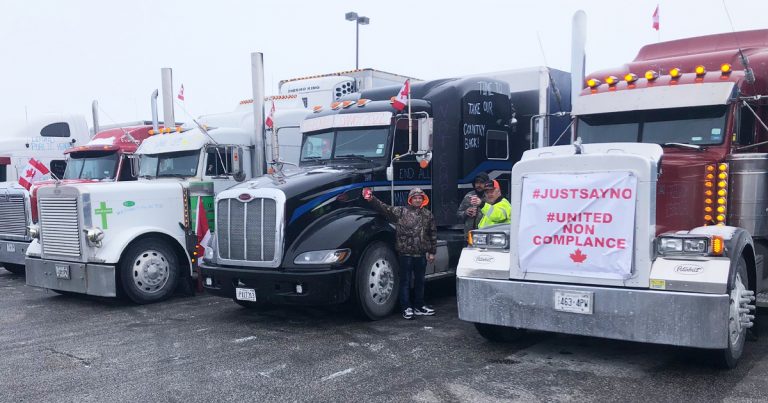
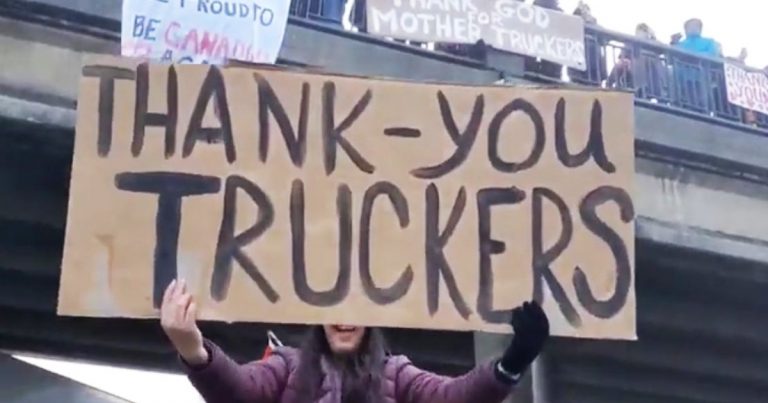
Freedom rallies and the Truckers for Freedom Convoy both took place over the weekend, and saw tens of thousands of Canadians voicing their opposition to vaccine mandates, forced vaccines and other heavy-handed public health restrictions.

But instead of listening to Canadians’ concerns, the elites in the legacy media and our politicians are belittling and demonizing these brave Canadians.

True North’s Candice Malcolm says Canadians have had enough and are standing up to tyrannical government restrictions.

SUBSCRIBE TO THE CANDICE MALCOLM SHOW

Fundraiser for Canadian truckers’ Freedom Convoy exceeds $3.3 million

Crowdfunding for the Freedom Convoy 2022 truckers’ protest has already sped past the $3 million mark, with no sign of slowing down.

Tamara Lich of Medicine Hat, Alberta launched the protest’s GoFundMe on Jan. 14. Fleets of trucks departed from multiple points across the country on Sunday and are expected to converge on Ottawa within a week.

“It’s our duty as Canadians to put an end to these mandates,” Lich wrote on the page. “It is imperative that this happens because if we don’t, our country will no longer be the country we have come to love.” 

Lich said that participants with the Freedom Convoy are “doing this for our future generations and to regain our lives back.” The page said donations would help with covering the costs of drivers’ fuel, food and shelter. 

“It’s a small price to pay for our freedoms,” she said. “We thank you all for your donations and know that you are helping reshape this once beautiful country back to the way it was.”

Addressing concerns raised by opponents of the convoy about the nature of its activities, GoFundMe said in a statement to CTV News on Sunday that funds will be held until the organizer can prove how they will be dispersed. 

“We require that fundraisers be transparent about the flow of funds and have a clear plan for how those funds will be spent,” said GoFundMe. “In this case, we are in touch with the organizer to verify this information.” 

The Canadian Trucking Alliance (CTA) also condemned the convoy in a statement on Saturday.

“CTA believes such actions – especially those that interfere with public safety – are not how disagreements with government policies should be expressed,” said the organization in a press release. “What is not acceptable is disrupting the motoring public on highways and commerce at the border.”

Truck drivers from across Canada have organized Freedom Convoy 2022 to demand all vaccine mandates end. Their protest comes just over a week after the Canadian government enacted a mandatory vaccine policy for cross-border truckers. 

An email obtained by True North showed that convoy organizers would begin a “slow roll” from multiple border points on Sunday and head towards Ottawa.

Organizers said they wanted the government to know that mandatory vaccines “will not be tolerated.” They claim that similar mandates in health care and aviation have been disruptive and would lead to further repercussions. 

The vaccine mandate for truckers took effect on Jan. 15. It removed the existing exemptions for Canadian truckers from testing and quarantines, requiring they be fully vaccinated. 

The CTA estimates as many as 32,000 Canadian and American cross-border truck drivers may be taken off the roads as a result of the mandate – approximately 20% of the 160,000 truckers total. 

Canadian teacher’s op-ed says history will show “we betrayed our children”

Canadian teacher Stacey Lance has written a damning op-ed in Substack detailing how governments have handled COVID-19 in schools and how it has affected students.

The article appeared in Common Sense with Bari Weiss on Thursday. 

Lance writes that she has worked as a teacher in the Canadian public school system for the past 15 years, “mostly at the high school level.” She adds that since the beginning of the COVID-19 pandemic, and when schools moved online, it was “evident to me that the loss of human connection would be detrimental to our students’ development.”

“Overlooked has been the deep shame young people feel: Our students were taught to think of their schools as hubs for infection and themselves as vectors of disease,” she says. “This has fundamentally altered their understanding of themselves.”

When schools returned to in-person learning in September, Lance says she was optimistic despite the move online when COVID-19 case counts increased. She says that schools have not been normal since.

Lance says that when she was teaching in-person, her school felt “like there was no longer life in the building.” Schools, she says, have become “cold and soulless” because students have been unable to gather in the halls or talk between classes. Social events have been cancelled. 

In her classrooms, she says, learning loss has become noticeable. She adds that her students cannot concentrate and are not doing the work she assigns them. 

Lance goes on to say that around this time of year, her school starts planning for prom, which is held in June. She says that whereas students used to talk nonstop about prom in previous years, they are not talking about it as much anymore because they assume it will be cancelled again. 

Lance’s article says it is the same deal with universities. She writes that her students have told her that if universities are going to be the same as schools, they do not see the point in going. 

Lance recognizes that people are resilient but that they break. She says her students are breaking, and some of them have broken. 

“When we look at the COVID-19 pandemic through the lens of history, I believe it will be clear that we betrayed our children,” she writes. “It’s time for a return to normal life and put an end to the bureaucratic policies that aren’t making society safer, but are sacrificing our children’s mental, emotional and physical health.”

Schools are safe to operate without strict COVID-19 protocols, according to the Ontario Science Table and researchers from SickKids Hospital in July. 

The Science Table said in the report that it was safe for most activities to resume in schools in fall 2021 and that mask mandates, social distancing and cohorting should be eliminated. 

“In-person learning is essential for the learning and overall well-being of children and youth,” said the report. “Therefore, barring catastrophic circumstances, schools should remain open for in-person learning.”

Quebec government ignored public health official who opposed reinstating curfew

Reports say that Quebec premier Francois Legault’s government ignored advice from a prominent public health official recommending against bringing back the province’s curfew ahead of New Year’s celebrations. 

Radio Canada and LaPresse are reporting that Montreal’s public health director Dr. Mylène Drouin told the Quebec government that she opposed a second curfew.

According to the reports, Drouin advised there were other measures more effective at reducing viral transmission while avoiding the collateral impacts of curfews that disproportionately affect vulnerable people.

Drouin’s opposition clearly went unheard, as Legault reinstated the harsh police-enforced curfew on Dec. 31, 2021

To this day, Quebec remains the only jurisdiction in North America and one of only a few in the world to have responded to COVID by limiting the hours people could be outside their homes. These curfews came despite many other nations around the world having higher rates of infection.

Drouin is not the only health expert who opposed the return of Quebec’s curfew. A group of 13 university health specialists also co-signed a letter to the government denouncing the measure’s reintroduction and questioning its effectiveness. 

Conservative Party of Quebec leader Eric Duhaime reacted to the news of Drouin’s snubbed advice in a Twitter thread. He said that “the wind is turning” when it comes to Quebec’s COVID-19 narrative.

Duhaime said it is clear that the government is misleading Quebecers. “We knew that it lied when it said that the closing of restaurants and bars was a recommendation of Public Health. We learned yesterday that Montreal Public Health never recommended a curfew.” 

It should be noted that there was a time when Legault himself claimed he opposed the controversial measures. 

A resurfaced clip from Mar. 16 2020 shows the Quebec premier dismissing the idea of a curfew, adding that he didn’t think it was important whether people came home at 7pm or at 10pm. 

The latest curfew was extremely unpopular among Quebecers, who had previously been subject to an even harsher curfew last year. The first one lasted from Jan. 9 to May 28.

Legault eventually announced on Jan. 13 that the latest curfew would end earlier than planned. The announcement came on the same day as a new poll showing a drop in support for Legault’s party.

The Quebec general election is scheduled to take place in Oct. 2022. 

Will Trudeau back down on the vaccine mandate for truckers?

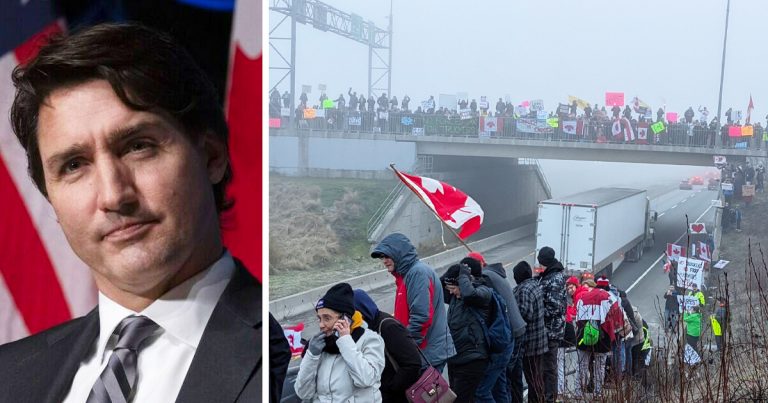
Thousands of truckers are convoying across Canada to protest vaccine mandates, including the Trudeau government’s vaccine mandate for truckers crossing the Canada-US border.

Truckers are often alone when transporting goods, so they shouldn’t be blamed for spreading COVID. They are also an integral part of Canada’s supply chain. Will Justin Trudeau back down on this non-sensical policy?

Anthony Furey discusses in his latest video.

“It’s time we reopen”: Brampton mayor Patrick Brown calls for an end to lockdowns

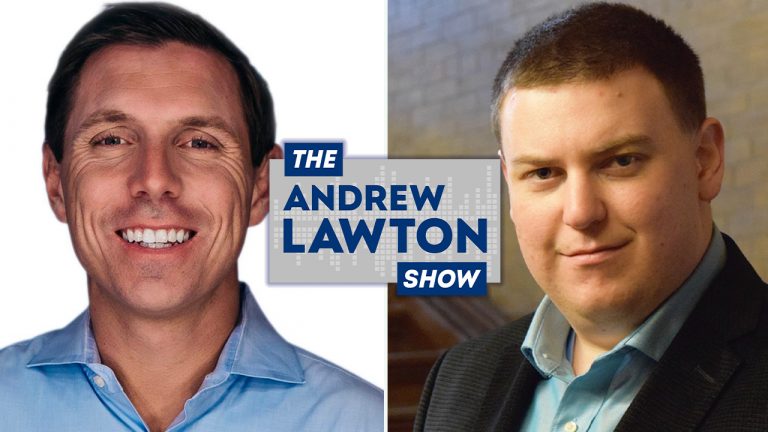
As Ontario yet again extends its roadmap to reopening, Brampton mayor and former PC Party of Ontario leader Patrick Brown says it’s time to reopen now, and for good. Mayor Brown joined The Andrew Lawton Show to discuss the damage caused by lockdowns, and the importance of giving people facts rather than spin when it comes to case and hospitalization counts, which simply don’t support the Omicron variant panic used to justify further restrictions.

Watch the full episode of The Andrew Lawton Show.

Taxpayer watchdog calls for Trudeau to cut taxes to fight inflation

The Canadian Taxpayers Federation (CTF) is telling the Canadian government to follow the lead of other countries that have lowered taxes to combat inflation. 

“Canadians are fueling up at the pumps and then worrying about whether they have enough left over for ground beef at the grocery store,” said CTF federal director Franco Terrazzano in a press release on Wednesday. “Inflation is a key economic issue facing Canadian families and our politicians need to wake up and provide some relief.”

Canada’s inflation rate for December was up 4.8% compared to last year, the highest the country has seen since 1991. 

The federal carbon tax on gasoline has increased twice during the COVID-19 pandemic and is scheduled to go up again in April to 11 cents per litre. Prime Minister Justin Trudeau promised to increase the carbon tax to almost 40 cents per litre of gas by 2030 and implement a second carbon tax through fuel regulations that will add an additional 11 cents per litre. 

Canadian workers making more than $64,900 per year will see their tax bills increase by $396 this year. The Canadian government is set to increase alcohol taxes for the third time during the pandemic on April 1. 

The CTF said that while Canada is raising taxes during the pandemic, other countries have provided relief. For example, South Korea reduced gas taxes for six months while eleven American states cut income or business tax rates. 

Terrazzano said high taxes and rising prices are “making the tough times tougher in Canada.” 

“While other countries are cutting taxes, all we get from Canadian politicians are higher tax bills,” said Terrazzano. “It’s time for Ottawa to provide some tax relief and make life in Canada a little more affordable.”

The current inflation rate has led to gas prices in Canada rising more than 33% compared to last year’s figures. Inflation has contributed to food prices going up by more than 5%. 

Conservative leader Erin O’Toole called on the Canadian government Wednesday to take action on inflation. 

“The cost of living is skyrocketing across Canada,” said O’Toole. “The Trudeau Liberals need to realize the impact this is having on you and your wallet.”

Fewer homes for sale in Canada than at any point on record

New statistics show there are fewer homes for sale in Canada than at any recorded point in history. 

According to the Canadian Real Estate Association (CREA), end-of-month supply of properties reached an all-time low in December. 

Records show that newly listed properties fell by 3.2% from November to December 2021. A drop in listings in the Greater Vancouver Area, Montreal and other regions in Quebec offset much of the new supply produced in Toronto.

“There are currently fewer properties listed for sale in Canada than at any point on record,” said CREA senior economist Shaun Cathcart. 

“So, unfortunately, the housing affordability problem facing the country is likely to get worse before it gets better. Policymakers are starting to say the right things, but now they have to act to change this course we’re on.”

By the end of December, there was only 1.6 months’ worth of inventory across the country. 

Cathcart said that an unprecedented nationwide home building push might be the only thing that will remedy the situation. 

“An aggressive national push to build more homes is what will address the issue, but it will probably have to be a greater amount of building than anything we’ve ever undertaken. A touch over the status quo won’t cut it,” said Cathcart. 

Housing prices have surged across the country with a 17.7% year-over-year gain at the end of 2021. 

Six of Canada’s largest cities have seen housing prices skyrocket, some reporting six-figure increases over the past year. 

The largest spike in the cost to buy a home was in the Greater Toronto Area, which saw 31% growth totalling $286,000. The cost of the average home in Toronto is currently priced at $1.2 million. 

Housing in the Greater Vancouver Area surpassed the cost of Toronto, however, with the average home costing $1.23 million. This represents a $181,600 jump, or 17%, since 2020.

“With the housing supply issues facing the country having only gotten worse to start 2022, take any decline in sales early in the year with a grain of salt because the demand hasn’t gone away,” said CREA chair Cliff Stevenson. “There just won’t be much to buy until a little later in this spring.”