An Ontario pastor may be facing charges for having a socially distanced drive-in church service, and Canadian gun owners are facing further regulations because of an evil rampage by a killer without a gun license and without legal guns.
True North’s Andrew Lawton talks about the criminalization of the law-abiding, and how identity politics has seeped into the coronavirus.
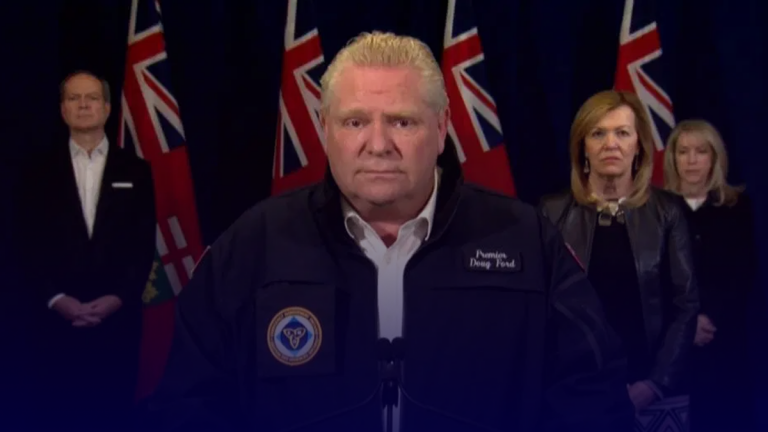
On Monday Premier Doug Ford revealed Ontario’s plans to reopen the province and ease coronavirus restrictions currently in place.
“The framework is about how we’re reopening not when we’re reopening,” said Ford during a press conference.
“Progress doesn’t mean we can quit now and that’s why I won’t set hard dates until we’re ready, because the virus travels at its own speed.”
The plan titled, “A Framework for Reopening our Province” details a three-stage process that culminates in reopening all workplaces within the province.
“The government will reopen Ontario businesses and public spaces gradually,” the government’s plan states.
“Each stage will last for approximately two-to-four-week periods to allow for close monitoring of any impacts or potential resurgence of cases.”
The Premier emphasized that the government will be basing their decisions on the advice of the Chief Medical Officer of Health.
The Chief Medical Officer of Health will use the following criteria in its advice to the government — virus spread and containment, health system capacity, public health system capacity and incidence tracking capacity.
In the first stage “select workplaces that can immediately meet or modify operations to meet public health guidance and occupational health and safety requirements” will be restarted.
The Ontario government also plans on opening “some outdoor spaces like parks” and permit a larger number of people to attend select events. Hospitals will also begin to offer some non-urgent care and other services.
Afterwards, more workplaces are to be opened including retail service and office and retail workplaces. During the second stage, additional outdoor spaces would be opened and “some larger public gatherings” would be allowed.
By the final stage, the province hopes that all workplaces are opened “responsibly” and relaxing public gathering restrictions, although still restricting large events like concerts.
During each stage, protections would remain in place for at-risk populations through public health measures such as physical distancing, hand washing and other actions.
“It is because of the determination and resolve of the people of Ontario that were now able to consider moving into the next phase of our battle against this virus,” said Ontario Health Minister Christine Elliott.
“We have a clear path forward to safely and gradually ease restrictions.”
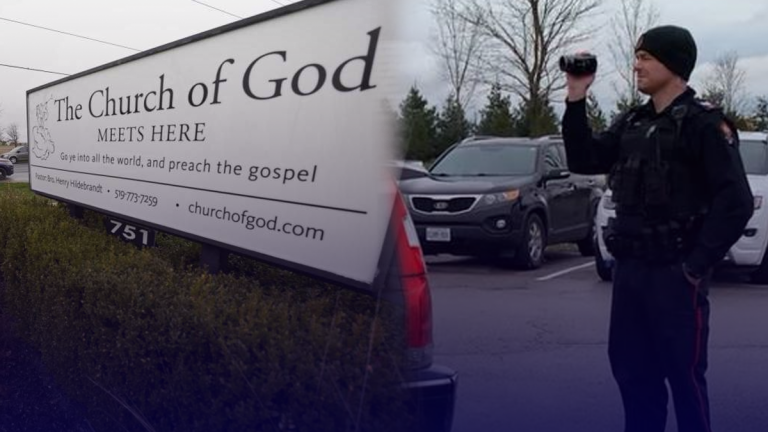
Police may be laying charges against an Ontario pastor whose church held drive-in service on Sunday, for supposedly violating the province’s public health orders.
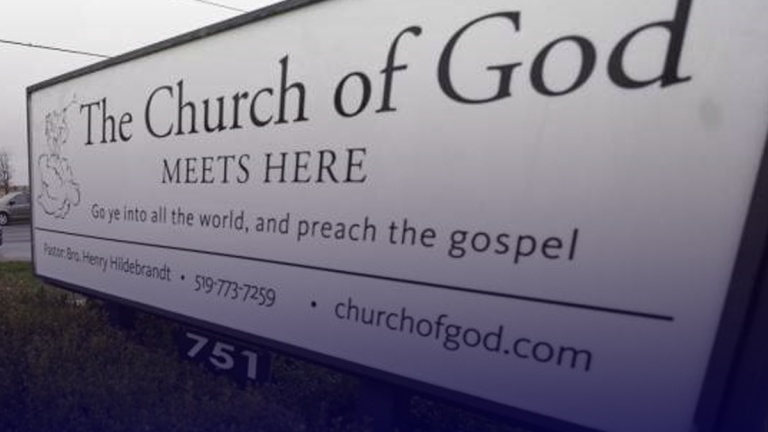
Police were on hand at the church of God in Aylmer, Ont. Sunday, recording congregants who stayed in their cars in the church parking lot while listening to Pastor Henry Hildebrandt on their radios.
“People will be held accountable,” Nick Novacich of the Aylmer Police Service said to CTV.
Police will be reviewing their footage and referring it to the country prosecutor.
Hildebrandt said he was pleased to find a way to preside over a church service while respecting social distancing.
“I am so glad, so glad we can do it like this. I can never be distant from you,” Pastor Henry Hildebrandt told the congregation.
“We’re here this morning in order for you to cast your eyes on me… to come here so we can see one another.”
The attendants sat in their cars and listened to Hildebrandt on their radios while he spoke from a platform in front of the church. His sermon was on the need for Christians to attend church.
Police stood amongst the vehicles and closely watched the attendants. No one was charged or ticketed on Sunday.
Hildebrandt said their drive-in church services follow the law, and are prepared to go to court if police try to shut them down.
“I know that we’re doing what we should be doing,” he said.
“I don’t know what [police] plan is or how far they want to take it. We’re getting legal counsel daily to make sure that we’re doing it right.”
Aylmer police told CBC they received 15 complaints specifically about the Aylmer Church of God’s services, leading them to monitor the church Sunday.
“The community as a whole is kind of up in arms that one group gets to do these services, yet all the other faith-based groups in the town are adhering to other platforms and formats of delivering their service,” said Novacich.
Aylmer police said last week they would press charges on churchgoers under Ontario’s public health orders if the Church of God continued services.
Hildebrandt noted that 300 meters away from the church was a liquor store where people get out of their cars and buy alcohol without surveillance.
“We absolutely do not want to cause unnecessary disturbances in Aylmer. I don’t want to cause trouble. But I saw no way around it,” he said.
“I know we were with God’s blessings this morning. We plan to be here next Sunday, the Lord willing.”
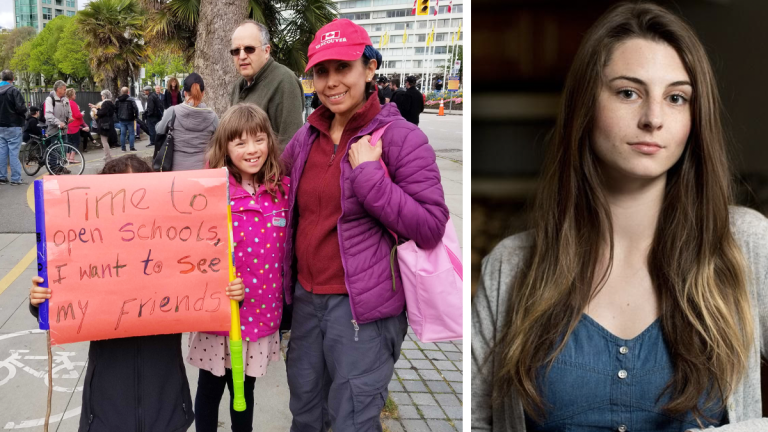
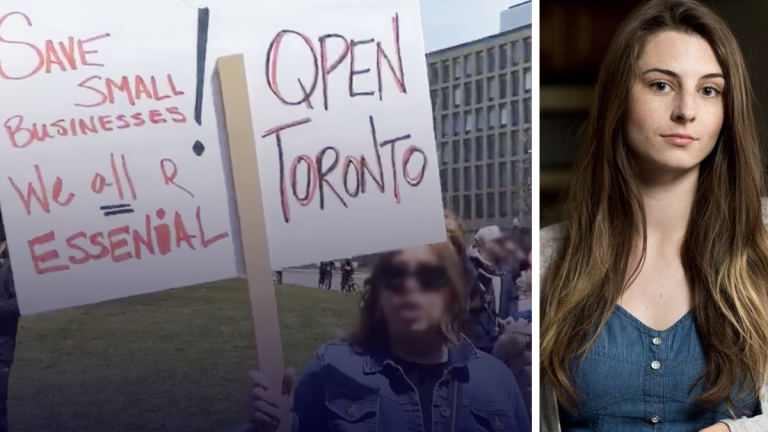
On Sunday afternoon, protesters took to the streets of downtown Vancouver to demand an end to the coronavirus lockdowns.
The crowd of nearly 100 people was met with mixed reactions by onlookers. Individuals surveilling from their balconies would sometimes boo, yell expletives, or scream “stay home!”
One woman heckling from her apartment balcony yelled, “We like staying home!” (That’s nice for her – I’m sure living in a beachside apartment and ordering takeout all the time is lovely – but what about the people who are suffering mental health issues, financial hardship, or domestic abuse?)
One individual who allegedly threw eggs at the marchers and had a knife on his person was arrested by police halfway through the march.
Other onlookers responded positively to the protesters, applauding from their patios, honking their car horns, or saying “thank you” and giving the thumbs-up sign.
Many have written off anti-lockdown protesters as conspiracy kooks: BC health minister Adrian Dix called the protesters “marginal” and said they should be ignored.
While one Vancouver protester was wearing a sweatshirt promoting flat-earth theory, many of the participants were simply individuals concerned about their kids’ educations, the future of local small businesses and the creep of government overreach.
As citizens grow more restless during the shutdowns, the anti-lockdown movement will become harder for politicians to ignore. Fear of contracting COVID-19 is also on the decline: an April 20 Angus Reid study found that “concern about personally contracting the virus has fallen for the first time since early March, dropping from 73 per cent two weeks ago to 61 per cent.”
For now, celebrities, politicians, and citizens alike feel righteous when they mock and swear at the protesters.
But the movement is growing: many of Sunday’s Vancouver protesters were commenting how this rally – the fourth of its kind – had attracted triple the amount of people from the week prior. And on Saturday, 100 people gathered in Toronto for a similar anti-lockdown protest. Ontario Premier Doug Ford denounced the crowd as “reckless,” calling them “a bunch of yahoos.”
One participant in the Vancouver march, who held a sign reading “End Lockdown, Restore Rights,” emphasized the secondary effects of the lockdowns, such as alcoholism, suicide, and domestic abuse stemming from mass unemployment. “We’re a diverse group, everyone has different thoughts, but the one thing that really unites us is economic rights…so many people are suffering.”
“We need to offer hope…where is the plan to reopen British Columbia?”
Individuals opposed to the pandemic lockdowns have been mobilizing at anti-lockdown protests in Vancouver and Toronto.
These protesters are being endlessly denounced and mocked by politicians, celebrities and citizens alike. But do individuals who want to sound the alarm over economic destruction and government overreach deserve such scorn and contempt?
True North’s Lindsay Shepherd analyzes this developing story.
Trudeau had said as recently as April 16 that we were “many weeks away” from even beginning to talk about reopening. Talk about being a downer. Meanwhile, premiers of all political stripes have kept up a can-do attitude about getting things roaring again as soon as it’s safe.
It looks like the feds have only now pivoted to talk of reopening because the provinces are ignoring them and taking the lead. It’s a case of fighting for control and relevance. This is unfortunate. Trudeau needs to back off and fight the urge to make everything revolve around him.
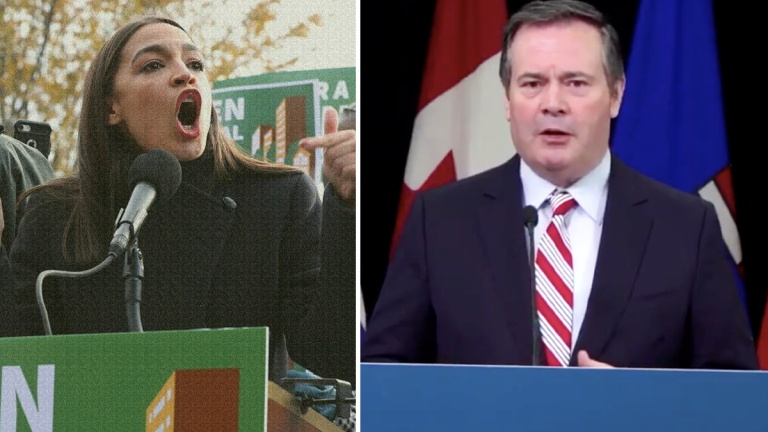
Alberta will not be attempting the “New Green Deal” proposed by far-left American politicians according to Premier Jason Kenney.
“When you talk about the Green New Deal, listen, our focus is on getting people back to work in Alberta, not pie-in-the-sky ideological schemes,” Kenney said.
The statement came at Friday’s press conference after Kenney announced that former MP James Rajotte will become the new Alberta representative to the United States.
Kenney was asked if Rajotte will be discussing the Green New Deal with its supporters in Washington given the rapid downturn of the energy sector.
Kenney responded saying that the middle of an economic crisis is not the time to attempt radical, untested ideas.
“We are actually not trying to amplify but fight back against the political agenda of the green left that has been trying to landlock Alberta energy.”
Kenney added that accepting the Green New Deal would be capitulating to those who have been trying to harm Alberta’s economy for years.
“So we’re not going to try to cooperate with the folks that are trying to shut down Canada’s single-largest subsector.”
The Green New Deal was a radical set of policies promoted by far-left U.S. politicians, particularly New York Congresswoman Alexandra Ocasio-Cortez, with the goal of ending climate change and income inequality simultaneously.
Among the policies proposed in the 2019 Green New Deal package included net-zero greenhouse gas emissions within 10 years and new welfare programs designed to repair “historic oppression.”
One report suggested the idea could cost $93 trillion over ten years and could cost each American up to 106% of their income.
An attempt to open debate on the Green New Deal in the U.S. Senate failed miserably in March 2019, with not a single Senate Democrat willing to vote in favour of the motion.
Kenney says that Rajotte will focus on creating more opportunities for Alberta south of the border, including working towards a North American energy strategy.
New Brunswick has become the first province in Canada to start lifting public health orders and return to normal.
On Friday Premier Blaine Higgs, along with the leaders of opposition parties, announced that New Brunswick will start making its return to normalcy immediately.
“I must say our success to date can largely be attributed to the ability of this group to put partisan politics aside and put New Brunswick first,” he said.
“Everyone in the province is focused on the same goal, whether they work in the departments of health, public safety or other frontline services, or whether they are at home doing their part by physical distancing.”
Saturday marked seven days without any new cases of coronavirus in New Brunswick.
While most public health orders still remain in place in the province, New Brunswick has officially started its return to normal.
Prior to Friday New Brunswickers were required to maintain social distancing with those outside their household. This limit has now been extended to two households.
Golf courses are open, parks and beaches are now open, certain practical postsecondary programs will also be allowed to meet in person and religious services can be held outside as long as attendees follow physical distancing measures.
New Brunswick Chief Medical Officer Dr. Jennifer Russell said the province will monitor the coronavirus situation in the province and will be ready to reintroduce restrictions if necessary.
“We will continue to carefully monitor COVID-19 in the province. This includes testing and tracing,” said Russell.
“New Brunswickers must continue following public health measures. Even as we begin to remove restrictions, you will be required to continue to practise physical distancing and good hygiene.”
The next phase in the transition to normalcy will begin in 2-4 weeks, depending on the success of the first phase.
There’s no shame in hard work. That used to be common wisdom, the ethos of our society and a driving force of our economy. Work hard, play by the rules, and you will be successful in Canada.
But somewhere along the way — from the introduction and expansion of our country’s social welfare program to recent calls for “universal basic income,” which has been actualized through the new $2,000 emergency benefit for all qualifying Canadians — the idea of hard work has become a laughing matter.
Two weeks ago, I used my column to call for the creation of a national work program for young Canadians. Workers would be given a fair wage and the program would be completely voluntary but it could serve to provide students and recent graduates with the opportunity to work for their country.
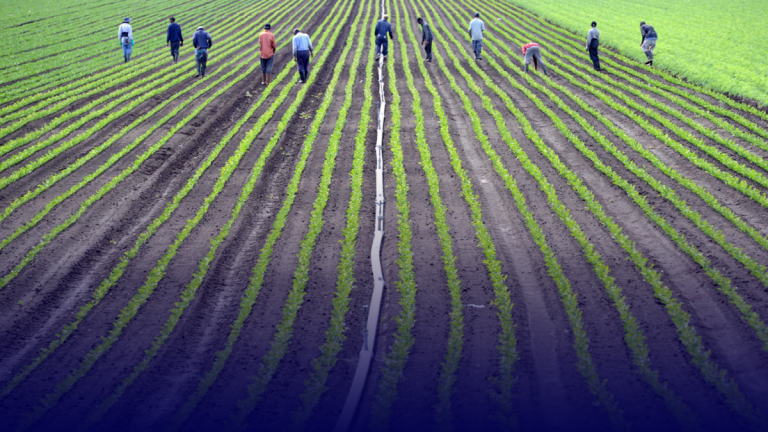
For instance, rather than bringing in Temporary Foreign Workers to fill critical jobs on farms and in food production services, we ought to train young workers to do these jobs — giving them valuable experience and allowing them to stay busy and productive during these uncertain times.
The coronavirus pandemic has caused the closure of borders all over the world and curbed the supply of workers willing to travel to Canada. Of those that do make the trek, Ottawa is spending $50 million to pay for these workers to remain in quarantine for 14 days upon arrival.
Wouldn’t that money be better spent offering training programs to help young Canadians earn valuable life experience?
My article was met with a mixed response, and many claimed that young people today are too fragile and undisciplined to work in the physically demanding roles typically filled by low-wage workers from poor countries.
I not only disagree with this characterization, I find it counterproductive and harmful.
Many Canadians are still raised to be tough as nails, many young people work incredibly challenging and laborious jobs — from oil rigs and fishing boats to logging camps and warehouses. These young workers could certainly handle a summer on the farm.
Even those raised to be soft — taught that masculinity is “toxic” and that the environmental movement should shut down blue collar jobs — would especially benefit from a demanding summer, working shoulder to shoulder with those from different backgrounds.
But instead of creating a work program, the Trudeau government took the opposite approach. This week, the prime minister announced a new $9 billion fund to pay young Canadians to stay at home this summer.
The new Canada Emergency Student Benefit will provide $1,250 to $1,750 per month in free money, given to any student who experiences financial hardship.
Alongside this welfare program, the government will also help create 72,000 volunteer jobs for students who do want to work.
“Could you see yourself doing the volunteer work or one of the jobs the prime minister was talking about?” asked flagship CBC host Rosemary Barton to a student who was a guest on her program following the announcement.
“Honestly, farming sounds quite interesting,” said Keihgan Blackmore, a law student at McGill University.
He was interrupted by Barton, who burst into laughter.
The idea that this young man wants to work on a farm, and is willing to "roll up his sleeves" and work hard is, apparently, HILARIOUS to this CBC journalist. pic.twitter.com/unH4HqveCX
It appeared as if she found the idea that a young law student would be interested in blue collar work to be funny. So much so that she laughed as he attempted to answer her question.
Despite the rudeness of this host, Blackmore continued to explain himself. “I’m not adverse to rolling up the sleeves and getting out there, doing whatever I can to support fellow Canadians but also myself.”
If you’re laughing at a young man wanting to work on a farm, you’re also laughing at the very idea of an honest day’s work.
That’s the real problem. There are too many people in this country who believe there is shame in hard work.