A breakdown of advertising and media expenditures accrued by the federal government shows that Ottawa spent $139 million of tax dollars on Covid-19 campaigns since the beginning of the pandemic.
True North compiled the total costs of media expenditures related to the Covid-19 pandemic from annual reports on Government of Canada advertising activities.
From 2019-2020, the federal government spent $4,494,710 on Covid-19 national advertising. For the 2020-2021 fiscal year that budget ballooned to $72,805,066. The latest Annual Report on Government of Canada Advertising Activities: 2021 to 2022 shows a slight decrease in spending on Covid-19 advertising, down to $62,012,941.
As of this year, Canadians were billed a total of $139,312,717 for Covid-19 related media expenditures.
The Annual Report on Government of Canada Advertising Activities: 2021 to 2022 has a section exclusively dedicated to Covid-19 which breaks down where the funding went.
A majority of the funding was for traditional advertising like television and radio, while the remaining 47% went to digital media. Funding was distributed via one private sector supplier selected by Ottawa known in documents as the “agency of record.”
“The COVID-19 pandemic remained a high priority, with advertising efforts from the previous two fiscal years continuing for a third fiscal year, to inform Canadians about government programs, services and public health measures as the situation evolved,” read the latest report.
“During this fiscal year, a total of $62.01 million was spent for COVID-19 related media placement through the (agency of record), making up 51% of total media expenditures for the fiscal year (similar to the previous fiscal year).”
The Public Health Agency of Canada (PHAC) was the number one federal institution when it came to reporting advertising expenditures. This year PHAC reported an expenditure of $61,779,631 on media. They were followed by Statistics Canada and the Department of Finance.
I just plugged the phrase “Cold War’ into Google. The first thing that comes up is the Wikipedia page on, well, the Cold War — that period between the end of WWII and the fall of the Iron Curtain.
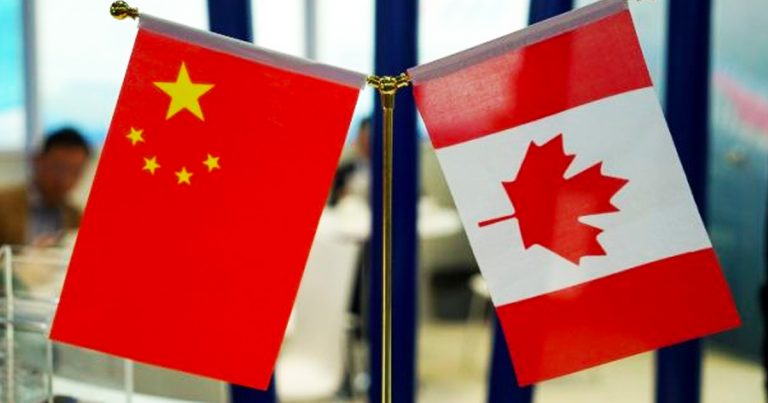
But then I clicked the tab for “News” and it told a very different story. The three top responses had nothing to do with Soviet Russia. They were all about China.
“Why the Chinese balloon crisis could be a defining moment in the new Cold War,” is the first result, a CNN headline.
Then there’s The New York Times: “Chinese Spy Balloon Calls Back to Cold War U-2 Episode”.
The third hit is an opinion column in The Washington Post: “Chinese balloon reminds us of the Soviet Union and U-2 Crisis of 1960”.
You get the point. Everyone is talking about that mysterious Chinese balloon that travelled across North America, only to be shot down by the American military over Atlantic waters followed by protests from Beijing. And everyone talking about it finds it completely fitting to liken it to an early event in a new Cold War.
What’s interesting about all of this is that there was a time not too long ago when it was considered improper to ask whether or not the United States and its allies were entering a Cold War with China. Then there was a period where you couldn’t really state that it was happening, but rather you’d pose the question: Is there a Cold War? Now though, it just seems to be accepted as a given that we are indeed in something of a Cold War, or at least a looming one, with China.
This subtle shift brings to mind the Ernest Hemingway quip: “How did you go bankrupt? Two ways. Gradually, then suddenly.” How did we enter a Cold War with China? Well, first we weren’t in one and then we were.
Looking back over the past five years, all the evidence is there. The trade war during the Trump Administration. The Meng Wanzhou and Two Michaels affair. The exposure of the awful treatment of the Uighur Muslims. The bellicosity towards Hong Kong and Taiwan. News that Apple and other companies are retreating from the mainland to set up shop in other countries.
It’s no longer a polarizing issue either. American politics enjoys a bipartisan consensus that they need to decouple from China as Xi Jinping solidifies his rule over the Chinese Communist Party.
What this means for Canada, most simply put, is that it’s happening and it involves us to some degree and we’re going to have to deal with it whether we like it or not.
For years, Prime Minister Justin Trudeau was teased for his caught-on-camera remark about how he has admiration for China’s basic dictatorship. He’s not going to be caught saying anything like that again.
The Liberals have pivoted on the file, largely because they had no choice. Our intelligence allies told us we’d have to ban Huawei from our 5G grid or risk being shut out of their circle. Trudeau was given an “us or them” ultimatum and he made the only choice he could, to reject Huawei and side with the US, UK, Australia and New Zealand.
The same goes for the federal government’s current commitment to decoupling from China and “friend-shoring” towards more like-minded allies in the Asia-Pacific. It’s inherently good to do it but we’re also doing it because Washington told us to do it.
But this isn’t all about Trudeau. This new Cold War landscape will stick around for awhile and the next PM or two will have to navigate it.
There will no doubt be more international incidents — although hopefully the severity of them will be along the lines of balloons astray than something more volatile like the Cuban missile crisis or a conflict in the South China Sea.
There will also be dozens or hundreds of little maneuvers for future governments to make when it comes to managing the many relationships Canada has with China in terms of trade, research, post-secondary education and more.
The landscape is about to shift in interesting ways. When you Google “Cold War’ a few years from now, the results may look very different than they do today.
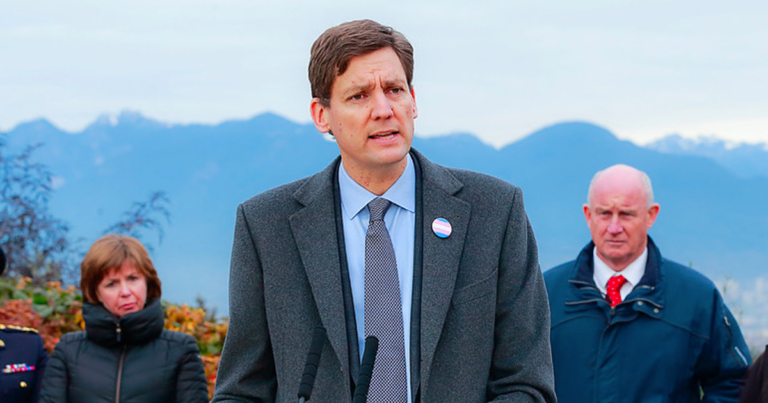
The Eby government recently launched a $500 million “Rental Protection Fund” to help address affordability woes in British Columbia. The fund, which will offer one-time grants to non-profit housing organizations to buy residential rental buildings (including co-operatives) listed for sale, is meant to protect existing renters from evictions.
But as well-intentioned as this fund may be, it won’t address the issue at the root of B.C.’s rental woes—that is, a severe imbalance between the number of renters and the availability of units to rent—and may actually make things worse.
In 2021 (the latest year of available data) the Abbotsford-Mission census metropolitan area (CMA) rental vacancy rate was 1.6%, which while paltry was still higher than in the Vancouver CMA (1.2%), the Victoria CMA (0.9%) and the Kelowna CMA (0.6%—the lowest among all metropolitan areas Canada-wide, which averaged 3.4%).
Unsurprisingly, average rents in B.C. were 24% higher than the Canadian average, according to the most recent census. It’s basic economics—when demand outruns supply, prices rise.
Again, the rental fund won’t do anything to increase the supply of rental housing or any other kind of housing for that matter. It will simply move housing units out of the private market and into the non-profit sector.
That might sound appealing to some, but here’s the problem—the non-profit sector doesn’t have the same access to capital as businesses and entrepreneurs, so non-profits aren’t as well-positioned to upgrade and expand existing properties. Consequently, after a non-profit purchases an existing building with money from the government’s new fund, it may not be able to redevelop that building and add more units. This unintended consequence could perversely result in fewer units being built than would be the case absent this latest government intervention.
But there’s good news. If the Eby government wants to help renters—and non-profit housing organizations catering to low-income renters—there are plenty of ways to do that. It could start with widespread zoning reform.
For example, relax the height and/or width restrictions that currently limit the size of existing buildings—from single-family homes to low-rise apartments—so building owners can increase both the number and size of units. This would also help non-profits who could see a dramatic increase in buildable space without a dime from the government.
Of course, people worry about low-income tenants forced to find new housing when rental buildings are sold for redevelopment. While there are some safeguards in place to help displaced tenants (including a robust Tenant Relocation and Protection Policy in Vancouver), it can be challenging to find another vacant unit. That’s one of the problems with routinely having a rental vacancy rate around one per cent. It doesn’t leave people with many options, and few of them are cheap.
The solution again is to simply allow more housing to be built. Investors are, to a large extent, betting on scarcity. Eliminate the scarcity and it’s harder to charge as much for rent—when demand outruns supply, prices rise. If the government adopted this approach, it would not only help specific tenants in specific buildings but it would help all renters who could use some relief from rising rents.
The Eby government’s new rental fund focuses on who owns the rental units—something British Columbians struggling to find and retain rental housing likely care little about. If the government wants to address rental affordability woes, it should remove barriers to housing construction including renovations to existing units and the construction of new units.
Steve Lafleur is a senior fellow of the Fraser Institute.
The majority of Canadians say they have witnessed a “climate-related event,” according to a newly released poll.
In the Leger poll, 81% of respondents attributed events they have witnessed such as heatwaves, high winds, flooding, drought, and wildfire to climate change.
“While some may feel sad and helpless about it, they remain motivated to protect themselves, and think there is more they could be doing to adapt,” wrote the Leger report.
Canadians had a gloomy outlook about the environment.
Most respondents (70%) said impacts have gotten worse in the past two years. The same number said consequences will continue to worsen over the next five or ten years (69%).
Canadians were scattered in their opinions of how such events impact their well-being.
Food security was the most popular health and wellness concern among respondents (59%), physical health was middling (40%), and mental health was the least concerning (26%). A smaller share reported they were not concerned about anything on the list (6%).
While Canadians were least concerned about the effects of mental health, mental health has still gained traction in the world of climate change.
Last month, a university in British Columbia announced it will host “climate change anxiety and grief” seminars to address the rising impacts of climate concerns.
The Simon Fraser University seminar taught strategies for managing emotions, such as breathing exercises, as well as strategies to relieve stress, such as reducing caffeine intake and improving exercise regimens.
A 2020 study in the National Library of Medicine linked high caffeine intake to mental distress in university-aged men and women (aged 18 to 29), and similarly linked high exercise with a decrease in mental distress of university-aged men and women.
While people may blame global warming for weather-related events that cause them grief, this may not always be the case.
In 2020, US Forest Service scientist Malcolm North said forest fires were not intensifying because of climate change, but because humans are preventing fires from burning. Preventing natural fires, he said, was effectively stockpiling the forests with dead wood, which added “fuel” for the next fire.
The Leger climate change public opinion poll was completed last summer, and released in January 2023. It was conducted on behalf of the Environment and Climate Change Canada department of the Government of Canada.
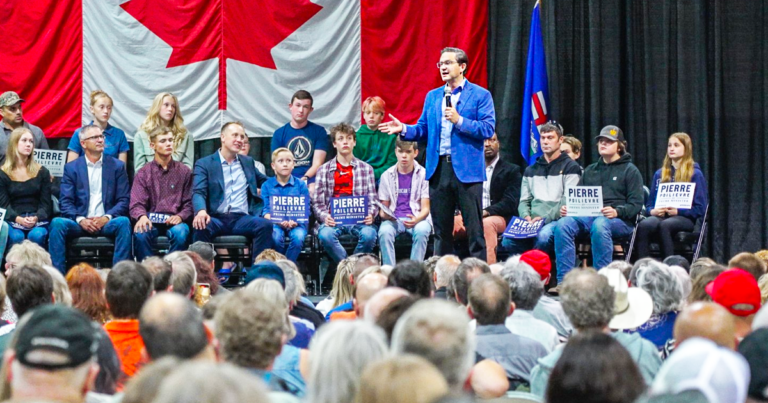
A new Leger poll reveals that the majority of Canadians believe many things in the country now feel broken – which is in line with one of the main narratives of Conservative leader Pierre Poilievre.
Plus, Alberta Justice Minister Tyler Shandro says the Liberal government is still intent on banning shotguns and rifles despite the government withdrawing a controversial amendment to Bill C-21.
And this past weekend, students gathered at Wilfrid Laurier University in Ontario to protest the school’s ongoing mask mandate – yup, they’ve still got one!
Tune into The Daily Brief with Anthony Furey and Andrew Lawton!
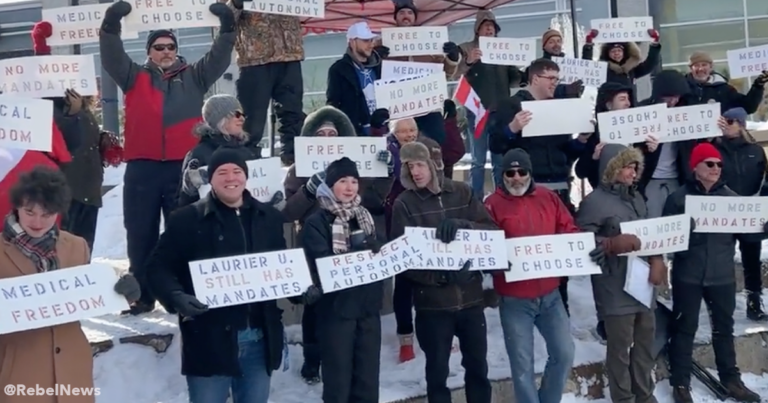
Students and faculty at Waterloo’s Wilfrid Laurier University held a protest this past weekend against the school’s mask mandate.
Wilfrid Laurier students, faculty, & allies held a protest against the university's mask mandate. The latter was organized by @Kam_Bach, who has gone viral several times for using random objects as face coverings. #CampusWatchpic.twitter.com/d4FAKRr7uX
The southwestern Ontario university continues to require that students wear masks in instructional spaces, even though masks are not required almost anywhere else in the province other than medical facilities.
The protest was organized by fourth year philosophy student Kamil Bachouchi and Students Against Mandate. Bachouchi has been leading what he calls “peaceful revolution” against the mandate, where he uses random items as face coverings.
Bachouchi told True North he wants to see his university “mandate our rights or mandate our freedom instead of mandating masks”, saying that mask mandates are disrespectful and show a disregard to the personal autonomy of students.
The rally was held at Waterloo Town Square and featured speeches from Laurier Associate Professor David Haskell, Haldimand-Norfolk county acting medical officer Dr. Matt Strauss and first year student Christian Poce. Bachouchi served as master of ceremonies.
Poce spoke about the struggles he encountered while trying to obtain a medical exemption from Laurier’s mandate amid being unable to mask due to a recent nose surgery. He said the ordeal took a month and resulted in him missing class time.
He also recalled an instant where a professor berated and embarrassed a student in front of the class for not wearing their mask properly. “We are young and we are healthy, and we should be free to do as we please,” Poce said.
Students, faculty and supporters protesting Wilfrid Laurier University’s mask mandate. Despite dropping their vaccination mandate, Laurier continues to require its students and faculty to mask up. https://t.co/xZvGyszDhbpic.twitter.com/F9g4mbpHig
In his speech, Professor Haskell said students took the courageous action of thinking for themselves and standing for their convictions by attending the anti-mandate protest.
“These universities rob their students of their freedom of conscience and their right to bodily autonomy.” For Haskell, the rally was not just about criticizing Laurier’s policy, but “an opportunity to actually ask a few questions, specifically questions about what kind of society do we want to live in.”
Dr. Strauss also praised students for attending the protest, saying “what you’re doing today really matters.”
The prominent doctor took a jab at Laurier’s administration in his speech, accusing them of “behaving like religious fanatics” for requiring that young people wear masks. “If you are forcing people to cover their face, based not on science, at this point it’s religion,” said Strauss.
Strauss added that “now is the time (undergraduate students) are supposed to be making life connections that will last forever. They’re supposed to meet their best friends, they’re supposed to meet their romantic partners, but can’t do that when you’re wearing a diaper on your face.”
In closing off the event, Bachouchi told the crowd, “enough is enough. I haven’t been complying. I encourage all of you guys to speak your minds and stand up for your rights.”
The Laurier students and faculty were joined by several supporters and allies – with Bachouchi saying some came as far as Owen Sound to attend the protest.
“It was incredible to get that much support and to be told that I inspire people, that I give people hope,” Bachouchi told True North, adding that “it was great to connect with that many new and familiar faces.”
He hopes that through his protest, Laurier will see that he isn’t alone in opposing their mandatory masking policy. “It’s not just one student doing this.”
Laurier is not the first Canadian university to face backlash from students over Covid-19 mandates. Last fall, hundreds attended a protest at the University of Western Ontario after the school announced it would be mandating masks and boosters.
Western ended up delaying the imposition of its booster mandate before quietly abandoning it. Western’s mask mandate does however remain in place.
True North reached out to Wilfrid Laurier University for comment, but they did not respond in time for publication.
University of Toronto gender studies professor and social justice activist Beverly Bain says police departments are masculinist and white supremacist institutions that seek to protect property rather than people.
The Canadian scholar, who describes herself as a “Black Radical Queer anti-capitalist feminist revolutionary,” has advocated for the defunding and abolishing of police and prisons.
I believe it! That is why they must not be involved with people in crisis. Defund and abolish the damn police!
“The (police) institution is a masculinist institution, white supremacist institution, that facilitates capital and protects capital” said Bain in an interview with True North in advance of an upcoming public lecture she’s giving at Trent University. She added that police protect property rather than people.
Bain believes that “those who are at the forefront of (the) struggle in terms of police violence and anti-black racism have been black radical feminists and black queer trans people.”
Bain works as an Assistant Professor of Women, Gender and Sexuality Studies at the University of Toronto’s Mississauga Campus. She teaches black queer diaspora, feminism, anti-racism, decolonialism, diasporic sexualities and gender and police violence in women and gender studies.
She is also the co-founder of the No Pride in Policing Coalition, whose website says is “an antiracist queer and trans group formed to support Black Lives Matter.”
Peterborough’s Trent University will welcome Bain on Mar. 8 for a virtual lecture titled “Still We Refuse! A Conversation on Anti-Black Racism, Police Violence, Feminism and Abolition” as part of the school’s Canadian Studies 50th Anniversary events.
Trent University will host a guest lecture on March 8 that will focus on "the capitalist, racist and heteromasculinist context that continue to legitimize policing institutions" and "the on-going collective refusals by activists." #CampusWatchpic.twitter.com/BQh0UAeVW2
The presentation will focus on “the capitalist, racist and heteromasculinist context that continue to legitimize policing institutions and the on-going collective refusals by activists as we organize and work to create liveable futures.”
“The 2020 uprising ignited by Black Lives Matter in the U.S. that erupted across the globe following the police killing of George Floyd, led to loud demands for defunding and abolition of police,” reads the description for Bains’ Trent event.
It adds that although police and politicians, including Prime Minister Justin Trudeau, attended BLM protests, a “terrifying backlash” from police and Toronto mayor John Tory has since occurred. “The City (of Toronto) and police escalated its attacks on the homeless and Indigenous peoples in encampments, Blacks, racialized, unhoused, poor and those with mental health issues.”
Tory is proposing to increase Toronto’s police budget by $48.3 million, and officers have been deployed to patrol the city’s transit systemamida concerning rise in crime.
Canada’s largest city has seen a recent increase in violent incidents, including random attacks on subway trains, streetcars and buses.
However, Bain told True North she opposes Tory’s plan, saying “if Toronto was truly interested in keeping people safe, we would begin with care, pour more money into sustainable services.”
“We came out of a lockdown, during the pandemic services were undermined, no money was put into sustainable services,” said Bain, who believes that “beefing up security, oppressing and surveillance are ways to escalate people’s difficult situations.”
“Black people in general don’t feel safe on the subway, police doesn’t make low-income black, Indigenous and people of colour feel safe on the subway,” she added. “Knowing options and the creation of sustainable infrastructures would make them safe, not more policing.”
Criticism of police conduct has been back in the news following Tyre Nichols’ death after he was beaten by five black Memphis police officers. However, the “Defund the Police” narrative has been the subject of broad criticism, ranging from police unions to progressive figures like former U.S. president Barack Obama.
Meanwhile, American cities including New York, Oakland, Baltimore, Minneapolis and Los Angeles, who reduced their police budgets in 2020 in light of the BLM Movement, opted to reinstate millions in police funding amid a spike in crime.
Trent University told True North that it “hosts lectures by a range of visiting scholars each year.”
The Liberal government’s controversial Bill C-11 legislation has been dubbed Prime Minister Justin Trudeau’s online censorship bill. It’s faced a lot of pushback, and yet the Liberals are determined to ram it through. The Senate has proposed a number of changes, but it’s unclear just how many the government will adopt.
Now that the bill’s gone through the Senate, it won’t be long until it becomes law. And this has a lot of people concerned.
Anthony Furey discusses the debate behind the legislation in his latest video.
Avideh Motmaen-Far is the President of the Council of Iranian Canadians. Dr. Masood Masjoody is Vice-President.
Iran’s brutal regime is no longer enjoying its once-privileged status in capitals across Europe. The Western world is waking up to the mullahs’ depraved human-rights abuses and no longer accepting their representatives in economics, politics, and diplomacy. Canada must escalate its actions to match our increasingly clear-eyed allies.
Earlier this month, the European Parliament took concrete and proactive action by demanding that EU policy makers designate the Iranian Revolutionary Guard Corps (IRGC) as a terrorist organization. Although the European Council delayed the move, citing the need for a court case from a member state, the 27-member state bloc announced a new sanctions package against the regime.
Meanwhile, across the English Channel, the United Kingdom announced economic sanctions against Iran, targeting top regime officials. Rumours are swirling that the UK is poised to designate the entire IRGC as a proscribed terrorist group.
Yet in North America, Canada – in contrast to our southern neighbour – remains painfully alone in its sluggish action. As countries across Europe escalate their respective sanctions against the regime, Canada’s fair weather approach and light measures are impossible to justify.
Of course, we must afford the federal government credit for positive steps it enacted last October as protests against the regime reached a crescendo in the Iranian diaspora. At the time, Deputy Prime Minister Chyrstia Freeland announced sanctions against top IRGC leadership and explicitly referred to them as “terrorists.”
However, the crucial goal of the federal government designating the IRGC as a terrorist entity (supported unanimously by Liberal and Conservative caucuses in a 2018 House of Commons motion) remains unfulfilled. This is unacceptable and becoming out of sync with our allies across the world.
History never reflects favourably on those that choose silence over action against totalitarian regimes. Thus, the federal government’s failure to comply with Parliament’s request to designate the IRGC as terrorists threatens Canada’s legacy and reputation as a country that values human rights.
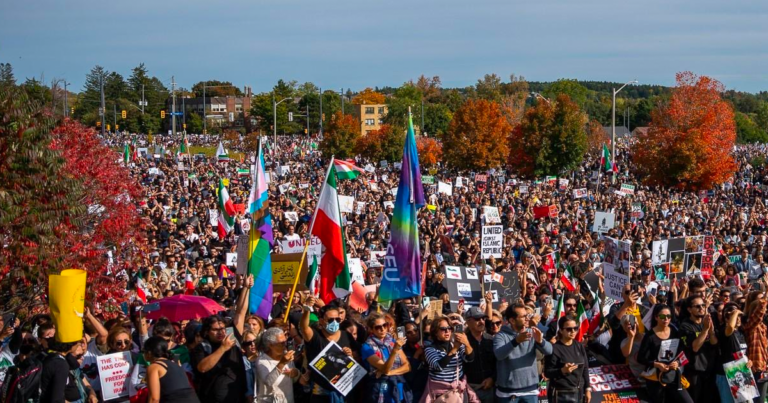
The IRGC, considered Iran’s top security force at home and abroad, is notorious for its decades of totalitarian theocratic rule and terrorist actions. Most recently, the IRGC has brutally suppressed protests in Iran that were calling for democratic regime change after the murder of Mahsa Amini, who died in police custody after being arrested for “improperly” wearing the hijab.
And of particular concern and pain for Canadians, the IRGC is responsible for shooting down Ukrainian Airlines Flight 752, which resulted in the deaths of 55 Canadian citizens and dozens of permanent residents and students. IRGC terrorism is no abstract and distant scourge to Canadians, its murderous actions have directly impacted our own.
There is no doubt that sanctions and policies, including terrorist designation, are effective. Solidarity with an oppressed people must include isolating their abusers with incremental and targeted isolation from financial, cultural and political centres of power.
Europe’s latest sanctions package shows the bloc is waking up and finally appreciating that there can be no compromise with Tehran’s mullahs. It is impossible to appease terrorists, for their fanaticism knows no boundaries recognizable to those in the free world.
If Canada is to remain known as a bastion for human rights, immediate action is required. The federal government must designate under existing terrorism legislation the IRGC as a terrorist entity without delay.
Data provided by the federal government shows that Covid shots made up a vast majority of “adverse effects” due to vaccination reported in the Canadian military.
As first revealed by Blacklock’s Reporter, 131 of 154 total adverse reactions that happened in 2021 was due to Covid-19 vaccines.
The numbers were reported by the Canadian Armed Forces (CAF) in response to an Inquiry of Ministry filed by Conservative MP Cheryl Gallant who requested the data on vaccine-related injuries in the military.
“Armed Forces health services tracks adverse events following immunization,” wrote cabinet. “An adverse event is any unexpected medical event.”
Military personnel were given a variety of vaccines. In total 19 different shots were reported including for polio, rabies, yellow fever and Covid-19, among others.
“A total 217,076 Covid vaccines have been administered to Canadian Armed Forces members,” said cabinet. “The majority of these reported adverse effects were minor and self-resolving in nature.”
In 2021, the CAF instituted a vaccine mandate. Soldiers who remained unvaccinated were subject to an “unsuitable for further service” discharge as exclusively reported by True North in November of that year.
Despite overturning the mandate last year, Chief of the Defence Staff Gen. Wayne Eyre decided to continue with discharging unvaccinated CAF members.
A total of 300 personnel were released from the military while another 100 left on their own accord.
“Additionally, a Canadian Armed Forces member’s unvaccinated status may have additional consequential career implications, including loss of opportunities contributing to promotion, which are outside of Canadian Armed Forces control,” a Department of National Defence spokesperson explained to True North.