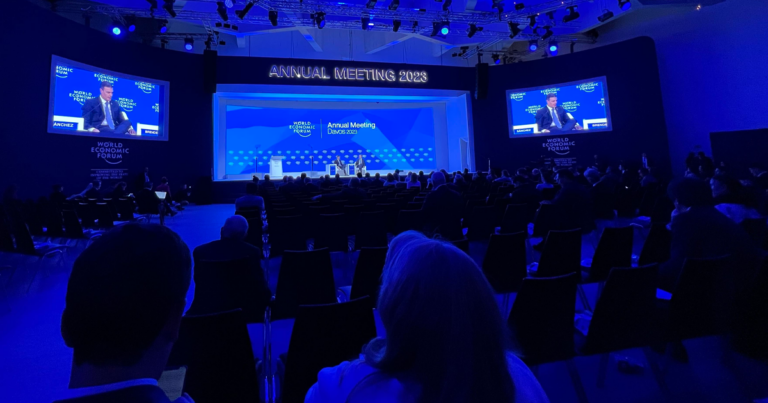
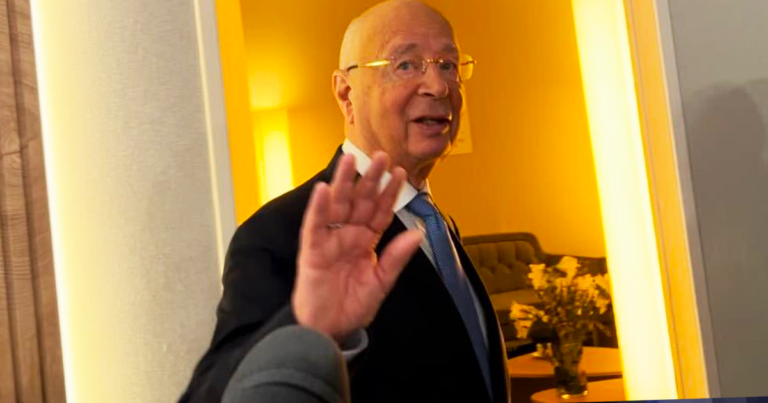
Corporations are paying thousands of dollars to attend the World Economic Forum Annual Meeting this year. Meanwhile, politicians are able to attend the summit for free. Despite WEF Founder Klaus Schwab’s denial that the WEF has any influence on politicians, the annual event certainly seems like a cash-for-access event.
As Andrew Lawton reports, the policies being promoted at the WEF are being adopted by governments around the world – including the promotion of a carbon tax.
On Day 2 of True North’s coverage of the WEF Annual Meeting, Andrew attempted to question Schwab, caught up with the Prime Minister of Luxembourg Xavier Bettel and much more.
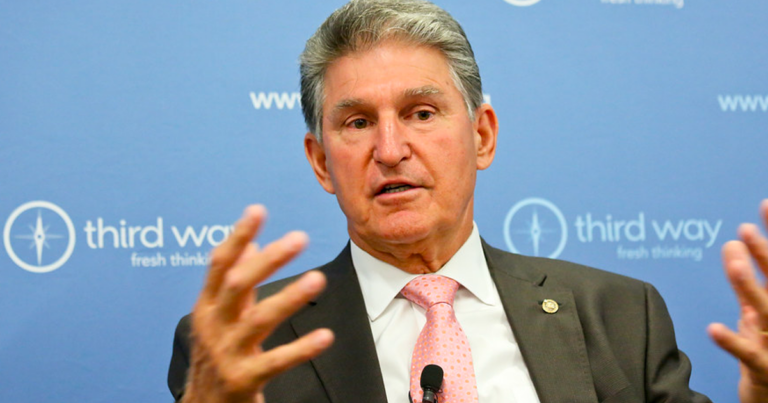
US Senator Joe Manchin says it makes “no sense” that President Joe Biden has been averse to importing Canadian oil.
The Biden administration has instead relied on Iran to increase its energy supply, even after former US President Donald Trump exited a 2015 nuclear accord and reimposed sanctions to curb oil exports and revenue to Iran’s government.
Manchin said Canada has been America’s best trading partner and ally, and 62% of US heavy crude oil already comes from Alberta. But instead of looking to import more oil from Alberta, the Biden administration is considering lifting sanctions from Iran, whose regime Manchin called “prolific terrorist supporters.”
United States Senator @Sen_JoeManchin says the Biden administration's aversion to importing more Canadian oil "makes no sense" and benefits countries like Iran. pic.twitter.com/aG3bHcvVKm
“It makes no sense to me, whatsoever,” Manchin told True North’s Andrew Lawton at the World Economic Forum’s annual meeting in Davos.
“We’re going towards areas that basically do not have the kind of standards that Alberta has and the way they’ve done so well… so many different advancements.”
Manchin, a Democrat from West Virginia, has been at odds with the Biden administration’s energy approach.
The administration began negotiations with Iran in 2021 about lifting sanctions should Iran cease development of its nuclear program. Tehran has ramped up its nuclear activities since Trump exited the 2015 accord.
Following reports about the possibility of lifting the IRGC from the Foreign Terrorist Organization list, Manchin wrote to Secretary of State Antony Blinken in April 2022 asking him to maintain the current sanctions .
“Let me be clear. The IRGC is a terrorist organization,” he wrote.
“We must not be shortsighted in the use of sanctions relief to mitigate our present energy challenges.”
In April, Manchin visited Alberta to learn about the province’s energy sector. Former premier Jason Kenney advocated for Alberta energy at a US Senate committee in May following an invitation from Manchin.
Manchin also said Biden’s Inflation Reduction Bill provides a “tremendous” opportunity for the US to be energy independent. But first, America needs to develop an all-energy policy using oil, gas, and coal and develop new technology for the future, he said.
“That’s what we’re working on. That’s what that deals with. It’s about energy security, and basically producing cleaner than any other hydrocarbons in the world,” he said.
“So with that, basically, we’re going to have to have Alberta oil — there’s no ifs, ands, or buts about it.”
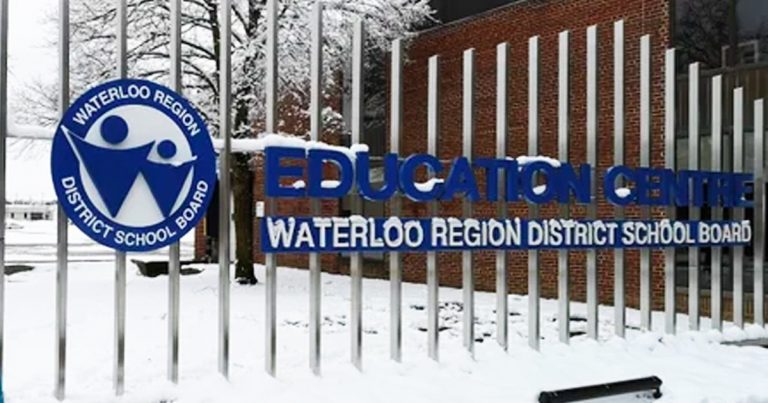
Parent David Todor asked Waterloo Region District School Board (WRDSB) trustees more than once Monday evening who exactly is interested in the “sexual orientation and gender identity” of his nine-year-old daughter.
In a scathing speech to the new board, he spent his allotted time of 10 minutes attacking the board’s ongoing “censorship” of meeting proceedings and surveys asking kids as young as Grade 4 to provide their sexual orientation and preferred gender.
He also raised concerns with another controversial book located in WRDSB elementary school libraries called “The Bluest Eye” written by Toni Morrison.
This evening @wrdsb father David Todor wiped the floor with school trustees who want sexually explicit material available in schools for seven year olds to access.
"Who is interested in knowing my daughter's sexual orientation? Why is the school board facilitating child abuse?" pic.twitter.com/rr0RQehk1n
The novel, written in 1970 and banned by many school boards across North America, includes themes of oppression, misogyny and incest.
When Todor read from the book, no one tried to stop him as they’d done with teacher Carolyn Burjoski a year ago:
“He could have been an active homosexual but lacked the courage. Bestiality did not occur to him and sodomy was out of the question for he did not endure sustained erections and could not endure the thought of somebody else’s. Since little boys were indifferent and insulting, he further limited his interests to little girls. They were usually manageable and frequently seductive…”
All of the trustees hid behind their COVID masks except for Mike Ramsay and Cindy Watson.
The bearded Todor, wearing his trademark hat, referred to two highly sexualized surveys by the board last year – one called “Have your Say” and another named the “Safe Caring and Inclusive Survey.
He said he’s tried to obtain both for two months but the board’s senior manager of research has so far refused to provide them.
He has since discovered that the WRDSB misled parents when they indicated the results will be kept confidential.
“The survey is not anonymous,” he said. “Student demographics will be merged with student achievement data.
“It’s none of your business what a person’s sexual orientation is,” he added.
Todor spoke on the one-year anniversary of the meeting when now retired 20-year teacher Burjoski was rudely cut off by former chairman Scott Piatkowski four minutes into her presentation.
She endeavoured to speak about the age inappropriateness of two highly sexualized books located in WRDSB elementary school libraries.
In the days that followed, Burjoski was put on leave and ordered to keep quiet while Piatkowski and others did the rounds of the media attacking her integrity and labeling her “transphobic.”
They also had the video of the meeting removed from their website.
Burjoski is in the midst of two actions against the board – a $1.7-million defamation lawsuit against the board and Piatkowski and a request for a judicial review of the decision to end her presentation.
The board’s defense on both lawsuits is being handled by two high-priced partners with the Bay St. law firm, Borden Ladner Gervais.
Todor claimed he’s noticed the entire database related to the incident has been “wiped” since last March.
He also contended that a lot of social media posts from the board are “censored” and comments on them are “limited, hidden, filtered and removed” – so parents don’t know what’s going on.
“That doesn’t seem too transparent,” he said.
Todor asked when will the board deem it’s gone too far by insisting on finding out the sexual orientation and gender of his two daughters, 7 and 9.
“I’m very concerned about the inappropriate behaviour (to which) the school board is headed,” he said.
“Who is interested in knowing and affirming celebrating my daughters’ sexual orientation. Why is the school board facilitating child abuse and having these kind of books available in the library?”
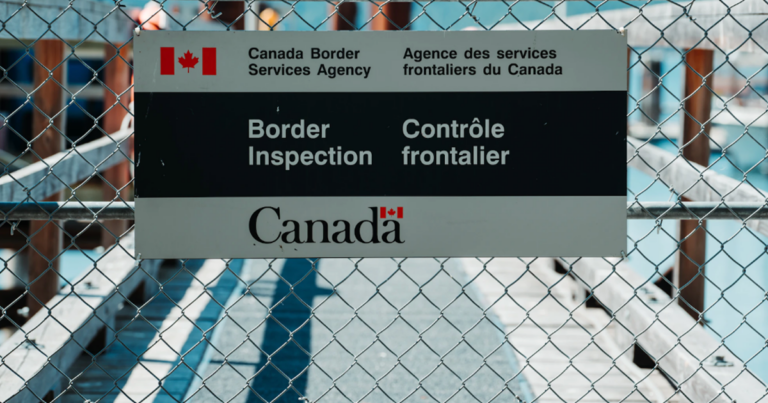
Minister of Public Safety Marco Mendicino was joined by media members on Tuesday morning to witness a collection of seized firearms at a border crossing in Ontario.
Canada Border Services Agency (CBSA) officers toured Mendicino through the Blue Water Bridge crossing, which links the Ontario town of Sarnia with Michigan. The tour displayed a table of captured guns, a handheld device for scanning packages, and a drug-sniffing dog named Smoke.
“This is the product of a lot of professionalism,” Mendicino said in a CTV News report.
The event at Blue Water Bridge comes amid ongoing criticism the Liberal government is facing for its strategy to stop gun violence in Canada.
In May 2020, the Trudeau government banned 1500 models of firearms, planning to collect them from owners by October 2023.
Last year, that plan hit some hurdles. The provinces of Manitoba, Alberta, Saskatchewan and New Brunswick voiced opposition to the federal government’s plan, and critics spoke up, saying it was misguided.
Toronto Police Chief Myron Demkiw testified in February, back when he was acting deputy chief, that the policy, which aims to buy-back firearms from licensed civilians, would fail to target the biggest source of crime in Toronto.
“The City of Toronto’s experience is that guns are not from law abiding citizens that are being used in crime. They’re guns being smuggled from the United States. Those engaged in handling those firearms are not law abiding, licensed gun owners; they are criminals with no firearms license,” he said.
Ex-gang leader Marcell Wilson testified in agreement. After leaving organized crime, he founded a youth outreach organization in Toronto, working to pull kids away from criminal lifestyles.
“Eighty percent of the gun violence we [witness is] committed with illegal firearms smuggled in from the USA,” he said.
Last year, the CBSA stopped 1,009 firearms from crossing into Canada. The CBSA and RCMP have received at least $312 million in investments to improve border security and gun tracing since 2016.
The CBSA highlights of 2022 cited a 267% increase in travelers seeking entry into Canada, with an 11% increase in prevented firearms.
For the first time ever, The Andrew Lawton Show is live from Davos. True North’s Andrew Lawton is in the Swiss mountain village reporting on the World Economic Forum annual meeting. He’s already encountered Klaus Schwab, four presidents and prime ministers, and countless other global elites who claim they’re here to find solutions to the world’s problems through “cooperation.”
In this special edition of the show, Andrew talks about what he’s seen on the ground in Davos, and also takes some of your questions about the summit.
In December, groceries remained 11% more expensive than a year earlier – a trend that’s held firm since August – according to a new report by Statistics Canada.
The Consumer Price Index report released Tuesday morning shows that while food prices in Canada have stabilized at an inflation rate of just over 10% year-over-year, some items are hit harder than the average.
In December, the price of non-alcoholic beverages had risen by 16%, bakery products by 13%, and coffee and tea rose by 13%
Prices also rose outside the grocery store.
In 2022, the price of gas was on average 28% more expensive than the year before – but hikes came to a halt around Christmas time.
In the biggest month-to-month decline in nearly three years, gas prices dropped by 13% in December.
True North reported in December that grocery prices were expected to hike in 2023. According to the Dalhousie University report, a Canadian earning $52,000 annually would lose roughly a week’s worth of salary paying for the same food.
The report estimated that four-person families would spend around $16,200 feeding themselves this year.
The problem may be pushing Canadians into social security systems.
In 2022, Food Banks Canada CEO Kirstin Beardsley said more Canadians turned to food banks than ever before. Food banks saw a 15% increase in visits that March compared to 2021.
A recent mediatour in Winnipeg saw Conservative Party leader Pierre Poilievre hint at some of the themes his party may be addressing during the next Parliamentary session. These included taking firm stances on the opioid crisis, the energy file and targeting the controversial Indian Act as “racist.”
In a Global News interview, Poilievre called the Indian Act a “disaster” and a “racist, colonial hangover” while promising reforms.
Poilievre criticized the centuries-old Act – which codifies the status of Canada’s Indigenous peoples, lands, and local governments – for usurping the power of First Nations people and giving it to the federal government.
“The Indian Act is a disaster. It is a racist, colonial hangover that gives all the control to self-serving, incompetent politicians and bureaucrats and lobbyists in Ottawa and takes away control from the First Nations themselves,” Poilievre told Global.
When asked if a Conservative government would take a different direction than the Liberal government on reconciliation and First Nations relations, Poilievre made clear he would abandon Prime Minister Justin Trudeau’s approach, which he described as symbolic and dramatic and said it has produced “no results.”
Listing new policy proposals, Poilievre said that the government would supply every First Nations reserve and community with clean drinking water via payment to infrastructure companies responsible for the system contingent on the system’s continued function.
“They [infrastructure companies] can’t build a faulty system, get paid and buzz off. They have to get the job done because our First Nations people deserve clean drinking water,” said Poilievre.
In 2015, Trudeau promised to deliver clean drinking water to First Nations, a commitment he has been unable to deliver after seven years in office.
In addition to a heavy focus on Indigenous issues, Poilievre also called for a different approach to dealing with the Canadian opioid epidemic.
“What I support is recovery and treatment. That does include medications that help people with the pain and suffering of withdrawal, that revive people who have overdosed. But that also means detox, in-patient care for 90 days with a counsellor to help remove the toxins from people’s bodies, get them into good habits and onto a better life,” Poilievre said in an interview with CTV News.
Poilievre placed part of the blame for the addiction crisis at the feet of pharmaceutical corporations, telling media about a woman who had become addicted to opioids in the first place because she was told by professionals that the drugs were safe.
“A waitress who had been a nurse got addicted to opioids because the lying, dirtbag pharmaceutical companies told her that it was safe,” the Conservative leader said in the Global News interview.
Poilievre also used the media tour to highlight his support for alternative forms of energy, criticizing Trudeau for failing to get these projects built in addition to traditional oil and gas sector initiatives.
“Justin Trudeau has brought in so much red tape that we can’t get anything built in this country,” said Poilievre.
He championed the idea of producing the necessary minerals for electric vehicle production in Canada, building more dams for hydroelectric energy, and placed great importance on the need for nuclear energy.
“This is something we have to be very clear about. There is no carbon-free future without nuclear power,” said Poilievre.
“Instead of importing our resources from dirty dictatorships, I’ll remove Justin Trudeau’s anti-development laws so that we can produce more energy, more agriculture, and more minerals for electric cars in this country,” said Poilievre in a City News interview.
Poilievre also proposed that First Nations who would like to develop resources and commerce within their communities will be able to keep the money instead of sending it back and forth to the federal government.
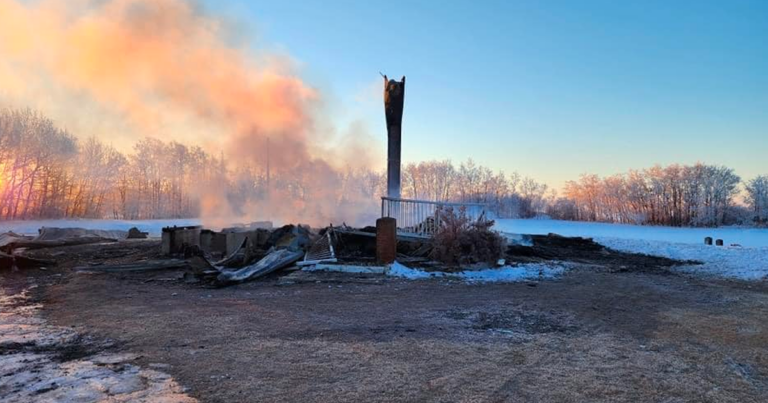
The Upper Pine Gospel Chapel of Rose Prairie in Northern BC is the latest church in Canada to have been set ablaze and destroyed. Meanwhile, a 49-year-old man is in custody after he allegedly attempted to set fire to St. Paul’s Presbyterian Church in Hamilton.
Plus, after a recent uptick in crimes committed by offenders out on bail and a sharply-worded letter from Canada’s premiers, Prime Minister Justin Trudeau says his government is carefully looking at the proposal for reforms to the country’s bail system.
Also, as the province deals with an unprecedented surgical backlog, the Ontario government is looking to privately run clinics to help give Canadians more choices for healthcare.
These stories and more on The Daily Brief with Anthony Furey and Harrison Faulkner!
Sure things usually attract crowds, and it’s no different in the staunchly Conservative Ontario riding of Oxford where four Tories will be vying to replace the retiring 18-year MP Dave MacKenzie.
Gerrit Van Dorland, executive assistant to Conservative Saskatchewan MP Jeremy Patzer, told The Hill Times that he will run for the nomination and is currently putting together the paperwork to be approved as a candidate.
With the addition of Van Dorland, there are now four candidates running for the Conservative nomination. The other three are: Deb Tait, a long-time Woodstock, Ont., city-county councillor and daughter of the outgoing MacKenzie; Conservative Party outreach chair Arpan Khanna; and Richard Roth, a former senior ministerial staffer who now works for Global Public Affairs as vice-president of strategic communications.
More Conservative candidates are expected to further clog the field.
Three byelections are scheduled to take place, on whatever day Prime Minister Justin Trudeau decides, and all three are expected to be shoo-ins of the party presently holding down the fort.
Right out of the box, Van Dorland came out sounding like Conservative Party leader Pierre Poilievre, as the quote on his campaign website will attest.
“Freedom is essential to any healthy democracy,” said Van Dorland. “If we’ve learned anything in the last two years, it’s that we must stand in defence of our freedoms, or they will erode. I pledge to you that as your representative, I will always defend your right to live as free people.
“Free from government interference in your family, your church, your job, your farm, your savings, or your hunting rifle.”
Not surprisingly, Van Dorland was a vocal supporter of the Freedom Convoy.
“We’ve seen over the last few years, the government encroaching on our freedom,” Van Dorland said in an interview with the Times, a parliamentary precinct newspaper. “And certainly I was opposed to the level of encroachment we’ve seen by the federal government. So certainly, it was incumbent upon Canadians and they raised their voices to express their discontent with the encroachment by the government. And in a free and democratic country, we should always welcome that level of public engagement.”
Van Dorland said he expects the nomination race to be a close one. At the start of the contest in December, the riding association had about 3,500 members, which is a high number for a rural riding. This is chiefly because of the leadership election where Poilievre signed up a record 312,000 new members across the country.
In addition to Oxford, at least two other byelections will happen this year: In Winnipeg South Centre, and in Calgary Heritage.
Winnipeg South Centre opened up after the death of three-term Liberal MP and former cabinet minister Jim Carr in December. Based on past electoral history, this is a solid Liberal riding.
With the exception of the 2011 election when the Conservatives won a landslide majority, the Liberals have held this riding going back to 1988. Carr’s son, Ben Carr, confirmed two weeks ago that he’s considering running, but had not yet made a final decision.
Calgary Heritage opened up after Conservative MP Bob Benzen resigned from his seat late last month. Benzen was first elected in a byelection in 2017 after former prime minister Stephen Harper resigned from the safe Conservative seat.
Shuvaloy Majumdar, a former staffer in the Harper cabinet, is running for the nomination. He is working as the global director at Harper & Associates, an international consulting firm founded by the former PM. Quinn Heffron, a former Conservative Hill staffer, is also running.
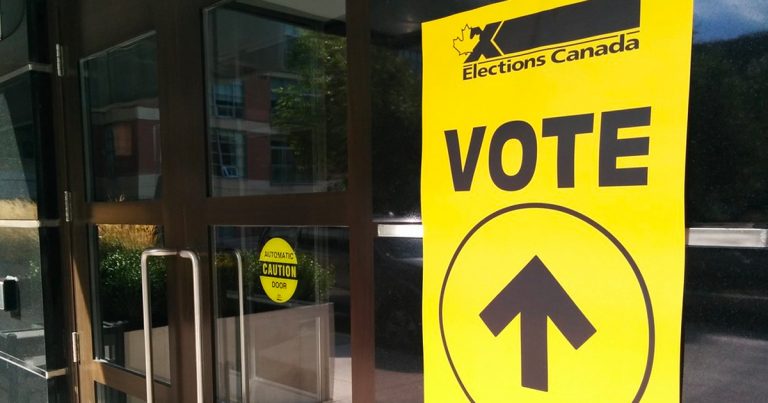
According to Elections Canada, the prime minister has six months to call a byelection after a riding becomes vacant, and the writ period has to be between 36-50 days. All three ridings have opened up at different times but with a difference of only a few weeks each. All three byelections will likely happen on the same day.
Political insiders have said they don’t expect any major surprise in the outcomes of the byelections. The Liberals are expected to win Winnipeg South Centre and the Conservatives will win Oxford and Calgary Heritage.
Only the names on the door placards need to be decided.
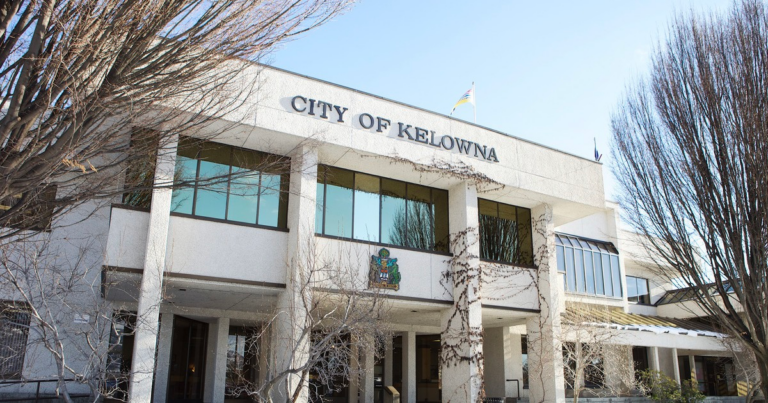
After ranking as the city with the highest crime rate in Canada last year, Kelowna city council and its recently elected mayor unanimously passed a motion in support of Bill C-283, also known as the “End the Revolving Door” Act.
On Monday, Mayor Ted Dyas and council voted to write a letter of support for the private member’s bill, which was sponsored by local Kelowna–Lake Country Conservative MP Tracy Gray.
Gray attended the Jan. 16 meeting to shore up support for the legislation, which passed its first reading in the House of Commons last June.
The bill hopes to amend the Criminal Code by giving the Commissioner of the Correctional Service of Canada the ability to designate a prison an “addiction treatment facility” so that inmates can be assigned to participate in a rehab program while serving their sentence.
In an emailed statement to True North, Gray cited the fact that over 70% of those incarcerated in federal prisons had addiction issues and went on to reoffend.
“The Liberal government, with their soft on crime justice policies, have taken the wrong approach which has failed to end the revolving door in our prisons. Instead, they’ve fostered a catch-and-release system where violent offenders return to the street,” said Gray.
“Liberal legislation has also reduced the consequences for violent crimes and have instead put their focus on targeting law-abiding hunters and sport shooters. Disappointingly, the Liberals have also indicated during Parliamentary debate that they will vote against my legislation.”
According to Gray, however, she has received positive support from the local community which in Aug. 2022 saw skyrocketing crime rates.
Federal data shows that Kelowna ranked first nationally when it came to the Crime Severity Index, which measures crime based on seriousness and other factors. Statistics Canada found that Kelowna’s crime rate sat at 11,112 incidents reported per 100,000 residents.
Mayor Dyas unseated incumbent Colin Basran last fall. While campaigning Dyas repeatedly pledged to deal with the city’s public safety issues.
Dyas has promised to expand the city’s Police and Crisis Team and hire a full-time mental health nurse for the local jail and further support for the Kelowna RCMP .
“They’re having to deal with these files, and they’re also having to stay with these individuals as they are admitted into Kelowna General Hospital, and it is consuming up massive amounts of time,” Dyas said in August.
“Now they’re unable to get out and deal with the other situations within this community that our community needs for them to deal with.”