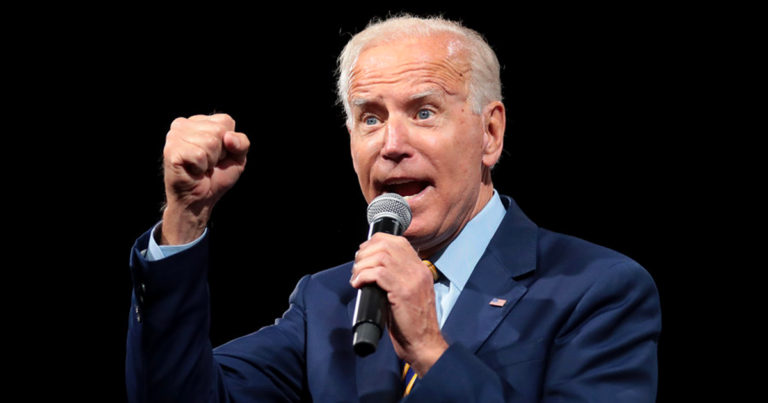
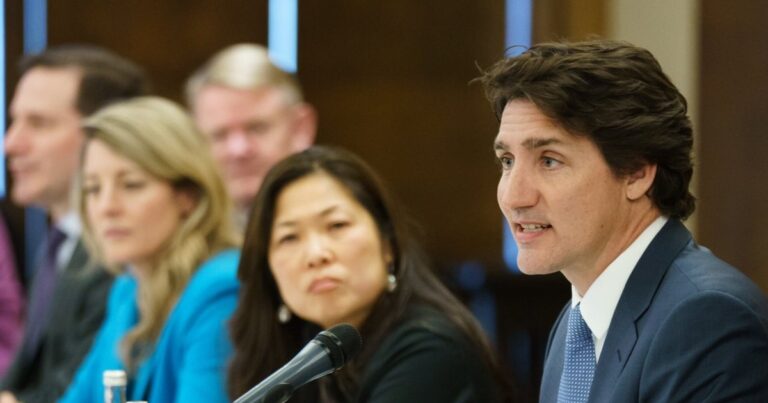
On Tuesday, Prime Minister Justin Trudeau and US President Joe Biden confirmed that the American leader would be coming to Canada for a state visit this March. Will Biden get the same reaction as former US President Barack Obama did when he came to Canada?
Plus, following media reports of the major increase in contracts to the controversial management consulting firm McKinsey and Co. under the Trudeau government, the Conservatives are asking a parliamentary committee to probe the matter.
And Alberta Premier Danielle Smith has made it clear that Alberta will not be supporting the government’s attempt to transition oil and gas workers to greener jobs.
Tune into The Daily Brief with Anthony Furey and Andrew Lawton!
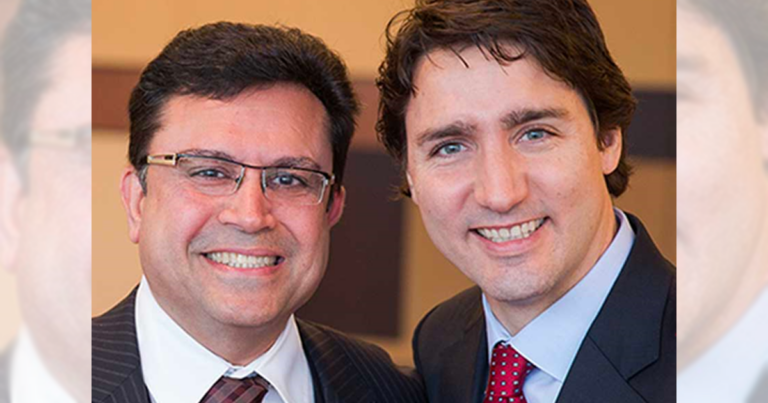
One Iranian group called the booing of Liberal MP Majid Jowhari during Prime Minister Justin Trudeau’s speech this Sunday a show of “deep displeasure” with the federal government’s policies on Iran.
President of the Council of Iranian Canadians (CIC) Avideh Motmâenfar told True North that Jowhari is seen by many in the community to be an apologist of the country’s theocratic dictatorship.
“The Prime Minister’s mention of Majid Jowhari elicited such a negative reaction from the crowd because Mr Jowhari, as the representative of a community of Iranian Canadians, has never taken a clear stand against the acts of repression and brutality of the Iranian regime against its own citizens,” said Motmâenfar.
“MP Jowhari is perceived by many within the Iranian-Canadian community to be an Iran regime’s apologist.”
Prime Minister Justin Trudeau receives jeers at Flight PS752's three-year memorial ceremony, after calling Liberal MP Majid Johawri a “strong advocate for the (Iranian) community.” pic.twitter.com/KAhRyUiB7O
True North reached out to Jowhari for comment but did not receive a response by the deadline given.
During the three-year memorial ceremony of the shooting down of flight PS752 which led to the deaths of 176 people including 63 Canadian citizens, Trudeau elicited a negative reaction from the crowd when praising Jowhari.
“I’m joined today by many colleagues many of you have gotten to know well over the past three years,” said Trudeau.
“Many members of caucus are here as well … Majid Jowhari, who is also a strong advocate for the community.”
Motmâenfar pointed to instances in which Jowhari had described the Iranian regime as “democratic” and calling on protesters to demonstrate “with the support of their elected government.”
Additionally, Jowhari has had several “friendly meetings” with officials from Iran’s government and continues to associate with organizational supporters of Iran in Canada.
“This Sunday the crowd seems to have seized the opportunity of Trudeau’s mentioning Jowhari to show its deep displeasure with the Prime Minister himself, and his lack of meaningful action against the regime in Iran, as exemplified by his stubborn position since 2018 against listing the IRGC as a terrorist entity,” explained Motmâenfar.
“Mr. Jowhari can not be considered a strong advocate for the Iranian community as he has always seemed to be apologizing for what the Iranian regime does rather than advocating for what is right in a free and democratic country as a Canadian.”
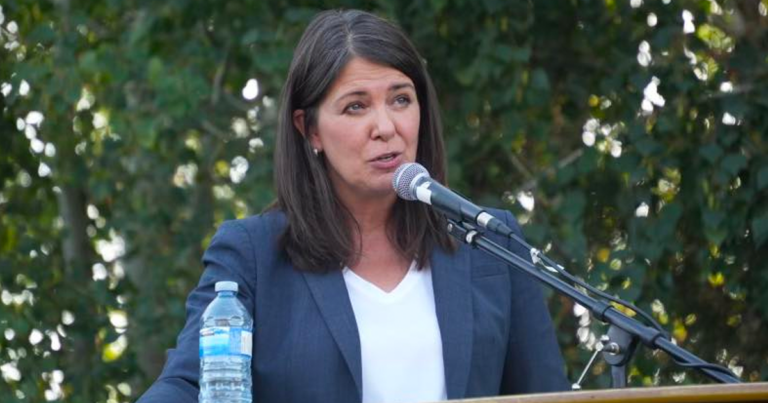
Alberta Premier Danielle Smith says Prime Minister Justin Trudeau is seeking to appeal to an “extreme base” through the federal government’s so-called “just transition” proposal.
In a wide-ranging press conference on Tuesday afternoon, the premier addressed Ottawa’s pledge to prioritize “just transition” legislation this spring.
Smith said her response would be different if the government was talking about sustainable jobs, but that’s not the language Ottawa is using.
“‘Just transition’ is language that they use when they phase out the coal industry. It is a social justice term,” she said.
“To use that terminology, they’re virtue signaling to an extreme base that is openly advocating to shut down oil or natural gas.”
“Just transition” emerged from the 2015 Paris Agreement, an international climate change treaty. The goal is to reduce the harm to workers as economies move from high-carbon activities to a green economy.
Last week, federal Natural Resources Minister Jonathan Wilkinson said Ottawa would move ahead this spring with legislation to provide a framework for the transition plan. He said it would provide incentive for workers to make a seamless transition to a less carbon-intensive economy.
Wilkinson said the concern won’t be a lack of jobs but finding workers to fill the long-term needs in the changing energy landscape.
Alberta environment minister Sonja Savage also called the term “divisive,” telling CBC on Sunday that a “just transition” is a “non-starter” in her province.
Smith said there’s “big threat” that Trudeau will phase out the oil sands through the legislation. She said she’d be happy to talk with her federal counterparts about sustainable jobs in carbon tech and hydrogen.
“This is not about phasing out any of these jobs, it’s about growing them and expanding the opportunity for oil and natural gas workers and that’s the kind of language I would like to hear the prime minister use.”
In 2017, Trudeau said Canada would have to “phase out” its oil sands.
And after German Chancellor Olaf Scholz came to Canada in August asking for liquified natural gas (LNG), Trudeau claimed there’s “never been a strong business case” for LNG exports from Canada’s East coast to Europe.
Pointing to these statements, Smith said she takes Trudeau seriously.
“This kind of targeted attack on our industry — it doesn’t lend itself to cooperative federalism,” she said. “That’s what I’m worried about.”
On Tuesday, Prime Minister Justin Trudeau and US President Joe Biden confirmed that Biden would be coming to Canada for a state visit this March.
The trip was announced during a meeting at the North American Leaders’ Summit in Mexico City, after Canada revealed it would be buying a US missile defence system for Ukraine. The trip would be the first of its kind since Biden was elected in 2020.
During their meeting the two leaders touched on a wide variety of issues including Canada’s recently announced bid to buy F-35 fighter jets to replace aging equipment at the Royal Canadian Air Force.
A readout from the Prime Minister’s Office highlighted discussion on trade including critical minerals for the development of electric vehicles.
“The two leaders discussed the critical importance of North American trade, competitiveness, and supply chains, including critical minerals and semiconductors,” claimed the readout.
Similarly, a statement from the White House further elaborated on how to turn North America into a “clean energy powerhouse.”
“President Biden and Prime Minister Trudeau discussed the generational opportunity to strengthen supply chains for critical minerals, electric vehicles, and semiconductors and to unleash the full economic potential of our shared continent,” the White House said.
Other issues raised by Trudeau included discussion surrounding the NEXUS backlog, as well as justice for the victims of Flight PS752 which was shot down by Iran in 2020.
“The Prime Minister and the President discussed their mutual commitment to tackling the climate crisis,” the PMO wrote.
Additionally, the White House stated that “migration issues” were raised during the meeting.
“Both leaders also underscored the importance of continued collaboration on migration issues, particularly in expanding legal pathways and increasing refugee resettlement — centerpieces of the Los Angeles Declaration on Migration and Protection,” wrote the White House.
Trudeau will remain in Mexico for the remainder of the “Three Amigos” summit where he will have rolling meetings with Biden and Mexican President AndreS Manuel Lopez Obrador.
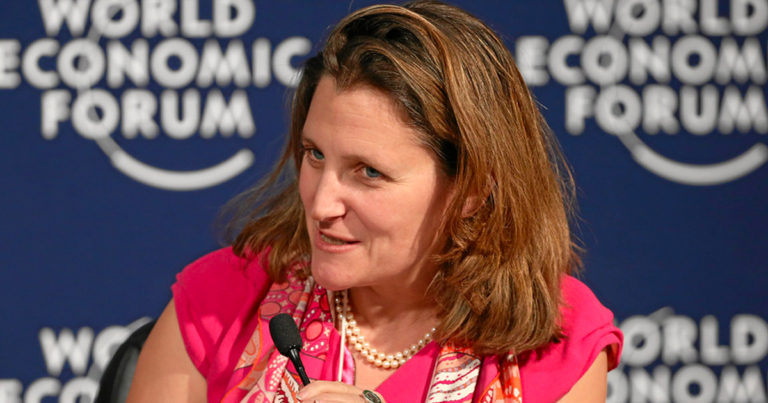
When the billionaires and global elites gather in the Swiss Alps next week, Deputy Prime Minister Chrystia Freeland will be among them. Freeland, who sits as a World Economic Forum trustee, will be an honoured guest at this year’s WEF Annual Meeting in Davos. True North’s Andrew Lawton will also be there reporting on some of the “solutions” being proposed in response to the world’s problems.
Also, the federal government is doing a trial run of its gun confiscation plans in Prince Edward Island, plus Nicole Scheidl from Canadian Physicians for Life joins to talk about the doctors pushing back against Canada’s euthanasia regime.
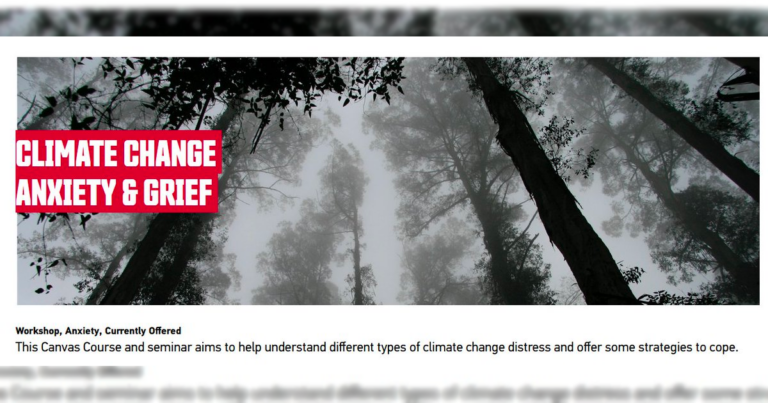
This month, British Columbia’s Simon Fraser University (SFU) is holding “climate change anxiety and grief” seminars for students with a clinical psychologist.
According to the university’s student services page, the climate change anxiety seminars helps students “understand different types of climate change distress and offer some strategies to cope.”
Two sessions are being held on January 24 and March 3 – at the university’s Burnaby campus and Surrey campus respectively.
Leading the seminar is registered clinical counsellor and psychologist Shona Adams.
“She is humbly aware of her white privilege and is passionate with facilitating people to reach their full potential within a caring and empowering environment,” writes her biography.
Listed in the seminar are the following learning outcomes: understanding the symptoms of climate change anxiety and grief, learning to cope with climate change anxiety and grief and finding out how to access further help and support.
The seminars are part of a research study and if participants opt in to participate will have a chance at winning a $100 gift card.
“This seminar is also part of a research study on understanding different interventions that people with different levels of climate change distress find helpful, and has ethical approval,” writes SFU.
Last year, Health Canada published an assessment report on the effects of climate change as it relates to health.
The report titled Health of Canadians in a Changing Climate claimed that climate change increases the risk of mental health impacts such as post-traumatic stress disorder and anxiety.
“Studies are also showing that people can become distressed about climate change itself, resulting in increased anxiety (often termed eco- or climate anxiety), grief (often termed eco-grief or climate grief), worry, anger, hopelessness, and fear,” claimed the report.
“Even people who are indirectly exposed to climate-related hazards can experience poor mental health outcomes, including vicarious trauma, secondary stress, and/or compassion fatigue for those whose lives have been disrupted by extreme events.”
A 2020 survey by the Department of Public Safety found that following the worldwide climate marches that year, 57% of kids were rating the threat of climate change as more grave than guns and illegal drug use.
“Youth are significantly more likely to identify climate change as an extremely serious issue, but they are less likely to identify illegal drug use as an extremely serious issue,” claimed the survey.
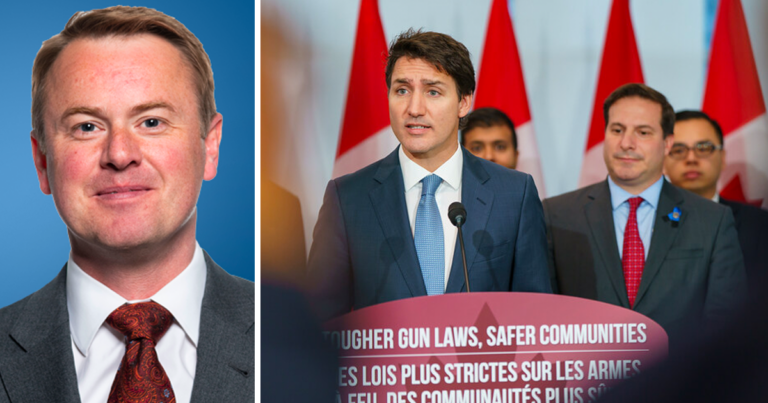
Alberta Justice Minister Tyler Shandro says the federal government must show firearms owners a “measure of decency” and extend the amnesty period for guns Prime Minister Justin Trudeau deemed illegal and pledged to buy back.
In September, Alberta was the first province to oppose federal Public Safety Marco Mendicino’s request to aid the federal government’s confiscation program. The move was promptly copied by Saskatchewan, Manitoba and New Brunswick.
Shandro now says Ottawa appears to be struggling to implement the buyback scheme “despite a mountain of money and years worth of lead time.”
“At minimum, they should proactively extend the amnesty that is currently scheduled to end in October 2023,” he said in a statement.
“Such a decision, however, would involve showing Canadian firearms owners a measure of decency, something that Minister Mendicino and this federal government is seemingly incapable of.”
Through a May 2020 order in council, Trudeau announced he was banning more than 1,500 models of firearms, including guns explicitly used for sport shooting and hunting. The Parliamentary Budget Officer said the program will cost $750 million. Those costs could balloon to $1 billion once administrative fees are taken into account.
The buyback program requires firearms owners to sell their guns to the government or have them rendered inoperable at federal expense.
Last week, Mendicino said Ottawa is working with “potential” third parties to implement the buyback scheme.
A Dec. 29 memo from Public Services and Procurement Canada (PSPC) describes the “transition” of confiscating firearms in the country’s smallest province, which already commenced in December, according to the memo.
“Prince Edward Island (PE) will be used as a pilot and will be the first point of collection based on the smaller number of firearms,” said the memo, as first reported by Blacklock’s Reporter.
Here in Ottawa, the quibbling over remote work versus in-office attendance has been strong ever since the Trudeau government mentioned its return.
Now it’s become a reason to strike. And the demand for more pay, which is almost a given, has been tacked on for good measure.
The Public Service Alliance of Canada (PSAC) and the Union of Taxation Employees (UTE) are launching nationwide strike votes today for more than 35,000 workers at Canada Revenue Agency (CRA) after talks broke down over wages and remote work.
Strike votes will be conducted from January 31 to April 7, 2023. Workers at CRA have been without a contract for more than a year, and the union declared an impasse in September.
“Workers’ wages have stalled while the cost of living has continued to rise, and everyone is feeling the strain,” said Chris Aylward, PSAC national president. “We’ve been clear negotiating wages that keep up with inflation and a sensible remote work policy are critical to reach a deal, but the Agency has refused to respond to our wage offer and still has major concessions on the table. Workers can’t wait any longer.”
The question for PSAC’s boss, who hasn’t been feeling the strain of the rising cost of living, is who wouldn’t want to work from home and save the time and cost of the commute?
Let’s answer that question for Aylward: Everyone, that’s who.
Except that when they were hired to work for the CRA, they were largely hired to sit in a cubicle in a federal building instead of complain about a return to the status quo so that the taxpayer isn’t paying for the heat, the lights and the security of a near empty federal office tower.
But they’ve now had a taste of working from home, and it’s become like drugs to an addict. And therefore it’s somehow unfair that working from home should come to an end now that the pandemic has somewhat subsided.
Now no one in the UTE has cried poverty and it would be hard to convince anyone that they are as hard-up as Ontario’s educational support workers who averaged shy of $35,000 annually. So the money demand is opportunistic.
The real demand is to continue working from home.
Back in December, during the first day of mediation, the PSAC-UTE bargaining team claimed it had no choice but to break off talks with the CRA over their refusal to budge on the remote work proposal, a key issue for members at the table.
On the eve of mediation and a week before the holidays, CRA and Treasury Board announced – without warning or negotiations with PSAC or UTE – that members will be required to return to the office in the new year, forcing workers to scramble to make child care arrangements and potentially relocate if they’ve been working remotely.
The government, said the union, is trying to impose a flawed hybrid work plan on our members while they’ve adamantly refused to provide a wage offer for workers. Meanwhile, CRA has doled out more than $29 million in bonuses to managers during the pandemic.
The bargaining team called on CRA to rescind its hybrid work plan and instead bargain in good faith on the issue. When the employer refused, the union declined to continue mediation — claiming it was another sign of disrespect towards its members from CRA and the government.
”It’s becoming clear holding strike votes to secure a strike mandate from PSAC-UTE members is the only way we’ll make real gains at the bargaining table,” the union said in a press release.
That strike vote begins at months end—the outcome of which will likely decide if all those federal offices in Ottawa and across the country will remain all but shuttered.
The use of hate symbols in Edmonton is decreasing and city officials have not issued any tickets in regard to hateful behaviour since amending a bylaw last summer, city administration revealed in a recent report.
In August 2021, the city amended a bylaw to specify that harassment may include words that are spoken, written or recorded, or signs, gestures and other visual representations.
Since then, four incidents involving hate symbols were reported to the city for investigation, including two events which were directed at city staff by members of the public, the report says.
City officials have not issued any tickets for hate symbols or behaviour to date, “using either officer discretion or other enforcement measures, in keeping with the 4Es of enforcement (Engage, Educate, Encourage, Enforce),” according to the report.
City administration is also working with the US Anti-Defamation League (ADL), an anti-hate organization.
The partnership has resulted in “Lighthouse,” a project which aims to cast “a light” on symbols of hate “by using technology to track the proliferation of hate symbols,” the report says.
“Lighthouse uses a phone application for data collection and a web application for image labelling and analysis.”
“The phone application allows users to photograph and upload images of potential hate symbols – these are stored securely, along with time and geolocation.”
The report comes after an Edmonton councillor asked city administration in March 2021 to provide an update on the use of hate symbols, including how many tickets have been issued and under what circumstances.
Use of hate symbols in graffiti is also “slightly” decreasing, the report found.
The city registered 68 complaints in 2019, dropping to 52 in 2020, and to 40 in 2021. Complaints rose to 54 in 2022.
Per the bylaw, city administration developed a standard operating procedure for incidents where hate symbols are observed or reported.
“Enforcement officers are aware of the reporting mechanisms and requirements and options for enforcement,” the report reads.
Last month, the City of Edmonton wouldn’t say by which forum racist attacks were made against Edmonton Mayor Amarjeet Sohi.
Sohi said he received racist attacks in response to the city’s joint decision with the Edmonton Downtown Business Association not to install a Christmas tree this year at this year’s Holiday Light Up event.
“I am unable to confirm whether the mayor received messages by phone, email, mail or social media,” a city spokesperson told True North.
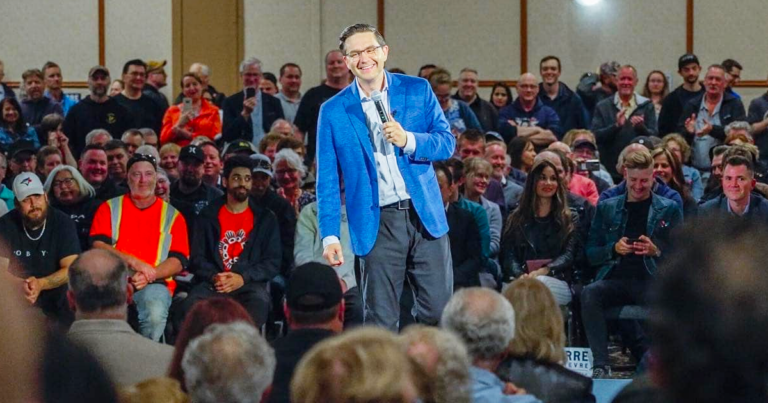
According to the latest polling data from 338Canada.com and Nanos, if an election were held today, Conservative Leader Pierre Poilievre would win and become Canada’s next prime minister.
And True North has learned that Deputy Prime Minister Chrystia Freeland will be attending the World Economic Forum’s annual meeting in Davos later this month.
Plus, in response to a recent announcement that Ottawa finalized a $19 billion deal to buy 88 F-35 fighter jets, the Canadian Taxpayers Federation tells True North that the price tag is double the original amount proposed.
Tune into The Daily Brief with Anthony Furey and Rachel Emmanuel!