Ontario school boards say students triggered by Queen Elizabeth II

Ontario school boards are claiming that students are triggered by discussions about the late Queen Elizabeth II as the province’s Education Minister Stephen Lecce orders schools to celebrate her life.

According to Global News, teachers in the York region are being told that tributing Canada’s former head of state could be “very triggering” to kids. 

A memo by the York Region District School Board claims that discussing the Queen’s death is “not encouraged.” 

“We request that school staff please refrain from developing tributes or activities to memorialize the death of the Queen, as well as displaying objects associated with the Queen for the purposes of memorializing,” the memo claimed. 

“For some, the death of the Queen is very triggering.”

Instructions included telling teachers not to play “God Save the Queen” or livestream the late monarch’s funeral “to have a break from potentially triggering media exposure.”

“Monarchies are steeped in problematic histories of colonialism which connect to ongoing present day oppression of individuals and groups. It is important to consider how each staff and student’s lived experience may potentially shape their perspective of the monarchy and be respectful of this,” the memo continued.

In response, Lecce directed the board with honouring the Queen and her role in Canada’s government. 

“We have made clear our direction that all schools are to recognize the profound impact of Queen Elizabeth II’s lifelong and unwavering devotion to public service,” Lecce told the outlet.

“I have directed this board to implement the province’s expectation, honour the Queen on the date of her funeral, and enrich students with a strong understanding of the values and enduring legacy of Canada’s constitutional democracy.”

The board has since said it will follow the provincial government’s instructions “by lowering flags and providing staff members with resources to respond to potential questions from children.”

Coutts border protester charged by RCMP

A Coutts border protester who made headlines last month when he was implicated in his friend’s conditional release has been charged by the Alberta RCMP.

Marco Van Huigenbos told True North he’s been charged with mischief over $5,000 stemming from his involvement with the Coutts border blockade.

In late August, Van Huigenbos’ close friend and fellow Coutts border protester Alex Van Herk was detained by the RCMP. Officers attempted to get Van Herk to sign a conditional release saying he would end contact with Van Huigenbos.

The condition was dropped after hundreds of people showed up to the RCMP detachment to protest Van Herk’s detainment. 

But Van Huigenbos said he knew the RCMP were coming for him when his name appeared under his friend’s conditional release. He reached out to the Alberta RCMP shortly after, he said.

Van Huigenbos said he was concerned the RCMP would place more conditions on him but with “more strategy” after seeing how things went for his friend. 

“There was definitely some concern there that they would double down on it, but thankfully they realized that there is no real reason for this condition,” he told True North.

Van Huigenbos said he’s been speaking with his friend since they left Coutts and he isn’t sure how ending communication would change things now.

There were no surprises waiting when he went to be charged on Monday. 

“It all went exactly as communicated,” Van Huigenbos said, noting there was no condition to end contact with Van Herk.

“In my mind, that was a small win,” he said. 

When Van Herk turned himself into the RCMP detachment in Fort MacLeod last month, officers told his family he would be home by dinner, but the detainment stretched into the evening as officers sought the conditional release measures that previously communicated.

Van Huigenbos said the RCMP “lied” to Van Herk and created a situation that didn’t need to happen — that hundreds of protesters showed up to the detachment to protest for Van Herk’s release. 

An RCMP officer confirmed to True North that “further charges have been pursued for Coutts.” An official release will be released Friday morning, the RCMP said.

Van Huigenbos now shares an October 4 court date in Lethbridge with Van Herk.

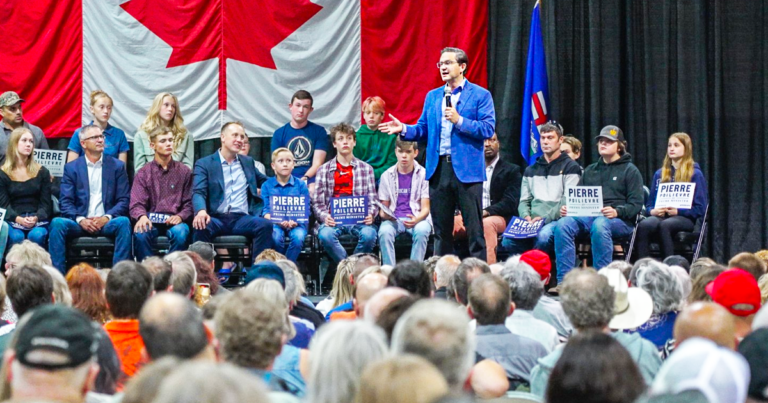
Quebec party leaders react to Poilievre’s landslide leadership win

The leaders of Quebec’s five major political parties addressed Pierre Poilievre’s landslide Conservative leadership victory this week in the midst of the provincial election campaign.

Like in the rest of Canada, Poilievre received an overwhelming amount of support in Quebec – winning 72 out of 78 ridings in the province.

Conservative Party of Quebec leader Eric Duhaime celebrated Poilievre’s win, saying in French that the latter “is a guy who will, I’m convinced, be a unifier.” 

Duhaime pointed out Poilievre’s French language skills and interest in Quebec, saying “a perfectly bilingual Conservative leader like him, it’s been a long time – since Brian Mulroney, I think – that we haven’t had one.”

He also praised Poilievre’s commitment to developing oil and gas and said that “Quebecers must understand that it is important to have a strong Conservative party in Quebec.” 

“When we look at federal politics, the most decentralizers in English Canada have often been on the Conservative side much more than on the side of the Liberals or the NDP,” he added.

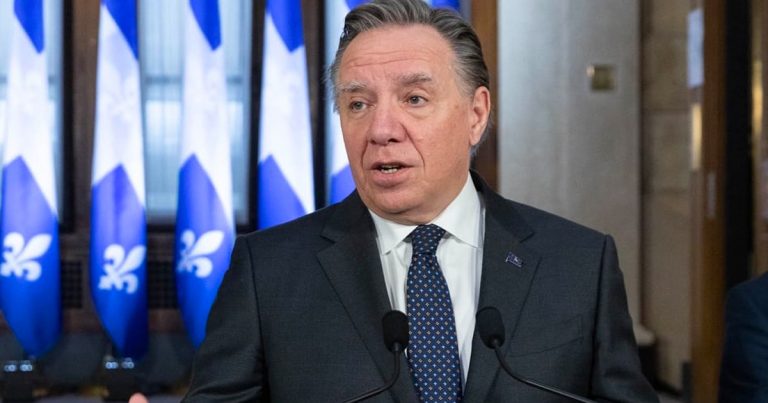
Meanwhile, Quebec Premier and Coalition Avenir Quebec (CAQ) leader Francois Legault, who endorsed Erin O’Toole’s Conservatives in the 2021 federal election, congratulated Poilievre but took a less celebratory tone.

When asked by the media about Poilievre’s win, Legault quickly said in French, “I don’t know him.”

Legault said that “no matter who the leaders of the federal parties are, I will continue to defend the interests of Quebec and Quebecers.”

Meanwhile, Quebec Solidaire leader Gabriel Nadeau Dubois reacted to Poilievre’s win by comparing him to former U.S. President Donald Trump.

“Most observers agree that Mr. Poilievre is part of a right-wing current of which Donald Trump is also part of,” said Nadeau-Dubois in French, describing it as “very hard right, very populist”

“The similarities between Pierre Poilievre’s political approach and that of Donald Trump are numerous,” he added.

Duhaime slammed Nadeau-Dubois for his comparaison, calling it “completely out of place” and “inappropriate.”

“Mr. Poilievre is a Canadian, he has nothing to do with what is happening south of our borders,” said Duhaime.

Quebec Liberal Party leader Dominique Anglade also congratulated Poilievre on his win, while Parti Quebecois leader Paul St Pierre Plamondon claimed a “Trudeau-Poilievre” tandem could revive the Quebec sovereignty movement.

Ratio’d | Woke TikTok suffers meltdown after Poilievre victory

Since Pierre Poilievre’s decisive victory last Saturday, woke activists stormed to TikTok to voice their collective meltdowns. From calling the Liberals the “centre-right” party, to blaming conservatives for choosing “the most extreme choice,” Harrison reviews some of the worst takes.

Also on the show, Harrison grieves at one of the most shocking incidents that happened in Ottawa this week… Green Party of Canada leader Amita Kuttner was “misgendered” at an online Green Party event.

Lastly, Harrison reviews Wednesday’s incident where Global News reporter David Akin heckled Pierre Poilievre and suffered a devastating ratio.

Tune into Ratio’d with Harrison Faulkner on True North!

Steven Guilbeault says he’s ignorant of what “woke” means

Liberal environment minister Steven Guilbeault said on Thursday that he had no idea what the definition of “woke” was in response to accusations launched at him and his party by Conservative leader Pierre Poilievre. 

“Frankly, I don’t even know what it means to be ‘woke’,” said Guilbeault when asked to respond to the accusations. 

“Woke” is a common term used both on the right and the left to indicate an extreme preoccupation with social justice identity issues including race and gender. 

Poilievre branded the Liberal and NDP partnership as a “radical woke coalition” in one of his first speeches as leader of the party. 

“To the prime minister and his ‘radical woke coalition’ with the NDP, here’s my commitment,” said Poilievre.

“We as Conservatives are always happy to work with any party to collaborate, and advance, and extend the interests of Canadians, but … Conservatives will not support any new tax increases and we will fight tooth and nail to stop the coalition from introducing any.”

Guilbeault has a long and storied past as an environmental activist and politician that could fall within the confines of being “woke.” 

As recently as Apr. 26, Guilbeault decried what he called “environmental racism” in the House of Commons. 

Guilbeault threw his hat behind Green MP Elizabeth May’s Bill C-226 which would “address environmental racism (and) advance environmental justice.” 

“The government supports this bill. I also want to thank her for her many years and decades of activism on environmental racism because it is a thing, despite what some people, unfortunately even in the House, think,” said Guilbeault. 

Since Poilievre’s election, some sources within the Liberal party have expressed dissatisfaction with the party being seen as too woke by Canadians. 

“We must return to a federal centre, centre-right party,” one anonymous MP told the CBC. 

“We need a government that is down to earth and less woke.” 

Liberal censorship bill a “power grab” over free speech: former CRTC commissioner

A former commissioner of the Canadian Radio-television and Telecommunications Commission (CRTC) called the Trudeau government’s internet regulation bill C-11 a “power grab over human communications.” 

According to Blacklock’s Reporter, former commissioner Timothy Denton testified before the Senate transport and communication committee on Wednesday. Denton is currently serving as a chair on the Internet Society and has been vocal about his opposition to the bill in the past. 

“It captures virtually all online audio and video,” said Denton. “(This bill is a) power grab over human communications across the internet and therefore deserves our distinct disdain.” 

Bill C-11 would allow the CRTC to essentially regulate what content Canadians post online. The government claims the bill’s objective is to update the Broadcasting Act, which would force big tech companies like Facebook to pay for Canadian content. However, the law has received wide condemnation as an affront to free speech by industry experts. 

“C-11 declares all audio and visual content on the internet to be broadcasts,” said Denton. 

“It’s a kind of reverse takeover of the internet. The tiny Canadian broadcasting system can take on the world of the internet by the mere trick of redefining ‘broadcasting.’ C-11 is that bold and that absurd.”

Although Canadian Heritage Minister Pablo Rodriguez has maintained that the law would not extend to user-generated content, current CRTC chair Ian Scott admitted during testimony in the House of Commons that it would subject said content to the regulatory regime. 

“[Section] 4.2 allows the CRTC to prescribe by regulation user uploaded content subject to very explicit criteria. That is also in the Act,” said Scott. 

“The commission could, for example, issue certain rules with respect to discoverability, could perhaps issue rules…to respond to certain concerns on accessibility.”

University of Ottawa professor and chair in internet and e-commerce law Michael Geist also penned a blog post on the flaws of Bill C-11 following Wednesday’s hearings. 

“The effect of significant new regulatory costs on these (big tech) services is likely to spark one of two responses: some services will simply pass along the costs to consumers in the form of new Cancon surcharges, while others will likely block the Canadian market altogether,” wrote Geist. 

The Rupa Subramanya Show | The WEF in Chrystia Freeland’s own words

Before becoming Canada’s deputy Prime Minister and simultaneously sitting on the board of trustees of the World Economic Forum (WEF), Chrystia Freeland authored a scathing critique of the global organization and the people that attend the annual summit in Davos.

The book titled, Plutocrats: The Rise of the New Global Super Rich and the Fall of Everyone Else writes about how plutocrats — the super-elites who sit at the top of the economic, political and social pyramid — attempt, and often succeed, in turning the rules of the game in their favour, by shaping government policy and public opinion.

The WEF Managing Director Adrian Monck told the CBC that questioning the WEF and their plans makes you a “conspiracy theorist” and that you should be doing something better with your time. If this is the case, why isn’t Freeland seen as a “conspiracy theorist” by her WEF peers?

On this episode of The Rupa Subramanya Show, Rupa discusses how voicing the same arguments that Freeland wrote in her 2012 book today will get you labeled a “conspiracy theorist” by the legacy media in Canada. How did we get here?

Tune in to the latest episode of the Rupa Subramanya Show to find out.

SUBSCRIBE TO THE RUPA SUBRAMANYA SHOW

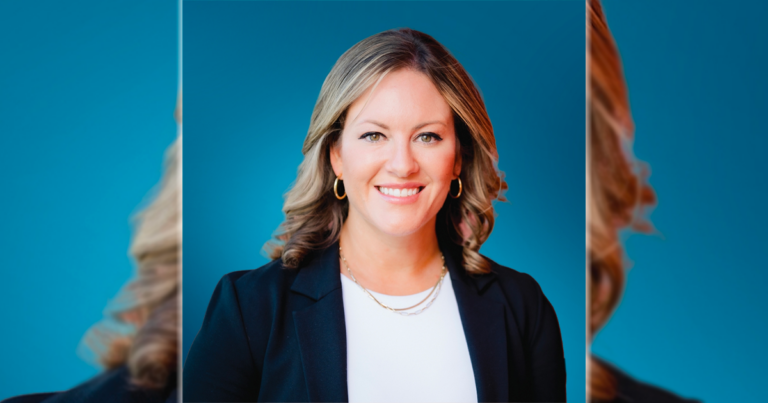
Schulz sends supporters email pretending to be NDP supporter who’s afraid of her

United Conservative Party leadership candidate Rebecca Schulz sent supporters an email pretending to be an NDP supporter begging Conservatives not to vote for Schulz because the NDP are afraid of her.

UCP members on Schulz’s mailing list received an email from “Your Friendly Neighbourhood NDP Supporter” with the subject “The NDP’s Worse Nightmare.” The actual email address listed is [email protected].

The email is written to Conservative voters and says the UCP appeared to be finished governing until Schulz came on the scene as a candidate to take over as party leader and Premier. 

“We’re terrified of Rebecca Schulz,” the email says. “Some of us actually say she’s the NDP’s worst nightmare.”

The email says Schulz is the only candidate who has a chance of beating the NDP due to her “clean record” and “fresh perspective,” which will win in both urban and rural areas. 

“She is leading with common sense, compassion, and strong Alberta conservative values,” the email reads. “We don’t have an answer for that.”

The NDP were ready to win the next provincial election and move forward with its agenda to phase out the energy sector, blow the surplus budget and “cozy up the Trudeau Liberals,” the email continues.

“We could never figure out how to make our budgets balance,” it reads. “Trudeau told us that our budgets would balance themselves, but that strategy didn’t pan out.”

The email says the NDP thought it would win the next election but “our celebration may be cut short” because of Schulz’s candidacy. 

The Schulz campaign says the email was “clearly” from Schulz as it contains Rebecca’s logo and was sent from her email.

“The intent of the email was to ring the alarm on the possibility that the NDP will be the ones who come out as winners should we get this wrong and that is precisely what it has done,” the campaign said in a statement to True North.

“In this race, some candidates, members, and media have been so singularly focused on the legitimacy of the Sovereignty Act that we’ve missed the big picture – that the outcome of this race will impact on whether we win or hand the province back to the NDP in Spring 2023.”

The email address [email protected] is the same email listed on Schulz’s leadership campaign website. 

The email concludes by urging readers not to “click the link below” to donate to the Schulz campaign. 

“If we’re facing Rebecca in 2023, we are going to need the biggest head start possible.”

The email is signed from “Your Friendly Neighbourhood Socialist.”

The fake email campaign strategy comes as Schulz has been falling behind in the polls.  

A Mainstreet Research survey conducted earlier this month found that Smith looks poised to win the Premiership with 44% support of party backers. 

Another 20% said they backed Brian Jean in the leadership race, followed by former finance minister Travis Toews with 19%, and 7% for Todd Loewen. Schulz received 6%, Leela Aheer had 3% and Rajan Sawhney had 1%.

Editor’s Note: This article has been updated to include comment from the Schulz campaign.

Scotiabank fires back at Trudeau’s claim that new spending won’t drive inflation

One of Canada’s largest banks is disputing claims by Prime Minister Justin Trudeau that more government spending won’t further inflation growth. 

Trudeau made the remarks while revealing an affordability and housing plan on Tuesday, which included a $2.5 billion sales tax rebate for low-income earners and $700 million to be put towards a dental-care plan among other measures. 

“We are retaining fiscal firepower and at the same time ensuring that those who need support don’t get left behind,” said Trudeau. 

“(This spending is) sufficiently targeted that we are confident they will not contribute to inflation.” 

Trudeau’s assurance that new spending wouldn’t drive inflation prompted Scotiabank to argue against the prime minister’s claims. 

“It seems sensible to assume that this will add to pressures on measures of core inflation,” economist Derek Holt told investors. 

“Any belief that it will ease inflationary pressures must have studied different economics textbooks.”

The warning comes as multiple banks including the Canadian Imperial Bank of Commerce (CIBC) and the Bank of Montreal (BMO) have published statements about how additional spending could harm the economy. 

“While there are times where fiscal largesse is just what the economy needs, these aren’t such times,” wrote CIBC chief economist Avery Shenfeld on Friday. 

“In a period of high inflation and excess demand, cutting taxes or handing out cheques can add fuel to the inflationary fire, and make the job of a central bank that’s raising rates to cool demand all that more troublesome.”

BMO officials have also stated that printing money to help assuage inflation would backfire. 

“We’re not going to deny that there are households seriously in need of help right now in this inflationary environment,” said BMO senior economist Robert Kavcic. 

“But, from a policy perspective, we all know that sending out money as an inflation-support measure is inherently inflationary.”

Conservative leader Pierre Poilievre had similar concerns as Canada’s big banks, claiming Trudeau was “pouring more gasoline on the inflationary fire.”

On Tuesday, Poilievre unveiled his leadership team with the mandate to “stop Trudeau’s tax hikes and end #JustinFlation so workers and seniors can thrive.”

Feds stand by Mexican visa lift as cartels take over fentanyl trade

The Trudeau government is standing by its decision to no longer require a visa for Mexican citizens even as major cartels have come to dominate trafficking fentanyl and other deadly opioids, True North has learned.

An Aug. 30 investigation by Wall Street Journal details how Mexico’s Sinaloa and Jalisco New Generation cartels have overtaken traditional fentanyl suppliers like China in smuggling fentanyl across North America. 

As it stands, Canada no longer requires people travelling from Mexico to acquire a traditional visa to enter the country. 

Prime Minister Justin Trudeau lifted the requirements on Dec. 1, 2016, allowing Mexican citizens to only file a $7 Electronic Travel Authorization (eTA) which only takes minutes to complete to be granted entry into Canada. 

When confronted with the cartel’s growing influence on peddling toxic drugs throughout North America, Immigration, Refugees and Citizenship Canada (IRCC) told True North that while fighting organized crime was a top priority, the eTA requirement will remain in place. 

“The visa lift underscores the importance Canada places on its friendship with Mexico and the closer ties stemming from the removal of the visa requirement,” said IRCC spokesperson Jeffrey MacDonald in an emailed statement. 

“As part of the process leading to the lifting of the visa requirement, Canada worked closely with its Mexican partners to put in place measures to protect Canada against the risks posed by the arrival of bad faith travellers from Mexico. The Government of Canada carefully monitors any behavior that threatens the security of the country and takes appropriate measures to remedy the situation.” 

Fentanyl and its derivatives have been a leading cause in drug toxicity deaths across Canada. Last year, opioid-related deaths reached 21 per day according to the Public Health Agency of Canada. As of Dec. 2021, an estimated 30,000 people have died as a result of opioid drug toxicity. 

Soon after the visa lift, asylum claims made in Canada by Mexican citizens spiked dramatically. By 2018, immigration offices saw an 840% increase in claimants when compared to the year prior to the lift. 

Cartel involvement in the opioid trade has prompted the US Drug Enforcement Agency (DEA) to respond. 

“Those cartels are acting with calculated, deliberate treachery to get fentanyl to the United States and to get people to buy it through fake pills, by hiding it in other drugs, any means that they can take in order to drive addiction and to make money,” said DEA Administrator Anne Milgran in Aug. 

True North reached out to the Canadian Border Services Agency (CBSA) to ask what border officials are doing to stem the tide of fentanyl trafficking and whether they are working with their Mexican and US counterparts to address the issue. 

“The CBSA does not comment or speculate on trends. Several elements can have an impact on the number of seizures from year to year. Several factors can impact statistics, such as traveller volumes and/or size/volume of a seizure, as well as ongoing investigations,” CBSA spokesperson Rebecca Purdy told True North. 

“The (CBSA) also works regularly and closely with our domestic and international law enforcement partners in a joint effort to ensure border security, including intelligence and enforcement,” she continued. 

“By means of numerous agreements (both national and international), the CBSA engages and shares information with partners to ensure that illegal goods and nefarious individuals do not enter the country.”

In 2019, it was reported that Canadian authorities lost track of an estimated 400 suspected Mexican cartel members including known hitman Romualdo Lopez-Herrera. Additionally, the CBSA saw an 80% increase in the number of drugs seized along the Canada-US border as well as cases of inadmissibility rising by 500%