Calgary mayor and majority of councillors refuse to consider pay freeze for themselves

An attempt by a group of Calgary city councillors to freeze council’s salaries failed on Monday after Mayor Jyoti Gondek and a majority of council members rejected adding the motion to the agenda. 

The proposal, which would implement a fourth consecutive wage freeze for city council, was put forward as an urgent motion by Calgary city councillor Dan McLean. This proposal was signed by fellow councillors Sonya Sharp, Andre Chabot, Sean Chu and Jennifer Wyness. 

“Do you think the Mayor and City Council deserve a raise while so many Calgarians are struggling in this current economic climate?” said McLean in a tweet. “I do not, so I’ve put forth a motion to freeze our wages at Monday’s Combined Meeting of Council.” 

Gondek ruled against adding the proposal to the meeting’s agenda, arguing it had been “sprung” on council at the last minute, according to the Calgary Herald. 

“I didn’t know it was coming,” said Gondek. “In my opinion, there’s a more fulsome discussion to be had around this one and that’s why I’m not accepting it as urgent.”

City council had voted to freeze salaries since 2018. Base pay for city councillors is set at $113,326 per year, and the mayor makes $200,586. 

Gondek said supporters of a wage freeze should consult with the independent committee that was ordered to review salaries of members of Calgary City Council. 

The committee, which was struck in 2020, suggested adjustments to council salaries should come from a formula based on Alberta’s average weekly earnings. 

McLean and his supporters said the formula will lead to a pay increase in 2022, and they are opposed to it because of Calgary’s economy. 

Some councillors expressed frustration that the proposal for a pay freeze was rejected from the agenda and yet an urgent motion on a response to Quebec’s Bill 21 was added.

Supporters of the wage freeze tried to challenge Gondek’s decision, but they lost the vote 9-6. 

“I was very disappointed that it was blocked by the mayor and some of her followers,” McLean told the Calgary Herald. “I would’ve liked to have seen a healthy debate but it was blocked before it was brought forward.”

Calgary City Councillor Gian-Carlo Carra said council should not be involved in setting salaries. 

“Previous councils have spent quite a bit of time setting up a situation where how we’re compensated is reviewed by independent citizen boards, benchmarked to well-established performance (indicators) of our economy,” said Carra. “Why anyone would want to try to open that black box and get involved is deeply problematic.”
Conservatives and Liberals strike last-minute deal on leave for bereaved parents

Conservative and Liberal MPs banded together just before Christmas break to extend bereavement leave for parents who have lost a young or disabled child.

The effort was spearheaded by Conservative MP Tom Kmiec who lost his daughter Lucy-Rose when she was 39 days old in 2018. Kmiec has been fighting to give grieving parents longer leave for some time now. 

Kmiec says he was inspired to pursue the law due to his and his wife’s struggles. 

“I experienced it first hand, and read so many stories of people who were so deep in their grief they could not work,” said Kmiec. 

“There were intense negotiations. They made an offer that if they accept to put in bereavement leave, that we would expedite the bill.” 

Kmiec’s private members bill was up for debate prior to the 2021 election, but the dropping of the writ brought it all to a halt.

Kmiec’s bill received bipartisan support this week after labour minister Seamus O’Regan struck a deal with his counterpart, Conservative MP and labour critic Scott Atchison. 

“It became evident to me that because of Mr. Kmiec’s personal tragedy that the entire Commons felt very strongly about it,” O’Regan said. 

“I know they were coming to me with something that meant a lot and was born from a very personal tragedy.”

The law change received royal assent last week and will now allow grieving parents in the public sector or federally-regulated industries to take eight weeks of unpaid leave. 

Prior to the change, bereaved parents could take only ten days of leave total – five paid and five unpaid. 

The extended leave is available to parents who lose a child under the age of 18 as well as those who have a stillborn baby following 20 weeks gestation. The parents of a disabled child who passes away are also eligible.  

A Christmas wish list for taxpayers

It’s been an expensive year for taxpayers with an increase in the carbon tax, an unnecessary federal election, and a hike in alcohol taxes among other expenditures. Franco Terrazzano of the Canadian Taxpayers Federation put together a wish list for taxpayers with a dozen items ranging from ending the gas tax-on-tax to ending automatic pay increases for members of parliament. He joined The Andrew Lawton Show to discuss his list, and also the stories he’ll be watching out for in 2022.

SUBSCRIBE TO THE ANDREW LAWTON SHOW

Trudeau appoints Liberal donor to Alberta superior court

Prime Minister Justin Trudeau has appointed another long-time Liberal party donor to a Canadian court of law. 

According to Blacklock’s Reporter, Attorney General David Lametti made the announcement on Monday. The judge in question, Michel Bourque, was appointed justice of Alberta’s Court of Queen’s Bench. 

Bourque’s appointment was announced one day after Parliament went on Christmas recess. 

“I wish Justice Bourque every success as he takes on his new role. I am confident he will serve the people of Alberta well,” said Lametti. 

Bourque has donated extensively to the Liberal party over the past four years. His contributions total $14,497 spread out over 95 different donations. 

Additionally, Bourque has contributed a total of $8,388 to the Alberta New Democratic Party.

Conservatives have accused the Liberals of stacking judicial benches in their favour from a pool of ardent party supporters. 

This summer, Conservative MP Michael Cooper put forward a motion in the Commons justice committee to review court appointments which he characterized as “a list of Liberal Party members, supporters, volunteers and donors.” 

“This raises questions about whether certain candidates for appointments were given preferential treatment,” said Cooper of his motion. 

“There have been allegations substantiated about political interference directed by the Prime Minister’s Office with respect to the appointment of judges.” 

Cooper’s motion was rejected by the Liberals who claimed the suggestion that they were stacking the courts was offensive. 

“There are many lawyers who are practicing in the courts in every jurisdiction in Canada who are active politically,”  said Liberal MP James Maloney. “Should that, does that disqualify them from being appointed to the bench? No, of course not. It’s outrageous to suggest that.”

Maloney went on to claim that he found the motion troubling, disturbing and offensive. 

“Let me also add our justice minister is one of the most ethical, decent, honest people I’ve ever had the pleasure of working with,” he said. “This motion suggests that might be in question. That alone is incredibly offensive.”

COVID news reports often look more like propaganda than journalism

When it comes to reporting on COVID in Canada, the legacy media are failing Canadians. 

Journalists don’t report the facts, they only push a narrative – even if it means burying important facts. The result is that journalists sound like government propagandists and their reports look like vaccine infomercials. 

Today on The Candice Malcolm Show, Candice is joined by Toronto Sun comment editor and columnist Anthony Furey to discuss the media groupthink when it comes to COVID. 

Throughout the pandemic, Furey has been willing to go against the grain, report inconvenient facts and push back against media nonsense – and as a result, some legacy journalists have attacked him for it.

SUBSCRIBE TO THE CANDICE MALCOLM SHOW

Health Minister complains of hate mail over allowing grocery stores to allow vaccine passports

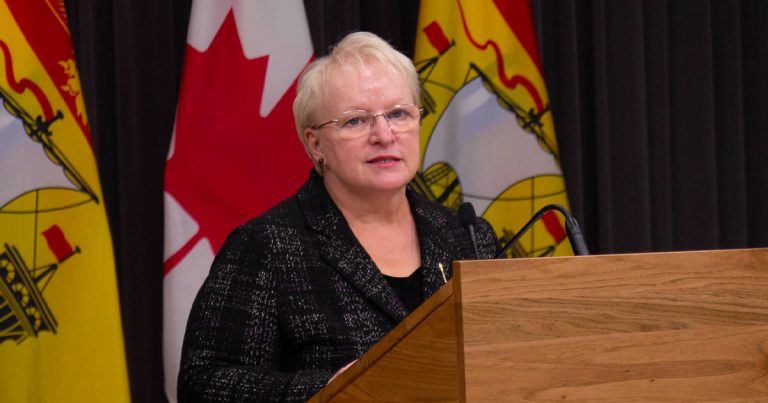
Days after reversing a decision that allowed grocery stores to ban unvaccinated Canadians, New Brunswick health minister Dorothy Shephard is saying some of the mail she received over the policy “crossed the line.”

In an interview with the Times & Transcript, Shephard describes receiving a “huge onslaught” of the material, including hundreds of emails.

“I think I have a thick skin,” Shephard says. “It doesn’t change the fact that some of these emails have crossed the line.”

The Department of Health confirmed that particularly threatening examples have been sent to the Department of Justice and Public Safety for assessment. The RCMP would not confirm whether it was investigating.

One of the emails accuses Shephard of “literally causing people to starve to death this winter,” while another advises her to “sleep with one eye open.”

“People like you always get what’s coming to you,” another states. The writer goes on to wish Shephard “a slow and painful death.”

Shephard did not mention the number of emails she had received in total, nor the proportion of the pushback she deemed legitimate. True North reached out to Shephard’s office but received no response.

Lawyer Andre Memauri with the Justice Centre for Constitutional Freedoms told True North that the minister shouldn’t be surprised with the reaction, given what the policy had authorized.

“Authorizing the potential denial of access to food is a reprehensible misuse of governmental authority,” Memauri says. “The Justice Centre publicly denounced the Government’s Order of December 4, 2021 because it is unconstitutional and should it have remained in place, it would have necessitated legal proceedings,” Memauri said.

“While the Justice Centre never condones threats or acts of violence against any person, it ought to be no surprise to the Honourable Minister that authorizing the denial of grocery shopping to tens of thousands of people might elicit a strong emotional response from the community.”

People’s Party of Canada leader Maxime Bernier also has some strong words for Shephard’s complaints. Having originally called banning unvaccinated Canadians from grocery stores a “red line,” he takes issue with any personal distress the minister claims over the pushback.  

“It’s too bad the minister needed a huge public backlash to realize the stupidity of her decision and to reverse it,” Bernier says. “Anyone with a brain and with a minimum of compassion would not have adopted such an abhorrent policy in the first place.”

“As for the hate content of any letter she received, I am not responsible for what individual Canadians write when they react to a policy debate and contact a minister. That’s her problem. Instead of complaining about letters, she might want to reflect on the anguish she caused among New Brunswickers and all Canadians when she escalated the level of discrimination and segregation that millions of them have had to endure because of authoritarian government policies during this pandemic.”

Focusing on extreme or illegal fringe elements has long been a way for politicians and mainstream media to delegitimize protests against lockdowns and vaccine mandates.

Earlier this month in Victoria B.C., officials and legacy media reporters condemned an anti-vaccine-mandate protest for including politicians being hanged in effigy even though organizers said they hadn’t invited the ones who staged the hangings.

“We tried to remove them, but they were not willing to move,” organizer Joseph Robert told Global News. “…It had nothing to do with the essence and what the organization had in this event.”

Despite being reversed due to backlash, the New Brunswick policy on vaccine passports for grocery stores was deemed fake news by several online outlets and fact-checkers.

Taxpayer watchdog demands Ontario government stop giving money to political parties

The Canadian Taxpayers Federation (CTF) called on the Ontario government to fulfil its promise to scrap the province’s political party funding on Monday. 

“Despite promising to end sleazy handouts to political parties when he ran for office, Ford has failed to scrap the system,” said CTF Ontario director Jay Goldberg. “He isn’t alone: All four of Ontario’s major political parties have helped themselves to millions of dollars from taxpayers’ wallets.”

Goldberg said all four of the province’s main political parties will take a record $14 million in subsidies by the end of 2021. 

These per-vote subsidies amount to political welfare, according to Goldberg. He said taxpayers’ money is being spent on lawn signs, attack ads and junk mail. 

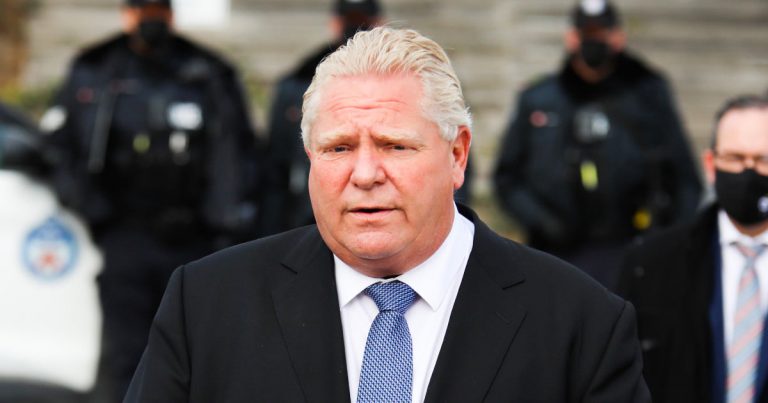
Ontario Premier Doug Ford committed to scrapping per-vote subsidies in 2018 but changed his mind in February. 

Ontario plans on keeping per-vote subsidies in place until 2024. 

Goldberg said it is wrong for Ontario to have them at all. 

“The Ford government used the pandemic as an excuse to keep the party with taxpayers’ money going, but the government extended the per-vote subsidy all the way until the end of 2024,” he said. “The premier needs to keep his promise and scrap political welfare.”

Former Ontario premier Kathleen Wynne created the per-vote subsidies system in 2014. Under Wynne’s plan, political parties received an annual 55 cent payment for every vote they garnered in the most recent provincial election. 

Ford promised to end these subsidies, but instead attorney general Doug Downey announced the province would be increasing them by eight cents a vote. 

Downey claimed the raise was necessary because political parties needed help during the COVID-19 pandemic. 

“COVID came along, and we want to make sure that we have good, vigorous debate here in Ontario,” said Downey. 

Canada and allies concerned about “erosion of democratic elements” in Hong Kong

Following a pro-Beijing sweep in Hong Kong’s legislative council election on Sunday which saw a record low voter turnout of only 30.2%, Canada and its allies have expressed “grave concern” about the undemocratic nature of the election.

According to Global News, foreign ministers of Canada, Australia, New Zealand and the United Kingdom issued a joint statement with the United States’ secretary of state on Monday in response to the election. 

“We … express our grave concern over the erosion of democratic elements of the Special Administrative Region’s electoral system. Actions that undermine Hong Kong’s rights, freedoms and high degree of autonomy are threatening our shared wish to see Hong Kong succeed,” the statement reads.

“The overhaul of Hong Kong’s electoral system introduced earlier this year reduced the number of directly elected seats and established a new vetting process to severely restrict the choice of candidates on the ballot paper. These changes eliminated any meaningful political opposition.”

Canada and its allies urged China to respect the rights and freedoms of the people of Hong Kong. 

Sunday’s election saw the lowest voter turnout since 1997 – when the British handed Hong Kong over to China. 

According to the BBC, activists were arrested if they urged people to boycott the election or to leave their ballots blank in protest. 

In March, Beijing passed a “patriots governing Hong Kong” resolution, which significantly altered Hong Kong’s legislative council.

Under Hong Kong’s new laws, only 20 of the 90 seats are elected by the public. Most of the lawmakers were appointed by pro-Beijing bodies to ensure a majority in the legislature. Further, all candidates must be vetted by a pro-Beijing committee prior to being nominated. 

Sunday’s election was the first election since China introduced its national security law, which targeted pro-democracy protesters and gave the government unprecedented powers to oversee the media, internet, schools and social organizations. 

Trudeau government deposited $26 million into wrong bank accounts last year

The Canadian government sent almost $26 million to the wrong bank accounts last year, and more than $10 million of it may be gone forever, according to CBC News. 

Figures tabled in the House of Commons show the Canadian government sent 22,170 direct deposits to the wrong bank accounts between April 1, 2020 and March 31, 2021. This compares to 9,619 payments worth a total of $6.6 million sent to wrong accounts in the previous fiscal year.  

The number of incorrect deposits reported during the 2020-2021 fiscal year is the highest since 2012. The $25.9 million is the second-largest annual amount of misdirected cash reported since 2009. 

The government blames the pandemic and COVID-19 support programs for losing track of the money.

“There was a significant increase in payments issued from April 1, 2020 up to March 31, 2021 to individuals and businesses as a result of the actions taken by the government to support hardship created by the COVID-19 pandemic,” spokesperson for Public Services and Procurement Canada (PSPC) Stéfanie Hamel told the CBC.

While the Canadian government was able to recover $7.1 million in misdirected payments last year, $10.2 million is cited as “not expected to be recovered.” The government said it hopes to recover another $8.6 million in the coming years. 

The Canadian government oversees billions of dollars in direct deposit payments every year. Hamel told CBC News that a small percentage of them ends up in the wrong places. 

“Some reasons for misdirected deposits may include manual errors, wrong information received from the recipient (i.e. the recipient provides incorrect banking information), wrong information received from the department, and potentially, fraud,” she said. 

She said the department has “rigorous processes in place” to recover money deposited into the wrong accounts, and it makes a “sustained effort…within the parameters of the law” to recover the money. 

Since the pandemic began, the Trudeau government has spent more than $380 billion. 

As a result of the government’s copious spending, Canada’s inflation rate spiked to a 18-year high of 4.7% in October. The high rate is the most inflation the country has seen since February 2003. 

Canada’s inflation crisis has resulted in a surge of prices among goods, including gasoline, shelter and groceries.

The CTF’s federal director Franco Terrazzano believes the government is “pouring fuel on the inflation fire.”

“The cost of living is soaring and Canadians should be worried about how the government is going to pay for its unprecedented spending and hundreds of billions of dollars in new debt. The feds need to stop dishing out cash we don’t have and pouring fuel on the inflation fire. Freeland needs to hit the brakes on this government’s runaway spending train.”

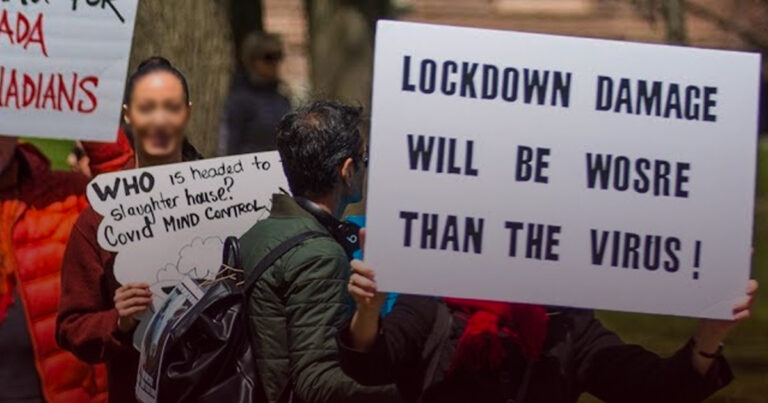
Poll shows support for lockdowns declining among Canadians

As governments across Canada implement strict lockdown measures in an attempt to curb the spread of the Omicron variant of COVID-19, a new poll indicates an increasing number of Canadians oppose lockdowns.

According to an Ipsos poll conducted on behalf of Global News, while the majority (56%) of Canadians agree that another lockdown is needed, the number of people that support strict public health measures is dwindling.

“Although a majority still support lockdown measures, support is dropping,” Ipsos CEO Darrell Bricker writes. 

“In July of 2021, 69% said they would support more lockdown measures if a fourth wave of the pandemic arose, which dropped to 63% in September, and is now just 56% now that the Omicron wave is upon us.”

The poll also reveals that the majority of Canadians disapprove of Prime Minister Justin Trudeau’s handling of the pandemic. According to Ipsos, 51% of Canadians either strongly or somewhat disapprove of Trudeau’s performance. 

“Compared to May of 2021, the Prime Minister’s COVID-specific approval rating is down by 5 points to 49%,” writes Bricker.

In comparison, Canadians have a more positive opinion of Canada’s chief officer of health Dr. Theresa Tam (64%) and US President Joe Biden (58%).

The latest Ipsos poll comes at a time when governments are enforcing stricter health measures in light of a rapid increase in COVID-19 cases.

In Quebec, venues such as bars, cinemas, gyms and spas will be forced to shut down after 5pm, and residents who deemed “non-essential employees” will be required to work from home. 

In Ontario, the government is mandating a 50% capacity limit for indoor public settings and reducing social gathering limits to 10 people indoors and 25 people outdoors. 

According to a report by Statistics Canada in July 2021, the consequences of government-enforced lockdowns killed more Canadians under the age of 65 than the COVID-19 virus itself.

In a report titled “Provisional death counts and excess mortality,” the government agency reviewed the number of deaths between January 2020 and April 2021 and concluded that 5,535 Canadians under the age of 65 died because of “indirect consequences” due to the pandemic.

Over the same time period, 1380 Canadians in the same age group died from COVID-19 itself.