Four in ten Canadians say Trudeau belongs on Santa’s naughty list

A sizable number of Canadians believe Prime Minister Justin Trudeau deserves to be on Santa’s naughty list this holiday season, according to an Ipsos poll conducted for Global News. 

Ipsos asked Canadians to look at a list of high-profile public figures and choose whether they belonged on Santa’s naughty list or on his nice list. 

The poll found 40% of respondents said Trudeau should be on Santa’s naughty list. This was compared to 18% who believed the Liberal leader belonged on the nice list. 

Ipsos CEO Darrell Bricker said in an interview with Global News that “Justin Trudeau is right up there, in terms of the notoriety and difficulty that he has with Canadians right now.”

There were 26% of Canadians who believed Chinese President Xi Jinping should be on the naughty list. Only about 3% said Xi should be on the nice list. 

Xi was involved with detaining Canadians Michael Kovrig and Michael Spavor for more than 1,000 days. The Chinese government has also been accused of committing genocide against Uyghur Muslims. 

“It’s probably just a lack of awareness of who (Xi) is,” Bricker told Global News. “(Of) the people who do have an opinion of him, the percentage that put him on the nice list is way lower than the percentage that puts him on the naughty list.”

Russian President Vladimir Putin beat out Trudeau for the top spot on the naughty list, with 44% of respondents saying he belonged there. 

While Putin and Trudeau took the top spots, other public figures also scored high in terms of naughtiness. 

Meta CEO Mark Zuckerberg came in third place with 32% putting him on the naughty list, followed by Ontario Premier Doug Ford at 29% and Amazon founder Jeff Bezos at 26%. Alberta Premier Jason Kenney earned 19%.

Referring to major technology companies such as Meta and Amazon, Bricker says they used to be well-respected. However, he says, “their motivations and the effect that they have on the world (are problems) people feel that they haven’t been as accountable for as they should be.”

Bricker added that Ford and Kenney might be ranking high on the naughty list because of how they have handled the Omicron variant. 

The poll found Canada’s health care workers are the most likely to find themselves on Santa’s nice list, with 54% of respondents saying they deserved to be there. Bricker said health care workers are ranked high because Canadians “see them as the champions leading us through this crisis.” 

Actor Ryan Reynolds came in a distant second for the nice list with 29% support.

The Queen came in third place, with 1 in 4 Canadians saying she has been good. Bricker said the Queen often “does really well” in these rankings.

The poll was conducted between Dec. 10 and 15 with a sample size of 1,001 Canadians aged 18 and up surveyed online. The poll is accurate within ± 3.5 percentage points, 19 times out of 20. 
“I pray everyday for Justin Trudeau. I pray that he will resign” (Ft. Rev. Majed El Shafie)

On a special Christmas edition of The Candice Malcolm Show, Candice is joined by Rev. Majed El Shafie. Majed is a refugee who survived torture and persecution in Egypt because of his Christian faith. He now runs One Free World International, a Canadian human rights organization that saves persecuted Christians. 

Christians remain the most persecuted religious group on the planet. So why do politicians like Justin Trudeau and the legacy media ignore their plight?

Majed has some choice words for our Prime Minister — he says it’s time to ditch political correctness, stop pandering and start defending our values and helping people in need, regardless of their creed or faith. 

We encourage all of our listeners and viewers to support Majid and the important work that he does. Learn more here: https://ofwi.org/

SUBSCRIBE TO THE CANDICE MALCOLM SHOW

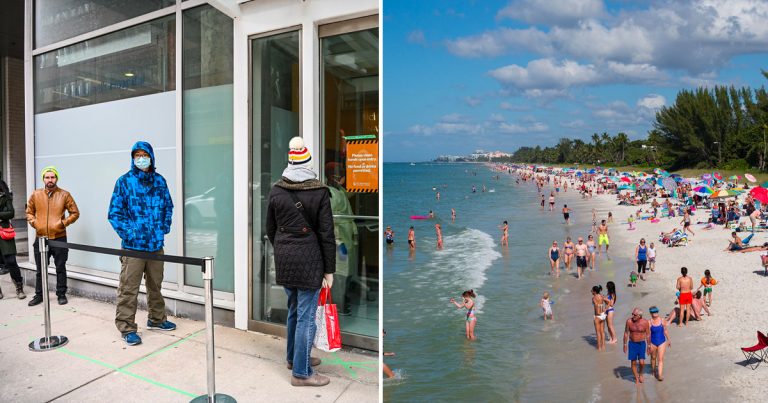
LEVY: Ontario and Florida could not be more different

They’re uncanny, the differences between Florida and Ontario. 

While seniors and other people down here are enjoying normal freedoms, my mother is locked away in an Ontario retirement home.

I noticed the difference – the logical easing of draconian restrictions – as soon as I crossed the border into the United States a month ago and started driving south. In most places where I stopped – from West Virginia to Charlotte, North Carolina to Savannah, Georgia – masks were not a must unless we took an Uber.

After nearly two years of being entertained primarily by online apps and virtual concerts, it has been so refreshing — so free — to take in a Broadway show, a live indoor concert and a movie where we could sit and munch on popcorn while sipping diet Coke.

As ridiculous as the measures were before I left Toronto, they have become outrageously draconian and cruel with the onset of the Omicron variant – a highly contagious strain of COVID that presents as mild in the vast majority of cases, particularly those who are fully vaccinated.

Some long-term care and retirement homes have gone into complete lockdown (à la 2020) over one case of Omicron. One such home is where my 88-year-old mom resides.

The residents are not allowed to leave their rooms, the home or – to my great surprise – the country. My mom was supposed to come down to Florida next week for some relief from the winter and the over-the-top, bordering-on-communist-China-type rules in Canada. Last year was horrible for her, as it was for many other seniors. I was planning to fly up next week to fetch her.

Her bags were already packed.

I’ve been threatened with fines if I dare try to take her out of the home and down south.

Seniors like her have already lost two years of their life to COVID restrictions. Heaven forbid Toronto Public Health officials should have some compassion and try to compromise.

Weak-willed politicians – ruled by unaccountable and power-mad medical officers of health and Twitter doctors – have once again become hysterical nincompoops preying on people’s fears. 

Most have lost all credibility.  They have repeatedly moved the goal-posts from assuring us we’d be free to resume our lives after two vaccines, to peddling the third booster, to telling COVID-lockdown-weary Torontonians and Ontarians it would be best to enjoy Christmas virtually or to meet with a very small number of people.

I have to laugh at the stories of rapid test kits being snatched up at LCBO stores and shake my head at the fact that many Torontonians will have to wait two months to get their boosters.

While an ordinary lab can get testing results turned around in 30 minutes for rapid antigen tests and within 36 hours for the PCR test, TPH – complaining that they don’t have enough highly paid bureaucrats to handle the backlog – is taking 72 hours or more.

When we arrived in Florida, we got our Moderna booster within days at a neighbourhood pharmacy. The whole process was quick and efficient.

It is a relief to walk into grocery, clothing and drug stores where someone isn’t standing at the door warning us to wear our masks, or having a fellow shopper chastise me for not standing exactly six feet away from him or her.

They’re only a couple days’ drive apart, but in terms of freedom Ontario and Florida seem like different worlds.

But that’s largely because our Canadian politicians are weak-willed and have passed the buck to unelected and power-hungry medical officers of health.

They’re too tone-deaf to recognize that people are tuning them out.

Are social conservatives losing the culture war?

As Andrew Breitbart famously said, politics is downstream of culture. Yet at times it feels like conservatives are losing the big cultural and political battles. In this edition of The Andrew Lawton Show, Andrew talks to pro-life activist Jonathon Van Maren about social conservatism, pro-life politics, and Erin O’Toole’s leadership as well as the state of the Conservative Party of Canada.

SUBSCRIBE TO THE ANDREW LAWTON SHOW

Alberta boots show the human toll of compulsory vaccine mandate

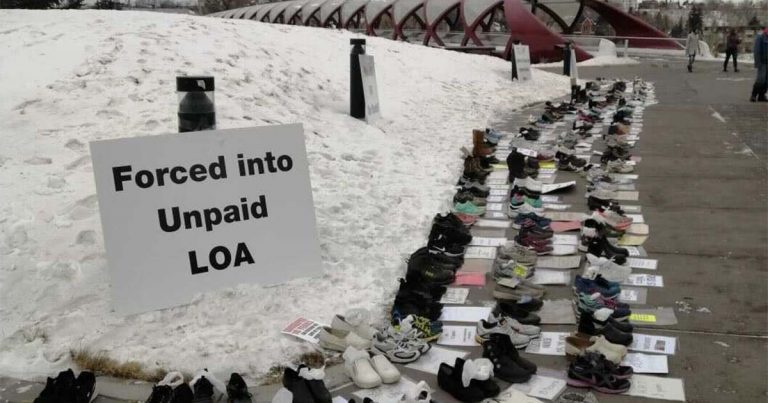
Nearly 800 pairs of empty shoes and work boots met Calgarians crossing the Peace Bridge on Wednesday. Beneath each pair was a piece of paper telling passersby about the professionals who had once worn them and how long they had held those jobs.

“Primary Care Paramedic, 20 yrs,” one sign read. “Canadian Armed Forces, 17 yrs.”

“RN 24 years – Covenant Health,” read another. “We will not be silenced.”

Their owners – workers in health care and emergency services – have all been forced from their jobs by Alberta Health Services’ (AHS) mandatory COVID vaccination policy. They include physicians, nurses, midwives, firefighters and many more.

A sign standing over the display read, “11,682 years of service represented here.”

Organizer Kate King was a primary care paramedic for ten years before being forced from her job after refusing to comply with the COVID vaccine mandate. She started the Alberta Boot Project just over a week ago to raise awareness of the human toll of the job losses – a toll often overlooked amidst the numbers and the divisions caused by the vaccination issue. 

“We want people to be aware of the human cost these vaccine mandates have taken,” King told True North. 

When asked which display struck her the hardest, King gave the example of a midwife of 29 years whom she recognized as having delivered her own little sister. 

“We had her sign and her shoes displayed at the legislature two days ago, and so many people recognized her that they started bringing roses and putting them down on her sign, and by the end of the day there was a mound of roses.”

King describes the reactions of passersby as “a mixture of shock, tears and aggression.”

Some workers who have come by to see their own shoes on display broke down in tears. Others were blown away by the extent of the display.

However, not all passersby had a positive reaction to the display. “I’ve had other people cussing at us, and calling us a blight on humanity – which can be a great way to open a conversation,” King says.

“I’m a chronic optimist, so I’m pretty hopeful,” she adds. “I think what it’s going to take to see a change in our province is for the tide of public opinion to start to change.”

King estimates that somewhere between 5,000 and 11,000 workers have been affected by the AHS mandate. She says that the number of 1650 given by AHS drastically misrepresents the true toll.

“The number the AHS released is very craftily worded,” she told True North. “It’s actually the number of people who were offered testing as an alternative and declined it. It’s not the number that was put on LOA (leave of absence).”

To create a legitimate database, King has launched a website that invites health professionals who have been affected by the mandate to check in with their stories. The survey can be completed anonymously.

AHS has also come under fire for allowing rapid testing in facilities with “low uptake” but denying the option to workers in other facilities.

The Alberta Boot Project’s volunteers set up their first display on Monday in front of the Edmonton legislature. They will move to Red Deer on Thursday before going province-wide in the coming weeks.

Prime Minister Justin Trudeau said Wednesday that “Canadians have shown we’re there for our neighbours, we’re there for our most vulnerable, and we’re there for our frontline health workers.” However, he neglected to mention the thousands of health care workers that have been sacked due to COVID vaccine mandates.

Quebec municipal transportation data ends up on dark web forum after cyber attack

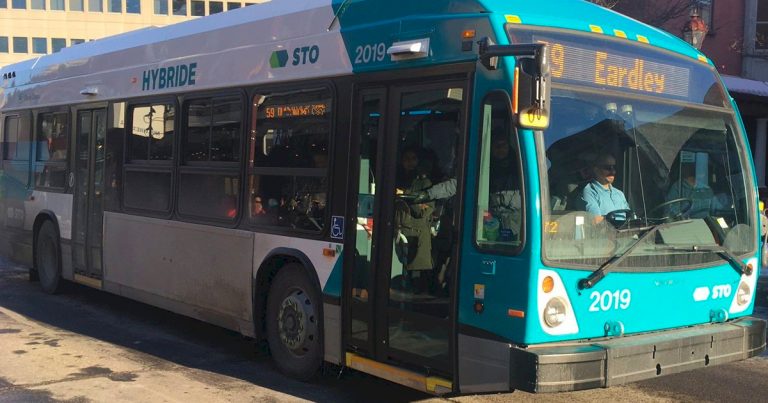
Cyber criminals posted massive amounts of data illegally obtained from a Gatineau public transport provider onto the dark web. 

Société de Transports de L’Outaouais (STO) was the subject of a recent ransomware attack – a form of malicious software that locks data until the victim pays an agreed-to ransom. 

According to the Ottawa Citizen, the criminals shared the information they had stolen in a dark web forum after STO refused to pay their price. 

Journalists were able to independently confirm the data leak after accessing the dark web using a specialized web client called TOR. The dark web, unlike the surface web or “clearnet,” is not accessible by ordinary web browsers.

“The attack was very severe,” STO CEO Patric Leclern said at a conference in September pertaining to the data breach. “To put it simply, it’s as if the attackers put a lock on our systems to prevent us from using them … Following the STO’s refusal to pay the demanded ransom, the cyber attackers published files on the dark web.” 

Hackers involved in the breach told the Ottawa Citizen that they had demanded $3 million USD from the STO before they would remove the data from the internet. 

According to Ontario Provincial Police cyber crime unit detective sergeant Vern Crowely, cyber attacks of this nature are at an all-time high. 

“The number of data breaches, today, it’s hit its peak — not to say that it’s going to go down,” said Crowley. 

Crowley’s concerns were echoed by head of the Canadian Centre for Cyber Security head Sami Khoury. 

“The number of cyber actors is rising and they’re becoming a lot more sophisticated,” Khoury told the Ottawa Citizen

A number of other government organizations have been the target of similar cyber attacks. 

Soon after the Quebec government unveiled its vaccine certification system, it was immediately breached, and the personally identifiable QR codes of some of Quebec’s top political leaders were stolen. 

Canadians should have “zero trust” after feds spied on 33M devices: privacy expert

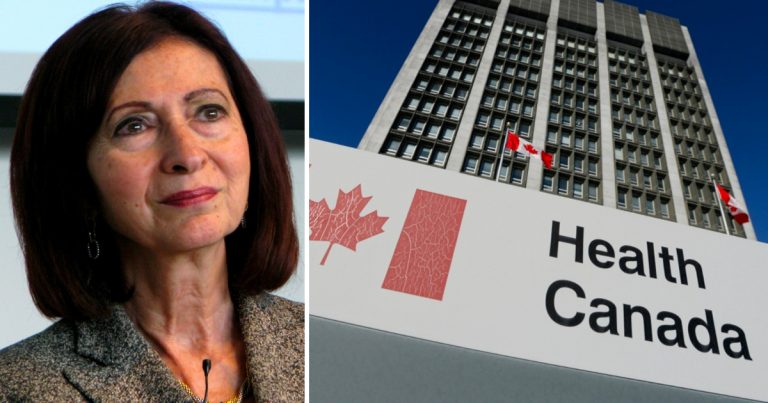
Ontario’s former privacy commissioner and Executive Director of Global Privacy and Security by Design Ann Cavoukian told True North that Canadians must demand accountability from the Public Health Agency of Canada (PHAC) for tracking their devices without consent.

According to Blacklock’s Reporter, PHAC secretly spied on 33 million mobile devices of unsuspecting Canadians to monitor its lockdown measures. The details of the plan were revealed on Monday. 

Cavoukian told True North that Canadians should have “zero trust” in what the government is telling them.

“They are collecting all of this mobile data,” she said. “33 million mobile devices and mobile devices are usually linked to personal identifiers, and you have to take some measures to remove them and de-identify the data in a strong way so it can’t be reidentified. We have no assurances to that effect whatsoever.”

“I don’t trust any of this. Zero trust, that’s where we have to start and we have to have some privacy commissioner’s office go in and take a look at this under the hood. Audit what they’re doing.” 

Part of the project involved collecting the cell tower locations of devices and other mobility data. Experts have pointed out that such data can be used to identify sensitive location information. 

“Due to the urgency of the pandemic the Agency collected and used mobility data such as cell tower location data throughout the Covid-19 response,” said PHAC spokesperson Mark Johnson. 

“It was to help understand possible links between the movement of populations within Canada and Covid.”

PHAC revealed the initiative this week, claiming to want to “be open and transparent” with the Canadian public. In reality, a federal contract was circulating prior to the announcement that revealed the federal government was hoping to make cell tower tracking a permanent feature of its research. 

“That is what is outrageous,” Cavoukian told True North. “If that hadn’t been caught onto, this could have continued for any length of time without anyone knowing it was happening. Completely unacceptable.”

Last year, the federal government introduced the COVID Alert app to track COVID-19 exposure. However, the app failed to pick up with a majority of Canadians after a study found that only 25,552 had opted to use it. 

According to Cavoukian, the PHAC data sweep was a convenient way to get around requiring consent from individual users to track their movements. 

“They wanted to find some other way they could do it, and this was the easiest way because they haven’t attained any approval for anything they just did,” Cavoukian told True North.  “And that’s what is so unbelievable to me that they could just do this and access the data of 33 million mobile devices and track it.”

“I just want to remind people how important privacy is. It forms the foundation of our freedom, and if we want to preserve our free and open society then we have to preserve strong privacy and object vehemently when we see surveillance models like this and the tracking of the population’s activities.”

Taxpayer watchdog releases annual ‘Naughty and Nice List’

The Canadian Taxpayers Federation (CTF) published their yearly Taxpayer Naughty and Nice List on Wednesday. 

CTF federal director Franco Terrazzano said in the press release that former governor general Julie Payette tops this year’s naughty list. 

“Payette lands herself in Santa’s bad books because she’s still eligible to bill taxpayers for her pension and lifetime expense account even after she left a reportedly grinch-style workplace,” said Terrazzano. 

Claridge CEO Stephen Bronfman was on the naughty list for asking Quebec taxpayers to pay up to $300 million for a part-time professional baseball team. 

MPs were on the naughty list for giving themselves two salary increases during the COVID-19 pandemic. 

Conservative Leader Erin O’Toole made the list for changing his position on carbon taxes. Prime Minister Justin Trudeau secured his place by committing to raising taxes. 

As for who was good this year, Terrazzano said some politicians made the nice list for running budget surpluses, improving transparency and giving up extras. 

New Brunswick Finance Minister Ernie Steeves found a place on the nice list for running a $38 million surplus during the pandemic. 

Former speaker of the British Columbia legislature Darryl Plecas was on the nice list for investigations into misspending that led to audits, police involvement, criminal charges and mandatory reporting of expenses for politicians. 

Former Calgary city councillor Jeromy Farkas saved taxpayers $308,234 by turning down his pension and transition allowance. 

The Bloc Quebecois made the nice list for being the one party in the House of Commons that refused the Canada Emergency Wage Subsidy. 

“Some politicians and political parties managed to land themselves on the nice list this year, so let’s hope taxpayers see some more good behaviour in 2022,” said Terrazzano. 

Trudeau tells Canadians to “hunker down” as provinces enter COVID lockdowns

Prime Minister Justin Trudeau is telling Canadians to “hunker down” over the Christmas holidays as provincial governments order people to stay in their homes and cancel events due to the Omicron variant.

Trudeau made the comments on Wednesday during a video statement to Canadians aired on CPAC. 

“I know nobody wants to be in this situation right now but Canadians have shown that we’re there for our neighbours, we’re there for our most vulnerable, we’re there for our frontline workers,” said Trudeau. 

“We stick up for each other, we make those tough choices to keep each other safe and we know that as long and dark that winter can be, spring is coming and spring will be better if we hunker down in the coming weeks.” 

On Sunday, Ontario Premier Doug Ford announced a new spate of lockdown measures which included 50% capacity limits for restaurants, gyms, retailers and other indoor spaces. 

The province also limited social gatherings to 10 people indoors and 25 people outdoors. Bars and other venues will be required to close their doors by 11 p.m. with the option of continuing takeout and delivery past that time. 

Alcohol sales will also be shut down at 10 p.m. province-wide. 

Quebec has also implemented new measures to curb the spread of the virus and is expected to introduce even more stringent restrictions soon. 

As of last week, all bars, casinos, theatres, spas and gyms were ordered to shutter their doors. Quebec also closed elementary and high schools, with in-person learning expected to return on Jan. 10. 

Quebec Premier Francois Legault is expected to announce more measures on Wednesday evening. Some reports have speculated that these will include a curfew and a two-week shutdown on non-essential businesses and restaurants. 

In British Columbia earlier this week, provincial health officer Bonnie Henry announced a total ban on gatherings including weddings, receptions, Christmas parties and other indoor events. 

Bars, gyms and nightclubs have also been ordered to shut down, while indoor venues have had their capacity reduced to 50%. 

Meanwhile in Alberta, the provincial government also reduced capacity by 50% for large venues and businesses as well as introducing vaccine booster shots for all adults. Restaurants and bars are being ordered to limit table capacity, and dancing is prohibited. 

In the Prairies, Manitoba and Saskatchewan have also curbed capacity limits. Manitoba health minister Audrey Gordon announced a limit to indoor gatherings with vaccinated people to include members of the household plus ten guests. Meanwhile, unvaccinated households are being limited to five guests at a time. 

Gyms, movie theaters and restaurants have also been ordered to reduce their capacities to 50%. 

As for Saskatchewan Premier Scott Moe, his government has stated that it won’t restrict indoor gatherings but instead asked Canadians to be conscientious of pandemic rules when gathering. 

“We will increase measures if it is necessary, but they shouldn’t be your first point to go when it comes to finding your way through any potential COVID wave,” said Moe. 

Atlantic Canada has also seen an increase in restrictions. In Nova Scotia, gatherings have been limited to 10 people for both indoor and outdoor settings. Events such as festivals and sporting events are prohibited. Businesses and restaurants are being ordered to maintain a 50% capacity limit. 

The PEI government announced similar measures including ordering all bars and restaurants to close at 11 p.m. and requiring out-of-province travellers to isolate for four days. Newfoundland and Labrador has announced similar travel restrictions. 

In New Brunswick, Premier Blaine Higgs has said that he will announce new restrictions following Christmas. 

As for the territories, Yukon, Nunavut and the Northwest Territories have added inter-provincial travel advisories. 

Nunavut has also ordered venues to reduce their capacity to 50%. Outdoor gatherings have been restricted to 50 people while indoor gatherings are limited to 10. Capacity limits have also been placed on gyms, places of worship and restaurants. 

Why do Christians get criticized and denigrated, ignored and erased?

We’re living in post-modern, post-nationalist times. The secular value of the separation of church and state has been taken to an extreme in Canada — and has led to the complete removal of religious symbols, concepts and festivities in the public square. 

Why do Christians get criticized and denigrated, ignored and erased? 

Can we completely erase Christianity from our modern society? Can we divorce our values, our norms, our morality from their Judeo-Christian roots? Should we? The political left enthusiastically says ‘yes,’ but there is also a growing appetite for learning more about the traditions, norms, values and attitudes that help build our modern day society. 

For a special Christmas week edition to The Candice Malcolm Show, Candice is joined by Ray Pennings of Cardus to discuss the importance of Christmas and the value of Christianity in modern times. 

SUBSCRIBE TO THE CANDICE MALCOLM SHOW