A new Canadian Taxpayers Federation campaign is urging Albertans to vote yes to abolish equalization payments to have-not provinces, weeks before Alberta’s Oct. 18 referendum.
“Albertans have had it rough for the last six-plus years, and we’re tired of being treated as the cash cow for the rest of Canada,” said Kevin Lacey, the CTF’s Alberta director and head of the Fight Equalization campaign. “Voting yes in this October’s referendum is a great way to send the Trudeau government a message that the equalization status quo must go.”
Since 1961, Albertans have paid $661 billion more to Ottawa than they have received back in spending. Encompassed in that amount is equalization, which costs Alberta taxpayers approximately $3 billion per year, or over $600 per Albertan.
Despite this significant contribution to Canada, the government has made it extremely difficult for Alberta’s economy to develop by instituting policies such as the carbon tax, the tanker ban, and the anti-pipeline legislation.
Even as the oil and gas sector has declined, Alberta has still been on the hook for other provinces’ economic fortunes.
Quebec receives over half of all equalization payments. Yet Premier François Legault has railed against development of Alberta’s oil and gas sector, calling it “dirty energy” and saying “there’s no social acceptability for an additional oil pipeline.”
The referendum question will ask whether section 36(2) of Canada’s constitution, which commits to equalization payments, should “be removed from the Constitution.”
If Albertans vote yes, the equalization structure will not change, but Kenney said it would give him leverage as he tries to gain national support for a constitutional amendment.
“Albertans shouldn’t be expected to contribute so much money while politicians in other provinces and Ottawa continue to roadblock our development,” said Lacey. “Albertans know we are getting a raw deal and voting yes in the equalization referendum is a crucial step in Alberta’s fight for fairness.” The Fight Equalization campaign will include advertisements, campaign signs, and a digital presence on fightequalization.ca.
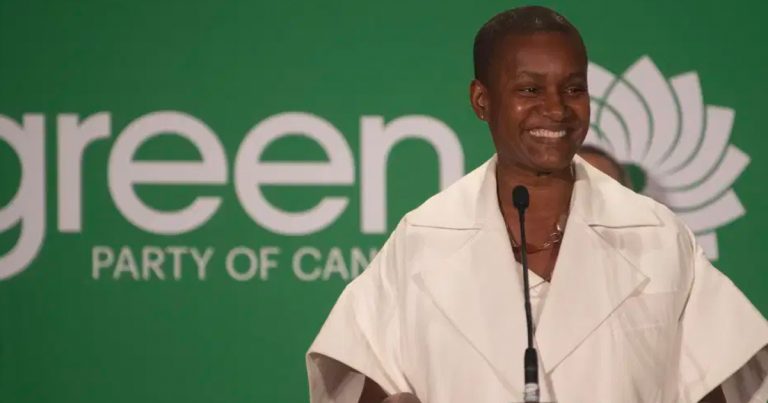
Embattled Green Party of Canada leader Annamie Paul will be resigning.
Paul announced her resignation Monday in Toronto, one week after an abysmal showing for her party, including a distant loss in her own riding.
At her brief press conference, Paul said the party apparatus had already triggered a leadership review, and she no longer wishes to deal with the “attacks” from within.
The Greens went from three seats in 2019 to two seats this year, with a drop in overall vote share from 6.5% to 2.3%.
The 2021 election was one of the worst results in the Greens’ history. The party fielded its smallest slate since 2000, fielding only 252 candidates across Canada’s 338 ridings.
Paul became leader of the Greens last October following her failed bid to win a by-election in Toronto Centre.
“When I was elected and put in this role, I was breaking a glass ceiling. What I didn’t realize at the time is that I was breaking a glass ceiling that was going to fall on my head and leave a lot of shards of glass that I was going to have to crawl over throughout my time as a leader,” Paul said.
In the lead-up to the election, Paul faced numerous attempts from Green party insiders to oust her. These internal tensions were inflamed when the Israel-Hamas conflict escalated in May.
Paul, who is Jewish, issued a statement calling for a deescalation in tensions and a return to dialogue on both sides. Two of the three Green Party MPs in Ottawa would publicly repudiate Paul’s statement.
Fredericton MP Jenica Atwin subsequently left the Green caucus to join the Liberals.
In response to the growing discontent among party members over Paul’s statement, her aide Noah Zatzman accused Green MPs of “appalling anti-Semitism,” “Jew hatred” and “discrimination.”
Paul was pressured by party members to denounce Zatzman’s post, however she declined to do so.
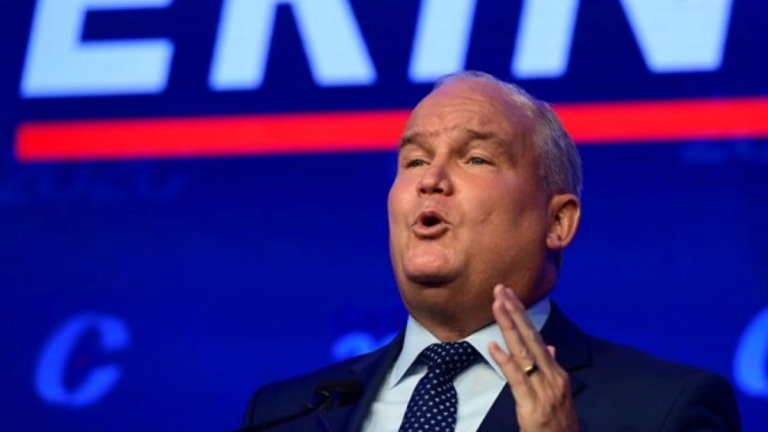
Now that Erin O’Toole has lost, the media suddenly love him.
Starting on Monday, at roughly the time the polls closed and after anything they said could have an impact in the election, much of the media began pumping out stories in support of the failed CPC leader.
We saw reports of former conservative leaders as well as elected officials, political consultants and backroom operatives all urging Conservatives to keep O’Toole on as leader, this despite his dismal performance as leader and failure to unseat our angry and unpopular Prime Minister.
Many journalists offered up similar pleas on social media, advising CPC members to continue on the O’Toole path to moderation.
Maclean’s editor Stephen Maher told Conservatives on Twitter: “you were doing the right things, too quickly, in this election. Keep O’Toole, take your time, do your homework.”
Sports journalist Matthew Sekeres let the cat out of the bag by saying: “Harper grew on people. O’Toole could too. Gotta convince cities that the fringe of (the) party won’t shape policy.”
Presumably by “fringe of the party” he was referring to the majority of Conservative members who are, well, conservative.
Similarly themed news stories appeared in the Globe and Mail, Toronto Star, Global News and the Canadian Press. Colour me skeptical.
After five weeks of treating Conservatives unfairly, misrepresenting O’Toole’s positions, repeating Liberal talking points, pushing Trudeau’s wedge issues and generally vilifying conservatives, many in the media suddenly have a change of heart.
Now that the election is over, now that he has no chance of becoming Prime Minister — at least not anytime soon — these journalists are suddenly happy to pretend they like conservatives.
O’Toole, after all, has proven to be exactly what journalists look for in a conservative politician: a non-threatening leader who promotes Liberal ideas and has proven he cannot beat Trudeau.
After running as a “true blue conservative” to become party leader, O’Toole shifted to the left for the federal campaign. He distanced himself from conservatives who believe that moral issues should be central in politics, and he drove libertarians out of the party and into the hands of the People’s Party of Canada.
His proposition to voters was basically this: I’m just like the Liberals in terms of my woke progressive values and big government spending policies, but unlike the Liberals, I’m a better manager of big government.
O’Toole could be forgiven for running as a centrist if his strategy had worked.
But it didn’t. In fact, he lost ground in Liberal strongholds like suburban Toronto and Vancouver, and he came out even in Quebec.
Worse than any position he took on the campaign, O’Toole refused to stand his ground.
He flip-flopped on the central issue of carbon taxes and by the end of the campaign, the Toronto Star reported that O’Toole would keep Trudeau’s carbon tax.
On the issue of Trudeau’s ban on scary-looking guns, O’Toole flip-flopped.
Once billed as a law and order Conservative, here, O’Toole had the opportunity to own the issue of public safety and crime. He should have hammered Trudeau over reduced sentences for serious gun crimes and touted his own impressive military and legal background.
Instead, an indecisive O’Toole changed his mind, changed his position and fell in line with the Liberal status quo after ever-so-slight pressure.
He failed to command respect or inspire Canadians. That’s the real reason he lost. But much of the media would have you believe that O’Toole needs to go even softer, even more moderate in order to win.
This is exactly the wrong advice.
Following the 2019 election, the media likewise pushed the CPC to take away all the wrong lessons.
Former Leader Andrew Scheer picked up 26 seats in that election. He knocked Trudeau down from a majority to a minority government and he won the popular vote.
Scheer was a young leader who was still building up his confidence and experience. He was likable, well-spoken and most importantly, he stood his ground — despite horrendous mistreatment by the media.
Scheer should have stayed on to build his momentum. But instead, the media began pushing a narrative that said he was too conservative to win. They soon concluded that the CPC had to move to “modernize,” move to the left, ditch moral issues and find a more “progressive” leader.
That was completely wrong, and listening to the legacy media is in part what led to Monday’s disappointing result.
Conservatives cannot make the same mistake twice. The media is wrong, do not listen to them.
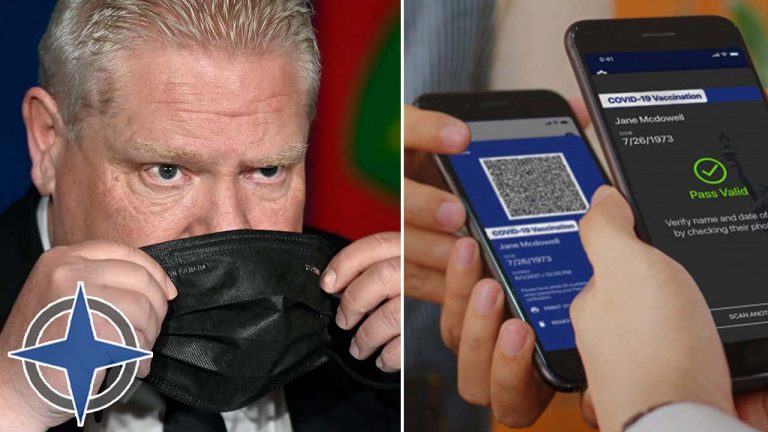
Now that Ontario has implemented a vaccine passport and most businesses are enforcing the rule that you must be vaccinated to enter, why do we still have to wear masks? Anthony Furey discusses that question, and explains why the arbitrary nature of covid enforcement will only lead to more confusion.
Most Canadians believe that Prime Minister Justin Trudeau should step down to let a new leader take the helm, according to a new post-election poll.
Despite winning another minority in last Monday’s election, 55% of respondents said Trudeau should resign, while only 45% suggested he should remain Canada’s head of government.
The Canadians surveyed overwhelmingly believe that the country is now more divided than ever and that the electoral system needs to be overhauled.
In total, 77% of people polled stated that the country was fractured following the election which produced very few changes in the makeup of government. On the other hand, only 23% of respondents said the country is more united under Trudeau.
The poll was conducted by Maru Public Opinion on election day and the day following, with a random sample of 1,510 Canadians. The poll has a margin of error of +/-2.5% 19 times out of 20.
“This is a signal to leaders of this country, particularly the prime minister and whoever he’s going to end up dancing with, that the public is in need of some healing, and it starts with him,” said Maru Public Opinion executive vice-president John Wright.
When broken down regionally, Albertans were the most likely to say that Canada is divided, with 88% agreeing with the statement. Saskatchewan, Manitoba and Ontario were second, with 79% of people thinking the country is divided.
Additionally, 52% of Canadians believed that the democratic system is broken and needs significant changes.
The poll respondents had also soured on Conservative leader Erin O’Toole, with 51% saying the beleaguered leader should leave his position.
Since failing to produce any significant results in the 2021 election, several prominent members of the Conservative party have sought to trigger a leadership review and have O’Toole removed from power.
Recently, Conservative national councillor Bert Chen launched a petition calling for O’Toole to be recalled.
Michael Spavor and Michael Kovrig have finally arrived home in Canada after almost three years of arbitrary detention in Chinese prisons.
The two Canadians boarded a plane Friday night with Canada’s ambassador to China, Dominic Barton. On Saturday, Prime Minister Justin Trudeau greeted the pair in Calgary upon landing.
“These two men have gone through an unbelievably difficult ordeal. For the past 1000 days they have shown strength, perseverance, resilience, and grace, and we are all inspired by them,” said Trudeau.
Trudeau announced their release just hours after Huawei CFO Meng Wanzhou was taken off of house arrest in Vancouver and permitted to go back to China.
The deal was a result of negotiations between the US Justice Department and prosecutors who agreed to drop charges against the Chinese heiress once accused of several wire fraud charges related to her company’s dealings with Iran which is under strict sanctions by US authorities.
Michael Spavor and Michael Kovrig were arrested on espionage charges in 2018 by Chinese Communist Party authorities in a move that is widely believed to have been in retaliation for Canada’s arrest of Meng on a US warrant.
Spavor was sentenced to 11 years in prison for trumped-up espionage charges, and a sentence had yet to be issued for Kovrig who was also accused of similar crimes.
China continues to maintain that the arrests of the two Michaels were unrelated to the arrest of Huawei CFO Meng Wanzhou despite the fact that their release occurred just hours after Meng secured her deal with the US.
Conservative Party Leader Erin O’Toole also congratulated the pair on their release following the announcement on his personal Twitter account. “Our family shares the elation of millions of Canadians that our citizens are coming home. Thank you to all diplomats involved,” said O’Toole.
Ontario’s vaccine rollout already seems to be running into challenges. Some businesses dont want to enforce the rule, some people aren’t satisfied and want more oversight and some people think this has gone way too far. Anthony Furey discusses in his latest video why this plan seems to be plagued by problems.
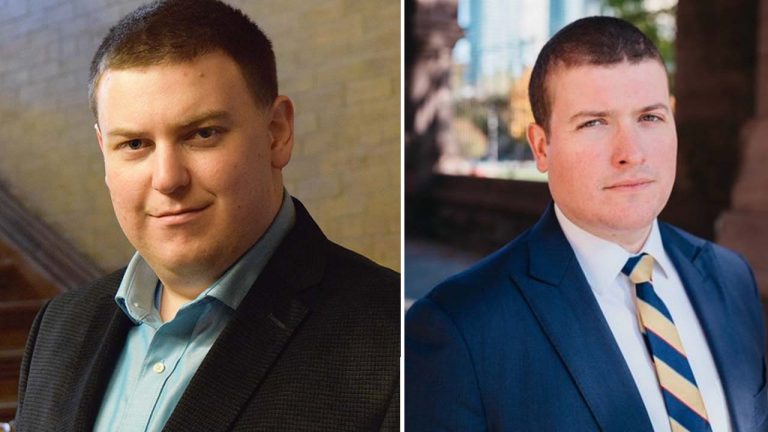
After a Conservative Party of Canada national councillor launched a petition calling for Erin O’Toole to be recalled as Conservative leader, a Conservative activist and former campaign manager has started a counter-petition expressing support for O’Toole and calling for him to remain in place to stand in another election. That activist, Fraser Macdonald, joined The Andrew Lawton Show to explain why he thinks O’Toole deserves another shot.
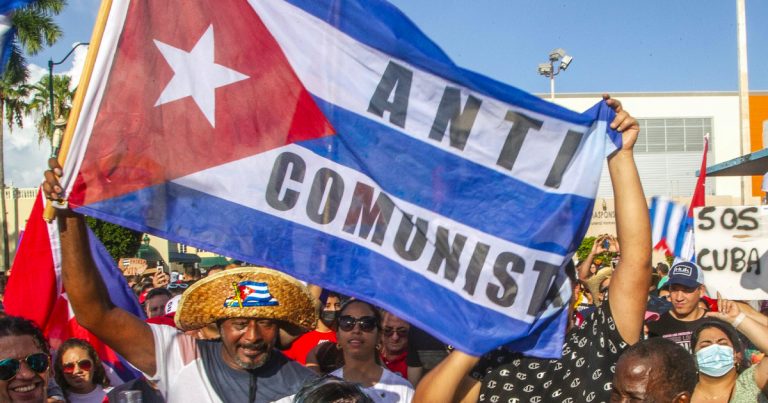
On July 11 and 12 of this year, more than 187,000 Cubans gathered across the island to demand freedom and democracy in Cuba. If Canadians are friends of the Cuban people, then we should listen to their voices. It is time for Canada to lead an international effort to publicly condemn and take action against gross human rights violations perpetrated by the Cuban regime against peaceful protestors.
It is unacceptable that the Trudeau government has neglected to take a firm stand in the face of arbitrary arrests, appalling police surveillance, torture and politically motivated imprisonment perpetrated against dissident artists, journalists and activists in Cuba.
In 2016, one year after taking office, Justin Trudeau said that he reaffirmed “our commitment – as individuals and as a country – to the protection and promotion of human rights worldwide.” However, the actual record of Trudeau’s government has not matched its rhetoric.
Canada must now rise to this historic moment and rethink its foreign policy towards Cuba, understanding that Cubans deserve to live in a democracy.
I recently met on Parliament Hill with a group of Cuban-Canadians. They expressed to me the need for an urgent change in Canadian foreign policy because Canadian tourism and investment are helping to prop up Cuba’s one-party state, as well as the entire repressive regime. Their views gave me a better understanding of the role Canada should play at a time when the Cuban people are demanding to live in freedom and democracy.
During our exchanges, I was asked a question worthy of reflection: “If you knew that your Cuban vacation was helping to strengthen the system that persecutes and sends innocent artists and journalists to jail, would you still travel to Cuba?”
Canada, the number one source of tourism to and investment in the island, should reflect on how it is helping to strengthen the Cuban regime. Canadians should be aware that there is no possible way to spend or invest money in Cuba without enriching and sustaining the Cuban government.
The Cuban military, through its holding company the Enterprise Administration Group (GAESA), controls an important part of the Cuban tourism economy. It operates hotels, financial institutions, import/export companies, transportation and more. According to Bloomberg, it is estimated that in 2015 GAESA dominated between 50% and 80% of business revenues in Cuba.
Contrary to what the Cuban regime claims, the money Canadians spend in Cuba does not contribute to improving the lives of Cubans; instead, it bankrolls the regime’s repression.
Global Fire Power states that Cuba has the sixth-largest paramilitary force in the world, which is mobilized to monitor and repress human rights activists, journalists, artists and critics. Meanwhile, a physician on the island with two specialties earns $310 CAD monthly, a salary much lower than the $357 CAD monthly earned by a deputy correctional officer without a high school education.
Further, Cuba’s tourism revenues are disproportionately invested in business and hotel construction, not in education, public health or social assistance programs. While the Cuban military invests in its plans to build 90,000 hotel rooms by 2030, the people suffer from a lack of food, medications and oxygen in hospitals — and Cuba is undergoing the worst wave of COVID-19to date. At the same time, people are suffering from a lack of ambulances, supposedly due to a lack of fuel; yet the regime has ample resources to mobilize its paramilitary forces in convoys of trucks, vans and buses, equipping them to arbitrarily detain thousands of peaceful demonstrators in the aftermath of the July 11 protests.
With all of this in mind, I encourage Canadians to ask themselves why we should spend our money in a country whose government uses it not to improve the lives of its people, but to repress them and cling to power for decades.
Canadians are known worldwide as defenders of universal human rights. As a senator who champions freedom and democracy around the world, I am committed to raising awareness among my fellow Canadians about the moral and ethical implications of spending our money in Cuba, which is a beautiful island that is governed by a political regime that preys on the people’s rights.
Here in Canada, the Conservatives publicly support the pro-democracy movement in Cuba and condemn the regime’s brutal repression of its people.
That is why the Conservative Platform explicitly says that a new Conservative Government will: “Support the Cuban People in their push for the democracy and freedom they deserve”.
We understand that for a peaceful, democratic movement to succeed in Cuba, Canada’s solidarity and support are required. The Cuban people deserve our support and I believe we must be prepared to provide it.
The Liberal government is refusing to offer support for Taiwan to join a Trans-Pacific trade agreement, recent reports reveal.
According to the Globe and Mail, both China and Taiwan have simultaneously applied to join the Comprehensive and Progressive Agreement for Trans-Pacific Partnership (CPTPP). The Trudeau government has decided to not support neither countries’ efforts.
“All decisions are made by consensus, and any country that joins CPTPP must meet and comply with the high standard rules and ambitious market access commitments of the CPTPP,” Global Affairs spokesperson Lama Khodr told the outlet.
The move seems to follow the Liberals’ reluctance to stand up to China by siding with Taiwan, which the Communist Party of China has territorial ambitions over.
A public consultation by Ottawa on who Canadians believe should be admitted to the partnership found that Taiwan was the second choice to be included in the partnership following Thailand.
Despite the support, Prime Minister Justin Trudeau’s government has repeatedly snubbed Taiwan on the international stage.
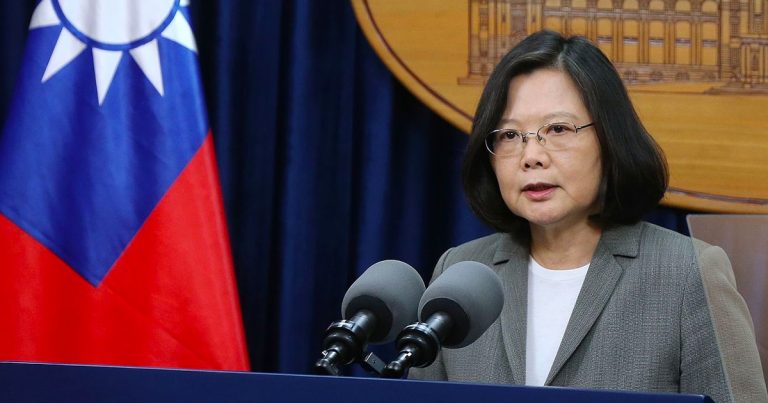
Reports from earlier this year revealed that the Liberal government tried to prevent Taiwanese President Tsai Ing-wen from being awarded the Halifax International Security Forum’s 2020 John McCain Prize for Leadership in Public Service.
Despite the interference attempt, President Tsai was issued the award after public outrage.
Additional former Liberal foreign affairs minister François-Philippe Champagne refused to thank Taiwan directly last year for medical supply donations while thanking China for their own donations.
In recent months, China has increased its hostile activities in the area after flying 28 Chinese military aircrafts near Taiwan’s air defence zone.
The show of force by China was one of the largest in recent history to enter the area.
The planes included four H-6 nuclear bombers and six J-11 fighter jets.