KNIGHT: Are the RCMP outside the law?

The rule of law is the golden thread that runs through our political system and should affect everyone – not just those of us who are obviously subject to it by virtue of being subservient to those who enact it and those who enforce it. 

This should be as true for the head of a police agency trying to manipulate an investigation instead of letting things take their course and letting the chips fall where they may. 

In August of 2017, retired RCMP Chief Superintendent Larry Callens allegedly took his own life in his home in Mara, B.C. Present in the home at the time was his wife, his son Craig and daughter-in-law Joanne. He was 80.

And there’s the rub. 

Craig Callens was the just-retired Commanding Officer of E Division (BC) – the RCMP’s largest deployment of contract policing in the country. His wife Joanne, a serving Sergeant with the RCMP, was also present at the time of Larry Callen’s alleged suicide. 

In essence, the Independent Investigations Office (IIO) should have been called into a situation that involved the death or serious injury to anyone in which a police officer may have been present or involved. 

For some reason that did not happen and to the best of my knowledge, there was no investigation into the sudden death of Larry Callens. 

Typically, in such cases, the agency with local jurisdiction would conduct the investigation and as agents of the Coroner, make findings which would result in a report detailing the death of that person, how it happened, what led up to it and what, if anything, could be done to prevent something similar from happening again.  

Typically. 

But this case was anything but typical. 

What is clear is that when the incident occurred during a family luncheon, the local police were called, but so too was someone much more senior. That person dispatched two senior officers from Vernon Detachment. I believe those folks were an Inspector Stewart and a Chief Superintendent McNamara. 

Those two officers made their way post haste to the scene and arrived even before the coroner who lived in the community. Once there, they allegedly bullied their way past the junior member who was guarding the scene. 

That junior member called the responding coroner and asked for help.

The coroner told the officers to get out of the scene, but they instead retreated to an adjacent room ostensibly to monitor things. 

Why? Well, that’s a good question. 

But in this matter we are left with many. What we are not left with are answers. 

For example, the weapon used was a Remington 870 12 gauge shotgun. The same weapon used in service with the RCMP and has been for several decades going back to when I was in training. 

The police version of the weapon has a five shot magazine. The shell used in the shooting was what is called in policing a slug – a solid piece of lead in a shotgun shell that is devastating. It is designed to stop a vehicle coming towards a road block by shooting it into the grill of the oncoming vehicle. It is not available commercially. 

Was the weapon an RCMP weapon “lost” over the years or was it obtained legally through commercial means? If it had a three shot magazine then it was obtained commercially. If it had a five shot magazine, then it was a police weapon. How then did it get into private hands?

These are just some of the unanswered questions resulting from this incident. I have many more. 

The memorandum of understanding with the IIO seems unequivocal. The RCMP should have advised the IIO and then the IIO would have decided to assert jurisdiction and assume conduct of the investigation. But, they were not given that option as the law requires.  Why? 

Was the Callens family given opportunities not available to the rest of us who live in B.C.? It seems the answer is yes and that is a problem for the RCMP. 
Alberta minister’s property burglarized, truck stolen in rural crime incident

An Alberta minister was the victim of a rural crime spree last week after burglars targeted his property while he was still at home. 

Minister of Agriculture and Forestry Devin Dreeshen confirmed the incident over Twitter on October 23, 2020. 

“Woke up at 4am to the sound of my truck being stolen. Criminals were in the process of stealing quads from the shed but were scared off. Needs to be fixed – rural Albertans shouldn’t have to put up with this,” tweeted Dreeshen. 

According to Rebel News, Dresshen’s stolen vehicle was allegedly used to commit several more crimes before being torched in Cold Lake, Alberta. 

“Appropriate steps were taken immediately following the incident, involving all concerned ministries. For example, any electronic devices that may have been compromised by this incident were successfully remotely wiped by government officials,” an Alberta government spokesperson told True North. 

“Furthermore, the Government of Alberta has significant security measures in place for all of its information. Cabinet-level documents are accessed digitally through a secure, password-protected cloud-based app. Drives are password-protected and encrypted so they cannot be accessed simply by removing the drive and plugging it into another computer.”

According to Statistics Canada, rural communities, especially those in the West are plagued by disproportionate crime rates when compared to their urban counterparts. 

“As with most property crimes, rates of break and enter and motor vehicle theft were higher in the Prairie provinces, especially Alberta. In 2017, police reported 978 break and enter incidents per 100,000 population in rural Alberta,” claimed a 2017 Statistics Canada report. 

Earlier this month in Taber, Alberta, the Alberta Law Enforcement Response Teams (ALERT) announced that they had apprehended five suspects in a rural property crime ring bust.

Police seized around $200,000 in stolen property and firearms, believed to be a part of a trafficking operation. 

“ALERT worked hand-in-hand with our policing partners to disrupt a group of individuals who were terrorizing small communities with thefts and property crime offences,” ALERT Communications Director Michael Tucker told True North.  

“Widespread theft like this, has a huge impact on community safety. Especially in rural communities – it shakes the sense of security amongst the victims. ALERT will continue to work alongside our partners to deliver a swift, robust response.”

China accuses Canada of supporting “anti-humanity Falun Gong cult”

The Chinese embassy in Canada issued a bitter statement on Wednesday accusing Canada of interfering in China’s internal affairs and supporting an “anti-humanity” cult.

“On October 27, the Canadian Foreign Minister made unwarranted accusations on China’s freedom of religious belief in a statement on the so-called International Religious Freedom Day, which grossly interfered in China’s internal affairs. We express strong dissatisfaction and firm opposition to this,” a spokesperson with the Chinese embassy said. 

“Meanwhile, as a country under the rule of law, China will never allow anyone to engage in illegal and criminal activities in the name of religion. ‘Falun Gong’ is an anti-humanity, anti-society, and anti-science cult banned by the Chinese government according to law. It is shocking that the Canadian government openly supports this cult.” 

The remarks, which were published on the official website of the Embassy of the People’s Republic of China in Canada were in response to a statement made by Canada’s Minister of Foreign Affairs François-Philippe Champagne on International Religious Freedom Day. 

In his statement yesterday, Champagne raised the issue of “the ongoing persecution of Uyghur Muslims, Tibetan Buddhists, Falun Gong practitioners, and other faith and belief communities in China.” 

True North reached out to the Falun Dafa Association of Canada for comment on China’s remarks. Association representative Joel Chipkar thanked Champagne for his statement and called on the Canadian government to remove the Chinese ambassador from Canada “for spreading hatred and bigotry against Canadians.”

“This statement from the Chinese Embassy is sheer hate propaganda to fuel a 21-year brutal and illegal persecution by trying to manipulate people into indifference to the mass human rights atrocities that the Chinese regime is responsible for against people who practice Falun Gong in China,” said Chipkar.

“The persecution of Falun Gong also violates the U.N. Charter, international human rights conventions and also violates China’s own Constitution and laws. Here in Canada, this statement by the Chinese Embassy that Falun Gong is a “cult” constitutes a breach of the Criminal Code of Canada as the wilful promotion of hatred against identifiable religious group based on Canadian police Hate Crimes Unit reports.”

Falun Gong is a religious movement founded in the early 1990’s by its leader Li Hongzhi. The Chinese Communist Party has actively persecuted Falun Gong practitioners and other faiths for several decades in an effort to crack down on religious worship and freedom in the country.

China’s brutal crackdown on Falun Gong worshippers included the practice of organ harvesting

“We also call on Canadian media to be sensitive to not repeat the Chinese regime’s hate propaganda that is being used to fuel the slander, torture and murder of people who practice Falun Gong in China,” Chipkar told True North.

This is not the first time that China has lashed out at Canada’s defence of Falun Gong and other persecuted minorities in the country. 

In March, the Chinese Ambassador to Canada Cong Peiwu accused western media outlets of spreading “fake news” about China’s mass internment of Uyghurs in the Xinjiang region. 

Cong called the re-education camps where a suspected one million Uyghur men, women and children are being held against their will “vocational training centres.”  

FUREY: Show us the data and evidence

0

Business owners and local politicians are pushing back against the government’s lockdown measures.

Their ask of the government is simple – if you’re going to shut us down, show us the data and evidence.

True North’s Anthony Furey says if the government is unable to justify the latest lockdowns, there will be even more civil disobedience.

Northern and rural Ontario most impacted by opioid crisis, health experts say

0

Northern and rural Ontario communities are being hardest hit by the opioid crisis, mental health and addiction experts agree. 

An expert panel told TVO’s Steve Paikin that a lack of access to health resources, long waitlists and the coronavirus pandemic have contributed to a worsening situation. 

According to program manager for the Cochrane Temiskaming Canadian Mental Health Association Marc Lionello, more people are coming in with complex drug addictions. 

“I can say strongly with a lot of confidence, especially in the last five years, the difficulty in terms of the cases we’re looking at supporting has increased not only with the numbers, but the complexity of the cases, with the addition of not only opiates but with things like speed (amphetamine) and meth (methamphetamine). It is increasingly difficult to be able to support these individuals,” Lionello told Paikin.

In 2009, the Canadian Mental Health Association found that geography played a key role in the mental health of northern and rural Ontarians. 

“A lot of time, you know, if you are in Southern Ontario, the services might be a few blocks away or maybe just in the next town. A lot of times here (in Northern Ontario) they might be hundreds of kilometres away,” said professor and co-chair of Northern and rural health at the Northern Ontario School of Medicine (NOSM) Marion Maar during the panel. 

On top of the drug and health problems rural Canadians are likely to encounter, rural communities are also disproportionately impacted by higher crime rates than their urban and southern counterparts. 

“The overall rural-urban difference in crime rates is mostly due to high rural rates in the Prairies and in the Provincial North, which is defined as the northern regions of British Columbia, Alberta, Saskatchewan, Manitoba, Ontario, Quebec, and Newfoundland and Labrador,” claimed a Statistics Canada report. 

“Overall, the crime rate in the rural Provincial North (14,512 incidents per 100,000 population) was three times higher than in the rural provincial South (4,706).” 

Legault threatens defiant gyms with lockdown fines

0

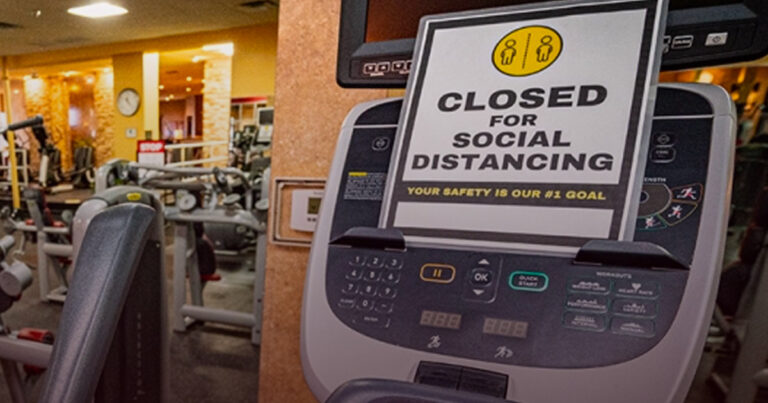
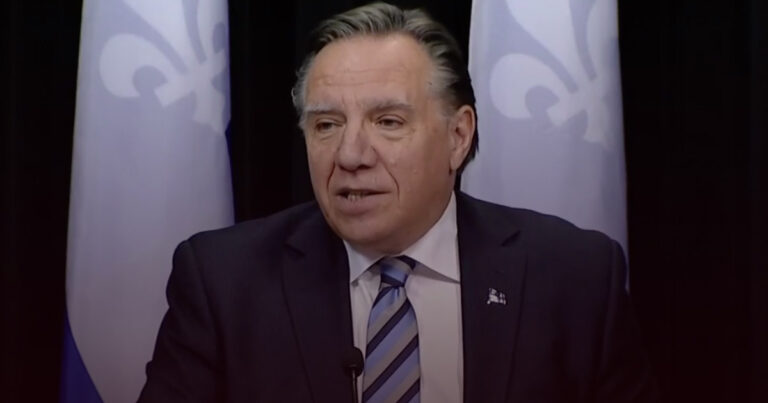
Quebec Premier François Legault is threatening to fine defiant gyms and physical fitness clubs who want to reopen despite an ongoing coronavirus lockdown. 

Approximately 200 different businesses have requested that the lockdown measures be repealed since new restrictions were introduced earlier this month in the province. The restrictions have been pushed forward to November 23 in red zones where there is an increase of coronavirus cases.

The businesses have formed an organization called Centres d’activités physiques du Québec and they are asking the premier to provide evidence that their facilities are linked to coronavirus outbreaks. 

Should the premier not be able to provide definitive proof that gyms are causing a surge in their virus, the businesses are saying that they will open their doors on Thursday. 

“The law must be respected. Gyms cannot be open,” said Legault, adding that any business that breaks the rules will be fined. 

“I’ve got (clients) who are in (psychological) distress right now. … We have people who need physical activity to keep them from falling back into a chasm of anxiousness, anxiety,” gym owner Dan Marino told the Montreal Gazette. 

“I’d rather get a ticket and challenge it with all of our group than find myself one morning saying I should have done something for someone who did harm to themselves.”

Legault has also warned that he is prepared to shut down dining in restaurants and bars in red zones should the virus escalate further. 

Quebec is not the only province which has once again resorted to lockdown like measures. In Ontario, the provincial government has rolled back to Stage 2 restrictions

Recently, the World Health Organization called on world leaders to not resort to lockdowns as a means of handling a surge in the coronavirus. 

“We in the World Health Organisation do not advocate lockdowns as the primary means of control of this virus,” said WHO official Dr. David Nabarro.

“The only time we believe a lockdown is justified is to buy you time to reorganise, regroup, rebalance your resources, protect your health workers who are exhausted, but by and large, we’d rather not do it.”

Majority of Canadians oppose removing or defacing historical statues

0

A new poll by Ipsos surveying attitudes towards the defacing of historical statues found that an overwhelming majority of Canadians were against the actions of protesters who topple monuments.

The poll, which surveyed 1,000 people across the country between September 11 and 14, 2020 was conducted on behalf of Global News. 

According to the data, 74% of Canadians disagreed with actions taken by protesters in recent months, while only 26% of people agreed with the vandalism. 

“Support for the protestors is by far the highest among Gen Z (61%), but significantly lower among Millennials (36%), Gen X (23%) and Boomers (9%),” claimed the poll. 

When asked whether Canada should take official steps to remove the statues legally, 39% of Canadians agreed that they should be removed if they are deemed to be racist, while 61% were against the idea. 

Another poll conducted by Leger and the Association for Canadian Studies also found that there were more Canadians who want to keep statues than those who wish to see them toppled.

Anti-racism activists throughout Canada have called for or have illegally removed statues of famous Canadians like Canada’s first prime minister Sir John A Macdonald.

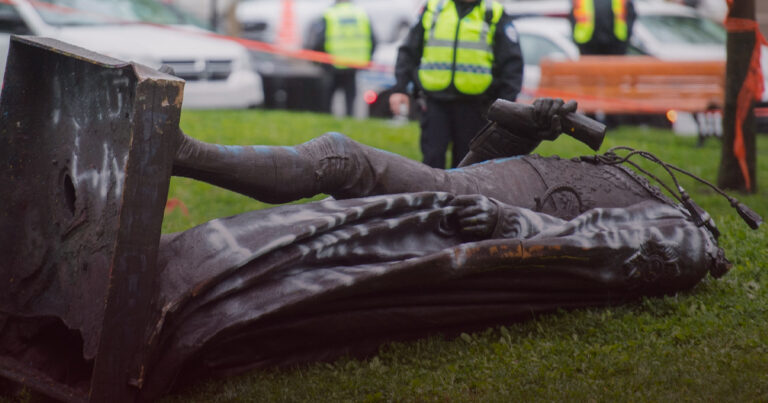
In August, radical protesters toppled and decapitated a statue of Macdonald in Montreal. 

Politicians including Conservative Party Leader Erin O’Toole and Prime Minister Justin Trudeau were quick to denounce the actions.

“Canada wouldn’t exist without Sir John A. Macdonald. Canada is a great county [sic], and one we should be proud of. We will not build a better future by defacing our past. It’s time politicians grow a backbone and stand up for our country,” tweeted O’Toole about the incident.   

In Ontario, the township of Baden, a statue of Canada’s first prime minister was quietly removed from its pedestal and placed in an undisclosed storage location after local councillors voted to have it taken down. 

“The statue will remain in the secured storage until all consultation has been completed and a report to Council is presented at the March 1, 2021 Council meeting, as set out in the Notice of Motion,” said a media release from the Township of Wilmot. 

“This is a step forward towards reconciliation and the Township of Wilmot is looking forward to conversations with the Indigenous Community.”

Liberals push for study on monitoring online hate speech

0

A recent notice from the House of Commons Canadian Heritage committee proposed a study on policing and monitoring online “hate speech.” 

According to Blacklock’s Reporter, the notice seeks to “undertake a study of the creation of and implementation of new measures for online media platforms’ internet service providers requiring them to monitor, address and remove content that constitutes hate speech and remove any other content which is illegal in Canada or prohibited by the Criminal Code.”

The move comes only a month after the Minister of Canadian Heritage Steven Guilbeault said that a Liberal plan to regulate online media would be revealed in the “coming weeks.” 

For some time now, the Liberals have been hinting at new regulations on social media companies and legislation to tackle online hate. 

Guilbeault has denied that the Liberal government seeks to censor Canadians and license content producers despite past comments made by him to that effect. 

During an appearance on CTV’s Question Period, Guilbeault suggested that the Liberals would in fact require licenses to produce online media. 

“If you’re a distributor of content in Canada and obviously if you’re a very small media organization the requirement probably wouldn’t be the same if you’re Facebook, or Google. There would have to be some proportionality embedded into this,” Guilbeault said.

“We would ask that they have a licence, yes.”

Guilbeault later retracted his comments. 

As exclusively reported on by True North, Guilbeault accused “some on the right” for his remarks.

“I’m not sure where you saw in the speech from the throne or some of my comments anything regarding censorship or licensing,” said Guilbeault in response to a question from a townhall participant.

“I mean, some on the right have claimed that this is what we were doing. It’s not and I read the speech from the throne a couple of times already and I can’t think of anything in the speech from the throne that this is our intention.” 

Mention of “taking action on online hate” also made an appearance in Prime Minister Justin Trudeau’s latest throne speech and was a key part of Guilbeault’s mandate as minister. 

“[The minister will] create new regulations for social media platforms, starting with a requirement that all platforms remove illegal content including hate speech within twenty-four hours or face significant penalties,” claims the mandate letter

This is not the first time that the Liberals have floated some form of policing of online content. 

During a 2019 committee investigation into online hate, the Liberals recommended reviving Section 13 of the Human Rights Act. Section 13 was repealed in 2011after critics claimed that it violated the fundamental right of freedom of expression.

Committee member and Liberal MP Nathaniel Erskine-Smith has also suggested in the past that offenders who participate in online hate speech or harassment should face fines

“There needs to be a recourse against the platforms and the individuals responsible for the speech,” said Erskine-Smith before suggesting that “an administrative system that is flexible and efficient” should be set up to punish those who break the proposed rules.

Ep 17 | J.J. McCullough | The Canadian Contrarian

0

SUBSCRIBE TO THE CANDICE MALCOLM SHOW

Regardless of what mainstream media outlet you tune into, there is a rigid and boring repetitiveness being spout from Canada’s Laurentian elites – who always more or less agree on things.

On today’s episode of the True North Speaker Series, Candice Malcolm is joined by J.J. McCullough. J.J. breaks the mould set by the mainstream media and often defiantly leads the conversation in new and interesting ways.

J.J. McCullough is a Vancouver-based political commentator, cartoonist, YouTuber and columnist with the prestigious Washington Post.

Candice and J.J. touch on an array of subjects, including the current state of Canadian politics, the media’s obsession with fringe left-wing parties, the accusation of systemic racism in Canada and much more.

J.J’s YouTube Channel: https://www.youtube.com/user/wartmamu

J.J’s Washington Post column: https://www.washingtonpost.com/people/jj-mccullough/

KNIGHT: Despite what we are being told, nothing has changed in today’s RCMP

0

In 2006, RCMP Corporal. Catherine Galliford had finally had it with the harassment in the Old Boys club — more formally known as the RCMP. 

Galliford complained to her direct supervisor about a co-worker and was called to the supervisor’s office. The supervisor sat behind his desk and on the only other chair in the room sat the male coworker she had complained about. There was no other chair; the co-worker patted his lap smiling saying “sit here.”

While it was not the worst example of harassment she had undergone, it was the last straw for her. 

She went on stress leave and five years later when nothing was being done about her concerns, the former spokesperson and the former face of the RCMP went public with her claims. 

Others like Janet Merlo and Krista Carle quickly let their voices be heard as well. This ultimately led to a class action lawsuit against the RCMP that was ultimately joined by several hundred serving and former members. 

In the end, taxpayers have shelled out over $1.16 billion in settlements with more pending. It would seem successive Commissioners of the RCMP, despite their pleadings to the contrary, have failed to change the culture of bullying and harassment in the RCMP. It has even spawned a union, the National Police Federation (NPF), once an unthinkable concept in our national police force. 

But successive Commissioners from Giuliano Zaccardelli to Bill Elliott to Bob Paulson and now to the stunningly ineffective Brenda Lucki have failed to move the needle measuring the Old Boys Network one bit. 

For years Canadians have been listening to their empty rhetoric about the cultural changes they are making and how they were striving to bring about more change. 

Well, nothing has changed. 

You’re either part of the Old Boys network or you’re not. If you are, you’re expected to go along to get along, to shut up and do what you are told “for the good of the Force.”

In 2017, many uniform members of the RCMP engaged in what was called the “yellow stripe protest.” They declined to wear the yellow stripe on their uniform pants as part of a labour protest. They were advocating for higher pay but also for a labour organization to represent the rank and file. After a series of political machinations between competing interests, the NPF emerged and sought union certification. They got it and negotiations for a first collective agreement are underway. 

In April of 2017, then Commissioner Bob Paulson issued a force wide broadcast email saying members participating in the yellow stripe protest would not be subjected to discipline. Many senior officers were in the process of initiating Code of Conduct investigations into members participating in the yellow strip protest and Paulson said, “Participating members have said they were threatened with discipline. Either way it goes against what we are trying to build; respect for one another.”

He retired two months later but never rescinded that order. He was replaced by Lucki who appears to be nothing more than a puppet for the Trudeau government.

On the weekend, I reviewed a report written by a Corporal R.T. Letnes, dated September 15, 2020. Letnes, a professional standards investigator and management relations expert, was asked to review the case of a ten-year member in one of the RCMP’s larger Alberta detachments. 

The member had been going through some personal issues relating to an operational stress injury(OSI) and went off duty on stress leave in November of 2017. He returned to work in April of 2018 and was a participant in the yellow stripe protest. 

Shortly after he received a memo dated April 26, 2018 authored by the Officer In Charge (Oi/c) of his detachment stating, “I am ordering you to wear the approved items of kit and clothing that will properly identify you as a member of the RCMP. Refusal to follow this lawful order may result in a Code of Conduct being ordered.”

This directly defied the order of the Commissioner of the RCMP and was intended to intimidate the member involved. 

The member refused and several months later he was called to a meeting with the Oi/c. He had the foresight to initiate an audio recording of the meeting in which the Oi/c is heard clearly stating, “I called Professional Responsibilities and I asked for a Code to be investigated to find out if in fact it’s that, so, that, that’s what this is about. So yes, put your stripe back on” again clearly defying the order of the Commissioner of the RCMP. 

It would seem to me that the only person that should be the subject of the Code of Conduct investigation is the Oi/c the detachment for defying the Commissioner and attempting to bully the junior member. 

But this is the RCMP. The Inspector is a card-carrying member of the Old Boys Club. 

The junior member has ten years service and a family with two kids, one of whom is special needs. He just wants to make things better for himself, his co-workers and his community. 

The matter is ongoing and I will be watching as it progresses. But at the very least, the case illustrates that nothing has changed in today’s RCMP despite all the protestations to the contrary from successive leaders and all the taxpayer money spent settling claims.