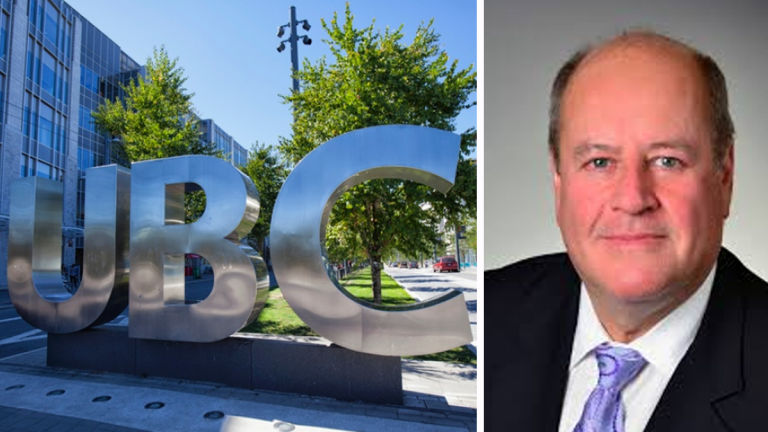
I just finished writing a column the other night about Michael Korenberg, the University of British Columbia (UBC) board of governors chair who was subjected to an online mobbing after the UBC Students Against Bigotry, an Antifa-affiliated campus group, disapproved of some of the tweets that Korenberg “liked.”
The UBC Students Against Bigotry (whose entire mandate is to deplatform non-leftists and get them fired) combed through Korenberg’s Twitter “likes” and found that he liked tweets by mainstream conservative pundits such as Dinesh D’Souza, Ann Coulter and Charlie Kirk. He also liked tweets that wished Donald Trump a happy birthday, and that celebrated Antifa being designated a domestic terrorist group. Most unforgivably, one of the tweets Korenberg liked was critical of Black Lives Matter, which is a group you can apparently never criticize.
Leftist media outlets and academics also joined forces to get Korenberg fired: an article in the Tyee called his social media likes “disturbing,” and UBC education professor Annette Henry opined that Korenberg’s likes reflected a “white supremacist capitalist [hetero]patriarchy” worldview, and “It’s unfortunate that we have people in such positions of authority at UBC.”
Henry couldn’t resist but add, “we still keep hiring white people where we have the opportunity not to.”
Another UBC professor Jennifer Berdahl told the UBC student newspaper that Korenberg should resign.
At the end of the column I had written, I said that I hoped Korenberg would stand up to the mob and that this debacle didn’t end in him issuing a grovelling apology and resignation letter.
But I had to toss out that column, as Korenberg has now released his looming resignation letter.
“Over the past two weeks some articles/statements that I ‘liked’ on Twitter supported regressive voices and took aim at thousands of brave individuals who are standing up against racism, discrimination and hatred,” he wrote in a statement posted on Twitter.
“I accept that in liking these social media posts, I damaged what I support and that I hurt people. I wholeheartedly apologize to them, particularly to the students, faculty and staff of UBC…I have stepped down because it is the right thing to do.”
And that really is all he is resigning for, folks: because he liked some tweets featuring basic, mainstream Republican talking points.
Korenberg was showing signs, early on, that he was the “apologize and resign” type. He told PressProgress that he regrets liking the tweets, giving the weak excuse that he liked them late at night.
But for the rest of us, if we are ever targeted by a mob of leftist campus activists and media outlets for something so minuscule as liking conservative-minded tweets, I hope we can muster up some courage and not be the type to “apologize and resign.”
What happened to that generosity of spirit? It apparently doesn’t apply anymore to the women and men in uniform who head out each day to keep us safe. It doesn’t seem to apply to those public figures who were swiftly de-platformed for wrongdoings that most us still don’t understand despite having read multiple detailed accounts. And it certainly didn’t apply to George Floyd, despite how he clearly told the officers on scene that he couldn’t breathe.
Handle with care. That’s what they told us. Sounds like we could do with hearing it again.
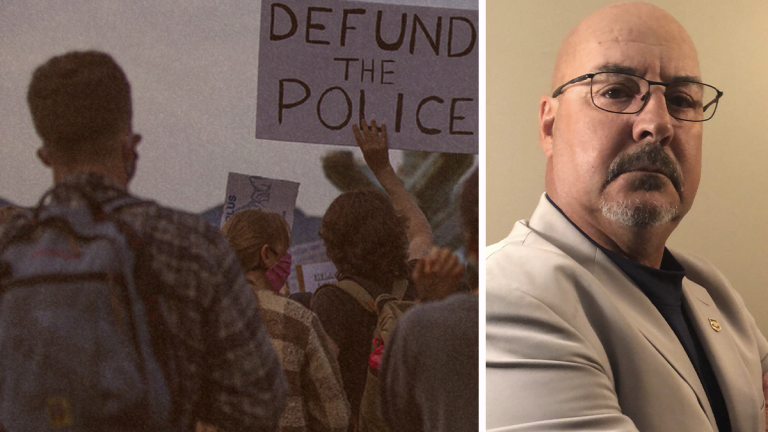
Recent events in the US are quickly escalating and calls to abolish the police are growing louder in Canada.
If the radical left gets their way, public safety and law and order will no longer be in the discussion.
True North’s Leo Knight says police officers in the US need to take back control of the streets and cities. Surrendering to the radical left will be disastrous to the whole of society.
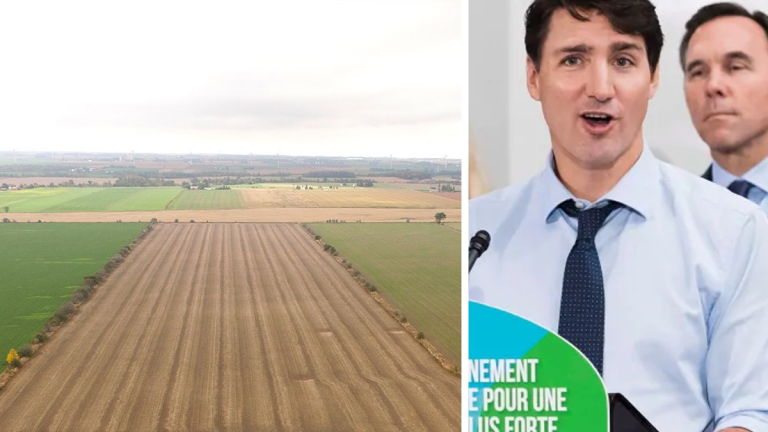
Canadians farmers are speaking up after the Trudeau government raised the carbon tax and claimed it is not a significant cost to the farming industry.
In a recent statement, Grain Farmers of Ontario Chair Markus Haerle said the carbon tax has clearly become a significant expense for Ontarian farmers.
“The numbers are indisputable,” he said. “It is simple math. We have run the numbers and the cost averaged to $5.50 per acre on corn, which means that on a 1,000 acre farm the carbon tax bill would be more than $5,000.”
“That is really just the tip of the iceberg. We estimate that the cost of the carbon tax is $14 per acre if you take into account transportation, inputs, and more.”
Grain Farmers of Ontario recently started a campaign to raise awareness of the harm government policies, including the carbon tax, are causing the agriculture sector.
Agriculture Minister Marie-Claude Bibeau recently claimed that the carbon tax was not a significant cost to farmers, saying that the average carbon tax bill per farm was $210-819.
On April 1 the Trudeau government increased the carbon tax by 50%.
Farmers have disputed the government’s calculation, saying that many farmers have already paid much more since the tax was introduced.
Commercial grain farmers across Canada claim they have paid over $10,000 in taxes since the carbon tax was first introduced. Some farmers have reported that they have been receiving bills of over $2,000 every month.
One of the biggest expenses for grain farmers is the cost of drying their grain. This process is necessary in order to keep the grain from expiring.
Members of the Western Wheat Growers Association have reported that the carbon tax is often over 30% of their total drying costs, with carbon tax adding $2000-8000 to their drying bills.
Western Canadian Wheat Growers Association President Gunter Jochum is outraged that the government continues to ignore how much carbon tax farmers are forced to pay.
“It is shocking Minister Bibeau and her department have arrived at this decision. As the tax comes directly out of our bottom line, grain farmers cannot pass the carbon tax imposed on them on to the end user. The Minister doesn’t understand that we compete with farmers globally who don’t have a carbon tax, ” Jochum said.
Western Canadian Wheat Growers Association, Grain Farmers of Ontario and the Canadian Federation of Agriculture have all asked for a carbon tax exemption, but this has been denied by the government based on Bibeau’s cost estimate of $210-819.
“Canadian grain growers are net-zero carbon emitters. We shouldn’t be punished with a carbon tax but instead be acknowledged for our positive contributions towards climate change and the environment.”
In 2018, Trudeau claimed that his party would take a “zero-tolerance” approach when it came to sexual harassment allegations. Trudeau said, “sexual harassment is a systemic problem” and “when women speak up, we have a responsibility to listen to them and to believe them.”
However, under his watch, numerous Liberals, including himself, have been accused of inappropriate behaviour, sexual harassment or other predatory behaviours. The prime minister fell back on his own promises and even skirted his own standards.
MP Marwan Tabbara
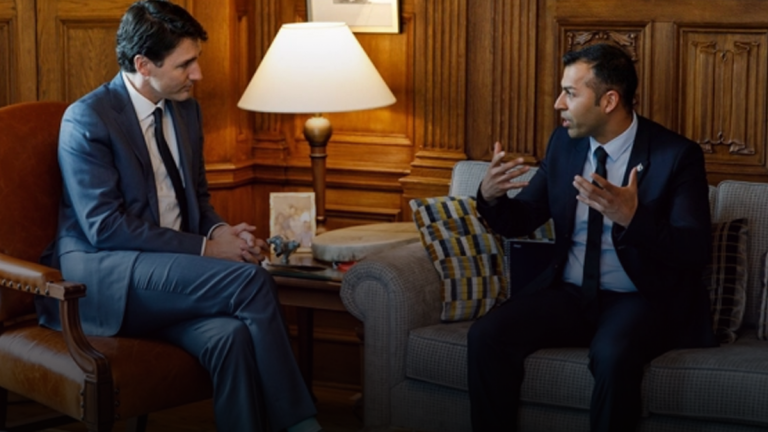
The most recent sexual harassment scandal involves former Liberal MP Marwan Tabbara.
Tabbara, who has since been kicked out of the party’s caucus, is currently facing a number of serious charges including assault, breaking and entering and criminal harassment.
Before Tabbara’s alleged crimes became public, the Liberal Party ran him as a candidate during the 2019 election, despite the fact that he was under investigation for a prior incident from 2015 where he allegedly directed sexual comments and inappropriately touched a female staffer.
According to the CBC, the investigation eventually ruled that the claims made against Tabbara were substantiated. However, it is unclear whether he was reprimanded for his actions.
When questioned on his knowledge of Tabbara’s actions and the resulting investigation, Trudeau wouldn’t address the matter.
Prime Minister Justin Trudeau
The prime minister had a scandal himself in 2018 when an old article resurfaced in which a female reporter claimed Trudeau groped her while at a music festival.
“The incident referred to in the editorial did occur, as reported. Mr. Trudeau did apologize the next day. I did not pursue the incident at the time and will not be pursuing the incident further. I have had no subsequent contact with Mr. Trudeau, before or after he became Prime Minister,” said the victim Rose Knight.
When asked to reflect on his behaviour of the incident, Trudeau said, “who knows where her mind was and I fully respect her ability to experience something differently.”
MP Kent Hehr
While serving as the Liberal Minister of Sport and Persons with Disabilities, Liberal MP Kent Hehr was accused by two separate women of sexual harassment.
Kristin Raworth alleged that the minister made women uncomfortable and feel “unsafe” while he was in the Alberta legislature. She claimed that Hehr made unwanted, sexual comments and remarks towards her.
Another woman came forward with a complaint claiming that he inappropriately touched her while at an event. Hehr apologized for the first incident, while also claiming the second incident involving inappropriate touching was unintentional.
Prime Minister Justin Trudeau kept Hehr within the Liberal caucus fold despite the allegations made against him.
PMO Director of Operations Claude-Éric Gagné
Former PMO staffer Claude-Éric Gagné was forced to resign from his position after being under investigation for inappropriate behaviour.
The staffer involved in the accusation was not identified and the PMO refused to provide details on the incident at the time.
Despite his resignation, Gagné denied the accusations made against him.
MP Darshan Kang
On August 31, 2017, Kang resigned from the Liberal caucus after he was the subject of several sexual harassment allegations. The allegations dated back to his term as an Alberta MLA.
Two female staffers came forward with information about Kang’s alleged inappropriate behaviour. According to the Hill Times, Kang was under investigation by the House of Commons Chief Human Resources Officer.
One of the accusers claimed that Kang had forced himself upon her, kissing her and grabbing her breasts without consent. Shortly after the accusations became public, Kang resigned from the Liberal caucus.
A 2018 report found that the reports were substantiated and that he violated harassment rules. In response to the report, Trudeau said that Kang was no longer welcome to run as a Liberal candidate in future elections.
MP Hunter Tootoo
Former Liberal cabinet minister and Nunavut MP Hunter Tootoo apologized publicly in 2016 after reports revealed he had been in an inappropriate relationship.
As a result of the scandal, Tootoo resigned from his cabinet position and the Liberal caucus to serve as an independent MP.
“I made a mistake and regrettably engaged in a consensual but inappropriate relationship, and that is why I resigned,” said TooToo.
MPs Massimo Pacetti and Scott Andrews
In 2015, shortly before Trudeau was elected Prime Minister, two Liberal MPs faced a flurry of allegations from a number of women.
Both Pacetti and Andrews were suspended from the Liberal caucus pending an investigation into sexual harassment complaints made by two female NDP MPs.
One of the women involved accused Pacetti of having sex with her without her explicit consent, while another woman claimed that Andrews had sexually harassed her. Two other possible victims were also identified.
The two disgraced MPs denied any wrongdoing in both instances. Following the investigation’s results, Trudeau who was the Liberal Party leader at the time decided to expel the two MPs permanently from the caucus.
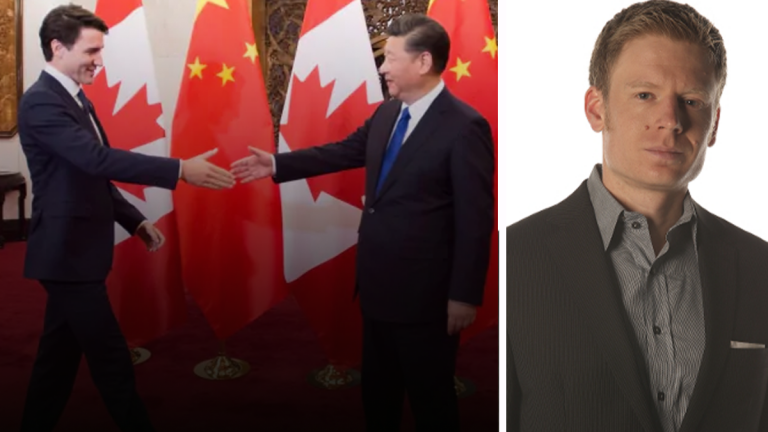
It doesn’t matter how much Trudeau appeases the Chinese regime, it’s not going to work.
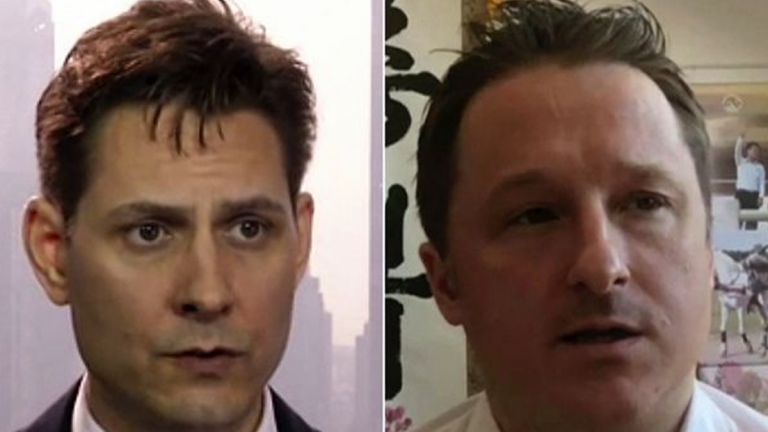
After Trudeau applauded China’s handling of the coronavirus and delayed his decision on banning Huawei from Canada’s 5G network, Michael Kovrig and Michael Spavor are being charged by the Chinese regime with various espionage crimes.
True North’s Anthony Furey says Trudeau needs to change his approach to China.
Systemic racism is literally everywhere and if you don’t accept that, you’re a racist! …At least that’s what the media and politicians are telling Canadians.
Instead of asking questions about issues that actually matter to Canadians, the mainstream media uses the Conservative Leadership Debate as a platform to push their own pet causes.
Plus, we’re reminded once again that the Trudeau Liberals are fake feminists.
And Trudeau embarrasses Canada AGAIN on the world stage but his friends in the mainstream media are pretending like nothing happened.
Tune into the True North Update with Candice Malcolm and Andrew Lawton!
The Liberal Party of Canada approved the candidacy of MP Marwan Tabbara prior to the 2019 election despite launching an internal investigation into sexual harassment allegations against him.
When questioned by reporters on his knowledge of sexual harassment allegations made against Tabbara, Trudeau failed to answer the question directly.
“We always ensure that there is a rigorous process in place whenever there are any sorts of allegations brought forward. We make sure that all the steps are followed, that the conclusions are adhered to, that the recommendations are fulfilled, and of course that confidentiality, which is so important in this situation and in all of these situations, is respected,” said Trudeau.
“That was the commitment I’ve made to Canadians. It is the commitment that all members of the Liberal party make.”
The disgraced Liberal MP, who has since been ejected from the party’s caucus, appeared before a court today regarding several serious charges. Tabbara is currently being charged with assault, breaking and entering to commit an indictable offence and criminal harassment.
Tabbara was arrested for his alleged crimes on April 10 but the incident did not become public knowledge until earlier this month when Global News reported on it.
When questioned about Tabbara on June 8, Prime Minister Justin Trudeau claimed he had no knowledge of the charges prior to the report.
“It is certainly disappointing as a party leader, that the individual in question never chose to inform the party, of which he was a part of, of these charges,” said Trudeau on Friday.
“I will let the police and the prosecutors in this case speak for themselves.”
According to CBC News, the party was investigating allegations going all the way back to 2015. Among the accusations directed against Tabbara by a female staffer, including sexual comments and inappropriate touching.
The Liberal investigation found that some of the allegations were true but it is unknown whether Tabarra was reprimanded for his actions.
Tabbara joins a number of other Liberal MPs and operatives accused of sexual harassment since Trudeau was elected.
In 2015, MPs Massimo Pacetti and Scott Andrews were kicked out of the Liberal caucus over accusations of harassment made by two NDP MPs.
In 2016 and 2017, MPs Darshan Kang and Hunter Tootoo, as well as the PMO deputy director of operations Claude-Éric Gagné, were also accused of inappropriate behaviour or sexual harassment.
In January 2018, MP Kent Hehr was also forced to resign from cabinet over sexual harassment allegations made against him.
In 2018, the prime minister promised that under his leadership the Liberal Party would have a zero-tolerance policy with regard to sexual harassment complaints.
Trudeau himself was accused inappropriately groping a woman in 2018. The alleged incident took place several years earlier in 2010. Former journalist Rose Knight confirmed that Trudeau had touched her inappropriately during a music festival that year.
“The incident referred to in the editorial did occur, as reported. Mr. Trudeau did apologize the next day. I did not pursue the incident at the time and will not be pursuing the incident further. I have had no subsequent contact with Mr. Trudeau, before or after he became Prime Minister,” said Knight.
“That’s the whole conversation we have to be having around this. People experience things differently and we have to be more thoughtful and that’s a big part of the collective awakening we have to have,” said the self-proclaimed male feminist in 2018.
During his daily coronavirus press briefing on Friday, Trudeau said he was “disappointed” with charges laid by China against Michael Kovrig and Michael Spavor.
The two Canadians are being charged by the Chinese regime with various espionage crimes after being unlawfully arrested in retaliation for the detainment of Huawei CFO Meng Wanzhou by Canadian authorities.
“In the case of the two Michaels, I can say that we are using a wide range of public and private measures to ensure that everything is being done to get these Michaels home,” said Trudeau.
Spavor is being charged with spying for a foreign entity and illegally providing state secrets, while Kovrig is charged with spying for state secrets and intelligence.
The two have spent well over a year in Chinese prisons since being arrested in December 2018.
Trudeau’s comments came shortly after China’s ambassador to Canada Cong Peiwu wrote an op-ed in the Toronto Star claiming that China would never “interfere” in Canada or undermine its relations with the country.
“The Chinese side never takes the initiative to stir up trouble and will never do anything to interfere in Canada’s internal affairs or undermine China-Canada relations,” wrote Cong.
Recent reports have outlined significant attempts by international organizations linked to the Chinese Communist Party (CCP) to interfere in Canada’s affairs.
According to a Global News investigation, United Front groups associated with the Chinese state were directing diaspora and auxiliary organizations to buy up personal protective equipment in Canada and abroad, while the CCP was playing down the severity of the coronavirus.
Conservative Party leader Andrew Scheer accused the Trudeau government of not taking enough actions in securing the release of the two imprisoned Canadians.
“It’s been 18 months since Michael Kovrig and Michael Spavor were arbitrarily and unlawfully detained by the Chinese government. During this time, Justin Trudeau has done nothing to stand up against the People’s Republic of China’s actions,” said Scheer.
“This case should be being dealt with at the highest levels. But Justin Trudeau has repeatedly refused to intervene.”
We have a huge problem in this country. And no, I don’t mean racism (systemic or otherwise), discrimination, environmental pollution or the other myriad issues facing Canadians.
I mean the fact that we aren’t having conversations about Canadian problems.
Most recently, the national conversation has revolved around anti-black racism, sparked by the senseless death of George Floyd in Minnesota.
To be clear, anti-black racism in Canada is real, and, like other forms of racism or discrimination, should be fought and condemned vigorously.
But the Canadian reality is vastly different from the American one.
For starters, Canada does not have a legacy of slavery like that of the United States. Canada was still part of the British Empire when it abolished slavery in 1833, prior to which only small numbers of slaves were ever recorded — mostly aboriginal peoples in New France captured or purchased from local tribes according to historian Marcel Trudel. Black slaves were occasionally brought to Canada, the largest group of which appears to be approximately 2,000 who came to Canada in 1783 when Loyalists fled north with them. Slavery was abolished in Upper Canada (Ontario) in 1793 by the Act Against Slavery.
Canada also did not have any equivalent to the Jim Crow laws which enforced segregation and made black Americans into second class citizens.
When it comes to education, schools in the United States are funded by local property taxes, meaning that lower-income neighbourhoods raise fewer amounts of property taxes to contribute to local schools. This has led to a situation where many poorer black neighbourhoods have fewer resources in schools than wealthier, often whiter, neighbourhoods nearby. Canada’s education system is more equitable — school boards tend to each be given a flat amount per student, regardless of their location.
According to Statistics Canada, there are approximately 1.2 million Canadians who identify as black, mostly in Ontario and Quebec which make up 3.5% of the total population. Of these, 56.4% were born outside of Canada compared to only 8.7% of black Americans. This creates a situation where issues affecting Canada’s black community may overlap with other challenges faced by recent immigrants. As such, language, employment or cultural barriers may explain some of the differences in outcomes between groups.
Lastly, with approximately 37% of black Canadians living in Toronto, many of the issues facing the community should be understood as largely Toronto-centric as opposed to national. Yet our news media has chosen to focus on protests in the United States when they should instead be talking about real issues, like those faced by Toronto’s black community such as possible police profiling or the use of arbitrary roadside stops.
So why does our national conversation tend to be peppered with American rhetoric?
Well, because it’s guaranteed to get a reaction from the public. Since most Canadians are steeped in American culture through movies, music and the news media, they may not even realize that we are being subjected to a largely American narrative. This is despite the fact that Canada has a vastly different history, governance and societal outcomes than our American neighbours.
Second, it can be an excellent political distraction; why focus on real problems when we can focus on American problems which have no real Canadian solution instead?
If you listen to the Prime Minister or most media outlets, you will find the discussion revolving around police brutality or the killings of black men. The implication being that this is a serious issue facing our country.
While it is difficult to determine how many people are killed by police each year (since Statistics Canada only tracks fatal shootings if the officer is criminally charged) most estimates put the total number below 25 per year. This includes people of all races and ethnic groups.
This is not to say that black Canadians never face unique challenges, racism or even harassment by police. However, focusing on American issues is stopping us from addressing the more prevalent forms of racism here at home.
You may have heard of “carding,” otherwise known as “street checking.” This involves the police stopping, questioning and documenting individuals in high crime neighbourhoods even when they are not conducting an investigation or suspect any offence has occurred. This can happen in any place a police officer has contact with the public, be it on public or private property.
This specific process was officially stopped in Toronto in 2014 after a Toronto Star investigation accused the police department of racism because data showed that black and brown-skinned Canadians were far more likely to be stopped. Similarly, both black and Indigenous people in Vancouver were more likely to be considered suspicious, and therefore ‘street checked,’ than others.
But did this mean that black and brown Canadians were stopped more on purpose or because they were more likely to be in a high-crime neighbourhood? It’s hard to tell just by looking at the publicly available data, especially when there are so many other variables.
Dr. Thomas Sowell, American economist and senior fellow at the Hoover Institution at Stanford University, provides a useful analytical tool that can help us understand, as he puts it, the three types of discrimination: 1a, 1b and 2.
Discrimination 1a: being sorted or discriminated against based on relevant characteristics specific to each person. E.g. street checking James because he’s in a gang and has a criminal record.
Discrimination 1b: trying to predict unknown individual characteristics based on observed group characteristics or averages. E.g. street checking James’ friend in a high-crime area because he was previously seen there with James and the gang.
Discrimination 2: arbitrary discrimination that ignores characteristics relevant to the decision making process. E.g. street checking James because he is black.
Street checking is just one example of a real, definable Canadian issue. One which may have many factors, variables and causes for us to discuss, examine and fix. Potential Charter issues aside, it matters whether or not police in Canada are employing type 1a, 1b or 2 discrimination. And the only way to find that out is to talk about it and examine the facts.
The distractions being created by our focus on American issues means that we are allowing Canadian problems to be perpetuated. We must all ensure that we aren’t being swayed by passionate American rhetoric or forgetting the Canadian context of any issue, including racism or police brutality. By being too busy debating American problems, we are complicit in allowing Canadian problems to stand.