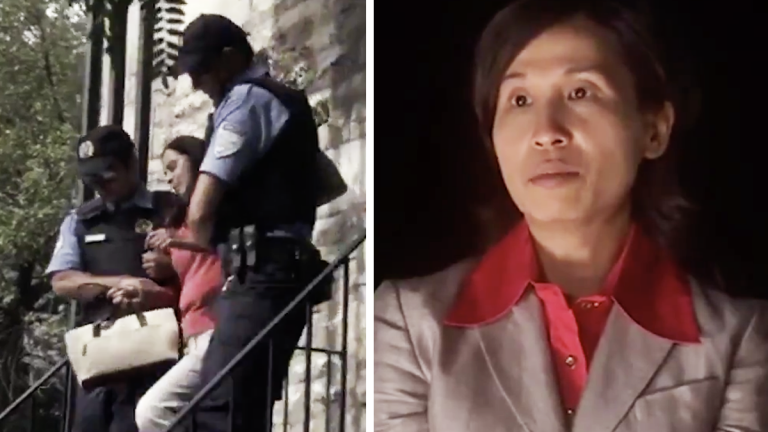
A clip has resurfaced of Canada’s Chief Public Health Officer Dr. Theresa Tam suggesting the use of virus tracking “bracelets” and using police to enforce quarantine measures in a 2010 documentary.
Tam was included in a segment in the film Outbreak: Anatomy of a Plague, which has recently been shared on social media.
👀
“You could track people, put bracelets on their arms,” she said.
That’s Theresa Tam, Trudeau’s public health advisor, who starred in a government documentary about pandemics, forced vaccinations and detention centers. https://t.co/6dQ9X9iV88
The documentary was originally released in 2010 and is about Montreal’s 1885 smallpox epidemic. The film asks experts how such an outbreak would unfold in the modern-day.
“If there are people who are non-compliant, there definitely are laws and public health powers that can quarantine people in mandatory settings. There’s potential you could track people, put bracelets on their arms, have police and other setups to ensure quarantine is undertaken,” says Tam in the documentary.
“It is better to be preemptive and precautionary and take the heat of people thinking you might be over reactionary, get ahead of the curve and then think about whether you’ve overreacted later but it’s such a serious situation that I think decisive early action is the key.”
Tam has been at the forefront of Canada’s coronavirus response since authorities became first aware of the coronavirus.
Critics have scrutinized Tam’s handling of the coronavirus and her reliance on the World Health Organization (WHO) since the coronavirus pandemic began.
Early in the outbreak, Tam claimed that the risk to Canadians was “low” and opposed the idea of the public wearing masks — a measure which she later suggested after the number of cases ballooned in Canada.
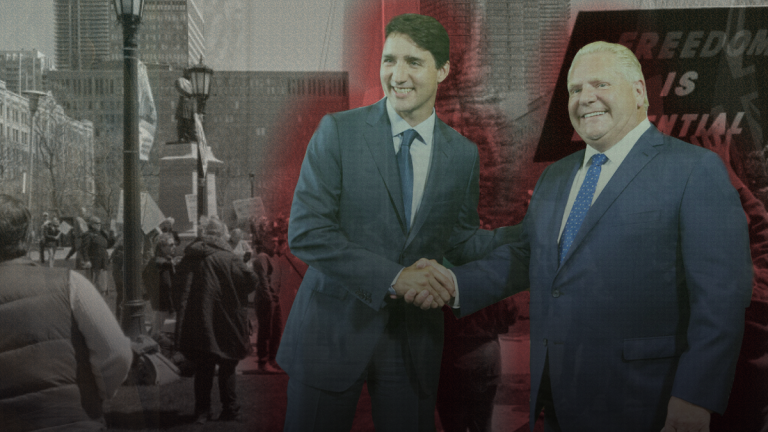
Politicians in Ottawa and Toronto rule out ending the lockdowns. Meanwhile, Quebec, Saskatchewan, many US states and much of Europe re-opens. Why don’t politicians trust Canadians?
Plus, Andrew Scheer flips flops about Derek Sloan’s “racist” comments. And the Toronto Star attacks a Conservative MP for spending time with her family.
More than half of the individuals being held in Canadian immigration detention centres have been freed during the coronavirus pandemic, according to Global News.
Between March 17 and April 19, 206 people who were being held for immigration violations or other reasons were freed by the Immigration and Refugee Board of Canada.
During this period, the number of detainees being held in various immigration holding facilities, including provincial jails, fell from 353 to 147 people.
117 of the remaining detainees are currently in provincial jails, while the other 30 are in one of three immigration detention centres in Toronto, Laval and Surrey.
There are several reasons why the Canadian Border Services Agency can choose to detain somebody. Among those reasons are whether the individual in question is a threat to public safety, if they have failed to adequately prove their identity, or if they are unlikely to appear for immigration hearings.
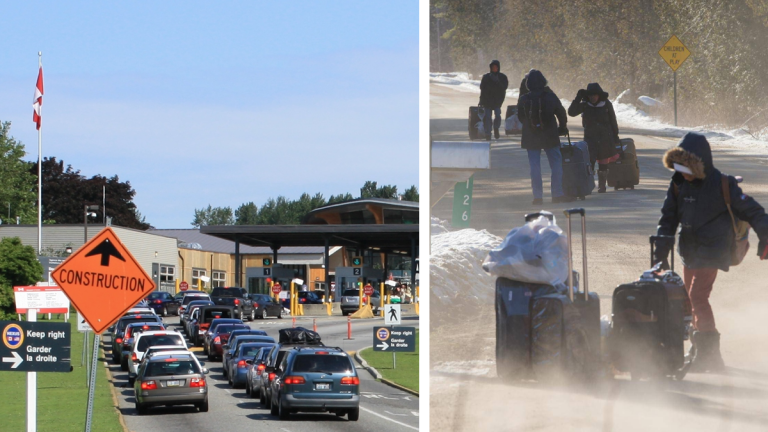
While the Trudeau government has implemented strict border controls during the coronavirus pandemic, a recently-made federal order is allowing border crossers to make asylum claims at official ports of entry if they meet exceptions under the Safe Third Country Agreement.
According to the agreement, “refugee claimants are required to request refugee protection in the first safe country they arrive in, unless they qualify for an exception to the agreement,” claims the official Immigration, Refugees and Citizenship Canada website.
“Exceptions to the agreement consider the importance of family unity, the best interests of children and the public interest.”
Several exceptions are in place which allow family members, unaccompanied minors and special document holders into Canada. There is also an exception for those who have been charged or convicted of an offence that could lead to the death penalty in their home country.
CBSA spokesperson Judith Gadbois-St-Cyr told True North that as it stands, the border is closed to “most asylum claimants,” excluding those who meet the exceptions.
“To be clear, the border remains closed to most asylum claimants,” said Gadboi-St-Cyr.
“Limiting cross border travel is a vital part of the national effort to limit the spread of COVID-19 in Canada. To that end, it is important to reiterate that now is not the time to be crossing the border to claim asylum.”
The University Health Network estimates that approximately 35 people have died from cardiac issues as a result of delayed procedures due to coronavirus healthcare restrictions in Ontario.
Ontario’s Minister of Health Christine Elliot revealed the estimated deaths when questioned about whether she had any knowledge of “collateral damage” resulting from restrictions to elective procedures.
“I understand that a report has been released today by UHN with respect to cardiac deaths and it has been estimated that approximately 35 people may have passed away because their surgeries were not performed,” said Elliot during Tuesday’s daily coronavirus briefing.
“That’s not something any of us want to hear, certainly was not intended because the best medical decisions were made, but as I said before any death is a tragedy. It’s something that has happened, I don’t want to call it collateral damage because they are deaths and that is very concerning and sad to all of us.”
Another report released today by the Financial Accountability Office of Ontario (FAO) revealed the impact the coronavirus outbreak has had on Ontario’s healthcare capacity.
According to the FAO, the cancellation of elective surgeries has reduced the occupancy rate in Ontario hospitals from 96% before the outbreak to the current rate of 69%, meaning that as of April 13, 11,200 hospital beds were empty.
From the period of March 15 to April 22, around 52,700 procedures were cancelled or avoided and the FAO estimates that each week 12,200 additional procedures are seeing delays.
“While lower demand for hospital services creates immediate availability of hospital resources for COVID-19 patients, it also will lead to significant demand pressure for hospitals in the longer-term. Since most of the delayed procedures are medically required, the longer procedures are postponed, the worse health outcomes Ontarians could have and the harder it will be for hospitals to eventually clear the backlog of delayed procedures,” claimed the report.
30% to 50% of operating rooms across Canada are empty as a result of the cancellation of elective procedures.
Minister Elliot told reporters that while some deaths are probable as a result of delayed procedures, thousands of lives were also saved.
“There may be some people who died because of cardiac or cancer deaths but we also saved thousands of lives by moving as quickly as we did so as tragic as it is, these decisions were made by the medical people involved with people’s cases and based on that pandemic plan,” said Elliot.
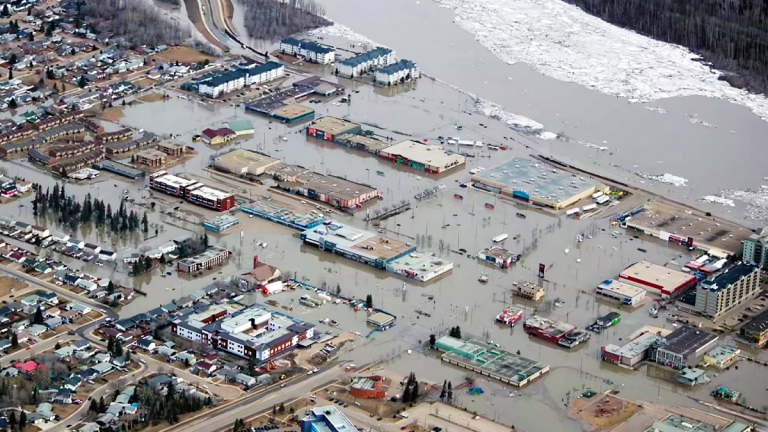
Elected officials in Fort McMurray, Alta. are asking for help from the military as flooding forces thousands to flee their homes.
Wood Buffalo Mayor Don Scott said Sunday that he had formally requested federal assistance for the ongoing flooding in the area, including help from the Canadian Armed Forces.
Fort McMurray—Cold Lake MP David Yurdiga told Postmedia Sunday he had also made a request for military assistance.
The municipality of Wood Buffalo declared a state of emergency as the Athabasca and Clearwater rivers flooded much of the municipality, including downtown Fort McMurray.
Sandbagging was done throughout Monday around the Northern Lights Regional Health Centre as waters continued to rise downtown.
Over 15,000 people have been ordered to leave their homes since flooding began Sunday, and 5,000 people have registered at the Casman Centre, which is being used as an evacuation centre.
Many communities that have not been ordered to evacuate are without power and have boil-water advisories.
Emergency responders performed over 200 rescue operations on Sunday night and Monday.
Requests for military assistance must first go through the province. Premier Jason Kenney says he will not approve military intervention until the municipality can provide more information on what the military would be doing.
“This is a situation that hopefully will be abating later this week but we’ll continue to discuss that with the municipality,” he Kenney.
“If there is a formal request, we’ll certainly be willing to consider putting that through to the Department of National Defence.”
On Monday night Kenney and Environment Minister Jason Nixon toured the affected areas of Fort McMurray.
“It’s very significant,” Kenney said on Facebook.
“We will provide all resources that are necessary. We will be there. We will be obviously supporting the community both in the emergency phase and the rebuild phase.”
New federal coronavirus models are predicting up to 3,883 deaths and 66,835 cases by next week.
Federal health officials provided updated models Tuesday afternoon, nearly three weeks after releasing their initial projections.
Chief public health officer Dr. Theresa Tam says the percentage of people who have died of the virus has also grown by several percentage points since federal officials released their original models.
“The proportion of cases for those who have died has increased from 2.2% on April 9 to 5.5% as of April 27. It is expected that the case fatality ratio will continue to change over time. Based on available information 17% of cases have required hospitalization and less than 5% have required intensive care,” said Tam.
“Adults aged 60 years and older account for 95% of deaths. While only 45% of reported cases are male, males are more likely to be admitted to the hospital and the ICU.”
The new models show that the number of cases now doubles every 16 days, whereas originally they were doubling every three days.
“We estimated that each infected person passed the virus onto just over two additional people. Today stronger controls including physical distancing increased testing to identify and isolate cases and trace and quarantine contacts are helping to reduce the average number of people each case infects to just above one,” said Tam during Tuesday’s press conference.
Tam added that the number must fall below one person infected by each person carrying the virus, in order to defeat the coronavirus.
Vulnerable populations, especially those in elderly care homes, have been the hardest hit by the virus. Approximately 79% of all deaths have taken place in these facilities.
Prime Minister Justin Trudeau urged Canadians to continue abiding by public health measures despite signs that the virus is slowing down.
“In many parts of the country, the curve has flattened, but we’re not out of the woods yet,” said Trudeau.
The CEO of Canada’s sixth-largest commercial bank has called Saudi Arabia’s oil price cuts an “act of economic warfare.”
In an interview with the Financial Post, National Bank of Canada CEO Louis Vachon said that governments will need to address Saudi Arabia’s decision to slash prices.
“The governments have been very focused on the COVID-19 situation, rightfully so, but at some point over the next few weeks or next few months we will have to address the other problem related to the energy industry, which was that particular policy by that government,” said Vachon.
The Saudi kingdom’s decision to start an oil price war at the height of the coronavirus pandemic has been devastating for the price of Canadian oil.
Alberta-based companies have been forced to reduce production and cut spending during the crisis. The provincial government has been seeking a “liquidity package” from Ottawa to help oil and gas companies weather the storm.
“I know they’re working on something that’s quite significant,” Alberta’s Minister of Energy Sonya Savage told the Financial Post.
“Numbers that we’ve looked at, that the premier has looked at, is we need $20 billion to $30 billion coming into our gas sector, inclusive of the service sector and the drillers — that’s the kind of program we’re looking at if we’re going to get to the other side.”
Demand in oil has been at an all-time low as benchmark prices of West Texas Intermediate crude historically slipped into negative territory.
Vachon went on to call the price cut “an act of economic warfare by a foreign government.”
“I think I’ve measured my words very carefully. But how would you describe the current situation, when predatory pricing is looking to put out of business a portion, or a significant portion, of the North American energy industry?” said Vachon.
The federal government’s incompetent handling of Canada’s medical supply stockpile has cost taxpayers nearly half a billion dollars.
Canadians are now paying to import personal protective equipment (PPE) at marked-up rates: according to Blacklock’s Reporter, vendors are charging approximately 380% more for PPE than before the coronavirus pandemic.
The $500 million cost was revealed in documents submitted before the House of Commons government operations committee on Friday, April 24.
Department of Public Works Deputy Minister Bill Matthews told the committee that the price of recent orders was several times more expensive than when the crisis began.
“On the mask question, you’re seeing a range of prices for masks. When this crisis started we were looking at about $1.20 a mask if you had orders early on. More recent orders, you’re seeing prices quoted up to five or six dollars a mask, for N95 respirators,” said Matthews.
Critics have accused the Liberal government of mishandling Canada’s emergency medical supply stockpile leading up to the coronavirus pandemic.
In February, Foreign Affairs Canada announced that it was sending 16 tonnes of personal protective equipment to China. Nearly a month later, Canada was scrambling to buy the exact same gear on the global market.
During a House of Commons health committee hearing earlier this month, Executive Director of the Public Health Association Ian Culbert called the government’s actions regarding the stockpile its “largest failure.”
“In hindsight, was it the best decision? Probably not. But I think it was made in good will with the best information available at the time,” said Culbert about the decision to send PPE to China.
“I would say the national emergency stockpile is probably the largest failure as far as our response goes to date.”
Prior to the pandemic, millions of N95 masks were sent to the dump after the federal government shut down an emergency stockpile in Regina.
In May 2019, two million N95 masks and 440,000 medical gloves from Canada’s National Emergency Strategic Stockpile were tossed into the trash after reaching their expiry date.
Revelations this week that the federal government is relaxing stringent closures of the border, especially during the pandemic restrictions are stunning.
However, last week the Trudeau government eased restrictions by allowing refugee claims to be made at legal Ports of Entry (POE) if they meet restrictions set by the Safe Third Country Agreement (STCA) signed between the U.S. and Canada in 2004.
These exceptions include unaccompanied minors, persons facing the death penalty in the US and any other third country or – and this is the kicker – for persons seeking to join a family member already in Canada.
According to a source close to front line CBSA officers, this includes family members who themselves are awaiting the adjudication of a refugee claim even if they entered the country illegally via a crossing between Ports of Entry like Roxham Road.
The number of claims in the past couple of years through the Roxham Road illegal entry point is believed to be more than 50,000 cases.
With the relaxation of the border closure, a refugee claimant who would otherwise be ineligible under the STCA may now make a refugee claim by simply saying they wanted to join their brother in Canada. CBSA must now allow them in, quarantine them for a period of 14 days and then, well – we really don’t know.
Presumably, they are released into the population of Canada and their refugee claim begins where they become eligible for welfare, healthcare, housing and all the myriad privileges the government provides.
What True North has also been told is if an incipient “irregular immigrant” is intercepted at the border the RCMP will direct them to the nearest POE where they will then be dealt with by the CBSA.
We already know that human traffickers move migrants to the border points and give them instructions on what to say to circumvent Canadian law and to take advantage of our generous refugee system. Therefore, all they need to do is change their story from what was used at the illegal crossings and add to it that they are joining a family member and presto, they are in and the money taps are turned on.
Scott Newark, a former Crown Counsel and security advisor to the Ontario government post 9-11 and special security advisor to Stockwell Day when he was Public Safety Minister said this on the subject: “These people coming in from the U.S. aren’t Americans, but people transiting the U.S. who decided they’d rather be a refugee in Canada because we have better healthcare and it’s easier to get welfare. Well, that’s not seeking protection, that’s immigration and they should get in line with everyone else.”
Hard to argue with that. But for the government of Justin Trudeau, that’s not the case.
Trudeau reluctantly closed the border after waiting until the coronavirus pandemic was already well underway. And now, just a few weeks later, he has reactivated the exemptions to the STCA to allow refugee claims. Meanwhile, Canadian citizens aren’t able to cross the border.
True North reached out to the CBSA for comment on the morning of April 22. They said they’d get back to us which they did the following day. This was their justification: “Under Order in Council 11, which came into force April 22, 2020, only foreign nationals who meet one of the exceptions (e.g., family member, stateless habitual resident of the U.S., unaccompanied minor) under the Safe Third Country Agreement (STCA), that came into place in 2004, can seek asylum at an official land port of entry (POE).”
This makes no sense at all. The border is closed to you and me, but a refugee claimant already safe in the U.S. can come to a POE and claim refugee status ostensibly to join a family member.
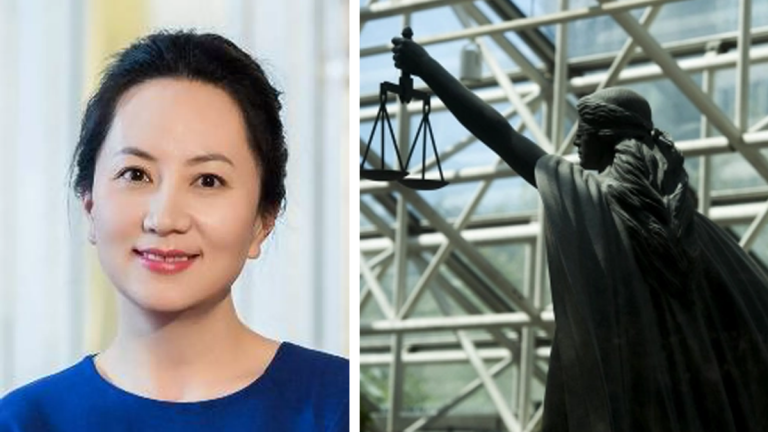
Huawei CFO Meng Wanzhou made an appearance before the BC Supreme Court on Monday morning via telephone.
Associate Chief Justice Heather Holmes oversaw the virtual case management hearing and ordered that Meng must appear before the court again on June 15.
Justice Holmes told the court that she would be giving three days notice before handing down a decision on the double-criminality dispute at the heart of Meng’s defense.
On the day of the decision, prosecutors and the defense will receive a copy of the ruling and the media will be informed on the matter in a 10 a.m. lockup shortly after. Holmes did not provide a date for when her decision will be made.
US authorities are seeking to have Meng extradited to the US over a number of bank and wire fraud charges related to Huawei’s alleged dealings with Iran, contravening American sanctions.
Meng’s lawyers are challenging the US extradition order on the basis of not meeting the requirement of double criminality. Meng’s lawyers claim that since the allegations are related to US sanctions, the charges do not apply in Canada.
Crown prosecutors must first prove to the court that Meng’s actions constituted a crime in Canada before the extradition hearing can move forward.
Since Meng’s arrest at the Vancouver International Airport on December 1, 2018, Chinese-Canadian relations have chilled.
Shortly after Meng’s capture, the Chinese government retaliated against Canada by unlawfully detaining two Canadian citizens on trumped-up espionage charges.
Michael Spavor and Michael Kovrig have been held in a Chinese prison for over 500 days, where they have been subject to continuous interrogation. They have also been denied access to consular visits by the Canadian embassy.
Meanwhile, Meng has been held under supervision at her multi-million dollar Vancouver mansion. In a letter marking her year spent under house arrest, Meng complained that her time reading books “from cover to cover” and completing oil paintings were “the worst days of [her] life.”
“The past year has witnessed moments of fear, pain, disappointment, helplessness, torment, and struggle,” wrote Meng.
“Right now, time seems to pass slowly. It is so slow that I have enough time to read a book from cover to cover. I can take the time to discuss minutiae with my colleagues or to carefully complete an oil painting.”