The Canada Mortgage and Housing Corporation (CMHC) has released this year’s annual rental market report and notes that in part migration continues to drive higher demand for rental space.
Economists with the Crown corporation blamed growth in demand outpacing housing supply – driven by “significantly higher net migration.” In 2022, Canada’s vacancy rate fell to an over 20-year low.
“Growth in demand outpaced strong growth in supply, pushing the vacancy rate for purpose-built rental apartments down from 3.1% to 1.9%. This was the vacancy rate’s lowest level since 2001. Rent growth, for its part, reached a new high,” wrote CMHC economists.
“Growth in rental demand across the country reflected significantly higher net migration, as flows continued to benefit from relaxed COVID-related travel restrictions.”
Costs of homeownership was also a major driver, forcing many people to resort to renting “mortgage increases and relatively high prices, which increased the costs of transitioning to homeownership.”
British Columbia continues to top the list when it comes to unaffordability.
Cities in BC made up the bulk of the top five most expensive places to rent. Renting a two-bedroom unit in Vancouver costs residents a whopping $2,002 on average.
Toronto was the second most expensive city with rents for similar units costing $1,779, followed by Victoria where renters pay an average of $1,699.
Kelown ranked in fourth place with rents averaging $1,690, whereas in Ottawa it costs $1,625 to rent a two-bedroom unit.
The Liberal government recently introduced a plan to welcome 500,000 new immigrants to Canada annually by 2025.
A recent poll shows that excessive strain on Canada’s housing availability and healthcare system are on top of mind for Canadians when it comes to high immigration numbers.
The Leger survey found that 49% of Canadians said that Ottawa’s plan was too ambitious at the present time.
Wednesday was Bell Let’s Talk Day, an annual pause to shed more light and understanding on mental illness.
About one in 5 Canadians — or 6.7 million people — are affected by mental illness each year. This number, however, only includes those who have been formally diagnosed and doesn’t take into account those who suffer from mental illness but are falling through the system’s many cracks of a still-problematic system.
In Toronto right now, the transit system is under attack with random beatings and stabbings, the most recent victim being a seriously injured 16-year-old boy who was stabbed by an unknown assailant.
The attacks are senseless, but they are growing.
The Canadian Mental Health Association has previously noted that in any given week 500,000 Canadians can’t work due to mental health struggles and this costs the economy $50 billion annually due to absenteeism and related issues.
It is too simple to say, “just get over it.”
In Hamilton this week, our prime minister and all his cabinet have spent their retreat retreating from a small group of protesters seemingly cut from the same bolt of cloth as last winter’s so-called Freedom Convoy that brought downtown Ottawa to a halt.
None of the protesters appear gentle. Twice now they have fired fireworks at the caucus’s chosen hotel, and followed them across the road to bang on the windows of the Bread Barn restaurant they were attending.
They also carried an inflatable sheep wearing a medical face mask, with a sign that read “99.8 per cent survival rate” — a reference to Covid-19.
Mental illness? Some, maybe; but more are just fed up.
Fed up with the fact that the Bank of Canada raised its interest rate to 4.5%, making mortgages more and more unaffordable. Fed up with the high cost of energy to heat their homes and fuel their cars as another winter blast hits. Fed up with the soaring inflation rate that is affecting food at the table and pushing food banks to their limits. Fed up with the government that seemingly sits back and does nothing.
Fed up with being fed up. Sick and tired of being sick and tired.
The country is going to hell. Someone has to care.
The Hamilton protesters have blown horns and have shouted at the prime minister at all hours of the day — taunting him with chants of “tyrant” and “traitor” and cries of “f*** Trudeau,” while carrying flags and signs bearing the same messages.
There is no civility. No one has said it’s Bell Let’s Talk Day.
Like with the Freedom Convoy of a cold winter’s past, the demonstrators are vehemently opposed to the prime minister’s handling of the Covid-19 health crisis and his policy of vaccine mandates for travellers and some cross-border workers — policies that were dropped last year as part of a push to return to pre-pandemic life.
The protesters also have been carrying signs denouncing the World Economic Forum (WEF), a non-governmental organization of mega-rich elites that hosts discussions between world and business leaders at an annual summit in Davos, Switzerland.
The WEF is at the centre of many Covid-related conspiracy theories because, in 2020, some of its leaders talked about a “great reset” after the health crisis — a chance to evaluate how the global economy is structured after grappling with such a devastating pandemic.
If not the WEF, then what?
It is all so depressing but, like depression, it is all so real.
A high school in Toronto is kicking off the year with a new mascot, after scrapping its old “Raiders” name over concerns about the involvement of pirates in the transatlantic slave trade.
Toronto’s Riverdale Collegiate Institute (RCI) last year announced it would change its team name, and asked students to vote for a new mascot. “Rams” was the winning selection.
Toronto District School Board media relations manager Shari Schwartz-Maltz told True North the school no longer felt “Raiders” was appropriate.
“While pirates are largely benign in pop culture, the actual history of piracy is complex and problematic,” said Schwartz-Maltz.
RCI announced the change in an October council meeting, but staff had investigated the issue for at least a year.
In 2021, RCI staff reached out to past students through an alumni Facebook group, and asked how the name “Raiders” started.
Alumni said the tag originated in the 1960s because footballers needed to toughen the team’s image.
Riverdale named itself after then-professional team “Oakland Raiders,” which had a reputation for being renegades.
“At that time Danforth Tech used to treat us like sissies and Lawrence Park considered us as low life east-enders,” said Mark Stanley, who said he played on the team from years ‘65 to ‘68. “So Riverdale became the […] Riverdale Raiders!”
About an hour’s drive from RCI, another collegiate school made a similar move.
Two years ago, Eastwood Collegiate Institute dropped its team name “Rebels,” saying the name had problematic ties to Confederate soldiers.
“As educators, our responsibility is to build a culture of inclusivity, creating a safe space for all students in which to learn,” a statement from the school at the time said. “We must lead and model messages of inclusion for our students each day.”
According to Eastwood’s statement, the team name was selected in the 1960s without ill intent, but changes had to be made because perceptions of racism still exist.
Canadian officials confirmed on Thursday the country will donate battle tanks to Ukraine as well as send Canadian Armed Forces to train Ukrainian soldiers.
The news comes a day after the United States and Germany each announced they would be sending tanks to the Eastern European country embroiled in what’s now a year-long war with Russia.
Minister of National Defence Anita Anand announced Canada will fulfill Ukraine’s request for “Leopard 2” tanks, donating four to Ukraine as part of ongoing military assistance.
“These tanks will allow Ukraine to liberate even more of its territory, and defend its people from Russia’s brutal invasion,” the minister said.
Anand said the government decided on four tanks after careful consideration around not depleting Canada’s own military reserves.
It may not be the last time Canada makes that consideration.
“Although I am announcing the donation of four tanks today, this number may grow as we coordinate donation and sustainment plans with our allies,” the minister added.
Anand said Canada plans to deploy Canadian Armed Forces trainers as well, in order to teach Ukrainian soldiers how to operate the tanks.
The decision comes after much anticipation.
For more than a week leading up to Thursday’s announcement, journalists put questions to Prime Minister Justin Trudeau, asking if he would supply the tanks.
German Chancellor Olaf Scholz amplified the pressure on Wednesday by officially green-lighting Canada to make the donation. The permission was necessary as part of a deal between the producer of the tanks, Germany, and Canada.
As True North reported, last week Canada donated 200 armoured vehicles valued at about $90 million.
Canada joined two climate coalitions last week – and an economist says one of them will definitely raise prices for consumers.
In an interview with True North, UBC economist Werner Antweiler said market interventions from the “First Movers Coalition” (FMC) will spike production costs in several industries. He said the coalition’s mandate to push for more green technology use throughout the economy will be expensive, and companies won’t have much of a choice but to pass the cost on to consumers through bigger price tags.
“At the end of the day, somebody’s got to pay for it,” he said. “The higher cost has to be passed on somehow… money is not coming from ‘somewhere.’ And they are surely not going to go and take it out of the investors.”
As True North reported last week, the First Movers Coalition is a group of top global players that have agreed to steer money away from carbon-intensive production methods, and instead direct the money to clean technologies that cannot yet compete at a cost-effective level.
“There is no free lunch here,” said Antweiler. “Any new technology that replaces an older fossil fuel technology tends to be more expensive. […] At the end of the day, switching to cleaner technologies poses a cost that needs to get passed on, essentially, to the final users.”
After announcing that Canada joined the FMC last week, Innovation Minister François-Philippe Champagne said Canada is committed to decarbonization.
While consumers can expect these commitments to cause price hikes in the short term, it won’t last forever, said Antweiler.
The UBC Sauder Strategy and Business Economics chair said clean technology will become significantly cheaper over time. He pointed to solar panels as an example, and said innovation was key.
“That is the crux of the matter for all these industries that are hard to decarbonize,” he said. “We will only see massive changes in these industries if there are competitive new technologies that are sufficiently cheap.”
Antweiler said the First Movers Coalition is focused on industries that have costly gaps to fill between carbon-intensive and clean technology– and that we can expect to pay for the bridge.
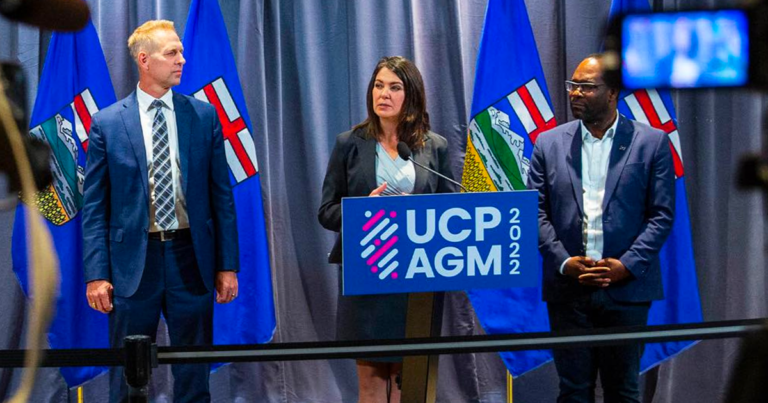
Alberta Premier Danielle Smith is calling CBC’s reporting about her government “defamatory” and “baseless”, the broadcaster isn’t backing down. Which side will prevail?
The Bank of Canada hiked interest rates yet again on Wednesday, the eighth such move since the central bank began its recent series of increases last year.
And after being swarmed by protesters in Hamilton, Prime Minister Justin Trudeau hits back saying “a handful of angry people do not define what democracy is.”
These stories and more on The Daily Brief with Anthony Furey and Rachel Emmanuel!
Canada is no longer in the top-10 list of freest countries in the world, according to a new report.
Canada fell six rankings, and was overtaken by nations such as Sweden, Finland, and the Netherlands on the annual “Human Freedom Index” released Thursday morning by Canadian think-tank the Fraser Institute. Their previous update that looked at Canada came out in 2021.
The report is based on measurements in 12 different areas, including: security and safety, rule of law, freedom of movement, association and assembly, and expression and information.
The liberty that declined the most in Canada, according to the report, was freedom of movement. The metric declined by more than 33% between 2019 and 2020.
Canada had the steepest year-over-year decline in total freedom among its peers, the report said. The peer group of the freest 15 jurisdictions in the world did not have a single country that increased its freedom in 2020.
The index scores countries by measuring the absence of coercive constraint, according to its publisher.
The Fraser Institute said this year’s report saw global freedom at the lowest the institute has reported since it began indexing in 2000. According to Thursday’s release, freedom across the world has been waning since 2007.
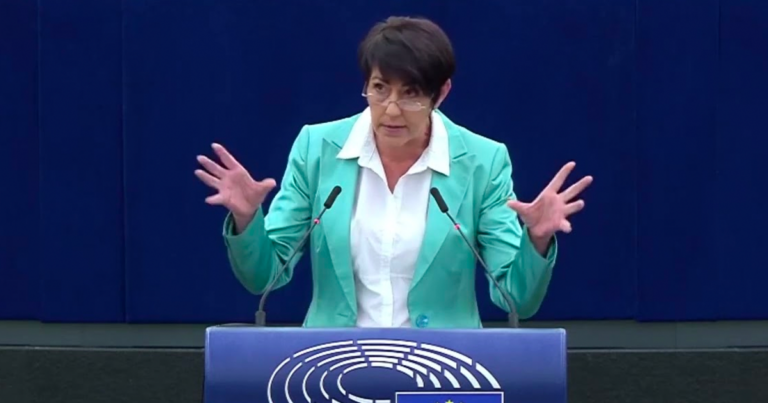
German MEP Christine Anderson has made a name for herself in Canada from her outspoken support of the Freedom Convoy and opposition to Justin Trudeau. Next month, she’s touring Canada and meeting with politicians, though she says the real motivation for the trip is to meet with some of the “bravest people in the world” — the supporters of the Freedom Convoy. In this edition of The Andrew Lawton Show, Andrew talks to Christine about the freedom movement, European and Canadian politics, and why she’s taking a stand.
The national president of the Amalgamated Transit Union (ATU) has called on Prime Minister Justin Trudeau and other decision makers to honour their promises to tackle random violence on public transportation.
Union head John Di Nino held a press conference on Tuesday following a series of attacks targeting transit operators in Toronto and elsewhere.
“Today, we heard from the prime minister who made a commitment to have these discussions about how we can tackle violence on transit systems. I hope and anticipate that it’s not just talk and that our office gets a phone call,” Di Nino said of remarks Trudeau made earlier in the day.
While speaking to the media about the ongoing federal cabinet retreat in Hamilton, Ontario, Trudeau told reporters that he’s willing to work with provincial and local levels of government to take action on the matter.
National president of the @ATUComm called on PM @JustinTrudeau to honour his commitment today to tackle public transit violence.
“Keeping Canadians safe remains one of the top jobs that all orders of government need to put at the forefront of everything they do. We will of course continue to work with the province and with the city on making sure that Canadians are safe,” said Trudeau.
“If there’s a role for the federal government to step up, we will no doubt step up. It’s something that we’re happy to partner with provinces and municipalities.”
The ATU has called for a national task force composed of all levels of government and transit agencies across Canada to investigate the “out of control” violence and propose solutions.
He said “kind words” are not enough and that violence on public transit is a systemic issue.
“Far too often we sit and listen to all of the kind words that come from CEOs and transit agencies and politicians saying ‘our hearts and best wishes go out to all of those victims. But it’s a one-off and our systems are safe’,” said Di Nino.
“Well, what we’re seeing today is that our systems are not safe and we need to ensure that the riding public has safe, reliable and affordable transit across this city and across this country. We can ill afford to do that by sitting on our hands and treating every incident as a one off.”
According to Di Nino, transit operators across Canada face up to 3,000 assaults annually – not including those which go unreported.
“There are many, many that are being unreported… Whether an operator or transit professional gets spat on or gets pushed or punched but gets back into the seat and starts doing their job again,” said Di Nino.
On Tuesday four teenagers were arrested and charged in relation to a “swarming” attack of two Toronto Transit Commission operators in Scarborough.
Following Alberta Premier Danielle Smith’s claims that its reporting is “defamatory,” CBC News says it won’t retract an article alleging that staff in Smith’s office emailed Crown prosecutors challenging their assessment on Coutts border blockades cases.
In an email to True North on Wednesday, CBC head of public affairs Chuck Thompson said the organization stands behind the journalism in the story, and as such, “have no intention of retracting it.”
CBC News also doubled down on its reporting with a second story alleging that Smith is inappropriately pressuring Justice department officials to intervene in pandemic-related charges.
Smith, the civil service, and Crown prosecutors denied similar allegations earlier this week. In both articles making such allegations, the CBC relied on anonymous sources.
In a statement, Smith called the allegations “baseless.”
“The Premier calls on the CBC to retract its outrageous story and, further, that the CBC and the Official Opposition apologize to the Premier, Premier’s Office staff, Alberta Crown prosecutors and those in the Alberta Public Service, for the damage caused to their reputations and that of Alberta’s justice system,” she said in a statement on Wednesday.
Thompson also said CBC stands by the story which transparently attributes the allegations to trusted sources and provides context to the allegations.
“As is our practice, we gave the premier and her office an opportunity to react and we included that response prominently in the story, including the sub-headline.”
Last week, CBC reported that anonymous sources said staff in Smith’s office emailed Crown prosecutors challenging their assessment and direction on cases stemming from the Coutts border blockades and protests. The story also granted anonymity to sources who feared they could lose their jobs.
The CBC later updated its story with an editor’s note saying the original version of the story neglected to note that CBC News has not seen the emails in question.
On Monday, the Alberta government said there’s no evidence of emails between the Alberta Crown Prosecution Service and Smith’s office following a review conducted by the non-partisan civil service.
The independent review was conducted by the Public Service Commission and internal IT experts between Jan. 20-22 searched for any emails sent to or received by the relevant prosecutors and Smith’s staff over a four-month period. Nearly one million incoming, outgoing, and deleted emails were reviewed.
“No further review will be conducted unless additional evidence is brought forward,” said a government release.
The Alberta Crown Prosecution Service (ACPS) also released a statement, saying it cooperated with the review and found no evidence of emails.
“Continued suggestions of impropriety without evidence are not warranted,” the statement reads.
“This unsubstantiated speculation harms the reputation of the ACPS and does a disservice to the dedicated professionals in ACPS who carry out their work with unwavering integrity.”
In its second story on Wednesday, the CBC published an article in which sources alleged Smith pressured Alberta Attorney General Tyler Shandro and his office to intervene in Covid-related court cases. The CBC said it spoke with multiple sources familiar with the interactions, but agreed not to name them “because of potential professional repercussions.”
Smith has said publicly she’s asked Shandro and his deputy minister to consider “on a regular basis” whether charges made for breaching Covid-19 restrictions are in the public interest.
Sources told CBC the conversations went beyond those considerations and “veered into pressure” about dropping the charges.
“They’re constantly pushing,” one source told CBC. “I would interpret that as pressure.”
Shandro’s office denies that Smith directed him on Covid-cases. And Smith said that communication with Shandro and his department has been appropriate and made through the proper channels.
“The CBC’s allegations and insinuations to the contrary are, once again, baseless,” she said Wednesday.