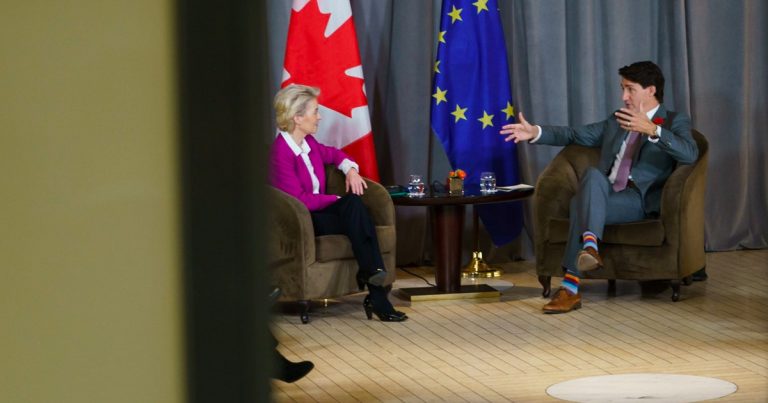
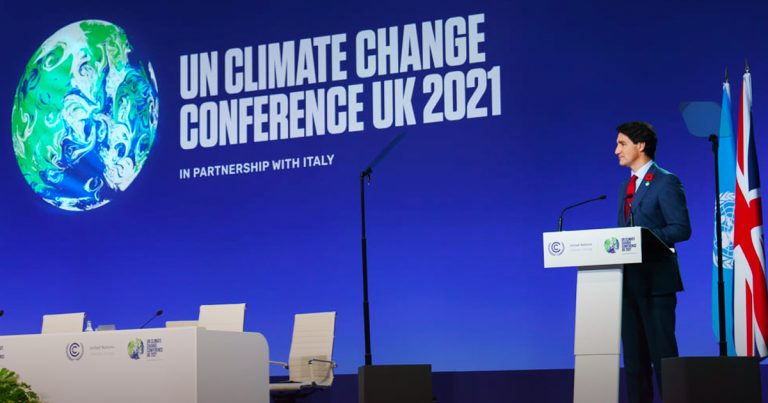
Over 100 countries are gathered in Scotland for COP26 and are using over-the-top doomsday alarmism over climate change. Their reckless fear-mongering is contributing to increased anxieties and unrealistic green policies.
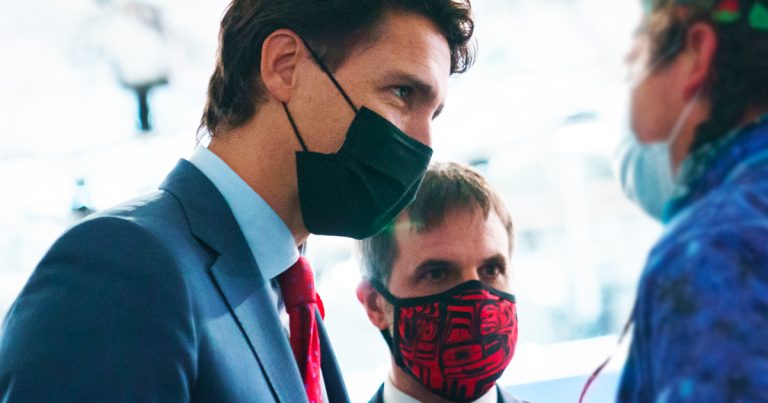
Case in point – Prime Minister Justin Trudeau announced yesterday the Canadian government will be putting a cap on oil and gas emissions in Canada in order to reach its ambitious climate goals.
Toronto Sun editor Anthony Furey joins The Candice Malcolm Show to discuss COP26 and how world leaders are ignoring the real issues while obsessing over climate change.
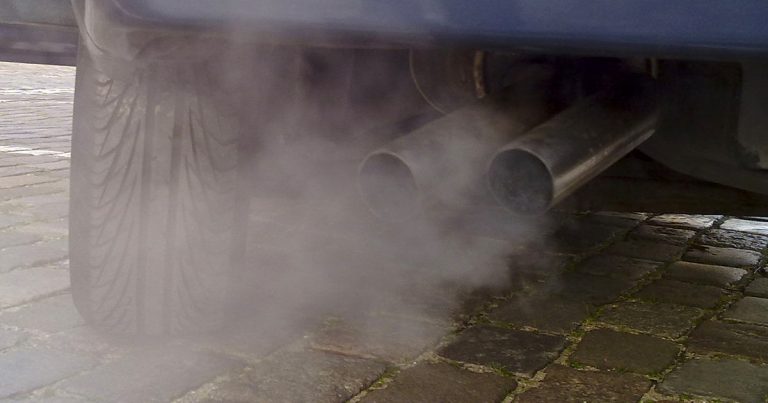
Locals in Glasgow, Scotland are slamming COP26 delegates for leaving their cars idling around the conference location.
According to Yahoo News, locals have noted that there are “a lot of engines running” as world leaders from around the world descend on the city to make commitments on how to fight climate change.
“There are a lot of engines running. I didn’t really get why that is. If it’s so they can keep the heating on then there’s no point in that,” said 23-year-old local event promoter Chris Anthony.
One attendee who also works with a climate change organization also criticized her fellow delegates for the behaviour.
“It’s horrifying. We’re all about stopping emissions and not using fossil fuels much less idling your car while attending a climate conference. I think that’s the level of commitment that a lot of people have to the issue which is no commitment at all,” said 68-year-old Diane Shisk of the Sustaining All Life charity.
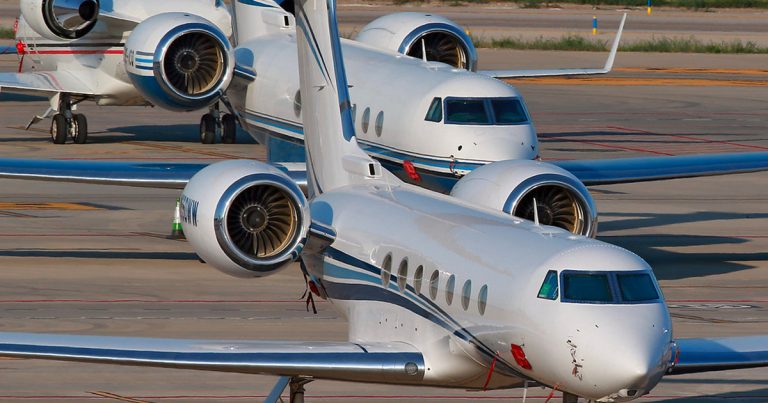
According to the Scottish media outlet Sunday Mail, over 400 private jets were used to bring approximately 30,000 global leaders to the summit, including a delegation of Canadian officials accompanying Prime Minister Justin Trudeau.
Estimates of CO2 emissions clock in around 13,000 tonnes of CO2, which is about the annual output of 1,600 Scots.
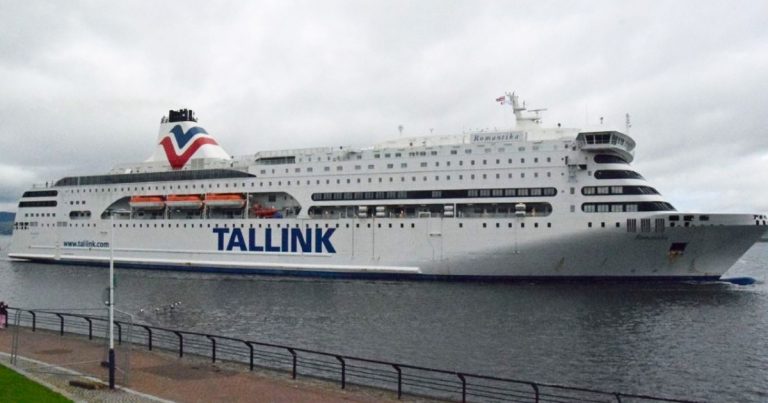
The UK government has accommodated some delegates by placing them on an “environmentally friendly” cruise ship due to a lack of space. Although the MS Silja Europa is designed to charge up on electricity when docked, a lack of onshore power stations in the country means that the vessel will have to rely on fossil fuels to operate.
On his first day at the conference, Prime Minister Trudeau announced that he would cap Canada’s oil and gas sector emissions.
“We’ll cap oil and gas sector emissions today and ensure they decrease tomorrow at a pace and scale needed to reach net-zero by 2050,” Trudeau said during a brief speech on Monday.
“That’s no small task for a major oil and gas producing country. It’s a big step that’s absolutely necessary.”
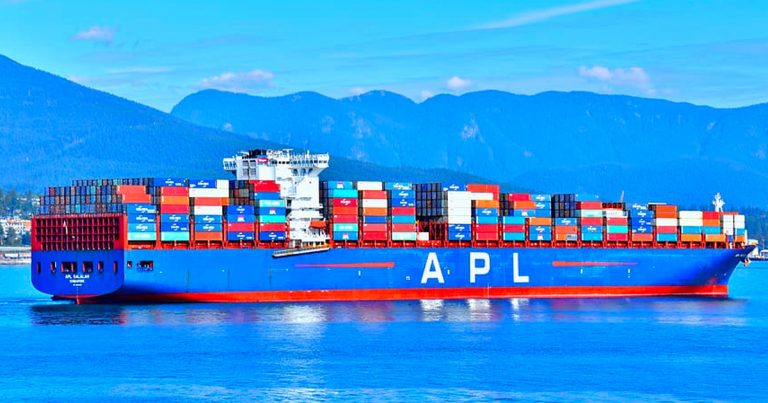
Canada could face negative downstream economic effects for some time due to current and ongoing supply chain disruptions plaguing the country.
According to the auditing firm RSM Canada, Canadian businesses can expect disruptions such as port closures, factories shutting down, production halts and labour shortages well into the year 2022.
The findings were reported in the company’s quarterly analysis published in The Real Economy, Canada.
“In addition to these supply chain challenges, the re-elected Liberal government will need to address declining participation rates and the ongoing labour shortage, which will likely remain a key issue for the economy in the short-to-medium term,” said RSM Canada projects and economics partner Alex Kotsopoulos in a news release.
“The government will need to ensure that new spending programs address some of the main items that could move the needle on enhancing Canada’s productivity.”
Among the significant issues highlighted by the firm’s report include increased globalization and the coronavirus pandemic, which have both placed strain on the supply chain.
According to the report, the average price to ship a container from Asia Pacific jumped by 63% in March and July of this year forcing many Canadian businesses to look for domestic suppliers.
Alongside shortages in the labour force, there is a significant ongoing talent drain in professional industries such as law firms.
“The global supply chain is already in a very fragile place and further disruption is going to delay the return of full production within the Canadian economy until the middle of 2022,” said RSM Chief Economist Joe Brusuelas.
“This would create conditions for further price volatility, at least until hesitations over the delta variant eases and businesses should be prepared for prices to potentially increase further.
Other observers have also warned of financial consequences due to supply chain concerns. Recently the outlet Baystreet reported that retail was down $1.9% in September due to shipping delays.
Canadian taxpayers had to foot nearly $1.3 billion in COVID-19 furloughs in the form of leaves of absences for federal employees.
According to the Parliamentary Budget Office (PBO), the total cost amounted to $1,269,900,000.
“The Treasury Board was unable to provide actual personnel expenditures,” wrote the PBO.
“Leave was likely under-reported by many organizations .Indeed, in each subsequent data update provided by the Treasury Board there was an increase in the number of hours previously reported.”
When broken down, it cost taxpayers $481 per employee per day when counting wages and benefits. Overall employees received an average $9,547 in furloughs.
As reported by Blacklock’s Reporter, at the beginning of the pandemic, the Treasury Board allowed federal managers to grant paid leave to employees, even if they were in “good health.”
Among the reasons cited include parenting, not being able to work from home or living with someone at “high risk of severe illness.”
“We’ve made sure to take care of our employees since the start of the pandemic,” said assistant deputy minister of the Treasury Board Sandra Hassan on November 4, 201.
“At the beginning of the pandemic we sent everyone home to comply with public health directives and to ensure the safety of our employees and communities.”
Among the departments with the highest amount in furloughs include the Canada Revenue Agency, Correctional Service, the Department of National Defence and the Department of Employment, among others.
Meanwhile, the Office of the Secretary to the Governor-General, granted the highest amount of unpaid leave with 1,016 hours or 6 months clocked by some employees.
“The Office of the Governor General’s Secretary is somewhat of an outlier,” wrote the PBO.
As Prime Minister Justin Trudeau makes his rounds during a series of international summits including the ongoing COP26 conference, legacy media journalists are clocking in their working hours by complaining about the weather and long security lines.
To date, over 400 private jets have been used to escort global leaders, their delegations and members of the media to attend the Glasgow conference. According to a recent report, the flights alone are estimated to have caused over 13,000 tonnes of CO2 pollution.
Prior to that, world leaders met in Italy for a G20 meeting and Trudeau concluded a bi-lateral meeting in the Netherlands.
Among the Canadian media outlets to have attended the events include the CBC, Global News and CTV News.
True North has compiled some of the most bizarre reporting coming out of Trudeau’s latest international junket by Canada’s legacy media below.
CBC reporter fawns over Trudeau lookalike
As delegates were gearing up for COP26 this week, CBC senior writer John Paul Tasker fawned over a series of tweets about Dutch GreenLeft Party leader Jesse Klaver, who he noted had an “uncanny resemblance” to Prime Minister Justin Trudeau.
Jesse Klaver has been dubbed by some media here as the "The Justin Trudeau of the Netherlands."
CTV journalist Glen McGregor shared a photo of crowds of delegates and media attempting to enter COP26 in Glasgow on Monday, complaining that the gathering was “not COVID-safe.”
Massive lineups at delegate/media security screening points for COP26 in Glasgow. Not COVID-safe; not smart security. Poorly done, Scotland. pic.twitter.com/DDJp9PgXCU
McGregor was not alone in his dissatisfaction with having to wait in line. He was also joined by CBC’s John Paul Tasker and David Cochrane who also noted the long lineups.
The lineup to get through security to get into COP26 media centre. It bends around the corner up ahead. pic.twitter.com/Z5FPYaLIKA
Global News reporter says international trips are not vacations for journalists
While Trudeau was still in Italy for the G20 conference, Global News reporter Sean O’Shea rushed to the defense of his colleagues saying that international trips to cover summits were not vacations for reporters. According to O’Shea the extra deadlines and being in an odd time zone disqualifies the trip from being considered a vacation.
Some people think reporting on these out-of-country trips are like a vacation—the opposite is always true. More deadlines, odd time zones, etc.
Prime Minister Justin Trudeau’s private vehicle made an appearance in COP26 reporting by CBC journalist Jean Paul Tasker as the Canadian leader arrived for the conference.
Trudeau is taking this Jaguar from the Glasgow Airport into Edinburgh, where the Canadian delegation is staying. pic.twitter.com/3ewgdEAKCq
Prime Minister Justin Trudeau is on another international junket to lecture others about climate change and the whole world is rolling their eyes.
In the past few days, Trudeau went to the Netherlands, the G20 summit in Rome and the COP26 Conference in Glasgow. Instead of discussing issues that actually matter to Canadians, such as the global supply crisis or the threat of hyperinflation, Trudeau used this opportunity to boast about his favourite pet issue – climate change.
However, because of his abysmal record on fighting climate change, Trudeau isn’t taken seriously by anyone on the international stage.
Candice Malcolm discusses Trudeau’s latest international junket and calls out the hypocrisy of the COP26 conference. Tune into The Candice Malcolm Show.
An “environmentally friendly” cruise ship ferrying thousands of COP26 attendees in Glasgow, Scotland will have to use fossil fuels due to a lack of charging stations at UK ports.
According to the Independent, the MS Silja Europa is equipped with shore power systems which allow the boat to charge up on electricity when docked.
Despite this feature, a majority of UK ports do not have onshore power stations for medium or large vessels.
The vessel was procured by the UK government due to a lack of accommodations available for the over 25,000 people who attended COP26.
Although most of the developed world, including Canada, sent delegates to the conference, two of the world’s largest emitters China and Russia did not send anyone.
Recent reports indicate that hundreds of private jets have been deployed by governments to attend the conference.
According to estimates by the Sunday Mail, the event will produce over 13,000 tonnes of CO2 pollution which is the equivalent of the annual pollution produced by 1,600 Scots in one year.
Prime Minister Justin Trudeau and several of his key ministers were in attendance at the conference.
Recently, Trudeau used the event as an opportunity to call on the imposition of a hard cap on oil and gas producers in Canada.
Officials from Canada and around the world boarded over 400 private jets to attend the ongoing COP26 climate conference in Glasgow, Scotland.
According to an analysis by the Sunday Mail, the event will produce over 13,000 tonnes of CO2 pollution.
The outlet estimated that up to 30,000 government officials ranging from prime ministers to low-ranking staff have attended the conference in person.
According to the outlet the Daily Record, the amount of emissions will be more CO2 than 1,600 Scots put out in the course of a single year.
Critics have pointed out that Prime Minister Justin Trudeau and his delegation’s travel to the conference were in conflict with the Liberal government’s rhetoric around reducing Canada’s carbon footprint.
As reported by Toronto Sun journalist Bryan Passifiume, several days before the conference was set to begin, a military strategic C-17 airlift jet flew to Glasgow while the prime minister was still announcing his cabinet.
While at the conference, Trudeau has pushed to impose a hard cap on oil and gas producers in Canada.
“We’ll cap oil and gas sector emissions today and ensure they decrease tomorrow at a pace and scale needed to reach net-zero by 2050,” said Trudeau on Monday.
“That’s no small task for a major oil and gas producing country. It’s a big step that’s absolutely necessary.”
File it under “Politics makes for strange bedfellows”. When Jason Kenney’s UCP government overhauled the rules for municipal elections, it opened the way for unlimited corporate and union donations to third-party advertisers (TPAs).
TPAs back candidates for city councils and school boards with advertising campaigns, social media mobilization and door-to-door organization. While they don’t select candidates for municipal elections and cannot coordinate with them, they provide well-financed, centralized and professional political support to candidates – political parties in all but name.
And while a few businesses and independent voters dipped their toes into the year’s municipal campaigns with their own TPAs, the unions representing Calgary’s municipal workers seized the opportunity with gusto.
Calgarians for a Progressive Future, the main third-party advertiser backed by the unions of City Hall and Calgary Transit, promoted a slate of candidates including Jyoti Gondek, the city’s new mayor.
Funding increased pay rates and staffing levels for the City’s unionized works means future property tax increases, increases that will not do much to attract investment to the City and its endangered downtown core.
Only one major mayoral candidate promised a four-year municipal tax-free, and he suggested that City Hall workers could take a pay freeze to help make the tax freeze work. That candidate was attacked by Calgarians for a Progressive Future and finished a distant second on election night.
Unions are an essential part of our political system in Canada. Anyone is free to organize and take part in elections. Unions, however, enjoy a big advantage under the UCP’s reforms since union donations from union members are tax-deductible. When the rest of us support a TPA, we do it with after-tax dollars.
Elections work best when voters have choices and when all sides put their best efforts into organizing. City Hall unions are going to be deeply involved in municipal politics, and it is high time that taxpayers had a TPA on their side as well.
Or, better yet, why not recognize that politics is a team sport and simply recognize that TPAs work like political parties and should be organized like political parties.
Political parties bring lots of advantages to elections. They identify voters and get them to the polls – something that can only improve local politics when voter turnout is so low.
Parties make it easier for voters to figure out where candidates stand on major municipal issues – another advantage in an election like this month’s Calgary race where so many incumbents were retiring and so many new faces were involved. And, finally, political parties vet the life histories of their candidates for skeletons that should disqualify some from running. It is hard to believe a municipal party would have let Sean Chu run given his chequered history. Municipal parties would be on the lookout for similar problems with candidates running for the other parties.
While federal and provincial parties often enforce rigid party discipline, it is unlikely municipal parties would be such monoliths. City politics is too close to issues that matter to voters for city councillors to be held hostage to party bosses. And since the mayor is directly elected, council members can vote as they wish without toppling the mayor in the way a prime minister or premier can be toppled by losing some votes on a budget bill.
For the provincial NDP, Calgary’s election was a dry run for their 2023 provincial campaign.
Calgarians for a Progressive Future is composed of the same public-sector unions that form the backbone of the Alberta NDP. During the municipal campaign, they collected voter data, trained and organized teams of field workers and identified candidates that will all be put back into the field to defeat the UCP and return the NDP to office in less than two years.
The UCP has opened the door to political party organizations at the municipal level, but it’s time for the Kenney government to finish the job.
Municipal politics where only City Hall unions are organized to support candidates won’t help any municipality get better and will eventually hurt the UCP provincially.
Let the City Hall unions organize a party, and let everyone else organize parties to balance the union influence.
Now that the next vaccine push will be targeting children aged 5-11, let’s look at the actual numbers for that age group.
The following figures come from Health Canada’s comprehensive database on COVID-19. Dating back to early 2020, there have now been a total of 1.68 million cases and 28,838 deaths.
(According to Alberta’s chief medical officer Dr. Deena Hinshaw, COVID deaths include cases where COVID was thought to be the primary or secondary factor contributing to death. According to a Stats Canada report , 90% of COVID deaths list a secondary cause on the death certificate, most commonly Alzheimer’s, chronic heart disease or dementia.)
Of the 1.68 million COVID cases to date, the most infected age group are those under the age of 20. There have been approximately 350,000 cases in this age cohort, making up 21% of all cases.
But despite experiencing the highest numbers of COVID cases, Canadians aged 0-19 experience the lowest hospitalization rate.
Only 2% of those hospitalized for COVID-19 are among those under 20. Compare this to my age bracket (30-39) with 7.5% hospitalization, my mother’s age bracket (60-69) with 17.7% hospitalization, or my grandmother’s age bracket (80+) with 25% hospitalization.
Of the 350,000 cases for Canadians under 20, only 1,824 have been hospitalized. We also know that a significant number of these were incidental hospitalizations — meaning that they went to hospital because they were suffering from something completely unrelated but happened to test positive for the virus during routine screening.
So despite having the most exposure to COVID, young Canadians are not suffering the same health outcomes as older populations.
When it comes to the mortality rate in this age group, the facts are clear: it’s basically nil.
Since the start of the pandemic, there have been 17 COVID-related deaths in Canada among children and teenagers. Not 17,000, not 1,700. Just 17.
That makes up 0.1% of all COVID deaths in Canada. The COVID case-fatality rate for Canadians under the age of 20, therefore, is 0.002%.
In other words, COVID is not a threat to kids. It wouldn’t even make the list of the top 10 causes of death for children.
And notably: the numbers show that a fully vaccinated adult is still at a much greater risk of being hospitalized or dying from COVID than an unvaccinated child.
Researchers have known this since the early days of the pandemic.
There is a “growing body of literature that is giving us some experience with that COVID-19 look s like in children, which, as we’re learning, is very different than what COVID-19 looks like in adults,” American pediatric infectious disease physician Dr. Jennifer Schuster said in June 2020.
The science shows us that COVID is not a deadly virus for kids.
So why are we going into overdrive with protective measures for kids? Mask mandates at schools, rules preventing kids from talking during their lunch break, social distancing measures and at-home virtual learning — all of these have negative impacts on a child’s ability to communicate, learn and enjoy their precious childhoods.
Readers of this column will know that Alberta recently announced its youngest COVID victim — a 14-year-old boy. However, the boy’s family clarified that he had tragically died of stage 4 brain cancer, not COVID. Alberta retracted this information and said they will now only announce a COVID death in a young person after an investigation has taken place.
Canadian parents need to know these facts and more as they assess the various heavy-handed measures that are being placed upon our kids.