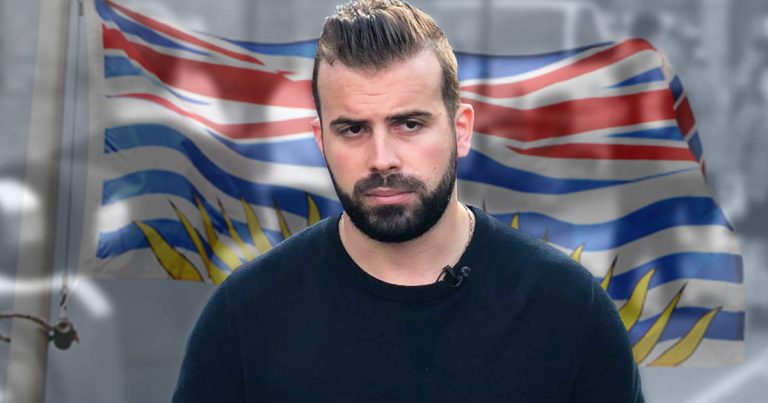
GUNN: I was blindsided by the BC Liberals

Blindsided. 

That’s the only way to describe how most of our campaign staff and volunteers felt on Friday, October 22nd, upon hearing the news that my candidacy had been rejected less than two weeks after entering the BC Liberal leadership race.

For those from outside BC, the BC Liberals are the main centre-right, free-market alternative to the NDP in the province – comprised of both federal Conservative and federal Liberals (not unlike the Sask Party in Saskatchewan).

After being resoundingly defeated by the NDP one year ago, and following the resignation of then-leader Andrew Wilkinson, the BC Liberals launched a leadership race and embarked on a quest of “renewal.” I entered the race, with the support of my 100,000+ social media followers, just over two weeks ago.

And within those first two weeks, there was little doubt that momentum was on our side. 

Over 2,000 British Columbians registered to vote for our campaign while our first two events, in Victoria and Comox, saw higher turnouts than events hosted by the other candidates. We were also the first to roll out a detailed platform and take strong positions, including opposing B.C.’s carbon tax and strongly defending freedom of speech. These are issues that the other leadership candidates have yet to touch. 

It was all going according to plan – until it wasn’t.

It was at this point we received the shocking news that an unelected, seven-person committee within the BC Liberal Party (known as the Leadership Election Organizing Committee or LEOC) had rejected my candidacy and, in effect, ended our campaign. LEOC defended the decision, in a public statement, by arguing approval of my candidacy “would be inconsistent with the BC Liberal Party’s commitment to reconciliation, diversity and acceptance of all British Columbians.”

Setting aside the fundamental point that subjective decisions on the worthiness of leadership candidates should be left to party members, this decision begged the question on which evidence did they base their judgment? 

The party pointed to three tweets I had made over the past two years that argued the Government of Canada had not committed “genocide” against Indigenous people, and a fourth tweet that stated a historical fact about the origins of residential schools.

At worst, it could be argued that one of the tweets was more terse than necessary. But it is difficult to see how any of these tweets expressed extreme or factually dubious opinions that fall outside mainstream Canadian political thought. Especially considering “genocide” is most commonly defined as “the deliberate killing of a large number of people from a particular nation or ethnic group with the aim of destroying that nation or group” – a rather serious accusation which, I believe, should only be used in those rare, extreme circumstances (such as the Holocaust, for example). 

It also raises the important sociological questions of whether the new litmus test for running for office in Canada includes some sort of compelled acknowledgement that Canada is a genocidal state, and if a pre-requisite for reconciliation, which I wholeheartedly support, rests on such an acknowledgement as well?

Another question that might be asked is if First Nations, who are finally beginning to share in the economic and societal benefits of Canada, are being served by such decisions? Ironically, of the unelected, seven-person committee that denied my candidacy none, to my knowledge, are actually Indigenous. Meanwhile, the one Indigenous candidate in the leadership race, Ellis Ross, enthusiastically supported my entry.

At 31-years-old, I fully recognized the magnitude of my undertaking when I entered the leadership race, and while I believed we could win, that was not my primary motivation for running.

I believe, as a society and culture, we have become, to an unhealthy degree, terrified of open and honest debate. We are scared of discussing ideas and issues, our history and traditions, and being OK with agreeing to disagree (rather than trying to cancel anyone who holds a contrarian opinion).

While the party has, to this point, been tight-lipped about the social media posts they used as justification (sincerely or not) to block my candidacy, I felt it was important to have them out in the open. This way we can, hopefully, discuss and debate not only their merits but the appropriateness of their use by the BC Liberal Party to justify exchanging the democratic rights of their members with the judgement of an unelected seven-person committee in the middle of a leadership race.

Ontario medical regulator initiates legal action against doctors opposed to COVID-19 vaccines

The College of Physicians and Surgeons of Ontario (CPSO) has filed claims against four doctors who are publicly opposed to COVID-19 vaccines with the Ontario Superior Court of Justice, according to a statement emailed to True North on Wednesday. 

The CPSO said in the statement that they are seeking to compel Dr. Celeste Jean Thirlwell, Dr. Mary Elizabeth O’Connor, Dr. Mark Raymond Trozzi and Dr. Rochagne Kilian to comply with ongoing investigations into their practices, including their issuance of medical exemptions for COVID-19 vaccines and testing. 

“In all four cases, the court filings indicate that their respective investigations were commenced following receipt of information, which includes copies of inappropriately issued exemptions,” said the CPSO. 

Dr. Thirlwell, a psychiatrist at the Centre for Sleep and Chronobiology, is alleged to have stated through her lawyer that if CPSO investigators attempt to obtain records from her office, “it will be resisted physically, by private security.” Dr.Thirlwell has taken the position that the college lacks “jurisdiction to police” medical exemptions. 

Dr. O’Connor, a family doctor from Ottawa, allegedly obstructed an investigation by refusing to provide medical records and patient information requested by the CPSO. Dr. O’Connor says she “will not be able to move forward without [the College’s] precise definition of COVID-19.” 

Dr. Trozzi, a family doctor from Harrow, Ont., believes the college does not have a “legal basis” to request patient lists and charts. Dr. Trozzi said “an Ontario doctor is free to provide medical exemptions relating to COVID-19 vaccinations as he or she sees fit.” 

Dr. Kilian, a former emergency room doctor from Owen Sound, Ont., was sent a notice because the college has received confirmation that she provides vaccine exemptions through Enable Air, a website facilitating the purchase of them. Dr. Kilian has taken the position that the college does not have jurisdiction to request patient lists and charts. 

Dr. Trozzi and Dr. Kilian were restricted from issuing medical exemptions for COVID-19 vaccines, testing and masks on Oct. 15. 

These two doctors could no longer issue exemptions related to these matters, and they were ordered to maintain a detailed log of patients that would be submitted for inspections by the CPSO. 

It remains unclear whether the college considers any exemptions the doctors issued prior to these restrictions as legitimate. 

The CPSO barred Kilian from practicing medicine on Oct. 29, alleging her activities put patients’ health at risk. 

She has spoken out multiple times against mask mandates, the safety of vaccines and lockdown measures. 

Thirlwell, O’Connor, Trozzi and Kilian could not be reached for further comment in time for publication. 

Canada sent most delegates to COP26 out of G7 nations

The Canadian government sent more delegates than any other G7 nation to the ongoing COP26 conference, including the summit’s host state, the UK.

True North relied on a provisional list of registered participants published by the United Nations Framework Convention on Climate Change (UNFCCC) to achieve the count. 

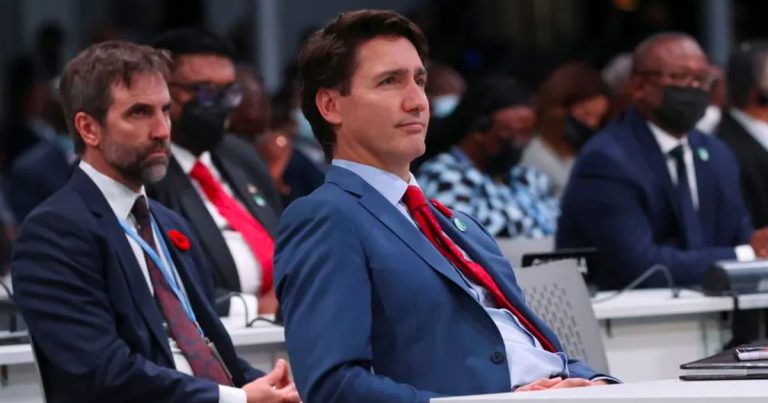
According to the UNFCCC document, Canada sent 276 delegates to COP26 including Prime Minister Justin Trudeau himself, numerous federal ministers, several provincial premiers and dozens of federal staff and media. 

The number of delegates sent by Canada outnumbered even the amount of people sent to attend by the conference’s host state, the UK.

In total, the UK sent the second-highest number of delegates numbering in at 227 attendees. 

The UK was followed by Japan who sent 225 delegates, while France sent 195 officials to attend. The US came in fifth place with 133 delegates sent. 

Meanwhile, Germany came second last with 120 delegates sent, followed by 66 attendees sent to COP26 by Italy. 

As first reported by Blacklock’s Reporter, the Department of Environment has refused to reveal the cost of the diplomatic trip. 

Among those listed as being part of Prime Minister Justin Trudeau’s entourage was his own personal videographer, photographer, speechwriter and a media team of 17 made up of press secretaries and communications directors. 

A number of reporters from CBC News, CTV, Global News and other outlets also attended.

Additionally, it is unclear whether taxpayers footed the bill of former environment minister Catherine McKenna, who was spotted at the conference but whose name does not make it into the official COP26 roll call. 

An estimated 30,000 delegates have been sent by nations and organizations around the world to the two week event. According to local outlet Sunday Mail, delegates boarded over 400 private jets to attend, contributing an estimated 13,000 tonnes of CO2 pollution into the environment. 

FUREY: What’s the future of cancel culture?

Are people finally getting fed up with cancel culture?

More celebrities are speaking out about it and more people are realizing just how ridiculous it is to cancel someone just because you don’t agree with them.

Anthony Furey discusses in his latest video.

Quebec repeals healthcare vaccine mandate, vaccines only mandatory for new hires

After admitting that the province’s healthcare system couldn’t handle losing thousands of healthcare workers, Quebec Health Minister Christian Dubé revised the provincial mandatory vaccine policy so that it only applies to new hires. 

Dubé made the announcement during a press conference on Wednesday. 

“To deprive ourselves of 8,000 people [in healthcare] will have devastating consequences for our network,” Dubé said.

“For many Quebecers, myself included, this remains incomprehensible that health workers won’t get vaccinated. “I think some people will be disappointed by the decision. I want to remind all Quebecers that they’ve gotten vaccinated in very big numbers… that meant we could make this decision today.”

Instead of forcing vaccinations on those who are unwilling, Quebec will now allow the unvaccinated to be regularly tested for COVID-19 three times a week. 

Currently, Quebec is reporting that 97% of all healthcare workers are vaccinated against COVID-19. According to Dubé, some healthcare workers dealing with high-risk patients in areas such as nursing homes will be reassigned to a different job. 

In a statement released Wednesday afternoon, the Ontario government announced that the province will not implement mandatory vaccination policy for healthcare workers. The province pointed to the negative impacts of the policy on healthcare systems in Quebec and British Columbia. 

Recently, BC Health Minister Adrian Dix revealed that the province had to cancel and delay some surgeries after 3,325 unvaccinated healthcare workers were put on unpaid leave by the provincial government. 

A True North estimate from October based on media reports found that approximately over 26,000 healthcare workers faced discipline or firing at the time for being unvaccinated across Canada.

Canada’s goal-posts are moving once again when it comes to COVID-19

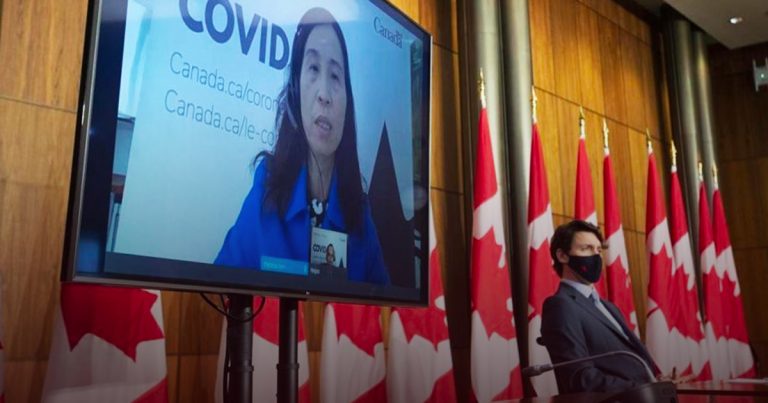
The government is changing what it means to be “fully-vaccinated.” Two shots may not be enough as Canada’s top public health “expert” Dr. Theresa Tam says the general population will need another vaccine shot. Tam’s latest ruling comes just three days after she said boosters would not be required for Canadians.

Nobody is surprised by the government’s moving goal-posts anymore. Whether it’s vaccine passports or Canada’s early response to the virus, Canadians have been accustomed to non-sensical and contradictory rules.

True North’s Candice Malcolm says it’s no wonder Canadians are hesitant when the lockdown authoritarians constantly tell us to “trust the science.”

SUBSCRIBE TO THE CANDICE MALCOLM SHOW

Liberals won’t reveal cost of 300 officials and aides attending COP26

The Liberal government won’t reveal how much taxpayers spent on sending 276 delegates and members of the media to Glasgow, Scotland.

According to Blacklock’s Reporter, among those who attended include former environment minister Catherine McKenna who travelled to the event as a VIP. The Department of Environment refused to say if McKenna’s expenses were covered by taxpayers. 

“Canada has taken steps to ensure diverse perspectives are reflected in international forums,” department spokesperson Samantha Bayard told Blocklock’s Reporter. 

McKenna is not listed on the official delegate list according to the outlet, however, she was spotted attending meetings at COP26.

Among those attending alongside Prime Minister Justin Trudeau include Environment Minister Steven Guilbeault, Deputy Environment Minister Thelma Hogan, Assistant Deputy Minister Catherine Stewart, Climate Change Ambassador Patricia Fuller and Climate Change Director Joanna Dafoe. They are also accompanied by 25 advisors and negotiators.

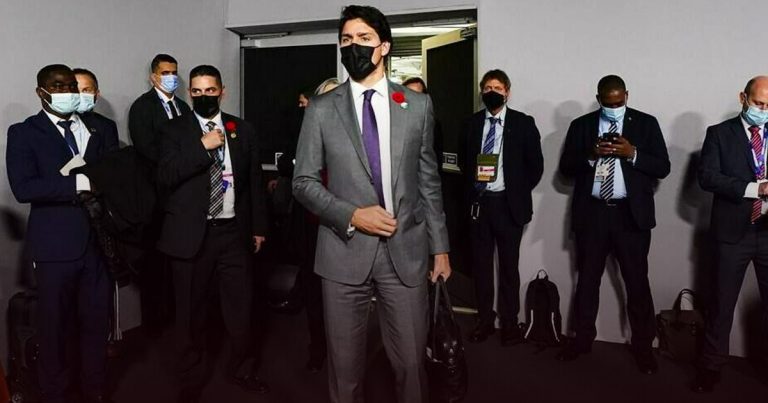
Trudeau’s personal photographer, videographer and speechwriter also travelled to Glasgow with the prime minister. His entourage was also accompanied by 17 press secretaries and communications directors and four CBC reporters.

Two elected Green Party MPs also got to attend. 

While at the conference, Prime Minister Trudeau pledged on Monday that he would cap emissions for Canada’s oil and gas sector. 

“We will limit oil and gas sector emissions today and ensure they decrease tomorrow at the speed and scale needed to reach net zero by 2050,” Trudeau told global leaders in a short speech. 

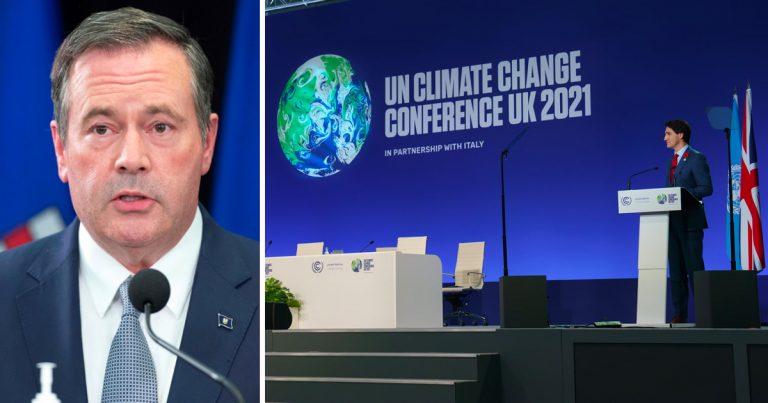
In response to the announcement, Alberta Premier Jason Kenney told reporters on Tuesday that the idea was “totally unrealistic” and that his province was never consulted on the matter. 

“I don’t know why they would make such an announcement without consulting the province with the most oil and gas reserves in Canada,” Kenney said.

“Their approach seems to be, well it’s totally unrealistic, and their approach, if they were to actually achieve their targets without using these transition technologies, would be devastating to the entire global economy.”

LEVY: Toronto takes a “woke” approach to combat homelessness

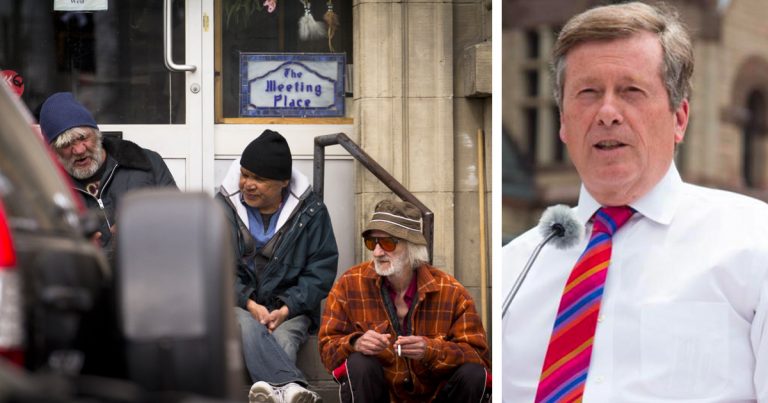
In 2018, 16% of all homeless people in Canada’s largest city identified as Indigenous. In the city of Toronto’s most recent homeless census, 15% said they had Indigenous ancestry.

In 2018, 31% of the homeless surveyed in Toronto were black. That percentage remained unchanged at 31% in this year’s street census.

White homeless people actually jumped to 41% this year from 36.6% in 2018, according to the street count.

The street census was completed on April 21 and cost $150,000, the highest amount to date of counts conducted every three years since 2006.

Despite the relatively static numbers – except for white homeless people – Toronto City Hall has dictated in its latest Homelessness Solutions Service plan to give preferential treatment to black and Indigenous homeless people, instead of helping every individual regardless of race. 

In fact, the first two priorities of the service plan – approved at an Oct. 21 committee meeting – are to “meaningfully address Indigenous homelessness” and “anti-black racism.”

Does that mean that it wasn’t meaningfully addressed in the past?

“Indigenous people are overrepresented in homelessness due to the ongoing effects of colonialism, intergenerational trauma and racism,” the service plan states, noting that the city’s shelter bureaucrats are committed to “honouring and working” within the context of the Truth and Reconciliation Commission of Canada.

That includes “Indigenous cultural learning and development for staff” and increased financial investments in Indigenous housing and homeless services.

For as long as I’ve been covering the homeless cause – some 20 years – the Indigenous have been evident on the streets of Toronto. Yet never before have city staff claimed the Indigenous population are homeless due to “colonialism.”

Actually, they’ve been in large part ignored.

In 2016, I wrote about councillor Joe Cressy holding court on Bloor St. W. while an Indigenous man lay sprawled out on the sidewalk behind him, completely ignored.

The same goes for “confronting anti-black racism.”

Even though the 2018 homeless census showed the impact of a huge influx of refugee claimants into city shelters – many from Nigeria and largely due to the illegal border crossings at Roxham Rd. – “anti-black racism” didn’t seem to be a problem then.

Nevertheless, shelter officials feel that a “distinct approach” to serve black people experiencing homelessness is now required.

It is so needed, according to the city’s bureaucrats, that an internal “anti-black racism” unit has been established within the shelter division – one that will provide “training, guidance and resources” so that there is an ongoing dialogue about “anti-black racism.”

If the city spent as much time monitoring the activities of service providers in shelters and ensuring there are consequences for shelter residents who commit crimes – as they do wringing their hands on make-work projects trying to be “woke” – the city would be far safer and the homeless industry would be pushed to deliver results.

The fact that the term “solutions” is attached to the name of the plan is extremely disingenuous.

City officials – as they have for years – claim their goal is to end chronic homelessness; yet the numbers of those who continue to find themselves without a permanent roof over their heads after six months are staggering, despite the hundreds of millions of dollars poured into homeless services each year.

In 2018, 48% of those surveyed said they were homeless for six months or more; 36% for more than a year.

In this year’s census, more than half report being without a home for upwards of six months, 65% for up to five years and a scandalous 13% for 10 years or more.

Unfortunately, the Toronto shelter system seems to be proof positive of the idiom, “if you build it they will come.”

In this case, the famous line from the Field of Dreams movie is not a good thing.

Shelters were supposed to be an emergency band-aid but this year’s census shows that the number of homeless being served in emergency shelters has jumped 57% – from 3,649 15 years ago to 5,720 this year. 

This street census, like the ones that have been done before, is supposed to frame future policies and targets to improve the system.

That should be the goal.

Twitter suspends six accounts critical of Chinese Communist Party

Twitter suspended six accounts for one week that opposed the Chinese Communist Party’s global influence, while remaining silent about why the suspensions were issued, according to the National Review.

Twitter suspended six accounts operated by Optimum Publishing International, a Canadian publishing house. Optimum’s main account and the profiles they use to promote five of their books were suspended in early October, but were later restored. 

Jimmy Quinn, the reporter at National Review who broke this story, reached out to Twitter twice in the last few weeks to inquire about the suspensions, but his emails went unanswered.  

Optimum’s Twitter accounts have been restored, but the social media platform has not explained whether the suspensions have to do with their work on Chinese political influence or why it took one week to restore them. 

In its communications with Optimum president Dean Baxendale, Twitter said the accounts were suspended because the publishing house was “operating multiple accounts with overlapping use cases, such as identical or similar personas or substantially similar content” in violation of the platform’s rules. Baxendale said foreign authoritarian governments such as Russia and China commit similar actions, and this conduct has gone unaddressed by Twitter. 

Baxendale told Twitter that these accounts are not inauthentic and intended to promote certain books. The social media platform restored these accounts. 

Twitter also operates more than one account on their platform. Each of these accounts plays a different role in engaging with users. 

A study done by the Programme on Democracy and Technology at the University of Oxford in May found a large number of Twitter accounts that demonstrate inauthentic activity intended to increase engagement with official Chinese government accounts. Researchers at Oxford noted Twitter took down accounts they identified as inauthentic, but the official accounts for Chinese officials and state media at the centre of this scheme have not been suspended. 

Chinese diplomats have not been suspended from Twitter despite promoting a conspiracy theory that the U.S. Army brought COVID-19 to China. 

Nebraska Sen. Ben Sasse and Wisconsin Rep. Mike Gallaghar urged Twitter CEO Jack Dorsey in a letter in 2020 to ban CCP officials from the platform for spreading disinformation about COVID-19. 

“It is clear that Chinese Communist Party officials are using Twitter to disseminate propaganda in the midst of a dangerous global crisis,” said Sasse and Gallaghar. “Even worse, this propaganda obscures and confuses users over the origins of the COVID-19 pandemic and potentially undermines efforts to contain and control the outbreak.”  

Optimum and Twitter could not be reached for further comment in time for publication. 

“Totally unrealistic,” Kenney slams Trudeau’s pledge to cap oil and gas sector

Alberta Premier Jason Kenney is hitting back after Prime Minister Justin Trudeau pledged to cap emissions in Canada’s oil and gas sector earlier this week while in Glasgow, Scotland for the COP26 summit. 

Kenney stated that Trudeau’s commitments did not have the support of Alberta, which produces most of Canada’s energy. 

According to the Canadian Press, Kenney told reporters that Trudeau’s pledge was “devastating” and “unrealistic.” 

“I don’t know why they would make such an announcement without consulting the province with the most oil and gas reserves in Canada,” Kenney said.

“The (federal government) has zero chance of achieving its greenhouse gas reduction goals without Alberta’s oil and gas industries. Let’s be a partner in that.”

“Their approach seems to be, well it’s totally unrealistic, and their approach, if they were to actually achieve their targets without using these transition technologies, would be devastating to the entire global economy,” he continued. 

On Monday, Trudeau stated that Canada would limit oil and gas emissions until they reach net zero by 2050. 

“We will limit oil and gas sector emissions today and ensure they decrease tomorrow at the speed and scale needed to reach net zero by 2050,” Trudeau told global leaders. 

“This is no small task for a major oil and gas producing country. This is a big step which is absolutely necessary.”

In response to Trudeau’s speech, Kenney stated that the government should work in concert with Alberta to develop resources for carbon-capture technology and other innovations like blue hydrogen. 

Kenney also reiterated his pledge to work with the federal government on carbon-reduction initiatives but not to go along with any policy aimed at suppressing Alberta oil development. 

Reports have shown that Prime Minister Trudeau’s federal carbon tax has failed to reduce carbon emissions. 

Last year, Department of Environment government data showed that in 2018 – a year after the carbon tax was implemented – emissions in Canada actually grew by 15 million tonnes.