The federal government has made Indigenous spiritual ceremonies exempt from public gathering restrictions while churches and other houses of worship face prosecution for opening up.
True North’s Andrew Lawton talks about how the federal government is letting pandering and political correctness trump science and religious freedom.
Also, the media is making a mountain out of a molehill when it comes to Andrew Scheer’s American citizenship.
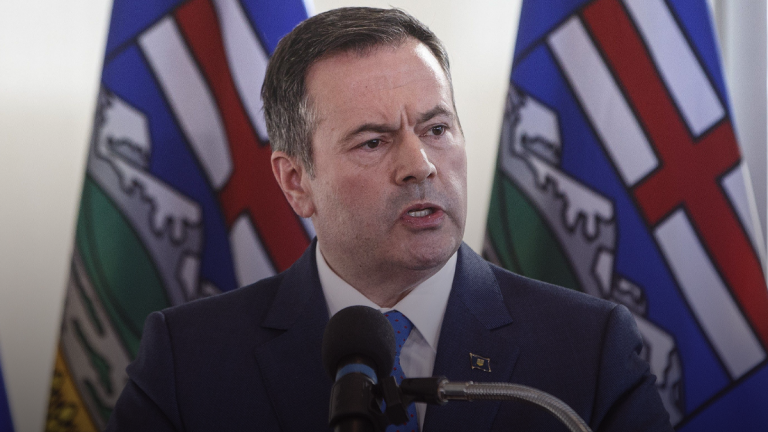
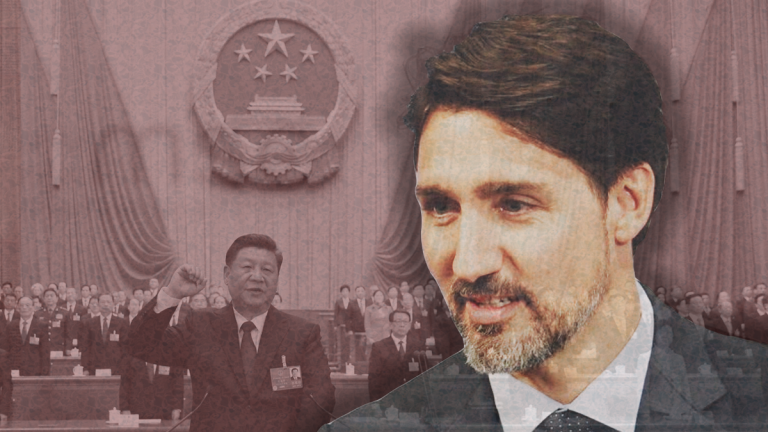
The Chinese consulate released a statement on Saturday attacking Alberta Premier Jason Kenney after he accused China of covering up the severity of the coronavirus.
The statement which was posted on the official website of the Chinese consulate-general in Calgary accused Kenney of attempting to please US President Donald Trump.
“A final friendly reminder for the Premier: You are based in Edmonton not in Ottawa,” claimed the statement.
“And your China-blaming comment might not please Mr. Trump since he will not spare a glance, let alone those American audiences as many of them are not fond of Mr. Trump, but instead, have profitable and unshakable businesses with China.”
Last week, Kenney called for a “great reckoning” on China during a meeting with the Canadian American Business Council.
During the meeting, he stated that the Chinese Communist Party was responsible for the “devastating public health and economic damage” being experienced by the world.
“I think the Chinese government played a significant role in the devastating public health and economic damage that is being experienced by the entire world. I do not think we should just forget this and walk past it. I think there is going to be, and there must be, a great reckoning for the role that China has played in this,” said Kenney.
“The fact that China allowed people to fly around the world from Wuhan even when they blocked Wuhanese travellers from the rest of China must never be forgotten. The role they played in suppressing whistle-blowing scientists who as early as December were reporting human to human transmission.”
Kenney’s remarks strayed from the friendly tone the federal government has extended towards the Chinese regime.
At the beginning of May, Chinese Ambassador Cong Peiwu praised Prime Minister Justin Trudeau’s approach to the country as being “cool-headed” as opposed to Trump’s alleged “smearing.”
“I believe that Canada has adopted a cool-headed approach,” Cong said.
“We appreciate that. The most important task, currently, is to focus our energy on fighting the pandemic.”
Parliamentary Budget Officer Yves Giroux recently admitted that his previous estimate of the debt Canada will face due to coronavirus pandemic relief spending – $252 billion – was too optimistic: our federal debt will in all likelihood shoot up to $1 trillion or more.
Meanwhile, because of coronavirus shutdown measures, Canada’s unemployment rate has risen to 13% (as compared to 5.5% in January 2020), with two million jobs lost in April.
Many are questioning how we will get on the road to economic recovery, and Immigration Minister Marco Mendicino hinted at an answer earlier this month.
“Immigration will absolutely be key to our success and our economic recovery…We continue to rely on immigration, it will be an economic driver and this will be the North Star of our policy going forward,” said Mendicino.
It will likely be difficult to convince Canadians facing an unemployment crisis that we should be pleased about resuming the plan to welcome one million new immigrants within the next three years. It’s likely we will soon be facing heavy government messaging trying to convince us of the economic virtues of immigration. When they do, we should have an understanding of the facts.
Mendicino and other immigration enthusiasts often cite Canada’s aging population as the reason why higher immigration levels are required. For Canada’s population to replace itself, we would need a total fertility rate of 2.1 children per woman, but this figure currently sits at 1.54. Canadians are having fewer children, which has caused concern that we will not have enough future workers and taxpayers to fund our social programs. Thus, many proclaim that immigration is the only answer.
Mendicino’s predecessor Ahmed Hussen has echoed this sentiment: “Why do we need immigration? Well, five million Canadians are set to retire by 2035. And we have fewer people working to support seniors and retirees.”
However, a policy piece authored by three economists concluded “immigration is not a solution to demographic problems such as population ageing” and “What a large body of evidence indicates is that immigration is neither good nor bad for the economy, as assessed by its impact on the living standards of current citizens.”
Immigration is not a solution to an aging workforce because working-age immigrants bring along dependents such as small children, non-working spouses and parents or grandparents.
When politicians claim immigration will remedy Canada’s demographic challenges, they are either uninformed or lying.
If the Canadian government brings over immigrants in hopes of instantly repairing our economy and repaying debt, they will likely be disappointed, and actually see an increased deficit.
“…newly arrived immigrants are a net drag on government budgets: they pay less in taxes on average and make average or slightly above average use of government services and benefits. Second-generation immigrants do well, however, which may offset this net drag to some extent, but the initial impact of a large increase in immigration should be expected to be an increase in taxes, a decrease in services, an increase in deficits, or some combination of the three.”
As for the question of whether an increase in immigration depresses the wages of the native population, more Canadian research is needed. However, one paper found that for every 10% increase in new immigrants, the wages of previous immigrants decrease by 2.6%. That means an influx of immigration does indeed affect wages, but the wages of established immigrants who have arrived at least ten years prior, not of native-born Canadians.
If politicians wish to promote immigration based on social factors, that is a different story – but when it comes to the economics, their claims that immigration will cure all of our financial woes do not hold water.
There has been a lot of reflection these past few months, where people have been reassessing their relationship to family, work, community and, yes, government. It’s too soon to tell exactly what this will mean for Canadian politics, but it likely won’t be good news for liberal elites, whose assumptions about the world are now stuck in the past.
It’ll be interesting to see if Trudeau and the Liberals stay the course and just try to dress up their old ideas as new, or if they pivot and adopt to the coming new era.
In early May, screenshots from a private Instagram group chat including NHL players Brendan Leipsic and Jack Rodewald were leaked by an anonymous account and widely circulated in the hockey community. The private messages were called “misogynistic and reprehensible” by the NHL, and some of the hockey players from the group chat were kicked off of their teams.
Is this yet another example of “cancel culture” in the NHL?
The Islamic call to prayer can be heard regularly across Canada including in major cities like Ottawa, Toronto, Edmonton, Calgary and Vancouver.
City councils have provided special permissions for mosques to publicly broadcast the calls during the Muslim celebration of Ramadan.
Ramadan is a holy month observed by practising Muslims worldwide. This year, Ramadan begins on the evening of April 23 and extends to May 23.
Ottawa first began to allow its mosques to broadcast the call to prayer at sundown at the end of April.
Ottawa Mayor Jim Watson said the decision was meant to “help our Muslim residents observe Ramadan in the absence of religious gatherings.”
“At the request of the Ottawa Mosque, to help our Muslim residents observe Ramadan in the absence of religious gatherings, the City is granting a Noise Bylaw exemption for Mosques to broadcast the evening call to prayer, which will go on for approx. 5 minutes at sunset,” wrote Watson on Twitter.
In Calgary, mosques began to broadcast the Islamic call only this month beginning with the Al Madinah Calgary Islamic Assembly last Thursday.
“May Allah bless the entire city council, bylaw officers, Coun. George Chahal, [Alberta Community and Social Services Minister Rajan] Sawhney and the community. May this COVID-19 disappear and everyone safe again. Thank you for the kindness and consideration. God bless Calgary. Love Calgary. Ramadan Mubarak,” tweeted the assembly’s official Twitter account.
Calgary Mayor Naheed Nenshi announced the exemption for mosques in a letter addressed to Muslim leaders in the city.
“As an effort to spark some joy and community spirit in the Ummah, I have reached out to our Bylaw Team and have asked them to accommodate your request without infringing on the noise regulations.” wrote Nenshi.
China could’ve contained the coronavirus. They didn’t tell the truth about the severity of the virus. They even falsified their data. As a result, thousands of people have died because China lied.
And yet – Justin Trudeau refuses to condemn the Communist regime. In fact, the Trudeau government has praised the regime for its handling of the coronavirus.
True North’s Leo Knight says this isn’t surprising. The connection between the Liberal Party of Canada and the Communist Party of China runs deep.
We all know how to read but how do you analyze text on a deeper level?
True North’s Sam Eskenasi says you need to first ask two important questions – what else is the author trying to tell us? Why did the author choose these specific words?
This is particularly important when you’re reading the Charter of Rights.
Since the Conservative leadership race has resumed, following a much-needed break due to the coronavirus pandemic, it has served as a good reminder to many that they were indeed not missing this race.
A prominent message that will likely emerge from all campaigns as we get closer to the ballot date is trying to appeal to the supporters of other campaigns. The Conservative leadership race uses a ballot that requires voters to rank their preference for leader from first to last — this means that if a candidate fails to achieve a majority of the points awarded in the contest, the candidate who placed last on the ballot will have their points reallocated to the remaining contestants based on how ranked preferences of their supporters. This process will continue until one candidate secures 50% of the total points – meaning we could see three “rounds” before a winner is declared.
The main target for these appeals will be social conservatives. This makes sense, as social conservatives are a large part of the Conservative base which is reliable, active and well-organized. However, social conservative voters may want to think twice before buying into these appeals, as recent history indicates they may not get what they bargain for.
Take, for example, the election of Patrick Brown as Ontario Progressive Conservative Leader in 2015. Brown ran on a platform emphasizing both social and fiscal conservatism, attracting the support of prominent social conservatives within Ontario including then-MP Pierre Lemieux and previous leadership opponent MPP Monte McNaughton. His strict pro-life voting history got him the endorsement of the Campaign Life Coalition, much coveted among social conservatives, and certainly helped him sell enough memberships to win the leadership of his party.
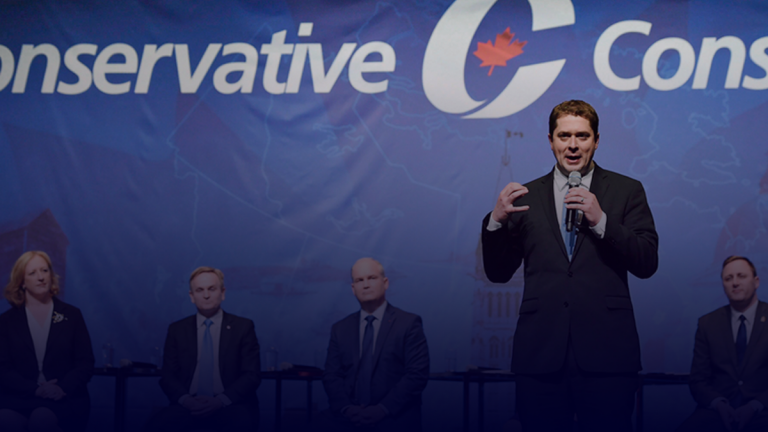
Similarly, Andrew Scheer’s election as Conservative Party leader in 2017 followed a similar path. He presented himself as an “unapologetic” Conservative who could unite all of the wings of the party, and labelling himself as “pro-life” though with no intention of introducing legislation on the matter. He actively pursued down-ballot support from his social conservative competitors Brad Trost and Pierre Lamieux, which managed to provide him with the support needed to receive a narrow victory over Maxime Bernier on the final ballot.
Despite their attempt to appeal to social conservatives for their support, Patrick Brown and Andrew Scheer were both quick to abandon them. Patrick Brown almost immediately reversed all of his commitment to social conservatives in Ontario, including by refusing to meaningfully address concerns regarding sex education and silencing pro-lifers within his caucus. Similarly, Andrew Scheer worked behind-the-scenes to shut down debate on social conservative issues he saw as electorally problematic, and was on the defensive about his handling of social conservative positions throughout the 2019 general election campaign.
These case studies are important for social conservative voters to consider in choosing how to rank non-social conservative candidates on their leadership ballot this year, if at all. For example, both of the perceived front-runners in the race, Peter MacKay and Erin O’Toole, have no history of supporting social conservative causes.
MacKay infamously said that social conservative were a “stinking albatross” around the neck of the party – a comment he now regrets.
O’Toole, who ran predominately as a red tory in the 2017 leadership race, has now shifted gears to try to present himself as a “True Blue” conservative in hopes of attracting these voters. However, similar to Andrew Scheer, he states that he will not introduce legislation on abortion, and has a voting history that is questionable to many social conservatives.
Overall, it is wrong to conclude that non-social conservative candidates should stop trying to appeal to social conservative voters. The Conservative Party is a big-tent, after all, and these voters deserve representation in it. However, candidates need to be more honest in communicating what social conservative candidates can expect from them, and keep their promises after getting elected.