A US government plan released by the New York Times expects that the COVID-19 pandemic could last “18 months or longer.”
“Shortages of products may occur, impacting health care, emergency services, and other elements of critical infrastructure,” claims the plan.
“This includes potentially critical shortages of diagnostics, medical supplies (including PPE and pharmaceuticals), and staffing in some locations.” P.P.E. refers to personal protective equipment.”
Last week, the US and Canada mutually agreed to close their borders to non-essential traffic to stop the spread of the virus.
The plan also warned that the virus could return in “multiple waves” and advised that the federal government take additional measures to produce medical equipment and protective gear.
“State and local governments, as well as critical infrastructure and communications channels, will be stressed and potentially less reliable. These stresses may also increase the challenges of getting updated messages and coordinating guidance to these jurisdictions directly,” claimed the plan.
On March 14, President Donald Trump announced a state of national emergency as the coronavirus continues to spread across the country.
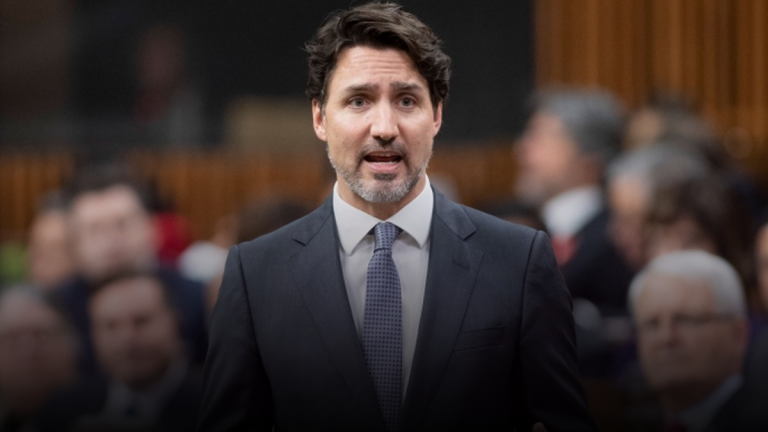
When asked whether Canada would follow in the US’ footsteps and declare its own national emergency, Prime Minister Justin Trudeau said that such a declaration is not necessary yet.
“There are many things that are being done and can be done at the local level, at the municipal level and at the provincial level. The federal Emergencies Act is a significant step that can and should be taken when we’ve exhausted all other steps,” said Trudeau.
“We continue to work very closely with provinces, with other jurisdictions, to make sure that they are able to do the things that need to be done and we will continue to look at if it is necessary to move forward with the Emergencies Act.”
As of Monday, March 23 the US topped 35,000 cases of the virus nationwide, meanwhile, Canada is reporting 1,432 confirmed cases.
Some provinces and territories are considering closing their borders in order to prevent the spread of COVID-19 within different regions of Canada.
After Yukon reported its first two cases of the virus, the territory’s chief medical officer Dr. Brendan Hanley recommended the suspension of non-essential travel into and out of the territory.
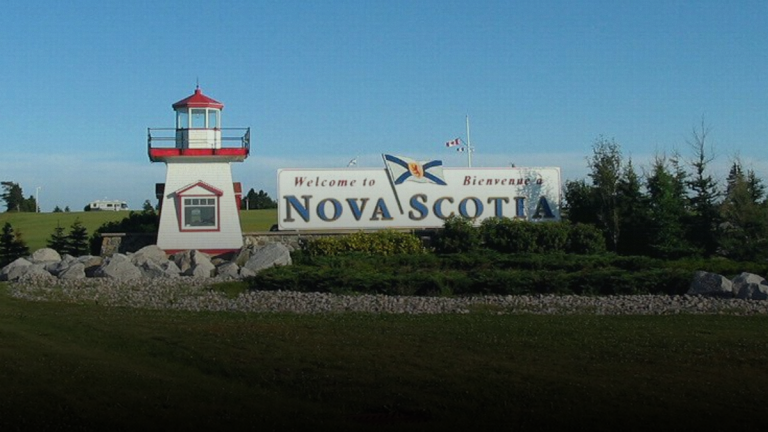
Nova Scotia has already implemented increased border controls and is asking anybody entering the province to self-isolate for 14 days. Those entering Nova Scotia will also be questioned by police, though workers and goods will continue to be allowed to cross provincial lines.
The province’s border restrictions went into effect Monday at 6 a.m.
According to Craig Janes, Director of the University of Waterloo’s School of Public Health, the federal government should consider restricting inter-provincial travel.
“Anything that we can do to just stop people moving around is going to reduce the amount of transmission and slow it. And that gives health systems the ability to respond without getting overwhelmed,” said Janes.
The Federation of Sovereign Indigenous Nations (FSIN) has called on Saskatchewan to close its borders to outsiders.
“Some First Nations have already exercised their autonomy by closing their borders and are limiting traffic in and out of their communities. We are calling on this Saskatchewan Government to do the same,” wrote FSIN Chief Bobby Cameron.
“The traffic on our highways coming in and out of the provincial borders continues to put everyone in Saskatchewan at unnecessary risk. Travellers from all over Canada continue to travel into Saskatchewan and could be unknowingly transmitting Covid-19. We must work together to stop or decrease the spread of Covid-19.”
On Saturday, the Northwest Territories announced that it would be closing its borders after reporting its first confirmed case of COVID-19.
Travellers who want to stay in the Northwest Territories are being asked to go into self-isolation, and people are being asked to report anybody found in violation of the order.
While the Canadian Charter of Rights and Freedoms assures people the right to travel, work, and live anywhere in the country, the federal government could restrict these freedoms during a state of emergency.
According to the Emergencies Act, in the event of a “public welfare emergency,” the federal government can regulate and prohibit “travel to, from or within any specified area, where necessary for the protection of the health or safety of individuals.”
Prime Minister Justin Trudeau has said that while all options are on the table, enacting the Emergencies Act is not yet necessary.
“At this time, we do not see the federal Emergencies Act as an essential tool today, but we are continuing to look at the situation. We’ll make decisions based on the best recommendations of science,” said Trudeau.
Prime Minister Justin Trudeau and Canada’s premiers will be considering whether or not to invoke the federal Emergencies Act to battle the spread of COVID-19.
“I can tell you that we haven’t taken anything off the table — from the Emergencies Act to new measures — or existing measures under the Quarantine Act. They are tools that are at our disposal,” said Trudeau.
The Emergencies Act authorizes “the taking of special temporary measures to ensure safety and security during national emergencies and to amend other Acts in consequence thereof.”
If invoked, it would give the federal government extraordinary powers to clamp down on the virus.
“One of the key elements of the Emergencies Act is that it is an override over the provinces. It takes powers that normally are only in the hands of the provinces, or even municipalities, and puts them in the federal level,” said Trudeau.
The current pandemic would fall under the Act’s “public welfare emergency” proclamation. If declared, the government would have the power to restrict travel within the country, evacuate Canadians, establish emergency shelters, seize and acquire property, among other drastic measures.
Every Canadian province has already declared a state of emergency and taken measures to restrict movement and shut down some businesses.
The law replaced the War Measures Act after it was passed in 1988 and has not since been used in Canada.
If implemented, the Act would also give the federal government power to regulate the distribution of essential goods, services and resources.
Part of the legislation also allows the government to order people to provide certain services or goods as it sees fit.
Trudeau spoke to premiers on Monday evening over video chat where he discussed the possibility of declaring a national emergency.
If declared, the government is required by law to provide a detailed explanation for the reasoning behind the declaration to the House of Commons and the Senate.
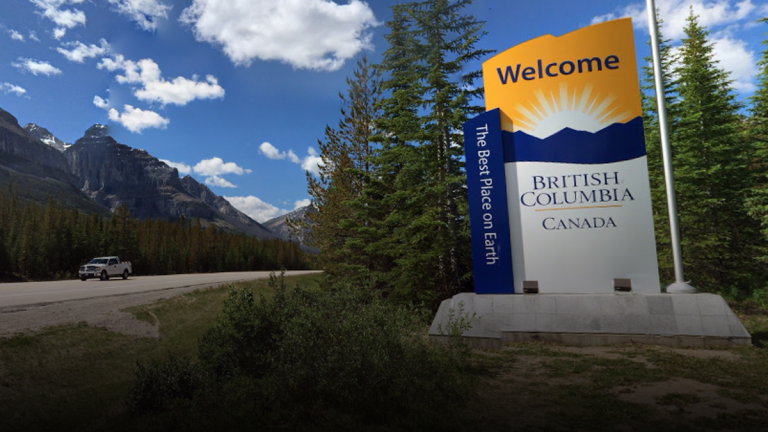
On Sunday morning, the District of North Vancouver closed two popular hiking spots, Lynn Canyon and Quarry Rock, saying “Visitors are not following provincial health officer orders to keep 2 metres’ distance, despite signs and staff enforcing physical distancing at trail entrances.”
More southwards, the Mayor of White Rock has stated he may close the city’s bustling pier and waterfront promenade if people don’t keep two metres apart from one another.
Provincial Health Officer Dr. Bonnie Henry has encouraged British Columbians to “call people out” on social media who are not abiding by social distancing measures, as photos have circulated of crowds continuing to gather at Vancouver hotspots such as Kitsilano Beach and Sunset Beach.
On Saturday afternoon, the tennis courts at my local park in Coquitlam were full, and the basketball court and skate park were occupied as well. By the next day, at least two municipalities – Vancouver and Port Coquitlam – announced they were closing outdoor recreational facilities.
While limiting contact sports makes sense, as does discouraging the gathering of large groups, many people seem to be publicly shaming families – who live together anyways – for going for a stroll together, or couples sitting on park benches apart from everyone else. Some seem to think that the “stay home” message also means solo jogging or bicycling is off-limits.
However, Dr. Patricia Daly, the chief medical officer of Vancouver Coastal Health said in an interview on Thursday, “I think being outdoors, and we’re fortunate we’ve had great weather, is the best recreational activity at this time of year. So I encourage people to do that. The risk of transmission is more enclosed environments, from contaminated surfaces, for example, so walking outdoors is a good thing and I certainly encourage people to be doing that.”
When asked if children can play on playground equipment, Dr. Daly answered, “I think you gotta take the kids out to play, and when you come home, wash their hands, simple as that.”
Despite this advice, most municipalities in the Metro Vancouver area have closed public access to playgrounds.
Skiing is also off the table for the rest of the season, and camping is prohibited until at least April 30.
On Saturday, a group of physicians at Royal Columbian Hospital in New Westminster urged Provincial Health Officer Dr. Bonnie Henry to either enforce social distancing or enact shutdowns at all public parks and beaches in BC.
If you take a holistic approach to health and value the necessity of exercise, fresh air, and natural sights, you might fail to see why abstaining from a solo or family walk would be necessary, as long as you weren’t planning to pet all the dogs in your path, shake hands with the people you see along the way, or breathe heavily in the faces of strangers.
But with the rain starting to come down, perhaps the “problem” of too many people enjoying the outdoors will solve itself quickly.
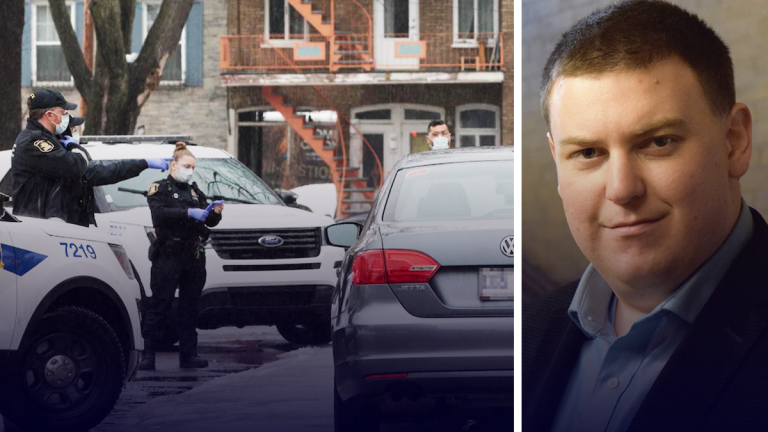
The police surveilled and arrested a Quebec City woman who broke her COVID-19 quarantine. Is this the new reality as Canada goes into lockdown? True North’s Andrew Lawton talks about the standstill the world is at and what may happen if government makes enforcement the priority.
Also, a growing call — including from Andrew — for the Conservative Party of Canada to postpone its leadership race.
The government warns Canadians that they could face fines and even be arrested if they refuse to self-isolate. Meanwhile, Justin Trudeau doesn’t rule out enacting the Emergencies Act.
Is the government cracking down on our personal freedoms or is this the appropriate action to take given the difficult circumstances?
True North’s Candice Malcolm and Andrew Lawton discuss and gives you an update on the latest news on the COVID-19 pandemic.
30% of Canadians don’t believe it’s necessary to practice social distancing and think that it’s fine to gather in large groups of up to 10 people.
The Research Co. poll surveyed Canadian’s attitudes in response to measures implemented by health officials meant to contain the spread of COVID-19.
Another 22% of people polled said that they see no problem with visiting the elderly, despite them being at a higher risk to die from the virus.
Currently, there are 1,432 confirmed cases in Canada, while 20 people have died as a result of contracting COVID-19. A total of 98,824 people have also been tested for the disease.
According to the government’s official coronavirus prevention page, social distancing is listed as the most effective method to stop the spread of the disease.
“Together, we can slow the spread of COVID-19 by making a conscious effort to keep a physical distance between each other. Social distancing is proven to be one of the most effective ways to reduce the spread of illness during an outbreak,” claims the Government of Canada.
Despite a willingness to flout the advice of health experts, most Canadians believe the pandemic is a crisis.
According to Research Co., 82% of Canadians described the current situation as a “major crisis,” while 13% thought it was minor. Another 3% of people polled did not think the pandemic was a crisis at all.
On Monday, Prime Minister Justin Trudeau told Canadians that they must follow the social distancing measures and stay at home.
“It means keeping two metres between yourself and someone else. It means avoiding groups. It means staying home as much as possible. If you choose to ignore that advice you’re not just putting yourself at risk, you’re putting others at risk,” said Trudeau.
“Enough is enough. Go home and stay home. This is what we all need to be doing and we’re going to make sure this happens.”
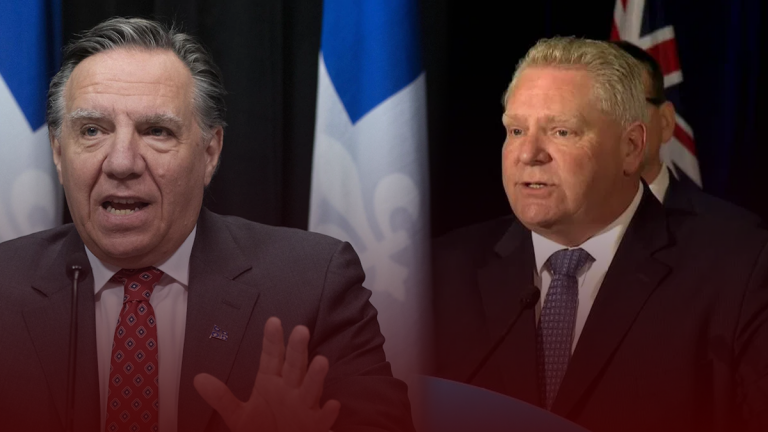
The premiers of Ontario and Quebec have ordered all non-essential businesses to close their doors in response to the COVID-19 pandemic.
Quebec Premier François Legault said Monday that all businesses, with the exception of essentials like grocery stores, must remain closed until April 13, effective Monday night.
Ontario Premier Doug Ford announced a similar measure Monday afternoon. The Ontario shutdown will be implemented at 11:59 pm Tuesday night.
A full list of essential workplaces designated by the Ontario government was released on Monday evening. Quebec also released a list of essential workplaces.
“Quebec will be on hold for three weeks. We are entering a new phase, a critical phase,” said Legault.
The announcement follows prior measures that saw malls and restaurant dining rooms closing.
Ford acknowledged the “gravity” of his decision.
“This is not the time for half measures. This decision was not made lightly, and the gravity of this order does not escape me,” said Ford.
Both Ford and Legault affirmed access to food and medication would remain, with Ford also noting a commitment to upholding critical supply chains.
Ontario currently has 425 confirmed cases of the virus with 5 deaths, while Quebec has 221 cases and 4 deaths.
The House of Commons is expected to convene tomorrow morning in an emergency meeting to pass additional COVID-19 measures.
Please spare us from over-reaching governments who may mean well but don’t know the square root of bugger all about what they are doing.
Every politician wants to be seen like they are in control, and that they somehow know better than the rest of us about how this coronavirus outbreak will play out.
The Prime Minister has announced that he will recall Parliament on Tuesday to consider significant emergency measures to deal with the global pandemic. God help us.
Let’s be realistic, Trudeau, whether in blackface, dancing in Indian costume or the current bearded self, is not a serious person. That’s probably the nicest thing I can say about him.
Word is he is considering implementing the Emergency Measures Act, which would give him the authority to deploy the Canadian military to do a number of far-reaching and authoritarian things. It was last used by his father in October of 1970 during the FLQ crisis when Trudeau the Elder deployed the military onto the streets of Montreal.
They had uninhibited powers to arrest anyone they wanted, unlimited powers of search, and in many cases, they abused that power. It was very frightening for anyone on the streets of Montreal.
This must be resisted at every level.
Justin Trudeau is not savvy enough or responsible enough to handle powers of that scope. These measures are fundamentally counter to Canadian values and our longstanding rights and freedoms.
The opposition Conservatives need to be screaming from the parapets against this action.
I’d call for support from the other parties in opposition, but Elizabeth May is a fringe ideologue who only cares about green evangelism and not about Canadians or our well-being. Jagmeet Singh, likewise, doesn’t understand his constituency or have a handle on most issues going on in the country, and the Bloc won’t do anything unless it means special treatment for Quebec. None are well-poised to stop a narcissistic prime minister from abusing his power and stomping on our civil liberties.
In the midst of a global health crisis and tumbling global economy, every local politician feels the need to do something, even if that something yields no results. Frankly, they typically yield negative results.
Consider the left-wing municipal government in Vancouver with the self-righteous mayor Kennedy Stewart.
His government has blocked parking access in the public areas around Stanley Park and the Sea-wall to stop joggers and cyclists from getting fresh air and exercise.
They have also closed access to parks, playgrounds, skateboard parks and other recreational areas.
Heaven forbid they allow stressed and homebound Vancouverites to relieve some stress by enjoying an hour outside in one of the city’s vast urban parks. Governments simply don’t trust citizens to follow basic rules and protect ourselves by staying six feet away from others.
Yet, these same busybodies stand mute about the hundreds of people living rough in Oppenheimer Park in a tent city that has been the location of recent shootings, stabbings and police seizures of weapons. This dangerous tent city, I might add, is largely tied to organized crime and the drug trade.
Instead of dealing with the real threat of vulnerable people contracting a virus or other diseases through unsanitary living conditions and open drug use, the Park Board has ordered all manner of restriction for ordinary Vancouverites who may want to use city parks. Meanwhile, they conveniently ignore the flotsam and jetsam of society who have turned Oppenheimer Park into a ‘No Go’ zone for anyone not inculcated into that anarchistic portion of society. And I might add, in a tent city with nowhere to wash one’s hands.
Not to be outdone, the North Vancouver District Council issued an edict that the hiking trail in Lynn Valley Canyon and the trail in Deep Cove to Quarry Rock must be closed to prevent, well, I don’t know what exactly.
I have hiked both mountain trails many times and I can say unequivocally that hikers must maintain a distance from each other in single file to pass through the narrow stretches of the trails. There is no way to congregate in large groups, as the council seems to think is a concern.
The sad reality is that there have been ten deaths from the coronavirus in North Vancouver. But each case has been of a patient in a long-term elderly care facility in Lynn Valley, where a cluster outbreak occurred weeks ago. I’m pretty sure not one of the residents of that facility went off for a hike to Quarry Rock on a Sunday afternoon.
The problem with all of this is that too many politicians, especially those on the left, feel like they must be seen to be doing something. But just because we’re in a crisis, doesn’t suddenly make them competent or trustworthy.
Most politicians are still just as clueless as ever, and their solutions will probably end up doing more harm than good.
During the COVID-19 pandemic, Canadians are looking more to their local governments for solutions. Nobody is looking to the United Nations for answers – and for good reason.
Local governments, communities, borders – these are all things that truly matter during these difficult times.
True North’s Anthony Furey says this is the end of the post-national state.