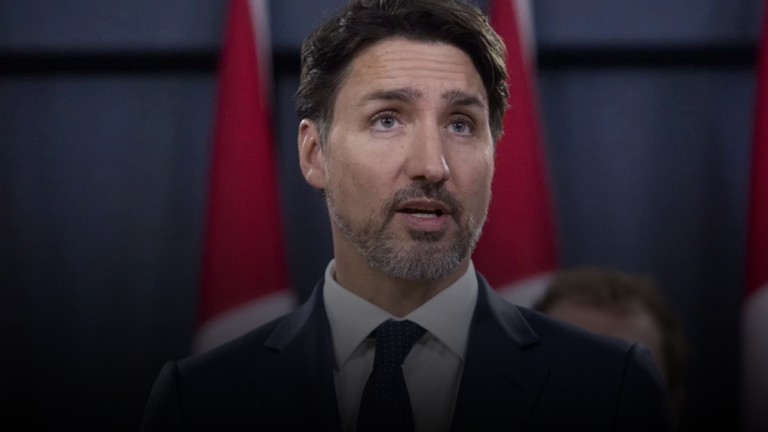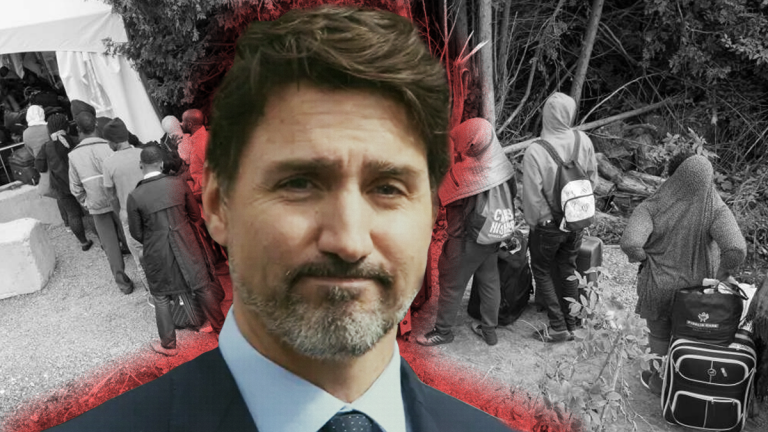
MALCOLM: Are our borders actually closed?

When does closed really mean open? 

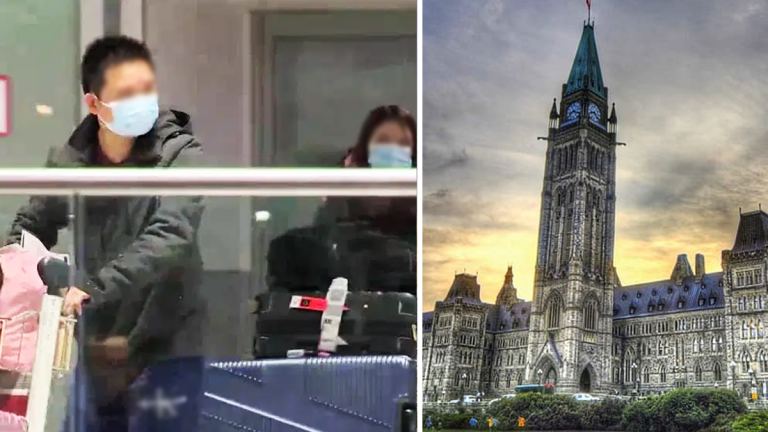
The Trudeau government announced earlier last week that Canada’s borders were closed — later admitting broad exemptions, including to illegal border-crossers, asylum seekers, temporary foreign workers and anyone part of the supply chain whose job involves getting goods in and out of Canada. 

In other words, our borders were still wide open. 

Since the onset of this virus-turned-global pandemic, the Trudeau government has insisted that grounding international flights and closing our borders to foreign travellers would not stop the spread of this deadly disease.

On March 13, Federal Health Minister Patty Hajdu explained why Canadians were wrong to want our borders closed: “Canadians think we can stop this at the border, but what we see is a global pandemic, meaning that border measures are actually highly ineffective at stopping this and in some cases create harm.” 

With no restrictions on flights from China, or on travellers coming from other outbreak centres including Iran, Italy and South Korea, and with a total absence of health screening at airports up until a few days ago, the virus easily made its way into Canada.

And with no restrictions or cautions against domestic travel from our leaders — who even allowed a large dental conference to be held in Vancouver, where several of the 15,000 attendees have since tested positive — the virus quickly spread throughout Canada and to every province in the country. 

The Trudeau government then did an about-face and joined the rest of the world to introduce some restrictions on travel. Canada would finally — finally! — begin closing its borders amidst the exponential growth in coronavirus cases.

But the more details we’ve learned about this so-called border closure, the more of a farce it has become. 

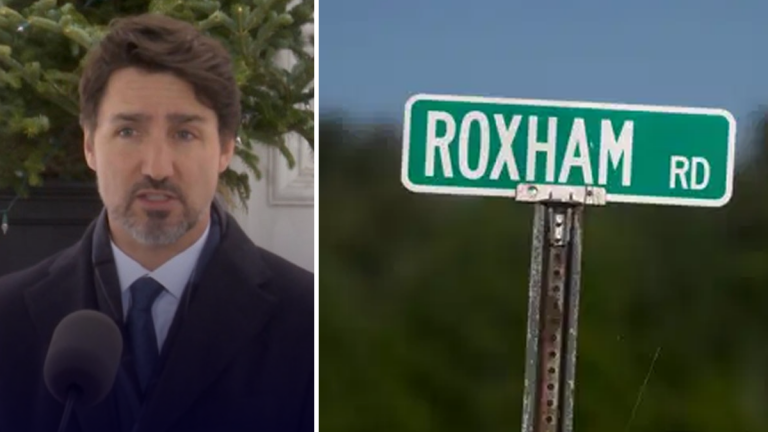
First, we were told that despite the ban on foreign nationals, Canada would still welcome asylum seekers who crossed into Canada illegally. The feds refused to take any measures to stop illegal border crossers who enter Canada from New York state at Roxham Road. 

According to CBSA union president Jean-Pierre Fortin, the number of illegal border crossers jumped to 80 per day — up approximately 35% from just two weeks ago. 

Public Safety Minister Bill Blair told Canadians on Tuesday that illegal border crossers apprehended at the border were being screened thoroughly and if they showed any signs of illness, they were sent to quarantine. 

But Fortin told the Montreal Gazette that there was no quarantine in place, contradicting the minister’s statement. 

Things got messier on Thursday when Deputy Prime Minister Chrystia Freeland told Canadians that the government hadn’t even started looking for a place to quarantine incoming asylum seekers. 

“Beginning tomorrow,” she said, the feds would begin looking for locations to quarantine asylum seekers.

So, it is with a grain of salt that Canadians should accept Trudeau’s Friday statement that Canada had reached a deal with the U.S. to stop and return all illegal border crossers. 

After years of Liberal politicians and their snooty friends in the media insisting that it was impossible to close the illegal border crossing at Roxham Road because the U.S. would never agree to take back asylum seekers, suddenly, Trudeau is making it happen. 

But many questions remain. 

Minister Blair confirmed that Canada would begin turning away migrants on Friday, but those who have already crossed illegally would get to stay. 

How many of those migrants have tested positive for the coronavirus? 

Are sick asylum seekers being held in isolation? If so, where?

Canada is now bracing for shortages and rationing in our healthcare system and doctors are warning that we are mere weeks away from having to turn away patients in need of ICU beds and ventilators. 

Trudeau should not only slam the door on illegal immigration, he should remove gold-plated health care benefits to those who entered the country illegally under his watch.


SHEPHERD: A coronavirus pandemic? In beautiful BC?

More British Columbians are calling out their fellow BC residents for enjoying the outdoors and oftentimes not abiding by the currently recommended social distancing measures.

But does the “stay at home” message need to be taken literally, or are some forms of outdoor recreation actually recommended?

True North’s Lindsay Shepherd gives an update from beautiful BC.

Liberal-appointed librarian accepted all-expenses-paid trip from China

0

A Liberal-appointed librarian enjoyed an all-expenses-paid trip to Beijing, sponsored by China’s communist government, to attend a conference that celebrated “socialist culture.”  

According to Blacklock’s Reporter, Librarian and Archivist of Canada Leslie Weir accepted thousands of dollars in flight, accommodation and meal costs from the National Library of China.

“Accommodation costs, meals and a portion of the airfare cost were paid by the National Library of China,” read the expense filings. 

Weir’s appointment was announced by former Minister of Canadian Heritage and Multiculturalism Pablo Rodriguez on May 27, 2019. Weir is paid an annual salary of $243,000.

“This appointment was made under the Government of Canada’s new approach to Governor in Council appointments. This approach supports open, transparent and merit-based selection processes that strive for gender parity, reflect Canada’s diversity and support ministers in making appointment recommendations for positions within their portfolio by providing them with information and referrals,” said the press release about her appointment. 

While at the conference, Weir delivered a speech to the attendees, though the content of her presentation has not been disclosed. 

China’s Minister of Culture introduced the conference by saying that he “hoped the National Library of China and public libraries around the country would stick to the Communist Party Central Committee’s decisions and plans…and make greater contributions to the great development and prosperity of socialist culture.” 

Weir’s trip to Beijing was only nine months after the unlawful arrest of Michael Spavor and Michael Kovrig. Chinese authorities arrested the pair to retaliate against Canada for detaining Huawei CFO Meng Wanzhou, who is wanted by US authorities for violating international sanctions on Iran. 

Several weeks after the library conference took place, Chinese authorities also took part in a number of book burnings targeting “illegal publications and religious publications.” 

China has a long history of persecuting religious and ethnic minorities. According to estimates, approximately 1.5 million Uyghur and other Muslim minorities are currently being held in concentration camps throughout China’s Xinjiang region.

Parliamentarians to receive combined $2.5 million pay raise during COVID-19 crisis

0

In the midst of the COVID-19 pandemic, with economists predicting a recession on the horizon, parliamentarians will be receiving a combined $2.5 million pay increase effective April 1.

According to Blacklock’s Reporter, members of the House of Commons and the Canadian Senate will get a salary boost based on wage settlement standards. 

The automatic raise was implemented by Bill C-30, An act to amend the Parliament of Canada Act, which was passed in 2005. 

“Bill C-30 is pretty straightforward. There is an index. It will reflect Canadian wage settlements. It will essentially reflect the wage increases that Canadians receive. We represent those Canadians,” said former Liberal House Leader MP Tony Valeri about the bill’s passing. 

The salaries of senators, MPs, speakers, cabinet members, as well as the prime minister will all be increased.

In addition, the salary of Governor General Julie Payette is expected to be increased by $6,858, totalling a yearly pay of $308,972. 

In the meantime, a majority of Canadians are concerned that the coronavirus will impact their personal finances.

According to a poll by the Angus Reid Institute, 65% of Canadians are worried that they will be impacted negatively by the pandemic.

Another 86% of people polled are concerned that the virus will hurt the Canadian economy. 

“As the outbreak has worsened, so too have financial markets, experiencing some of their worst days ever. It is perhaps, then, unsurprising that half of higher-income Canadians report their investments have taken losses,” claimed the Angus Reid Institute.

Earlier this week, the Liberals announced a $27 billion direct aid package for those impacted by layoffs or other economic repercussions brought on by the virus.

KNIGHT: Is Trudeau’s response to the COVID-19 pandemic enough?

The Trudeau government has finally closed our borders, put an end to the illegal border crossings and provided an emergency fund for Canadians to access in response to the COVID-19 pandemic.

But there are many questions that remain unanswered. Are our borders actually closed? What happens to the illegal border crossers that are already in Canada? Will the $82 billion emergency fund actually help Canadians?

True North’s Leo Knight discusses in his latest video.

Support independent media in Canada: http://www.tnc.news/donate/

Additional quarantine centres pop up in Wuhan despite China’s claim of zero new infections: report

0

Despite the Chinese government’s assurances that they have stopped the spread of COVID-19 within their borders, there are signs that new quarantine centres have popped up in the Wuhan region. 

On March 19, China’s national health commission stated that for the first time since the coronavirus appeared in December 2019, they have not detected any new cases.

According to the Epoch Times, local residents in the Wuhan region have reported long lines at hospitals and witnessed additional treatment facilities being created to deal with the virus.

Videos posted on social media show at least 30 residents in front of the designated COVID-19 treatment centre, Wuhan Union Hospital. 

“Look, Look! People are lining up in front of the fever clinic at Wuhan Union Hospital,” claims the person in the video. 

Another video shared by a construction worker from the area allegedly shows an impromptu hospital being built in a local stadium. 

“After the 14 makeshift hospitals were closed [on March 10], they set up 300 relay stations. I believe they are like a new type of makeshift facility,” a local resident identified only as Ms. Li told the Epoch Times. 

As of yesterday, COVID-19 has infected over 218,800 people worldwide. 898 people have contracted the disease in Canada.

Earlier this week, Europe passed China’s official number of infections, with 85,000 people reportedly infected, while China had 80,900 cases of the virus. 

According to a report by UK researchers from the University of Southampton, the Chinese government could have prevented the impact and spread of the virus by 95% if they had acted sooner in curbing its spread. 

Now that the Liberals have suspended illegal border crossings, where’s the media outrage?

0

Up until now, Canada’s mainstream media have been cheerleaders for lax and open border policies. 

Journalists and columnists from the CBC, the Toronto Star and other left-leaning outlets have written extensively about how curbing the illegal entry of people across Canada’s border is racist and xenophobic.

Yesterday, Prime Minister Justin Trudeau announced that illegal border crossers would be turned back to the US in order to mitigate the spread of COVID-19.

True North has compiled a list of quotations from columnists and journalists who implied closing the border to illegal border crossers was impossible:

“For starters: Canada has very few options in terms of controlling the numbers of people who apply for asylum. Building a wall along the U.S. border, or sending them back is not an option; if you step foot on Canadian soil you can claim asylum, and extending the Safe Third Country Agreement to the entire border can’t happen without the Americans’ agreement.” – Abigail Byle (CBC)

“First, we have a VERY long border with the U.S. and it would be simply impossible to bar the frontier entirely […] Travel bans are partly based on fear. While they are understandable to an extent, they have to be implemented carefully so they do not give the haters more fodder for their despicable views.” – Phil Gurski (Ottawa Citizen)

“But having now been exposed to the dire consequences of the application of Trump’s zero-tolerance immigration policy on migrant children and their families, more Canadians could find the Conservative solution of making the border as hermetic to asylum seekers as possible politically unpalatable.” – Chantal Hébert (The Star)

“Regardless of political persuasion, no one who takes Canadian constitutional law seriously can contend that Canada may lawfully send a person who meets the Canadian refugee definition to a country where they will be detained, possibly separated from their children and then deported back to the country where they face persecution.” – Sean Rehaag (Huffington Post

Closing an official border crossing to stop refugees means nothing with the Safe Third Country agreement in place.” – Nora Loreto (Twitter)

“This is such an important question. If the virus doesn’t discriminate, maybe we should be thinking harder about what to do when someone comes back to Canada rather than working on the honour system for some and closed border for others.” – Nora Loreto (Twitter)

Closed borders, closed economies and closed minds aren’t the cure to what ails humanity. International co-operation and the eventual return to a more open world are.” – Editorial (Hamilton Spectator

Closing existing [border] loopholes would only make life more difficult for the RCMP, more lucrative for smugglers and more dangerous for asylum seekers. It could also damage Canada’s international reputation for welcoming refugees. And there’s one last hurdle: convincing the U.S. to expand the deal.” – Aaron Hutchins (Maclean’s)

“Our boy ⁦@ErinOTooleMP⁩ wants everyone to know that if we’re closing the border to Americans we better make darn sure none of those brown skinned refugee types get in either. God he is pathetic.” – Scott Gilmore, Editor-At-Large at Macleans (Twitter)

The economic effects of COVID-19 explained in 8 minutes

What does this pandemic mean for the Canadian economy? Can the government do more? How does this all affect you and your wallet?

True North’s Sam Eskenasi breaks down the economic effects of COVID-19 in his latest video.

True North is committed to keep you updated on the COVID-19 pandemic. We’re not getting a government bailout – we need your help. Support independent media: http://www.tnc.news/donate/

Liberals promise millions in foreign aid to help combat COVID-19 abroad

0

The Liberal government has promised millions in foreign aid to combat the COVID-19 pandemic abroad. 

$50 million in taxpayer dollars has been promised to the World Health Organization and other bilateral endeavours. 

The money is expected to start flowing to international agencies and NGOs worldwide in the next few days. 

According to Minister of International Development Karina Gould, the funds are intended to help the world’s most vulnerable, including those in refugee camps. 

“They’re already in close quarters, their access to health care is limited. Their ability to get tested is limited. Their access to food and sanitation is limited. So one of the things we need to be doing is to ensure we are containing the spread within those very marginal and vulnerable populations,” Gould told the Globe and Mail.

“We can’t prioritize one population over another because it doesn’t matter who you are, where you live or what your socio-economic background is. The virus doesn’t care about those things.“

The funds are part of a larger $1 billion plan to fight the virus globally. 

Billions of dollars have already been allocated to help Canadians deal with the financial impacts of the pandemic at home.

Earlier this week the federal government revealed a $27 billion package of direct financial assistance for Canadian families and businesses amidst the ongoing economic fallout. 

How to access new COVID-19 benefits and EI

0

With the COVID-19 pandemic causing mass layoffs and forcing millions to stay at home, the federal government has announced new benefits and changes to Employment Insurance as part of a $27 billion direct aid package to Canadians.

On Wednesday, Prime Minister Justin Trudeau announced changes to EI to allow workers who have been affected by the COVID-19 pandemic to receive benefits immediately.

For those who do not qualify for EI, the government will soon be introducing two new programs for Canadians affected by COVID-19 — the Emergency Care Benefit and the Emergency Support Benefit.

Along with these programs, the government has also made other changes to temporarily alleviate the financial strain caused by COVID-19 shutdowns. 

Here are the new benefits:

Employment Insurance Sickness Benefit

This week, the government of Canada introduced new rules for receiving the Employment Insurance Sickness Benefit.

The Employment Insurance Sickness Benefit will provide individuals with up to 55% of their earnings (maximum $573 a week) if they cannot work for medical reasons.

What differentiates the COVID-19 Employment Insurance Sickness Benefit from standard EI? The one-week waiting period for benefits to kick in has been removed, and those being quarantined will not need to provide the government with a medical certificate.

Who qualifies?

Applicants who meet the requirements for EI in their respective region of Canada and cannot work or have lost their job because they are either sick or under quarantine. 

How to apply

In order to get the one-week waiting period waived, you must first complete a standard EI application online or at a Service Canada location and then call the government toll-free number at 1-833-381-2725, or teletypewriter at 1-800-529-3742.

It’s important to note that anyone displaying COVID-19 symptoms is not permitted to enter any Service Canada location.

Emergency Care Benefit 

The Emergency Care Benefit will provide eligible applicants with up to $900 bi-weekly for 15 weeks. This benefit will apply to workers, including those who are self-employed, who do not meet the requirements for Employment Insurance.

Who qualifies?

  • You must be either quarantined or sick with COVID-19

or

  • You must be caring for a family member who is quarantined or sick with COVID-19

or

  • You must be caring for children whose school or daycare has been closed

How to apply

The application for the Emergency Care Benefit will become available in April. Every two weeks recipients must reattest via phone, CRA MyAccount, or My Service Canada.

Emergency Support Benefit

The federal government has not yet released any specifics on what the Emergency Support Benefit will look like or how much each applicant will qualify for. So far, the Federal government has budgeted $5 billion for the benefit and has described it as long-term support.

Who qualifies?

The Emergency Support Benefit will provide an unspecified amount of money to Canadians who are currently unemployed but do not meet the requirements for Employment Insurance.

How to apply

Emergency Support Benefit applications will be available on CRA MyAccount in April.

Other changes

  • The due date for filing individual 2019 tax returns has been extended until June 1, 2020.
  • Taxpayers can defer money owed in the current income tax year until after August 31, 2020.
  • The GST credit maximum has been raised to $300 for adults and $150 for children.
  • Recipients of the Canada Child Benefit will get an increase of up to $300 monthly, per child, for the 2019-2020 benefit year for the 2019-2020 benefit year.
  • Beginning in April, all Canada Student Loan and Canada Apprentice Loan payments will be paused until September 30, 2020, and will not accrue interest.
  • Minimum withdrawals from Registered Retirement Income Funds (RRIFs) will be reduced by 25% for 2020