Podcaster loses sponsor after discussing trans issues critically

Canadian-American author Kira Davis says her popular podcast’s largest sponsor dropped their ads from her show after remarks she made involving the LGBT community and trans issues.

Davis, the host of the “Just Listen To Yourself” podcast, invites guests from across the political spectrum to discuss controversial issues. She says her biggest sponsor, Indeed.com, dropped their ads after two episodes of the podcast were released that discussed the LGBTQ community and drag queens.

In an interview with True North, Davis says that she previously tried to avoid having a conversation on gender issues and the broader LGBTQ community on her podcast because of her membership in a podcast network and sponsor sensitivity to any negative criticism directed at the LGBTQ community. 

In an episode titled When Did Drag Queens Become The Hill to Die on? Davis engaged in a conversation about the history of drag queens and the controversy surrounding drag queen performances for children. 

“I don’t believe that most of them [drag queens] are like “I’m going to sexualize your kids.” But most of them cannot separate themselves from the concept of this being a sexualized performance because that’s what it is,” said Davis on the show.

Soon after, she released an episode titled Words We Need to Be Done With in 2023, in which she listed the word “non-binary” as a word she’d like to forget. Davis said that two hours after the publishing of this episode, her biggest sponsor dropped her.

“A man who calls himself non-binary and wears dresses and high-heels to work as a high level official in the U.S. government on the international scene – yeah that’s a sign that he’s crazy,” said Davis on the podcast in reference to Sam Brinton, a member of the Biden administration. 

Davis told True North that despite being an openly conservative podcast and despite the discussion of controversial issues like the “n-word,” Indeed.com did not drop their support until issues concerning the LGBTQ community were brought up.

“I did very controversial podcasts on black lives matter and even the n-word, where we even use the n-word on the podcast. Through all of those they never ever had a problem. It wasn’t until I got to the transgender episodes that they [her sponsor] had a problem. They had an immediate problem,” said Davis. 

On why she believes the LGBTQ community has the power to deplatform potential opposition, Davis blames American “DINKS” – activist households with a double income and no kids who have been able to rise to the top of corporations and promote a progressive worldview. 

“They’ve risen to the top of these companies. They’ve risen to the top of the grievance industries. They’ve risen to the top of government. The reason why this is a sensitive topic right now is because those are the people at the top and are in charge of things. These are the “allies” at the top,” said Davis. 

Davis says that conservatives need to be more proactive in climbing to the top of school boards, corporations and government. “We don’t own the school boards. We don’t own the companies. My argument is that we need to go own them. What we need to start doing is playing the long game,” says Davis. 

Davis says that her soon-to-be-released book Drawing Lines: Why Conservatives Must Begin to Battle Fiercely in the Arena of Ideas seeks to answer the question of how conservatives can fight back against the domination of the cultural left-wing. 

True North reached out to Indeed.com for comment but has not received a response.
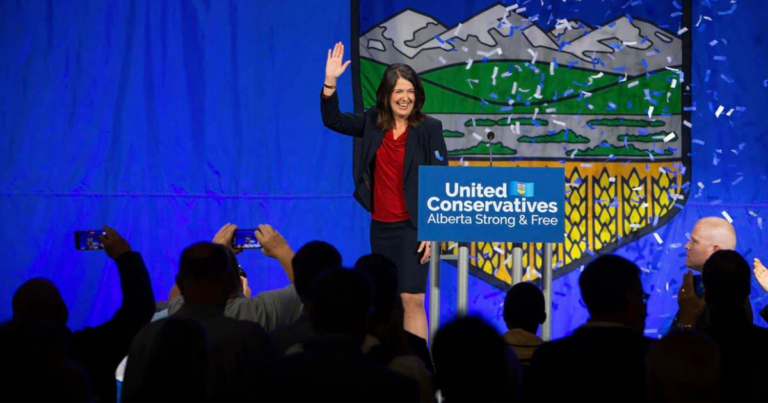
The Daily Brief | Who do you believe – the CBC or Alberta gov?

The Alberta government says there’s no evidence of emails between the Alberta Crown Prosecution Service and Alberta Premier Danielle Smith’s office. This comes after the CBC published a story alleging that staff in Smith’s office emailed Crown prosecutors challenging their assessment and direction on cases stemming from the Coutts border blockades and protests. Who do you believe?

A European politician who’s made headlines for criticizing Prime Minister Justin Trudeau is bringing her road show to Canada – literally.

And following the World Economic Forum Annual Meeting in Davos, Canada has announced that they’ve joined another global coalition taking aim at climate change.

Tune into The Daily Brief with Anthony Furey and Rachel Emmanuel!

SUBSCRIBE TO THE DAILY BRIEF

Ongoing CRA and union talks lead to potential strike over tax season

0

More than 35,000 union workers at the Canada Revenue Agency (CRA) are threatening to go on strike this tax season, their busiest time of the year, after requesting a three-year pay raise adding up to nearly 30%.

The union and the CRA have been negotiating about worker contracts for a year. This month, negotiations included a threat of a worker strike, allegations of bad-faith bargaining, and a walk-out from the negotiating table.

The Union of Taxation Employees (UTE) said they would launch a strike vote after requesting a 14-month backdated pay raise of 4.5%, a 2-month backdated pay raise of 8%, and a future pay raise of 8%.

The UTE also asked for a one-time pay increase of 9%, though it is unclear at what date the raise would take effect.

SaltWire reported last week that UTE national president Marc Brière explained the wage requests simply.

“We want to keep up with inflation,” he said.

The UTE and CRA have been bargaining about worker contracts for roughly a year. 

Negotiations broke down this December when the UTE walked away from the bargaining table, saying it could not fulfill a request from the CRA: the request that workers return to the office. 

“The government is trying to impose a flawed hybrid work plan,” the UTE wrote. “Forcing workers to scramble to make child care arrangements and potentially relocate if they’ve been working remotely.” 

The union next announced plans to launch a strike vote among its workers. If passed, the vote would lead union workers to walk off the job. A UTE statement said the vote would begin on January 31st.

CRA responded by filing a complaint.

The Canada Revenue Agency alleged the UTE was not bargaining in good-faith, which would be a violation of guidelines laid out in the Federal Public Sector Labour Relations Act.

“UTE has clearly stated its intention to move to a strike position as soon as possible […] in a manner that would impact the CRA’s tax filing season, without first engaging in good faith bargaining,” the CRA statement wrote.

The CRA asked a judiciary board to direct the union back to the bargaining table. Before the union can declare a strike, said the CRA, the union should have to make every reasonable effort to find a collective agreement.

When speaking to the Daily Hive two weeks ago, UTE National President Marc Brière said workers are prepared to take the nuclear option. 

“If they don’t take us seriously, unfortunately, we will have no choice but to shut down the CRA on the first occasion, including the tax season.”

If initiated, the strike vote would begin January 31 and end on April 7.

CAMPUS WATCH: Ontario university creates “LGBTQ2IA+ only” swim times

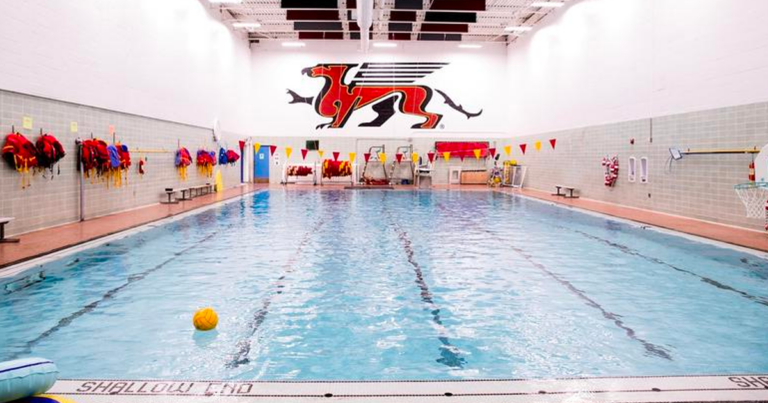
The University of Guelph (U of G) in Southwestern Ontario is offering “LGBTQ2IA+ Only” swimming times on Wednesdays at its athletics centre.

UofG’s website says the dedicated swim time “exists to create space for shared lived experience” and “to provide a safer, braver space for folks to show up, move their bodies & build community.”

The university says “any queer, trans and/or gender diverse person who wants to attend is welcome” and that attendees can use their preferred change room.

The “LGBTQ2IA+ Only Swim” takes place Wednesday afternoons in the red pool – one of two swimming pools at the Guelph Gryphons Athletic Centre.

This coming Wednesday’s “LGBTQ2IA+ Only Swim” is also listed by the UofG Student Experience office as an “LGBTQ2IA+ Solidarity Swim” that is part of their 2023 “Snow Days” programming for first year students. 

“We want to provide space (that) specifically decenters cisheteronormativity” reads the event page for Wednesday’s swim. It adds that “students are welcome and encouraged to wear the attire and swimwear they desire and have a space to try something new if that best suits them.”

While UofG says the dedicated times are “open to LGBTQ2IA+ people only”, it also notes that “allies” are welcome. They however ask that “allies” come only if invited by an LGBT student. 

Attendees are not asked to self-identity when accessing the pool and LGBT students can also attend regular open swim times.

UofG also holds dedicated swimming times for women – a common practice in university, public and private swimming pools that in-part helps accommodate Muslim women.

The University of Windsor also offers a weekly “LGBTQ+ Inclusive Swim” and bi-weekly “2SLGBTQIA+ only” workout times, while Ottawa’s Carleton University offers a “Trans and Allies Fitness Space” three times per week. 

UofG did not return True North’s request for comment in time for publication.

The university says the long “LGBTQ2IA+” acronym “represents lesbian, gay, bisexual, transgender, queer, questioning, two-spirit, intersex, asexual, and others whose identities fall outside of heterosexual and cisgender paradigms.”

Navigating Canada’s abortion data is a challenging endeavour

Last year saw a resurgence in the abortion debate in North America following the U.S. Supreme Court decision around Roe v. Wade and just last week, thousands gathered in Washington DC for the annual March for Life – but despite all the attention on the issue, Canadians are left in the dark when it comes to knowing how many abortions are done every year due to the lack of federally regulated data.

“Looking for abortion data in Canada is a loaded question,” said Patricia Maloney to True North. Maloney is a pro-life researcher who has been investigating abortion in Canada on her website “Run with Life” since 2010. 

National abortion numbers are only collected by the Canadian Institute for Health Information (CIHI). Precise statistics on abortion are challenging to produce because no federal ministry or board is keeping track of them. Additionally, private clinics such as Planned Parenthood are not legally obligated to report the number of abortions completed to the CIHI.

On top of that, the methodology used by the institute excludes medical abortions such as those done through RU-486, an abortion pill typically known as Mifegymiso. While statistics produced by CIHI appear to show a steady decline in abortions.

According to CBC News, an estimated 4,253 prescriptions for Mifegymiso were given to women in 2017, the first year it was made available to the public.

In 2021, Maloney found that the CIHI underreported 18,278 abortions performed in 2019 in Ontario alone. Through the Freedom of Information Act (FOI), she was able to find these numbers based on Ontario doctors’ billing codes.

“Not all provinces use the same methodology for statistics,” she said. “so there isn’t necessarily consistency between them.”

CIHI has also seen discrepancies in abortion statistics when compared to data from Quebec’s RAMQ billing system. Documents show that between 2015 and 2017, there were 20% more abortions in the province than in the data collected by CIHI. These numbers exclude medical abortions and Quebec women who travelled out of the province to have abortions done.

Based on OHIP billings released by litigation to Maloney, 45,471 abortions were done in 2014 while the CIHI reported only 23,746. CIHI has since corrected these numbers.

Media outlets such as CTV News have used CIHI data to state that abortions in Canada are steadily decreasing. Meanwhile, Quebec, Alberta, and British Columbia are among the provinces that do not report medically induced abortions to CIHI, further obscuring the data.

CIHI told True North that the abortion data for 2021 will not be available until March of this year.

“Diagolon” founder Jeremy MacKenzie de-banked by Scotiabank

Scotiabank has informed “Raging Dissident” podcast host and Diagolon founder Jeremy MacKenzie that it will no longer provide him with services. 

The Canadian Armed Forces veteran and father of three has indicated online that he will seek legal options to reverse the decision calling it “discriminatory.” 

“I might need to sue them because I feel like this is predatory. This is discriminatory because of my legal situation,” said MacKenzie in a recorded phone call with a Scotiabank representative.

“The bank determined that this relationship is outside of its risk appetite,” the bank representative told MacKenzie.. “(We are) calling to give you the courtesy of a heads-up (because) you’ve been a longtime client of the bank.” 

The controversial podcaster is facing a slew of charges related to a Nov. 2021 incident including “assault, pointing a firearm, using a restricted weapon in a careless manner, and mischief.”

While in jail awaiting bail, MacKenzie testified before the Public Order Emergency Commission last year in relation to Prime Minister Justin Trudeau’s Freedom Convoy crackdown. 

When questioned about his group’s activities, MacKenzie denied claims by the federal government that they were a militia intent on committing violence, instead claiming Diagolon was a running gaffe. 

MacKenzie was also banned from visiting “any of the Scotiabank branches or bank premises in person without first getting written consent in advance from the bank, from management.”

MacKenzie has 30 days to get his affairs in order before his financial services will be severed. True North reached out to Scotiabank for comment but did not receive a response in time of publication.  

“I understand the frustration, that’s for sure,” said the Scotiabank representative. 

“It’s not frustration. This is catastrophically ruinous to most people… Have you ever been de-banked before, and had your mortgage cut? I mean, my children live there.”

MacKenzie’s mortgage will continue with Scotiabank until 2024 but at that point it will not be renewed, the representative informed him. 

“There is certainly not anything resembling a militia or anything to this extent,” claimed MacKenzie. 

In Sept. 2022, Conservative leader Pierre Poilievre called on the RCMP to investigate MacKenzie for threatening to sexually assault his wife during a podcast episode. 

European MP who backed Freedom Convoy to tour Canada

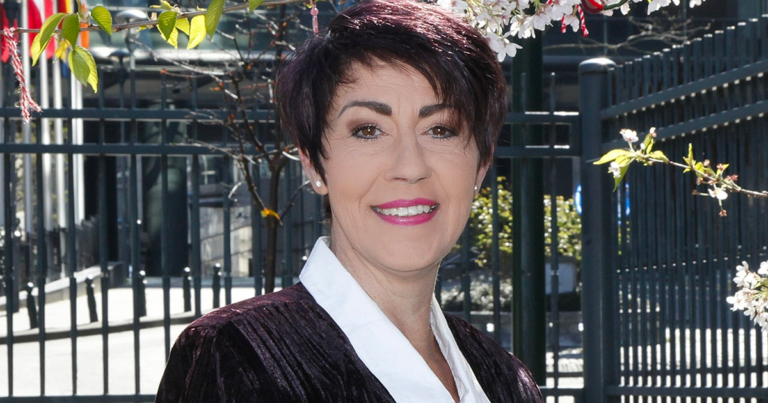
A European politician who rebuked Prime Minister Justin Trudeau in front of the European Union Parliament last year has announced a Canadian tour to meet the people she says are the bravest in the world.

German MEP Christine Anderson has booked tour venues in Alberta, Quebec and Ontario this February because she says she has grown fond of Canadians since seeing their resistance to what she describes as a totalitarian regime in Canada. 

“Canadian truckers, they just stood up,” she said in an interview with Rebel News on Friday. “And they just said ‘No, we’re not going to put up with this. We will fight for […] our freedom.’ That takes a lot of courage, and a lot of bravery. I was so impressed by that.”

Anderson’s tour begins on February 18 in Calgary with later stops in Toronto, Whitby and Montreal.

Last March, Anderson received international media attention when she harshly criticized Trudeau during his trip to speak at the European Union Parliament in Brussels.

Speaking to the parliament floor and Trudeau, Anderson said Trudeau was a disgrace for any democracy.

“It would have been more appropriate for Mr. Trudeau […] to address this house according to Article 144, an article which was specifically designed to debate violations of human rights, democracy, and the rule of law, which is clearly the case with Mr. Trudeau.”

Earlier this month, Anderson phoned in to speak at a protest outside the College of Psychologists of Ontario. Anderson said she stood with protesters to support Canadian psychologist Jordan Peterson, whose license to practice psychology was being threatened by the college in response to his behaviour on Twitter.

Feds propose trust fund for residential schools reparations

The federal government announced on Saturday it signed an agreement for a $2.8 billion trust fund for Indigenous bands who were seeking reparations for what they describe as the damage caused to their people through the residential school system.

The pending fund responds to a class-action lawsuit against the government of Canada, which more than 300 Indigenous bands filed against the Crown.

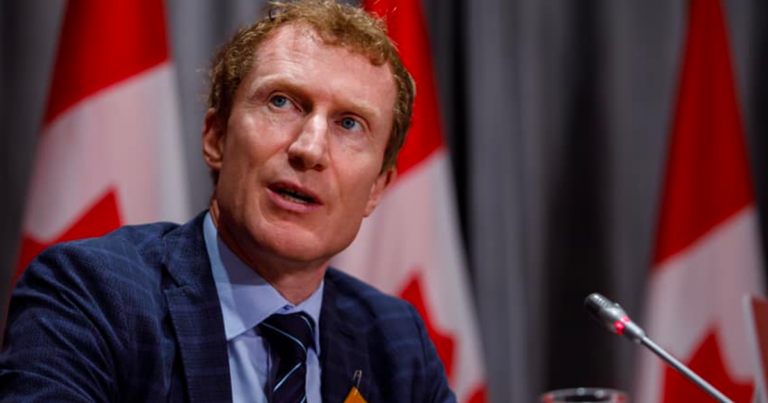
Minister of Crown-Indigenous Relations Marc Miller said the settlement shows Canada’s ability for constructive dialogue and for resolving historic grievances outside the court system.

“Together, we have developed a settlement that will support the Band class members in their healing journeys for generations to come,” he said.

The settlement is not yet official, as it must be approved by the Federal Court. Representatives of the Indigenous and Crown parties are expected to meet on Feb, 27.

The $2.8 billion is planned to support healing, wellness, education, heritage, language and commemoration. 

A board of elected Indigenous directors will choose how the money is spent on three main goals: reviving Indigenous language and culture, protecting Indigenous heritage, and securing Indigenous well being.

It is not the first time Canada settled for the damage of its residential school system.

In 2006, Canada announced its “Indian Residential Schools Settlement Agreement,” which established a $1.9 billion trust fund to make payments to the victims of residential schools. 

Those eligible received $10,000 for their first year at a residential school, plus $3,000 for every additional year.

Fifteen years later, in 2022, Canada announced a separate settlement with victims who only attended residential school during the daytime.

The settlement consisted of $10,000 for victims, $50 million for the creation of a society to support Indigenous healing, $9.6 million for victims’ past legal fees, and $2.5 million for victims’ ongoing legal fees.

Alberta government review finds no evidence of claims made in CBC story

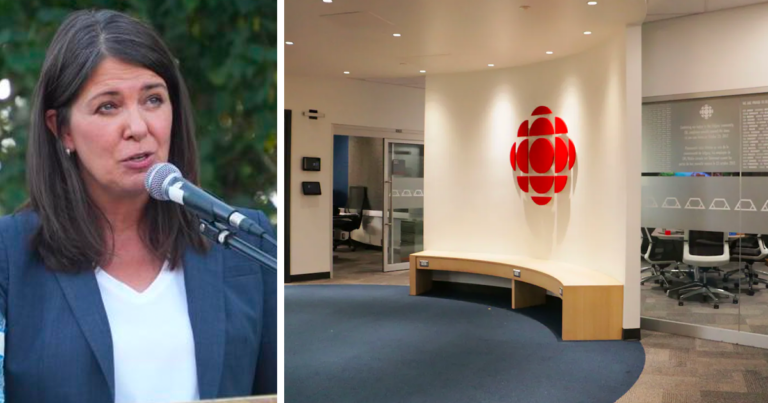
The Alberta government says there’s no evidence of emails between the Alberta Crown Prosecution Service and Alberta Premier Danielle Smith’s office.

The government initiated the review after the CBC published a story on Thursday alleging that staff in Smith’s office emailed Crown prosecutors challenging their assessment and direction on cases stemming from the Coutts border blockades and protests. The story cited anonymous sources. 

Smith said an independent Crown prosecution service, free from political interference, is integral to the preservation of public confidence in the justice system.

“I am confident in the integrity and professionalism of my staff,”  she said in a statement Monday.

“That’s why I am grateful for the non-partisan review completed this weekend by the Public Service Commission, which found no records of contact between the Premier’s Office and Crown prosecutors.”

The CBC story alleged that staff in Smith’s office sent emails to Crown prosecutors in the fall. The CBC agreed not to identify because they fear they could lose their jobs.

The CBC later updated its story with an editor’s note saying the original version of the story neglected to note that CBC News has not seen the emails in question.

In October, Smith promised to seek legal advice on granting pardons to those charged for breaching Covid-19 restrictions. 

Last week, the Premier said she’d asked Justice Minister Tyler Shandro and his deputy on a regular basis to consider whether pursuing these charges are in the public interest. She also clarified that she had not spoken with Crown prosecutors.

The independent review was conducted by the Public Service Commission and internal IT experts between Jan. 20-22 searched for any emails sent to or received by the relevant prosecutors and Smith’s staff over a four-month period. Nearly one million incoming, outgoing, and deleted emails were reviewed.

“No further review will be conducted unless additional evidence is brought forward,” said a government release. 

“We ask the media and public to also respect their independence as they carry out their important work.”

Niall Ferguson pushes back against Davos green agenda

Like most central planning efforts by governments, green energy schemes have been a failure, historian Niall Ferguson says. Ferguson pushed back against the prevailing green narrative at the World Economic Forum’s annual meeting in Davos last week and elaborated in an interview with True North’s Andrew Lawton.