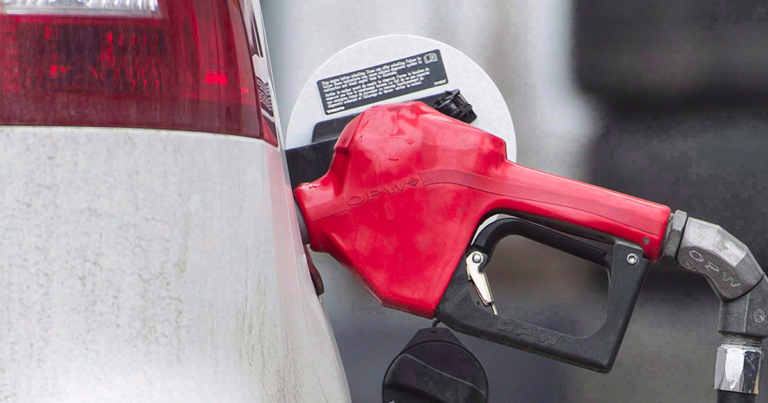
Ontarians can expect a crushing blow to their wallets this week as gas prices are predicted to jump by 10 cents in the following days.
According to experts, this is the biggest single overnight gas spike the province has seen in years.
Drivers can expect to pay up to 163 cents per litre by the end of the week compared to the current price of 152.9.
“You don’t see that very often,” said analyst and Canadians for Affordable Energy president Dan McTeague. “Normally you see 10 to 15 cents a litre over a two-day period but never in one big fell swoop.”
Things are much worse on the west coast. Vancouver, British Columbia posted the highest gas prices in North America last week.
Some gas stations reported a price of 242 cents per litre after a sudden 40 cent jump to prices in the Metro Vancouver area.
“I don’t know that I’ve ever seen a wider gamut of price behaviours coast-to-coast in my career,” said GasBuddy petroleum analyst Patrick DeHaan.
“A slew of unexpected refinery disruptions, including fires and routine maintenance, have seemingly all happened in a short span of time, causing wholesale gas prices to spike in areas of the West Coast, Great Lakes and Prairies, and some of those areas could see prices spike another 10 to 20 cents per litre or more until issues are worked out.”
The Conservatives have called on the Liberal government to immediately alleviate the cost of living crisis by raising taxes for Canadians.
Yesterday a Conservative motion to scrap all new federal tax hikes failed after being shut down by Liberal and NDP MPs.
“With 40-year high inflation, the last thing Canadians need is new tax hikes on their paycheques, gas, groceries, and home heating,” Conservative leader Pierre Poilievre tweeted on Monday. Last week the Liberal government passed an increase to the carbon tax with the help of the NDP and the Bloc Quebecois.
Canada has devolved over the years into “a childish country incapable of solving big problems,” according to Brian Lee Crowley, managing director of the Ottawa-based non-partisan think tank, the Macdonald-Laurier Institute (MLI).
Writing in the National Post, Crowley argues that “childishness in the form of wishful thinking has taken hold of Canada’s political establishment.”
“The post-war period in Canada has created unprecedented order and stability,” writes Crowley. “However, it has also led to a comforting but childish illusion that the world was simply made this way.”
”Canada’s puerile political status-quo means that wishful thinking has replaced critical thought.”
More bluntly, post-war Canada is now a country of childish silliness that is incompetent when it comes to solving big issues.
An example?
“To combat climate change, we simply unilaterally declared that global energy use would be radically reduced, despite the fact that billions of people depend on cheap and abundant energy, which renewables are far from being able to provide,” Crowley argues.
Some harsh, yet simple, truths have to be faced. Nature is unaffected by our illusions. The laws of physics, the inevitability of biology and the march of time are indifferent to our purposes.
Death comes soon or late. Events happen that are beyond our control. When we engage in magical thinking and believe what we want to be true, rather than what actually is true, we become not just child-like, but childish.
“We thus plunged countries like Germany into crisis and gave Russia the whip hand in its invasion of Ukraine and its goal of disrupting the unity of liberal democracies,” says Crowley.
Here in Canada, for example, Prime Minister Justin Trudeau, while supplying Ukraine with basic armaments, has chosen to sanction Russia and its oligarchs with an assortment of bans — as if seizing a Russian millionaire’s yacht would be some sort of crippling action that would impede Russia’s military action.
Other western nations have followed suit but have fallen short of poking the Russian bear in the cojones for fear of retaliation.
It’s obviously not working, as Russia ramps up both its war against Ukraine as well as its aggressive rhetoric such as threatening nuclear measures.
To maximize growth and use part of the wealth that’s created to invest in discovering new technologies that could help solve the problem, such as climate change.
“This approach has never yet let us down, and in fact is precisely the reason why, despite staggering population growth, we continue to be able to feed ourselves,” says Crowley. “A North American farmer who in 1940 could feed his own family and 18 other people can now feed his family and about 160 others thanks to a thousand incremental improvements in farm technology.”
This approach won’t satisfy those who want instant results, says Crowley. “Yet as any gardener knows, no matter how badly you want the flowers, you cannot make them grow faster by pulling on them.”
“It’s time for Canada to grow up, because, while we may not be interested in disorder, disorder is interested in us.”
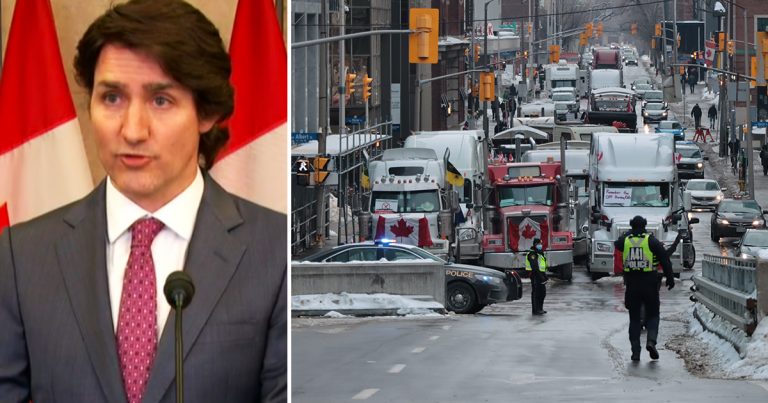
Prime Minister Justin Trudeau is expected to personally testify at the ongoing Public Order Emergency Commission over actions he took to quash the Freedom Convoy in February.
According to CTV News, Trudeau is among eight members of the Liberal cabinet who will be required to appear before Commissioner Paul Rouleau to justify the federal government’s invocation of the Emergencies Act.
A list seen by the outlets includes a total of 60 witnesses including Public Safety Minister Marco Mendicino and Deputy Prime Minister Chrystia Freeland.
Others on the list include figureheads of the Freedom Convoy and law enforcement officials involved in the crackdown.
“The Commission has provided a preliminary list of witnesses to Parties that have standing,” said Commission spokesperson Michael Tansey.
The list is not final and was provided to Parties on a confidential basis.”
Canadians last saw a prime minister testify at a public inquiry in 2005 when former Liberal prime minister Paul Martin appeared before the Gomery Commission to testify on corruption charges against his government.
Internal polling by the federal government found that Canadians felt that the Liberal government’s use of the Act was an overreach.
“Though a small number of participants felt implementing the Emergencies Act was a necessary step given the disturbance caused by the seemingly indefinite nature of the protests, most felt this action represented significant ‘over-reach’ by the federal government as they interpreted this as limiting the right of these Canadians to peaceful protest,” wrote researchers.
“A significant number identified with the frustration expressed by the protesters regarding ongoing public health measures even if they disagreed with some of the methods.”
Polling shortly after the Act was revoked also showed that Canadians were disappointed with the federal government for not engaging with protestors before declaring the demonstrations illegal.
“Participants were generally dissatisfied with the response of the Government of Canada,” analysts wrote.
“It was thought the perceived lack of engagement by the federal government with the protesters only served to intensify these demonstrations.”
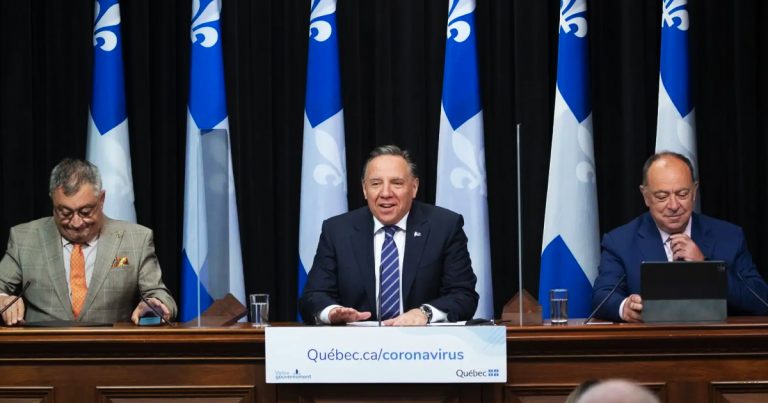
Quebec Premier Francois Legault has been re-elected – with his Coalition Avenir Quebec (CAQ) party winning a second majority in the province’s National Assembly.
Radio Canada called the election in Legault’s favour at 8:10pm, projecting both his re-election and a second majority.
The CAQ won 90 seats, a gain of 16 seats from 2018. The Quebec Liberals placed second in terms of seat count with 21 seats, a loss of 10 from 2018. However, the Liberals placed fourth in the popular vote.
Meanwhile, the left-wing Quebec Solidaire party won 11 seats, up one from 2018. The seperatist Parti Quebecois party won only three seats, amounting to a loss of seven.
The disparity between popular vote share and seats won can be attributed to the first past the post voting system in which the candidate with the most votes in an individual riding wins, irrespective of margin.
The results of the Quebec Election. As you can see, there are noticeable differences between the seat count and the popular vote. #FPTP#PolQcpic.twitter.com/ZGSohASbfI
While the Conservative Party of Quebec performed well in the popular vote, it failed to win a seat – with its leader Eric Duhaime being defeated in the riding of Chauveau where he had hoped to unseat the incumbent CAQ member of the national assembly.
The PCQ received 12.92%, up from the 1.46% it received in the 2018 provincial election.
In his speech Monday night, Duhaime said that his party’s popular vote gains signal a moral victory, stating “all the other opposition parties lost votes; we’re the only opposition party rising tonight.”
He also announced his intentions to stay on as Conservative leader, telling his supporters “I’ll need you even more in the next four years.”
Duhaime compared politics to hockey, saying the 2022 campaign was the first phase or period. “Politics is like our national sport, like hockey. There are three periods. The first period ends for us tonight. The first period was to make sure that we became a big party, that we became part of the big league.”
“We’ve done that masterfully.”
Meanwhile, Legault said in his victory speech that “Quebecers had a very clear message: let’s continue!”
The nationalist premier also claimed that “when I say Quebecers form a great nation I mean all Quebecers from all regions, of all ages, of all origins. I’m going to be the premier of all Quebcers.”
Legault’s win comes after a 36-day campaign where the CAQ maintained strong leads in the polls.
Legault’s CAQ campaigned on the slogan “Continuons” (Let’s continue) and promised Quebec voters tax cuts and government checks, healthcare reforms that include private options, building new housing, limiting immigration, greenhouse gas reductions, as well as investments in infrastructure and education.
The Premier was not exempt from criticism and protest during the campaign, after a controversial first term where he implemented policies some deemed divisive.
The Legault government passed Bill 96, a French language law which critics claim will negatively impact Anglophones and Allophones, and Bill 21, a secularism law which some say infringes on religious freedoms.
The CAQ also faced criticism for their handling of the COVID-19 pandemic.
They imposed some of the most punitive restrictions in the western world, along with some of the strictest vaccine mandates in North America. Despite these measures, Quebec has the highest Covid death count in Canada.
Days before the election, a Radio Canada investigation also revealed that McKinsey & Company, a global consulting firm with ties to Pfizer, the WHO, the WEF and the Bill & Melinda Gates foundation, played an important role in Quebec’s pandemic response.
Opposition to the CAQ’s handling of Covid also contributed to the rise of the Quebec Conservatives.
However, Legault has earned praise for being one of the few politicians in Canada to tackle wokeness. Earlier this year, his government introduced a bill to protect academic freedom – which allows professors to use any words while teaching, including language that some may find offensive.
The voter turnout for the election was 66%, the same as 2018.
Experts say government lockdowns and Covid-19 mandates have left children with unprecedented psychological and social scars.
According to Blacklock’s Reporter, testimonies by pediatricians at the House of Commons health committee reveal how severe mental health among youth has become.
“We found older youth were statistically more likely to report severe difficulties in the psychiatric domain,” said University of British Columbia Department of Pediatrics clinical scientist Dr. Quynh Doan.
According to Doan, a survey of 424 youths found that a majority were experiencing “psychological difficulties” as a result of pandemic measures.
“Youth who were not attending any formal educational programs either at home or in person at a time when school would normally be in session were twice more likely to report greater severity in the psychiatry and youth health domains compared to youth who were in full time, in-person school,” explained Doan.
The president of the McMaster Children’s Hospital Bruce Squires also said that children suffered from long waits to access mental health care.
According to Squires, the number of kids entering in-patient programs for eating disorders shot up by 90%.
“Canada’s children and youth have borne the brunt,” said Squires.
“Their development – physical, emotional, social, spiritual – has been impacted severely by learning loss, reductions in access to physical activity, social isolation and delays in access to care. The data are striking.”
The City of Toronto recently faced backlash and was forced to pull back a Covid-19 vaccination campaign video after singling out unvaccinated children.
In one of the short advertisements, a young girl is portrayed as being isolated and alone implying that it’s because she’s not vaccinated.
“Kids should be out there. Not in here. Covid-19 vaccines available for children 6 months to 12 years,” the ad claims.
In response to public outcry, the city paused the campaign and said they communicated the intent of the video poorly.
“We do believe we can better communicate this intent and, as such, we have removed the video to better address the core message of children being eligible to be vaccinated against COVID-19,” said City of Toronto spokesperson Brad Ross.
A Calgary physician has filed to take the federal government to the Canadian Human Rights Commission for lifting mandatory mask mandates for travel.
Dr. David Keegan claims that he was “dismayed” by the news that the mandates lifted on Oct. 1 saying that he suffers from a cardiopulmonary condition.
“I was frankly dismayed when I heard the news,” said Keegan.
“(It creates) an environment that is unwelcoming and unaccommodating to people with compromised immune systems, cardiopulmonary conditions, and so on.”
“So I’m expecting and anticipating that the government will realize the error in this decision and keep the mask mandate in place.”
While the federal government has removed the requirement to wear masks, it still “strongly recommends” that travellers wear masks while travelling.
Liberal Health Minister Jean-Yves Duclos has also stated that the government could reintroduce mandates should the need arise in the future.
“If anybody believes the pandemic is over, I invite them to visit a hospital,” said Duclos last week.
“That decision again was driven by the evidence that we have seen over the last few weeks and months, which is that the transmission and cost of transmission of COVID-19 on our health-care workers, hospitals and including those patients who have seen backlogs in their surgeries and treatments over the last two years and a half … are now almost entirely driven by domestic transmission of COVID-19. That’s where we need to invest our energy.”
The lifting of remaining pandemic mandates come after the federal government faced increasing pressure from opposition politicians and border communities to do away with stringent rules.
Currently, the US government still has a Covid-19 vaccine requirement to enter the country.
In September, the Liberals also announced they would be making the ArriveCan application optional for travellers after facing months of issues and inefficiencies due to the program.
Based on data from Parliament’s own Budget Office, the federal government won’t be able to balance its budget until 2041. On top of that, the government doesn’t even think they’re at fault, going as far as claiming to be in a “responsible fiscal position.”
It’s time for a Reality Check.
In this episode, Jasmine Moulton tackles the government’s arguments and shows why we’re actually in a much more difficult position despite claims from the Trudeau government. From the notion that Canada is handling its debt well to raving about “historically low interest rates,” Jasmine shows us that we’re in a much different place.
Joining Jasmine on the show is the Federal Director of the Canadian Taxpayer’s Federation Franco Terrazzano. Franco shares his thoughts on what the government can do to alleviate Canadians who are currently struggling.
Tune into Reality Check with Jasmine Moulton on True North!
As parliament continues to investigate Prime Minister Justin Trudeau’s use of the Emergencies Act to quash Freedom Convoy protestors in February, internal focus group polling shows that many Canadians remain disappointed with how the government handled things.
According to Blacklock’s Reporter, a Privy Council Office survey titled Continuous Qualitative Data Collection of Canadians’ Views found that respondents were upset with how little the federal government engaged with protestors.
“Participants were generally dissatisfied with the response of the Government of Canada,” analysts wrote.
“It was thought the perceived lack of engagement by the federal government with the protesters only served to intensify these demonstrations.”
The research was undertaken between Mar. 3 to Mar. 30, only days after the Trudeau government suspended the use of emergency powers which included freezing assets of protest supporters and arresting organizers.
“Several of those who felt the Act should not have been invoked were also primarily opposed to the protests and felt the Act would not have been necessary in the first place if more had been done at all levels of government to quell the protests in their initial days,” the study claimed.
“Among those who were more supportive of the protests it was felt use of the Act represented significant overreach by the federal government.”
General attitudes towards the convoy and its goals were split with “roughly similar” numbers of people praising the movement as those speaking negatively of it.
“Across all groups a roughly similar number of individuals spoke negatively about the protests as those who expressed support with several others more uncertain,” wrote analysts.
Some Canadians even said that the “primarily grassroots” convoy “encouraged and uplifted” them in its opposition of Covid-19 mandates.
“Among those in favour of the protests, it was generally thought the gatherings had been mostly peaceful and that protesters had been unfairly treated by law enforcement and public officials,” the survey found.
“In addition, several participants believed coverage of these protests in media had been almost entirely one-sided and portrayed the demonstrations in a disproportionately negative light.”
Hearings for the commission investigating Trudeau’s invocation of the Emergencies Act have been postponed to October 13 due to the commissioner’s health.
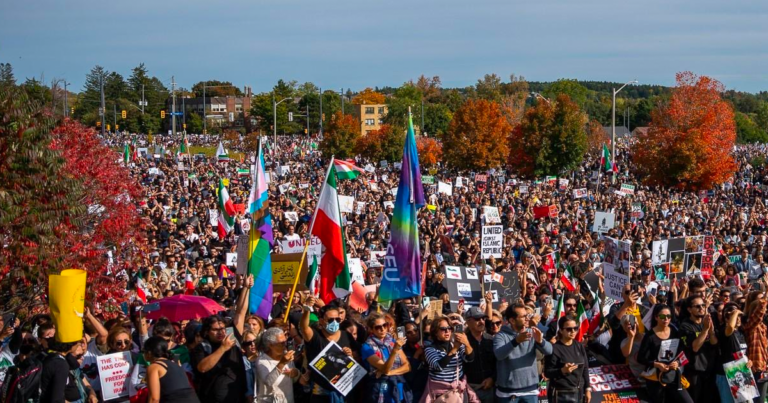
Canadians have come out in droves to protest the brutal Iranian regime after the death of 22-year-old Maha Amini while in police custody.
According to police estimates, over 50,000 people turned out for a protest in Richmond Hill on Saturday.
Protests in Iran have been raging for weeks after Amini died shortly after being arrested for violating the Islamist theocracy’s mandatory veiling laws.
The protest in Richmond Hill was put together by the group Iranian-Canadians for Justice and Human Rights in front of Richmond Hill Central Library.
Conservative Leader Pierre Poilievre was also in attendance at the protest.
Spoke to thousands in Richmond Hill fighting for a free Iran. #MahsaAmini
“The time has come for all of us friends of freedom to gather around because the time has gone for too long. Too long we have allowed the tyrants in Tehran to terrorize the people, to steal their rights and to engage in extrajudicial arrests and disappearances,” said Poilievre.
Similar protests also took place in Montreal, Vancouver and elsewhere throughout Canada over the weekend.
“(The protest was organized to) bring together Canadians of all ages, races and religions to speak out in defense of the people of Iran, particularly its brave women,” said one organizer.
“As Iran’s regime shuts off the internet in the country and kills protesters indiscriminately, the people of Iran have repeatedly asked that the international community be their voice and amplify their demands.”
Last week, the Conservatives came out in support of a regime change after calling on the government of Prime Minister Justin Trudeau to list the Iranian Revolutionary Guard Corps as a terrorist entity.
“Yes, and if you can’t be unequivocal about a brutal religious dictatorship who kills their own people, then I’m not sure what we’re all discussing here,” said Conservative deputy leader Melissa Lantsman about the prospect of regime change.
On Monday, the Liberals expanded the list of sanction targets to include 34 individuals one week after they announced new retaliatory measures against Iran’s morality police.
“These sanctions are in response to gross human rights violations that have been committed in Iran, including its systematic persecution of women and in particular, the egregious actions committed by Iran’s so-called ‘Morality Police,’ which led to the death of Mahsa Amini while under their custody,” the federal government wrote.
A global management consulting firm with ties to Pfizer played a key role in Quebec’s Covid response, according to a report by Radio-Canada, CBC’s French-language arm.
Documents obtained by Radio-Canada showed that McKinsey & Company, a firm with 30,000 consultants across 35 countries, contributed to several major pandemic decisions taken by François Legault’s government.
These include decisions around communication strategies, equipment purchases, masks, PCR testing and long-term care. The firm also helped the province with its reopening plan and economic relaunch strategy, as well as Quebec’s vaccination campaign.
The story was published just days before Quebec’s provincial election.
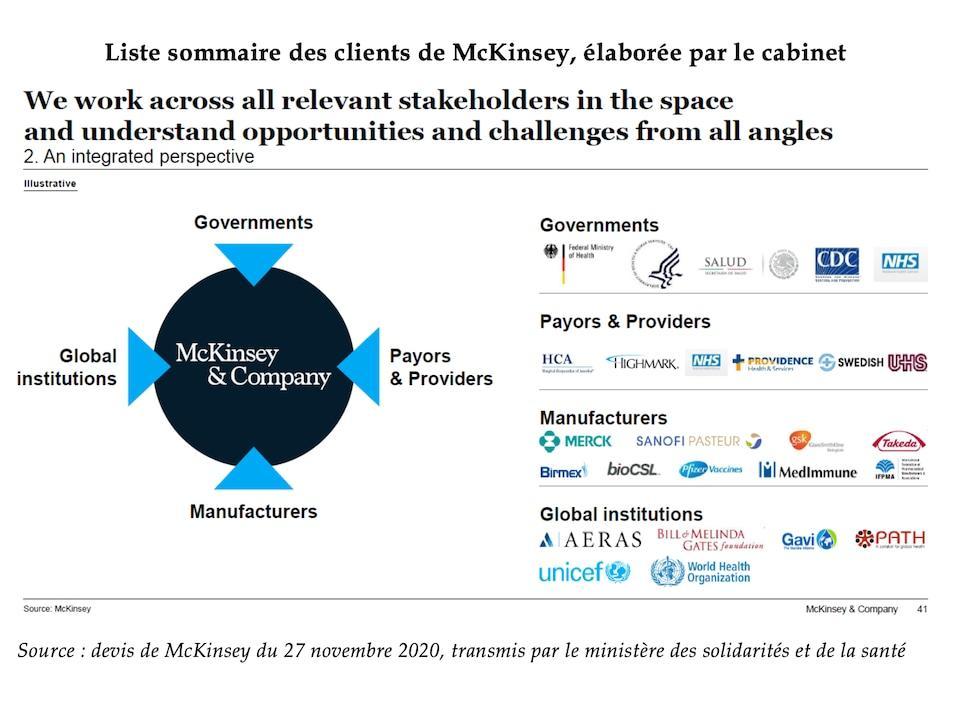
During the pandemic, other clients of McKinsey included the Ontario government, European governments, the World Health Organization, the Bill & Melinda Gates Foundation, as well as large pharmaceutical companies, including Pfizer, the manufacturer of one of the two major Covid vaccines distributed in Quebec.
A List of McKinsey clients obtained by a French Senate inquiry commission. SOURCE: SENATE OF FRANCE (photo displayed in Radio-Canada’s investigation)
McKinsey’s website also boasts about a strategic partnership with the World Economic Forum – in addition to stating the firm “supports the (WEF’s) mission of improving the state of the world.”
According to the investigation, McKinsey advised the Quebec government on its dealings with Pfizer, including on Quebec’s vaccine distribution agreement with the pharmaceutical giant.
The firm also recommended that Quebec discuss with Pfizer vaccine storage and second doses.
In an end-of-term memorandum, McKinsey says it helped the Quebec government “improve its vaccination strategy and plan in light of best practices in the field.”
Radio-Canada’s report also noted that on the first day of the vaccine rollout, a McKinsey associate emailed Quebec’s vaccine campaign director, writing “congratulations on this first day that is going well. Here are my notes on follow-ups (action, responsibilities, deadlines). Feel free to make changes.”
According to the report, McKinsey could not disclose its other clients to the Quebec government.
An Apr. 6 2020 amendment to the contract between Quebec and McKinsey stated that “McKinsey may not inform or consult with the Client about McKinsey’s performing engagements for the Client’s competitors or other parties.”
The firm also says it aims to avoid all situations that could result in conflicts of interest.
However, the Canadian Press noted the Senate of France warned that contracts with consulting firms made way for possible conflicts of interests. McKinsey had also been under a conflict of interest investigation by the US Congress after it advised both health regulators and big pharmaceutical companies.
When asked about the findings of the investigation, Legault defended the hiring of the global firm to help with managing the pandemic.
“It’s expensive, McKinsey, but, obviously, that’s in line with the service they provide,” said Legault, who claimed the province’s bureaucrats decided to give the firm sole-sourced contracts amid a public health emergency.
Legault also said that “ultimately, it was up to me and my team to make decisions, but I think the recommendations that we received from McKinsey helped us save lives.”
The province’s opposition leaders reacted to the news with a critical tone – with a strong reaction coming from Conservative Party of Quebec leader Eric Duhaime.
“A firm with clients whose interests potentially conflict, a firm whose client is Pfizer itself! There is certainly the appearance of a conflict of interest and it is essential to get to the bottom of this,” said Duhaime in a press release.
“Who really managed the pandemic in Quebec? Were Mr. Legault and Mr. Dube the puppets of McKinsey?”
Duhaime is calling for a public and independent inquiry into the province’s contracts with McKinsey.
According to Radio-Canada, McKinsey advisors cost the Quebec government $6.6 million, or $35,000 per day. The cost of McKinsey’s services for the reopening plan was $1.7 million, while their help with the economic relaunch cost $4.9 million.
When asked for comment by Radio-Canada regarding its investigation, McKinsey senior advisor Eric Gaudet said, “we have to respect our confidentiality agreements.”
It should be noted that the Legault government was criticized for its overall management of the pandemic.
The province imposed some of the strictest restrictions in the western world, including lockdowns and curfews, as well as some of the harshest vaccine mandates in North America which covered previously deemed “essential” businesses like liquor and cannabis stores, as well as big box stores like Walmart and Costco.