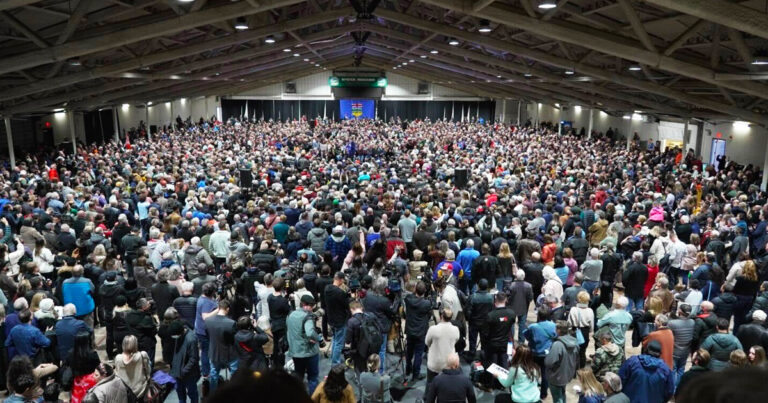
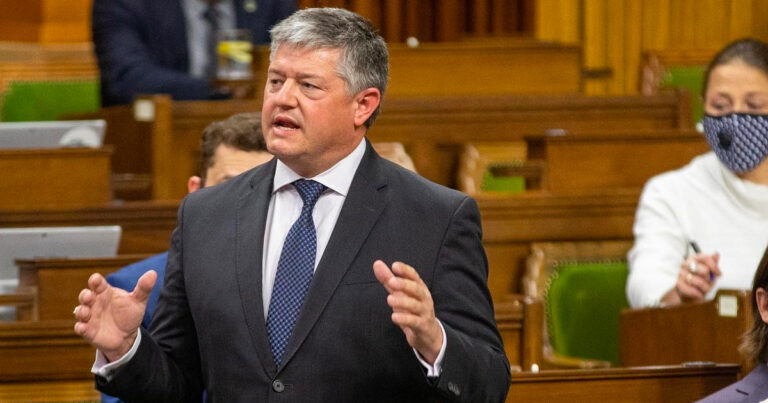
It’s Fake News Friday on the Candice Malcolm Show! Candice looks at the latest developing fake news story line in the legacy media, which is that Pierre Poilievre must be racist because he appeals to too many “white people.”
Rather than critiquing conservatives on substance, lazy journalists would much rather simply hurl insults because apparently having “white people” at your rally is a bad thing.
One substantive critique of Poilievre did come from the CBC – where “experts say” that contrary to Poilievre’s critique of government borrowing and printing of money, the real cause of inflation has little to do with government.“
Government spending is one of many factors pushing prices up — but it’s a relatively modest one,” said one left-wing economist defending Trudeau. “It really doesn’t matter what Canada’s government spends,” said another. You can’t make this stuff up.
Another CBC article goes even further in defending the Trudeau government, telling us that the “pick-up truck tax doesn’t exist” – this despite the tax being listed in a government report released by Trudeau’s Environment Minister.
The CBC may not understand basic math, economics, civics or how laws are passed, but they do understand where their bread is buttered: they exist for the sole purpose of defending Justin Trudeau.
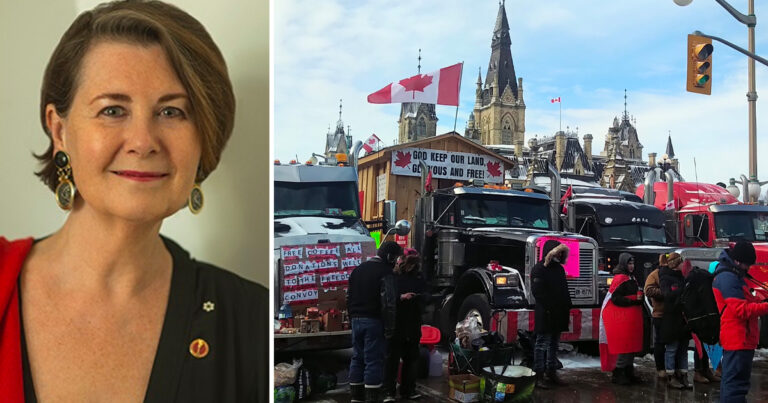
Conservative Party leadership candidate and Independent Ontario MPP Roman Baber has slammed Prime Minister Justin Trudeau for demonizing Freedom Convoy protesters on Parliament Hill last February.
Baber made the comments during an appearance on CBC News’s Power & Politics earlier this week. In the segment, Baber also said that Trudeau’s invocation of the Emergencies Act was groundless.
“There was absolutely no necessity in the declaration of an emergency or riot police against bystanders on the Hill. That was unacceptable. No one regretfully actually discussed the issue at dispute which are the mandates. You shouldn’t force someone to choose between their ability to put food on the table and potentially making healthcare choices that they didn’t want to make,” said Baber.
Baber also went after Trudeau for not meeting with convoy organizers who were calling for an end to COVID-19 mandates across Canada.
.@JustinTrudeau tried to demonize the protestors. But on February 18 we all saw – it was a truly peaceful movement. My remarks on the Freedom Convoy on @PnPCBC.
“The Prime Minister did not have courage to even meet with them, and on February 18 when the government cracked down on protesters we did not see any rioting, any violence any guns or any resistance. The government tried to demonize the protesters, but on February 18, I think Canadians saw this was a truly peaceful movement,” said Baber.
Baber was an early supporter of the Freedom Convoy. On Jan. 26, he tweeted that he supported “truckers and their legal right to peaceful protest. They’re not just standing up for their ability to earn a living. They’re standing up to Justin Trudeau and for our democracy.”
I support the truckers and their legal right to peaceful protest. They're not just standing up for their ability to earn a living. They're standing up to @JustinTrudeau and for our democracy. Keep on rolling, and keep it safe and legal. #onpoli#cdnpoli#IStandWithTruckerspic.twitter.com/HIw2lJKFOG
As the convoy barrelled towards Ottawa, Trudeau called the demonstrators a “fringe minority with unacceptable views.”
“The small fringe minority of people who are on their way to Ottawa, who are holding unacceptable views that they are expressing, do not represent the views of Canadians,” said Trudeau.
During the interview Baber also blasted cancel culture and censorship for quashing people’s ability to have a frank discussion about the pandemic.
“I’m of the view that it’s the censorship, the cancel culture and the inability to have a frank discussion that led to the pandemic response of the last couple years,” said Baber.
Conservative member of parliament Scott Aitchison is seeking the Conservative Party of Canada’s leadership on a platform that’s heavy on policy and emphasizes the importance of building consensus within the party and the country. Aitchison joined True North’s Andrew Lawton to discuss his campaign. In this wide-ranging interview, Lawton and Aitchison discuss carbon taxes, housing affordability, supply management, and the convoy.
A senator appointed by Prime Minister Justin Trudeau has said there was a movement underway – including Liberals – to bring an end to the Trudeau government’s implementation of the Emergencies Act in February, and that the government was aware of that movement on the day it pulled the plug.
Manitoba senator Marilou McPhedran made the comments last week during the closing minutes of a government panel discussion on the 40th anniversary of the Charter of Rights and Freedoms.
A senator appointed by PM Trudeau has said there was a movement underway – including Liberals – to bring an end to the Trudeau government’s implementation of the Emergencies Act in February, and that the government was aware of that movement on the day it pulled the plug. pic.twitter.com/DYkV4XGtN2
“Just to point out that the day on which the declaration was ended by the government, there was already a movement among a significant number of senators and MPs, including some Liberals, to come up with the requisite signatures to begin the process of ending the declaration, and we didn’t end up having to do that,” she said.
“The government was well aware that we were fairly far along in creating that joint letter that was required under this particular section, and instead there was the decision just to suspend.”
Immediately after those remarks, McPhedran concluded the discussion, saying that after 40 years with the Charter, “many of the interpretations that seemed to make sense no longer make sense for Canadian society, as it is now.”
“And so, leaving here today, well, I’m hoping that where we have consensus is the need not only for awareness raising, but actually for much deeper, stronger civics education, charter-based education, not only in our schools, not only in our higher education institutions, but throughout our society. Because if we don’t know our rights, we cannot live our rights.”
True North reached out to McPhedran for clarification about the movement but received no response by time of publication. Trudeau appointed McPhedran to the Senate in 2016 as an independent, after expelling Liberal senators from his caucus in 2014. The move left Trudeau free to appoint senators, but also to call them independent of the Liberal Party.
The Trudeau government invoked the never-before-used Emergencies Act on Feb. 14, saying the legislation’s powers were required to deal with ongoing protests against pandemic restrictions, including the Freedom Convoy in Ottawa.
“There’s a high level of frustration that this situation has gone on as long as it has,” said Trudeau. “Those people have gone from protesting and disagreeing with those (COVID-19) measures, to limiting and blocking the freedoms of their fellow citizens.”
Trudeau refused to revoke the act even after a joint force of municipal, provincial and federal police cracked down on freedom protesters between Feb. 17 and 20. Instead, the Liberal government used NDP support to extend its emergency powers in a parliamentary vote on Feb. 21 – an extension that could have kept them going until mid-March, before they were required to be reviewed.
When the vote was to be confirmed in the upper house, however, senators expressed open frustration with being expected to rubber stamp the Trudeau government’s decision without access to the information that had led to it.
“This is a serious step that we’re contemplating here today,” said Conservative senator Elizabeth Marshall. “What exactly happened that the government decided to invoke the act?…Because it seemed like for three or four weeks, there was nothing, they were just tolerating it.”
Mounting opposition to the government’s decisions both to implement and prolong the Emergencies Act concluded with Trudeau revoking it on Feb. 23.
“The situation is no longer an emergency. Therefore, the federal government will be ending the use of the Emergencies Act,” said Trudeau.
“We are confident that existing laws and by-laws will be sufficient to keep people safe.”
A review committee on the use of the act has been launched, as required by law. Last week, 15 civil rights groups called for the inquiry to be independent and transparent.
“It should not be marred by partisan fights,” petitioners wrote. “We are concerned about the use of state and police powers to suppress constitutional rights.”
True North also reached out to Conservative and Opposition Senate leader Don Plett and will update this story as new information becomes available.
Conservative leadership candidate Pierre Poilievre announced on Thursday that if elected Prime Minister, he would make federal infrastructure funding for municipalities contingent on building homes for Canadians.
A backgrounder on the policy reveals that a Poilievre government would target “severely unaffordable” big cities with a population of over 500,000 – like Toronto and Vancouver – by requiring them to increase their homebuilding by 15% annually.
Cities that fail to reach their target would have some of their funding from the $2.2 billion Canada Community-Building Fund and GST rebate program cut.
“Municipal governments with more than 500,000 people which also have ‘severely unaffordable’ housing, will need to increase dwelling completions by 15% annually or lose up to 15% of their Community Building Fund allocation and GST rebate. The penalty will be equal to the amount by which the municipality misses the target,” the backgrounder described.
Municipalities that have a population of less than 500,000 will not see any changes to their funding, and any amounts withheld from big cities will be redistributed to localities that speed up housing developments within the same province.
Poilievre would also create a penalty for “NIMBYism and gatekeeping” through a system that would allow residents and entrepreneurs to file complaints with the federal government (NIMBY is an acronym for “not in my back yard,” which refers to opposition to local land use developments, often through strict regulations).
“When complaints are well-founded, the federal government will withhold infrastructure dollars from the offending big city politicians until they remove the blockage and home building begin,” the plan outlines.
The $10 billion promised in Budget 2022 by the Liberal government will remain intact, but under Poilievre’s program half of the funding would be shifted away from municipalities and distributed through a Building Bonus towards localities that “remove gatekeepers to boost homebuilding.”
“Municipalities will get $10,000 per home on all growth in their home building, paid out only after the units are built and occupied,” the statement claimed. “To be clear, the $10,000 is not the cost of building or servicing the house. It is a reward for municipalities getting out of the way so that private builders can supply more to homebuyers.”
Requirements will also be in place for municipalities that want infrastructure funding for major transit projects to pre-approve high-density housing on all lands around the proposed sites.
“That will guarantee that low-income people and youth who cannot afford cars can live and work near transit,” the plan outlines.
Additionally, if elected Poilievre would sell off 15% of the federal government’s 37,000 office buildings to companies under the condition that the spaces are transformed into affordable housing units.
Poilievre also pledged to introduce measures to prevent further printing of money to fund government deficits.
Economists are warning Canadians that further interest rate hikes and a recession could be coming very soon.
A new survey by Finder which polled the country’s leading economists found that most agree that the Canadian economy is heading for a recession and that people should brace themselves for its impact.
Of those surveyed, a majority said that it would likely arrive within the first six months of 2023, while a quarter said it could take a year before it begins – coming in early 2024.
New COVID-19 variants, interest rate hikes and inflation were some of the primary reasons behind their concerns.
“Once everyone gets their fun out of their system (this summer), the crash will not be far behind, especially in the face of a subvariant that will place pressures on businesses and the health-care system again,” said senior lecturer of economics at Concordia university Moshe Lander.
Statistics Canada recently reported that inflation had reached 6.7% in March – the highest it has been since January 1991.
Economists expect that the Bank of Canada will engage in “aggressive” rate hikes in the year ahead with a predicted four rate increases this year.
Additionally the outcome of the Ukraine-Russia war could be a determining factor as to when the recession will exactly take place.
“(It) largely depends on how prolonged the supply-side issues will be and the escalation for the Russia-Ukraine war,” said economist Murshed Chowdhury.
Canada’s expected GDP growth also shrank by 15% compared to last year, new International Monetary Fund projections show.
The country is expected to grow its GDP by only 3.9% whereas in 2021 GDP projections sat at 4.6%.
“Multilateral efforts to respond to the humanitarian crisis, prevent further economic fragmentation, maintain global liquidity, manage debt distress, tackle climate change, and end the pandemic are essential,” wrote the IMF.
Buried deep in a Trudeau government report released last month was a proposal to slap a new tax on pick-up trucks – by far the most popular vehicles in Canada. The recommendation attached to Environment Minister Steven Guilbeault’s climate change report called for a tax of anywhere between $1,000 and $4,000.
On today’s episode of the Candice Malcolm Show, Candice is joined by the researcher who found this buried tax proposal and exposed it – Kris Sims of the Canadian Taxpayers Federation (CTF).
Remarkably, after Sims broke the story, Guilbeault went on the attack and called her factual news report “disinformation” and “fake news.” This is the same minister who first drafted Bills C-10 and C-36 that seek to censor and ban so-called disinformation.
The Trudeau government’s loyal CBC stenographer Aaron Wherry was quick to repeat Guilbeault’s talking points in an article that accuses Sims and the CTF of criticizing a “Truck Tax that doesn’t exist.”
Candice and Kris talk about the bizarre world of federal politics where Trudeau government officials deny facts that are published in their own reports, where journalists hold government critics – rather than government officials – to account, the growing cultural divide between the laptop class and the working class, and the brewing culture war over pick-up trucks.
Twenty-seven-year Ontario Progressive Conservative (PC) MPP Toby Barrett has announced he will not run in the upcoming 2022 provincial election.
Initially elected in 1995, Barrett has won a total of seven consecutive elections during his tenure. His riding of Haldimand-Norfolk has been renamed twice in that time, going from Norfolk to Haldimand-Norfolk-Brant in 1999, to its current name in 2007.
Barrett said he leaves provincial politics “(k)nowing that my capable staff and I, over those 27 years, have helped a very large number of people.”
Barrett was elected during former Ontario premier Mike Harris’s “Common Sense Revolution,” which promoted fiscal responsibility and tax reductions – something Barrett said he still believes in.
“Being a fiscal conservative, regardless of which party was in power, I consistently fought red tape, objected to waste, foolish spending and borrowing that jacked up Ontario deficits and debt,” he said.
Barrett has described himself as a riding man, involved in the affairs and issues his constituents face and bringing those concerns to the Ontario legislature.
“The people that I have had the privilege of representing have always come first . . . regardless of their ideology or political affiliation. What remains uppermost in importance is that we continue to fight for our small town and rural way of life in a democratic society where freedom prevails and justice rules.”
During the 2022 Freedom Convoy, Barrett voiced his support for the truckers, saying he was heartened to see Canadians expressing their concerns peacefully on highway overpasses in contrast to those who blockaded Highway 6 in Mar 2020.
During his tenure, Barrett criticized former Liberal premier Dalton McGuinty’s government for the Tobacco Tax act, which affected his riding’s tobacco farming industry. Barrett argued that the tax, which the government was not properly enforcing, led to the creation of illegal smoke shops that would sell contraband cigarettes for lower prices.
Barrett also touts accomplishments outside of his riding.
“I have also consistently been at odds with decision makers on tobacco farmer policy, the 16-year Caledonia debacle and, more recently, my opposition to a city of 40,000 people in the Nanticoke Industrial Park,” he said.
The Ontario PC Party has announced that Mayor of Haldimand County Ken Hewitt will become their candidate for Haldimand-Norfolk in the 2022 general election.
“I am honoured to join Doug Ford and the Ontario PC team in this next step of my career as your candidate for Haldimand-Norfolk, a community I have had the privilege of serving for the last twelve years,” said Hewitt.
Ontario’s general election is set to take place Jun. 2.
The United States has indefinitely extended its ban on unvaccinated foreign nationals crossing its land border. Combined with Canada’s ban on unvaccinated people boarding airplanes, unvaccinated Canadians are still, effectively, trapped in Canada. True North’s Andrew Lawton discusses the latest, plus talks to Canadian veteran James Topp about his march across Canada for freedom. Also, Quebec’s population is in decline but Quebecers want more representation in the House of Commons. University of Calgary political science professor Barry Cooper joins the show to talk about this motion, which even the Conservatives supported.
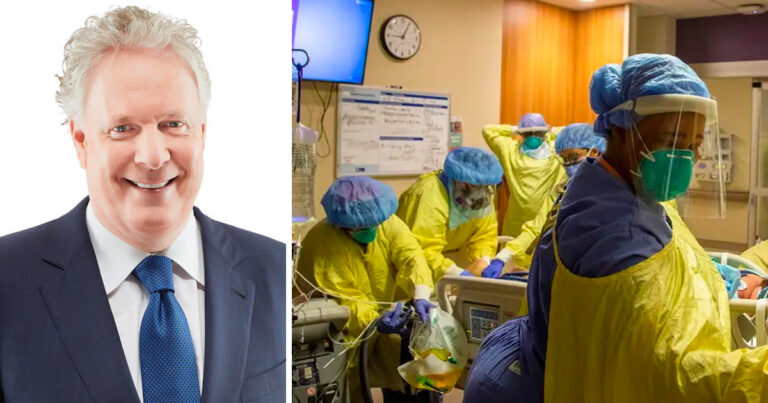
Jean Charest is a leadership candidate for the Conservative Party of Canada.
Our country’s healthcare system is cracking under its own weight. Seven years of big left-wing government, and a pandemic that allowed it to cement its grip over national healthcare policy and subject Canadians to lockdowns, have left us in a state of crisis.
In every category, from ICU and hospital beds per capita to doctors and nurses per capita, to wait times for basic procedures, Canada is near the bottom of Organisation for Economic Co-operation and Development (OECD) rankings, despite spending more than most countries who outperform us.
More empty promises, irresponsible spending or slogans are not the answer. What Canada needs is strong Conservative leadership to unleash healthcare reform and stop the downgrade spiral of degrading healthcare services.
We have politicians that have used this pandemic as an opportunity to exploit people’s real fears and anxieties as a reason to divide us. Canadians have the right to be frustrated with lockdowns and the countless fumbles made by our government throughout the pandemic. However, in Conservative politics that frustration must translate into substantive and serious policy alternatives.
My leadership bid is the only one with a robust stance on healthcare policy, one that can counter the big government mindset that has crept in, to revitalize our healthcare system. Failure to properly address these issues now will mean Canadians’ health remains neglected long into the future.
A Charest government would immediately call an inquiry into the Liberals’ pandemic response. It’s unacceptable that Canada was subjected to more stringent lockdowns than almost anywhere else in the world. For this to happen in a developed country, with some of the world’s leading medical practitioners, demonstrates that our system is in urgent need of innovation and structural change.
The problem with a government that seeks control is that it needed little incentive to go along with lockdowns, rather than seek more accommodating, and responsible, alternatives. Their desire to control healthcare policy, keep the provinces under their thumb and prevent innovation meant that when COVID hit, we had a broken system unable to cope. So, we got locked down.
That was bad enough. But what is even more egregious is that the government has refused to learn its lessons, and instead remains committed to controlling healthcare policy, keeping it out of provincial hands that are better suited to meet demands on the ground.
Just this week, provincial premiers issued a united appeal to the federal government for increased health transfers. Even the NDP premier of British Columbia, John Horgan, decried the government’s gung-ho decision to fund vast new social healthcare programs without the stable healthcare funding that Trudeau’s government promised the provinces seven years ago.
Committing funding to extensive new dental care programs, while the provinces desperately await the funding needed to clear the backlogs of vital surgeries and appointments that have accrued over the past two years illustrates this government’s paternalistic approach. They try to win political plaudits with overreaching schemes, instead of supporting their provincial partners who deliver health care services.
It’s time to untie the hands of the provinces and let them develop their healthcare services based on local needs, without the federal government interfering in their jurisdictions. A Charest government would commit to maintaining the 3% annual increase in the Canada Health Transfer and to renegotiate a long-term agreement. Despite the Liberal’s campaign promise in 2015 to secure a “long-term agreement on funding”, seven years later the provinces remain united in their criticism of Trudeau’s government failure to deliver.
With the health of Canadians on the line, a delay is no longer an option. My whole political life I have advocated for each province to determine the right healthcare delivery model that works for them, under the core principles of universality and affordability. My Conservative government, following consultations with provinces, would table a new National Healthcare Act to reform the Canada Health Act.
Recently, my leadership campaign released a comprehensive, Conservative healthcare policy that would be implemented by a Charest government. As well as unshackling the provinces, it would empower healthcare workers and prepare us for the future by investing in Canadian supply chains, clearing backlogs, and improving access to critical medicines.
The last point is one where this government is ideologically opposed to the private sector. Arcane regulations have prevented people suffering from rare diseases from getting access to the lifesaving drugs they need. Cystic Fibrosis Canada has been lobbying the federal agency and health minister for access to critical medicines, as people with the disease cannot get access to vital medicine produced solely by American pharmaceutical companies.
The logic of preventing access to such drugs while another respiratory illness ripped through our country, is baffling. My government would review Health Canada’s regulatory processes to ensure rigorous swift procurement and supply of critical medicines. Simply put, it would get the federal government out of the medical red tape business and let doctors care for patients.
Big government is not the solution. Canada needs responsible government that will treat health care as a true national legacy and one that will finally give the provinces the freedom to innovate and deliver efficient quality health services.
Canadians deserve better. They deserve a government that tackles the healthcare crisis with true leadership with the provinces and policy solutions that commit our country to caring for those who need a compassionate healthcare system.