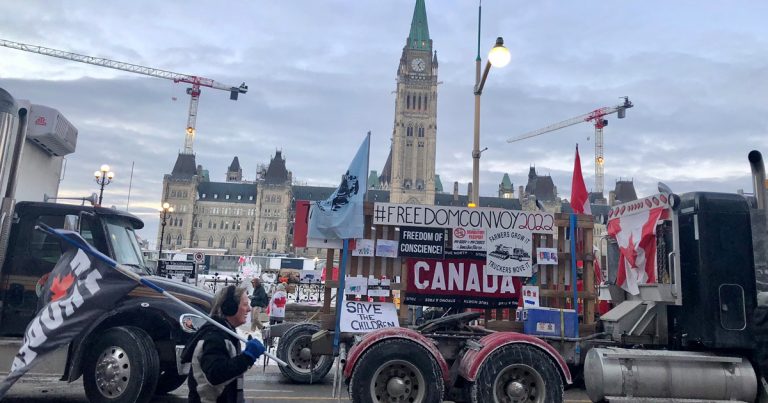
The head of Foreign Affairs for the Bharatiya Janata Party – one of India’s two largest political bodies – has called out Prime Minister Justin Trudeau for invoking the Emergencies Actto quash ongoing trucker convoy protests.
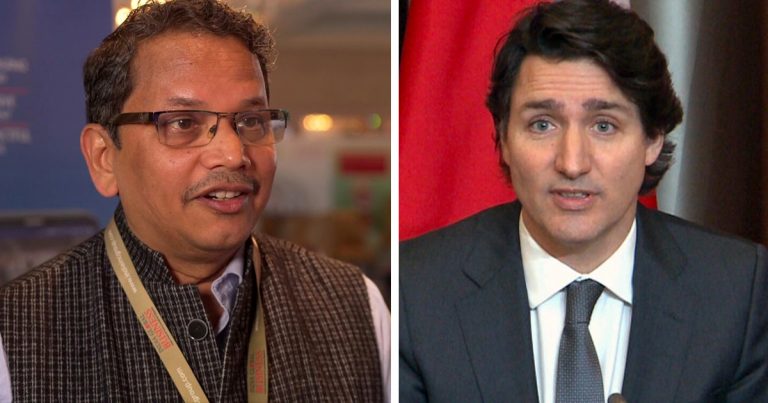
Dr. Vijay Chauthaiwale, who is a molecular biologist, blasted Trudeau’s hypocrisy on Tuesday, pointing to the fact that the prime minister supported ongoing protests in India in 2020.
“And this was (Justin Trudeau) when there were street protests in India ‘Canada will always be there to defend the rights of peaceful protesters,’ Chatuhaiwale tweeted in response to an article about the Liberals pledging to freeze the bank accounts of protestors.
And this was @JustinTrudeau when there were street protests in India "Canada will always be there to defend the rights of peaceful protesters" @CanadainIndia
When farmer protests rolled through India that year, Trudeau was criticized by the Indian government for his stance.
“Canada will always stand for the rights of peaceful protests anywhere in the world and we are pleased to see moves towards de-escalation and dialogue,” Trudeau had said of the India protests.
“Such actions, if continued, would have a seriously damaging impact on ties between India and Canada,” India’s Ministry of External Affairs wrote at the time of Trudeau’s stance.
Trudeau also negotiated with anti-pipeline protesters that same year who blockaded critical infrastructure and set train tracks on fire. He also appeared in solidarity with a Black Lives Matter protest in 2021 as riots and violence erupted throughout the United States.
Trudeau has been facing flack from the opposition in the House of Commons after invoking the Act on Monday and pledging to crack down on the peaceful protests seeking to end COVID-19 mandates across Canada.
“He name-calls people that he disagrees with, he wedges, he divides, he stigmatizes, yet in spite of all of his failure, the Coutts border has cleared, Windsor has opened up,” said interim Conservative leader Candice Bergen. “Provinces and police are doing their jobs, and blockades are starting to come down, but the prime minister thinks that now is the time to use this extreme measure and invoke the Emergencies Act. Isn’t it true that the prime minister’s actions can serve to actually make things worse and not make things better?.”
“This is about keeping Canadians safe, protecting their communities and neighbourhoods and ensuring jobs in our economy,” said Trudeau.
Despite Trueau’s move to suspend civil liberties and grant law enforcement additional powers, police have already managed to disperse truckers in Coutts, Alberta.
Not long before, the Ambassador Bridge standstill was also cleared.
Several civil and legal rights organizations have come out against Trudeau’s invocation of the act, saying it is unnecessary in the face of existing powers and that the current situation in Canada does not meet the high threshold necessary for its enactment.
Why did Justin Trudeau invoke the Emergencies Act? Did the Trucker Convoy movement really warrant drastic and sweeping new federal powers?
Using existing powers, courts and judges already stopped the truckers from honking, broke up the blockade on the Ambassador bridge connecting Windsor and Detroit, and seized millions of dollars that had been donated to the truckers.
What more does Trudeau want?
On today’s episode of the Candice Malcolm Show, Candice breaks down the facts leading up to this shocking announcement and outlines the three reasons she thinks are really behind this unprecedented power grab.
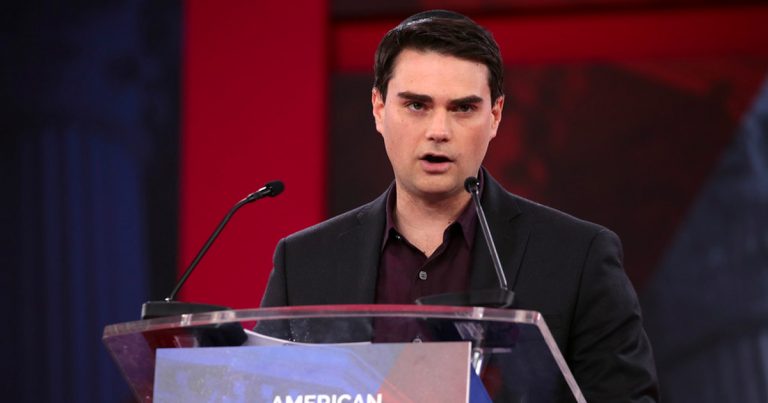
Prominent American political commentator Ben Shapiro has skewered Prime Minister Justin Trudeau for invoking the Emergencies Act to deal with peaceful protests across Canada.
“Justin Trudeau (who is definitely not Fidel Castro’s son!) cannot explain the legal basis for invoking the Emergencies Act, but he’s got his finance minister out there announcing that banks can freeze your account without a court order anyway if you donate to the truckers,” said Shapiro in a tweet on Tuesday.
Shapiro declared that Trudeau’s implementation of the Emergencies Act was “tyranny” and “a clarifying moment,” saying that for generations, the left has “promised that if they are handed emergency powers, they will protect citizens.”
Justin Trudeau (who is definitely not Fidel Castro's son!) cannot explain the legal basis for invoking the Emergencies Act, but he's got his finance minister out there announcing that banks can freeze your account without a court order anyway if you donate to the truckers.
The COVID-19 pandemic, Shapiro added, has proven that this promise is a lie because “centralized power often achieves precisely the opposite of its intended purpose.”
“Faced with the debunking of their generations-long promise, the left has two choices: (1) Abandon the faith or (2) burn the heretics,” he said. “Guess which one they’re choosing.”
Shapiro also chastized Trudeau for characterizing the protestors in the Freedom Convoy as a fringe minority.
“This sort of tactic, which Trudeau is picking up from the American left, is likely to be wildly unsuccessful,” he said in an interview on America’s Newsroom on Fox News last week. “Everybody can look at this convoy and see that they are not flying Nazi flags en masse, that these are not radical right-wingers.”
Trudeau invoked the Emergencies Act for the first time in Canadian history on Monday to give the federal government extra powers to manage the trucker protests.
“It is now clear that there are serious challenges to law enforcement’s ability to effectively enforce the law,” he said.
Trudeau said the Emergencies Act would give police more power to break up public gatherings deemed illegal and dangerous, including blockades and occupations.
The RCMP, he said, could enforce municipal bylaws and provincial offences where needed.
The Liberals also announced they were giving themselves sweeping financial powers on Monday.
Finance Minister Chrystia Freeland said that crowdfunding platforms would have to register with the Financial Transactions and Reports Analysis Centre of Canada (FINTRAC) under the Emergencies Act. She added that crowdfunding platforms would also have to report large and suspicious transactions to FINTRAC.
“We are making these changes because we know these platforms are being used to support illegal blockades and illegal activity, which is damaging the Canadian economy,” said Freeland.
The Freedom Convoy entered its 24th day on Tuesday.
Prime Minister Justin Trudeau is seeking to invoke the Emergencies Act because of the trucker convoy, which has been situated in Ottawa for coming up on three weeks. The government is not only trying to give more power to police, but also to banks, which will be expected to snitch on anyone they suspect of being involved in the convoy and even freeze their bank accounts.
True North’s Andrew Lawton talks about all this and takes your questions in this live edition of the show
Also, he is joined by Canadian Constitution Foundation litigation director Christine Van Geyn to discuss the constitutionality of the Emergencies Act.
Canadian civil rights and legal organizations across the political spectrum have come out squarely against Prime Minister Justin Trudeau’s decision to implement the Emergencies Act to deal with trucker protests.
The Canadian Civil Liberties Association (CCLA), the Canadian Centre for Constitutional Freedoms (CCCF) and the Canadian Constitution Foundation (CCF) have all released statements opposing Trudeau’s announcement on Monday, saying the current situation does not meet the high threshold required for the extraordinary legislation to be enacted.
“Governments regularly deal with difficult situations, and do so using powers granted to them by democratically elected representatives,” said the CCLA in a press release Tuesday. “Emergency legislation should not be normalized. It threatens our democracy and our civil liberties.”
The federal government has not met the threshold necessary to invoke the Emergencies Act. This law creates a high and clear standard for good reason: the Act allows government to bypass ordinary democratic processes. This standard has not been met. 1/3
— Canadian Civil Liberties Association (@cancivlib) February 15, 2022
Alongside grassroots protests calling for an end to ongoing COVID restrictions and mandates, blockades at border-crossings have sprung up in British Columbia, Alberta, Manitoba and Ontario.
Despite all but the Manitoba blockade being reopened by Tuesday and the premier of Manitoba saying the Emergencies Act was unnecessary to address it, the Trudeau government announced that it was invoking the Emergencies Act – including adding sweeping financial powers – to protect the country’s economy.
“We are making these changes because we know that these platforms are being used to support illegal blockades and illegal activity which is damaging the Canadian economy,” Liberal finance minister Chrystia Freeland said on Monday.
BREAKING: Canada is now regulating crowdfunding platforms and crypto currency under the Terrorist Financing Act. pic.twitter.com/SMzVqonD8v
The CCLA pointed out that that the Emergencies Act “can only be invoked, according to its own terms, when a situation “seriously endangers the lives, health or safety of Canadians and is of such proportions or nature as to exceed the capacity or authority of a province to deal with it” or “seriously threatens the ability of the Government of Canada to preserve the sovereignty, security and territorial integrity of Canada” and when the situation “cannot be effectively dealt with under any other law of Canada.”
“The Emergencies Act is there to address these kinds of extreme threats to Canada, not to protect the economy.”
The JCCF, which has been on the ground in Ottawa working with Freedom Convoy organizers from the beginning, characterized Trudeau’s use of the Emergencies Act as a farcical overreach of federal powers.
“Prime Minister Pierre Trudeau used the War Measures Act in 1970 to deal with violence, kidnapping and murder committed by terrorists in Quebec,” said JCCF lawyer Jay Cameron on Monday. “Today, Prime Minister Justin Trudeau is considering using the Emergencies Act to deal with bouncy castles and ball hockey.”
“Peaceful protesters who feed the homeless, shovel snow, pick up garbage, dance in the streets, play street hockey, wave Canadian flags, sing the national anthem and set up bouncy castles for children do not ‘seriously endanger the lives, health or safety of Canadians,’ nor are these peaceful activities ‘of such proportions or nature as to exceed the capacity or authority of a province to deal with it.’”
Among the premiers – whose support Trudeau does not need – only Ontario’s Doug Ford has publicly endorsed the prime minister’s adoption of the measure, but did so after the Ambassador Bridge blockade had already been cleared.
“Provincial police forces already possess all of the powers necessary to enforce the law and keep the peace, as demonstrated in the Ontario Provincial Police’s successful clearing of the Ambassador Bridge,” said the CCF on Monday.
“It’s more a logistical challenge than a threat to the integrity of the country,” the Macdonald-Laurier Institute’s Aaron Wudrick told the Wall Street Journal. Wudrick added, however, that several powers in the Emergencies Act – including compelling tow-truck drivers to help police move trucks – are a problem.
“It seems to me that compelling individuals against their will to help the government seems like a suspension of civil liberties.”
Justin Trudeau says the freedom convoy protesters are “limiting the freedoms of their fellow citizens.” He just invoked the Emergencies Act. pic.twitter.com/UNmXsoB43k
The Emergencies Act has never before been used in Canada, not even during the 1990 Oka Crisis that saw nearly 5000 soldiers deployed, 2 deaths and more than 100 injuries. The Act was not used on 9/11 nor during the 2014 Parliament Hill terror attack.
Trudeau had originally floated using the Emergencies Act in April 2020 at the start of the pandemic but was resoundingly opposed by the premiers. B.C. premier John Horgan is reported to have become so angry over the idea that he swore out loud.
As of Tuesday afternoon, Trudeau had yet to present to Parliament the required plan and justification for invoking the Act.
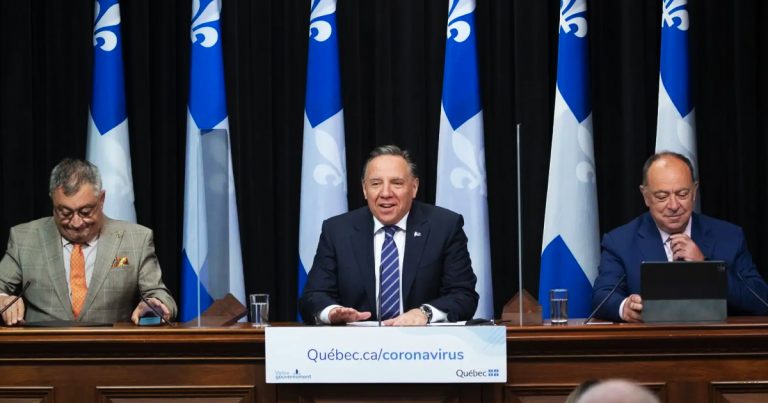
Quebecers will soon no longer have to show vaccine passports to access basic services and goods.
On Tuesday afternoon, Quebec premier Francois Legault announced that the province would completely phase out its vaccine passport system by March 14.
“We’re doing it because it’s the right time to do it – because it’s safe for public health. And as I said, it’s there when we need it,” said Quebec health minister Christian Dubé.
As of Feb. 16, Quebecers will no longer need to present proof of vaccination to enter big-box stores, liquor or cannabis stories.
By Feb. 21, Quebecers will not need to show their vaccine passports to enter places of worship or funerals.
Quebec will gradually lift its harsh vaccine mandates that limit access to groceries. Unvaccinated Quebecers will be able to go shopping at Walmart/Costco & for booze/pot starting tomorrow. They'll be allowed back into churches on Feb 21. Remaining mandates will lift on Mar 14. pic.twitter.com/F61LAchqxo
Since the freedom convoy began, multiple provinces have dropped their public health restrictions.
Quebec now joins Saskatchewan, Alberta, Manitoba, PEI and Ontario in phasing out its vaccine passport system.
As for Quebec’s announcement last month that its vaccine passports would soon require booster shots to remain valid, interim director of public health Dr. Luc Boileau said that it was unfeasible.
“We cannot move forward with a standardized vaccine passport with three doses because a lot of Quebecers, at least two million, maybe 2.5 or three million, have been infected recently, and we suggest they wait until eight to 12 weeks before receiving the third doses,” he said.
The latest decision to abandon the vaccine passport system is a total reversal to Quebec’s prior approach to the pandemic, which saw the province impose some of the harshest measures in the Western world.
In January, Legault was entertaining the idea of instituting a health tax for unvaccinated residents in the province. Additionally, the Quebec government moved to ban unvaccinated Canadians from big box stores, requiring them to have store escorts to enter pharmacy sections.
Masks will continue to be required for Quebec schools, however, and domestic travel by air or rail for unvaccinated Canadians remains prohibited.
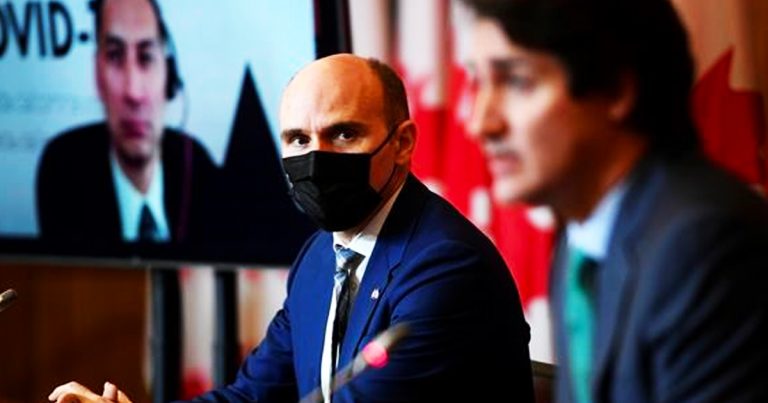
Federal health minister Jean-Yves Dulos announced on Monday that the federal government would be easing multiple travel restrictions for vaccinated Canadians.
As of Feb. 28, Canadians will have the option of presenting a negative rapid antigen test or a molecular PCR test in order to meet pre-entry requirements.
Unvaccinated Canadians will still be required to be tested on arrival, and a mandatory 14-day quarantine is still in force, but unvaccinated children will no longer have to self-isolate for 14 days before returning to school or daycare.
Travelers can still be subject to random molecular tests at the airport but will not be required to enter quarantine while they wait for their results.
The federal government is also adjusting its travel health notice and will no longer advise Canadians to travel for essential purposes only.
Despite the changes, unvaccinated Canadians are still barred from boarding domestic and international flights or rail.
The decision to alter travel requirements comes one day after Prime Minister Justin Trudeau invoked the Emergencies Act to quash protests demanding the end of COVID-19 restrictions across Canada.
On Tuesday, the Quebec government also announced that it would be phasing out its vaccine passport system beginning on March 14.
The travel industry has been hard hit by federal and provincial COVID-19 public health orders.
Estimates claim that tourism in Canada collapsed by over 50% during the pandemic. Before the outbreak of COVID-19 in Canada, the industry was producing $105 billion in revenue a year but after lockdowns that fell to $53 billion.
Recently, the Crown corporation VIA Rail asked the federal government for a taxpayer bailout after it faced a 98% decline in revenues due to federal vaccine mandates and restrictions.
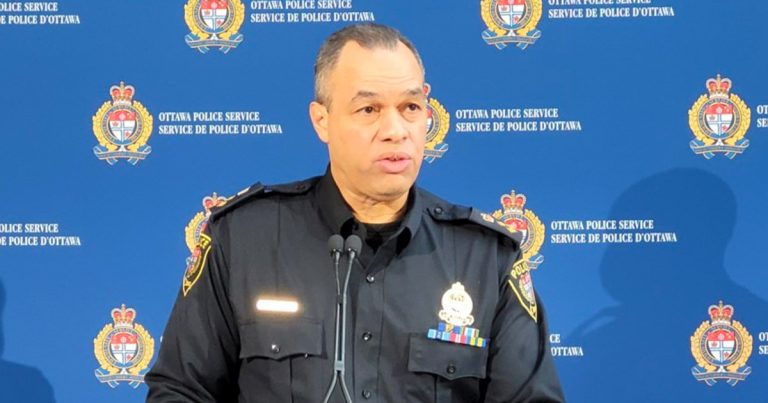
Ottawa Police Chief Peter Sloly has resigned from his position after facing criticism for his handling of the Ottawa freedom protests.
Sloly was in charge of coordinating law enforcement operations in the city and responding to the demonstrations on Parliament Hill which have entered their third week.
Sloly sent his resignation to Ottawa police services board chair Diane Deans on Monday.
Sloly is reportedly to be replaced by Deputy Chief Steve Bell.
The Ottawa police board will hold a public meeting on Tuesday at 2:30 p.m. EST but has been behind closed doors since this morning.
First named chief in August 2019, Sloly left the job with two years left on a contract set to end in 2024.
Prior to his departure, Sloly alongside Ottawa Mayor Jim Watson requested 1,800 additional law enforcement officers to help end the protest.
“I came here to do a job and I’m going to get that job done all the way through,” Sloly stated last week.
On Monday, Prime Minister Justin Trudeau invoked the Emergencies Act to increase the powers of law enforcement to quash the protests. The Act would also allow the federal government to play a larger role in coordinating the response to the Canada-wide demonstrations against COVID-19 mandates.
The Liberals have seven days to table a plan and justification of their decision to Parliament which will then vote on whether to enable the government to adopt emergency powers.
Part of the act will allow banks to freeze funds of truckers without a court order and for government bodies to cancel their insurance.
Despite invoking the Emergencies Act, Trudeau had claimed last week that he didn’t believe “the contention that the city of Ottawa has exhausted its tools and resources.”
Police chair Deans, who received Sloly’s resignation, has described the Ottawa protest as “treason” and an “insurrection.”
“We all need to work together. This is not something this country has ever seen before,” said Deans last week. “I understand Mark Carney referred to it as sedition today. I think that’s exactly what it is.”
“This is treason. This is way bigger. This is a group of well-polished professional people that are trying to overthrow the government.”
The Freedom Convoy entered its 24th day on Tuesday.
Invoking the Emergencies Act – the most sweeping set of powers available to a Canadian prime minister, the act that replaced the War Measures Act – only confirms Justin Trudeau’s complete and utter failure at dealing with a positive, optimistic and peaceful grassroots movement.
This comes 18 days after he dismissed this movement as a “small fringe minority.”
The Freedom Convoy will go down in history as one of the most powerful and effective protests our country has ever seen. It has inspired “Canadian-style” freedom convoys all over the world, overzealous rules are being removed and failed leaders are being replaced.
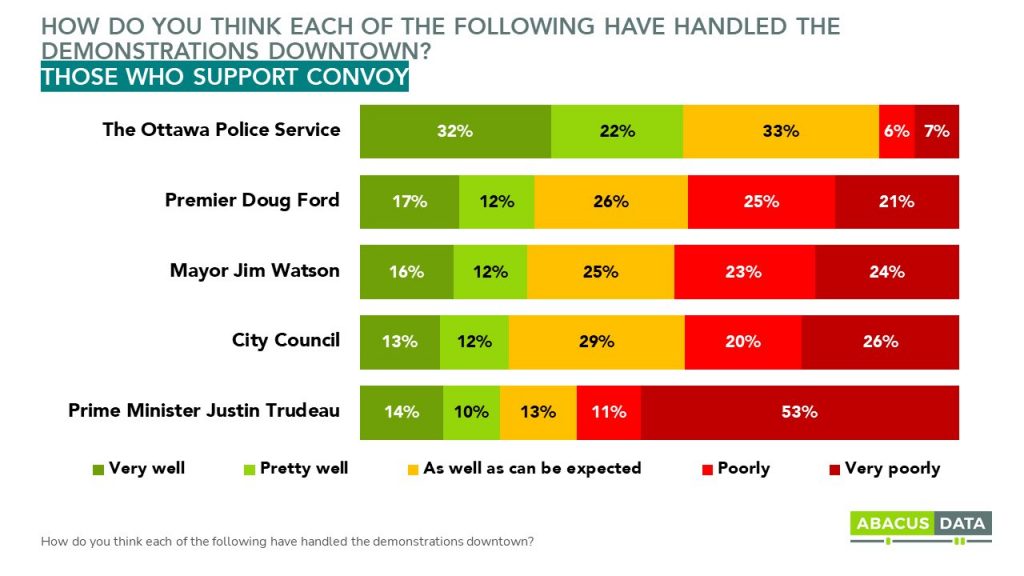
Trudeau has been absent all weekend, hiding out somewhere, having closed-door meetings with no updates and showing no leadership whatsoever. This comes one week after a poll showing BOTH sides of the convoy blame Trudeau the most out of anyone for how the demonstrations have been handled.
Abacus Data.Abacus Data.
After initially fanning the flames, smearing the truckers and sounding remarkably delusional and out of touch, Trudeau stepped back. He seemed to acknowledge he was making things worse, so he almost disappeared, waiting for someone else to solve the problem. Police, Mayor, Premier?
This is where things get really interesting. One of the most remarkable things about the protests is the relaxed, almost supportive attitude of the police. Many seem simply unwilling to arrest or break up these protesters (even when they’ve crossed into civil disobedience).
This has clearly triggered Ottawa journalists. They are fuming and furious that the police aren’t cracking down, towing the trucks, issuing mass fines and arresting the protesters. They desperately want the police to do Trudeau’s dirty work and end this thing.
Instead, we see many videos like this (that angered the journalists and led the Ontario Provincial Police to launch an investigation):
This is OPP pretty much cheering these people on as they get to ‘Ottawa’.
“Wait till you get there 😏” “I get what you guys are doing” “I support you guys 100%”
— Coalition Against More Surveillance (@CAMSOttawa) February 13, 2022
The police are trying to de-escalate tensions, keep the peace. But also, culturally, they’re on the same side as the truckers.
They don’t want to arrest their friends – guys they play hockey with, people they go to church with, or went to high school with. They don’t want to stop people who are (rightly and bravely) standing up against unjust and illiberal laws, especially when public opinion has so sharply shifted.
A new Ipsos poll found that 46% of respondents said that the grievances expressed by the protestors are “legitimate and worthy” of sympathy.
So suddenly Trudeau wakes up, realizes he’s lost control and that every day he’s absent is another day the protesters are emboldened and his supporters think he’s failed. So he leaks to the media that emergency measures are coming and that he will come out this afternoon swinging.
Unfortunately for Trudeau, his sweeping powers need to be enforced by someone. The police, the military, the towing companies have all to varying degrees thus far refused. Will issuing stronger, louder warnings in his grown-up voice change their minds?
Unfortunately for Trudeau, his sweeping powers need to be enforced by someone. The police, the military, the towing companies have all to varying degrees thus far refused. Will issuing stronger, louder warnings in his serious up voice change their minds? pic.twitter.com/RW279L7aX6
Or will issuing *yet another* set of “temporary and emergency” powers (after two bloody years of “temporary and emergency” powers) simply expose a leader who is angry, out-of-touch and more interested in fortifying his own power than in doing what is right for Canada?
It’s a serious gamble, one that requires others to do the heavy lifting and be on the front line against peaceful protesters, families, blue collar workers, veterans and the diverse group of Canadians who want their freedoms back.
Final point here (aimed at those claiming law and order conservatives are hypocrites for supporting the convoy):
The rule of law is based on the principle that laws are just, equal and fair. Bad laws undermine the rule of law and need to be stopped. That’s what this is all about.