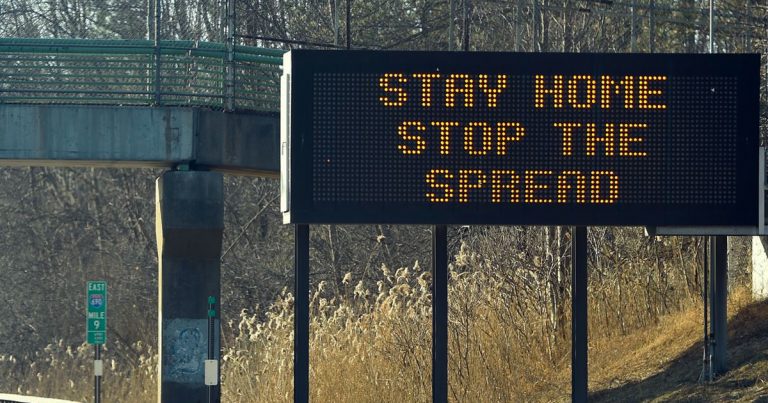
The Canadian workforce has been heavily impacted by government lockdowns and the full extent of the damage caused by public health measures is not yet known.
As first reported by Blacklock’s Reporter, a Department of Industry report revealed that lockdowns have cost at least 740,800 jobs in small businesses – a 9% decline compared to the previous year.
Prior to the pandemic, small business employees comprised approximately 68% of the Canadian workforce – 7.7 million employees.
According to Key Small Business Statistics 2021, lockdowns had the largest impact on Prince Edward Island as the province lost 13% of small business jobs. Public health measures had an impact on all provinces: British Columbia (12%), Alberta (11%), Québec (9%), Saskatchewan (8%), Newfoundland and Labrador (8%), Ontario (7%), Nova Scotia (7%), Manitoba (6%), New Brunswick (4%).
The government report warns that the damage of lockdowns is so severe that it will take time to analyze the full extent of the jobs lost.
“How many businesses appear and disappear each year? In 2020 the COVID-19 pandemic likely impacted business entries and exits,” said the report.
“However since the most recently available data on business creation and destruction are for the year 2018 these impacts are beyond the scope of this report.”
Small business owners have had to take on massive amounts of debt in order to stay afloat during the pandemic.
According to a report by The Canadian Federation of Independent Business (CFIB) in September, business owners have had to rack up $138 billion in debt.
“Actual repayment of this debt will be the next big obstacle small businesses will face. Many are still seeing a slow pickup in revenues, capacity restrictions and uncertainty heading into the fall and winter,” said CFIB Senior Vice-President Corinne Pohlmann.
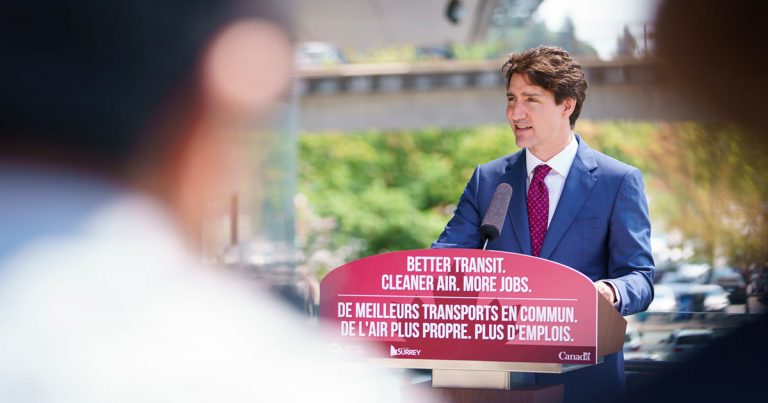
In the first year of the COVID-19 pandemic, expenses in Prime Minister Justin Trudeau’s office increased by 6.9% to $10.5 million.
According to the government’s public accounts for 2020-2021, spending for all ministerial offices, including the Prime Minister’s Office (PMO), reached $68.21 million. The majority of the spending, $67.3 million, was spent on personnel.
When The Hill Times reached out to the PMO for comment, a spokesperson blamed the pandemic for the increase in spending and that its spending is “in line with or lower than some previous governments.”
“The COVID-19 pandemic has had a significant impact on Canadians’ lives and the way they work. Workplaces needed to adjust to the new reality to ensure public health and continued operations. The Prime Minister’s Office was no exception,” the PMO spokesperson said.
After Trudeau’s office, then-government House leader Pablo Rodriquez was the highest-spending office with $2.96 million. Deputy Prime Minister Chrystia Freeland’s office closely followed at $2.93 million.
The pandemic has had devastating effects on the livelihoods of Canadians, as many businesses were forced to shut down.
In May of 2020, Statistics Canada reported that unemployment in Canada reached its highest level in the agency’s history.
“The unemployment rate was 13.7% in May, the highest rate recorded since comparable data became available in 1976. In February, prior to the COVID-19 economic shutdown, the unemployment rate was 5.6%. It increased to 7.8% in March and 13.0% in April,” StatsCan said at the time.
Meanwhile, the federal government spent money at unprecedented levels. In the first 8 months of the pandemic, Trudeau spent $240 billion. In the government’s latest fiscal update, Canada’s debt is expected to reach $1.2 trillion by the end of this fiscal year.
The government’s spending has resulted in an inflation crisis which has increased the cost of goods for Canadian consumers.
According to Canadian Taxpayers Federation Federal Director Franco Terrazzano, it’s time for the federal government to start curbing back spending.
“The stats are showing what everyone is feeling: pain from sky-high cost of living. It’s time for the feds to take the printing press out of overdrive, rein in the overspending and provide tax relief.”
An Alberta government report into environmental activist groups found that foreign donors have poured $1.3 billion into Canada to fight oil and gas development. The Canadian Energy News Network strives to tout the sector’s positive and counter the negatives from those well-funded activists.
Cody Ciona from the Canadian Energy News Network joined The Andrew Lawton Show to discuss some of the bigger picture challenges the sector is facing, but why he’s optimistic about the year ahead.
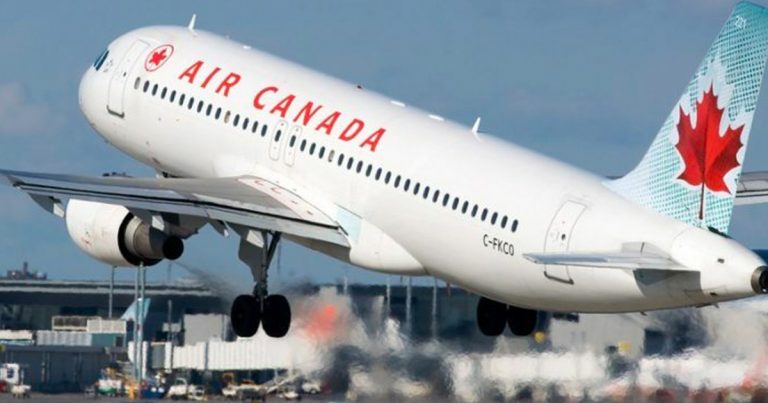
Internal surveys by the Privy Council Office show that Canadians are unhappy with the federal government’s decision to bail out Air Canada.
According to Blacklock’s Reporter, the results were revealed in a report titled Continuous Qualitative Data Collection Of Canadians’ Views.
The survey showed that some Canadians were “vehemently opposed to the deal, questioning why the federal government should be required to step in to assist a failing company.”
“They saw the deal as a significant burden on taxpayers and generally held the view that private sector businesses should not need to rely on government funding to stay afloat,” researchers wrote.
“When told the Government of Canada had purchased stock in Air Canada, some then wondered about the federal governments’ investments in other publicly traded companies.”
Those opposed to the bailout “were of the view taxpayers should not be on the hook for assistance to companies like Air Canada.”
The study cost $1.6 million and was conducted by the Strategic Counsel in the form of focus groups.
In April 2020, the Liberal government pushed through a repurchase of $500 million in Air Canada stock even though the Canadian government had privatized the company three decades ago.
At the time, Finance Minister Chrystia Freeland called the investment a “good deal.”
“This is a good and fair deal for Canada,” said Freeland. “Taxpayers aren’t footing the bill, this is a loan.”
At the height of the pandemic, Air Canada executives were forced to walk back on $10 million in bonuses after a public outcry. The bonuses were due to be paid out despite the deal with the federal government capping executive salaries at $1 million a year.
Air Canada and other airlines have been in dire straits due to a significant decline in air travel during the COVID-19 pandemic.
During a June 2020 submission to the Commons health committee, executives stated that it could take a long time to get back in the black.
“We don’t see our business recovering for another three years,” said Air Canada vice-president Ferio Pugliese.
2021 was a great year for our organization! We broke big stories, exposed corruption and abuse in the government, travelled around the country to tell different stories and interviewed the top newsmakers and elected officials in the conservative movement.
On top of all this, we massively expanded our audience and hired several new reporters, producers and contributors. At a time when the legacy media is failing, laying off journalists and begging the government for bailouts, True North is growing at a serious clip!
That’s because, unlike the legacy media, we’re willing to criticize the Trudeau Liberals, fight back against Woke insanity, expose excessive government overreach and tell the other side of the story – no matter how politically correct it may be.
It’s also because we have the best audience in Canada!
On today’s episode of The Candice Malcolm Show, Candice is joined by True North’s Andrew Lawton to discuss the high points of 2021 and give a preview of what’s in store for 2022.
Canada has seen its share of weird, heartless and even contradictory COVID restrictions over the past two years, all in the name of keeping us safe.
With another holiday season upon us and government lockdowns coming down yet again, True North has gathered together some of the strangest and most heartless restrictions and recommendations from across the country.
Not all provinces are represented below, and the restrictions we’ve chosen may also be in regions we haven’t listed. Readers who want to let True North know about any noteworthy restrictions specific to their own region are invited to send us an email.
Dishonourable mention: Putting capacity limits on ski-trails and toboggan hills (Ottawa)
You’d think it would be harder for COVID to get you if you’re racing down a hill on skis or a toboggan. But apparently in Ottawa, you’re safer if you’re sitting still.
Ottawa eventually banned sledding at the city’s most popular hill last January.
10. Needing to show a vaccine passport to get into a museum but not a library (Manitoba).
Because in Manitoba, COVID doesn’t like to read over the holidays but apparently is sophisticated enough to want to take in a historical exhibit. What happens if you dare to read something in a museum?
9. Recommending a “virtual ugly holiday sweater party” instead of a real Christmas party (Yukon).
Are government lockdowns preventing you from seeing loved ones in-person over the holidays? Not to worry! The Yukon government web page lists a variety of alternatives to an in-person get-together. One, “hold a virtual ugly holiday sweater party,” includes all the steps and instructions, including step two: “create or buy an ugly holiday sweater.” Thanks, government!
Nunavut wins this one for specifying that there’s no singing in church. In Ontario, you can still sing publicly if you’re a professional – so if you do karaoke with your friends, make sure they throw money at you.
Nova Scotia gets an honourable mention for allowing solos but no choirs.
Yukon gets another for recommending against “chanting” and “shouting.” We’re not sure about yodeling.
Where’s Kevin Bacon when you need him? No, this isn’t the set of Footloose – some Canadian provinces really banned dancing.
B.C. wants “no dancing” and “no mingling” this Christmas – just masked people trying to speak across their tables from their socially distanced chairs. Ontario allows dancing, but – as with singing – only if you’re a professional.
Nova Scotia gets an honourable mention for allowing masked dancing, thereby turning every club into a cheap masquerade.
6. Making parents show vaccine passports to see their children at school (Nova Scotia).
True North broke the story that Nova Scotia’s school boards were making parents show proof of vaccination to visit their children’s schools – even though the policy specifically excludes parents. Not that it mattered – the government cancelled all concerts and shut down the schools over COVID a few days later.
5. Advising double-vaccinated people to stay away from triple-vaccinated relatives (Ontario)
Ontario’s chief medical officer of health Kieran Moore doubled down on his recommendation in October that children should say “trick or treat” quietly – this time by suggesting that fully-vaccinated adults should still stay away from their triple-vaccinated loved ones this Christmas. Good luck with that one…
4. Allowing grocery stores to bar unvaccinated customers (New Brunswick)
Until recently, New Brunswick had given food retailers the option of denying entry to unvaccinated individuals. At least one business went for it. True North helped shine a light on the policy, and major backlash forced the government to reverse it.
3. Unvaccinated people can’t attend worship (Quebec, B.C.)
Remember that time Jesus said, “Give me your tired, your poor…but only if they’re fully vaccinated?” Yeah, me neither.
Quebec’s new winter lockdowns include needing a vaccine passport to enter a house of God. The one exception is if you’re homeless, making it the first time ever that someone has needed to show a lack of identification to get past security.
In B.C., only the Northern Health region has ordered places of worship to bar unvaccinated worshipers from buildings. As True North reported, the order hasn’t deterred some courageous pastors in Prince George and Smithers.
All travelers entering N.L. must isolate for five days and pass a rapid test each day in order to be released. The government brought in the restriction on Dec. 21 – too late for holiday travellers to work around it. Family get-togethers have been ruined.
Fully-vaccinated travellers entering P.E.I. must isolate for four days, even with a negative test. Unvaccinated people must isolate for 8 days. As with Newfoundland & Labrador, the P.E.I. government brought in the restriction too late for holiday travellers to make accommodations (Dec. 22), derailing long-anticipated reunions.
1. No get-togethers for unvaccinated people. At all. (B.C.).
B.C.’s chief medical officer of health Bonnie Henry takes the (fruit)cake this season for denying unvaccinated Canadians the warmth of kith and kin. But what do you expect from someone who cancelled all weddings, concerts and New Year’s parties too?
On today’s episode of The Candice Malcolm Show, Candice is joined by True North’s own Andrew Lawton to discuss the biggest stories of the year – including the ones the media got wrong.
They each chose their top news story, the biggest story the legacy media ignored, and the biggest fake news narrative of the year, and they discuss each one in-depth on this special episode.
The legacy media gets so many things wrong, it’s hard to pick the worst examples! Tune in to see if your choices match Candice’s and Andrew’s, and let us know in the comments if you agree.
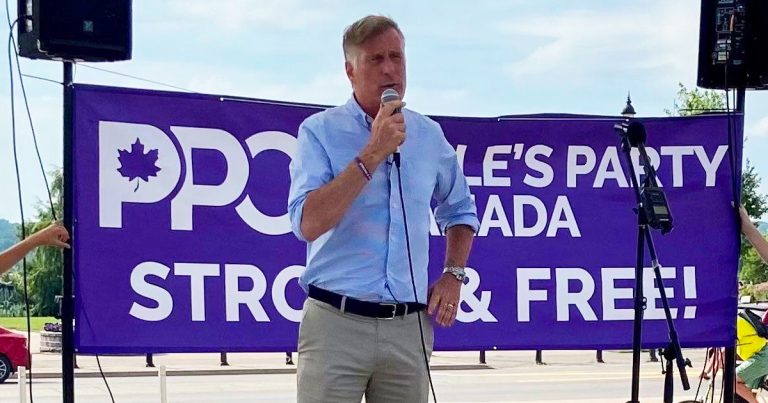
The People’s Party of Canada (PPC) will head into the next election with half a million more dollars in its coffers because of how Canada funds political parties, according to the National Post.
Elections Canada refunds up to 60% of local riding associations’ expenses if their candidates receive at least 10% of the votes in an election. This money includes what is spent on signs, literature and offices.
In 2019, the PPC cleared the 10% threshold in only a single riding. In 2021, they were able to do so in 26 electoral districts.
A portion of this refund is issued soon after the final votes are tallied, but the rest comes after audits by Elections Canada to determine how many of the expenses qualify.
Elections Canada also offers 50% refunds on national campaign expenses for parties that receive at least 2% of votes nationwide. The PPC did not clear the 2% threshold in 2019, but they can now claim this refund because they garnered 5% of the vote in 2021.
PPC spokesperson Martin Masse said in an email to True North on Tuesday that the party spent about $1.3 million on the national campaign, and they look forward to receiving a refund for half of this amount.
“We are happy to be able to benefit from this program like the other parties,” said Masse. “Until now, all our expenses were covered by donations only.”
Masse said the PPC plans on setting aside most of this money as a “war chest” for the next election. They have hired a national coordinator for riding associations as well as an information officer.
The party ran on a platform opposing lockdown measures, mandatory vaccines and vaccine passports in the last election.
PPC Leader and founder Maxime Bernier receives a $104,000 annual salary from the party.
Some political parties require riding associations to give a portion or all of its refunds back to the national party, but Masse told True North that local PPC riding associations will be able to keep the refunds Elections Canada sends them.
Masse vowed that the PPC will be more prepared for the next election.
“We have started a process to approve candidates who want to run again in the next election as soon as the new year, way in advance of the next election,” he said. “They are experienced, will be able to start organizing already, will have a team in place and will be better known in their communities when the next election campaign starts.”
National campaign expense refunds from 2015 – the last year in which these figures have been made public – show that Canada’s three largest parties received huge amounts. The Liberals received about $22 million, the Conservatives claimed close to $21 million, and the New Democrats garnered almost $15 million. All three parties will continue to rake in sizable refunds for 2021.
One party that lost a significant amount of support in the last election was the Greens. Their campaign was hurt by party infighting when members of the executive council tried to remove former Green Party leader Annamie Paul.
The Justice Centre for Constitutional Freedoms has been at the forefront of several of the legal fights over lockdown restrictions and vaccine mandates over the last couple of years. The pandemic has not only revealed the importance of civil liberties litigation, but has also created a workload the JCCF has had to keep hiring lawyers to keep up with. In this wide-ranging Andrew Lawton Show interview, JCCF president John Carpay talks about his organization’s genesis and vision, as well as the major cultural and legal battles afoot over free speech, individual choice, and healthcare conscience rights.