Employment service launches for Canadians who do not wish to provide vaccine status

A job board website has been created to assist Canadians with finding jobs that do not require them to disclose their COVID-19 vaccine status.

Jabless Jobs is committed to connecting non-discriminatory employers with like-minded job seekers and aims to give people hope by empowering them to obtain financial security regardless of their personal health choices. 

Job seekers who do not want to provide their vaccine status can apply for jobs. Employers who do not care about people’s vaccine status can post job ads and hire recruiters.

Some of the job postings that are open are a customer care representative at SOTA Instruments, a farmhand at Strawman Farms and a granulator operator at Empire Metals. 

COVID-19 vaccine mandates have led to thousands of Canadian workers being fired or put on unpaid leave for refusing to take the vaccine, squeezing a tight labour market and raising prospects for lawsuits. 

Prime Minister Justin Trudeau promised vaccine mandates as a central part of his re-election campaign in September, setting a precedent that has spread from the public to the private sector. 

The mandate for federal government workers is one of the world’s strictest, and it has been extended to federally regulated sectors, which include airports and rail travel. 

In a recent poll, it was revealed that a majority of Canadians say employees who refuse to be vaccinated against COVID-19 should be fired.

The poll, conducted by Angus Reid, showed about 70% of respondents supported firing on-board airline employees, school teachers, police officers, paramedics, firefighters and health care workers if they are unvaccinated. 

There were 64% of respondents that said unvaccinated restaurant employees should be dismissed. And 55% of them had a similar opinion for construction workers and 53% for small businesses. 
How vodka can reduce carbon emissions without a carbon tax

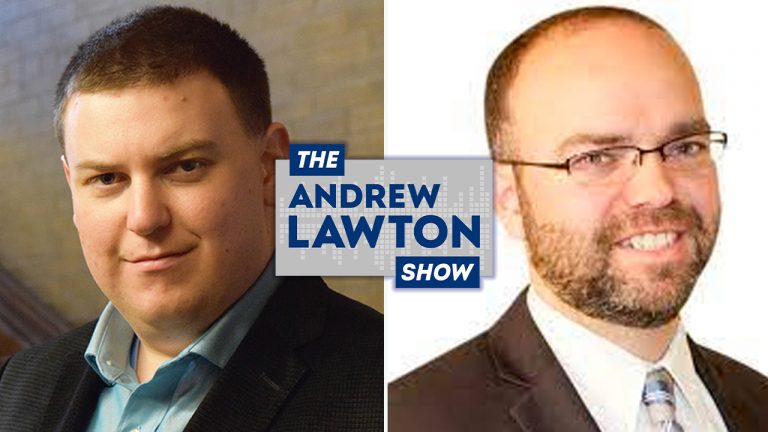
Justin Trudeau is trying to tax industry to reduce Canada’s carbon emissions, but the private sector is innovating far more protective means to get carbon dioxide out of the atmosphere while creating — not killing — jobs. Colin Craig of SecondStreet.org joined The Andrew Lawton Show to discuss some of the ways entrepreneurs are doing this, from making vodka to diamonds to blue M&Ms.

Watch the full episode of The Andrew Lawton Show.

Property rental company “very proud” of denying housing to unvaccinated

An Alberta property rental company has announced that it will be denying new tenants housing if they’re not vaccinated against COVID-19. 

As reported by the Canadian Press, Strategic Group, which owns over 1,500 rental units in Edmonton and Calgary, hopes that their policy will inspire other housing providers to do the same. 

“We’re proud of it. Very proud of it. And we’d like to see other landlords implement the same policy. It will help to end this pandemic,” said the company’s chief operating officer Tracey Steman. 

Strategic Group’s policy will require anyone touring a suite or new tenants to provide proof of COVID-19 vaccination. Other policies also require existing tenants to show a vaccine certificate to access common areas. 

According to President of the Canadian Federation of Apartment Associations John Dickie, it’s unlikely that Strategic Group’s approach will spread to other rental housing providers.

“It’s possible. Some people are reluctant to be the first adopter. But I don’t think it would be very widespread. We’re not the health police,” said Dickie. 

Dickie also noted that this was the first case that he’s seen where a rental property manager implemented a proof of vaccination policy for its tenants. 

Since the policy was announced, the company has received numerous one-star Google reviews.

“I would never ever use their services. They are DISCRIMINATORY I hope somebody sues them for discrimination because that is what it is,” wrote user Erika S. 

“Disgusting policies from a appalling corporation. I will never rent from this company again. Shame on them!” user James Tynan said in a review. 

Community-driven rural crime group forms in Saskatchewan with help from the RCMP

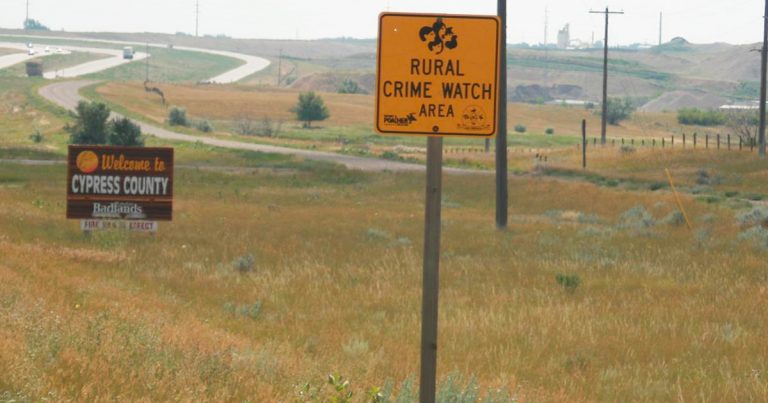
A new crime watch group in Saskatchewan hopes to tackle the province’s rural crime problem. 

According to the StarPhoenix, the Saskatchewan Association of Rural Municipalities (SARM) and the Saskatchewan Urban Municipalities Association (SUMA) are banding together to form the Saskatchewan Rural Crime Watch Association.

The initiative will have support from the provincial government and the Saskatchewan RCMP. 

SARM President Ray Orb called the group a “second set of eyes for the police” and hopes that it will cut down police response times and increase communication between residents and law enforcement. 

“By reporting suspicious activity immediately to the RCMP or 911, volunteers become the extra eyes and ears for local police when they may not be in their area,” said Orb in a news release on the matter. 

“Rural Crime Watch has already been proven successful. Statistics show that areas with organized Crime Watch programs tend to have a significant reduction in criminal activity, including theft of equipment and grain, vandalism, dumping of garbage, break-and-enters, and cattle rustling.”

Locals hoping to enlist and volunteer for the program will be required to undergo a security and background check with their local RCMP. 

Once a volunteer, members of the association will be tasked with observing, recording and reporting suspicious activity or vehicles. 

“Our communities have always looked out for each other,” SUMA President Rodger Hayward said. 

“We share a common goal of wanting safer homes and safer communities, and starting a Rural Crime Watch program in your area makes that goal actionable. Simply put, working together helps the police solve and prevent crime, which makes our communities safer places to live.”

The Saskatchewan government has recently introduced new laws to help tackle the province’s rural crime issue. 

Last year, the provincial government passed the Pawned Property Amendment Act which creates new regulations for scrap metal businesses to keep better track of customers and potential stolen goods. 

“Police Services, farmers, and businesses in Saskatchewan have told us about the dangerous growth of metal theft,” said the province’s Justice Minister and Attorney General Gordon Wyant. 

“This legislation will serve as a valuable tool for police when working to reduce this type of crime, which is often specifically targeted at rural property owners.”

Is Canada still a free and democratic society?

This may seem like a silly question. Of course we are, some may say. 

But if we pause for a moment and think about the erosions of our basic rights and freedoms during the pandemic, or think about the hateful attitude many hold for the unvaccinated — up to and including our Prime Minister — you may start to think that Canada doesn’t feel Canada anymore. 

Today on the Candice Malcolm Show, Candice is joined by Travis Smith. Smith is a professor at Concordia University and a political theorist who earned his PhD at Harvard, where he studied the politics of medicine. 

They talk about how too many Canadians are willing to sacrifice their rights in exchange for the promise of good health – and how this is a recipe for disaster for a free and democratic society like Canada.

SUBSCRIBE TO THE CANDICE MALCOLM SHOW

Throne speech lacks “any serious thought” on tackling inflation: Macdonald-Laurier Institute

The federal government’s throne speech is facing criticism for not offering solutions for the biggest economic crisis facing Canadians – inflation.

Speaking from Ottawa Tuesday afternoon, Macdonald-Laurier Institute domestic policy director Aaron Wudrick criticized Tuesday’s speech from the throne as lacking “any serious thought” about inflation.

“It is understandable that (the Liberals) are focused on the pandemic, but beyond that, much of this throne speech comes across as incredibly disconnected from the day-to-day struggles many Canadians face,” said Wudrick.

“The throne speech gives the impression of having dropped the line about inflation to sound like they are paying attention to it, but it is clear from the rest of the speech that there hasn’t been any serious thought put into what to do about rising inflation.”

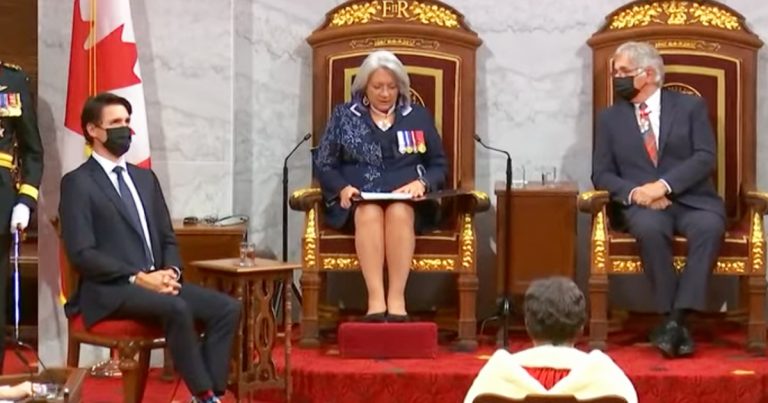
Governor-General Mary Simon delivered the throne speech as parliament returned to the House of Commons for the first time since September’s election, which sent the Liberals back to Ottawa with another minority government.

The speech outlined the federal government’s priorities moving forward with its new mandate. Much of the speech was dedicated to Liberal priorities like tackling climate change and reconciliation while the country faces an inflation crisis and slacking supply chains.

Wudrick criticized the speech for lumping Liberal pet projects in with counter-inflationary measures.

“It was very odd to hear the throne speech reference inflation as a major concern and then proceed to completely ignore it. The speech bizarrely points to housing and childcare as ‘addressing’ inflation which makes no sense,” he said. “One, these measures won’t do anything to ease inflation’ and two… those measures were things the government had already committed to – they were not developed to fight inflation.” 

Contained within the speech were over half a dozen references to climate change and reconciliation, while topics like inflation and the supply chain only received one mention each. 

“We do know that Canada is seeing the highest rate of inflation in almost three decades. We do know that even the Bank of Canada has acknowledged it will persist. These challenges are still real for Canada regardless of how much better or worse it is anywhere else,” said Wurdrick. 

With regard to whether the Liberals will continue to spend their way through this mandate, Wurdrick says that while it does seem there will be some post-pandemic spending restraint, the plan lacks any details. 

“The speech does hint at some post-pandemic fiscal tightening – but as with inflation, there are no details,” he said. “The rest of the speech mentions many commitments to spend more money, so it is difficult to see how they will be able to cut spending and reduce the deficit while still fulfilling all of the promises they are making in the speech.”

Economic issues take a back seat in Trudeau government’s throne speech

Issues pertaining to Canadians’ economic livelihood such as inflation, supply chain disruptions and the ballooning federal debt took a back seat in the Speech from the Throne on Wednesday as the 44th Parliament session convened. 

Other issues like reconciliation with Indigenous peoples and tackling climate change were at the forefront of the Liberal government’s priorities. 

In total, inflation and the supply chain each received one measly mention while the federal debt received no mention at all. 

“Inflation is a challenge that countries around the world are facing. And while Canada’s economic performance is better than many of our partners, we must keep tackling the rising cost of living,” the speech states. 

“Canada’s prosperity – and middle-class jobs – depend on preserving and expanding open, rules-based trade and ensuring our supply chains are strong and resilient.”

Meanwhile, Liberal government priorities like reconciliation and climate change both received seven mentions in the throne speech.

Conservative Party Leader Erin O’Toole addressed the throne speech and accused the Liberals of pursuing “more of the same” policies when it comes to the economy. 

“To the Canadians watching at home, I have one message for you. Conservatives will be your voice. We will be the voice for millions of Canadians being left behind in Justin Trudeau’s economy,” said O’Toole. 

“Today we heard more of the same from the Trudeau government. What we didn’t hear was a plan for the economy. A plan to tackle the cost of living crisis. Wages are flat and more jobs are part-time and precarious.” 

According to the latest numbers provided by Statistics Canada, inflation hit a second 18-year-high this September and is currently sitting at 4.7%. 

Among the goods impacted by skyrocketing prices is gasoline which was up 41.7% compared to last year. In total, transportation costs have gone up 10%, meanwhile, the cost of shelter has also surpassed the inflation rate and is currently 4.8% higher than last year. 

Niagara Region says children can be vaccinated without parent’s consent

Guidance released by Niagara Region Public Health claims that children can be vaccinated without their parent’s consent

“Under the Health Care Consent Act, be advised that there is no minimum age to provide consent. This means that your child can consent to be vaccinated without parental consent,” the statement claims. 

According to Niagara Region Public Health, children can consent to vaccination as long as they are informed and the consent is offered voluntarily. 

The statement defines a person who is able to give consent as someone who understands “information that’s important to making a decision concerning vaccination” and who understands “the consequences of a decision or lack of decision.” 

This information was presented on a general vaccination guidance page. True North has reached out to Niagara Region Public Health for comment and clarification but did not hear back in time for publication. 

In a Twitter post on Tuesday morning, Niagara Region Public Health claimed there was “misinformation being shared” regarding parental consent and vaccination despite the claims originating on their website.

On Tuesday, public health officials in the region will be hosting a virtual town hall on vaccinating children from five to 11 years old. 

“While most children with COVID-19 have mild symptoms or none at all, some children with COVID-19 can get very sick,” states Niagara Region Public Health. 

“Vaccinating children will help to reduce the number of cases of COVID-19. The vaccine is shown in clinical trials to prevent symptomatic illness in youth.”

With regard to parental consent, Niagara Region Public Health states that it is “preferred that children get their vaccine with a parent or legal guardian present at the clinic.” 

“If necessary, children can go with an alternative caregiver to get vaccinated.”

According to official government statistics, six children under the age of 15 have died from COVID-19 since the pandemic began last year. 

“There were six Covid-related deaths reported in Canada among individuals between 0 and 14 years old,” Health Canada spokesperson Anne Génier told Blacklock’s Reporter. 

Health Canada data also shows that only 2% of those hospitalized for COVID-19 were under the age of 20. 

Mandatory vaccination is an obliteration of rights

Austria has become the first western country to mandate vaccination against COVID, threatening unvaccinated citizens with fines and even jail time while implementing a sweeping nation-wide lockdown. True North’s Andrew Lawton, who just returned from a pre-lockdown holiday in Austria, says once government has decided citizens don’t have rights, what they do is just a matter of degrees, arguing there’s no reason the same thing couldn’t happen elsewhere, including in Canada.

Also, SecondStreet.org president Colin Craig joins to explain why carbon dioxide might not be the bogeyman it’s made out to be.

SUBSCRIBE TO THE ANDREW LAWTON SHOW

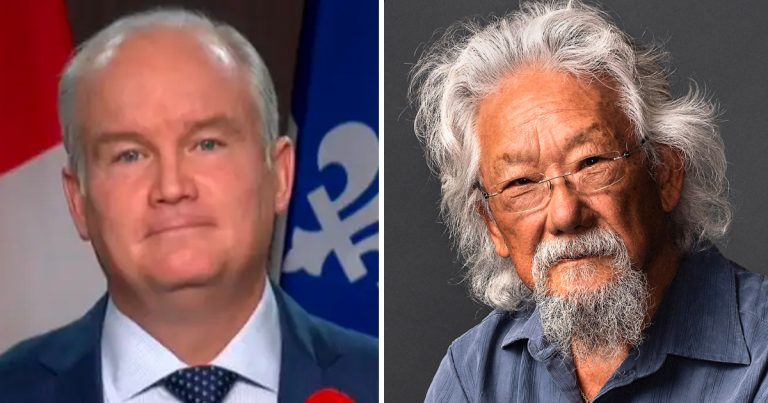
O’Toole slams David Suzuki, accuses him of inciting terrorism against energy workers

Conservative leader Erin O’Toole accused woke climate activist David Suzuki of undemocratic language and inciting terrorism against energy workers.

O’Toole was responding to comments Suzuki made on Saturday, in which the activist said, “there are going to be pipelines blown up if our leaders don’t pay attention to what is going on.”

Speaking to CHEK News in Victoria, British Columbia on Saturday during an Extinction Rebellion protest, Suzuki said that Canada is in “deep, deep doo doo” and that “this is what we’ve come to.”

On Monday, O’Toole took to Twitter to condemn Suzuki’s comments and call on fellow politicians to do the same. 

“This type of rhetoric is dangerous and undemocratic,” O’Toole said on Twitter. “It implies that energy workers and infrastructure should be targets for acts of terrorism.”

In response to the fallout from Suzuki’s reckless comments, the foundation that bears the activists’ name, the David Suzuki Foundation issued a statement on Twitter Monday to distance themselves from Suzuki’s comments and to clarify that he did not issue a threat to destroy natural resource infrastructure.

“When David speaks publicly, he speaks on his own behalf – not for the David Suzuki Foundation,” the foundation tweeted.

“We have been in touch with David: he has confirmed that this comment was NOT a direct threat to destroy fossil fuel infrastructure.”

This isn’t the first time the woke climate activist’s comments have upset Canadians.

Suzuki once said that humans are “maggots” that “defecate all over the earth.” 

He also called for an end to immigration, claiming our program is “disgusting” and that “Canada is full.”

Suzuki also once told students at McGill University that politicians who won’t meet his standards of “climate activism” should be incarcerated. He challenged students to find a “way of throwing our so-called leaders into jail.”

As of the time of this article being published, neither Prime Minister Justin Trudeau nor Jagmeet Singh has issued any condemnation of Suzuki’s comments.