Just because President Trump wants to reopen the economy, doesn’t mean this is a partisan issue. Those obsessed with taking down President Trump think the reopening of the economy translates to “helping the rich.”
But this is far from the truth.
Reopening the economy means returning to our way of life, to put food on the table and to put a roof over our heads.
Given how lives are being ruined by the economic situation, it’s irresponsible to prolong this ordeal any longer than necessary.
Politicians should be united on a responsible reopening and it’s unclear why the feds aren’t working more to facilitate the plans of the provinces, which are the primary responders to this pandemic.
The economy is shut down, millions are unemployed and many businesses have closed their doors permanently – all because we’re trying to stop the spread of the coronavirus.
Are we overreacting? Is there a more sensible way to manage the spread of the virus?
Prime Minister Justin Trudeau’s vacation home is undergoing $8.6 million in renovations.
Just days after Prime Minister Justin Trudeau broke social distancing rules by leaving Ottawa to spend Easter at Harrington Lake, the prime minister’s Quebec vacation home, the property is undergoing extensive upgrades.
Harrington Lake is a 16-room mansion built in a Colonial Revival style. The property is owned and maintained by the National Capital Commission (NCC), a government agency which maintains historic buildings in the Ottawa area.
Since March 29, Sophie Grégoire Trudeau and their three children have been living at Harrington Lake while Justin Trudeau has remained in Ottawa.
NCC spokesperson Jean Wolff defended the investment, saying that Harrington Lake has not seen any renovations for the past 15 years.
“Harrington Lake has not seen any investment since 2005 when the NCC made critical repairs to the roofing, eavestroughs, piping, electrical, mechanical and structural systems of the property,” Wolff stated.
According to the NCC, Harrington Lake consists of the main home, two guest cottages and a staff cottage.
Although no major renovations have been done to the property recently, an Access to Information request revealed upgrades had been made under the Trudeau government, including a screened patio with umbrella costing $13,000 and a golf cart costing $5,000.
Prime Minister Justin Trudeau left his house in Ottawa to spend the Easter long weekend with his family at Harrington Lake, ignoring the advice of public health officials to not mix households.
Trudeau also surpassed the checkpoints set up by Quebec police to prevent people from entering the province for unnecessary travel, even as thousands of vehicles were turned away that week.
The on-going coronavirus outbreak will inevitably have massive impacts on all areas of Canadian life.
One area that should not be ignored in the fall-out of this pandemic is the impact it will have on families, and the potential it will have to contribute to the already rising occurrence of family breakdown in our society.
Family breakdown is a concerning problem, as united families provide a built-in support system that helps ensure better outcomes for everyone, especially children.
For example, research from organizations like the Centre for Social Justice in the United Kingdom demonstrates that family breakdown more than doubles the likelihood that children will be homeless, in trouble with the justice system or experience educational underachievement.
For these reasons, it should be concerning for policy-makers that the most common conditions which trigger a cause of family breakdown – divorce or separation – is likely to arise for many Canadians in the midst of the coronavirus pandemic. Common reasons often cited to cause divorce and separation include problems of addiction, conflict triggered by anxiety and stress – including those driven by monetary concerns accompanied by job losses – and domestic violence. As coronavirus has the potential to encourage these conditions, it puts our families at greater risk.
For example, the pandemic puts individuals struggling with issues of addiction at a high-risk of relapse. Approximately 21 percent of Canadians deal with addiction in their lives, and those affected often turn to weekly meetings, like those offered by Alcoholics Anonymous groups, to get the support needed to kick their habits. However, because of social distancing measures, the occurrence of these meetings have been reduced significantly, and in some cases, halted completely. And, while some meetings have shifted online, not all Canadians have the needed technology to attend such meetings. This reduced support system, combined with the studies that demonstrate an increased amount of substance abuse during periods of crises, should be a concern for policy-makers as the relapse into addictions will inevitably trigger increased family-breakdown in Canada.
Family conflict around financial problems will inevitably occur as the Canadian economy has come to a grinding halt. Canada already saw the largest one-month job loss in history in March, as more than one million Canadians were laid off. This will no doubt be compounded by massive losses in April as companies in nearly every industry have suffered due.And while many Canadians will be able to access benefits from the federal government, the amount offered is not equivalent to what most Canadians would be earning in normal circumstances though their monthly bills – like mortgages or leases – will mostly stay the same. As a result, Canadians will likely face increased conflict relating to this anxiety and stress, which could easily contribute to family-breakdown.
Unfortunately, a negative spin-off of increased anxiety and stress-related conflict is an increased occurrence of domestic violence. Agencies in Nova Scotia, for example, have already warned of an increased occurrence of domestic violence due to the coronavirus.
Overall, the risk of family breakdown during the coronavirus pandemic is heightened. Policy-makers need to take this into account and be considerate in ensuring that their responses take into account these complex realities. If not, the fall-out will include many undesirable social circumstances, including for our children, that will have lasting consequences for Canadian society.
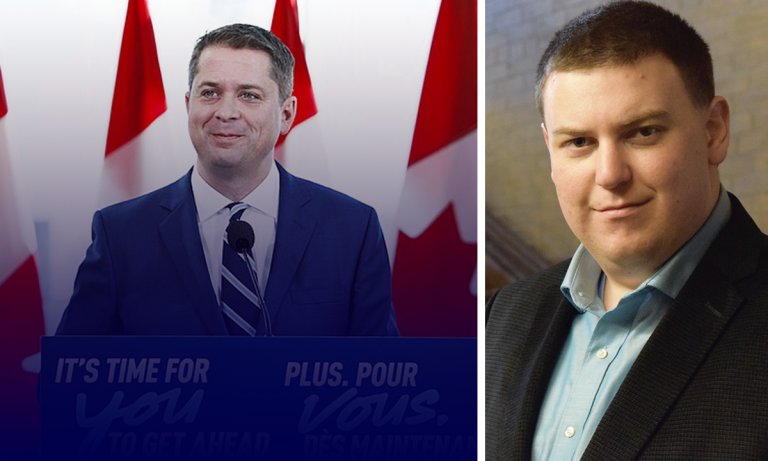
Conservative leader Andrew Scheer joined The Andrew Lawton Show to discuss the World Health Organization’s growing credibility crisis, and the Justin Trudeau government’s “outrageous” apologetics for China’s communist dictatorship.
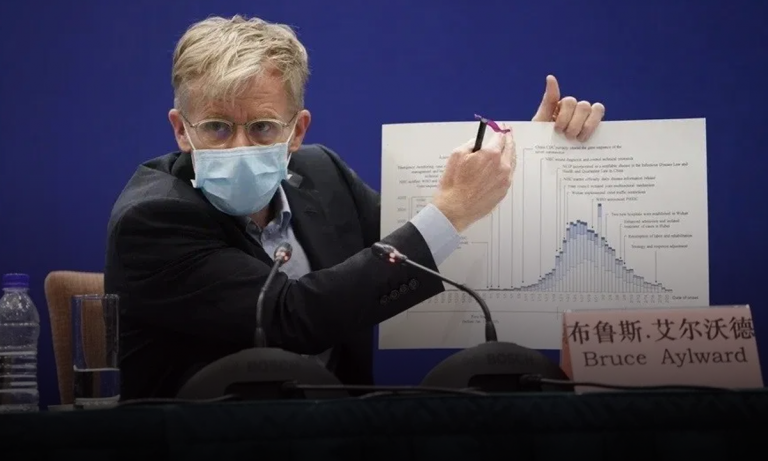
The House of Commons Standing Committee on Health has once again demanded that Canadian World Health Organization (WHO) official Bruce Aylward testify in front of the committee to answer for the UN agency’s handling of the coronavirus pandemic.
Aylward has previously shirked his duty to appear before the committee.
On April 14, Conservative MP and health critic Matt Jeneroux condemned Aylward’s last-minute cancellation and called it “unacceptable.”
“Dr. Aylward decided not to appear before the committee at the last minute and did not offer to be rescheduled for a later meeting. This is unacceptable,” said Jeneroux in a public statement.
“There is no doubt that the WHO has been slow to recommend concrete measures, negatively impacting Canada’s response to the virus. The WHO has back-tracked on every position they have taken, meaning the Canadian government has back-tracked as well.”
Jeneroux put forward a motion to invite Aylward to testify by the end of April, which the committee subsequently passed.
Aylward himself was the source of public controversy after allegedly dodging questions from a journalist about Taiwan’s exclusion from the World Health Assembly.
Critics of the WHO have accused the organization of spreading false claims about the coronavirus on the Chinese Communist Party’s (CCP) behalf.
On Tuesday, Conservative Party leader Andrew Scheer referred to “many concerns” being raised regarding China’s influence over the WHO.
“Many concerns have been raised about the accuracy of the World Health Organization’s data, the influence that China has on the World Health Organization,” said Scheer.
Scheer has since signed a letter by the Macdonald-Laurier Institute condemning the Chinese Communist Party’s coverup of the initial coronavirus outbreak and the WHO’s complicity in the act.
“The roots of the pandemic are in a cover-up by CCP authorities in Wuhan, Hubei province. Under the influence of the CCP the World Health Organisation first downplayed the pandemic,” reads the letter.
“Taiwanese health officials also allege that they ignored their alerts of human-to-human transmission in late December. Under pressure from the CCP, democratic Taiwan—which has coped with the pandemic in exemplary fashion—is excluded from the WHO.”
Scheer is among several Canadian politicians who have signed the document, including Conservative party leadership contenders Peter MacKay and Erin O’Toole, among other MPs.
Ontario’s Ford government will be giving 21,000 iPads to low-income students.
On Friday, Education Minister Stephen Lecce announced that iPads equipped with data plans will be distributed to students who otherwise would not be able to access the province’s online learning tools.
“Our government made a commitment to parents that we would ensure your children would be safe while they learn,” Lecce said.
All schools in Ontario are closed due to the ongoing coronavirus pandemic. Schools will remain closed until at least May 4.
Ford said that he hopes the iPads will help reassure those concerned about their children’s education.
“We have to bridge the gap for those kids who may not have the tools to learn,” stated the premier.
“I hope this gives you some peace of mind, knowing that your children will have access to the tools they need to continue learning during this difficult period.”
It will be up to the individual school boards to determine which students receive the iPads.
On March 20, the Ontario government launched the Learn from Home program, giving K-12 students access to courses in various subjects.
The iPads were provided to the province at a discounted price by Apple, and Rogers is providing the data plans.
With the future uncertain, Lecce says that the province is considering every option, including postponing in-class instruction until September.
“If we get the impression that we need to add additional supports, leaning into the next year, we will do it. We are looking into every option to make sure that no child has a gap in learning,” said Lecce.
Are you getting impatient about this lockdown and all of these strict social distancing rules? Are you concerned about how our economy will ever recover from this?
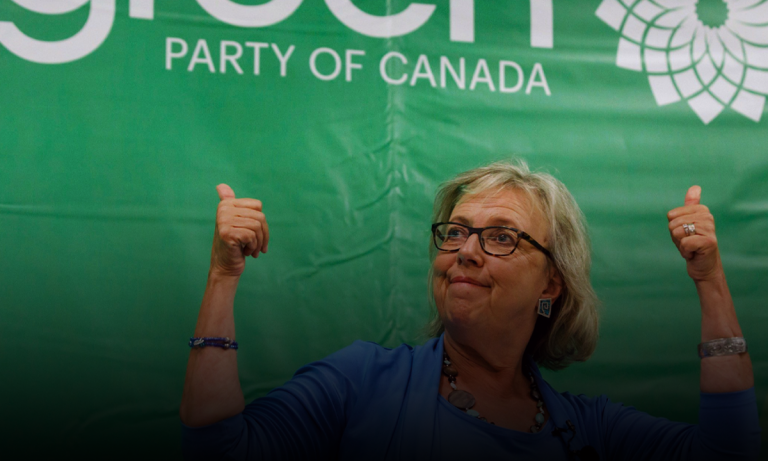
Well, the Green Party of Canada thinks this way of life should be the new norm. Why? You guessed it – for climate change.