Hundreds of federal inmates have been freed in order to slow the spread of the coronavirus pandemic within correctional institutions.
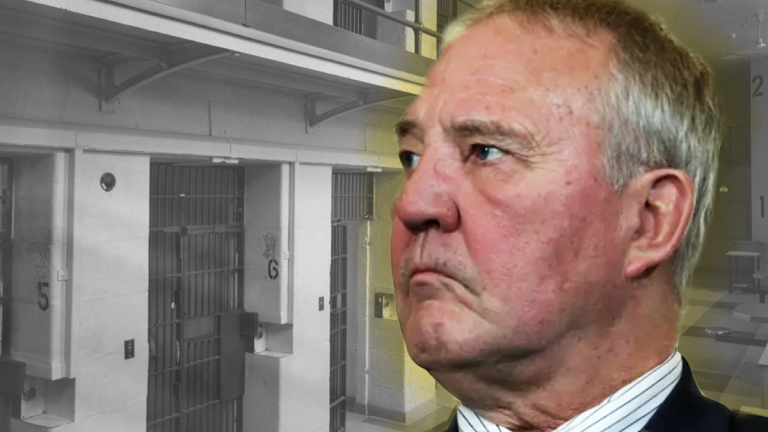
Public Safety Minister Bill Blair revealed the extent of early prison releases during a press conference on Monday.
“[Corrections officials] have been working hard to make sure those individuals are considered for early release, and literally hundreds of people have, in fact, been placed back into the community,” said Blair.
“But it’s done in a very careful and supervised way because public safety is our first priority.”
In total, around 600 prisoners have applied to be released back into the community. When asked for an exact figure, Blair could not provide reporters with an answer.
Correctional Services Canada (CSC) and the Parole Board are in charge of supervising and releasing inmates in federal prisons.
The Union of Canadian Correctional Officers has doubted the effectiveness of early and exceptional releases in combating the spread of the virus and expressed concern about the risks involved for public safety. The union told CTV News in March that the decision was “irresponsible.”
“The focus must be on changing routines in our institutions to respect social distancing and self-isolation directives to every extent possible,” said the union.
“Canada is in crisis, and its citizens are already dealing with a potentially deadly threat. It is irresponsible to introduce further threats into our communities.”
In Richmond Hill, Ontario a 22-year old man allegedly assaulted a police officer in broad daylight only several hours after being released from custody early.
Chibudem Anthony Okeke is being charged with attempted murder and failing to comply with recognizance and allegedly assaulting and attempting to disarm Const. Andrew Varao.
Canadian far-left extremist websites are seeking to take advantage of the coronavirus pandemic to further their radical views through violent means.
Montreal Counter-Information and North Shore Counter-Info are calling on their followers to issue death threats, engage in vandalism and assault unsuspecting police officers and prison guards.
One post on Montreal Counter-Information from April 13 titled “In May, Let’s Play: A Call to Conflict” claims that the coronavirus pandemic has created conditions “favourable for attack” and suggests a number of criminal and violent acts be perpetrated to take advantage of the situation.
“Now that the control forces canvassing the territory with vehicles, drones or just by foot have never been so present and overworked, what could happen if they were threatened inside their fortresses, with death threats written in paint? Regularly attacked with some stones/cocktails/fireworks/firecrackers in the middle of the night as they sleep? If they were ambushed during their patrols?” says an anonymous submission to Montreal Counter-Information.
The violent call to action also asks fellow extremists to sabotage fibre optic cables and relay antennas to disrupt communication services. In the article, the anonymous author fantasizes about attacking and beating unsuspecting prison guards while they return home from work.
“Now that the cages are chock full and that people slowly die behind bars, what could happen if the guards’ cars would unfortunately meet with a screwdriver/hammer/firestarter? If the people who lock up and stand guard, already under constant pressure, were hit and beaten while going back home?” says the post.
A similar blog post published on April 20 by North Shore Counter-Info asks followers to gather in small groups and engage in illegal activities like property damage and vandalism ahead of May Day which coincides with International Workers Day.
“Decentralized direct action is a skill we already have, and it can be taken in small groups, which is convenient when the pandemic makes it reasonable to reduce the number of people we’re close to. We propose a two week window centered on May 1st for going out and attacking capitalism – tags, breaking things, liberating stuff, use your imaginination [sic],” says an anonymous submission on the website.
“It is a delightful new reality that it no longer cocks eyebrows when you’re just someone out for a night jog in a mask and hoodie down the empty, empty streets. And coming out of the Wet’suwet’en solidarity movement, there is a lot of resistance to celebrate, as well as new skills and contacts to build on,” claimed the North Shore article.
As exclusively reported on by True North, both websites were active during February’s nation-wide rail blockades allegedly in support of the Wet’suwet’en hereditary chiefs who opposed BC’s LNG pipeline.
During the blockade crisis, North Shore provided instructions on how to create thermite to disrupt rail lines and advocated for activists to destroy other critical infrastructure. Meanwhile, Montreal Counter-Information published a similar callout alongside guides instructing people to make Molotov cocktails.
Over the weekend, global oil prices hit an 18-year low as demand has been drying up and producers around the world are struggling to find storage space. Last week global prices dropped by 20%.
Oil prices took another dive on Monday, with West Texas Intermediate dropping to -$37.00 at one point – a record low.
Firms such as Husky Energy, Cenovus Energy and ConocoPhillips have all drastically cut production over the past few weeks. One forecaster told Reuters that as much as one-third of Canada’s oil output might get cut in the near future.
More than simply stopping production, much of Canada’s output comes from steam-driven oil facilities which are extremely costly to shut down and restart.
It is unclear how long companies can survive if prices remain negative and global shortage remains at near-capacity.
On Friday, Prime Minister Justin Trudeau announced $2.5 billion in long-awaited aid to the energy sector.
Finance Minister Bill Morneau had originally told companies on March 25 that help was “hours, potentially days” away.
Of the $2.5 billion, $1.7 billion will go towards cleaning up and closing unneeded oil wells, with the rest going towards an emission-reduction plan.
Kenney took to Twitter to criticize Trudeau’s approach to the energy sector, noting that Central Canada’s auto sector received significant aid during the 2008 Financial Crisis.
When Central Canada’s auto sector risked collapse in 2008, Canada took action to ensure a future for those workers.
A collapse of the Canadian energy sector would be economically devastating for the whole country, from banks, to pension funds, to manufacturers, to govt revenues.
Justin Trudeau is working hard to keep the House of Commons vacant, opting to have press conferences rather than Question Period and executive fiat rather than parliamentary approval of legislation. True North’s Andrew Lawton talks about this and a proposed federal bill that would make it illegal to spread coronavirus “misinformation” – as defined by the Liberals, of course.
Also, Conservative leader Andrew Scheer joins the show to discuss Canada, China and the World Health Organization.
Justin Trudeau’s carbon tax failed to lower greenhouse gas emissions a year after it was introduced.
According to government data obtained by Blacklock’s Reporter, emissions actually grew by 15 million tonnes in 2018.
The Department of Environment wrote off the growth as being in part caused by “colder winter weather.”
“This increase is attributed to higher fuel consumption for transportation, winter heating and oil and gas extraction,” said the department’s National Inventory Report 1990-2018.
The report also revealed that the federal government spent up to $60 billion to lower greenhouse gas emissions over a five year period stretching from 2014 to 2019.
“Between 2014 and 2019 the Government of Canada invested $60 billion to drive down greenhouse gas emissions, generate clean technologies, help Canadians and communities adapt to a changing climate and protect the environment,” claimed the report.
The federal carbon tax was introduced by the Liberal government in 2017 as a way to force provinces that didn’t implement their own carbon pricing onto a federal scheme.
Several provinces including Alberta, Ontario and Saskatchewan have challenged the law as unconstitutional.
Recently, the Supreme Court of Canada postponed Ontario and Saskatchewan constitutional challenge which was originally planned for March due to concerns over the coronavirus pandemic.
In March, Deputy Prime Minister Chrystia Freeland announced that the carbon tax would go up by 50% despite the national crisis.
“I think our government has been very clear that this is a time where our first priority is protecting the health and safety of Canadians, and that’s what everyone here has been very focused on,” said Freeland.
“We are thinking very carefully about our whole approach to what we are doing economically, both in terms of how we are supporting workers and businesses, and also what we are doing on the tax side.”
Ontario government health officials have declared that the community spread of coronavirus within the province has peaked.
According to projection models, social distancing and other measures have contributed to slowing the spread of the virus, and the province is headed for a best-case scenario.
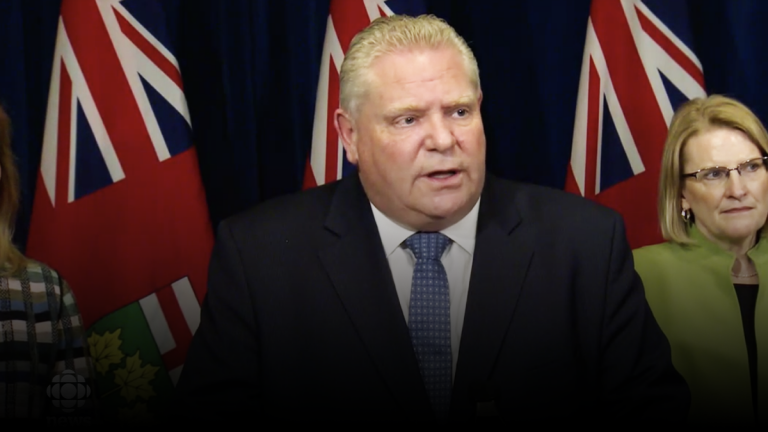
“The modelling clearly demonstrates that we are making progress in our fight against this deadly virus. That’s due to the actions of all Ontarians, those who are staying home and practising physical distancing, and to the heroic efforts of our frontline health care workers,” said Premier Doug Ford in an official news release.
Brown says Ontario's curve is flattening, as are those of other provinces and Canada more broadly. pic.twitter.com/4Kwun4Svte
However, based on the advice of health experts, the declaration of an emergency has been extended to May 12, meaning that gatherings of five people will continue to be restricted and non-essential services will remain closed.
University of Toronto School of Public Health Dean Adalsteinn Brown said during the briefing that the peak period could last for a few days or longer.
“Peaks are not a nice single sort of spike. They can be a little bit bumpy, they can be prolonged for a period of time,” said Brown.
Brown provided the projections alongside Ontario Health President and CEO Matthew Anderson and Associate Chief Medical Officer of Health Dr. Barbara Yaffee.
“When we do start to lift some of the measures, it will not be a light switch on and off, it will have to be very gradual. And we will have to measure the impact of each change as we make it,” said Yaffe.
The modelling released today shows that our months of planning and collective action to stop the spread of #COVID19 is working. But in order for these projections to become reality, we must continue to stay home and practise physical distancing. https://t.co/vGlR9nSIZ3
Due to the province’s success in curbing the spread of the virus, hospitals have been able to handle the outbreak and have not had to deal with overcapacity issues.
“The information released today shows early but unmistakable signs that our efforts are working,” said Christine Elliott, Deputy Premier and Minister of Health in a government news release.
“These numbers are not an accident. They are the result of months of planning and collective action to stop the spread of COVID-19 and flatten the curve. However, in order for these projections to become reality, each of us must continue to stay home as much as possible and practise physical distancing.”
Health experts have warned that elderly care facilities still remain an issue when it comes to potential outbreaks.
Ontario has reported a total of 11,184 confirmed cases as of Monday, and 613 deaths.
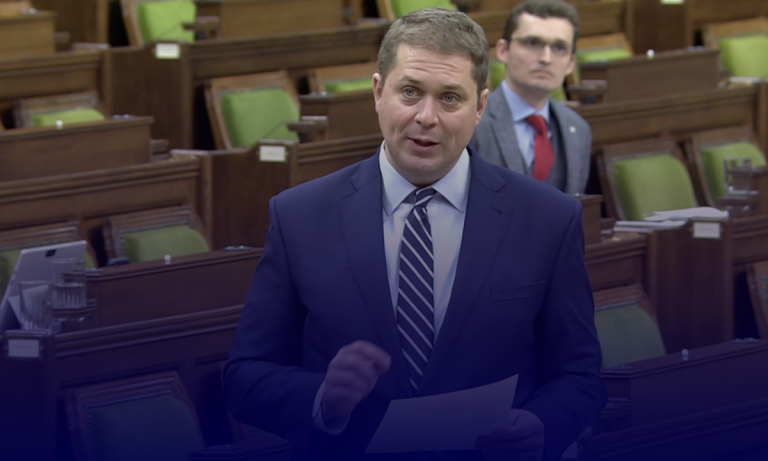
Conservative leader Andrew Scheer says that Canada should cut foreign aid to China.
In a weekend press conference, Scheer stated that China does not deserve aid given its abysmal human rights record and surly attitude towards Canada.
“I don’t believe Canadian taxpayers should be sending any money to China,” Scheer said.
“We’re talking about a communist dictatorial government that abuses human rights, quashes freedoms, violates rights of its citizens, and has a very aggressive foreign policy all throughout the region.”
Last week, Blacklock’s Reporter revealed that the Trudeau government gave $41 million to China in 2019 through foreign aid.
Scheer added that the communist regime should not have been supported financially whilst Canadians Michael Spavor and Michael Kovrig remain imprisoned, and while China had banned Canadian agricultural products.
In 2019, China banned Canadian meat and canola for several months, citing unspecified health concerns.
Scheer says that another way Canada should stop supporting China is by divesting from the Asian Infrastructure Investment Bank (AIIB).
The AIIB is a Beijing-based development bank which invests in Asian infrastructure. The Chinese communist government owns about 26.5% of the bank’s voting shares.
In 2017, Canada bought US$375 million worth of AIIB shares.
While Canada has seen little progress getting new pipelines built, the AIIB has invested in several pipelines since 2017, mostly in China.
“I’ve never understood why Canadian tax dollars have to go help build roads and bridges in other countries,” Scheer said.
“It’s becoming more and more clear we cannot depend on China as a reliable ally, as a partner in our values. We need to rethink our relationship with China.”
The theory that COVID-19 leaked from a Chinese laboratory is looking more credible with each passing day.
When the world first learned about the coronavirus — after a weeks-long cover up by Chinese officials and their friends in the World Health Organization — we were told it originated from a wet market in Wuhan, China.
We were told to ignore the fact that China’s only high-security infectious disease laboratory — a lab infamous for controversial research and government’s secrecy — the Wuhan Institute of Virology lab, is located minutes from the wet market.
This was simply a coincidence, we were assured, and talking heads insisted we have full faith in the explanation given by Chinese government.
Anyone who raised questions about the link between the new coronavirus and China’s lone biosafety level-4 laboratory located in the same city were attacked and maligned, including myself.
Back in January, I raised some of these concerns on my podcast and on social media. But, as has become a sad sign of our times, agenda-driven journalists quickly attempted to discredit these questions.
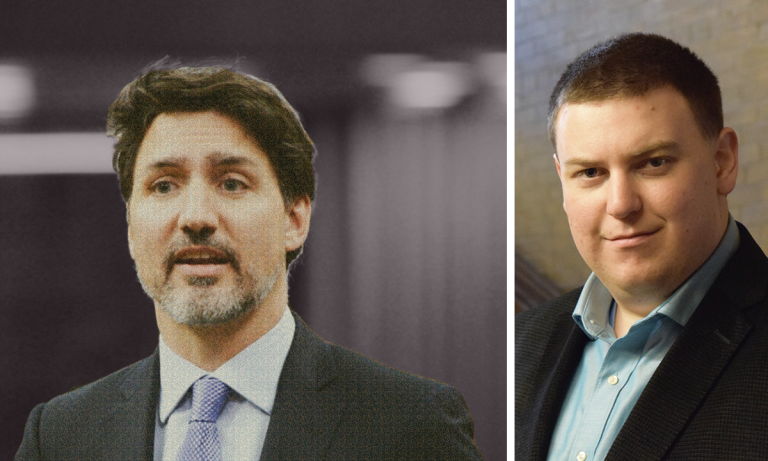
Canadian freelance writer Justin Ling wrote a post for Foreign Policy regurgitating Chinese propaganda that implied I and others were spreading misinformation and conspiracy theories by bringing up these questions.
In the past few weeks, however, major news outlets around the world have begun to revisit this link and raise serious doubts about China’s explanation of the origin of this virus.
On April 2, the Washington Post published a widely-shared article entitled, “How did covid-19 begin? Its initial origin story is shaky.” It revealed that “the first covid-19 case in Wuhan had no connection to the seafood market,” undermining the wet market narrative.
It detailed a competing theory among researchers: that the wet market is located “less than 300 yards” from the “Wuhan branch of the Chinese Center for Disease Control” (CDC) and “researchers from that facility and the nearby Wuhan Institute for Virology have posted articles about collecting bat coronaviruses from around China.”
The Post detailed a “December video from the Wuhan CDC that shows staffers ‘collecting bat coronaviruses with inadequate [personal protective equipment] and unsafe operational practices.’”
The Daily Mail then reported that top UK officials agree, stating “there is a credible alternative view [to the zoonotic theory] based on the nature of the virus. Perhaps it is no coincidence that there is that laboratory in Wuhan. It is not discounted.”
This week saw several groundbreaking reports that give the lab leak theory more credibility.
First, the Washington Post reported that U.S. State Department cables warned of safety issues at the Wuhan lab in 2018. “U.S. Embassy officials visited a Chinese research facility in the city of Wuhan several times and sent two official warnings back to Washington about inadequate safety at the lab, which was conducting risky studies on coronaviruses from bats.”
Next, Fox News reported that U.S. officials have “high confidence” the coronavirus leaked from a lab in Wuhan, albeit accidentally.
U.S. officials believe that China not only lied about the origin of coronavirus in order to deflect blame, they also destroyed evidence to hide the smoking gun.
“China ‘100 per cent’ suppressed data and changed data,” officials told Fox News. “Samples were destroyed, contaminated areas scrubbed, some early reports erased, and academic articles stifled.”
It may be the “costliest government coverup of all time,” a U.S. official said.
To add insult to injury, Canadians learned the Trudeau government recently sent $830,000 to this very lab for coronavirus research.
Canadians deserve to know the truth about the origins of a virus that has destroyed our economy and killed 1,250 of our compatriots.
Perhaps we would have found the truth sooner had it not been for the actions of those journalists like Justin Ling, who were more interested in heckling those asking important questions than in getting to the bottom of a criminal cover up.
The RCMP has confirmed at least 18 people have died following an incident involving an active shooter, including an RCMP officer and the gunman. Another officer who has not been named was injured and is in hospital.
RCMP officials said that the shooter killed at least 18 people between when the first incident was reported Saturday night and when he was killed by police on Sunday morning.
RCMP reported that Constable Heidi Stevenson was killed while responding to the incident.
“Heidi answered the call of duty and lost her life while protecting those she served. Earlier this afternoon I met with Heidi’s family and there are no words to describe their pain,” Assistant Commissioner Lee Bergerman told reporters during an update on Sunday evening.
RCMP also confirmed that the suspect, 51-year-old Gabriel Wortman, was dead.
On Saturday night, RCMP received a call claiming there was a man armed in the rural community of Portapique, Colchester County. Several nearby communities were on lockdown throughout the night as RCMP searched for the suspect.
#RCMPNS is responding to a firearms complaint in the #Portapique area. (Portapique Beach Rd, Bay Shore Rd and Five Houses Rd.) The public is asked to avoid the area and stay in their homes with doors locked at this time.
Residents across central Nova Scotia reported homes and cars on fire during the twelve-hour manhunt. RCMP confirmed that at least some of the fires were caused by Wortman but would not comment further.
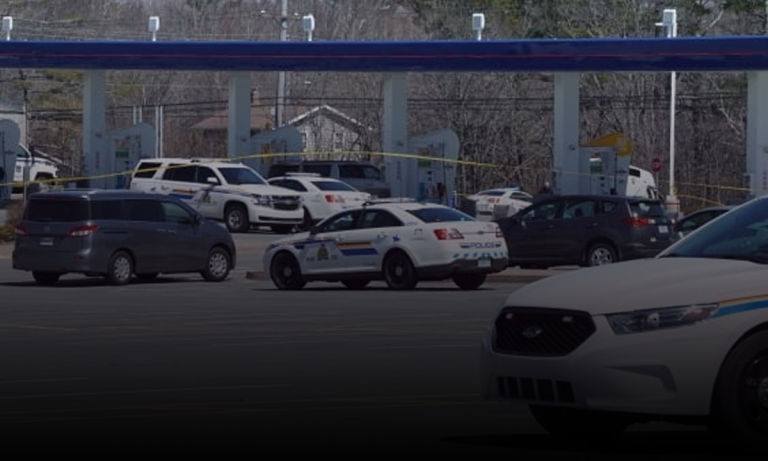
Sources said Wortman was shot and killed by RCMP at the Enfield Big Stop on Highway 102 — about 100 km away from Portapique, N.S.
This conflicts with earlier claims by RCMP that Wortman was in police custody earlier in the day.
It has been reported that Wortman was wearing an RCMP uniform and driving an RCMP vehicle. RCMP confirmed on Twitter that Wortman was not employed by the law enforcement agency.
To clarify, the suspect in our active shooter investigation, Gabriel Wortman, is NOT employed by the RCMP but he may be wearing an RCMP uniform. He is considered armed and dangerous. If you see him, do NOT approach and call 911 immediately.