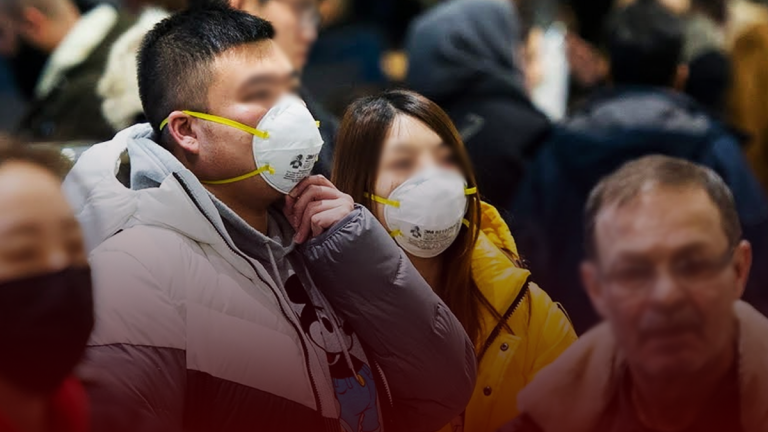
65% of Canadians worried about their income, savings because of COVID-19

0

A majority of Canadians are worried that the COVID-19 pandemic will harm their personal finances. 

According to a poll by the Angus Reid Institute, 65% of Canadians are concerned that the virus will impact them financially, while 86% are worried that it will hurt the Canadian economy.

“As the outbreak has worsened, so too have financial markets, experiencing some of their worst days ever. It is perhaps, then, unsurprising that half of higher-income Canadians report their investments have taken losses,” said the Angus Reid Institute. 

10% of Canadians with income levels ranging from under $50,000 to over $100,000 a year report that they have either been laid off or lost hours at their workplace because of the virus. 

In total, 34% of respondents reported that their financial investments have taken a hit because of the recent economic turmoil. 

Global stock markets have been reeling due to the economic uncertainty caused by the global pandemic. 

On Monday, the Toronto Stock Exchange and Dow Jones fell by 10% and 12%, respectively. 

In response, the Liberal government announced a $10 billion stimulus package to help Canadian businesses deal with the impact of the pandemic. 

“These are extraordinary times and that means we are ready to take extraordinary measures,” said Morneau on March 13th. 

“As a first step, today I’m announcing that we are establishing our Credit Facility Program to support businesses and to stimulate the economy. This will make $10 billion available in additional support for Canadian businesses through the Business Development Bank of Canada and Export Development Canada.” 

The Angus Reid poll also shows that the virus has disrupted the daily lives and plans of many Canadians. A total of 52% of Canadians have reported that an event was cancelled or postponed in their communities. 

Canadians have also been following the advice of public health officials, with 82% reporting that they have been washing their hands more frequently since February and another 48% saying they are avoiding public spaces.

EXCLUSIVE: CBSA halting deportations amid COVID-19 pandemic

0

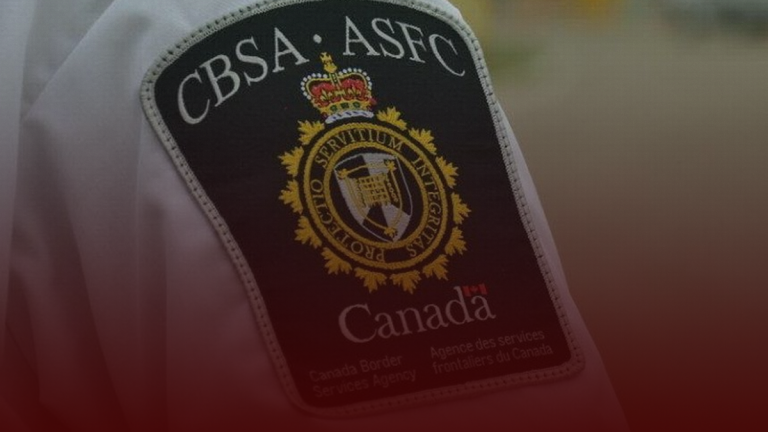
The Canada Border Services Agency has paused deportations while Canada deals with the spread of coronavirus, the agency confirmed to True North.

“During this time-period while the openness of international borders and availability of international flights is rapidly changing, there has been a significant impact on removal operations,” said a CBSA spokesperson.

“In light of the current circumstances and in the best interest of officers and clientele, the Government of Canada, in conjunction with the Canada Border Services Agency (CBSA), has decided to stop carrying out removals at the current time.”

The spokesperson added that some removals may still take place with “serious criminal cases,” but these will be “via exception only.”

The directive includes the cancellation of previously scheduled deportations. The CBSA will be notifying those impacted by the cancellations in these cases.

CBSA didn’t confirm how long the pause will be in effect, though two immigration lawyers indicated they’ve heard it will last three weeks.

This comes just one day after Prime Minister Justin Trudeau announced a shutdown of the Canadian border to those who aren’t Canadian citizens or permanent residents. The federal government has also ordered many international flights to redirect to the Vancouver, Calgary, Montreal and Toronto airports to better control the flow of entry into Canada.

CBSA is using what it calls a “risk-based approach” to assess even Canadian citizens returning to Canada. Officers have been directed to remind people who enter the country that they must self-isolate for 14 days. The CBSA is also asking anyone with symptoms to disclose them to a screening officer.

On Sunday, a CBSA employee at Pearson airport in Toronto tested positive for COVID-19, though the agency didn’t know where or when the employee, who is currently in self-isolation, contracted the virus.

The Candice Malcolm Show: A discussion with Douglas Murray

SUBSCRIBE TO THE SHOW!

Fresh off the release of his latest book, The Madness of Crowds: Gender, Race and Identity, Douglas Murray joins True North’s Candice Malcolm for a must-listen discussion.

As an intellectual and journalist, Douglas Murray has been on the front lines of issues that affect all of western civilization – including Canada.

Candice and Douglas discuss the coronavirus, open borders, Trudeau’s blackface incidents and much more.

Like this interview? Please consider making a tax-deductible donation to True North to support our reporting and independent media in Canada: http://www.tnc.news/donate/

EXCLUSIVE: Group says RCMP gave “emphatic” assurance illegal border crossing could continue

0

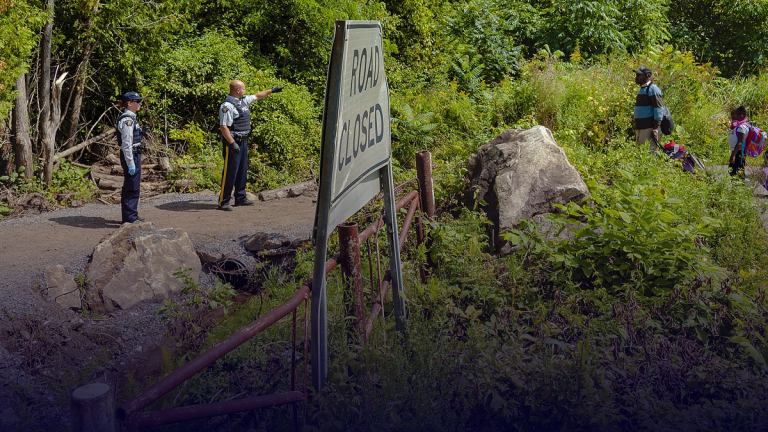
RCMP officers assured activists that Canada would continue to accept illegal border crossers in the event of a border closure, a pro-asylum group says.

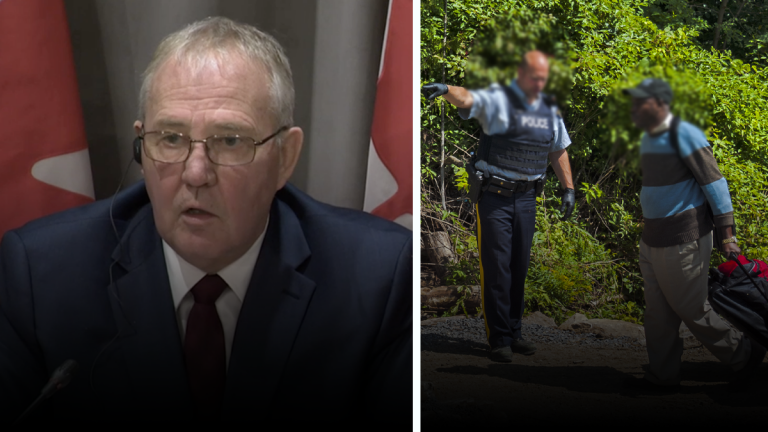
Public Safety Minister Bill Blair confirmed at a Tuesday press conference that illegal border crossers would still be allowed into Canada, though the Hemmingford, Que.-based Bridges Not Borders said it was advised of this last week by the RCMP.

The group posted an advisory on its website on Mar. 13 relaying the RCMP’s assurances.

“Due to the COVID-19 pandemic, the Canadian government is considering closing the border between Canada and the US. However, the RCMP police (sic) have confirmed with us today that, if the border is closed, people seeking asylum will still be able to cross at Roxham Road,” the advisory said.

Prime Minister Justin Trudeau imposed a ban on non-resident foreign nationals entering Canada Mar. 16, carving out an exemption for US citizens.

Bridges Not Borders says its advance knowledge came from its “good working relationship” with the RCMP.

“Last week we asked them, because it was discussed in the press that the government was considering closing the border,” coordinating committee member Wendy Ayotte said. “We were informed that it would remain open. That was quite emphatic on their part, and that gave us the message that this was a high-level decision.”

Ayotte said she supports the RCMP’s approach, suggesting that not allowing people to cross illegally at Roxham Rd. could cause a greater spread of COVID-19.

“If people were to enter Canada in that way, it would use up RCMP resources and if they were able to enter Canada undetected they could spread COVID-19,” Ayotte said.

Bridges Not Borders started operating in 2017 by welcoming illegal border crossers into Canada. The group provides care packages to illegal migrants and counsels them on how to circumvent the Safe Third Country Agreement, which aims to prohibit people in the United States from claiming asylum in Canada.

Government figures reveal nearly 55,000 people have entered Canada illegally since Feb. 2017, the bulk of which came in at Roxham Rd.

Blair said Tuesday that illegal border crossers will be subjected to additional medical screening and, when necessary, housed in quarantine.

“Because of the need for the 14-day isolation, we are now making separate arrangements for those individuals to be placed in appropriate shelters in order to accommodate the requirement for the period of isolation,” said Blair.

Ayotte said her team is hearing on the ground that this process has already been implemented.

The RCMP did not respond to a request for comment from True North.

Despite the pandemic and government measures, Ayotte said volunteers with her group continue to greet asylum claimants at the border, though she noted it’s entirely up to them.

“One of the very important things that I think needs stressing is that [the RCMP] are very concerned that if they shut down Roxham Road, imagine what would happen: there would be an increase of people trying to cross into Canada through the woods or other unsafe terrain,” said Ayotte.

Introducing the True North Update (Ft. Candice Malcolm and Andrew Lawton)

When it comes to the coronavirus, many Canadians want to know the latest news. This is why we’re introducing a new segment called the True North Update, featuring True North’s founder Candice Malcolm and True North fellow Andrew Lawton.

Ontario declares a state of emergency.

Illegal border crossers are still coming into Canada.

Why isn’t the Conservative party suspending the leadership race?

Tune in now for the True North Update!

In these tough times, accurate reporting is more important than ever. This is why True North is so important. Support independent media: http://www.tnc.news/donate/

BREAKING: Trudeau government continues to allow illegal border crossers into Canada despite travel restrictions

0

The Liberal government continues to allow illegal border crossers to enter into the country despite implementing wide travel restrictions for other travellers.

Canada’s Minister of Public Safety Bill Blair made the announcement during a press conference earlier today.

“The measures that are currently in place is that those individuals are immediately taken into custody by the RCMP, they are screened thoroughly by our border officers. This process takes about 24 hours and they are now also being screened for any evidence of symptoms and question about where they have been,” said Blair. 

“Because of the need for the 14-day isolation, we are now making separate arrangements for those individuals to be placed in appropriate shelters in order to accommodate the requirement for the period of isolation. 

True North reached out to the RCMP for comment on whether or not illegal border crossers are screened for symptoms or if medical personnel were present to test the asylum claimants.

“Anyone coming into RCMP custody who appears to be ill, or may pose a risk to public health, would be assessed by a medical professional.  The RCMP has provided information to its employees and first responders on general precautions for interacting with potentially ill individuals, including those at greater risk of carrying the novel coronavirus,” said RCMP National Communication Services spokesperson Catherine Fortin. 

“As first responders, we are trained to identify individuals who are in need of medical assistance. While in RCMP custody if a person appears to be ill, or may pose a risk to public health, we would seek the appropriate medical assistance based on the circumstances.”

Yesterday Prime Minister Justin Trudeau announced that Canada would close its borders and not allow non-citizens to enter the country. 

According to Trudeau, only Canadian citizens, their family members, permanent residents and US citizens would still be allowed to travel to and from Canada.

“As the virus continues its spread we’ve decided to take increasingly aggressive steps,” said Trudeau on Monday.

“We will be denying entry to Canada to people who are not Canadian citizens or permanent residents.”

Trudeau also instructed air operators to prevent people who are showing COVID-19 symptoms from boarding a plane heading into the country. 

Ontario declares state of emergency, orders many businesses to close

0

Canada’s largest province has declared a state of emergency amid COVID-19’s spread across Canada.

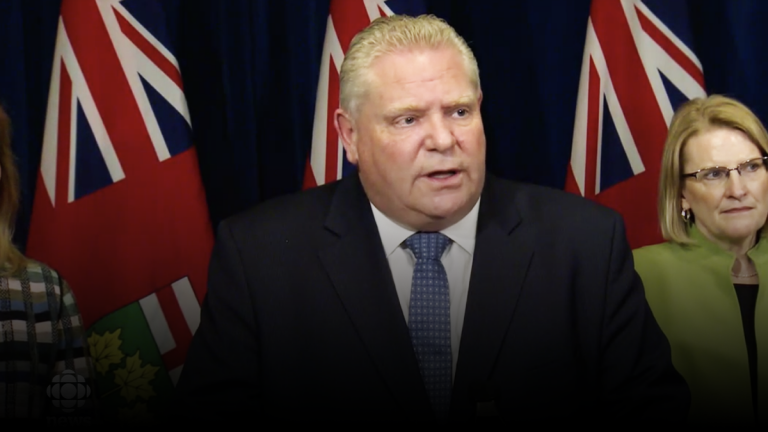
Ontario premier Doug Ford announced the change in the province’s status at a press conference Tuesday morning.

The directive will allow the province to more swiftly direct funding and other resources where needed.

Under the order, all public events with more than 50 people have been banned, and facilities like libraries, bars, cinemas, and daycares have been ordered to close.

Restaurants must also shut down, though takeout and delivery services are exempt.

“This is not a provincial shutdown. I repeat: this is not a provincial shutdown,” Ford said. “The vast majority of businesses, including those most vital to day-to-day life will not be affected by this order. Essential services and essential needs will be available to every individual and family.”

The government of Ontario is also investing $304 million into the province’s efforts to combat COVID-19. The funding will go towards:

  • Increased capacity in hospitals: $100 million
  • More testing and screening through public health: $50 million 
  • Further protect frontline workers, first responders and patients: $50 million
  • Supporting frontline workers: $25 million
  • Long-term care homes: $50 million
  • Residential facilities in developmental services, gender-based services and protective care for children and youth: $20 million
  • Protect seniors in retirement homes: $5 million
  • Indigenous communities: $4 million 

Ford made it clear that despite the mass-shutdown of many businesses, Ontario is not entering a total lockdown like those seen in countries such as China and Italy.

Ontario lets weekend inmates serve sentences from home to stop spread of COVID-19

0

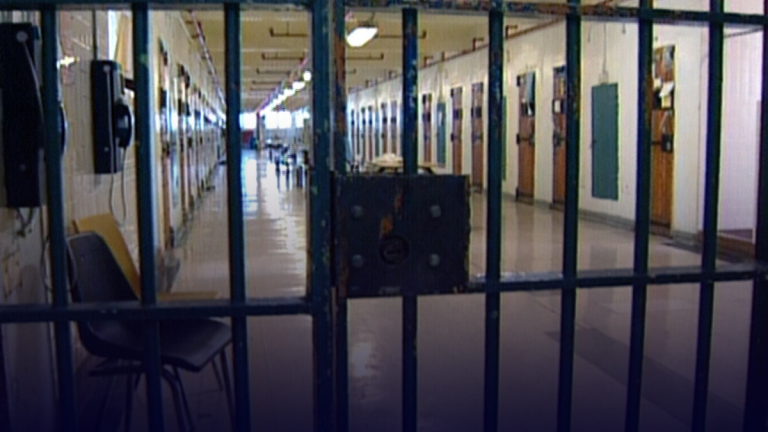
The Ontario government will allow intermittent inmates to do their time from home, to help stop the spread of COVID-19. 

An intermittent inmate is a non-violent offender who serves their jail time in several time blocks – typically weekends – instead of being jailed for the entire duration of the sentence. 

“To reduce the possible transmission of COVID-19 in our correctional facilities, effective March 13, 2020 and until further notice, intermittent inmates who serve time on the weekends will be required to attend their reporting facility, where they will be given a temporary absence from custody and permitted to return home,” said a statement from Ontario’s solicitor general.

“Intermittent inmates have already been deemed low-risk by the courts and remain in the community Monday to Friday to live and work.”

Correctional facility health experts have warned that jails and prisons could be incubators for the virus due to the close proximity of inmates and poor ventilation. 

“There are crowding issues, ventilation issues, security issues where people have to be checked and monitored fairly frequently,” former correctional health expert and physician Robert Greifinger told NPR.

According to the latest statistics, there were 38,786 adults in provincial or federal prisons and jail at the end of 2018. 

The Ontario government also announced that it would temporarily suspend personal visits in all adult correctional facilities in the province. The suspension came into effect Mar. 14.

“These measures are necessary to reduce any potential transmission of COVID-19. We are taking immediate action to ensure the safety of both our staff and those in our custody. We all need to stay vigilant and do our part to ensure the health and well-being of all Ontarians,” said the government’s statement.

Out of all of the provinces, Ontario currently has the highest number of COVID-19 cases. As of March 16, 145 Ontarians were confirmed to be infected with the virus, according to the federal government. 

Majority of BC residents support the province’s LNG pipeline

0

With the national blockade crisis now in Canada’s rearview mirror, a majority of BC residents say they support the province’s LNG pipeline. 

According to a poll conducted by Research Co., 61% of British Columbians are in favour of developing the pipeline. 

Out of those polled, only 30% of respondents expressed opposition to the Coastal GasLink project. 

With regards to the Wet’suwet’en hereditary chiefs who sparked the blockade crisis, 48% of BC residents disagreed with their actions, while only 37% agreed with them. 

The federal government struck a tentative land deal with the chiefs early in March and the blockades came down shortly after.

Details of the agreement have been scant, and other Wet’suwet’en leaders expressed outrage after being left out of the government’s negotiations. 

“The government has legitimized the meeting with the five hereditary chiefs and left out their entire community. We can not be dictated to by a group of five guys,” stated former Wet’suwet’en hereditary leader Theresa Tait-Day. 

“This project has been hijacked by the five chiefs. Over 80% of the people in our community said they wanted LNG to proceed.”

Tait-Day, who is a member of the Wet’suwet’en Matrilineal Coalition, had her title stripped from her due to her support of the Coastal GasLink project. 

When asked what they think of the national protests, 53% of BC residents disagreed with the actions of those who participated. 58% were opposed to the road blockades. 

A vast majority of British Columbians were optimistic about the pipeline’s economic benefits, with 70% believing that the project would contribute hundreds of jobs to the province. 

According to BC Premier John Horgan, the federal government’s deal with the Wet’suwet’en chiefs will not impact the project and construction will continue. 

Police investigating ISIS statements made by man charged in Toronto hammer terror attack

0

The man charged with the terror-related murder of a 64-year-old woman in Toronto allegedly made statements about the Islamist terror group ISIS. 

According to Global News, the statement and written materials left behind by Saad Akhtar prompted police to investigate the murder as a terrorist attack. 

Police have not yet disclosed Akhtar’s statements to the public or the contents of the written material related to the investigation. 

On the evening of February 21, 2020, Akhtar allegedly attacked Hang-Kam Annie Chiu with a hammer while she was out walking by herself. 

Later that day Akhtar turned himself into the police, which prompted the police station’s evacuation after he left behind a suspicious package. 

The terror attack was Toronto’s 11th homicide of 2020. 

According to the investigators that determined the murder was committed for “terrorist reasons,” Akhtar left behind a note at the scene of the crime. 

Crown prosecutors are charging Akhtar with first-degree murder including terrorist activity. 

Toronto police Chief Mark Saunders believes that the attack was a random incident and that there was no threat to public safety. 

According to Akhtar’s mother, their family immigrated from Pakistan in 2001, and her son was known to punch holes in the wall while at home. 

Prior to the alleged attack, Akhtar had left to attend mosque but never returned home.