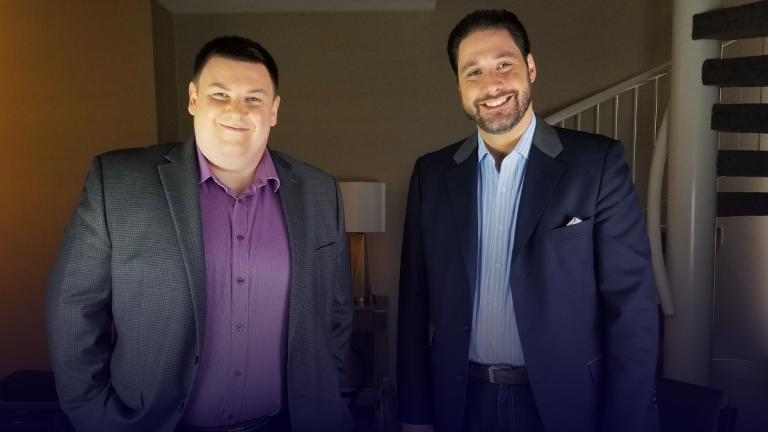
True North’s Andrew Lawton sits down with former staffer and political candidate Rudy Husny to discuss his Conservative leadership bid.
In this interview, Husny speaks of his background in trade negotiations, his ideas for a relevant Conservative party, and why he thinks MPs should refrain from addressing “settled” social issues.
This is part of The Andrew Lawton Show’s Conservative Leadership Series, featuring in-depth interviews with all of the candidates seeking the Conservative leadership.
An Italian journalist is asking everyone to act responsibly and take precautions to avoid a coronavirus outbreak like the one that hit his country.
Mattia Ferraresi wrote an op-ed in the Boston Globe Friday, saying many Italians were “too selfish to follow suggestions to change our behaviour” in the early stages of the COVID-19 outbreak.
Ferraresi is now asking other countries not to make the same mistake.
“We, of course, couldn’t stop the emergence of a previously unknown and deadly virus. But we could have mitigated the situation we are now in, in which people who could have been saved are dying. I, and too many others, could have taken a simple yet morally loaded action: We could have stayed home,” he wrote.
In less than a month Italy went from having no confirmed COVID-19 infections to almost 25,000, with nearly 2,000 deaths. Italy has the second-highest number of COVID-19 cases behind only China.
Ferraresi said the Italian government’s containment efforts were seriously hindered by Italians who did not take the situation seriously.
“What has happened in Italy shows that less-than-urgent appeals to the public by the government to slightly change habits regarding social interactions aren’t enough when the terrible outcomes they are designed to prevent are not yet apparent; when they become evident, it’s generally too late to act,” he said.
“I and many other Italians just didn’t see the need to change our routines for a threat we could not see.”
The Italian government launched a nationwide lockdown Mar. 9 to slow the spread of COVID-19. Everything but essential services has been shut down.
Last week an Italian doctor took to social media to describe the COVID-19 “tsunami” that hit his country’s healthcare system. He also called out people who do not take the warnings seriously.
“Now, explain to me which flu virus causes such a rapid drama… And while there are still people who boast of not being afraid by ignoring directions, protesting because their normal routine is ‘temporarily’ put in crisis, the epidemiological disaster is taking place.”
The Canadian government is currently asking individuals to stay at home should they develop any of the common symptoms of COVID-19.
The government is also recommending Canadians stock up on food and medication.
As of Monday Canada has refused to close its borders, a move other countries have already taken.
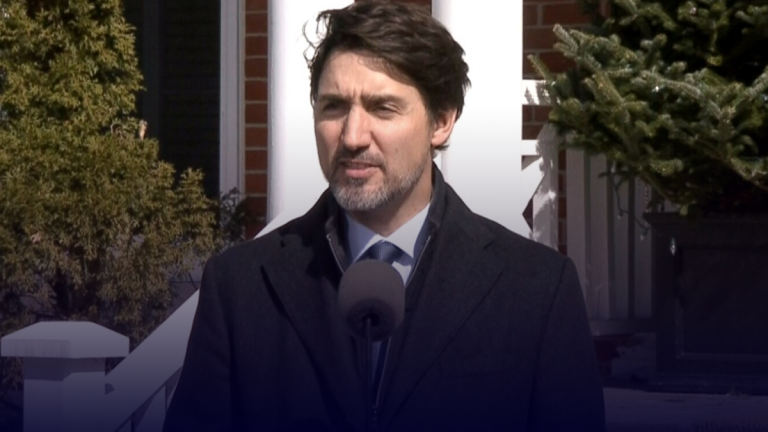
Prime Minister Justin Trudeau updated Canadians on the federal government’s handling of the COVID-19 pandemic on Monday afternoon.
Trudeau gave the statement while still in self-isolation after his wife Sophie Grégoire Trudeau contracted the virus after returning from a speaking engagement in the UK.
“As the virus continues its spread we’ve decided to take increasingly aggressive steps,” said Trudeau on Monday.
“We will be denying entry to Canada to people who are not Canadian citizens or permanent residents.”
Trudeau said that there would be exceptions for aircrews, diplomats, immediate family members of Canadians. US citizens are also not included in the ban.
The Canadian government is also instructing air operators to block anyone who shows symptoms from boarding a plane to Canada.
Additional international flight restrictions were announced by the prime minister which would reroute planes to Montreal, Toronto, Calgary and Vancouver airports to focus screening measures. The measures will first go into effect on Wednesday, March 18.
As of this article’s publication, Canada had 324 confirmed cases of the virus, with the number of infections growing every day.
Last week, Ottawa announced a $10 billion stimulus program for Canadian businesses impacted by the virus.
“These are extraordinary times and that means we are ready to take extraordinary measures,” said Finance Minister Bill Morneau on March 13.
“As a first step, today I’m announcing that we are establishing our Credit Facility Program to support businesses and to stimulate the economy. This will make $10 billion dollars available in additional support for Canadian businesses through the Business Development Bank of Canada and Export Development Canada.”
The Bank of Canada also announced that it would be cutting interest rates to 0.75% in order to stimulate the economy.
Economists and major banks have predicted that Canada is heading for a recession in the near future.
The Royal Bank of Canada wrote in a report that it believes the country will plunge into a recession later this year due to the economic effects of the pandemic and historically low oil prices.
The health risks of continuing the events and public appearances are obvious. While we do not yet know exactly how dangerous the virus is, research indicates that it is spreading fast, and Canada is only in the infant stages of the outbreak. In fact, Canada’s health minister Patty Hajdu reported that some government estimates show up to 70% of the country’s population could become infected. Given hospital wait-times are already out of control in parts of the country, we want to limit the spread and reduce – or at least delay – the pressure on our healthcare systems for as long as possible, and prioritize protections for our most vulnerable. This is why our governments are beginning to declare a state of emergencies, and in some cases, banning these kinds of gatherings to begin with.
Peter MacKay, often cited as the front-runner by mainstream media, was amongst the first of the campaigns to react to the news, announcing on Twitter on Thursday that he would be suspending public events for his campaign in wake of the outbreak. The other perceived front-runner, Erin O’Toole, also made the same commitment. However, it is not the campaigns of these perceived front-runners that are being disrupted by this outbreak.
To become officially verified in the race and make the ballot, candidates have to submit $300,000 in donations and signatures from 3,000 party members by March 25.
Peter MacKay and Erin O’Toole have already met this standard, and thus have no problem staying home and stopping physical campaign events. They can sit at home, avoid answering hard questions from voters or journalists and send out well-crafted messages through social media. It is easy for these candidates to avoid gaffes and missteps when they are able to hide behind the computer-screen of well-paid public relations consultants.
As anyone who has worked in politics can attest to the fact that every day on the campaign trail makes a huge difference. That is why for candidates like Toronto lawyer Leslyn Lewis or MP Marilyn Gladu – who have not been getting the same attention from mainstream media – having to shut down in-person events like fundraisers means it now may be next-to-impossible for them to meet this March 25 deadline.
Without adjusting deadlines like these, or modifying the rules for the race, the Conservative Party is giving an unfair advantage to front-runners at the expense of these candidates and their supporters who have been working tirelessly in the race, and whose chances of making the ballot has been significantly reduced due to the COVID-19 outbreak.
Conservatives want to form the next government of Canada, and if so, they need to provide leadership not only in Parliament but inside their own house too. That is why they should reverse-course and immediately make changes to the leadership process to ensure other candidates have a fair chance of staying in the race. The party will be better off as a result.
What measures are other countries taking in response to the global pandemic? Is Canada doing enough?
There’s so much evolving at such a quick pace, but what exactly are the economic and societal effects of COVID-19?
True North’s Sam Eskenasi explains in his latest video.
We’re committed to telling the other side of the story. In these tough times, factual and accurate reporting is more important than ever. Help us report the news: http://www.tnc.news/donate/
Why have so many famous people been diagnosed with coronavirus?
First, we learned that actor Tom Hanks and his wife Rita Wilson tested positive for COVID-19, the technical name for the coronavirus disease that originated in Wuhan, China in late 2019.
The couple is in Australia, on location filming Hanks’ latest film.
Next, news broke that the NBA was suspending its season after Utah Jazz star Rudy Gobert tested positive along with his teammate Donovan Mitchell. Just hours before his diagnoses, Gobert was making light of the disease and jokingly rubbed his hands all over a set of microphones in response to reporters concerned questions.
He later apologized for his “careless” actions.
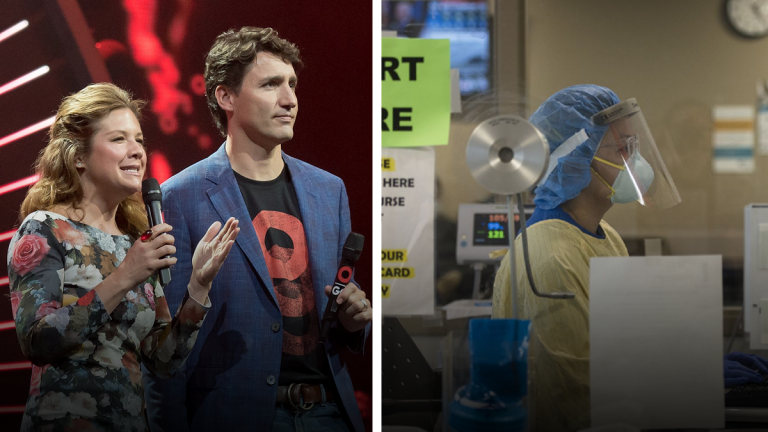
Late Thursday night, Prime Minister Justin Trudeau confirmed that his wife Sophie also tested positive for the Wuhan virus. The Trudeau family put themselves into “self-isolation” after Sophie showed symptoms following an international trip to the United Kingdom.
Add these to the growing list of famous people with COVID-19, including top Italian soccer player Daniele Rugani, Spanish soccer coach Mikel Arteta, U.K. Health Minister Nadine Dorries and Brazilian President Jair Bolsonaro. (There are conflicting reports about Bolsonaro.) Other world leaders, including several top-ranking officials in the Islamic Republic of Iran, have also tested positive.
Does the disease disproportionately affect the rich and famous? They do attend more events, travel more and interact with crowds far more than the rest of us.
Or, perhaps it’s that the privileged global elite have special access to testing that is being denied to the general public.
Compare Sophie Trudeau’s situation to my own.
Last weekend, I flew from San Jose, California to Toronto, landing at Pearson International Airport after spending some time in Silicon Valley.
Santa Clara county is experiencing a coronavirus outbreak, with 48 cases reported so far. The broader San Francisco Bay Area has seen 142 confirmed cases and 4 deaths.
Part of the problems with coronavirus is that young and healthy people are often asymptomatic carriers of the disease. But, like Sophie Trudeau, I began to develop some mild symptoms consistent with the coronavirus — a low-grade fever, dry throat, but no sneezing or runny nose.
When I reached out to health authorities, both with Health Ontario and Toronto Health Services, I learned that I don’t “qualify” for coronavirus testing.
After waiting two hours on hold, an agent from Toronto Health Services assured me that I do not have coronavirus and there is “no point” in administering a test. She advised that I stay home and self-quarantine — a decision my family and I made several days earlier.
I was explicitly told that 1) I was already screened at the airport, which is untrue — there was no screening or Health Canada presence at International Arrivals the day I returned — and 2) the only people in Canada being tested were those who were both showing symptoms and who had recently visited Italy, Iran or Wuhan, China.
So why was Sophie Trudeau tested? She didn’t go to those places.
There have been 596 reported cases in the U.K., where Sophie visited, compared to more than 1,600 cases in the U.S., where I visited. This week, Toronto reported its first case of community transmission — meaning you don’t even need to leave the country to catch the deadly disease.
Why aren’t more Canadians being tested? The truth of the matter is that the reason infection rates are so low is because testing rates are low. Canada simply doesn’t have the capacity to test everyone who potentially has the disease, thus keeping statistics artificially low. This is likely true all over the world.
When it comes to one of the deadliest diseases in our lifetime, Canada has a two-tier healthcare system. One for the political elite and another for the rest of us.
LIKE & RT: We can't trust the government to keep us safe. We should take it upon ourselves to contain the spread of disease.
An Australian academic who wrote a book about China’s influence in his country says Canadian institutions are under even more influence.
Clive Hamilton, professor of public ethics at Australia’s Charles Sturt University told the National Post he is worried by the influence the Chinese government has on Canadian institutions.
He claims that the situation is clearly more serious in Canada than in Australia.
“Yes, Australia’s economic dependence is higher — in terms of trade — but when I look, as I have been doing, at the subtle but intense influence of China on Canadian institutions — parliaments, provincial governments, local governments, universities, the intellectual community, the policy community — it makes me deadly worried,” he said.
In 2018 Hamilton wrote “Silent Invasion: China’s Influence in Australia.” After finishing his book three publishers refused it, each citing fear of retribution from China.
Hamilton notes the extreme influence the Chinese government has in Canadian universities, citing the harassment of Tibeto-Canadian Chemi Lhamo after she was elected student-union president at UofT Scarborough.
A petition demanding Lhamo be removed saw over 11,000 signatures. Virtually all the names on the petition were Chinese.
“I’m kind of dismayed at the apparent unwillingness of authorities to defend those essential democratic principles, including, in this case, the right of a minority person to participate in the democratic process on campus.”
The Chinese Students and Scholars Associations (CSSAs) operating in universities across Canada are known to be closely associated with the Communist Party of China.
Hamilton also made it clear he believes Canada should ban Huawei, a telecommunications firm closely associated with the Chinese government. Australia has already banned Huawei.
“It’s the only sensible thing to do, even though there will be economic costs. The security benefits in my judgment far outweigh the economic costs,” he said.
China arrested two Canadian citizens over a year ago in retaliation for the arrest of Huawei executive Meng Wanzhou. Despite these arrests and repeated insults by Chinese officials, Canada has attempted to play nice with China.
“It’s one thing to be polite, it’s another thing to be bullied by an authoritarian power,” Hamilton said.
Hamilton ended by saying the critics of China should not be afraid of being called racist as many Chinese-Canadians cannot speak up out of fear of retribution from the regime or its allies in Canada.
“There are a lot of Chinese Canadians who would like to have their say but have to censor themselves if they want to avoid very severe consequences. Those who do make a decision to speak up are very courageous people.”
Wait times to get a bed in Ontario’s hospitals were at a record high prior to the coronavirus outbreak.
According to Ontario’s Ministry of Health, in January patients waited an average of 18.3 hours in the emergency room before a bed was available — an all-time record.
In November 2019 the average wait was 16.6 hours, and in December 2019 it was 15.7 hours.
The first case of COVID-19 was confirmed in Toronto at the end of January. As of Sunday, there are 300 confirmed cases in Canada, 146 of which have been in Ontario.
On Sunday, Ontario announced there have been 43 new cases of COVID-19 in the province, the single largest increase to date in Canada.
Canada’s single payer health care system ain’t all it’s cracked up to be. https://t.co/hPqFjpd7pe
Last week, Ontario Health Minister Christine Elliott told reporters that the province was prepared to handle the COVID-19 outbreak.
“Our hospitals are absolutely ready to deal with this,” Elliott said.
“If there is a surge in patients, then there are arrangements being made with all our hospitals. One hospital, in particular, may be the one that will receive patients who have COVID-19, allowing the other hospitals to take up the work that was normally done.”
February’s wait time report is not yet available.
For most of 2019, many of Ontario’s largest hospitals were at or over patient capacity. How the healthcare system handled the added stress of a pandemic is not yet clear.
Last week, an Italian doctor took to social media to describe the “tsunami” that has hit his country’s healthcare system due to COVID-19.
Hospitals in affected regions of Italy are running at 200% capacity and lack the resources to properly treat all cases.
Last week federal Health Minister Patty Hadju warned that 30-70% of Canadians could contract COVID-19 if certain estimates are correct.
Over the weekend the Ford government announced they will be introducing a bill requiring employers to give leave for employees who have been affected by COVID-19.
Many women are under the impression that after starting a family, they have two options: they can either quit their job and become a stay-at-home mother, or they can leave their kid with someone else all day and go off to work.
However, many mothers don’t fit neatly into the “stay-at-home mom” or “working mom” categories — they are “working stay-at-home moms!”
What is a working stay-at-home mom? Watch True North’s Lindsay Shepherd’s latest to find out!
Fan of True North? Support independent media to ensure we can continue to deliver reports like this one: http://www.tnc.news/donate/
There’s a lot of discussion about how serious coronavirus actually is. Some argue that “it’s just a flu” while others argue this could be the next Spanish Flu. But here’s the problem — there are no COVID-19 experts. Nobody knows how deadly this virus will be.
As other countries begin to take intense measures against the virus, it’s inevitable that Canada will eventually have to clamp down as well.
True North’s Anthony Furey says Canada should take all the necessary preventative measures now to stop this virus from spreading.