KNIGHT: Report shows the RCMP has been taken over by politically correct bureaucrats

0

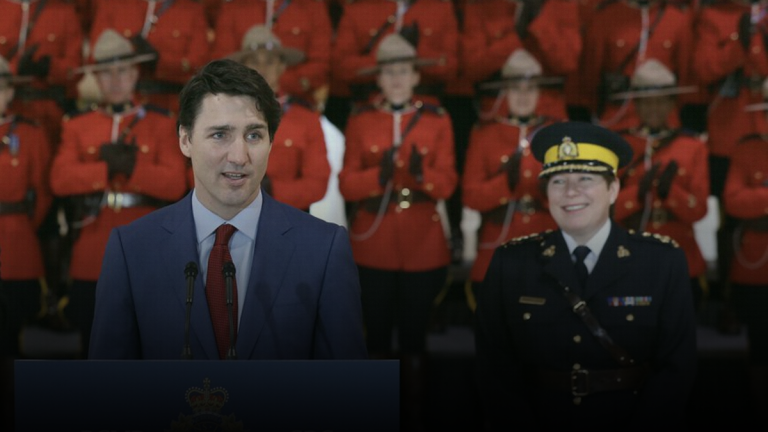
Lost this week among all the noise surrounding the COVID-19 pandemic, was the report dubbed 2020-2021 Departmental Plan for the RCMP.  It was tabled in Parliament by the Minister of Public Safety Bill Blair.  

I have rarely, if ever, read such a piece of bureaucratic drivel as this document. It goes on for 35 pages and says nothing of importance. Oh, it proclaims the virtue of Justin Trudeau’s gender equity and transgender inclusiveness and the rest of the Liberals virtue signalling idiocy like green initiatives and all that nonsense. 

But it doesn’t deal with the real challenges that face our national police force. After just having been hit with a $1.8 billion settlement price tag to deal with class action harassment lawsuits by serving and former members of that dysfunctional organization, it does not talk about the way forward.

For at least two years the RCMP has been struggling with recruiting. In December 2018 the CBC ran a story headlined: Short-staffed RCMP looking at ‘everything’ to attract new recruits. In reality, the problem has been going on for much longer.

The reality is that RCMP changed their recruiting practices 20 or so years ago which made it more difficult to get hired by the Force. The prototypical Saskatchewan farm boy, once a stalwart of contract policing in the west suddenly was no longer desirable to the politically enlightened leadership of the RCMP. 

They wanted post-secondary degrees, gender equity and diversity to reflect ‘the community they serve.” Affirmative action hiring became the norm. 

This left the largest policing agency in Canada with a shortage of folks who wanted to do the dirty work that is actual policing. The sort of work done by the Saskatchewan farm boys without complaint. The new hires felt night shifts were beyond them given their hard-earned degrees in social studies. 

In the late 90’s they started teaching their snowflake recruits they could “opt-out” of calls if they deemed they were too dangerous to attend. I can’t even get my head around that one. Policing is a dangerous job. It is a job typically done by those who answer a call to serve their community. You are trained and paid to run towards danger not to “opt-out.”

But that was then back when I wore the red serge I suppose. It would seem the leadership of the RCMP can’t get out of their own way. 

This report tabled by the Minister tells me that things aren’t getting any better. Consider this statement from the report: “The RCMP is also implementing the Safe Place Program, a public awareness initiative that promotes a partnership between businesses and police to provide a safe place for members of LGBTQ2S+ communities that may be experiencing harassment, crime, or bullying.” 

Um, their own members are the victims of harassment and bullying. That’s why the RCMP has to pony up $1.8 billion.

Or this: “The RCMP supports transgender, non-binary, and two-spirit employees.”

What does that even mean? There is also a section about Gender Equity and the Emergency Response Team. Now, I don’t know about you, but if I am in an active shooter situation and the ERT is responding, I honestly don’t care what the genders of the team members are. I want to know they can and will get the job done. 

It’s clear that the bureaucrats in the PMO and the Public Safety Ministry had their fingerprints all over this report.  Speaking of affirmative action hires, the Commissioner of the RCMP didn’t have the intestinal fortitude to tell them to bugger off and she would show them the report when it was done and not before. 

What is clear in reading this report is that the management of the RCMP has been taken over by the Trudeau Liberals.

Very sad for a once proud and great organization. 
Wet’suwet’en hereditary chief says pipeline “hijacked” by just five chiefs

0

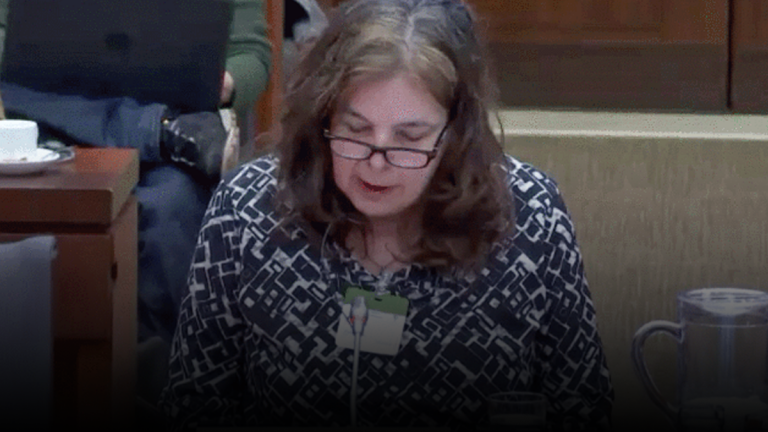
A Wet’suwet’en leader told MPs that the Coastal GasLink pipeline project on their territory has been “hijacked” by just five chiefs.

At a House of Commons committee meeting earlier this week, Wet’suwet’en Hereditary Chief Theresa Tait Day told MPs that the Liberal government made a huge mistake when they held meetings with the five dissidents several weeks ago.

“The government has legitimized the meeting with the five hereditary chiefs and left out their entire community,” she said.

“We can not be dictated to by a group of five guys.”

Tait Day slammed the federal government for treating these five chiefs as if they were legitimate spokespeople for the Wet’suwet’en people.

“This project has been hijacked by the five chiefs,” she said.

“Over 80% of the people in our community said they wanted LNG to proceed.”

Tait Day had been part of the coalition of Wet’suwet’en hereditary chiefs which met in 2015 and gave their approval for the pipeline.

Tait Day added she felt like her community was being used by environmentalists to further their anti-pipeline agenda, regardless of what her people actually want.

“We feel like we have been hijacked by the protestors who have their own agenda.”

In February, Crown-Indigenous Relations Minister Carolyn Bennett met with the dissident chiefs in Northern B.C., coming to a tentative agreement on how to acknowledge land title rights.

The hereditary chiefs still oppose the pipeline, though construction has been allowed to resume.

A number of hereditary chiefs have spoken out in support of the Coastal GasLink project.

In early February Skin Tyee First Nation Hereditary Chief Helen Michelle said that the vast majority of Wet’suwet’en support the pipeline, adding that the people protesting are not from her community.

Like Tait Day, Michelle also notes that only one hereditary clan, consisting of five male chiefs, oppose the pipeline.

Later in February, Hereditary Wet’suwet’en Subchief Gary Naziel said that the dissident chiefs are twisting Wet’suwet’en traditional laws.

“These five so-called hereditary chiefs, who say they are making decisions on behalf of all Wet’suwet’en, do not speak for the Wet’suwet’en,” he said.

“They are neither following nor abiding by our traditional laws. They are changing them to suit their own purposes, to benefit themselves.”

Federal health minister says between 30% and 70% of Canadians could get coronavirus

0

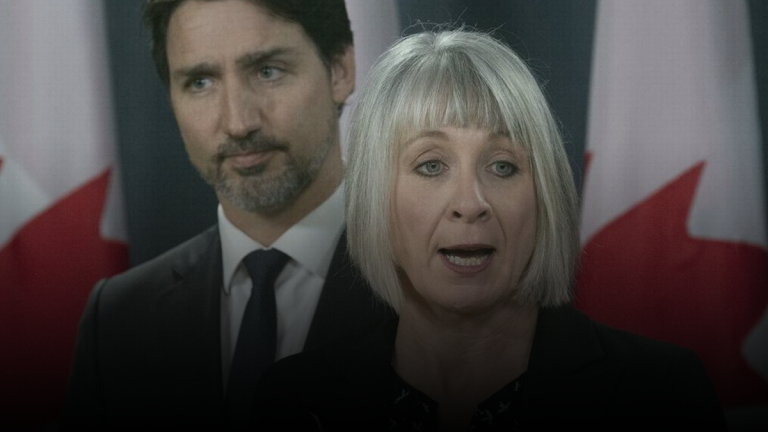
Federal Health Minister Patty Hajdu has warned that a significant percentage of Canadians could contract coronavirus as the pandemic continues to spread.

In the House of Commons health committee on Wednesday, Minister Hadju told MPs that the government is looking at some extreme estimates of how many Canadians may become infected.

“There are a range of estimates, but I would say that it is safe to assume that it could be between 30 percent of the population that acquire COVID-19 and 70 percent of the population,” she said.

She added that the spread of the virus is dependent on the effectiveness of the government’s response.

As of Saturday, there have been over 150,000 cases of COVID-19, with over 5,600 deaths.

In Canada, there have been 200 confirmed cases.

According to the World Health Organization global fatality rate for COVID-19 globally is 3.7%. If between 30-70% of Canadians were to get COVID-19 between 403,000 and 940,000 Canadians could die assuming the fatality rate remains the same.

Despite dire warnings from Canada’s healthcare community, the federal government’s response to the COVID-19 outbreak was slow and restrained.

Earlier in March Hadju said that her government has not implemented extra screening measures along Canada’s borders, claiming it would not matter.

“The more countries that have outbreaks, the less relevant borders become. A virus knows no borders,” she said.

Meanwhile in the United States, the Trump administration implemented various travel restrictions in the early stages of the pandemic.

Most recently the United States announced a travel ban against most European countries as the virus continues to spread quickly across that continent.

By contrast, passengers arriving in Canada on Air Canada’s last flight from Italy for the foreseeable future were not even screened upon arrival. Italy, with over 17,000 cases of COVID-19, is the world’s second most infected country behind China.

This week, the government has moved quickly as cases of COVID-19 soared in Canada, including implementing a $1 billion response fund and $10 billion stimulus package to keep the economy from declining.

On Friday, the government announced some restrictions on international travel, including limiting international flights to select airports and banning cruise ships until July 1.

KNIGHT: Do you trust the government?

It doesn’t matter the issue — the Trudeau government just can’t bring themselves to do the right thing for Canada.

They exacerbate the problem by not being honest with Canadians about they are doing and why.

True North’s Leo Knight explains in his latest video.

Fan of Leo’s? Support True North: http://www.tnc.news/donate/

China and Russia trying to influence Canada from within, claims intelligence report

0

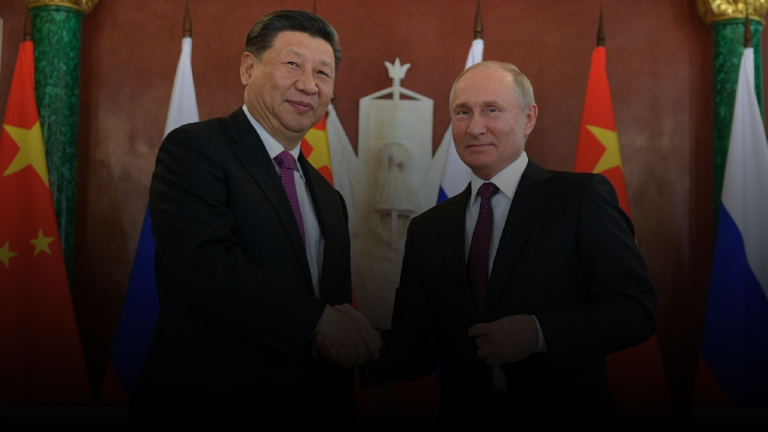
China and Russia are trying to subvert Canada from within and the federal government has done very little about it. 

A new report by the National Intelligence and Security Committee (NISC) raises red flags involving Chinese and Russian interference in Canadian society and institutions. 

The NISC warned on Thursday that foreign actors have been trying to manipulate politicians, students, the media and post-secondary institutions for their own strategic ends. 

“The threat is real, if often hidden. The perpetrators have become more brazen and their activities more entrenched,” claims the report. 

“Canada has been slow to react to the threat of foreign interference.”

The report noted, “Foreign interference activities are targeted at three key areas: the electoral process at all stages, elected officials and their staff, and sub-national areas of government.”

The report paid special attention to China, which it alleges has been using citizens and students within Canada to conduct clandestine intelligence-gathering activities to undermine Canadian sovereignty and democracy. 

“These states target Canada for a variety of reasons, but all seek to exploit the openness of our society and penetrate our fundamental institutions to meet their objectives,” said NISC chair and Liberal MP David McGuinty. 

In its recommendations to combat the threat, the committee called for a “whole of government approach.” 

The report comes several months after a top RCMP intelligence officer was arrested in September 2019 after stealing a large trove of highly classified information with the intention of selling it to foreign actors.

Cameron Ortis was charged with seven criminal counts, including obtaining information to pass off to a foreign entity, communicating special operational information, and breach of trust. 

According to a source from within the RCMP, Ortis had “large quantities of information, which could compromise an untold number of investigations.” 

In January of this year, new charges were brought against Ortis for “intentionally and without authority” sharing confidential information with four people in 2015.

ESKENASI: Avoiding people during COVID-19 pandemic is not racist

0

Canadians are becoming increasingly concerned about the spread of COVID-19 and many have decided to self-isolate or avoid certain areas or large gatherings. Choosing to stay away from a particular person or place because you’re fearful of catching the virus may be discriminatory, but is it racist? And aren’t they the same thing?

When news of the COVID-19 outbreak in Wuhan, China began to circulate in the media, many Canadians felt a sense of detachment. The virus was far away and across an ocean, in a part of China they had likely never heard of, let alone would be able to find on a map.

Then media reports and videos — supposedly from Wuhan — began to leak out on social media. Trucks spraying massive clouds of unknown substances, authorities appearing to weld doors and gates shut, locking people in their homes and individuals collapsing on the streets. 

As the numbers of infected began to rise, speculation as to the origins of the virus became a near pastime for many online. Did it come from a secret weapons lab? Was it contracted by eating raw or unusual animals? All throughout though, one thing was clear: the going narrative was that this was clearly a ‘Chinese’ virus.

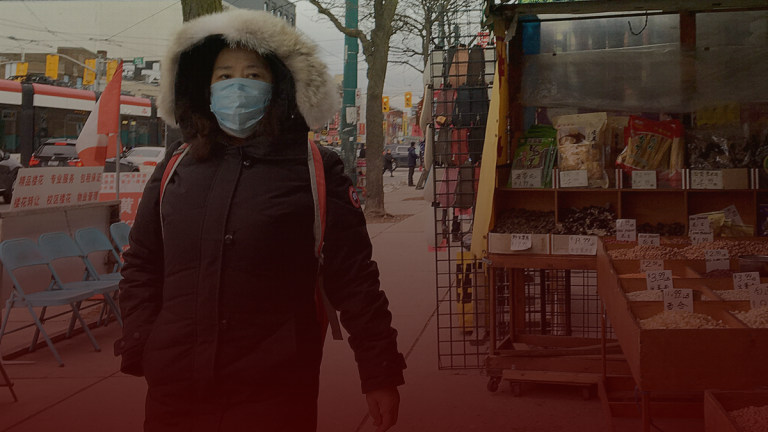
That’s when Prime Minister Justin Trudeau began warning Canadians against a rise in racism and hostility towards the Chinese community. This echoed an earlier warning from Chinese community leaders fearing a repeat of the racism they said they faced during the SARS epidemic. 

As the numbers of infected began to surge and cases appeared in additional countries, anxiety around the virus began to increase. Many vowed to stay away from Chinese restaurants and neighbourhoods, citing increasing concern that they might catch the virus, either from someone who had been to Wuhan or had themselves contracted it from an individual who recently travelled to China. Now calls to avoid Italians and Iranians have begun to crop up after both Italy and Iran reported large-scale outbreaks. 

Along with general fear and panic over COVID-19, many Canadians — and people across the globe — will, in the coming days and weeks, make decisions about where to go, who to associate with and what precautions to take. 

These actions are, by their very nature, discriminatory because they draw distinctions between two or more people, places or things. 

But are they racist?

Dr. Thomas Sowell, American economist and senior fellow at the Hoover Institution at Stanford University provides a useful analytical tool which can help us understand, as he puts it, the three types of discrimination: 1a, 1b and 2.

Discrimination 1a is when an individual is sorted (or discriminated) based on relevant characteristics specific to each person. For example, Kennedy is Chinese and has visited family in Wuhan recently where a COVID-19 outbreak is happening; I will, therefore, avoid contact with him for the near future.

Discrimination 1b happens when you try to predict an unknown individual characteristic based on observed group characteristics or averages, which economists call ‘statistical discrimination.’ This type of discrimination is used statistically (as well as in practice) when there is a lack of information on a person’s specific characteristics (1a). As such, a known characteristic, like country or region of origin, can be used as a proxy for unknown characteristics that are likely to be correlated. 

An example would be: there are many Iranian foreign exchange students at my school and I know that a number of them travel to Iran regularly. I also know that Iran currently has a considerable outbreak of COVID-19; since I do not know whether or not each individual has visited Iran recently, I will avoid contact with them as a group for the near future because they are more likely as a group to have individuals who have visited Iran compared to the foreign exchange students from Japan.

Discrimination 2 occurs when someone makes a decision based on arbitrary discrimination that ignores characteristics relevant to the decision making process. This is known as ‘animus’ or ‘taste-based’ discrimination because the only thing important to the decision-maker is one specific known characteristic; the person who I buy my morning coffee from is Asian, I am not sure whether or not he is Chinese or from another country in Asia, but I plan on avoiding him for the near future.

It is this type of discrimination (2) that most individuals would correctly associate with the racism and discrimination that we as a society reject, since it divides people based on only one characteristic, regardless of whatever personal specifics may be relevant.

Differentiating (dare I say discriminating?) between these types of discrimination is important because they help us understand the motives behind the actions of the discriminator. Or, alternatively, if discrimination is a reasonable step to take.

Imagine you are walking down the street in an unfamiliar neighbourhood at night when you suddenly see a shadowy figure walking towards you. As they get closer you notice that they are what appears to be a menacing-looking man. In this case, the cost of judging him on his particular merits would be too high. You must therefore, for your own safety, make a judgement about this individual based on the usual characteristics associated with people who look like him since his appearance is the only thing you have to judge in this particular case. 

Now imagine you’re walking down that same street and you see an elderly woman coming towards you, your decision would undoubtedly be different. The legitimacy of using discriminatory thinking in your decision making is entirely case specific. 

Not all categorizations are the result of malicious, racist or otherwise evil intent, and it is important to note this fact. Examining a person’s overall pattern of behaviour, as opposed to the specific instance of discriminatory decision making — especially when panic over the COVID-19 outbreak is rising and may soon reach outrageous proportions — will help lower or avoid friction between individuals.

Avoiding groups which have a statistically higher likelihood of carrying the virus is certainly discriminatory, but it is not always racist. 

Quebec to receive $13.2 billion in equalization payments while Alberta in midst of crisis

0

While Premier Jason Kenney was in Ottawa seeking help from the federal government amidst a financial crisis that could cripple the Albertan economy, Quebec will be gifted $13.2 billion in equalization payments. 

The sum is $100 million more than the $13.1 billion the province received last year. Meanwhile, Alberta, alongside Saskatchewan and Newfoundland and Labrador, has not received any equalization payments since 2010. 

Quebec’s share of the equalization total was revealed by the province’s Finance Minister Eric Girard during a budget proposal. 

Alberta’s economy has been reeling due to the largest stock market crash since 2008 and an ongoing oil price war that has crippled the province’s core industry. 

Kenney made an appearance in Ottawa on Wednesday alongside his fellow premiers to engage the federal government on how to best deal with the impacts of the COVID-19 pandemic and its economic effects.

“We are facing an economic crisis in Canada and we need the national government to act accordingly with total focus on that issue,” said Kenney. 

“We need that more in Alberta, I believe, than any other part of the country.”

Layoffs are expected in the oil and gas sector which has seen some companies lose share valuation by up to 90% in the last two days. 

“A number of our energy companies saw their share valuation go down by as much as 90% in the last 48 hours,” said Kenney. 

“A lot of those oilfield workers who are on rig sites will be laid off and probably won’t be going back to work.”

The Toronto Stock Exchange plunged over 12% on Thursday, one day after Donald Trump announced a ban on air travel into the US from the European Union. 

SkipTheDishes introduces contactless delivery, suspends cash orders to prevent COVID-19 spread

0

Food delivery app company SkipTheDishes has introduced new public health and safety measures to prevent the spread of COVID-19 in Canada. 

“The health and safety of our customers, restaurant partners, and couriers is of the utmost priority. With the ongoing news of coronavirus (COVID-19) in Canada, SkipTheDishes is taking additional precautions across our network,” wrote the company on their website. 

Couriers will not be accepting cash payments for deliveries until further notice, and customers can request “contactless delivery” to have food left at their door. 

“Early next week we will be suspending the cash payment option for all orders. Contactless payment options allow all users to reduce contact with surfaces known to aid in the spread of COVID-19,” said SkipTheDishes.

“You can request Contactless Delivery by leaving a note after selecting ‘Deliver to My Door’ at checkout for all orders. Make sure you use the live order tracker and collect your food when it’s marked as ‘Delivered.’”

The announcement comes as the total number of COVID-19 cases in Canada edges closer to 200. As of this article’s publication, 152 people have been infected with the virus nationwide.

Several other private companies and retailers have joined in on the effort to fight or curb the spread of the coronavirus pandemic. 

In the United States, Walmart, Walgreens and CVS recently announced that they will allow their parking lots to be used as impromptu coronavirus testing stations after President Donald Trump announced a state of emergency on Friday. 

“When we got the call yesterday from the White House, we were eager to do our part to help serve the country,” said Walmart CEO Doug McMillon. “And given what we are facing that is certainly important to do. We should all be doing that.”

Uber has also stated that they will be temporarily suspending the accounts of drivers who are known to have contracted the coronavirus. The food delivery arm of the company, Uber Eats, also implemented an option for customers to have food delivered to their door. 

FUREY: Trudeau’s plan to “phase out the oil sands” is working

It turns out when Justin Trudeau said, “I want to phase out the oil sands,” it wasn’t a gaffe or misspeak – it was the plan all along.

Earlier this week, the Globe and Mail reported that Liberal MPs and cabinet ministers were working behind the scenes working against the Teck Frontier oil sands project.

This project would’ve brought thousands of much-needed jobs to Alberta.

True North’s Anthony Furey explains in his latest video.

Fan of True North and Canada’s energy sector? Support independent media in Canada: http://www.tnc.news/donate/

Elections Canada auditing Liberal minister’s secret New York campaign fundraiser

0

Elections Canada will be auditing Indigenous Services Minister Marc Miller’s 2019 campaign rifling over his failure to report donations from an American fundraising event, according to Blacklock’s Reporter.

Miller travelled to New York City to attend an Oct. 10 fundraiser for his campaign, which Miller has said was hosted and attended by Canadian citizens.

While the fundraiser was documented and filed with the US Department of Justice, none of the 27 donors listed on his campaign return had a residence in the city.

“[Miller] has agreed with the Liberal Party of Canada through oral discussions to attend a meet and greet among Canadian citizens living in New York City on October 10, 2019 at a Canadian citizen’s home in New York City, and collect donations from these Canadian citizens for his Canadian election campaign as Liberal Party of Canada candidate for Ville-Marie-Le Sud-Ouest-Île-des-Soeurs in Montréal, Canada,” wrote a Foreign Agents Registration Act with the DOJ. 

Chief Electoral Officer Stéphane Perrault acknowledged the investigation at a parliamentary committee meeting Thursday.

“His return is being audited as we speak,” Perrault told a Conservative MP, “Like in any cases where we warrant the Commissioner’s attention, we involve the Commissioner.”

Miller has not said who was present at the fundraiser or who contributed to his election campaign. However, as revealed by True North founder Candice Malcolm, one of the organizers of the event was a former senior aide to Hillary Clinton.

Cooper’s work for Clinton involved setting up her ill-fated email server while she was the Secretary of State. Cooper set up the server which was eventually leaked despite not having any prior experience working in the field of cybersecurity. 

The Liberal cabinet has defended Miller claiming that all election laws were followed.

“All aspects of the law were faithfully adhered to and any insinuation, implication or suspicions otherwise with regard to Minister Miller are wholly and utterly unfounded,” said Government Representative in the Senate Marc Gold on February 27.