Just a few weeks ago, Justin Trudeau was calling trucker convoy supporters a “fringe minority” with “unacceptable views.” Now, he’s lecturing the world about the importance of respecting people with different viewpoints. True North’s Andrew Lawton says the world community is likely to see through this having watched his government’s crackdown on peaceful protesters just a few weeks ago. Also, why conservatives shouldn’t support Putin, plus National Council of Resistance of Iran spokesperson Alireza Jafarzadeh on Iran’s attempts to restore the infamous nuclear deal with Russia’s help.
SUBSCRIBE TO THE ANDREW LAWTON SHOW
Trudeau calls for civility after calling truckers racists
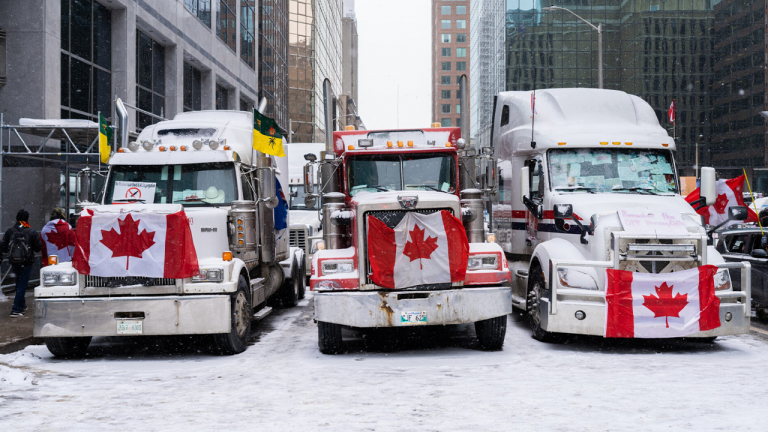
Trudeau’s cringy Operation Photo-Op continues

For the past week Justin Trudeau and three of his senior cabinet ministers have been touring Europe, taking lots of photos and lecturing the world about “democratic values.”
In the UK, Trudeau was met with massive protests and negative press. In Latvia he was oddly grinning ear-to-ear while standing next to Canada’s military. And, in Germany, Trudeau told world leaders that in a democracy, people need to listen and have respect for those who hold “different political views.”
On this episode of The Candice Malcolm Show, Candice breaks down the unbelievable gaslighting and very worst moments of Trudeau’s European photo-op tour.
SUBSCRIBE TO THE CANDICE MALCOLM SHOW
B.C. drops masks, will drop vax pass April 8 “assuming conditions”
Holdout province British Columbia has finally floated a timeframe for dropping its mask mandate and vaccine passport, “at least for the spring and summer months ahead.”
Provincial health officer Dr. Bonnie Henry announced Thursday that B.C. would be lifting its mask mandate for most settings at 12:01 AM PST on Friday, excluding high-risk health environments such as doctor’s offices and healthcare settings.
The lifting of masks extends to schools from kindergarten to grade 12 but will not come into effect until students return from spring break. For most public schools in the province, the break runs from March 13-28.
Henry added that “in many workplaces, masks will still be required. They just will no longer be mandated in those areas.”
“Masks continue to be encouraged in some of those settings where we have to get close to other people, and we can’t necessarily avoid it, and things like public transit and on B.C. Ferries, but they’re no longer, as I said, mandated under an order.”
As for the province’s vaccine passport, Henry announced that the program is set to be lifted on April 8, “assuming that our conditions continue to improve.”
Henry said she would also be repealing the order that requires post-secondary students who live in residence to be vaccinated.
“And workplaces will transition back to this requirement rather than having the broader communicable disease plans in place,” she said.
As for the vaccine mandate originally slated for private-sector healthcare professionals, Henry said she would be working with individual licensing colleges moving forward to determine how and whether it will apply.
“So yes, this is different from our original vision, which would be people not being able to practice if they were not vaccinated by March 24,” Henry admitted. “We’ve been working through the specifics with each individual college and based on the risks within each profession.”
Henry began her announcement by congratulating the province’s higher-than-90% vaccination rate for people over 12, saying she was able to consider lifting restrictions thanks to them “stepping up and doing what we needed to do.”
“Our approach has always been to only have the minimum necessary restrictions to keep people safe and to prevent the transmission, particularly to those who are more susceptible to severe illness with COVID-19,” Henry said. “It is finding that balance. I am incredibly grateful to the millions of people throughout our province for your willingness and support in adopting our COVID-19 safety measures. Your efforts combined with these high vaccination rates have saved countless lives.”
“It’s a good place for us to be and I’m optimistic that we’ll be able to continue this path at least for the spring and summer months ahead.”
Vancouver Coastal Health top doctor said mandates and passports ineffective
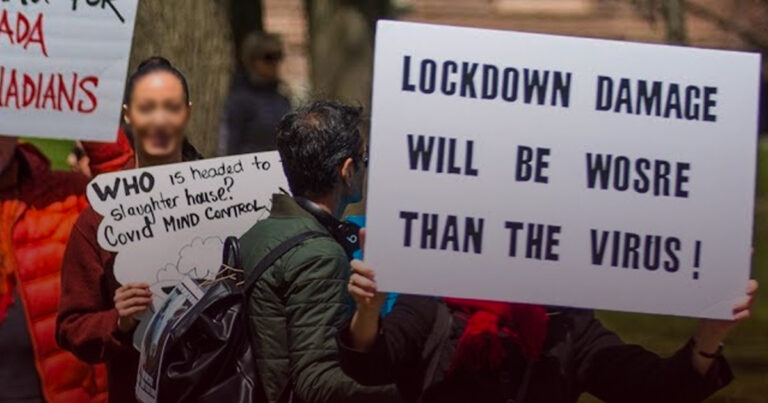
Vancouver Coastal Health’s Chief Medical Officer Dr. Patricia Daly slammed vaccine mandates and lockdowns as being ineffective and doing more harm than good in a newly released letter from February.
The letter addressed to the president of the University of British Columbia cited a study by the Social Science Research Network entitled The Unintended Consequences of COVID-19 Vaccine Policy: Why Mandates, Passports, and Segregated Lockdowns May Cause more Harm than Good.
The pre-printer study – which means it was not yet peer-reviewed – was conducted by international public health and infectious disease experts who concluded that the measures employed by governments to combat COVID-19 impinged on human rights and adversely affected health.
“The authors conclude that such policies ‘may lead to detrimental long-term impacts on uptake of future public health measures, including COVID_19 vaccines themselves as well as routine immunizations. Restricting people’s access to work, education, public transport, and social life based on COVID-19 vaccination status impinges on human rights, promotes stigma and social polarization, and adversely affects health and wellbeing,” wrote Daly.
Daly also encouraged the university to drop its vaccine requirement for registering students and its rapid testing program citing the fact that “there is now evidence of the endemic nature of the virus.”
“Such measures may result in profound negative harms on (student’s) future health and wellbeing, by impacting future educational and career opportunities, and their mental health,” wrote Daly.
The university eventually complied with Daly’s advice and reversed its policies.
Daly’s letter was released one day before B.C.’s Provincial Health Officer Dr. Bonnie Henry announced that mask mandates would be lifted shortly after midnight at 12:01 AM PST on Friday.
Henry also stated that vaccine passports would no longer be required beginning on April 8, “assuming that our conditions continue to improve.”
Other studies have concluded that lockdowns have done little to reduce COVID-19 mortality rates, and have in fact hurt individuals and society severely. Last month, researchers at Johns Hopkins University arrived at similar conclusions.
“Overall, we conclude that lockdowns are not an effective way of reducing mortality rates during a pandemic, at least not during the first wave of the COVID-19 pandemic,” wrote researchers.
“In Edmonton, Canada, isolation and quarantine were instituted; public meetings were banned; schools, churches, colleges, theaters, and other public gathering places were closed; and business hours were restricted without obvious impact on the epidemic.”
Roman Baber enters Conservative leadership race
Independent Ontario MPP Roman Baber has announced he is running to become the next leader of the Conservative Party of Canada (CPC).
“Despite the challenges, please have faith in Canadian kindness,” said Baber at his campaign launch on Wednesday. “It’s time to heal, and I invite you to turn a page and join me in uniting this country.”
Baber was introduced by Breakthrough Autism founder Nancy Marchese who said that she has met many politicians over the years, but none of them were like Baber.
“I’m here at my very first political party event because I believe in people, I believe in Canada, and I believe in Roman,” said Marchese.
Baber spoke about how he immigrated to Canada when he was 15 years old and that his family had little money when they arrived. He said that did not matter, however, because Canada gave him every opportunity to succeed.
Many Canadians are worried about Canada’s future, said Baber, and that he is not going to sit back as Canadians lose faith in government.
Lockdowns, he said, were “the greatest policy error of our generation.”
Baber added that he refused to ignore how healthy people were harmed by the measures and that he had spoken out because “people matter before politics.”
Baber was originally elected as a member of the Ontario PCs in 2018, but Premier Doug Ford removed him from caucus on Jan. 15. 2021 over his opposition to the government’s lockdowns and other pandemic restrictions.
Baber said that he will advocate against vaccine passports and vaccine mandates if he is elected as CPC leader. He promised to promote free and open discussion instead of censoring people he disagrees with.
He also said that he would promote job creation, adding that Canadians “don’t want basic income, but to earn an income.”
Baber also said that Canada’s natural resources are a blessing and that if elected leader, he would not allow oil and gas projects to be cancelled.
Baber said the CPC needs to reach out to disillusioned conservatives, young people and those living in urban centres. The Conservatives have “to articulate a reasonable and practical stance rooted in kindness,” he said.
“Change is coming. We’re going to disrupt politics and change the way politics is done, so we can reignite and unite the Conservative Party and so we can win and unite our wonderful country.”
Prior to his announcement on Wednesday, Baber had said he was running to create change.
“I am grateful to Canadians who stood with me for the last 15 months,” he said in a tweet. “You can always count on me to say what I believe & do what I believe to be right.”
So far, the candidates for the Conservative leadership race are Baber, CPC MPs Pierre Poilievre and Leslyn Lewis and former Quebec Liberal premier Jean Charest.
Brampton mayor Patrick Brown is also expected to enter the race, while CPC MP Scott Aitchison and former CPC MP Leona Alleslev are said to be considering.
The next Conservative leader will be elected on Sept. 10.
Canadian veteran James Topp completes first 500km of protest march to Ottawa
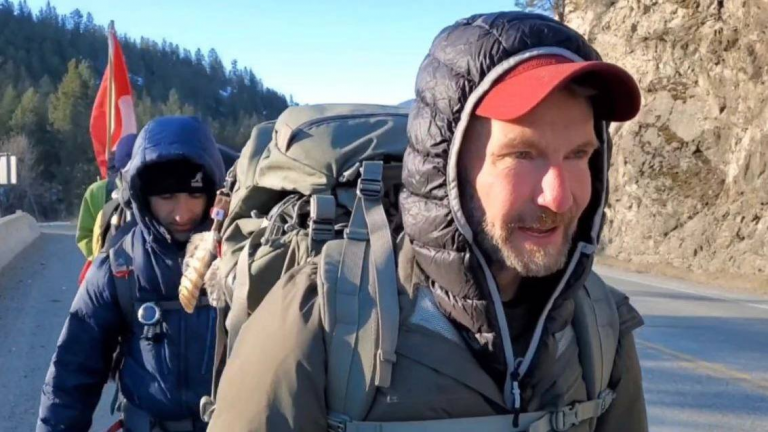
Canadian Armed Forces veteran James Topp completed the first tenth of his march from Vancouver to Ottawa on Thursday, reaching the town of Grand Forks, British Columbia as he looks ahead to crossing the Columbia and Rocky Mountains into Alberta.
“The support being offered is overwhelming, and I am thankful to everyone who reached out to me,” Topp told True North. “Many have opened their homes to me or offered donations. People have pulled over to wish me well and even marched with me for a while. It is the most amazing thing to be a part of.”
Topp also wanted to thank his support crew through the first portion of his journey, whom he described as “vital to the success of the mission so far.”
“They are Jeremy, Cristian, Dallas, Dan, Esther, and David, the owner of the RV who saw us through to Hope in the first phase of the march. There are other names I have not mentioned working super hard behind the scenes, and I am thankful to them all for making this mean something.”
Topp began his 4395-kilometre trek on Feb. 20, departing from the Terry Fox monument at Vancouver’s B.C. place in solidarity with the truckers and working Canadians to bring an end to overbearing government mandates.
The march began the same weekend that police cracked down on Ottawa convoy protesters under Prime Minister Justin Trudeau’s implementation of the Emergencies Act, an event that Topp told True North had only strengthened his resolve.
Topp said that everywhere he goes, he has heard stories from people like himself whose mental health and livelihoods have been devastated by government mandates during the pandemic.

“Everywhere I meet people, I hear their stories and the stories are amounting to an overwhelming amount of individuals suffering due to government overreach,” Topp wrote on Wednesday. “I am marching to carry these stories to Ottawa. I want to thank every person who has entrusted me with their story. It increases my resolve more and more each day.”
Topp continues to follow Highway 3 – also called the Crowsnest Highway – which skirts along B.C.’s border with the US. The route contains a number of small but historic communities including Midway and Greenwood, which has retained its historical designation as a city despite a current population of under 1000.
“On our way, we were welcomed by Baily, a health worker who was also fired from her job of serving the elderly with care after failing to comply with the mandate. She shared her story, as so many fellow Canadians have,” Topp wrote.
“On our way out of Greenville, we met John and his wife Annie who drove all the way from Victoria to meet us. John is a longtime airline pilot who is no longer working in that capacity, also due to the unjust mandate. John decided to join us in the march for the rest of the day, quite a feat on this cold day.”
Travelling across the Okanagan plateau will give Topp some flat land before he heads into the final two stretches of B.C.’s mountains, including the Columbian Mountains that serve as the western boundary of the Kootenay region. After that, Topp and his crew face the Rockies, where they will follow the Crowsnest Pass into Alberta.
“I am being realistic about hitting the mountains,” Topp told True North. “I respect the dangers that are present in the terms of weather and terrain. I am taking precautions by keeping daily distances shorter and having a safety vehicle nearby. I have people watching my back as we lean into this part of the journey.”
Topp’s progress can be followed on his website CanadaMarches.ca, which includes live GPS of his location, a blog and links to social media, as well as information for people wishing to volunteer or offer night support.
Calgary school board opposes “self-control” in new sex-ed curriculum

In addition to a spate of other criticisms, the Calgary Board of Education has complained that kids are being taught too much “self-control” in the latest sex-ed curriculum proposed by the Alberta government for five to 11 year-olds.
“The idea of ‘self-control is a necessary virtue’ is a heavily faith-based concept that erodes the ability to learn about healthy sexual relationships,” wrote the board. “Faith-biased understanding continues to label processes within this proposed draft. For example, pregnancy is referred to as a natural process while birth control is categorized as artificial. Further, the specific use of abstinence is inaccurate and presented as moral/values based ideal rather than one option with specific advantages.”
A Draft Curriculum Review Briefing submitted to the Regular Meeting of the Board of Trustees on March 8 is also chock- full of other woke complaints about the kindergarten-to-grade 6 curriculum. These complaints involved concerns about too much emphasis on the “great works” of literature and that counting dance steps constitutes a “colonial view” of the artform.
First proposed on Aug. 6, 2020, the Alberta government’s curriculum has faced controversy from progressivist opponents who have labeled it as too conservative and old-fashioned. As of January, the Ministry of Education has decided to move forward with an updated version after consulting with advisory groups.
In its review, the board primarily took issue with the curriculum being too centered on European culture and history. Board members also called for an “anti-racist perspective” to be included.
“The draft curriculum is Eurocentric, meaning, the focus is on Europe and Europeans, and the narrative is told from a European and European-settler perspective,” board officials wrote. “In addition to being Eurocentric and having problematic Indigenous content, the parts of the draft that attempt to address Black history in Canada are severely limited, lacking in substance and depth or an anti-racist perspective.”
Even when it came to teaching dance, analysts took pains to explain how counting steps and focusing on technique was a “colonial view” of dancing.
“The focus on counting, preplanning and technique is a colonial view of the dance artform,” bureaucrats wrote. “There is a clear Eurocentric bias when it comes to actively appreciating and engaging in Francophone, Metis, Inuit and First Nations dances.”
Additionally, educators took issue with the Alberta government’s emphasis on the “great works” of Greek and Roman literature and that the curriculum included too much Shakespeare.
“The works of literature and authors referred to as ‘great works’ are primarily focused on European culture and history (Greek, Roman, Renaissance, Shakespeare) with little connection to students’ interest and relevance to their own lived experiences,” the board wrote.
Similar gripes were voiced regarding the arts which board officials labeled as “overly Eurocentric (and) imbalance from a gender perspective.”
“The art appreciation outcomes are overly Eurocentric, colonial, and imbalanced from a gender perspective, and do not leave enough space for teachers and students to design learning about artists that meaningfully enrich other learning or exemplify local experiences and histories,”
The sciences were not immune to the woke complaints of the board either. Bureaucrats found issues with the curriculum failing to “acknowledge the existence of Indigenous science perspectives, let alone present their validity.”
The Alberta government has said that it hopes the curriculum would fully be implemented in public schools by Sept. 2023.
GiveSendGo refunding convoy donations after government attempts seizure
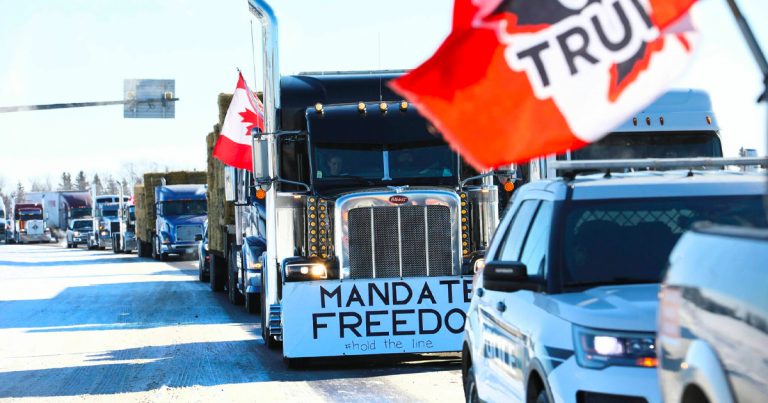
The fundraising platform GiveSendGo has announced that it will be refunding the remaining donations for the trucker Freedom Convoy, saying the Canadian government is “trying to seize the funds to redistribute.”
According to a statement posted on their official Twitter account, GiveSendGo said that the move was to protect donors and the intended purposes of their donations.
“The Canadian government has criminalized the receiving of funds from the Canadian trucker campaigns and now are trying to seize the funds to redistribute. In order to protect our Givers and the intended purposes of their gifts, funds not already transferred to the recipients from the ‘Freedom Trucker Convoy’ campaign will be refunded,” GiveSendGo wrote.
GiveSendGo is the target of an ongoing class-action lawsuit by Ottawa residents against fundraisers involved with the convoy.
Lawyers have already obtained a court injunction to freeze convoy funds and have attempted to apply the order to funds that have yet to be distributed by the platform.
However, co-founder of the Christian fundraising platform Jacob Wells has argued that GiveSendGo’s terms of service give the company power to return the funds to donors if it so wishes.
Despite arguments that GiveSendGo was in breach of a government order freezing the distribution of funding donations, Ontario Superior Court Justice Calum MacLeod stated that the injunction was only meant to apply to funds already in the possession of convoy organizers.
GiveSendGo was the victim of a hack last month after criminals leaked the private information of thousands of donors, some of whom were then targeted by harassment and threats.
Conservative MP James Bezan has asked the federal privacy commissioner to look into the matter, calling it a “blatant breach of privacy.”
Despite claims by the Liberal government that the convoy movement was foreign-funded, fundraising platform executives testifying before the Commons public safety committee stated that a majority of funds were from Canadian donors.
This is a developing story that will be updated.
Conservative MP wants political belief covered by Canadian Human Rights Act
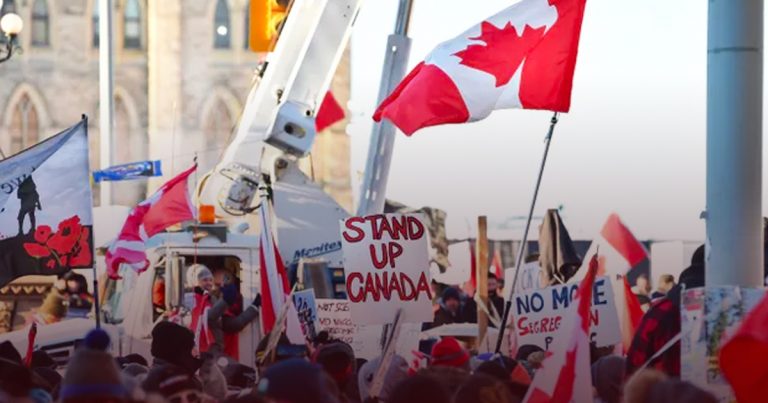
Conservative MP Garnett Genuis has brought forward a private member’s bill to add political belief and activity as protected grounds to the Canadian Human Rights Act.
“This bill is about protecting the rights of individuals – their freedom of speech and their freedom to be involved in the democratic process without facing reprisals,” said Genuis in a statement. “But it is also about realizing the benefits that come with a free democracy and a robust civil society.”
Speaking with True North’s Candice Malcolm on Tuesday, Genuis said that although some provinces offer provisions in their own human rights codes, there are not currently any federal protections against discrimination based on political beliefs or activities.
“There’s a difference between discriminating about ideas and discriminating against individuals,” Genuis explained. “So in terms of prohibiting discrimination against individuals on the basis of their political beliefs or activities, it’s about saying that governments or banks shouldn’t be able to fire someone or deny someone service on the basis of their political beliefs – that if your employer finds out that you’re conservative, they can’t fire you because of that.”
Genuis said that the Freedom Convoy showed a recent example of where individuals were persecuted on the basis of their political views.
“Let’s say somebody had made a small donation to the convoy and their employer found out about it,” he said. “This bill would, I think, provide some protection from that person being fired.”
Genuis added, however, that his bill would likely not work retroactively to recover jobs already lost.
He also said that “there is a distinction between someone facing discrimination and someone just having people be mean to them.”
Genuis explained that Bill C-257 would also provide exceptions for bona fide occupations where partisanship or political neutrality are reasonable requirements for employment. A political staffer is expected to have a certain worldview, he said, while other roles may require an employee to be nonpartisan.
This bill remains in first reading at the moment.
Conservative MP Leslyn Lewis seconded the bill.
“We must remain a country where everyone is free to speak their mind, especially about their own government, without fear of repercussions,” said Lewis in a tweet.
Genuis said that Canadians must be free to express and act on their political beliefs without being afraid of intimidation from governments or private employers.
“This freedom is essential for a strong democracy with a robust and independent civil society,” he said.
Queen’s University law professor Bruce Pardy said that in an era of cancel culture and anti-conservative discrimination, human rights codes should include political belief as a protected ground.
“No government of any political stripe has the courage to repeal human rights codes,” said Pardy in a column in the National Post. “The only way to even approach political neutrality is to have them protect political beliefs.”
B.C. health minister won’t say if vaccine mandate still on table for private health care

British Columbia’s provincial health officer Dr. Bonnie Henry has put out a new order affecting the province’s private-practice healthcare workers, but it’s unclear whether it is a step closer to mandatory vaccination for the sector or a walkback from it.
Henry had announced on Feb. 9 that the province would be extending its mandatory vaccination policy to include all regulated health care professionals not yet covered, including physicians, surgeons, chiropractors, dentists, midwives, acupuncturists, practitioners of Chinese medicine and many others.
Under the original order, all healthcare professionals in B.C. would have had to have shown proof of vaccination by March 24 or be deregistered by their licensing bodies.
The new order issued on Tuesday requires the governing colleges of B.C.’s regulated healthcare workers to collect the vaccine status of their members by March 31 and be prepared to give that information to the government on request.
The order refers to unvaccinated people as “health hazards,” has no expiry date and will “not accept requests for a reconsideration.” Although B.C. health minister Adrian Dix called it “a necessary step to gain access to the information around vaccination,” it differs from Henry’s original order in several key ways.
The first difference is the change from the province’s original deadline of March 24, which required private sector healthcare workers to have at least one COVID shot to continue practicing their professions. Despite requiring those workers to disclose their vaccination status to their regulatory colleges, the new order does not state that they will need to be vaccinated to continue operating their practices.
The second difference is the lack of consequences for workers who refuse to comply, as well as any deadline for when those presumed consequences might kick in.
Asked by reporters whether mandatory vaccination is even still on the table for the sector, Dix did not answer definitively.
“It’s my strong view that everyone in health care should get vaccinated,” he said.
Despite Dix’s view, at least one regulatory body covered by the order – the College of Physicians and Surgeons of British Columbia – is telling its members the new regulations do not require them to get their COVID shots to keep practicing.
On the college website’s FAQ page about the new order, the question and answer are as follows:
“Does the Order require registrants to be vaccinated against COVID-19?
No. This Order requires the College to record the COVID-19 vaccination status of all registrants, but it does not impose a COVID-19 vaccination requirement. Please note that separate public health orders remain in place requiring COVID-19 vaccination for health professionals working in residential care, acute care and community care settings.”
Henry’s new health order comes amidst fierce pushback from some healthcare professionals, who warned that the loss of services caused by mandatory vaccination would place additional stress on the province’s already buckling healthcare system.
An anonymous source also told True North that private-sector healthcare had “lawyered up” over the mandate and that the province realized it had a fight on its hands, especially in light of pandemic restrictions being dropped across the country and around the world.
As of Wednesday, B.C. remains the only province in Canada that has not committed to dropping its vaccine passports and mask mandates.