Former cabinet minister Peter MacKay has announced that he will not be running to become the next leader of the Conservative Party of Canada (CPC).
“I believe very strongly in our party, in the democratic process as well as being true to your word and being a fiscal conservative,” said MacKay in a video posted to Facebook on Saturday. “I continue to pay my campaign debt from the 2020 leadership campaign, which resulted from unforeseen circumstances.”
MacKay thanked his employers and his family, whom he consulted in his decision.
MacKay said it takes “an enormous commitment” to be Conservative leader and that he admires the candidates vying for the position. He vowed to continue to support Conservative interim leader Candice Bergen and the eventual winner.
“I look forward to staying active in the life of my community, my country and my party and wish you the very best,” he said.
MacKay came in second place in the 2020 Conservative leadership race, losing to former veterans affairs minister Erin O’Toole.
The former minister – who held the justice, defence and foreign affairs portfolios under former prime minister Stephen Harper – was believed to be entering the race after penning an op-ed in February in the Toronto Sun about how the Conservatives can win.
“We need to rebuild our party into the grand coalition it has always been, where all can hold divergent views and where members are prepared to be both flexible and constructive in pursuit of the best outcomes for Canadians,” he said. “Constructive Conservatism is the path for our return to government.”
MacKay added Conservatives have “found strength, purpose and the will to succeed when our country has needed it most” and that this moment is now.
MacKay also co-wrote an op-ed in the National Post on Feb. 14 supporting Liberal Prime Minister Justin Trudeau’s invocation of Emergencies Act, condemning the Ottawa convoy protests as “anarchy on display.”
So far, the candidates for the Conservative leadership race are CPC MPs Pierre Poilievere and Leslyn Lewis, Independent Ontario MPP Roman Baber and former Liberal Quebec premier Jean Charest. Brampton mayor Patrick Brown also officially entered the race on Sunday.
CPC MP Scott Aitchison and former Conservative deputy leader Leona Alleslev are also said to be considering running.
The next Conservative leader will be elected on Sept. 10.
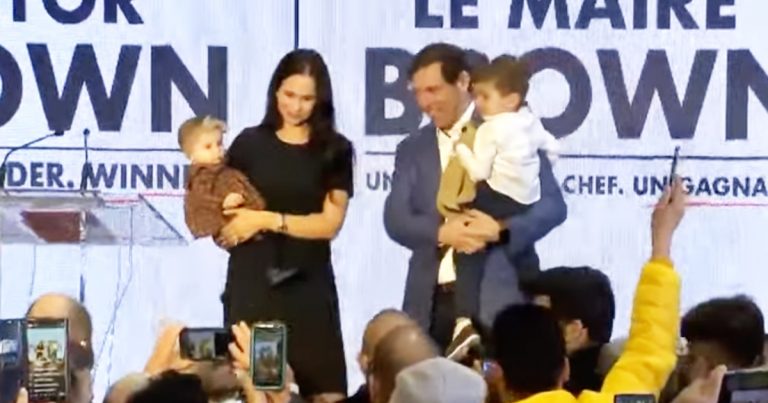
Brampton mayor and former Progressive Conservative Party of Ontario leader Patrick Brown is running to be the next leader of the Conservative Party of Canada.
“I will fight to build a stronger Conservative Party – one that’s rooted in our values and principles, and that can topple the Liberals. The only thing that matters to me is a better future for you,” Brown said at his campaign launch on Sunday.
“The Conservative party I am fighting for is one that is principled and inclusive. I want people who have voted for other parties to feel welcome in our Conservative family.”
Brown spoke about his record as mayor of Brampton, saying that he pushed back against the Ontario government’s lockdowns during the pandemic.
“When COVID-lockdowns threatened the freedom of families and businesses – and the mental health of Canadians – I was one of the only big city mayors to speak out and demand an end to restrictions.”
Brown also stressed the need for fiscal restraint and lower taxes.
“I’m the only big city mayor in Canada that has frozen taxes every year I’ve been in office while delivering four consecutive balanced budgets.”
The Brampton mayor also took a shot at fellow leadership contender Pierre Poilievre, saying that Poilievre “will never be prime minister.”
“Conservatives deserve more than a leader who is an attack dog in opposition,” said Brown.
Brown says Poilievre has “already turned off many Canadians that we have to inspire in order to win a federal election.”
Prior to Brown’s campaign launch, Poilievre’s campaign released an attack ad slamming the former Ontario PC leader’s record. Poilievre’s campaign advisor Jenni Byrne posted the video on Twitter, saying “Patrick Brown will say and do anything.”
Last week, CTV expressed “regrets” about its reporting of a 2018 story that triggered Brown’s resignation as leader of Ontario’s Progressive Conservatives.
Brown filed an $8 million defamation lawsuit against CTV’s parent company over a Jan. 2018 story detailing two allegations of sexual misconduct, which Brown denied.
In a statement, the broadcaster said “details provided to CTV for the story were factually incorrect and required correction.”
“CTV National News regrets including those details in the story and any harm this may have caused to Mr. Brown,” the statement, first reported by the Toronto Star, says.
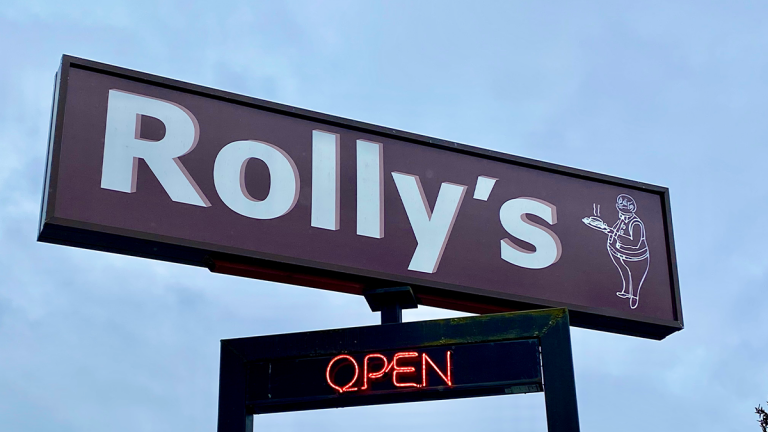
A small-town British Columbia restaurant that was shut down in October for refusing to check for vaccine passports has now reopened, the same day health officer Dr. Bonnie Henry announced the relaxing of the province’s pandemic restrictions.
Rolly’s Restaurant in Hope, B.C. resumed business on Thursday, five months after an injunction forced its closure last fall. The restaurant has now had to adopt a “counter-service model” in order to avoid enforcing vaccine passports, which are slated to be dropped on April 8. This means orders must be placed and picked up by customers in designated areas, similar to a fast-food restaurant.
Rolly’s was full on Friday for lunch, though its atmosphere was a little muted compared to the fighting spirit its walls had radiated last fall.
“I wasn’t sure what to expect,” co-owner Steve Young told True North. “From the support that we got, I thought that we would do well this summer when people were traveling. I mean, the counter service model is a bit of a gong show. It’s a huge change for us. We’ve got a month to live with it, but the servers are going around in circles. But it’s coming together. It’ll be fine.”
Rolly’s made national news last year by refusing to comply with B.C.’s vaccine passport program, which its owners called a violation of their customers’ privacy rights.
The restaurant continued operating after being served a closure order by the Fraser Health authority and having its business and liquor licences pulled, which drew fines of $100 a day.
The eatery became a rallying point for Canadians fed up with the erosion of civil liberties during the pandemic, drawing the personal attention of provincial health officer Henry and health minister Adrian Dix.
“They’ve hosted political parties that are anti-vaccine, and it’s been a difficult challenge,” Henry said in October. “It shows people that they don’t respect their neighbours, they don’t respect their business neighbours, they don’t respect their community and that is something that we’re hoping we’ll get an injunction to help support us in closing [them].”
“We owe one another to follow public health rules,” Dix added. “It’s our expectation people will do that.”
Rolly’s was shut down by a Supreme Court injunction on Oct. 20, after operating in defiance of the closure order for two weeks.
During the hearing, co-owner Marlene Abeling mentioned the constitution and the Charter of Rights and Freedoms multiple times, telling the court that she did not believe that COVID-19 was a health risk, that there had been no transmission at the restaurant and that it was illegal to ask customers for their medical information.
Both the judge and lawyers for Fraser Health said her argument was “for another day.”
Young told True North that he didn’t see Rolly’s Restaurant’s reopening on Thursday as a victory but that he was grateful for the support they had received, and he was looking forward to the remaining pandemic restrictions being lifted in a month.
“I’m sure we would have needed at least $100,000 to go to court and take on their team of four lawyers,” he said. “And we weren’t really given the opportunity for legal counsel. I mean, the judge just basically said, ‘who am I to question the health authorities?’ I don’t know why a judge wouldn’t consult the constitution. But at any rate, we weren’t going to go sell a house to go to court.”
Young commended the restaurant’s loyal staff, adding that finding good help has been a huge issue over the past two years. Despite the fines, he said that Fraser Health and the municipality had been reasonable with getting the restaurant back up and running again.
“I certainly don’t criticize them for any of this,” he said. “I mean, obviously it’s the health ministry that has imposed all this, and I certainly don’t agree with it. But, yeah, it’s interesting.”
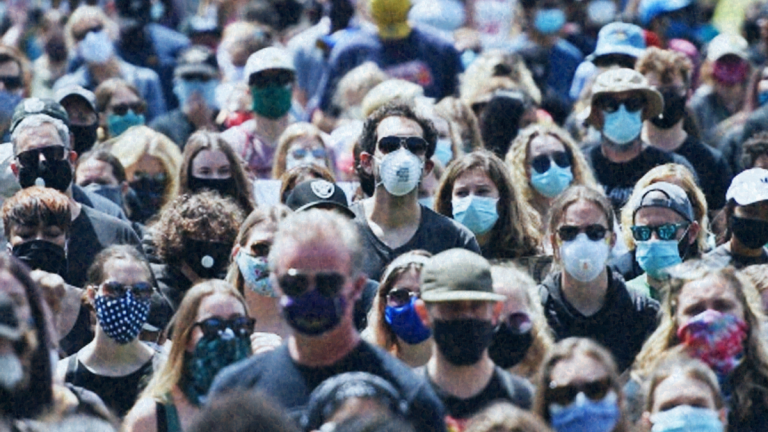
A vast majority of Canadians agree that the COVID-19 pandemic has brought out the worst in their fellow citizens, a new Angus Reid Institute poll shows.
On the two-year anniversary of the virus being declared a pandemic, people say they are faring worse now than when they were in 2020.
The poll, which was commissioned by CBC, suggests that approximately 80% of Canadians believed that people have been pulled further apart over the last two years and that “the pandemic has brought out the worst in people.”
The poll surveyed 2,550 Canadian adults from March 1 – 4. A poll with a similar probability sample would carry a margin of error of +/- 2% or 19 times out of 20.
When it comes to how much compassion people have for one another, over 60% of people said that they feel their fellow citizens are now less compassionate.
56% of people polled also said that they are less optimistic now as a result of the pandemic.
“When we see 80 plus per cent of people saying that the pandemic has pulled people further apart rather than brought them together, when we hear that almost the same number say that the pandemic has brought out the worst in people instead of the best in people, you really start to see that degradation, that breakdown of whatever sense of social cohesion we thought we might have felt this time two years ago,” said Angus Reid Institute President Shachi Kurl.
Nearly half of the survey participants also said that their overall life quality has gotten worse, while only 23% said it has gotten better.
As reported by True North, a number of public figures and politicians – including Prime Minister Justin Trudeau – have played a significant role in demonizing and polarizing fellow citizens during the pandemic.
Trudeau has been criticized all over the world for painting unvaccinated Canadians as “racists, misogynists and extremists.”
In a Sep. 2021 interview, Trudeau used the derogatory terms to describe his fellow citizens on a French-language program.
“They are extremists who don’t believe in science, they’re often misogynists, also often racists. It’s a small group that muscles in, and we have to make a choice in terms of leaders, in terms of the country. Do we tolerate these people?” asked Trudeau.
The CBC has publicly retracted a news story about the trucker Freedom Convoy that erroneously claimed that support for the protests had largely come from foreigners.
According to Blacklock’s Reporter, the claim was made by the CBC radio program The World This Hour.
“On February 10 in a report about the protest convoy CBC Radio’s The World This Hour incorrectly said GoFundMe ended a fundraiser for the protesters over questionable donations to the group,” a statement by the public broadcaster wrote.
No further explanation was provided by the CBC on why the statement was incorrect.
CBC has parrotted the idea that extremists and foreign sources were behind the trucker protests despite evidence showing otherwise.
Reporters at the outlet based their claims on a so-called “exclusive analysis” of donations.
A Feb. 10 article titled “Convoy Protest Received Hundreds Of Donations That Appeared To Be From Abroad” claimed that “donations identified by CBC News are likely only a fraction of all the donations made by people outside of Canada.”
“In recent days questions have emerged about how the protesters raised so much money so quickly and where it came from. Before GoFundMe shut down the protest convoy’s crowdfunding page and announced donors would be refunded it had attracted more than 120,000 donations amounting to more than $10 million.”
Another story by CBC claimed that “at least one third” of the donations were by anonymous donors.
However, according to GoFundMe executives who testified before a March 3 Commons public safety committee, foreigners made up a very small portion of the donors.
“Our records show 88% of donated funds originated in Canada and 86% of donors were from Canada,” said GoFundMe president Juan Benitez.
The chair of one of Canada’s largest farmers’ groups has confirmed to Parliament that the Trudeau government’s vaccine mandate for cross-border truck drivers is raising the cost of fruit and vegetables.
Chair of the Trade and Marketing Working Group at the Canadian Horticultural Council (CHC) Quinton Woods told parliamentarians at the Commons agriculture committee on Feb. 28 that the border restrictions on unvaccinated truckers further reduced the supply of available drivers.
He said this had compounded the supply chain problems fruit and vegetable growers already faced, forcing them to pass on the burden to consumers.
“One of the most important challenges—and very timely, based on recent events—is the availability of trucks and truck drivers. These shortages were there before the COVID-19 pandemic, but the introduction of the new border measures further reduced the supply of available truck drivers to haul our goods across international borders,” said Woods.
“It is important to note that the costs associated with these disruptions cannot be fully borne by growers like me, and that, wherever possible, we will need to pass these on to consumers. Sadly, these increases, which are being felt by the end consumer, are likely to escalate and most affect those who can least afford it.”
In January the Liberals flip-flopped on a prior repeal of the trucker vaccine mandate throwing the transportation into disarray. An estimated 26,000 unvaccinated truck drivers were taken off international routes as a result of the decision.
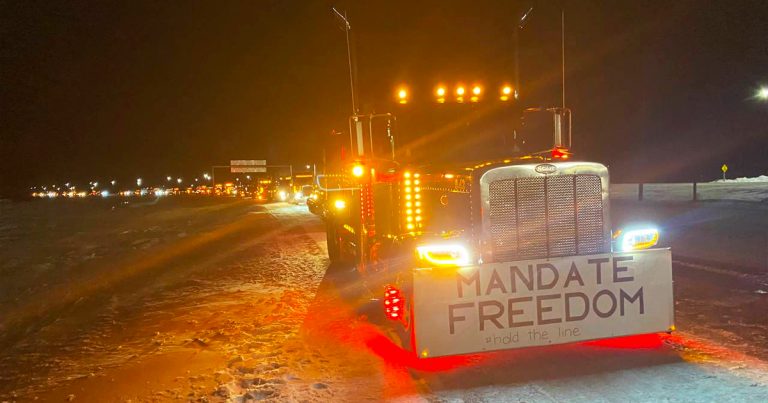
Despite warnings by industry leaders that the mandate would impact the cost of goods and lead to shortages, the Liberal government held firm on the mandate, which sparked the nation-wide Freedom Convoy movement.
Woods also told the committee that the skyrocketing price of fuel and fertilizer are also contributing to higher costs of produce.
“One of the biggest cost increases we’ve seen this year is actually the cost of fertilizer, with some growers facing increases as high as 53%,” said Woods.
In the last month alone, Saskatoon-based Nutrien Ltd. saw a 24% increase in stock price, while the cost of grain reached a 14-year-record of $10 per bushel. Although in part driven by economic sanctions on Russia for its invasion of Ukraine, the price of fertilizer was already at crisis levels prior to the invasion.
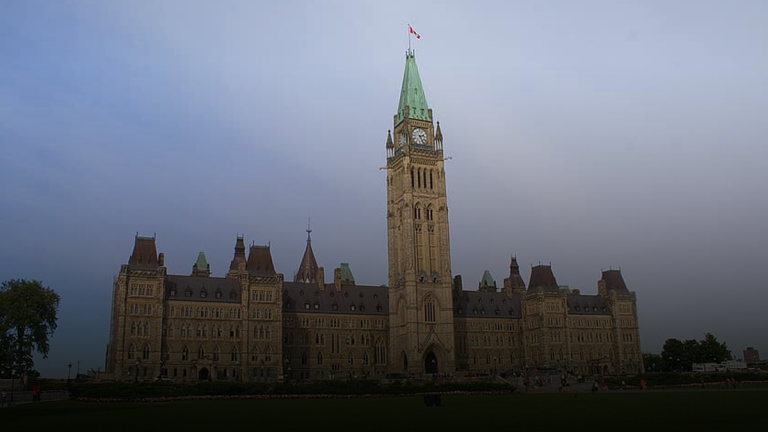
Members of Parliament have quietly dropped a committee investigation into the highly publicized incident of a woman who climbed atop the Tomb of the Unknown Soldier during the Freedom Convoy protests in Ottawa, according to Blacklock’s Reporter.
Although the woman’s identity and affiliations have not been identified, the incident and its images were widely shared by opponents of the convoy as evidence of the protest’s disrespectful and extremist roots.
The accusation came despite protesting veterans and other demonstrators showing great respect to the memorial, including sweeping it daily and conducting holy services on its steps.
The Standing Committee on Veterans Affairs in the House of Commons launched the investigation “given the shameful and disrespectful behaviour shown by protesters” in the incident in February. MPs passed a motion to “undertake an urgent study to review these actions and that the witnesses include the Ottawa Police Service.”
Ottawa Police never testified, providing no reason why.
“The reason this motion was put forward is so we do our part as a committee so the disrespectful behavior is not repeated,” said Liberal MP Rechie Valdez, who sponsored the motion.
The committee ended up dropping its probe, however, stating it “condemns the desecration of any war memorial in Canada including the National War Memorial, the Tomb of the Unknown Soldier and the National Aboriginal Veterans Monument in Ottawa and that the committee call upon law enforcement to continue their investigations.”
No reason was provided for discontinuing committee hearings.
A Twitter video from Jan. 31 shows a young woman wearing a parka standing on the Tomb of the Unknown Soldier at Canada’s National War Memorial, yelling, “freedom.”
The OPS issued a press release seeking information leading to the woman’s arrest soon after.
Veterans affairs minister Lawrence MacAulay accused the Freedom Convoy of being behind the incident.
“To see that from the protesters was shocking, disgusting and a slap in the face to every Canadian veteran,” said MacAulay at a committee hearing. “I hope we never, ever see anything like that again in this country.”
The woman was among tens of thousands of people protesting near Parliament Hill that day.
Two Ottawa residents were charged with mischief and carrying a concealed weapon to a public meeting, and a Quebec city man was charged with uttering threats on social media while he was in Ottawa.
Then-Ottawa Police chief Peter Sloly said at the time that the Freedom Convoy was “a unique demonstration.”
“No injuries, no deaths, no riots in the last four days in the nation’s capital even though we have a global cause, national protest,” said Sloly.
The Freedom Convoy protests would eventually come to an end on Feb. 18-20 after Prime Minister Justin Trudeau invoked the never-before-used Emergencies Act to deploy a joint force of federal, provincial and municipal police to crack down on demonstrators.
It’s a special LIVE edition of Fake News Friday on the Candice Malcolm Show! Candice is joined by True North journalist Harrison Faulkner to break down all the worst media spin and dishonesty of the week.
They talk about how many legacy media journalists have turned on the Canadian flag – admitting that they feel triggered seeing it and that it now represents the Freedom Convoy (apparently that’s a bad thing).
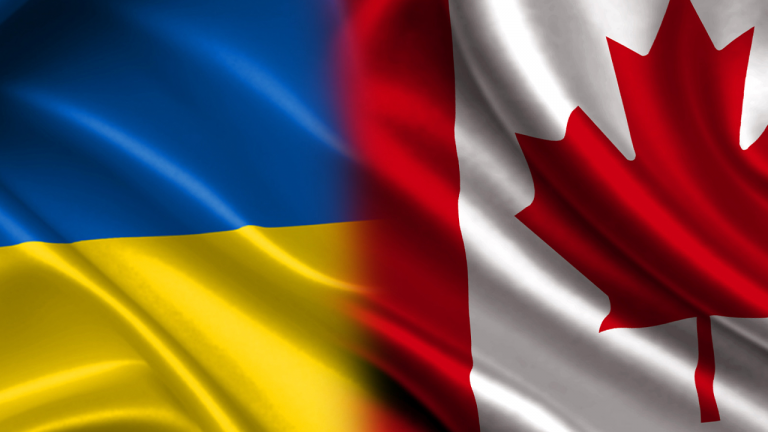
Meanwhile, many of these same journalists have no trouble rallying around Ukraine – changing their profiles and adding the Blue and Yellow flag to their Twitter bios. But, unfortunately for these journalists, we keep seeing more and more ties to neo-Nazi groups embedded inside the Ukrainian military.
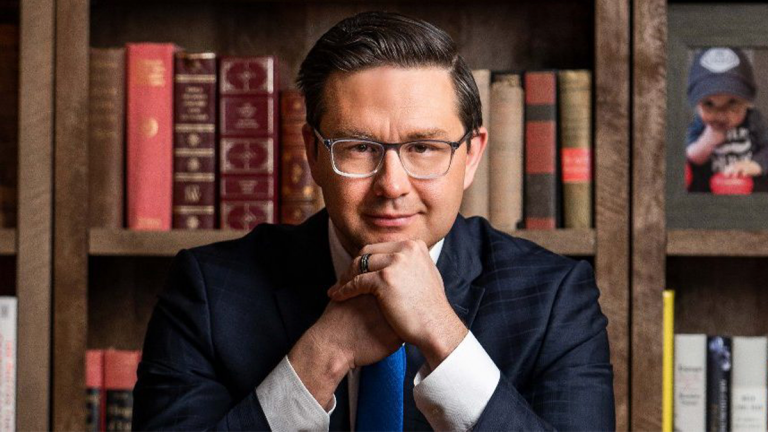
Longtime Conservative member of parliament Pierre Poilievre was the first to launch a campaign to be the next Conservative Party of Canada leader. Poilievre joined True North’s Andrew Lawton for a wide-ranging chat about why he’s running, and what he seeks to do as Conservative leader and prime minister if he’s elected. Poilievre said he’s running to tackle the cost of living crisis, and says his message of freedom will not only unite conservatives, but also Canadians. He also contrasted himself with Jean Charest, whom he accused of being a high-tax Liberal.
Carleton University’s School of Journalism held a panel discussion with members of the legacy media on Tuesday to discuss their role in covering what the school called “the siege of Ottawa” by “the so-called freedom convoy.”
Before it even took place, the event received backlash online for its biased tone and the apparent exclusion of independent and right-of-centre journalists.
Given that I live in Ottawa and had spent a good amount of time covering the Freedom Convoy for True North, I thought I would attend the event, and with an open mind.
I was asked for proof of vaccination and screened for COVID when I arrived at the event even though Ontario had dropped vaccine passports on March 1.
The panel featured CBC’s Judy Trinh and Jorge Barrera, the Toronto Star’s Raisa Patel, CTV News’s Glen McGregor, left-wing investigative journalist Justin Ling and photographer Justin Tang.
Carleton journalism associate professor and CBC News anchor Adrian Harewood was the moderator for the evening.
The MC began by acknowledging that the relationship between the Canadian public and the legacy media has changed, and Harewood recognized an erosion of public trust.
National Post columnistRupa Subramanya, who had received a late invitation to join the panel, was not able to attend the event due to scheduling issues. Instead, she offered remarks in a pre-recorded video.
Subramanya called out the framing of the event, as well as the negative tone the legacy media had adopted while covering the convoy. She also touched on civil disobedience in India, including the 2020-2021 farmer protests, which Prime Minister Justin Trudeau had supported.
While some panellists seemed defensive following Subramanya’s remarks, others made comments later that evening that seemed to reaffirm what she had said.
Despite the overwhelming consensus in the legacy media that the Freedom Convoy protesters were hateful towards them, not all journalists at the panel seemed to have experienced something truly negative.
Photojournalist Justin Tang talked about the importance of journalists dressing to blend in, saying that he chose not to wear a mask because it would have drawn negative attention. By carrying himself in a way that was non-threatening to protesters, Tang said, he was able to do his job.
I myself observed while covering the Ottawa protests that Freedom Convoy demonstrators were very wary of the legacy media. Part of the reason for this distrust is the disconnect between rural and urban Canadians, as well as between the elite and the working class.
Panellists mentioned how journalism used to be a blue-collar profession but that today, legacy media journalists are seen as part of the social elites. The majority of these “social elites” live and work in cities, as legacy media offices are usually found in downtown cores.
The panel acknowledged that legacy media under-reports rural communities, with CBC’s Judy Trinh saying, “when was the last time we travelled outside the downtown core to west Carleton?” (a rural area outside of Ottawa)
According to Trinh, people in rural communities have been ignored by the media, similar to how the media has ignored people of colour.
Race was a prominent topic throughout the night. Near the end of the event, an attendee asked why the media was considering reaching out to white right-wingers who are occupying a city to rebuild their trust, but not to people of colour who have been oppressed for years.
To this, Trinh acknowledged that there are issues with how the legacy media has covered minority communities. Harewood, who is black, added that the media needs to be more comfortable discussing race.
There was also a question about media bias, asking if journalists believe that they can be fully objective.
CBC’s Jorge Barrera answered the question by stating that he does not think journalists should be objective, but rather impartial. He added that as a journalist, he is aware of his biases.
The panel was then asked about “citizen journalists,” who, along with independent reporters, played a crucial role in covering the historic Freedom Convoy protests in Ottawa.
Trinh said that she was concerned about the fact that everyone with a camera is considered to be a citizen journalist. The Star’s Raisa Patel added that certain contexts and skills are needed to do proper journalism.
Justin Ling said that citizen journalists have biases, and chose to aim their cameras intentionally at what they wanted people to see.
I thought to myself, doesn’t the legacy media also do this?
I recall during the convoy coverage that most of the clips showing demonstrators cleaning up garbage, shovelling the streets and handing out food had come from citizen journalists. Meanwhile, the legacy media seemed to focus more on the one unknown person who had brought a Nazi flag.
As the event came to an end, the MC said that the conversation the panel had was needed, and was just part of a beginning.
I couldn’t agree more.
I had just heard members of the legacy media openly admit that their industry ignores rural Canadians and has racial biases. Moreover, these journalists know they are not objective, and that trust has eroded.
What I took away from this event is that the legacy media has flaws, and that they know that. People are right to question their credibility, and I believe we should not accept everything they say as truth, but rather do our own independent research and confidently come to our own conclusions.