Conservative MP asking about World Economic Forum accused of “disinformation”

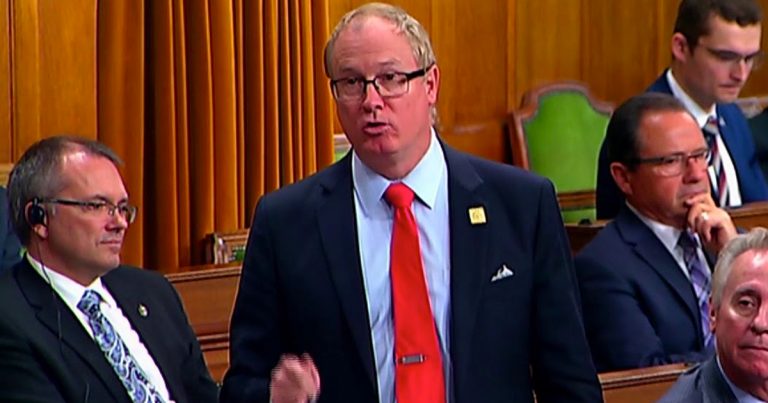
An NDP MP accused Conservative MP Colin Carrie of disinformation in the House of Commons after Carrie asked the Trudeau government a question about the World Economic Forum (WEF) on Saturday. 

Carrie said the question had come from a constituent and was related to foreign interference in Canada’s democracy. 

“Klaus Schwab is the head of the World Economic Forum, and he bragged how his subversive WEF has “infiltrated” governments around the world,” said Carrie. “In the interests of transparency, could the member please name which cabinet ministers are on board with the WEF’s agenda?” 

Before Carrie was even able to finish his question, Deputy Speaker Chris d’Entremont stated that the “audio and video” were really bad. 

Before Carrie could repeat the question, however, NDP MP Charlie Angus complained that Carrie “was openly promoting disinformation.” 

WEF has been a topic of controversy recently after a 2017 clip resurfaced where WEF head Klaus Schwab bragged about infiltrating governments around the world using politicians sympathetic with his organization’s views. 

In the clip, Schwab states that “half of (Trudeau’s) cabinet” were WEF Young Global Leaders. 

“I have to say, when I mention now names (sic), like Mrs. (Angela) Merkel and even Vladimir Putin, and so on, they all have been Young Global Leaders of the World Economic Forum,” said Schwab.

“But what we are very proud of now is the young generation like Prime Minister (Justin) Trudeau … We penetrate the cabinet. So yesterday I was at a reception for Prime Minister Trudeau and I know that half of his cabinet, or even more than half of his cabinet, are actually Young Global Leaders.”

The WEF has been a proponent of the Great Reset, which it describes as a global shift towards stakeholder capitalism – a sustainable economic concept developed by Schwab. 

According to the Great Reset, capitalism is dead, and every aspect of society needs to be revamped according to notions of diversity, inclusion and sustainability. Proponents of the idea have pushed for what’s called a “circular economy” that privileges renting over ownership, or the idea that you would “own nothing” and be happy. 

Prime Minister Justin Trudeau and others have frequently referred to using the COVID-19 pandemic as an opportunity for a Great Reset. 

Deputy Prime Minister Chrystia Freeland and former health minister Patty Hajdu also spoke at the Great Reset Initiative hosted by the WEF in 2021. 
Judge who denied bail to Freedom Convoy organizer ran for Liberals in 2011

The Ontario judge who denied Freedom Convoy organizer Tamara Lich bail on Tuesday ran as the federal Liberal candidate for Glengarry-Prescott-Russell in 2011. 

Julie Bourgeois, who was a Crown attorney when she ran, came in second place for the Liberals in the 2011 federal election, losing to former Conservative MP Pierre Lemieux. 

Bourgeois also made 71 donations to the federal Liberals from 2009 to 2014, ranging in amounts from $5 to $1,186. 

During her failed campaign, Bourgeois spoke about how tough times led people to commit crimes. 

“Not necessarily major crime,” she said. “You see desperate people going through desperate times.” 

Justin Trudeau himself had also praised Bourgeois in a campaign video. 

“Her vision, her authenticity, her strength is going to be an amazing asset,” said Trudeau in a video from 2011, before he became Liberal leader. “Both for the people of Glengarry-Prescott-Russell but also to everyone in the House of Commons after the next elections when I will have, hopefully, the honour of sitting beside her in the House.” 

Lich, who is facing counselling to commit mischief charges, was denied bail on Tuesday.

“I cannot be reassured that if I release you into the community that you will not reoffend,” Bourgeois said in her decision. 

The judge said the convoy’s effect on Ottawa was immense and that Lich was stubborn in her responses to the court during her bail hearing.  She said that the organizer’s detention “is necessary for the protection and safety of the public.”

The revelation that the judge was a failed Liberal candidate came when prominent Canadian psychologist and author Dr. Jordan B. Peterson posted an email from a tipster on Tuesday.
“Said judge did not recuse themselves for a perceived conflict, nor did the organizing judge take issue with assigning this care to them,” said the tipster. “Even to a former Yugoslav like me, I am surprised.”

Liberal MP says trucker slogan “honk honk” is code for “heil Hitler”

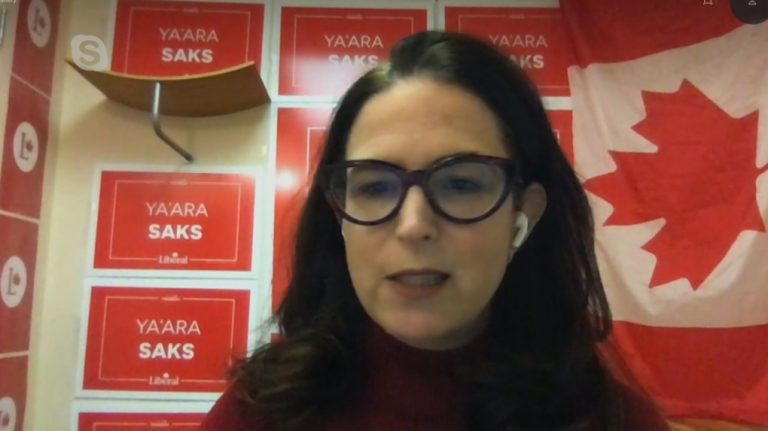
Toronto Liberal MP Ya’ara Saks claimed during a parliamentary debate that the freedom convoy’s trucker-horn slogan “honk honk” is actually an acronym-style codeword for the Nazi salute “heil Hitler.” 

Saks made the claim on Monday while testifying in defence of Prime Minister Justin Trudeau’s implementation of the Emergencies Act to crack down on convoy protesters. 

“How many guns need to be seized?” said Saks in the House of Commons on Monday. “How much vitriol do we have to see of honk honk – which is an acronym for heil Hitler – do we need to see by these protesters on social media?”

Saks attempted to justify her remarks by sharing a Twitter thread about the topic. 

“For those of you who think that honk honk is some innocuous joke, I’ll leave this here,” she said

She included a screenshot of a tweet from Antifa member Gwen Snyder that said since “heil Hitler” and “honk honk” both have two Hs, it is “often used ‘ironically’ by alt-right trolls.” 

Urban Dictionary defines “honk honk” as “a word referring to Freedom Convoy 2022 in Canada.” 

Quillette associate editor Jonathan Kay mocked Saks for the allegation.

“Actual tweet from Liberal Member of Parliament seeking to back up her claim that saying ‘honk honk’ means you are pledging allegiance to Adolf Hitler,” said Kay. “These are the people running our country.” 

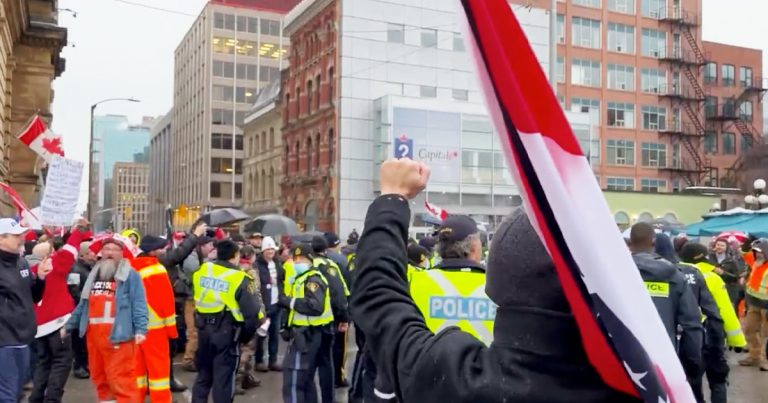
Since the Freedom Convoy arrived in Ottawa on Jan. 29, Trudeau has insisted on characterizing the protesters as racists and other kinds of extremists, repeatedly referring to sightings of a swastika flag and a Confederate flag to delegitimize the entire movement.

On Jan. 16, Trudeau even accused Jewish Conservative MP Melissa Lantsman of standing “with people who wave swastikas.” 

Trudeau’s decision to invoke the Emergencies Act passed in the House of Commons due to support from the NDP on Monday. The Conservatives and Bloc Quebecois opposed it. 

There were 185 MPs who voted in favour of the act, with 151 against.

Trudeau invoked the act on Feb. 14, granting the Canadian government unprecedented powers. 

The government was, however, required to seek approval from the House of Commons within seven days to extend its use for at least another four weeks. 

Had the vote failed, the emergency declaration would have been revoked. A federal election might have been called because it was a confidence vote. 

The passing of the motion in the House of Commons would keep the emergency measures in place until mid-March, when Parliament would review the measures again.

The Senate – which is currently debating the motion – must vote on the government’s request, but its approval will be more of a formality.

Is the trucker convoy really over?

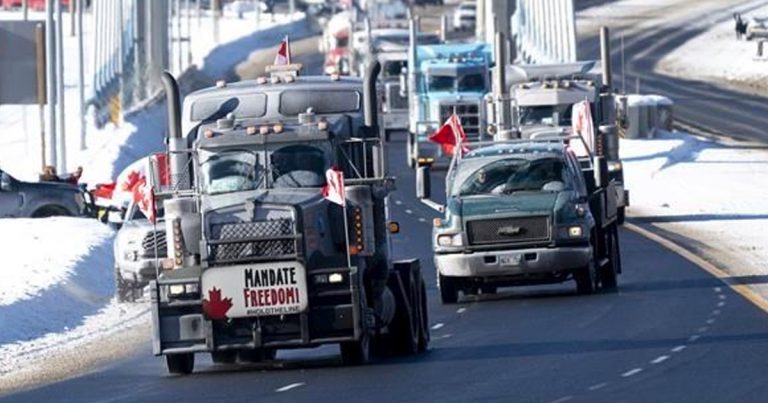
It’s been a month since the first wave of the trucker convoy set out to Ottawa to call for an end to vaccine mandates and vaccine passports, setting off a massive protest movement and a three-week-long presence in downtown Ottawa. Police action over the weekend pushed protesters and their trucks out of downtown Ottawa, yet Justin Trudeau’s state of “emergency” remains in place. A secure perimeter remains in Ottawa and police have announced plans to continue investigating and charging anyone involved in the protest.

In this live edition of The Andrew Lawton Show, True North’s Andrew Lawton talks about his reporting on the ground in Ottawa over the weekend, and speaks to convoy organizer Tom Marazzo about what’s next.

SUBSCRIBE TO THE ANDREW LAWTON SHOW

Protester group takes Trudeau government to court over Emergencies Act

Some protesters from the freedom convoy movement are taking the Trudeau government to court to demand it to release the documents justifying the implementation of the Emergencies Act. 

According to Blacklock’s Reporter, Canadian Front Line Nurses submitted a Federal Court application demanding the federal government fork over “all Orders in Council, minutes of meetings, cabinet submissions, memoranda, agreements and constituting documents” supporting Prime Minister Justin Trudeau’s invocation of the Act.

“Invocation of the Emergencies Act is improperly motivated by a design to target, threaten and punish individuals who have different views from that of the Prime Minister with respect to Covid-19 mandates and restrictions,” wrote the group’s lawyers. 

“There is no national emergency. The Freedom Convoy protest has increased the Canadian public’s awareness with respect to the unreasonableness of government Covid-19 mandates and restrictions.”

According to the lawsuit, the federal government’s use of emergency powers contradicted the Charter of Rights and Freedoms and the Canadian Bill of Rights

The Liberals have been reluctant to provide any evidence to support their claims that the protests constituted a public order emergency. 

In an Orders in Council issued days after Trudeau’s invocation, the federal government argued that “continuing blockades” and the protests’ “adverse effects on the Canadian economy” were among the reasons justifying the emergency.

However, blockades at the Coutts and Ambassador Bridge border crossing have since been cleared. 

Conservative MP John Barlow spoke on Sunday during the debate in the House of Commons over whether the Emergencies Act should be extended.

“Here, I want to be very clear,” he said. “The ramifications of invoking the Emergencies Act are profound. That is because it has never been done before.” 

“Meanwhile, over the last week, the blockades the Prime Minister is saying are devastating our economy in Coutts, at the Ambassador Bridge and Emerson have all been resolved, and it did not take the Emergencies Act to do it. They were resolved because the police services in those areas used the tools that were available to them under the Criminal Code – existing tools. There was no need for the Emergencies Act to resolve these blockades.” 

Despite the borders now being open and the protesters in Ottawa having largely dispersed, the Liberals and the NDP voted to prolong Emergencies Act powers for the Trudeau government for 30 days. 

Under the act, the federal government can seize assets of protesters, arrest them for being in certain areas and even cancel their insurance.

Romanian parliamentarian calls Trudeau “tyrant” and “dictator” over Ottawa crackdown

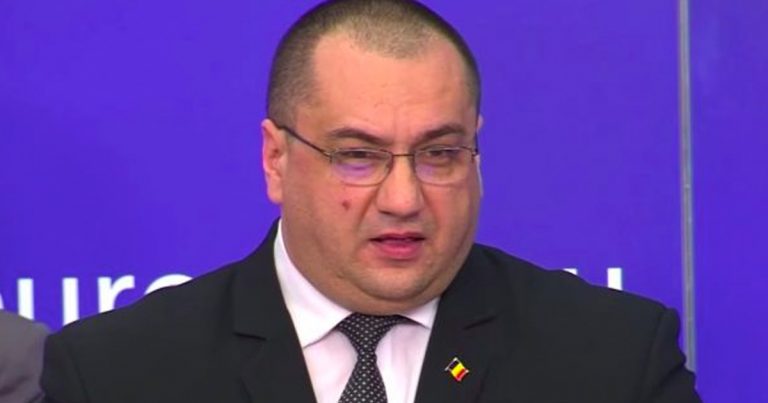
Romanian Member of European Parliament (MEP) Cristian Terheș savaged Prime Minister Justin Trudeau at the European Parliament in Brussels this weekend for cracking down on peaceful freedom convoy protesters in Ottawa.

“The prime minister of Canada, the way he’s behaving right now – he’s exactly like a tyrant, like a dictator. He’s like Ceaușescu in Romania,” said Terheș.

“If you raise doubts about the vaccines, you’re outcasted. What’s the difference between what he does and what happened under the Inquisition?”

Nicolae Ceaușescu was a communist dictator who ruled over the former Socialist Republic of Romania until 1989 when his regime was toppled by revolutionaries after decades of ruthless repression. 

Ceaușescu also oversaw the creation of the Securitate, one of the most brutal secret police forces in the Eastern Bloc. 

Terheș went on to offer his support to the freedom convoy movement and said that he hoped it would spread to other nations. 

“I hope this movement for freedom and for rights is spreading all around the world. Because at the end of the day, we have to make sure that those elected officials understand that they were elected into those offices for the people. Not to behave like masters of slaves.”

Terheș joins a growing chorus of international voices who are condemning Trudeau for abusing his powers. Others who have spoken out against Trudeau include UK MP Marcus Fysh, US Senator Marsha Blackburn, US congresswoman Yvette Herrell and Indian politician Vijay Chatuhaiwale. 

On Monday, Liberal and NDP MPs successfully voted to extend the use of the Emergencies Act to deal with the protests against COVID restrictions and mandates. Trudeau invoked the extreme measure to crush demonstrations in Ottawa but also cited border blockades that had come to end before or shortly after he implemented the act. 

To date, nearly 200 people have been arrested for participating in the protest, and 76 vehicles have been towed from the city’s downtown core. 

Checkpoints remain in place throughout Ottawa as well as a heavy police presence. 

Trudeau government gives $10 million to race-based housing

The Trudeau government has announced it is giving millions of taxpayer dollars to help 200 black families in the Greater Toronto Area pay for their first home. 

“This investment builds on previous announcements by the Government of Canada to support Black Canadians in achieving their dream of homeownership,” read an announcement by the Canada Mortgage and Housing Corporation (CMHC) on Friday.

The program will provide $10 million in taxpayer money to the BlackNorth Homeownership Bridge Program along with a “joint contribution of $40 million with Habitat for Humanity to create 200 additional homeownership opportunities for Black Canadians, as part of a recently announced $50 million investment through the National Housing Co-Investment Fund to support Black Canadian renters.”

“Different Canadians face unique challenges, especially when it comes to finding a safe and affordable place to call home,” said federal minister of housing and diversity and inclusion Ahmed Hussen.

“Our government continues to support Black Canadians in accessing equitable housing opportunities. This funding will support Black Canadians across the GTA to become homeowners and break the cycle of core housing need.”

The CMHC press release said that the program would be led by BlackNorth Initiative in partnership with Habitat for Humanity and “will support homeownership for Black Canadians through a shared equity mortgage structure.”

“We need to focus first and foremost on the most vulnerable of our fellow Canadians, including those who face unique challenges,” said BlackNorth Initiative founder Wes Hall. “Investment in the BlackNorth Initiative Homeownership Bridging Program (HBP) highlights the Government of Canada’s commitment to both anti-racism initiatives and finding pathways to homeownership.”

The HBP, said the press release, will “support homeowners in building strength and generational wealth through their home, create ownership opportunities for multiple generations of homeowners and will ensure housing units remain affordable across multiple owners to build inclusive communities.”

Quillette associate editor Jonathan Kay mocked the race–based funding program on Saturday. 

“So how do they decide who gets the money?” said Kay in a tweet on Saturday. “Do they pick, like, the *blackest* applicants?” 

Race-based data collected by Statistics Canada suggests that about 25% of Black Canadians are in core housing need, with 80% of them paying about a third or more of their income towards housing. 

Convoy organizer Tamara Lich denied bail

One of the leading organizers behind the freedom convoy has been denied bail by an Ontario court judge.

Ontario Court Justice Julie Bourgeois made the ruling in Ottawa on Tuesday, saying she believes Tamara Lich would reoffend if released.

“I cannot be reassured that if I release you into the community that you will not reoffend,” Bourgeois said in her decision.

Bourgeois said the convoy’s effect on the community was immense and that Lich was obstinate and disingenuous in her responses to the court during her bail hearing. The judge said Lich’s detention “is necessary for the protection and safety of the public.”

In addition, Bourgeois ordered Lich to have no contact with other convoy organizers Benjamin Dichter, Christopher Barber and Daniel Bulford.

Lich was arrested on Feb. 17 and charged with counselling to commit mischief. Barber was arrested the same day and released on bail over the weekend.

Lich’s detention also comes just over two weeks after the man who was arrested in Winnipeg in connection with a hit-and-run that injured four protesters at a freedom rally was also released on bail. According to court documents, 42-year-old  David Alexander Zegarac was released from custody on Feb. 5 on a promise to pay $10,000. His next appearance is scheduled for March 22.

Bourgeois’s decision comes one day after Prime Minister Justin Trudeau’s decision to invoke the Emergencies Act passed a vital vote in the House of Commons thanks to the parliamentary support of Jagmeet Singh and the New Democratic Party.

The Trudeau government invoked the act on Feb. 14, immediately granting itself unprecedented powers.

The passing of the motion in the House of Commons will keep the emergency measures in place until mid-March at the latest. The Senate must also vote on the government’s request, although this will serve more as a formality.

Since the act was invoked, supporters of the Freedom Convoy have had their bank accounts frozen, while police in Ottawa brutally cracked down on protesters over the weekend. 

All border blockades, including those in B.C., Alberta, Manitoba and Ontario, had already been cleared before or shortly after Feb. 14. 

Recap of Day 30 of the Truckers for Freedom Convoy

On day 30 of the Truckers for Freedom Convoy, the NDP gave Trudeau the votes he needed to extend the Emergencies Act, Trudeau himself didn’t bother to show up in person and the Liberal public safety minister claimed that police officers showed restraint and professionalism during the violent crackdown on Freedom Convoy protesters over the weekend.

In a historic moment in the House of Commons, Liberals and NDP MPs voted in lockstep to pass the Emergencies Act and extend Trudeau’s use of its unprecedented powers for at least another four weeks.

The extension came despite border blockades already having been cleared across the country and the protests in Ottawa having been crushed. 

The final vote was 185 to 151 in favour of passing the Emergencies Act. 

Jagmeet Singh and the NDP voted in favour, giving Trudeau’s Liberals the votes they needed to succeed.

All Conservative MPs, Bloc MPs and one Green Party MP – Mike Morrice – voted against the motion. 

After the vote had been read, interim Conservative leader Candice Bergen rose on a point of order to immediately introduce a motion to revoke Trudeau’s emergency declaration. 

Bergen had obtained the required 20 signatures of members to put the motion forward.

Liberal house leader Mark Holland then rose to say that because the vote was already counted, the House had to adjourn and Bergen’s motion was out of order.

“I say this to all Canadians,” Bergen responded. “Conservatives will continue to use every tool at our disposal to end the Prime Minister’s abusive Emergencies Act.” 

Bergen’s mic was then cut off. 

Trudeau himself voted remotely, not bothering to show his face in the House during the most consequential vote of his seven-year tenure as prime minister. 

Before the vote, Justin Trudeau had held a press conference declaring that his government was going to seek to extend the powers of the Emergencies Act despite border blockades and the Ottawa protests having come to an end. 

“Local and provincial authorities needed more tools to restore order and keep people safe,” Trudeau declared.

Trudeau claimed that while his government supported the right to peaceful protests and freedom of expression under the Charter of Rights and Freedoms, change could only happen when people vote or run for office. 

In a purely political move, Trudeau also made support of the Emergencies Act a confidence vote on his government. If the vote had failed, it would likely have triggered an election.

“I can’t imagine that anyone who votes no is doing anything other than indicating that they don’t trust the government,” Trudeau said. 

After the Prime Minister’s press conference, NDP leader Jagmeet Singh had said that the NDP would be “reluctantly” supporting the motion – a declaration on which he and his party made good a few hours later.

Singh went on to say that the NDP would be pulling their support of the motion as soon as the Emergencies Act  is no longer needed – even though the vote extends the act by another four weeks. 

Speaking after the vote in the House of Commons, Trudeau’s Minister of Emergency Preparedness Bill Blair said, “(w)e are in hourly consultation with our officials about the threat that has existed and continues to exist in this country.”

“(W)e undertake that as soon as it’s no longer required, we are prepared to lift those measures”

Meanwhile, Liberal public safety minister Marco Mendicino declared that the conduct of police officers over the weekend was “professional” and that officers showed “restraint.”

Deputy prime minister Chrystia Freeland also spoke today, addressing concerns that people who had merely donated to the Freedom Convoy – even before the Emergencies Act had declared it illegal – were seeing their bank accounts frozen.

“The way to get your account unfrozen is to stop being part of the blockade and occupation,” she said – despite the Ottawa protests having ended and all blockades having been cleared across the country for almost a week. 

The Givesendgo set up by the Truckers for Freedom Convoy organizers had reached USD $9,732,208 by the time this article was published.

Vote on Trudeau’s use of Emergencies Act passes with NDP support

Prime Minister Justin Trudeau’s decision to invoke the Emergencies Act passed a vital vote in the House of Commons on Monday thanks to the parliamentary support of Jagmeet Singh and the New Democratic Party (NDP).

185 MPs voted in favour of the act with 151 against.

The NDP sided with the Liberals in passing the motion, while the Conservatives and the Bloc Quebecois opposed it. 

The Trudeau government invoked the act on Feb. 14, immediately granting itself unprecedented powers. However, the government needed to seek approval from the House of Commons within seven days in order to extend its use for at least another four weeks.

Had the vote had failed, the emergency declaration would have been revoked immediately. As a confidence vote, it would also likely have triggered a federal election. 

The passing of the motion in the House of Commons will keep the emergency measures in place until mid-March at the latest. The Senate must also vote on the government’s request, although this will serve more as a formality.

Immediately after the vote, interim Conservative leader Candice Bergen attempted to enter a motion recalling the use of the Emergencies Act. 

Her motion was ruled out of order.

“We will continue to fight this power grab by the Prime Minister and his government,” Bergen said in a statement following the vote.

“That’s why immediately following the vote, Conservatives gave notice of a motion to revoke the Prime Minister’s emergency. Liberal and NDP MPs will need to explain to Canadians why they are continuing to enforce a national state of emergency that gives the federal government far-reaching powers and authority.”

Since the act was invoked last Monday, supporters of the Freedom Convoy have had their bank accounts frozen, while police in Ottawa brutally cracked down on protesters over the weekend. All border blockades, including those in B.C., Alberta, Manitoba and Ontario, had already been cleared before or shortly after Feb. 14.  

Trudeau is the first Prime Minister in Canadian history to invoke the Emergencies Act since it was created as a successor to the War Measures Act in 1988. 

Earlier on Monday, Trudeau justified invoking the act and urged other MPs to support its continued use.

“Invoking the Emergencies Act has been necessary. Law enforcement agencies relied on it to set up secured areas in downtown Ottawa and at border crossings,” said Trudeau.

“It prevented foreign money from continuing to fund illegal blockades, and it’s making sure our borders remain open. It has been the responsible thing to do.”

Moments after the motion passed, MPs voted to adjourn Parliament until Feb. 28 – in the middle of a so-called national emergency.