CBC crew rescued from icy ditch by Freedom Convoy protester

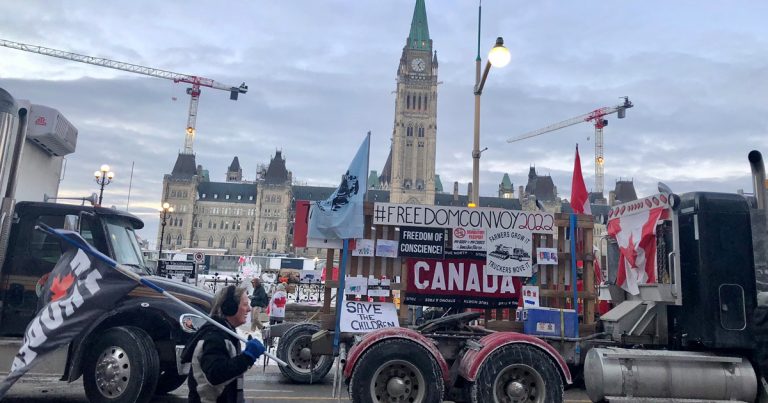
A CBC crew whose van slid into a ditch in Arnprior, Ontario was rescued by a truck driver participating in the Freedom Convoy.

A parliamentary reporter with the state broadcaster had headed to the town about 70km west of Ottawa to gather footage of remaining convoy trucks parked there. When the crew’s van reportedly went into a nearby ditch, trucker Tyson Gareau used a chain to pull it out with his Ford pickup. 

“A demonstrator named Tyson Garneau (sic) wearing a ‘defund the CBC’ hat pulled us out knowing we were CBC journalists,” said CBC reporter Ashley Burke in a tweet on Wednesday. “He said he’d never leave anyone stuck like that.”

Burke spoke to Gareau on the scene and reported that he had been sleeping in the back of his truck during the Freedom Convoy and had just arrived at the Arnprior camp earlier in the day. Burke also reported Gareau had lost his job as a truck driver and had been protesting because he wanted freedom for his grandkids. 

She added that a female trucker at the gate of the protester camp was friendly but refused to allow the CBC inside, saying that her crew was trying to care for other protesters on the site. 

The rescue occurred even while Burke’s CBC colleague David Thurton back in Ottawa was asking Trudeau whether he still saw the protest camps outside the city as a threat.

 Trudeau, who had just announced he was revoking his implementation of the Emergencies Act answered, “the threat continues.”

Christian Heritage Party leader Rod Taylor said that Gareau’s rescue of the stranded CBC reporter embodies human decency. 

“Canada is in the ditch right now,” said Taylor. “We need to all work together to get back on the road.”

Alberta premier Jason Kenney also praised Gareau for helping out the state broadcaster. 

“For all of the differences we have in this country, a little bit of old fashioned Canadian kindness goes a long way,” said Kenney. “I nominate this for a new Canadian Heritage Minute!”

Freedom Convoy organizer Tom Marazzo had called for protesters to withdraw from Ottawa on Saturday to avoid being targeted by police action. 

Marazzo said at a press conference that it was time for protesters to leave Ottawa to avoid further harm. 

“There isn’t anything to be gained by being brutalized by police,” said Marazzo.
B.C. now firing government employees put on leave over COVID shots

It’s a week of reckoning in British Columbia as hundreds of health-care workers and public employees are now being terminated after being forced onto unpaid leave last year by provincial COVID vaccine mandates.

The firings in B.C. come even as provinces across Canada continue to drop COVID restrictions, including Prince Edward Island and Nova Scotia, who announced today that their vaccine passport programs would end this month.

B.C. is now the only province that has not signalled definitively when any of its vaccine policies will end. The province – which does not allow rapid testing – has among the most stringent vaccine mandates in the country, if not the world.

The province had announced last fall that frontline health-care and public service employees would be joining long-term care workers in requiring two COVID shots to keep their jobs.

When the deadline passed for health-care workers in October, the B.C. government announced its mandate had forced more than 4000 employees onto unpaid leave.

Termination of those frontline workers began Monday, with the province reporting 674 employees in the Vancouver Coastal Health and Fraser Health regions now out of a job.

These firings also come as B.C. hospitals face staggering labour shortages.

 Health minister Adrian Dix has admitted that one week in January saw 27,937 shifts unfilled.

 Dix also recognized that while conformity to government vaccination policies is high among medical professionals, even small staff losses create big challenges. Like Alberta and parts of Ontario, the province even brought in a policy allowing vaccinated health-care workers infected with COVID-19 to come to work in order to relieve staff pressures.

This week also serves as the three-month deadline for hundreds of B.C. Public Service (BCPS) employees placed on unpaid leave on November 23. Prior to this, the province had retroactively legislated COVID vaccination as a requirement of employment, meaning those who opposed the policy could then be fired “with cause.”

The group BCPS Employees for Freedom, which represents more than 450 members affected by the mandate, put out a news release on Friday urging BCPS head bureaucrat Lori Wanamaker to meet with them to reconsider their termination.

“B.C. is now just one of a few provinces in Canada that will terminate public servants for not proving their COVID-19 vaccination status,” said the group. “Ontario, Quebec, Alberta, Saskatchewan and Manitoba all honour their employees’ medical privacy and choice in this matter. They have determined that their employees can work safely without this requirement and we hope B.C. will allow public servants here to do the same.”

BCPS Employees for Freedom’s website includes video testimonials of three workers from different ministries – totalling 53 years of service – who will be fired under the existing arrangement.

 Because B.C.’s public service unions – including the BCGEU and PEA – have expressed support for government vaccination, union members who oppose the policy have been left unrepresented in the matter, and unable to mount their own legal challenges to the policy.

 As BCPS employees put on leave had been receiving notices from the province through registered mail, it is expected that it will take a few days before termination letters are received. Government correspondence posted anonymously to the BCPS Employees for Freedom Telegram chat on Wednesday nevertheless suggests that terminations remain in effect.

“Indeed, as expected, there is no change in the requirement that all Public Servants be vaccinated for COVID-19 and those that remain unable to provide proof of vaccination after 3 months of LWOP will have their employment terminated.”

 B.C. chief medical officer of health Dr. Bonnie Henry also announced on Feb. 9 that the province was expanding the mandatory vaccination policy to remaining health-care professionals in private practices, including midwives, acupuncturists, chiropractors, dentists and many others.

The deadline for these practitioners to get their first shots is March 24.

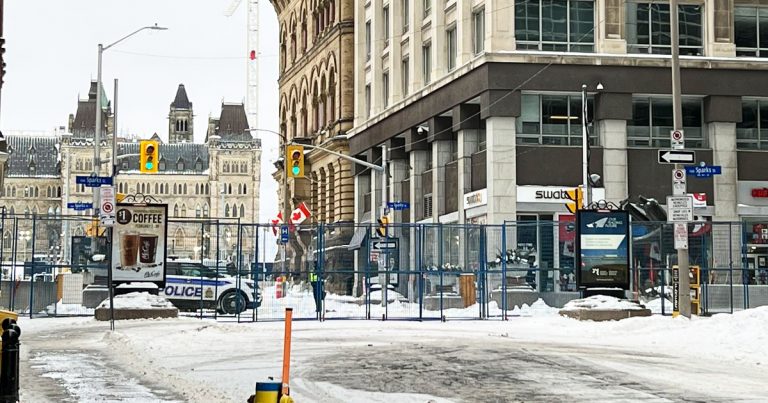
A look inside Trudeau’s militarized No-Go Zone in Ottawa

The Trudeau government used excessive force and violence to remove a group of peaceful and unarmed protesters in Ottawa. They created a No-Go Zone. 

Police explicitly told journalists to leave the area, and they threatened to arrest anyone found walking down the street in Ottawa. 

How is any of this legal? It isn’t.

The Canadian Civil Liberties Association has condemned this behaviour, saying that: “time and time again, Canadian courts have ruled against exclusion zones and other limits on the press.” 

On today’s episode of the Candice Malcolm Show, Candice is joined by journalist Andrew Lawton who was on the ground reporting all weekend for True North and was himself the victim of police brutalization. They discuss what happened, what it means and what’s next. 

SUBSCRIBE TO THE CANDICE MALCOLM SHOW

Trudeau revokes the Emergencies Act

Prime Minister Justin Trudeau announced Wednesday that his government would be revoking his implementation of the Emergencies Act.

“The situation is no longer an emergency. Therefore, the federal government will be ending the use of the Emergencies Act,” said Trudeau. 

“We are confident that existing laws and by-laws will be sufficient to keep people safe.”

Trudeau argued that giving his government sweeping powers was “the response and necessary thing to do,” in response to the freedom convoy. 

A joint committee of parliamentarians will now review the government’s decision to declare a national emergency within 60 days, as required by the legislation.

Trudeau’s revocation of the Emergencies Act comes days after the House of Commons approved the use of the unprecedented law – thanks to the parliamentary support of Jaghmeet Singh and the New Democratic Party. 

The Trudeau government invoked the act on Feb. 14, immediately granting itself unprecedented powers. The government needed to seek approval from the House of Commons within seven days in order to extend its use for at least another four weeks, or whenever it chose to discontinue its use of the legislation.

The House of Commons’s passage of the act was currently being debated in the Senate of Canada.

Since the act was invoked last Monday, supporters of the Freedom Convoy have had their bank accounts frozen, while police in Ottawa brutally cracked down on protesters over the weekend. All border blockades, including those in B.C., Alberta, Manitoba and Ontario, had already been cleared before or shortly after Feb. 14.  

Trudeau is the first Prime Minister in Canadian history to invoke the Emergencies Act since it was created as a successor to the War Measures Act in 1988.

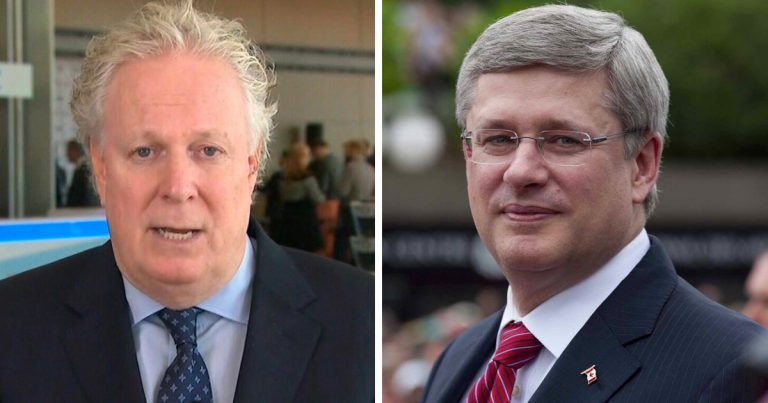
Stephen Harper would oppose Jean Charest’s leadership run: sources

Sources close to former prime minister Stephen Harper have said that if former Quebec premier Jean Charest runs for leadership of the Conservative Party, Harper will use his influence to keep Charest from winning.

According to the French-language outlet La Presse, Harper made the pledge in response to rumours that Charest was thinking about running.

“He will not sit idly by if Jean Charest enters the race,” an unidentified source told the outlet. 

“The boss is of the opinion that Jean Charest is not a real conservative.” 

While Premier of Quebec, Charest denounced Harper in 2008 over several Conservative Party of Canada (CPC) policies including cuts to the arts sector and abolishing the long gun registry. Harper had also spoken out in 2020 against a possible bid by Charest for the party’s leadership. 

The Conservatives are expected to officialize a leadership race this year after former CPC leader Erin O’Toole was ousted by caucus earlier this month.

A faction of Conservative MPs have already called on Charest to enter the race to be O’Toole’s successor. In a letter, MPs from Quebec, Ontario and Nova Scotia appealed to Charest to run out of a “sense of duty.” 

Among the signatories was MP Alain Rayes. 

“Mr. Charest, Canada needs you. The leadership race for the Conservative Party of Canada boils down to one fundamental question: who is best positioned to unseat the federal Liberals and finally provide our country with a Prime Minister who will revive our economy and govern with confidence under the Conservative banner?” the letter read.

To date, only CPC MP Pierre Poilievre has publicly announced his intention to run for the top spot. 

Positioning himself as a staunch fiscal conservative and a step away from O’Toole’s red-Tory leanings, Poilievre told supporters that he was running “to give (Canadians) back control of (their) life.” 

“Together, we will make Canadians the freest people on earth with freedom to build a business without red tape or heavy tax,” Poilievre said. 

“Freedom from the invisible thief of inflation. Freedom to raise your kids with your values. Freedom to make your own health and vaccine choices. Freedom to speak without fear and freedom to worship God in your own way.”

Other potential candidates include current CPC MP Leslyn Lewis, former justice minister Peter MacKay, Brampton mayor Patrick Brown and Postmedia columnist Tasha Kheiriddin.

The House of Commons skirted a federal election on Monday when Prime Minister Justin Trudeau announced that the vote to support his implementation of the Emergencies Act would be a confidence vote.

The vote passed with the support of Jaghmeet Singh and the NDP. 

Several MPs, including Liberals Joel Lightbound and Nathaniel Erskine-Smith, said they supported Trudeau because they didn’t want to bring down the Liberal government, not because they supported the act.  

Trudeau government says $20 donation to convoy enough to freeze account

Banks across Canada have frozen Canadians’ accounts to the tune of nearly $8 million after the Trudeau government ordered a crackdown on the freedom convoy’s financial support. 

According to Blacklock’s Reporter, the Department of Finance said during a Commons finance committee meeting that even a $20 donation could lead to consequences. 

“It would be unlikely that someone who gave $20 three weeks ago or even $20 post-February 15 would have been captured by a freeze. It’s not impossible,” said assistant deputy finance minister Isabelle Jacques. 

“To my knowledge it is over 206 accounts and the total value – the latest number I have – was approximately $7.8 million. We know those accounts are personal and commercial accounts. It’s a mixture of the two.”

After Prime Minister Justin Trudeau invoked the Emergencies Act on Feb. 14, the federal government dictated that banks could freeze or seize the assets of those participating in the Ottawa protests as well as those who provided financial support.

According to Jacques, the RCMP provided the names of individuals associated with the movement from a watch list of donors and participants. The owners of the funds were not notified that they had been targeted until their accounts were frozen. 

Under the Emergencies Act, banks do not require a warrant to seize the funds, nor do they face any legal consequences for doing so. 

“Prior to an account being frozen, are you aware of an opportunity for an individual to either be notified or to make any representations to the financial institution or law enforcement?” asked Conservative MP Adam Chambers. 

“No, not to my knowledge, not under this order,” Jacques replied. 

The Orders in Council detailing the government’s emergency powers also requires “any crowdfunding platform and payment processor to report certain transactions to the Financial Transactions and Reports Analysis Centre of Canada (FINTRAC) and to require any financial service provider to determine whether they have in their possession or control property that belongs to a person who participates in the blockade.” 

Despite the Liberals’ repeated claims that foreign extremists were funding the freedom convoy, the deputy director of intelligence at the Financial Transactions and Reports Analysis Centre of Canada (FINTRAC) shut down such claims

“The money… what’s happening in Ottawa has not been identified to my knowledge as ideologically motivated violent extremism,” said deputy director Barry MacKillop. 

“No, the sources of funding we’ve seen to date – we have not seen a spike, and as you know I can’t speak to individual reporting or reporting on any individuals or organizations. But we have not seen a spike in suspicious transaction reporting for example related to this.” 

Ottawa councillors want no vehicles on Wellington Street after convoy

After complaining about the obstructions and gridlock Freedom Convoy protesters caused on Wellington Street over three weeks, some Ottawa city councillors now want to see the parts of Parliament Hill’s main thoroughfare closed to vehicles altogether.

Councillor Catherine McKenney announced on Twitter Monday afternoon that she would be bringing a motion forward at Wednesday’s city council meeting to keep a portion of the busy Ottawa street shut to vehicular traffic.

The motion is being seconded by councillor Jeff Leiper, who like McKenney opposed the peaceful freedom convoy demonstrations. He also welcomed the federal government invoking the Emergencies Act.

Councillor Mathieu Fleury also chimed in on the issue, saying he does not think Wellington Street will reopen to traffic.

“It’s going to look like a street for the time being, but it’s likely going to be converted into a pedestrian plaza,” Fleury told CBC.

Wellington Street is one of Ottawa’s most vital thoroughfares, running east to west past not only the Parliament Buildings but also the Supreme Court of Canada, National Library and Archives and National War Memorial.

Progressivist Ottawa City councillors are not the only ones in favour of permanently closing parts of Wellington Street to traffic. Liberal MP Greg Fergus, who voted in favour of invoking the Emergencies Act to deal with convoy blockades on Monday, is also on board.

“I think we can [bring] our Parliament more to the people, and this is a great way of doing it. I like his idea. I’d like to see it even go further,” Fergus told CBC.

Former Liberal MP and Cabinet Minister Catherine McKenna, who received attention for her numerous anti-convoy tweets, also supports the proposal.

“Please shut down Wellington to cars (and tractor trailers!) now. Forever,” said McKenna.

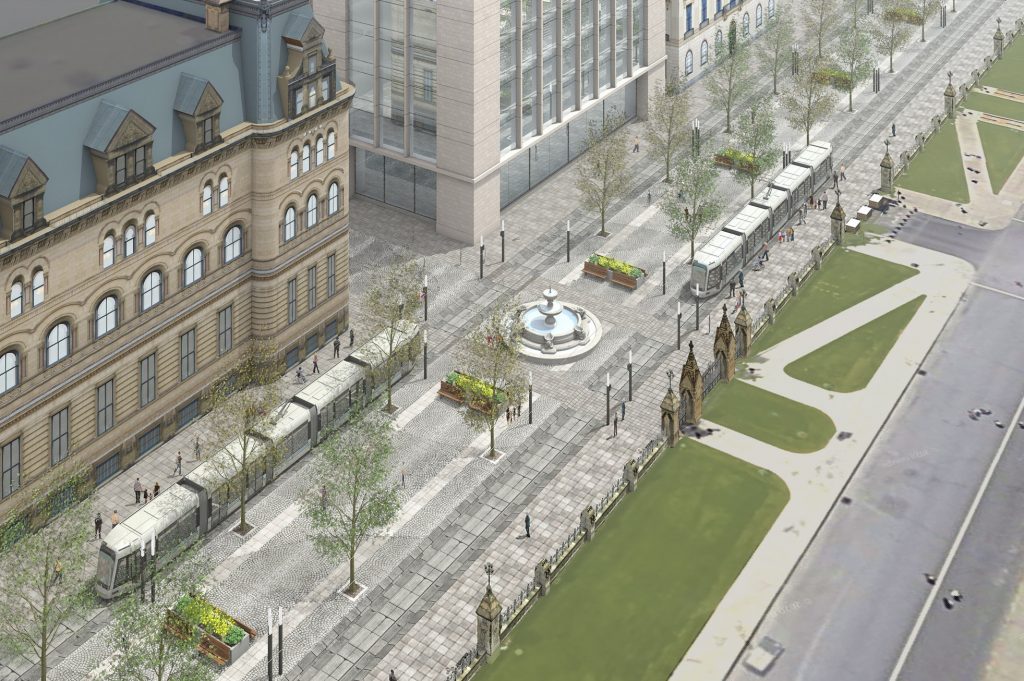
The city of Gatineau, Quebec just across the Ottawa River from Parliament Hill currently plans to build a light rail system into Ottawa’s downtown core. Some are saying that trains could replace cars on Wellington Street.

A proposal by architecture firm MCROBIE shows the prominent Ottawa street turned into a pedestrian mall with trees, benches and fountains, and a train running on each side.

Source: MCROBIE Architects 

Not everyone is on board with the idea, however. Critics point out the ridiculousness of removing peaceful protesters to clear the street for traffic, then opting to keep it closed permanently.

The proposal is also being criticised as an anti-car policy, with some pointing out that Ottawa’s downtown already has a pedestrian street a block away from Wellington.

Ottawa’s Sparks Street, which was a prominent street housing several department stores including Murphy-Gamble, Morgan’s, C.Ross, and Bryson-Graham’s, was closed to traffic in 1967.

Most of the stores have since closed, with the street’s main tenant now being the government of Canada.

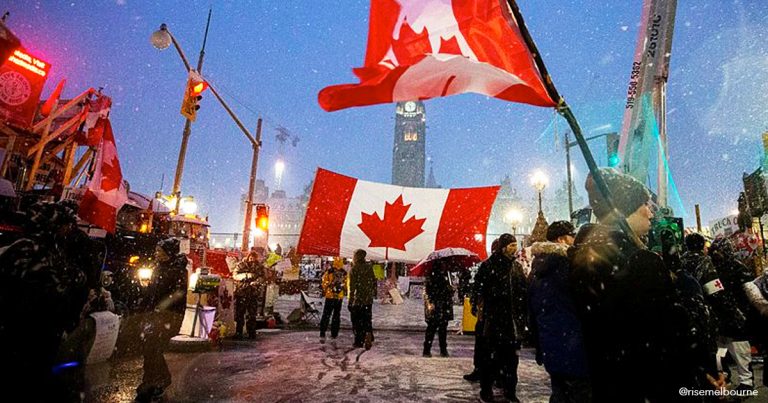
On Friday through Sunday, police forcibly removed freedom convoy demonstrators who were calling for the end of COVID-19 mandates and restrictions. They dispersed the crowds using chemical irritants, batons and riot horses, among other tools.

Texas congressman Crenshaw calls Trudeau dangerous, invites truckers to US

After reminding persecuted convoy protesters last week that the US has a trucker shortage and a work visa program, Texas Republican congressman Dan Crenshaw is calling Prime Minister Justin Trudeau a dangerous authoritarian. 

“Justin Trudeau is living proof that annoying-but-harmless wokeism can quickly evolve into dangerous authoritarianism,” said Crenshaw in a tweet on Monday. “Never underestimate the force with which the self-righteous will act to suppress the freedom of others, especially under the guise of compassion.” 

Crenshaw, who is also a former Navy SEAL, said last week that people participating in the Freedom Convoy should consider moving to the US. 

“Quick note to Canadian truckers being fired and now targeted as ‘terrorists’ by your woke government: The USA has a trucker shortage and a work visa program,” he said

New Mexico Republican congresswoman Yvette Herrell has also announced that she will be bringing forth a bill to grant political asylum to “innocent Canadian protesters who are being persecuted by their own government.” 

Herrell said on Saturday that Trudeau’s crackdown on the Freedom Convoy is “not the action of a western democracy, but that of an authoritarian regime like Venezuela.” 

“Just as we provide asylum for political prisoners, we should do the same for truckers who have been subjected to violence, had their property confiscated and their bank accounts frozen by a government that is quickly becoming the embarrassment of the free world,” said Herrell.

She added that Americans could not be silent as the Canadian government attacked peaceful protesters. 

Hundreds if not thousands of police engaged in heavy-handed tactics when they moved in to suppress the peaceful freedom convoy protests in Ottawa on Friday through Sunday. 

The Ottawa Police Service confirmed that 191 people had been arrested and 389 charges had been laid. 

Police cordoned off multiple areas across the capital, setting up 100 checkpoints and demanding to see journalists’ licences. True North and Rebel News reporters were in several cases denied access while legacy media were let in.

Despite the crackdowns, Trudeau opted to continue the Emergencies Act that granted police the extra powers to conduct their actions. Continued implementation of the act passed a vote in the House of Commons on Monday with crucial support from Jaghmeet Singh and the NDP.  

The financial accounts of many convoy truckers and supporters have been frozen under the government’s emergency order. On Tuesday, Blacklock’s Reporter announced that $8 million in finances had been suspended, including the accounts of people who donated as little as $20.

LEVY: Mike Bullard is back and he’s ready to laugh again

Legendary stand-up comedian Mike Bullard has been to hell and back.

After more than three years of legal wrangles, a social media thrashing by a lynch mob of female journalists and repeated efforts to cancel his outspoken voice, Bullard is back on the circuit and wanting to tell his side of the story.

He says he’s playing to packed houses at his old stomping grounds, Yuk Yuk’s, and is working on a book. 

“For five years I was muzzled,” says Bullard, who’s now 64. “I’m a social animal, and it nearly killed me.”

Five years ago, the comedian saw his career suddenly go into freefall — dismissed from his gig at Newstalk 1010 radio after being accused of stalking and harassing equally high-profile TV reporter Cynthia Mulligan.

It all occurred in the aftermath of what can be described as a tumultuous, on-again, off-again eight-month relationship. When Mulligan suddenly cut off all contact with Bullard in June 2016, he said he stubbornly and foolishly continued to text her (partly, he added, because he believed rumours were being spread that he was stalking her).

In the late summer of 2016, Mulligan lodged a complaint with the Toronto police, and that’s when things began to unravel for him. 

He said his 83-year-old mom had a fatal heart attack after the Toronto Star’s Kevin Donovan broke the story in October of 2016. 

After seeing his name trashed on social media, he also admits he tried to take his own life.

Bullard said he found himself the bullseye of three overlapping targets – of an overzealous crown attorney who seemed to want to make an example of him, of a police force under pressure to jump on any complaint involving a woman and of media interested in linking his story to the emerging #MeToo movement.

Bullard was slapped with charges of criminal harassment, obstruction of justice and breaching conditions of staying away from Mulligan. 

In June of 2018, broke and unable to continue his defence, he made a deal. He pled guilty to one count of making harassing phone calls and two breaches of a court order and was given a conditional discharge with no criminal record.

At a preliminary hearing, Judge Howard Borenstein – who registered disdain for the four days spent in court on this issue – ruled that there was “nothing in any of the communications (from Bullard) which gives rise to the reasonable inference that her (Mulligan’s) safety was being threatened.”

The judge added that no reasonable jury would convict Bullard of criminal harassment. 

Nonetheless, Mulligan wasted no time in having her victim impact statement posted on Facebook and Twitter by her friend TV journalist Avery Haines – a statement in which she repeated claims that Bullard abused her, and she feared for her safety.

In a transcript of a pre-interview with Chatelaine writer Sarah Boesveld for a June 2018 story, Mulligan said that the judge “didn’t get it” when he dropped the criminal harassment charge. Nor, she contended, was it his role to say she had “no reason to be afraid.”

Toronto Star columnist Heather Mallick also tweeted a series of now-deleted comments including – “This is what comic Mike Bullard did to a prominent TV journalist. Stalkers are terrifying. They are vipers. Why is this man not in jail?”

In Oct. 2018, Donovan even retracted his original claim in the Star that Bullard had stalked Mulligan at her home – two years after the story appeared and months after Bullard pled guilty. Reached recently, Donovan said he had written the story because “it was about a public figure” who “ultimately pled guilty” to three crimes. 

By then, however, it had cost Bullard $1.7million in both lost income and legal costs to defend his reputation.

Bullard’s lawyer Calvin Barry has said Bullard’s only crime was “unrequited love” and being “stubborn and naive rather than criminal.” 

Diana Davison, founder of the Lighthouse Project which advocates for the wrongly accused, said she feels that once the “ball got rolling, Mulligan couldn’t stop” and continued to push the narrative that she was “traumatized.”

Mulligan, now a CITY News reporter, did not acknowledge or respond to my four requests for comment over more than six weeks.

Bullard, though, is just happy to be getting back to the laughs and the resilience that led to his successful career. He describes its derailment in 2016 as an anomaly he’s glad to leave behind.

“I never felt helpless in my life until then,” he said.

Unreal use of propaganda in Canada

Why did the Canadian government pass the Emergencies Act last night?

There are no border closures, no road blockades, and thanks to a weekend of police brutality and excessive force, there are no protesters or trucks left in Ottawa.

Trudeau passed the Emergencies Act to crush dissidence and punish his political foes.

And the worst part is, the legacy media are giving him a free pass, parroting and pushing his propaganda and cheering him on.

Despite the brutal crackdown in Ottawa (including against journalists) and Trudeau’s best attempts to shut down political dissidence, the freedom convoy lives on! Tune into The Candice Malcolm Show.

SUBSCRIBE TO THE CANDICE MALCOLM SHOW