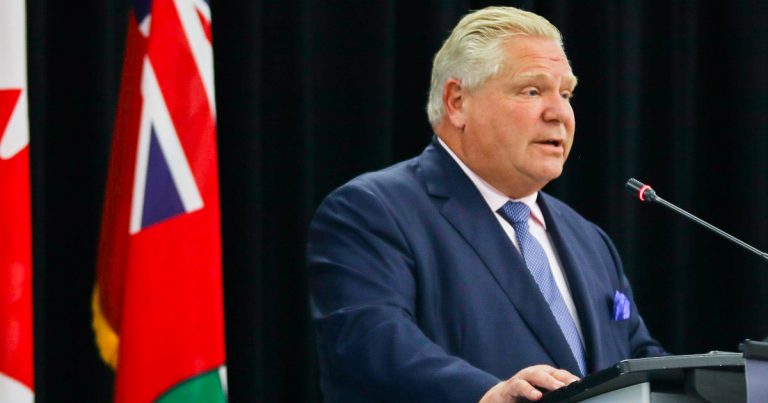
The Ontario government has finally unveiled its reopening plan.
While public health measures such as vaccine passports and mandatory masks remain in place for the next few months, the government has set a timeline for when the province can fully return to normal.
Almost half of the country desires significant political reform, a new Pew Research poll comparing attitudes towards governments across the developed world reveals.
The poll surveyed thousands of people over the phone from 16 advanced economies including Canada, the US, Australia, Japan and South Korea.
When Canadians were asked if the political system “needs to be completely reformed/needs major changes,” 47% of those polled agreed with the statement.
In comparison to other nations, however, the desire for systemic change in Canada is relatively low. Other countries such as the US reported 85% of people desiring reform and in Italy 89% of people wanted change.
“Even in places where the demand for significant political reform is relatively low, substantial minorities say their system needs minor changes. In all of the publics surveyed, fewer than three-in-ten say the political system should not be changed at all,” wrote Pew Research.
On the question of whether the economic and healthcare system needs to be reformed, 46% and 43% of Canadians responded in the affirmative respectively.
Despite the desire for change, most Canadians remain satisfied with how well democracy is working in their own country with 66% saying it is working well and 33% who are not satisfied.
When broken down further, people who viewed Canada’s pandemic performance negatively were more likely to desire serious reform politically. In that group, 71% of people wanted significant change, while among those who saw pandemic policies positively only 32% were desiring reform.
“People who believe their country is doing a poor job of dealing with the pandemic are consistently more likely to say they are dissatisfied with the way their democracy is working and to call for political reform,” wrote researchers.
“The belief that one’s country is doing a bad job of dealing with the pandemic is also linked to a desire for health care reform.”
Farmers and agricultural groups are lauding two bills passed by the Manitoba government meant to protect communities from rural crime.
The President of Keystone Agricultural Producers Bill Campbell was among the industry leaders who praised the bill as a necessary measure for increased security in rural areas.
“Improvements to trespassing and biosecurity laws are important steps in ensuring Manitoba farm families feel safe and biosecurity protocols are maintained,” said Campbell.
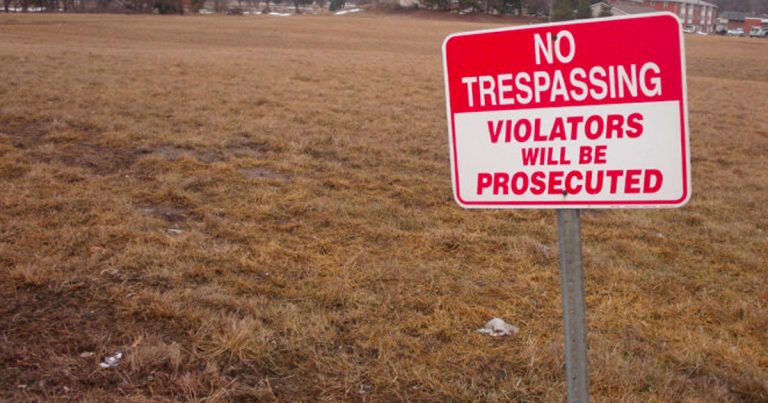
One of the two laws, Bill 63, went into effect on Friday, October 15, 2021. The legislation, titled the Petty Trespasses Amendment and Occupiers’ Liability Amendment Act, makes entry onto certain rural premises without permission an offence. The bill includes premises such as farms and storage facilities within its scope.
Meanwhile, on October 8, 2021, a separate law, Bill 62, otherwise known as the Animal Diseases Amendment Act was also enacted. Bill 62 provides increased protection to “biosecurity zones” such as farms and facilities where animals are housed and processed.
Critics have accused the Manitoba government of unfairly targeting animal rights activists, but proponents of the law have stated that the bills extend beyond simple activist activities and are meant to ensure the safety of animals as well as farmers.
“That’s part of it. Obviously, if people are entering a facility unauthorized and posing a danger to … the safety and biosecurity, this is what’s really looking to address that,” said Agriculture Minister Blaine Pedersen.
“It is not specifically for [activists], but it does cover that element.”
Last week, Manitoba RCMP announced that rural police reported crime rates have dropped significantly over the last year.
Between August 2020 and August 2021, rural communities in Manitoba saw an average 11% decrease in crime.
The drop was experienced across several crime categories including assault and robbery which fell by 29% and property crimes which fell by 23% in the province’s East District.
Are government responses to COVID-19 based on the social media mob? In some cases in Canada, it definitely seems like the case. But what if social media didn’t exist?
Would Canada’s response to COVID be more balanced and more similar to how the country handled the SARS outbreak? Let us know what you think.
Ontario’s former information and privacy commissioner Dr. Ann Cavoukian is raising the alarm about the potential for vaccine passes to be used by governments to spy on their citizens.
Cavoukian, who also holds a senior fellowship at Ryerson University’s Ted Rogers Leadership Centre and is the executive director of the Global Privacy and Security by Design Centre, made the comments in an interview with the Epoch Times.
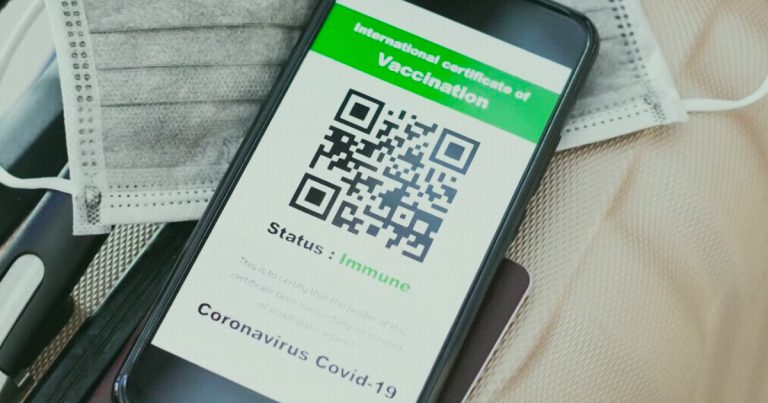
“Wherever you have to give your vaccine passport, it’s not just the QR code. They’re asking you for identification—your driver’s licence, your phone number—there’s personal information linked to it,” Cavoukian told the outlet.
“There will be geolocation data associated with where you were, and at what time. [Governments] can engage in surveillance and pull these all together and know where you were, at what time, who you were with.”
The Ontario government has claimed that the vaccine passport model they introduced on October 15, 2021 provides “greater security and privacy protection” by way of using a QR code which is essentially an advanced barcode that can contain more information.
However, as experts have pointed out, vaccine passports are not impervious to abuse or attacks from cybercriminals or foreign entities.
A group of so-called hackers notified the Quebec government that it was able to access the QR codes of several high-profile politicians, including Quebec Premier Francois Legault by way of a loophole in the system.
Additionally, as Cavoukian explains, governments have not indicated when an end to the vaccine passport system will take place.
“What often happens is when there’s an emergency, the privacy laws get lifted because it’s an emergency situation and additional measures are introduced. Then, when the emergency ends, those privacy-invasive measures often continue,” she said.
“That’s what happened with 9/11, with the Patriot Act, and others. And so my fear is that people are going to just expect to have to reveal vaccine status on a go-forward basis, even when the pandemic ends.”
On Friday, the Ontario government unveiled its reopening plan, which aimed to lift the province’s vaccine passport system in early 2022. However, their plan is contingent on factors such as case numbers and hospital capacity.
According to Cavoukian, this kind of data gathering will create a “global digital infrastructure of surveillance” which is constantly being updated by “hundreds and thousands of sites that are obtaining these vaccine passports from you.”
“With vaccine passports, people are being forced, they’re demanded to reveal their vaccine status. And that should be no one’s business except for the individual and their own doctor,” said Cavoukian.
In addition to the cost of fuel and gasoline, Canadians have had to deal with a spike in propane prices across the country.
According to the Financial Post, propane has spiked in the last three months in parts of Canada by a shocking 296%.
ATB Capital Markets has reported that propane jumped from US$0.25 per gallon to US$1.40 per gallon. Additionally, Bloomberg reports that the prices were the highest they have been in over 7.5 years.
The US Energy Information Administration (EIA) recently warned that in the US, Americans will have to pay higher heating costs this winter as propane and natural gas are expected to rise even further.
“The higher global and domestic energy prices that are resulting from economies beginning to grow again are going to translate into larger household bills for energy this winter,” EIA acting administrator Steve Nally said.
“Exports now make up a larger proportion of the total propane market, the total amount produced and distributed through the system, than is true for gas. Similar to natural gas, we’re in a situation where prices for the arbitrage opportunity are so wide that you’re going to keep exporting as much as you can.”
Recent Statistics Canada data reveals that inflation is the highest it has been since February 2003, as Canadians struggle to deal with rising costs of goods across the board.
The latest data indicates that inflation is currently at 4.4%.
“Since the pandemic began (beginning of March 2020) the Bank of Canada has printed more than $380 billion,” Canadian Taxpayers Federation Federal Director Franco Terrazzano told True North on Wednesday.
“The stats are showing what everyone is feeling: pain from sky-high cost of living. It’s time for the feds to take the printing press out of overdrive, rein in the overspending and provide tax relief.”
Goods like beef have shot up 13% at grocery stores, while the cost of gasoline has risen a shocking 32.8%.
Conservative Party leader Erin O’Toole chastised the Liberal government on social media this week for the high prices.
“Liberal mismanagement of our economy has led to the highest levels of inflation since early 2003. The cost of everything is skyrocketing. The Trudeau Liberals need to wake up and realize the mess they have created,” tweeted O’Toole on Thursday.
The RCMP union is trying to trademark possible names of a hypothetical Alberta provincial police force to throw a wrench in Alberta’s pursuit of its own independent law enforcement agency.
According to online records, the National Police Federation (NPF) applied last February to trademark the following names with the Canadian Intellectual Property Office: “Alberta Police Force,” “Alberta Police Department,” “Alberta Provincial Police,” “Alberta Police Service,” and “Alberta Provincial Police Service.”
The trademarks have not been approved and are still under consideration.
Kenney has put forward the idea of creating a police service under the province’s jurisdiction as a way to break free from the federal model and better address Alberta’s specific law enforcement needs.
“Especially in rural (areas), one of the issues is unacceptably long police response times. I think we can do better with a community police model. That’s what the city people have, with municipal police forces, in Calgary, Edmonton, Lethbridge and four other communities. If it’s good enough for city people, why isn’t it good enough for rural people to have their own local police force?” Kenney said in August. “That’s what an Alberta provincial police force would provide.”
NPF president Brian Sauvé claims “public polling” doesn’t support the idea, despite surveys showing otherwise.
“We don’t believe it should be easy for Premier Kenney to proceed unchallenged along the path of this politically-motivated proposal to replace the RCMP with a new provincial police service — which public polling tells us just isn’t what Albertans want, and continues to lack any transparency and accountability,” Sauvé said.
In reality, polls indicate that more Albertans (46%) supported a provincial police force than those who didn’t (39%).
“The government will not be deterred by petty attempts of obstruction. Any decision will ultimately be made in the best interest of Albertans,” said Alberta Justice Minister Kaycee Madu in response to the NPF application.
According to a trademark expert and University of alberta professor Cameron Hutchison, it is likely that the union will not be granted the trademarks.
“Normally, you have competitors and people who want to use the same word for their products. We have Pears soap or Dove soap, right? We don’t want to allow trademarks over (the word) soap because then nobody else can use them,” Hutchison told the Edmonton Journal.
“So either one of those would be a bar to getting a trademark, and I don’t see how they clear that hurdle.”
It’s Fake News Friday on The Candice Malcolm Show! Candice calls out the legacy media for their dishonesty and highlights the most outrageous examples of the media misleading Canadians.
This week, the legacy media went after Ontario Premier Doug Ford for making “anti-immigrant” comments, when in reality he was complimenting new Canadians and talking about work shortages and the need for more immigrants in the province.
Plus, the Saskatchewan Health Authority publishes medical misinformation and the left eats its own by setting its targets on Margaret Atwood.
These stories and more on The Candice Malcolm Show. Tune in now!
Conservative pundit and independent journalist Aaron Gunn has been barred by the BC Liberals’ Leadership Election Organizing Committee (LEOC) from running in its upcoming leadership race.
Gunn, who ran an explicitly conservative platform, responded to the news on Twitter Friday saying that those who believe in common sense and free speech are no longer welcome in the party.
“Today, it became clear that conservatives, and all British Columbians who believe in common sense and freedom of speech, are no longer welcome in today’s BC Liberal party,” tweeted Gunn.
‘I will be releasing a full statement later today, but rest assured, if you think this fight is over, you couldn’t be more wrong. The fight is only just beginning.”
BREAKING: The BC Liberals have red-lit conservative pundit Aaron Gunn from running in their upcoming leadership race.
Without approval from the Leadership Election Organizing Committee, Gunn will not be a candidate in the 2022 party election. https://t.co/pvuadkXFnr
In a statement released by the party, comments made by Gunn on social media were cited in the decision to bar him.
“After a thorough review of Mr. Gunn’s statements on social media, both public and private, and after having provided Mr. Gunn with the opportunity to respond to concerns raised by certain of those statements, LEOC concluded that to approve Mr. Gunn’s candidacy would be inconsistent with the BC Liberal Party’s commitment to reconciliation, diversity and acceptance of all British Columbians,” said LEOC Co-Chair Roxanne Helme.
Without Gunn in the race, party members will have to choose between the following candidates: Ellis Ross, Gavin Dew, Kevin Falcon, Michael Lee, Val Litwin and Renee Merrifield.
The move comes after Gunn was attacked by both the ruling BC NDPs and by potential opponent MLA Michael Lee who accused Gunn of holding allegedly “intolerant views.”
“Michael is exemplifying the worst aspects of politics. He is the classic politician who says one thing and does another, and people are sick of this behaviour,” Gunn told True North.
“I represent tens of thousands of ordinary British Columbians who want to see change in politics. Meanwhile, Michael Lee is committed to regurgitating talking points from our NDP opposition.”
Gunn announced his leadership bid on October 9, 2021 in his hometown of Victoria, BC.
As Justin Trudeau’s government seeks to “decarbonize” Canadian industry, the Liberals are advancing what they call a “just transition” devoted to “helping workers and communities thrive in a net-zero carbon economy.” While it sounds noble, it’s an initiative based on the idea of phasing out jobs in Canada’s oil and gas sector. Moreover, it neglects to recognize the work being done by the energy industry, such as investing in carbon capture and storage, which reduce emissions without punitive carbon taxes.
In this edition of True North’s The Andrew Lawton Show, we do a deep dive into the so-called just transition, and shine a light on what the sector is doing outside the government.
This panel features Alberta Enterprise Group president Danielle Smith, Modern Miracle Network founder Michael Binnion, Carbon Upcycling CEO Apoorv Sinha, and Avatar Innovations co-founder and CEO Kevin Krausert.