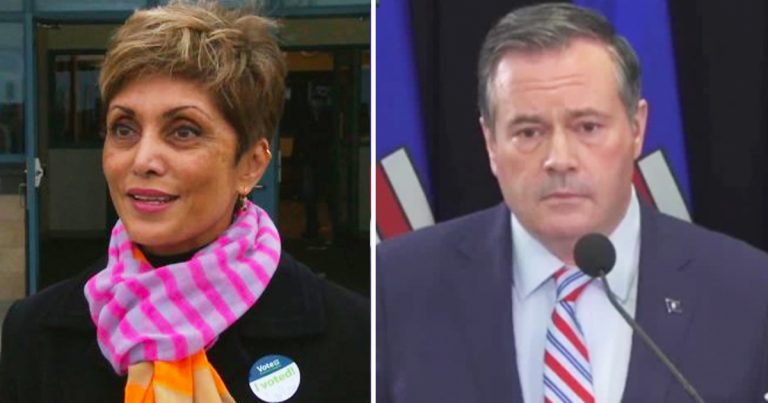
New Calgary mayor Jyoti Gondek’s first priority should be getting Calgarians back to work, not declaring a “climate emergency,” Alberta Premier Jason Kenney says.
Speaking to reporters Tuesday afternoon, Kenney said Gondek’s decision to declare Calgary in a state of emergency due to climate change is a “peculiar priority,” given more tangible challenges the city is facing.
Alberta premier Jason Kenney says Calgary mayor-elect Jyoti Gondek's first priority should be getting Calgarians back to work, not declaring a climate emergency. pic.twitter.com/YwuRxshS65
“In a city that has been suffering from near double-digit unemployment, that has gone through five years of deep economic adversity, I find that a peculiar priority,” Kenney said. “I would have thought that the mayor of Calgary’s top priority would be getting Calgarians back to work. That’s certainly my top priority.”
Gondek, an urban sociologist and one-term city councillor, was elected mayor last week, replacing outgoing mayor Naheed Nenshi.
In an interview the day after the election on Real Talk with Ryan Jespersen, Gondek said her first order of business would be to declare a climate emergency, something she said would make capital “flow in” to Calgary.
Gondek also said it was time to “move past” oil and gas to “put ourselves on the map as the city that is the absolute leader in a transitioning economy.”
In 2018, however, while serving as a Calgary city councillor, Gondek sang a different tune about the importance of Alberta’s energy industry.
“Because I am Canadian and a public servant at the city of Calgary, I support Canada’s oil and gas sector,” she said at the time. “Canada’s oil and gas firms have repeatedly demonstrated leadership on a global stage. Whether through innovations in technology, but minimized impact to the environment, or unmatched standards in health and safety practices.”
More than six in 10 Alberta voters opted to remove equalization from Canada’s constitution in a referendum last week.
According to the results released Tuesday, 61.7% of electors voted “yes” while 38.8% voted “no.”
The question was: “Should section 36(2) of the Constitution Act, 1982 – Parliament and the government of Canada’s commitment to the principle of making equalization payments – be removed from the constitution?”
In total, 1,092,639 electors voted in the referendum.
The results seem to align with pre-election polls showing Albertans are uneasy with the status quo, which sees billions of dollars transferred from Alberta and other wealthier provinces to so-called “have-not” provinces, notably Quebec and the Atlantic provinces.
Although the referendum is not legally binding, legal scholars have argued the federal government has a duty to negotiate with a province after such a referendum, a theory born out of the Supreme Court’s review of Quebec’s secession referendum.
Another recent poll by Maru Public Opinion found that a majority of Canadians also agreed that Alberta wasn’t getting a fair shake under the current equalization program.
According to the results, 66% of those polled believed that certain aspects of the federal program were unfair to Alberta, which contributes an outsized share of money sent to the rest of the country.
Belief in the unfairness of equalization extended across the country with even 53% of Atlantic Canadians agreeing and 55% of Quebecers also thinking equalization is unfair to Alberta.
Additionally, 69% of Canadians believed that if a province blocks or objects to pipeline development, they shouldn’t be benefiting from Alberta’s equalization payments.
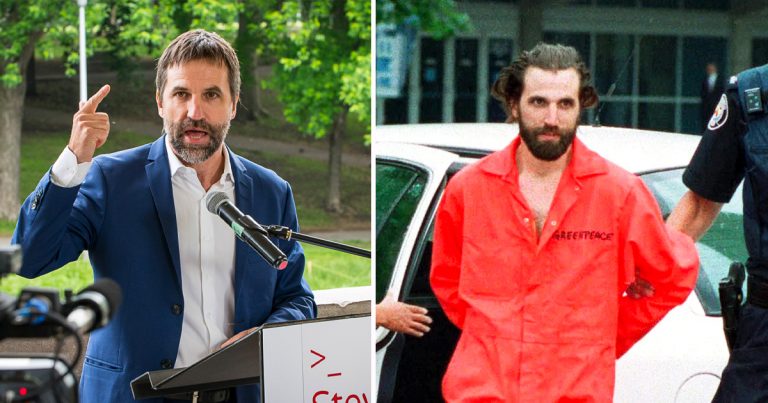
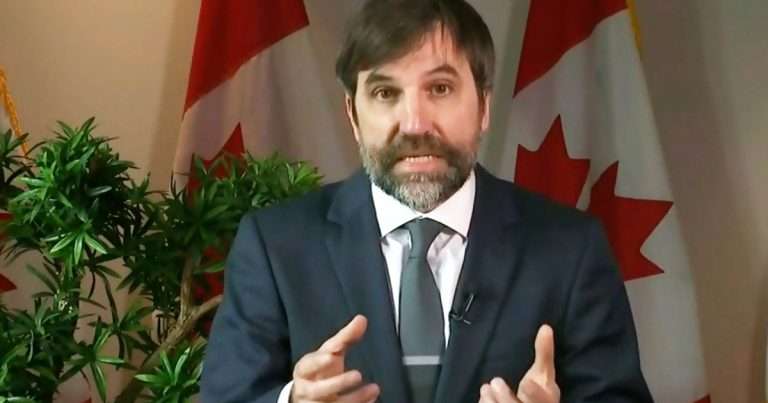
Liberal MP Steven Guilbeault was handed the environment portfolio on Tuesday as Prime Minister Justin Trudeau unveiled his new cabinet after retaining a minority government in this year’s election.
Guilbeault, who formerly served as the minister of Canadian heritage, has a history of involvement in the radical environmental movement.
In 2001, while a part of the organization Greenpeace, Guilbeault was arrested by authorities after illegally scaling Toronto’s CN Tower.
Guilbeault has recalled his past radical actions fondly and sympathized with recent environmental protesters but insisted that he now pursues his “political action differently” and calls himself a “radical pragmatist.”
“I think in many ways… I’m still this guy who climbed the CN Tower,” Guilbeault said in an interview with the National Post.
“But to me, civil disobedience was never a goal in and of itself. It was just a tool. And now I’m using different tools.”
As Canada’s new environment minister he is taking over the role from Liberal MP Jonathan Wilkinson, who was handed the natural resources ministry by Trudeau.
Guilbeault’s first task will be to travel to Glasgow in the next few days to join global leaders at the United Nations climate change conference (COP26) alongside Trudeau.
While still the minister of Canadian heritage, Guilbeault gave several controversial interviews and made conflicting statements regarding the Liberal government’s plan to censor the internet.
In 2020, Guilbeault proposed that the Liberal government would require media outlets in Canada to get a government license to operate.
Additionally, when facing criticism regarding the government’s disastrous Bill C-10, Guilbeault labelled all opponents to the law “extremists.”
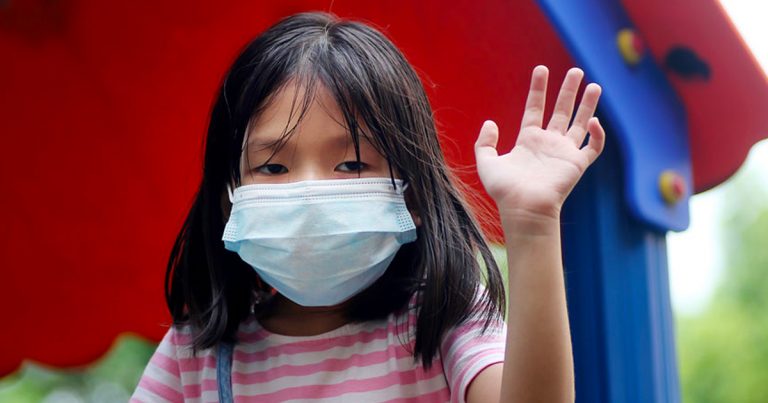
Students in the Toronto District School Board (TDSB) are being told not to speak during lunch breaks in an effort to stop the spread of COVID-19.
Citing concerns about a lack of socialization and increased screen time, parents of students are speaking out about the TDSB’s strict rule.
Parent Teresa Ostrom told CTV News Toronto on Friday that she did not find out about the policy until she had the chance to meet her child’s teacher face-to-face. Her child attends Alvin Curling Public School.
“My kid had never mentioned it, so I was actually shocked,” said Ostrom. “We were told that the kids were not permitted to speak while eating lunch because they remove their masks to eat.”
She said she worries about her child’s ability to socialize.
“I just felt so sad for the kids,” she said. “They’ve missed out on so much and especially so much unstructured socialization, which is what chatting with friends during lunch is, so it just seemed like one more thing taken away from them.”
Parent Narie Ju Hong echoed similar concerns and described the policy as cruel.
“I’m a high school teacher, and we don’t tell the students not to talk,” said Hong. She said her child’s teacher plays French television shows during the lunch break.
Toronto District School Board (TDSB) spokesperson Ryan Bird said in a statement emailed to True North on Monday that this measure was enacted based on the advice of Toronto Public Health.
“We have required lunches to be brief and quiet — guidance which has been in place since September 2020,” said Bird. “By keeping talking to a minimum while eating and while masks are off, we are reducing the possibility of the spread of COVID-19.”
Bird said when students have a brief lunch and spend less time with their masks off, students can go outside and talk with their friends sooner.
A study conducted by researchers at the Hospital for Sick Children suggested COVID-19 and the ensuing lockdowns had a significant impact on youth mental health in Ontario, and screen time is to blame for it.
The early data, which has not been peer reviewed, showed that more than half of 758 kids aged eight to 12 years old and three quarters of 520 adolescents aged 13 to 18 years old reported major symptoms of depression from February to March.
Increased screen time had a wide-ranging impact on the mental health of children and adolescents, according to the study.
Principal investigator of the study Dr. Daphne Korczak said more screen time was associated with increases in irritability, hyperactivity, inattention, depression, and anxiety in children.
“Kids need school, they need their friends, and they need to have fun,” said Korczak. “As our focus shifts to reopening society, we must have meaningful conversations about prioritizing the needs of children and youth.”
Children born after 2009 are ineligible to receive a COVID-19 vaccine at the moment, which means the majority of elementary school students remain unvaccinated. Toronto Chief Medical Officer of Health Dr. Eileen de Villa said on Wednesday that she hopes to see approval of COVID-19 vaccines for children aged five years old and up in the coming weeks.
Retail sales fell by 1.9% in September as a result of supply chain issues and shipping delays.
Canadians have reported missing goods in retail stores across the country as suppliers struggle to meet global shipping constraints.
Additionally, a shortage of microchips has impacted the automotive and consumer electronics sector, the outlet Baystreet reports.
Recently, members of the business community gathered for a week-long Supply Chain Canada conference last week to discuss the current state of affairs.
“The supply chain challenges that are happening now, we believe are just the tip of the iceberg, that this is going to be a continuing trend, particularly as the geopolitical situation deteriorates and the U.S. seeks to decouple some of its supply chain from China,” warned former Conservative cabinet minister Tony Clement, who was a speaker at the conference.
Clement isn’t the only former politician sounding the alarm on the direction of Canada’s economy.
In an interview with CTV’s Question Period over the weekend, former Liberal prime minister Jean Chretien blasted the federal government’s handling of the economy.
“We’re printing money like crazy,” said Chretien.
“We’re moving into a dark alley, but we’ll have to go to the end of the alley.”
Chretien also warned that there will be “difficult circumstances coming” should the Liberals continue down their chosen path.
Last week, Statistics Canada revealed what many Canadians have been expecting for some time now – that inflation is getting ahead of the government’s control.
Data indicates that inflation is the highest it has been since February 2003.
“Since the pandemic began (beginning of March 2020) the Bank of Canada has printed more than $380 billion,” Canadian Taxpayers Federation Federal Director Franco Terrazzano told True North, referencing official Bank of Canada data.
“The stats are showing what everyone is feeling: pain from sky-high cost of living. It’s time for the feds to take the printing press out of overdrive, rein in the overspending and provide tax relief.”
Tens of thousands healthcare workers across Canada are facing termination or discipline for not being vaccinated against COVID-19, according to a review conducted by True North.
True North relied on over a dozen reports on the regional and province-wide data to reach the total, which is subject to change.
Between Sept. 28 and Oct. 25, 26,425 nurses, doctors and other staff in the healthcare industry could be reprimanded for not obeying various COVID-19 mandates instituted by their workplaces or provincial governments.
Some of the workers counted in the article linked here have already been put on unpaid leave or fired.
See the full list of available reports on unvaccinated healthcare workers below:
84 face termination: London Health Sciences Centre (London Free Press)
181 face termination: University Health Network (CTV News)
497 face regular testing – Saskatchewan Health Authority (CBC News)
Every major political party in Canada is the same.
The ideological conformity in Canadian politics is pathetic and uninspiring. We saw this phenomenon during the recent federal campaign, and under Erin O’Toole, the Conservative Party is dedicated to erasing any distinction between the parties.
For 24 hours, there was a hint of difference between the CPC and the Liberals when it came to their position on forced vaccines for MPs.
After a heated caucus meeting, the CPC maintained their position AGAINST forced vaccines. But, a day later, O’Toole contradicted that position and came out IN FAVOUR of the Liberal mandate.
Ottawa’s Medical Officer of Health Dr. Vera Etches is citing staffing issues as a primary concern for the city in her latest report to the Ottawa Board of Health.
The warning comes as hospitals throughout the region are about to put hundreds of unvaccinated nurses and staff on unpaid leave as part of a mandatory vaccination program.
Although the report identifies the effects of the COVID-19 pandemic on the city’s healthcare system, no mention is made of the hundreds of unvaccinated staff about to be put on unpaid leave.
“The sheer volume of work brought on by COVID-19 and the length of the pandemic response have heightened concerns about workforce capacity and sustainability, raising human resources as a key organizational risk. Ensuring adequate and appropriate staffing levels and staff mix based on operational needs is critical to OPH successfully achieving its objectives,” wrote Etches.
Among the solutions proposed by Etches to deal with staffing issues include retaining casual employees and training temporary positions.
“Mitigation efforts include plans to maintain staffing capacity by seeking to retain casual pools of employees, training temporary employees, and ensuring that programs have the flexibility to quickly scale resources up or down as needed. Despite planning, the capacity to respond to a surge will be limited by available human resources and the response levels may need to be adapted, depending on the situation,” Etches notes.
Recently, Ottawa Hospital announced that over 300 employees and staff who aren’t fully vaccinated against COVID-19 will be put on an unpaid leave of absence.
According to the hospital, 189 employees haven’t received a dose of COVID-19 vaccines while 129 others have only received one shot and are therefore not considered to be fully immunized.
“There are a number of staff who have yet to become fully vaccinated by November 1 and therefore will be placed on unpaid leave of absence,” said a letter obtained by CTV News.
Hospitals across Canada, including most recently Toronto’s SickKids Hospital, have also announced similar measures to exclude unvaccinated staff. Recent reports indicate that the hospital has put 147 staff on unpaid leave for refusing to be vaccinated against COVID-19.
The Vancouver-based internet freedom advocacy group Open Media is slamming the Liberal government for hiding the results of a consultation on its proposed plan to regulate online content from the public.
According to Blacklock’s Reporter, Open Media Campaign Director Matthew Hatfield claimed that the vast amount of criticism the government received in the past few weeks is being held up behind a veil of secrecy.
“If our government won’t tell us what they’ve heard from us, how can we know if they’re listening?” said Hatfield.
“In a shocking move, our government has refused to publish the results of last month’s consultation on their proposed plan to censor and surveil the internet. Any legislation that could affect our online speech is among the most sensitive our government could propose, yet the government is keeping this crucial criticism on those proposed plans hidden from the public.”
According to Hatfield, Open Media members alone submitted 9,000 submissions against the proposal prior to the consultation period closing on September 25, 2021.
Among the groups which also submitted counter-arguments to the plan include the Independent Press Gallery of Canada (IPG), University of Toronto’s Citizen Lab and a number of other organizations dedicated to civil liberties and free speech online.
“The IPG opposes the proposal and expresses a serious concern to the harmful effects on freedom of expression and principles of law that will ensue if the government moves forward with the proposal. We expect that the government will take our criticisms into account and will cease its pursuit of the proposal in its current form,” IPG President and True North Founder Candice Malcolm wrote.
Although the federal government has not published the results of its consultation, Heritage Minister Steven Guilbeault’s office has confirmed that it did not receive any messages of support for the law.
Other critics of the proposed law, including federal judges and human rights advocates have separately labelled the plan “incoherent” and “unconstitutional.”
The most striking feature of the recent federal election was the amount of overlap between the parties when it came to their platforms as well as their overall governing philosophies.
We’ve come to a point where the Liberals, Conservatives, New Democrats, Bloc and Greens all have the same opinion on virtually every political issue that matters to Canadians.
On healthcare, fiscal federalism, bilingualism, high taxes, budget deficits, the size of the public service, childcare, affordable housing, reconciliation, the environment, immigration, foreign policy, gun control, abortion, speech censorship, COVID restrictions, lockdowns, vaccines and even some variation of a universal basic income, they all agree!
Sure, each party has a slightly different way of framing the issues — tinkering with the various rates and rebates here and there — but, overall, it would be nearly impossible for the average voter to name the party behind the big-ticket platform ideas of the major parties.
Which party proposed doubling the Canada Workers Benefit to give low-wage workers a rebate on federal income tax?
Which party proposed a tax-free savings account for first-time homeowners under the age of 40?
Which party proposed a two-year ban on foreign ownership of homes? (Trick question, they all agree on that one!)
One of the biggest announcements from the Conservative campaign was an idea to allow working mothers to continue collecting maternity leave payments while working part-time. The kicker: a Liberal policy already allows this.
The uninspiring sameness of the major parties led us to a status quo outcome. Canadians were indifferent to the various pitches, and thus, retreated to old habits and cast the same vote as they did last time.
(The exception came by way of Maxine Bernier and the People’s Party of Canada, who ran on a very different set of issues and nearly tripled their vote count. Bernier’s outside-the-box ideas, however, led much of the media — also cursed by toxic groupthink and rigid boring sameness — to demonize and slander Bernier and call him every horrid name in the book.)
The Conservatives once offered the occasional spark of originality in Canada’s painfully dull political system. They sometimes resisted media-induced conformity and would say ‘no’ to the left’s insistence that we all have the exact same opinion on every single topic.
Conservatives used to push back, ever so slightly, on the latest leftist fad — be it on fanatical climate alarmism, open borders immigration or accusing Canada of committing the worst forms of crimes, including genocide.
But it seems those days are behind us. Under Erin O’Toole, the party appears committed to whitewash itself into a true big-L Liberal Party.
Last week, following what I’m told was a very heated caucus meeting on the topic, O’Toole sent out party whip Blake Richards to oppose the Liberal government’s vaccine requirement for all MPs.
“As we said during the election, workplace health and safety can be assured through vaccination or the demonstration of a recent negative rapid test result,” said Richards.
“We cannot agree to seven MPs, meeting in secret, deciding which of the 338 MPs, just elected by Canadians, can enter the House of Commons to represent their constituents,” he said.
I’m told the Tory caucus vehemently opposes vaccine mandates, while O’Toole — weakened from an election loss and worried about a leadership review, which can now be initiated with a letter from just 24 MPs — wants to fall in line with the preferred policy of much of the media and Liberal Party.
O’Toole allowed caucus to win the day, but 24 hours later, speaking to TVO’s Steve Paikin, O’Toole changed his mind and contradicted Richards by saying that his party will respect the Liberal rule on vaccines.
For 24 hours, there was a hint of daylight between the Liberals and Conservatives. That, apparently, was too much for O’Toole, who seems to prefer the position of total Liberal conformity.