Toronto 18 terrorist seeking more computer access while on parole

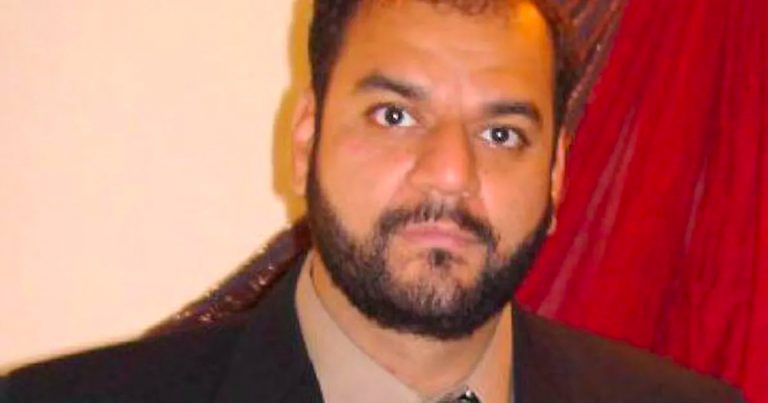
Terrorist and architect of the Toronto 18 plot Shareef Abdelhaleem wants to be given more computer access while out on parole, Parole Board of Canada records show. 

Despite masterminding a plot to detonate bombs in Toronto that could have killed numerous Canadians, Abdelhaleem is currently a free man after being let out of prison over 10 months ago.

While living at a halfway house, Abdelhaleem has restrictions on his computer and internet use. Now he is complaining that he doesn’t have unlimited internet access and can only use a single device. 

If granted more access, he might not have to share his passwords with his parole officer. 

According to records, Abdelhaleem whined so much about his restrictions that people around him began to complain. 

Despite his terrorist past,  the Parole Board of Canada will be hearing Abdelhaleem’s complaints in the near future and will consider whether requiring him to provide the passwords to his device and accounts would violate his rights. 

“The Board has considered the technology available at the time of your offences and the one in place today that could be used by terrorist groups. As such, the Board is of the opinion that your Internet usage and communication must be monitored,” the Board said in June 2021.

Abdelhaleem was arrested in June 2006 after an extensive national security operation. Abdelhaleem was accused of wanting to detonate truck bombs at CSIS, the Toronto Stock Exchange and military bases.

The plot concocted by Abdelhaleem and others also included a plan to invade Parliament and behead the prime minister of Canada. 

During his trial, Abdelhaleem was identified as a “key architect” in the plot and convicted of terrorism charges. 
Alberta sends a clear message to the rest of the country

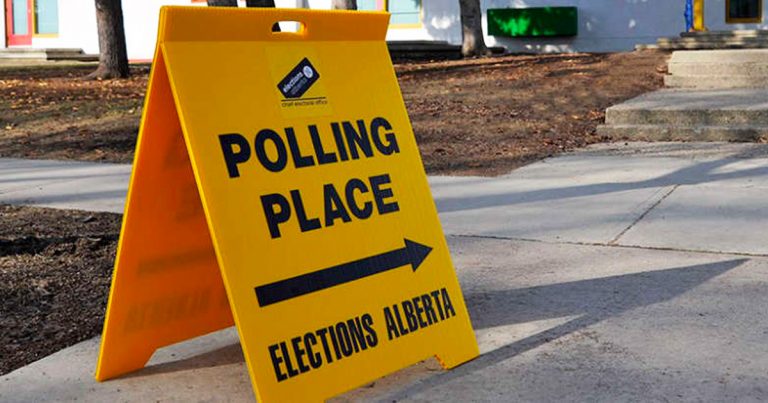
The official results of the equalization referendum were finally released this week and a majority of Albertans believe our confederation is not working. 62% of Albertans voted to remove equalization from the constitution.

What’s next for Alberta? How will Ottawa respond? Why is the media trying to discredit the results?

Conservative Strategist Vitor Marciano joins The Candice Malcolm Show to discuss.

SUBSCRIBE TO THE CANDICE MALCOLM SHOW

Canadians paying $3 million more in cabinet salaries when compared to 2015

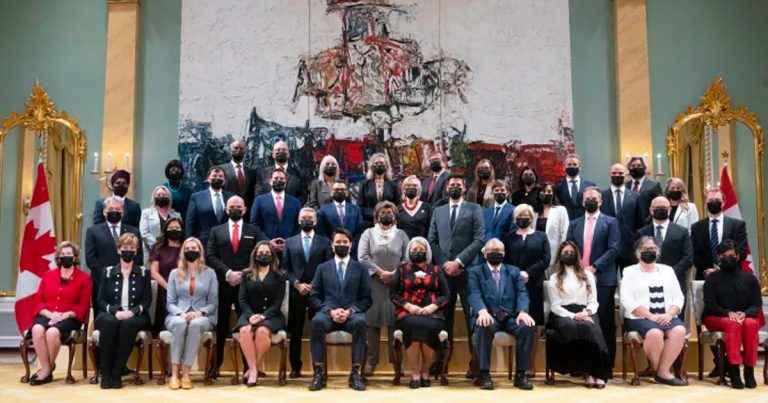
Prime Minister Justin Trudeau’s oversized cabinet will cost Canadians $3 million more than when the Liberals were first sworn in in 2015. 

According to the Canadian Taxpayers Federation (CTF), cabinet members will cost taxpayers a combined $10.8 million per year in salaries. 

“Taxpayers are paying for a bigger and more expensive cabinet,” said CTF Federal Director Franco Terrazzano.

“The federal government has a lot of work to do to chip away at the $1 trillion debt and it should start with leadership and restraint at the top.”

Currently, Trudeau’s base salary is $371,600 and each cabinet minister will be paid $274,000 annually. This comes after all ministers received two salary raises over the course of the COVID-19 pandemic. 

The numbers do not include all of the other additional benefits cabinet members and the prime minister receive.

Currently, Trudeau is making $13,800 more per year than he did before COVID-19 and ministers are getting paid $10,100 more. 

“Taxpayers are struggling and the cost to pay for our federal cabinet shouldn’t be rising during the pandemic,” said Terrazzano. 

“Taxpayers expect to see leadership from this cabinet and that means Trudeau should be shrinking cabinet and all politicians should reverse the two pandemic pay raises.”

Earlier this month, the CTF revealed that the latest Statistics Canada employment data shows that while government jobs continue to grow, private sector workers are struggling

According to data, Canada added 107,000 “public administration” jobs over the course of the pandemic, meanwhile the private sector saw a loss of 256,500 jobs. 

Liberals want to rush censorship law Bill C-10 back into parliament

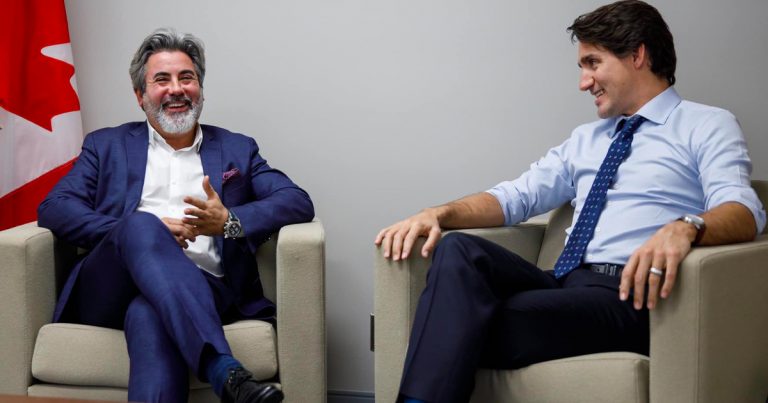
Newly-appointed Minister of Canadian Heritage Pablo Rodriguez promised on Tuesday to rush the controversial anti-internet freedom law Bill C-10 back into parliament at the soonest opportunity. 

Earlier this year, the bill died in the Senate before the end of the last parliamentary session. Now that the Liberals have a minority government, they want to make regulating the internet a top priority. 

“We promised to bring in some bills very quickly. C-10 is one of them,” said Rodriguez after being sworn in. 

“We made many promises to table important bills in the first 100 days and that includes the broadcasting bill. We need that bill. We have to modernize it.” 

The law, which proposes to update Canada’s Broadcasting Act to meet the current digital media landscape, has been cited by many experts as a threat to Canadians’ right to freedom of expression. 

When debating the law, the Liberals removed an amendment to the bill which effectively served to protect user-generated content from Canadian Radio-Television Commission (CRTC) oversight. 

Some critics of the bill argued that removing the amendment effectively placed the content ordinary Canadians posted online under government control. 

Several former CRTC commissioners have already strongly come out against the bill. In May, both CRTC ex-chair Konrad von Finckenstein and former CRTC commissioner Timothy Denton signed a petition which labelled the bill as “authoritarian.” 

“It appears Canada is not immune to the growing trend of government intervention to curtail freedom and seek to control parts of the internet’s infrastructure in ways reminiscent of actions taken by authoritarian governments,” wrote the petition. 

“We are Canadian internet policy and technical professionals writing as concerned experts and on behalf of all those who care about the future of a free and open internet.”

In response to criticism, former Canadian Heritage minister Steven Guilbeault referred to those who opposed the law as “extremists”. 

Halifax soup kitchen requires people to be vaccinated against COVID-19 to enter

A soup kitchen in Halifax intended to help the city’s most vulnerable will require individuals to show proof of vaccination against COVID-19 before entering its premises and accessing its services. 

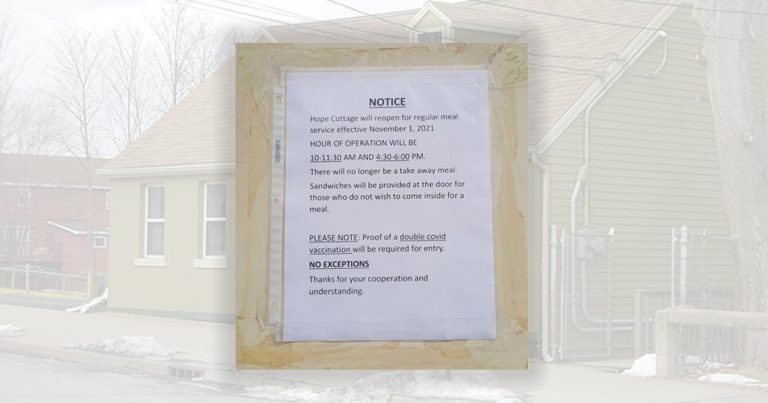
Former department head of emergency medicine for Nova Scotia’s eastern zone Dr. Chris Milburn posted a photo of a sign at Hope Cottage on Facebook on Monday. Milburn said Hope Cottage used to be a place where people would come to sit and have a warm meal with no judgment or questions asked. 

“But now if you don’t happen to be carrying your vax pass on your 800$ smartphone, tough luck,” said Milburn. “What the hell are we doing?” 

According to the sign, there will be no exceptions to the vaccine policy. 

Programs and services for vulnerable populations that cannot be offered virtually are exempted from Nova Scotia’s vaccine passport system, except if meals are offered. Meals can only be provided through takeout or delivery to people who cannot show proof of vaccination. 

Hope Cottage confirmed in a statement emailed to True North on Wednesday that their sign exists and individuals entering its premises will be required to show proof of vaccination.

“We will be following provincial health protocols,” said Hope Cottage. 

Hope Cottage will be reopening for meal service on Nov. 1. The hours of operation will be 10 to 11:30 a.m. and 4:30 to 6 p.m.

There will no longer be takeaway meals but sandwiches will be provided at the door for people who are unable to come inside for a meal. 

Nova Scotia implemented a vaccine passport system for non-essential activities for anyone 12 years old and up effective Oct. 4. The vaccine passport system applies to social activities that bring people together.

Other provinces do not require vaccine passports for soup kitchens. 

British Columbia’s vaccine passport policy does not apply to soup kitchens. Proof of vaccination is required for restaurants, cafes, pubs, bars and lounges. 

Ontario’s vaccine passport system does not require people to show proof of vaccination to enter soup kitchens. Instead, proof of vaccination has been mandated for restaurants, bars and other food and drink establishments. 

Aaron Gunn speaks out after disqualification from BC Liberal leadership race

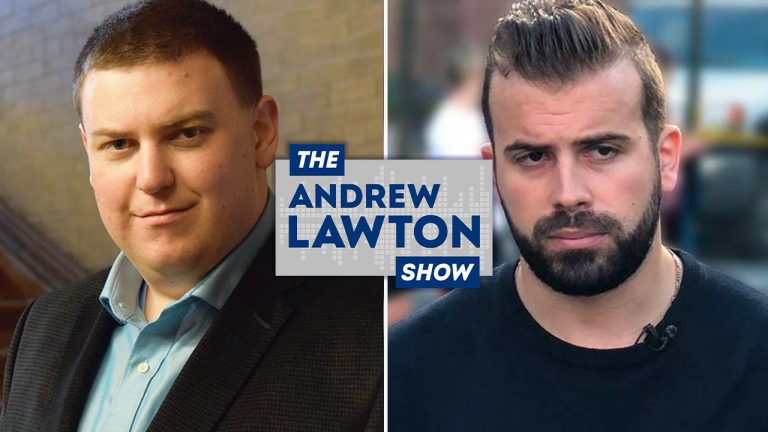
The BC Liberal Party, which is the preferred provincial party of most BC conservative voters, has disqualified conservative commentator and activist Aaron Gunn from seeking its leadership because, in the party’s words, his candidacy would be “inconsistent with the BC Liberal Party’s commitment to reconciliation, diversity and acceptance of all British Columbians.” Gunn says the only evidence he was provided was that he has said Canada is not a genocidal nation. He joined The Andrew Lawton Show to explain.

Watch The Andrew Lawton Show.

Federally-funded org won’t say whether Margaret Trudeau was paid for speaking event

Prime Minister Justin Trudeau’s mother Margaret Trudeau recently spoke at an event hosted by an organization that received $5.8 million from the federal government. 

On October 14, 2021, she appeared at an Elevate.ca event titled Think 2030 to discuss mental health and the COVID-19 pandemic. The company, however, is now refusing to say whether they paid Margaret Trudeau any compensation for the event. 

The not-for-profit based out of Toronto lobbies the federal government for funds and in June of this year, FedDev Ontario awarded the agency millions in funds. 

“Elevate did not receive any federal funding whatsoever for its event Think 2030,” Elevate general manager Lisa Zarzeczny told CTV News.

According to the federal government, the funding given to the organization was to “reskill 5,300 job seekers from underrepresented communities, including Black, Indigenous, People of Colour, 2SLGBTQ+, and francophone professionals in the Greater Toronto and Hamilton Area and match them with job openings in technology and innovation-based organizations, start-ups and the creative industries.”

Last year, payments made to Margaret Trudeau and other members of the Trudeau family by WE Charity were investigated by the federal ethics commissioner. 

In total, Margaret Trudeau received upwards to half a million dollars from the charity for various speaking engagements.

Trudeau’s brother Alexandre Trudeau and the prime minister’s wife Sophie Gregoire Trudeau have also received payments from WE. 

Although Trudeau was cleared of any wrongdoing by Ethics Commissioner Mario Dion, Dion noted that the matter did have an “appearance of a conflict of interest” but no laws were violated by the prime minister when he handed the company a $900 million single-sourced contract. 

Additionally, disgraced finance minister Bill Morneau was found guilty of breaking ethics laws for giving the company what amounted to “unfettered access” to his office. 

Despite cabinet tweaks, Trudeau is planning more of the same

Patty Hajdu is out as health minister, Harjit Sajjan is gone from defence, and Bill Blair has lost his public safety portfolio – but all three remain in cabinet. Despite changes in Justin Trudeau’s cabinet, it’s clear the government is not interested in a course correction, but rather more of what they were doing before the election, True North’s Andrew Lawton predicts.

Also, a shout-out to a couple of Conservative MPs who are speaking out against vaccine mandates, plus former BC Liberal leadership candidate Aaron Gunn joins the show to discuss his disqualification from the leadership race for allegedly being insufficiently committed to “reconciliation, diversity, and acceptance.”

SUBSCRIBE THE ANDREW LAWTON SHOW

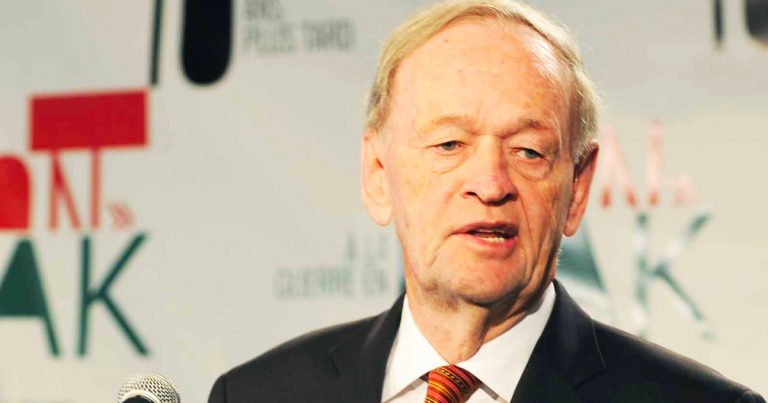
Former PM Jean Chrétien stares down the woke mob

The legacy media is trying to manufacture a scandal against the former Liberal PM.

Despite months of hysterical woke rhetoric from the legacy media and the far-left mob – declaring that Canada committed genocide and cancelling anyone who says otherwise – Chrétien dared to challenge this narrative on residential schools.

He defended his decisions, defended the philosophy behind the schools, and even defended his 1969 proposition to abolish Indian Affairs and eliminate Indian status altogether. He rightly stated that we can’t change history, and that we shouldn’t apologize for every bad thing that happened in the past.

Chrétien defended a position that many Canadians agree with, he held his ground when the woke anti-Canada crowd came after him.

Candice Malcolm says that today’s political leaders could learn a lot from Chrétien.

SUBSCRIBE TO THE CANDICE MALCOLM SHOW

1% of CBC staff not fully-vaccinated against COVID-19

As of last week, 1% of CBC/Radio-Canada staff who have reported their vaccination status are not fully vaccinated against COVID-19. 

Earlier this month, True North reported that all CBC staff would have by the end of October to report their vaccination status to the Crown corporation after Prime Minister Justin Trudeau announced a vaccine mandate for public servants and federally-regulated industries. 

In response to inquiries on Monday, CBC’s Director of Media Relations and Issues Management Leon Mar confirmed that 75% of employees have already reported their status and that 1% of that segment was not fully vaccinated. 

“As of October 20, 75% of employees had completed the mandatory declaration of COVID‑19 vaccination status. Among permanent, contractual and temporary employees of 13 weeks or longer, that number goes up to 81%. The vast majority of respondents are fully vaccinated; only 1% have confirmed that they are not fully vaccinated against COVID‑19. Employees have until October 31 to complete their vaccination status declaration,” Mar told True North in an emailed statement. 

The move seems to conflict with a statement by CBC given to True North earlier this year, when the broadcaster suggested that vaccination was a “personal decision” for employees. 

“At present, vaccination is a personal decision for each employee to make,” Mar told True North in August. 

As of April 1, 2021, CBC/Radio-Canada reported that it had 7,429 employees

Mandatory vaccination for the public broadcaster will come into effect on December 1, 2021. Additionally, according to Mar, the CBC is still working out the kinks of the mandate including how to deal with those who refuse to get vaccinated. 

“We are still in the process of developing the mechanisms and procedures allowing us to operationalize this new requirement, including what administrative measures will apply to unvaccinated people for whom no medical or religious exemption applies,” said Mar. 

“With regard to vaccine exemptions on medical or religious grounds, we will continue to follow the advice of health experts on this issue and we will evaluate such requests on a case‑by‑case basis.”