Former Bank of Canada governor forecasts recession

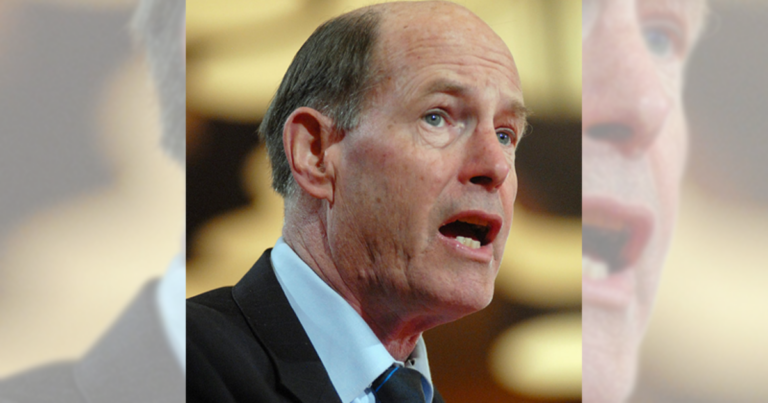
Former Bank of Canada (BoC) governor David Dodge told the Senate banking committee on Thursday that Canada faces an impending recession.

According to Blacklock’s Reporter, Dodge predicted economic growth would flatline and unemployment will surge.

“It’s not going to feel so good,” said Dodge. “Unemployment is going to rise and economic growth will flatten to zero.” Dodge also blamed his successors for incorrect forecasts, claiming they were “not very helpful.”

Senator Clement Gignac (Que.), who was the chief economist for National Bank, criticized BoC executives for giving bad advice to Canadians. 

“In 2020 the central banks, not only in Canada, said interest rates would remain low for a while,” said Gignac. “As a result a lot of people bought houses at variable rate mortgages.”

“In 2020 the Bank of Canada said, ‘You know what? Inflation will be transitory.’ Whoops,” said Gignac. “They give us the impression that they know a lot of things, and we start to realize they have no better clue than Wall Street economists.”

Since 2020, Bank of Canada governors have issued the following inaccurate forecasts:

  • “Interest rates are going to be low for a long time” (Tiff Macklem, July 15 2020)
  • “Inflation is expected to remain less than two percent in 2023” (Tiff Macklem, July 15 2020)
  • “Inflation will stay low” (Stephen Poloz, November 17 2020)
  • “The inflation we’re observing right now is very likely to be transitory” (Stephen Poloz, May 18 2021).

Senator Gignac asked Dodge about the BoC’s inaccurate predictions.

“Do you think the central bank talks too much?” asked Gignac.

“I think it’s very hard to give guidance other than, ‘We’re going to watch and see what happens,’” replied Dodge. “I think there were big mistakes made.”

Dodge served as the Bank of Canada’s governor from 2001-2008 before retiring. 

Economists from Desjardins Group and the Royal Bank of Canada are now joining the growing number of experts who are telling Canadians to brace for an incoming recession. An official statement from the BoC also indicated more hikes were likely coming soon.

“Given the outlook for inflation, the Governing Council still judges that the policy interest rate will need to rise further,” read the statement. 
BONOKOSKI: Solving Canada’s internal trade woes with “mutual recognition”

Canada’s economy loses $200 billion a year through internal trade barriers thrown up by the provinces, a situation the Macdonald-Laurier Institute (MLI) says can be remedied by “mutual recognition.”

The billions of dollars of productivity lost is due to a labyrinth of rules, regulations, and restrictions between provinces, says the think tank.

Solving Canada’s internal trade woes has remained a stubborn problem, however, with federal government after federal government coming up short in how the provinces can ultimately untie this costly trade impasse.

In one of MLI’s latest papers, titled “Liberalizing internal trade through mutual recognition; a legal and economic analysis,” authors Ryan Manucha and Trevor Tombe explore the policy, finding that it may represent an important next step toward liberalizing internal trade between Canada’s provinces.

But what is mutual recognition?

“Simply, it is a policy whereby ‘regulatory requirements’ met for one provincial and territorial government automatically satisfies requirements for another,” write Manucha and Tombe. “No province would have to change to a common set of standards; they would simply agree that the standards of other provinces are recognized as legitimate.”

Why does it matter?

The authors found that internal trade costs imposed by parallel regulatory regimes are quite significant. A web of regulations makes it more difficult for businesses to operate across provincial lines, increasing delays and administrative costs which meaningfully affect productivity.

“Canada’s economy could increase by between 4.4% and 7.9% – a significant gain of between $110 and $200 billion per year – if internal trade barriers were eliminated by mutual recognition policies,” say Manucha and Tombe.

The authors are careful to note that these long-run gains would take many years to realize. Regardless, “the large magnitude of potential gains suggests the increasing effort and attention by policy-makers on this issue is well placed.”

Despite the unambiguous and large economic benefits of mutual recognition, there are trade-offs to consider.

If trade is liberalized, economic disruption will be inevitable, with the authors noting that increased competition and workforce migration may place disproportionate pressures on smaller and lower productivity regions.

Impacts will therefore be felt unequally across provinces or industries. Furthermore, unilateral or partial adoption of mutual recognition between provinces may complicate redistribution and pose political challenges.

Nonetheless, mutual recognition’s benefits are substantial, the risks are generally low, making the policy well worth considering, says MLI.

The two authors argue that the policy could be implemented in select industries where risks are particularly low and benefits are high, such as in finance. Such potential for quick wins would demonstrate why “mutual recognition should be an important part of the policy conversation.”

Ryan Manucha is widely published and a frequent commentator on the topic of Canadian interprovincial trade, while Trevor Tombe is a professor of economics at the University of Calgary and a research fellow at Calgary’s School of Public Policy.

Pursuing mutual recognition policies within specific areas, such as trucking regulations, food safety, or financial services, may be appropriate in the future, say the authors.

Canada’s experiment with domestic political arrangements to liberalize internal trade commenced in 1995 with the Agreement on Internal Trade.

The various agreements among the nation’s provinces and territories that have been spawned since then, and which presently constitute Canada’s ecosystem of domestic trade arrangements, are largely underpinned by the paradigm of national treatment’ reads the report.

Mutual recognition could further domestic liberalization efforts with its more stringent obligation on the part of one province to generally accept the technical regulations of another for goods or services. Arguably, recourse and the adoption of mutual recognition is a natural progression for Canada’s interprovincial trade advancement, say the authors.

Whatever the best route forward, interest among governments to improve economic growth and liberalize trade may be higher today than any point in recent memory, they argue.

And mutual recognition should be an important part of the policy conversation.

Students’ challenge of Western University’s booster mandate dismissed by judge

The Ontario Superior Court of Justice has upheld Western University’s controversial booster vaccine mandate.

On Saturday, Justice Kelly Tranqulli dismissed the challenge by five students and found that Western officials are “expressly permitted to govern its affairs,” defending their right to impose a mandate even in the absence of a provincial mandate.

According to the National Post, the lawyer for the students Lisa Bildy argued in court that because the province’s Covid-19 vaccine policies have been repealed, the university was not authorized to ask for the vaccination status of staff and students.

Bildy also argued Western lacked the authority to collect data from students and staff under Ontario’s Freedom of Information and Privacy Protection Act, and that the university’s booster mandate fell outside of its core directive, which they claim is to provide post-secondary education.

Lawyers for Western argued that the school had powers under the Univesity of Western Ontario Act and that implementing its mandate is a “lawfully authorized activity.”

Justice Tranquilli sided with Western’s lawyers.

“Based upon the broad wording of Western’s enabling statute, and the process that Western followed in promulgating its COVID-19 Vaccination Policy, I am satisfied the university has demonstrated that the policy is a ‘lawfully authorized activity,’” the decision said.

“That the province no longer requires Western to impose a vaccine mandate, or that Western is reportedly the only university in Ontario to impose such a mandate, is of no consequence. Western is expressly permitted to govern its affairs.”

In September, Western University delayed the implementation of its booster mandate, and gave students, staff and visitors until next year to provide proof of vaccination before attending campus.

The university originally imposed an Oct. 1 deadline, though it’s now been pushed back by more than three months to Jan. 9, the beginning of the winter term.

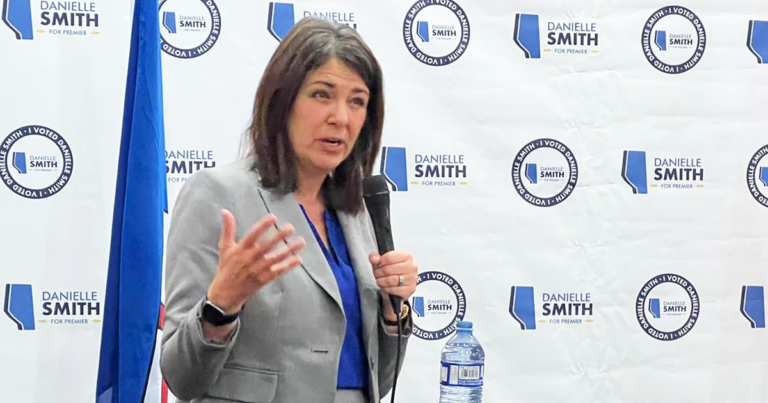
The Alberta Roundup | Is Jason Kenney campaigning against Danielle Smith?

This week on The Alberta Roundup, Rachel Emmanuel discusses how a third party advertiser, which was created to promote Alberta Premier Jason Kenney, is sending out automated text messages criticizing Danielle Smith’s candidacy for the United Conservative Party (UCP) leadership. Is the sitting premier campaigning against Smith?

Plus, UCP leadership candidate Todd Loewen defended Freedom Convoy organizer Tamara Lich, saying says it was “abhorrent” that the Medicine Hat police service spent energy re-arresting her.

And a citizens advocacy group has started a petition to stop Edmonton’s plastics ban. Common Sense Edmonton says the proposal is more virtue-signalling price increases from the government.

These stories and more on The Alberta Roundup with Rachel Emmanuel!

SUBSCRIBE TO THE ALBERTA ROUNDUP.

Governor General’s office won’t reveal individual menu items on $100K catering bill

Conservatives are demanding the Liberal government disclose the cost of individual menu items after an international trip by Governor General Mary Simon racked up a $100,000 catering bill. 

According to Blacklock’s Reporter, expense records show that Simon’s staff dined on $218 per plate for breakfast, lunch and dinner courses. 

“We’d like to know whether we are dealing with caviar and champagne. What kind of meals are we talking about here?” asked Conservative MP Pierre Paul-Hus. 

Flight records from the government’s Dubai trip revealed that Simon’s junket billed taxpayers $80,367 in food costs alone. 

“If you divide that by 46 people you get $1,744 per person or $218 per meal which includes breakfast,” said Liberal MP Anthony Housefather. 

“Did anybody look at the price and say, ‘Oh my God, this is an astronomically high price for this small number of meals’?”

Simon’s deputy secretary Chrstine MacIntyre refused to reveal to the House of Commons government operations committee what food items were served on the flight. 

“I was one of the passengers on those flights. The meals we were given are the types of meals you would get on a commercial flight,” said MacIntyre. 

“An average of $218 per meal would represent groceries for a whole family. There were snacks. What kind of snacks? How many snacks were there? What were the costs of those?” asked Bloc Quebecois MP Julie Vignola. 

MPs also pressed witnesses to explain why nobody brought up concerns with the high bills. 

“I’m trying to be polite here. I’m gobsmacked that it’s 2022, there are dozens of people I’m sure working on this and $218 just seems to be, ‘Meh, that’s okay.’ How did this happen?” said Conservative MP Kelly McCauley. 

As exclusively reported by True North, Prime Minister Justin Trudeau’s residence spent more than $12,000 on dining and groceries in one month last year.

The average cost for groceries by the Trudeau household from Mar. 2021 to Sept. 2021 reached $7,861. 

Parents speak out about prosthetic breast-wearing transgender teacher

Parents, students and local residents converged outside Oakville Trafalgar High School on Friday to protest the high school and school board for defending the giant prosthetic breast-wearing transgender shop class teacher.

After footage emerged last week of the teacher in class, the story went viral around the world and Canada became the punchline of the world’s jokes.

When parents wrote to the school to voice their frustration, the high school defended the biological male teacher instead of siding with the students.

True North’s Harrison Faulkner was in Oakville today to speak with local parents who attended the protest.

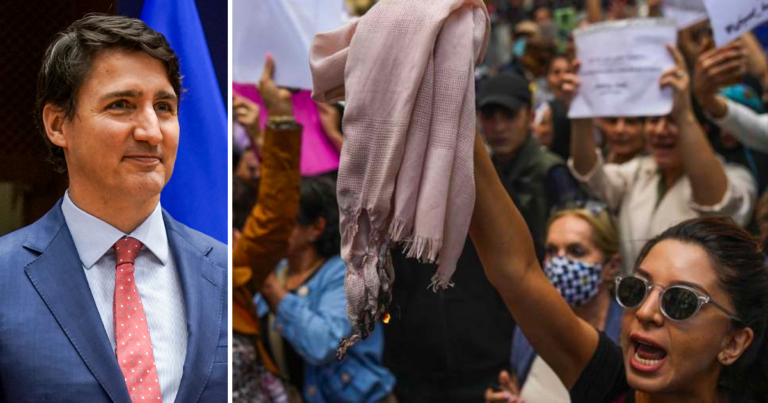
Trudeau says he “strongly supports” Iran protests

Prime Minister Justin Trudeau said Thursday that his government “strongly supports” the ongoing protests for women’s rights in Iran. 

Trudeau’s statement comes after Iranians called on Canada to act in defence of the protesters who have come out in droves over the death of 22-year-old Mahsa Amini. Amini died while in police custody for supposedly violating the Islamist theocracy’s mandatory veiling laws. 

“Canada strongly supports people who are expressing themselves and protesting peacefully in Iran. We are calling on the Iranian regime to end its repression of freedom of expression – and to end the ongoing harassment of, and discrimination against, women,” tweeted Trudeau. 

Amini’s killing has prompted other world leaders to also condemn Iran including UN Acting High Commissioner for Human Rights Nada Al-Nashif. 

“Ms. Amini’s tragic death and allegations must be promptly, impartially and effectively investigated by an independent competent authority that ensures in particular that her family has access to justice and the truth,” said Al-Nashif. 

To date, 26 people have reportedly died in clashes with government authorities seeking to clamp down on the growing movement. 

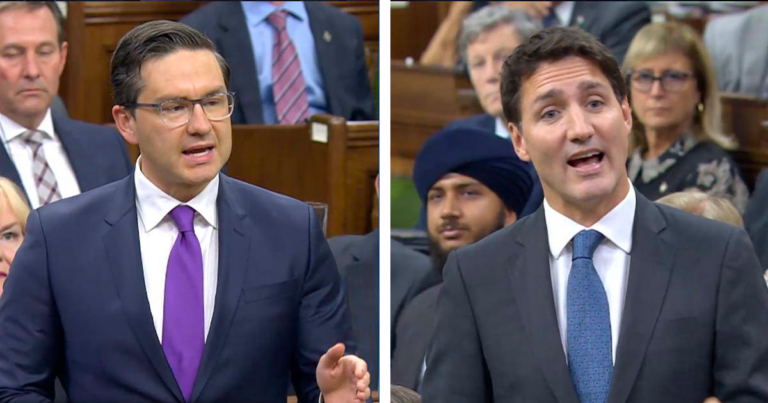
On Wednesday, Conservative leader Pierre Poilievre called on Trudeau to make a statement and list the Islamic Revolutionary Guard Corps (IRGC) as a terrorist entity. 

“The killing of Mahsa Amini is another heartbreaking act of brutality and murder by the Iranian dictatorship against the women of Iran. Trudeau needs to finally stand with Iranian people who are fighting for their freedom and list the IRGC as a terrorist group,” tweeted Poilievre. 

Thirteen cities in Iran including its capital Iran have seen demonstrations flare causing the Iranian government to limit access to the internet and social media. 

The US Treasury Department announced on Friday that it would expand internet services for Iranian despite existing US sanctions.

“With these changes, we are helping the Iranian people be better equipped to counter the government’s efforts to surveil and censor them,” said Deputy Treasury Secretary Wally Adeyemo. 

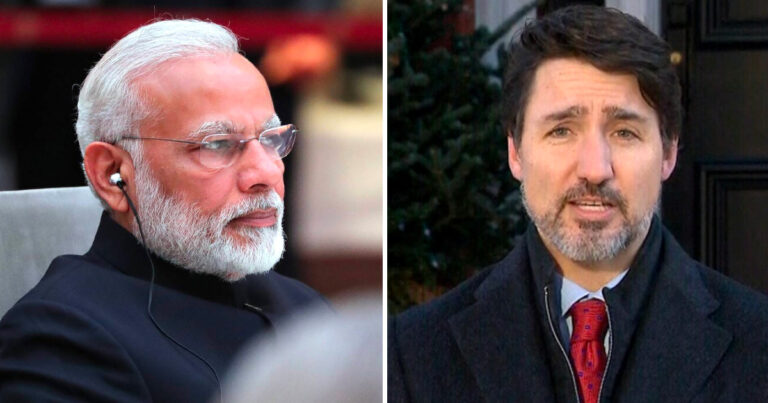
India warns travellers of “pro-Khalistan” hate crimes in Canada

India has issued an advisory to travellers coming to Canada warning of “pro-Khalistan” hate crimes. 

On Friday, India’s external affairs ministry warned that “sectarian violence” and anti-Indian sentiments are on the rise in Canada. 

“There has been a sharp increase in incidents of hate crimes, sectarian violence and anti-India activities in Canada,” an advisory wrote. 

“In view of the increasing incidences of crimes as described above, Indian nationals and students from India in Canada and those proceeding to Canada for travel/education are advised to exercise due caution and remain vigilant.” 

Relations between India and China have cooled as the country blamed the Canadian government for not doing enough to crack down on Khalistani separatists who want to create an independent state in India’s Punjab region. 

“The perpetrators of these crimes have not been brought to justice so far in Canada,” claimed the external affairs ministry.

Incidents include a Toronto temple graffitied with anti-Indian messages.

Spokesperson for the Indian government Arindam Bagchi pointed to a pro-Khalistan referendum held in Canada, which he blamed of having “extremist and radical elements.” 

“You are all aware of the history of violence in this regard. The government of India will continue to press the government of Canada on this matter,” said Bagchi. 

“(It’s) deeply objectionable that politically motivated exercises by extremist elements are allowed to take place in a friendly country.” 

In 2019, the Liberal government removed references to “Sikh extremism” from its annual Public Report on the Terrorism Threat to Canada.

The decision elicited outrage from Indian politicians, including the Chief Minister of the Punjab Region Amarinder Singh who accused Prime Minister Justin Trudeau of pandering for votes. 

“It is obvious that Trudeau had played safe in view of the upcoming elections in Canada, giving in to pressure within his country,” said Singh. 

“The world cannot afford to fan extremism in any form, which is what the Trudeau government was effectively doing with such ill-thought moves.”

Fake News Friday | The legacy media rushes to defend Trudeau

While media outlets around the world ridiculed Prime Minister Justin Trudeau for his antics in the UK, legacy media outlets in Canada all came to the defence of the singing prime minister. That media bailout sure is paying off eh?

Plus, CTV News skews polling data and misleads Canadians about the popularity of the Trudeau Liberals.

And a Hill Times columnist celebrates the death of Queen Elizabeth II.

With a lot on their plates, Andrew Lawton and Harrison Faulkner try to make sense of these wild stories and unpack the most unhinged takes of the week.

Tune into Fake News Friday on True North!

BONOKOSKI: Dehumanizing Poilievre is Trudeau’s only remaining tactic

Prime Minister Justin Trudeau has fallen so far from grace that dehumanizing Conservative leader Pierre Poilievre may be his only shot at getting re-elected.

Unless, of course, he follows his late father and re-enacts that famous walk in the snow.

Winter, after all, is not far away.

The first public opinion poll since Poilievre overwhelmingly captured the Tory leadership on the first ballot has the Poilievre-led Conservatives with a five-point lead over the Trudeau Liberals.

The Abacus Data poll has the Conservatives at 35%, Liberals at 30%, the NDP at 17%, the Bloc Quebecois at 9% and the People’s Party at 4%.

It was Trudeau, however, who set the tone.

When he congratulated Poilievre on his victory, Trudeau took a shot at the Conservative leader by stating Canadians need “responsible leadership,” a high road approach as opposed to a political leader who lambasted “institutions that make our society fair, safe and free.”

He also criticized Poilievre for stating that inflation-strained Canadians could get out from under that heavy hand by investing in the dangerous world of cryptocurrencies, and further criticized him for laying shade on the vaccines “that saved millions of lives.”

The fall parliamentary session — which kicked off on September 20 — is already being billed as a potential bruiser with no holds being barred.

The summer session was a douser.

From mid-July to early September this year, seven different committees of the House held a total of 21 meetings and hearings to study a half-dozen matters of real public concern.

These were busy days, but the Opposition Conservatives were then leaderless.

But they are leaderless no more, but with the Abacus poll showing there was no sudden surge in Tory support, just a modest one-point rise since the 2021 election.

This reflected more on Trudeau’s continuing loss in popularity, as evidenced by the social media pillaging him for being disrespectfully tone deaf by singing Queen’s “Bohemian Rhapsody” in a London hotel in the days prior to Queen Elizabeth II’s state funeral, than it reflects a significant rise in Poilievre’s support.

On the death of the Queen, Poilievre told the House of Commons during a special commemorative session that the Queen’s “humility reminded us that government is not about us. It is about those we serve. We are, indeed, servants and not masters.”

“Around the globe, democratic institutions are being challenged, but Canadians can rightly be proud of living in one of the strongest democracies in the world,”  Trudeau had said, with a subtle dig at Poilievre’s own disruptiveness.

“It is this very strength and stability, represented by the Crown and embodied by the Queen, that Canadians have always benefited from, and we, as parliamentarians and Canadians, dedicate ourselves each and every day to those democratic principles.”

Poilievre, says the National Post’s John Ivison, has positioned himself as a “disruptor” who wants to overturn the status quo when it comes to climate change, pandemic politics and institutions like the Bank of Canada.”

And he makes no bones about it.

In fact, he brandishes it like a red flag in front of a bull.

As John Ivison wrote in the National Post, “Trudeau’s mission is to unite the majority of Canadians behind the idea that the new Conservative leader is a risk to their personal and financial security.”

It may be a tough row to hoe.