Quebec political parties offer tax relief amid rising cost of living

As Canadians deal with skyrocketing prices for goods and services as a result of historically-high inflation rates, affordability is becoming a key issue in the upcoming Quebec provincial election.

Some of Quebec’s political parties are pledging to provide much-needed tax relief to Quebec residents. The Conservative Party of Quebec (PCQ), Coalition Avenir Quebec (CAQ) and the Quebec Liberal Party (QLP) are all pledging to cut income taxes if they win the Oct. 3rd provincial election.

However, the left-wing parties in Quebec are not offering any type of income tax relief for voters. 

True North has compiled a brief overview of each party’s plan. 

Conservative Party of Quebec 

The Conservatives’ “Liberty 22″ election platform pledges to lower the rate of Quebec’s first two tax brackets by 2% – meaning the first $46,295 earned would be taxed at 13% rather than 15%, while the $46,295 to $92,580 bracket would be taxed at 18% rather than 20%. 

The party says their tax cut plan would save someone earning $80,000 per year around $2000.

The PCQ has also pledged to increase the basic personal tax exemption from $15,728 to $20,000, gradually reduce payroll taxes – as well as suspension of the provincial gas tax and removal of the sales tax on second-hand items, including cars.

Coalition Avenir Quebec 

Premier Francois Legault’s CAQ party’s “Anti-Inflation Shield” promises to decrease the rate of the first two tax brackets by 1% – meaning the first $46,295 earned would be taxed at 14% instead of 15%, and the $46,295 to $92,580 bracket would be taxed at 19% instead of 20%. The rates would then be further reduced by 0.25% annually until 2032.

The CAQ says their plan would save Quebecers making $80,000 per year approximately $630. 

They are also promising to send cheques of up to $600 to 6.4 million Quebecers, a promise that has earned him criticism from other parties.

The CAQ has also been blasted for saying they will fund their tax cuts by deducting payments to the Generations Fund – a fund that was established to reduce provincial debt. 

Quebec Liberal Party 
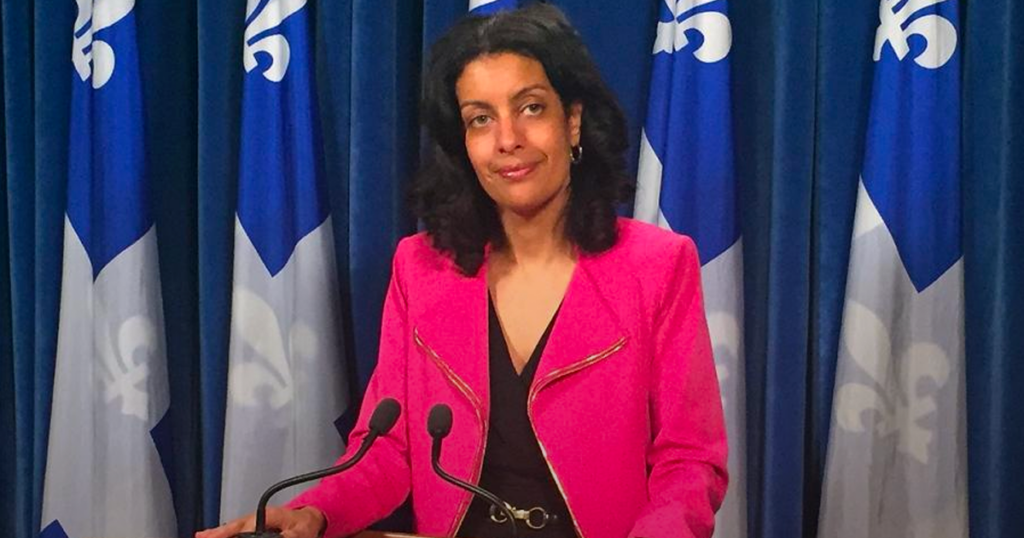
The Liberals’ “Pocketbook Plan” vows to reduce the rate of the first two tax brackets by 1.5% – meaning the first $46,295 earned would be taxed at 13.5% in lieu of 15%, and the $46,295 to $92,580 bracket would be taxed at 18.5% in lieu of 20%.

The PLQ says their income tax cut would save people up to $1125.

Additionally, they have promised to abolish the sales tax on essential items and on the first $4000 of hydro bills. They also pledged to enhance the solidarity tax credit, which helps disadvantaged people.

On the other hand, the Liberals also want to raise taxes on Quebecers earning over $300,000 per year. 

Parti Quebecois & Quebec Solidaire

Quebec’s two main left-wing parties, the Parti Quebecois (PQ) and Quebec Solidaire (QS), are not promising income tax cuts – with the QS’s co-leader Gabriel Nadeau-Dubois claiming Quebecers don’t need them.

While QS would suspend the sales tax on certain items, the leftist party is promising to increase income taxes for high earners – in addition to imposing a wealth tax on Quebecers whose net assets are over $1 million and an inheritance tax of 35% on inheritances worth over $1 million. 

QS also wants to charge a 15% tax on vehicles that emit 210g or more of CO2 per Kilometer. According to Le Journal de Quebec, most SUVs would be affected by the tax, which would see the price of the Chrysler Grand Caravan increase by $7500.

QS says families with 3 or more children, as well as vehicles used for work, would be exempted from the tax.

It should be noted that Quebec is one of the most taxed jurisdictions in the world.

As reported by The Suburban, the 2021 “Bilan de la fiscalité from the Chaire de recherche en fiscalité et en finances publiques at the Université de Sherbrooke” says Quebec saw the highest tax burden in Canada in 2019 – in addition to having the 11th highest burden among the 38 Organisation for Economic Co-operation and Development member countries. 

Quebecers also pay a total of 14.975% in sales taxes on purchases, which is higher than 13% paid in Ontario and the 5% paid in Alberta.
James Topp serves Global News with notice of libel over white supremacy claims

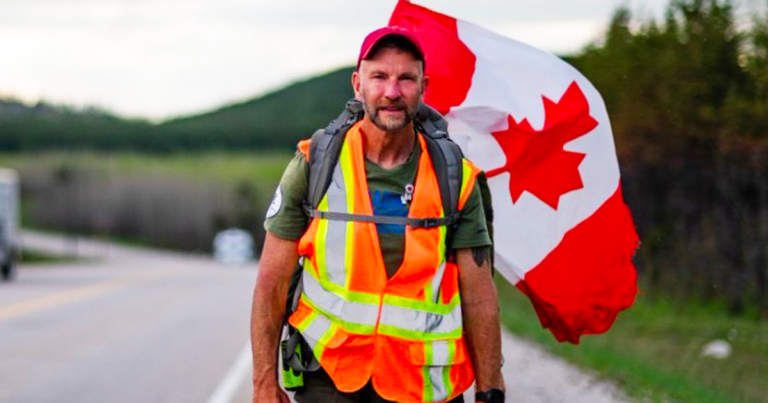
Canadian Armed Forces (CAF) veteran James Topp has retained a lawyer and has served Global News as well as its parent company Corus Entertainment Inc. with a notice of libel for falsely painting him as a white supremacist. 

Topp made headlines when he marched across Canada to protest Covid-19 mandates earlier this year. He is currently facing a court martial after refusing to comply with the CAF’s mandatory vaccination policy. 

The notice filed by lawyer David Elmaleh names journalist Rachel Gilmore and her employers. It references an Aug. 18 article titled ‘Good PR’: Why anti-hate experts are urging politicians to step up vetting practices which covers a meeting between Topp and Conservative leader Pierre Poilievre. 

“The defamatory article, inclusive of the URL tag, referred to Mr. Topp as a white supremacist, among other things,” the notice reads. 

Global News has since changed the URL of the article but originally it included the words “james topp white supremacists far right.” 

“(Defendants published this) without providing any evidence supporting their statements,” writes Elmaleh. 

“(Those named) also included various ‘tags’ on the defamatory article, further implying that Mr. Topp is a white supremacist, extremist and member of the far right.” 

An editor’s note on the article currently states that the URL was revised “to omit a reference to ‘white supremacist’ to avoid any misunderstanding that persons named in the URL are associated with that label.” 

“Take notice that Mr. Topp intends to plead that the defamatory words were made deliberately, irresponsibly and with malice,” the claim continues. 

“The intended defendants knew that the defamatory words, and the innuendo arising from them, were false, yet expressed them in any event in order to generate headlines, expand the reach of the defamatory article and garner interest from as many members of the public as possible.” 

Topp is alleging that the false claims “lowered his reputation, and has caused and will continue to cause reputational and financial harm, along with emotional pain and suffering.” 

The notice calls on the named parties to immediately publish an apology on all platforms and warns that Topp will seek damages in future proceedings. 

True North reached out to Gilmore and Global News to give them an opportunity to comment on the libel allegations but did not receive a response by the time this article was published. 

Canada outlier among 51 nations that have provided tax relief as inflation surges

Canada remains a global outlier when it comes to providing tax relief for its citizens at a time of surging inflation.

According to a new report by the Canadian Taxpayers Federation (CTF), 51 other countries including many belonging to the Organization for Economic Co-operation and Development (OECD), have introduced tax cuts to help assuage inflationary pressures. 

“While Ottawa sticks Canadians with higher tax bills, other countries are doing the right thing and providing their citizens with much needed relief,” said CTF federal director Franco Terrazzano. 

“Prime Minister Justin Trudeau should follow the lead of other nations and make life a little more affordable by cutting taxes for Canadians.”

The CTF report found that over half of G7 and G20 countries and a majority of OECD nations have provided some form of tax relief. 

25 different governments cut taxes on gas, 18 axed consumption taxes, 15 have lowered energy taxes, 11 cut business taxes and eight nations have cut income taxes. 

Unlike the federal government, provinces have taken tax relief into their own hands with Ontario, Alberta and Newfoundland and Labrador temporarily suspending fuel taxes.

On the other hand, Prime Minister Justin Trudeau has hiked the carbon tax, taxes on alcohol and payroll taxes. 

“Ending the tax hikes while Canadians struggle with the pandemic and inflation should have been a no-brainer,” explained Terrazzano. 

“Trudeau could immediately make life more affordable by reducing his tax-take like so many other countries have done.”

Conservative leader Pierre Poilievre has also called on the Liberals to immediately introduce tax relief for Canadians. 

Yesterday, Poilievre demanded that Trudeau axe the carbon tax and cap government spending. 

Reality Check | How Socialist is Canada?

In the past, Prime Minister Justin Trudeau has admired communist dictatorships such as China and has revered Fidel Castro’s Cuba. Is Canada shifting to the left? How socialist is Canada really?

On this episode of Reality Check, Jasmine Moulton uncovers the dangers of “democratic socialism” and how it has the same underlying philosophy as communism –which has been historically disastrous wherever it has been implemented.

Jasmine also looks into the worrying trend of those in Canada who have positive views of socialism and communism.

Tune into Reality Check with Jasmine Moulton on True North!

SUBSCRIBE TO REALITY CHECK.

The Andrew Lawton Show | Trudeau plans to drop border mandates – don’t celebrate just yet

Multiple reports suggest the Liberals are on track to make ArriveCan optional and drop the border vaccine mandate when the current orders expire September 30. While this might seem like good news on the surface, they’ve also been eager to say anytime they’ve lifted restrictions that things are only “suspended” and could come back with a winter surge in Covid cases or the emergence of a new variant. Today, the government tried to get a lawsuit challenging the former air travel vaccine mandate thrown out.

True North’s Andrew Lawton discusses the latest news on mandates, and also exposes a deceptive and manipulative City of Toronto ad campaign pushing Covid vaccination on children.

SUBSCRIBE TO THE ANDREW LAWTON SHOW

Iranians demand action from Canada as nation plunges into protests

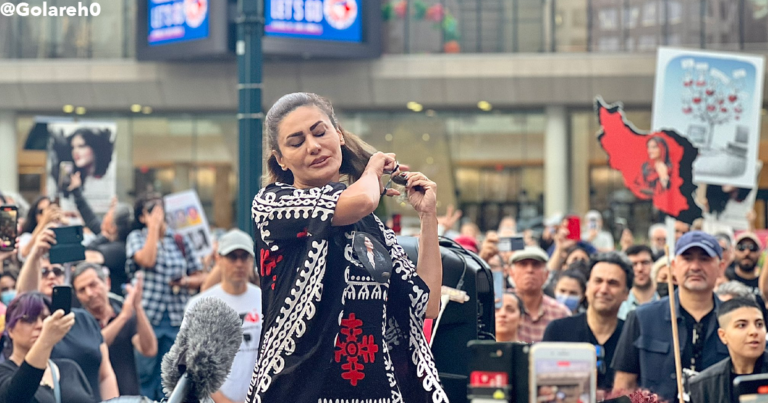
Iranians across Canada are calling on world governments to act as Iran plunges into protests over the death of 22-year-old Mahsa Amini while in police custody. 

Protests took place in Toronto and Vancouver with supporters bearing photos of Amini. Amini was arrested by Iran’s morality police on Sept. 13 for allegedly violating the country’s mandatory veiling laws. 

It was revealed that Amini had died three days after her arrest due to what authorities claim was a heart attack. 

Iranians have come out in droves across the country to voice their opposition to Amini’s death. Three protestors have since been shot dead by Iranian police including in Urmia, Kermanshah and Piranshahr. 

Videos of Iranian women removing or burning their hijabs have been circulating. 

Iranian President Ebrahim Raisi is scheduled to appear before the UN General Assembly in New York later this week.

Amini’s death prompted UN Acting High Commissioner for Human Rights Nada Al-Nashif to call for a full investigation into her killing. 

“Ms. Amini’s tragic death and allegations must be promptly, impartially and effectively investigated by an independent competent authority that ensures in particular that her family has access to justice and the truth,” Al-Nashif said.

The Trudeau government is currently facing criticism for allowing the son of Iranian vice president Ensiah Khazali to live in Canada and operate a virtual private network business.

“Canada does not limit the number of temporary resident visa applications that are accepted from any country,” said Immigration Refugees and Citizenship Canada official Aidan Strickland.

“Temporary resident visa applications are considered on a case-by-case basis on the specific facts presented by the applicant.”

On Twitter, Conservative deputy leader Melissa Lantsman called on the federal government to follow through with a 2018 vote and finally declare the Islamic Revolutionary Guard Corps a terrorist organization. 

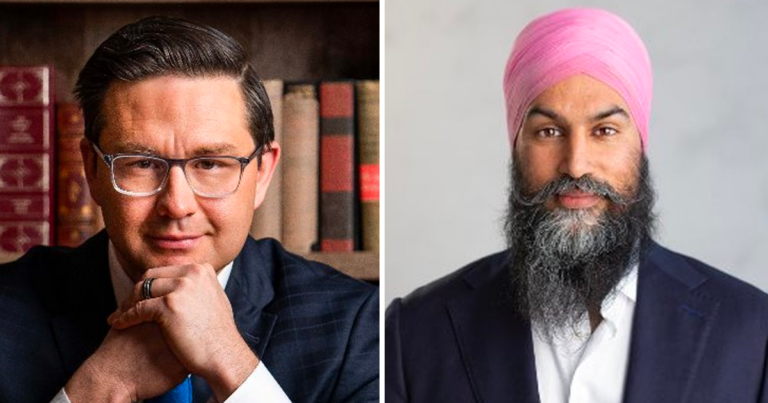
Jagmeet Singh rules out working with Pierre Poilievre

NDP leader Jagmeet Singh has ruled out working with Conservative leader Pierre Poilievre, claiming Poilievre is “opposed to making life better for people.”

Shortly after parliamentarians returned to the House of Commons this week, Singh claimed that his priorities were diametrically opposed to the Conservative leader’s.

“I don’t see a way to work together with someone who is so fundamentally opposed to making life better for people,” said Singh while fielding questions from reporters on Tuesday. 

“It’s clear that his priorities are very different. He has sided with wealthy CEOs (and against) the idea of making them pay their fair share or pay what they owe. We believe that CEOs should pay what they owe. He’s voted against minimum salary to make sure workers get respect and dignity. I think workers should get good salaries.”

Singh also criticized Poilievre for his handling of a press conference last week where Global News reporter David Akin heckled the Conservative leader. 

“Why not just say ‘No,’ or say ‘Yeah, I’ll take questions’,” said Singh. 

“It seems like a bit of a weak approach to then make it into someone’s partisan political position. I think it is an example of a lack of his strength to be able to stand up and say what you want and defend your position.”

“If there’s a continuance of the circus, then they’ll have to see who will buy tickets. I don’t think that’s what people want. But I’m not the Conservative party, so all I can say is what we’re going to do, and what we’re going to do every single day is come here and do the best of our ability,” Singh continued. 

The NDP recently launched an attack ad aimed at Poilievre. The video asks, “Who is the real Pierre Poilievre?” and claims that he’s a “friend of big business and the corporate elite.” 

In March, Singh and Prime Minister Justin Trudeau formed a coalition, with the NDP demanding that the ruling Liberals deliver on policy promises like universal dental and pharmacare in exchange for parliamentary support. 

On his first day in the House of Commons as leader of the official opposition, Poilievre demanded tax cuts for Canadians and went after the Liberals over inflation yesterday. 

“People cannot even afford to have a family in the first place, because they cannot get out of their parents’ basements or out of 400-square-foot apartments after housing prices have literally doubled in this country under the Prime Minister,” said Poilievre during Question Period. 

“Now, with rising interest rates, which the government promised would not happen any time soon, families have to spend 50% of their income, the highest in over three decades, just to keep a roof over their heads. The solution from the Liberals is higher taxes on gas, groceries and paycheques.” 

City of Toronto has “paused” child vaccine videos while it works to “ensure clarity”

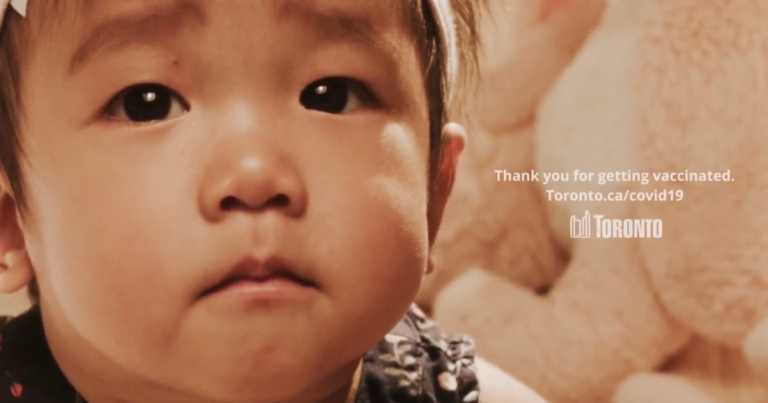
The City of Toronto is reviewing a series of five videos promoting child Covid vaccines to “determine what changes may need to be made to ensure clarity of the message.”

The five short videos were published on Friday but went generally unnoticed until Tuesday, when social media backlash prompted the City of Toronto to pull them from its social media accounts.

In one of the videos, an infant is on a video call with cooing relatives.

In another, a young girl is told by her mother she can’t go outside to play with her friends because “there’s still something going around.”

All of the videos conclude by telling viewers that Covid vaccines are available to children as young as six months old.

City of Toronto spokesperson Brad Ross told True North that the ads were “designed to engage parents and caregivers about the availability and efficacy of vaccines for children.”

“(They) have all been paused while being reviewed to ensure the messages are clear and unambiguous,” Ross said.

The City has said that no elected officials were involved in the development or production of the campaign, which it describes as part of a “community-led initiative overseen by the City.” The campaign was produced by Toronto’s vaccine engagement team alongside a municipal initiative to mentor “BIPOC and 2SLGBT youth…to be filmmakers.”

“The ‘vaccine engagement team’ is a group of community ambassadors who have done an excellent job reaching out to communities that are hard to reach, be it language or culture barriers, or where low vaccination rates are seen,” Ross said.

The City says each video cost $4,000 to produce, with a total project cost of $20,000 for the five-video series.

The videos were produced under the auspices of Toronto’s ArtWorks TO program.

“ArtWorks TO provides opportunities for youth media artists (18-29) who are Indigenous, Black and People of Colour and/or 2SLGBTQ+ to gain professional experience, skills and network in the media arts industry,” the program’s website says.

Eight times international media has lashed out at Trudeau

Prime Minister Justin Trudeau has a habit of embarrassing gaffes and statements while on diplomatic trips abroad.

The latest instance included a video of Trudeau singing at a hotel piano in the UK on Saturday prior to the state funeral of Queen Elizabeth II.

Commentators abroad slammed the incident as disrespectful and out of touch with the national grieving happening in the country. Meanwhile, in Canada the legacy media came to the prime minister’s defence. 

This is not the first instance in which Trudeau has been ridiculed or blasted for doing something ridiculous internationally. True North has compiled a list of eight times Trudeau has embarrassed Canada abroad and received bad international press for it in the recent past. 

Disastrous trip to India 

In 2018, Trudeau and a delegation consisting of senior members of the Liberal cabinet travelled to India for what was supposed to be a trip to strengthen economic ties between the two countries.

After several appearances by Trudeau in which he was decked out in full Indian cultural attire and seen Bhangra dancing, the trip descended into chaos after convicted terrorist Jaspal Atwal was invited to a state dinner with Indian authorities. 

Outlets like the Times of India remarked how the invitation clouded the trip and embarrassed the prime minister. 

Branded a “dictator” internationally over Freedom Convoy crackdown

Trudeau’s decision to crack down on peaceful Freedom Convoy protests in February earned him widespread international condemnation. 

The condemnation came to a head while Trudeau delivered remarks at the European Parliament a month later when several MEPs condemned the prime minister publicly. 

Among them was Croatian MEP Mislav Koalkusic who accused the Liberal government of engaging in a “dictatorship of the worst kind.” 

The incident was covered internationally by outlets like Fox News, OpIndia, Croatia’s daily newspaper Večernji and Australia’s Sky News

Trudeau was also condemned by UK Conservative MP Marcus Fysh who called on the country’s Foreign Secretary to intervene when Trudeau decided to adopt emergency powers. 

Politicians from India, Finland, the US and elsewhere have since also condemned Trudeau over the decision. 

Calling Fidel Castro a “remarkable leader”

Upon the death of Cuban communist dictator Fidel Castro in 2016, prime minister Trudeau publicly praised him as a “remarkable leader.” 

 “Fidel Castro was a larger than life leader who served his people for almost half a century,” said Trudeau. 

“While a controversial figure, both Mr. Castro’s supporters and detractors recognized his tremendous dedication and love for the Cuban people who had a deep and lasting affection for ‘el Comandante.”

Soon after, outlets like the New York Times and The Guardian published articles about the ridicule Trudeau received as a result of the statement. 

Castro’s takeover of Cuba is estimated to have led to nearly 11,000 deaths via state-sanctioned murders, disappearances and extra-judicial killings. 

Mocked as “little potato” in China

In Sept. 2016, a Canadian delegation led by Trudeau travelled to China to strike a trade deal and rekindle relations between the two countries. 

The trip failed to accomplish what it set out to do and the Liberals came back to Canada largely empty handed. While travelling through the country, the prime minister got the nickname “little potato” – a play on Trudeau’s surname and the Mandarin term for potato “tudou.” 

Trudeau’s team tried to play the nickname as endearing but instead the prime minister was ridiculed for embracing it. 

Since the trip, the nickname has taken on a negative connotation with the Australian Institute of International Affairs deridingly using it to bash Trudeau’s foreign policy in 2019. 

Accused of sabotaging Pacific trade deal

Trudeau was accused of sabotaging an imminent Trans-Pacific Partnership trade deal between 11 countries after he didn’t show up to a pre-planned leaders summit in Vietnam. 

After making world leaders wait, former Japanese prime minister Shinzo Abe was forced to cancel the meeting. 

“The Canadian side said today they are not yet at the stage where its leader can confirm the agreement reached among ministers,” said Abe. 

International media headlines described the incident: “‘Screwed’ by Justin Trudeau,” wrote abc News. “East Asia Summit rejects Canada after Trans-Pacific Partnership snub,” wrote Australia’s Financial Review

Snubbed at G7 and G20 meetings

While at a G20 summit in 2019, the prime minister’s offer for a handshake was initially snubbed by Brazilian President Jair Bolsonaro. The event was covered by international outlets like The Daily Express.

A video of the incident shows Bolsonaro turning away from Trudeau who is left hanging as the Brazilian president talks to somebody beside him. Eventually, Bolsonaro finishes his conversation and greets Trudeau. 

During a prior G20 summit in 2017, Trudeau was also ignored by former US president Donald Trump. 

Caught gossiping about Trump on a hot mic

While at a NATO reception at Buckingham Palace, Trudeau was caught on camera gossiping behind former president Trump’s back. 

“He was late because he takes a … 40-minute press conference at the top,” Trudeau was heard telling other world leaders.

The comments led to Trump calling Trudeau “two-faced.” This was not the first heated incident between the two world leaders. After a G7 meeting in Quebec in 2018, Trump called the prime minister “very dishonest and weak.” CNN reported on the incident claiming it caused “consternation in Canada.” The Guardian also covered how the meeting was cut short following Trudeau’s hot mic moment. 

Siding with Cuba eight times at the UN

Under Prime Minister Trudeau’s watch, Canada has sided with communist Cuba at the United Nations alongside Syria, Iran and North Korea at least on eight different votes

“My fellow Canadians: these 8 UN votes by Ottawa—breaking with the democratic world—are a stain on our country’s reputation,” said UN Watch founder Hillel Neuer. 

GUEST OP-ED: Historic septic dig casts doubt on Kamloops residential school burial site claims

James Pew is an independent writer, father and entrepreneur. James’ work can be found on Substack at Woke Watch Canada and The Turn. James is a strong advocate for liberalism and the cherished Western freedoms associated with truth-seeking.

What really happened in May of 2021 when the world’s media lost their minds and disseminated false headlines claiming mass graves of murdered children were uncovered in Kamloops, BC?

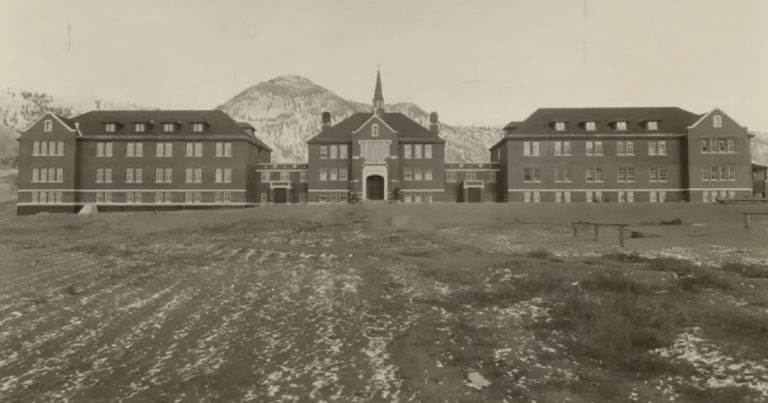
To get a clear picture of what is likely to be the case, we must begin with what led indigenous community members to believe clandestine burials had taken place in the apple orchard of the former Kamloops Indian Residential School (KIRS).

It is important to note that it was the so-called indigenous Knowledge Keepers at Kamloops who claimed to have known that the Kamloops apple orchard was a clandestine burial site. The reason ground penetrating radar (GPR) searches were conducted was due to the Knowledge Keepers “knowings” – which derive from indigenous oral traditions (also known as “traditional knowledge”).

But what is the difference between an urban legend and a “knowing” disseminated through oral traditions?

Former KIRS student, Emma Baker admitted in an interview with CTV that when she attended the Kamloops residential school from 1952 to 1956, she and her friends made up stories about graves in the apple orchard.

“There was a big orchard there and we used to make up stories of the graveyard being in the orchard,” Baker told CTV News Channel on Saturday. “There was rumours of a graveyard, but nobody seemed to know where it was and we didn’t even know if it was true.”

Those lurid stories, or more likely, highly implausible urban legends, were for decades circulated by defrocked former United Church minister and debunked conspiracy theorist Kevin Annett. It appears that Annett had heard the tales of unmarked graves and murdered children, most likely remnants of the gruesome yarns exaggerated by former IRS students like Emma Baker.

Perhaps the strangest chapter in Annett’s saga, which includes the morbid quest to find “unmarked graves,” is the bizarre 2011 ruse he perpetrated involving the former Mohawk Institute in Brantford, Ontario.

In Billy Remembers, Frances Widdowson asks “about the extent to which the ‘oral tellings’ of the Knowledge Keepers, which have been provided as evidence for the existence of ‘secret burials’ at KIRS, have been influenced by the lurid stories circulating over the past 25 years.”

The hoax involved Annett and “excavations” on the grounds of the former Mohawk Institute and was largely ignored by Canadian media, which was (and is) more interested in the dissemination of emotionally charged theatrics in line with a progressive narrative.  It ended with Annett’s ex-communication from the Six Nations after he was filmed waving a chicken bone around the streets of Toronto, claiming it belonged to an Indigenous child recovered from a clandestine grave located at the site of the former Mohawk Institute.

Canadians might have expected Annett’s 2011 farce to be the water putting out the fire on the misleading Kamloops claims, for, in addition to his antics in Brantford, Annett was also the source of many of the outrageous assertions at Kamloops. On the contrary, the Kamloops story sparked renewed interest in unmarked grave searches at former residential schools, including the Brantford site, and began a cascade of similarly framed “discoveries” at locations across the country.

But new information from a somewhat mysterious but legitimate and verified source has arrived just in time. An anonymous architectural consultant who specializes in site inspections and goes by the moniker KamRes (short for Kamloops residential school), has built a website called Graves in the Apple Orchard featuring details of his analysis concerning survey data of the infamous Kamloops apple orchard.

In July, Terry Glavin wrote in the National Post, …a report anonymously prepared by an architectural consultant who specializes in site inspections, which suggests that the anomalies picked up by the T’Kemlups GPR survey are likely the result of decades of ground disturbances — irrigation ditches, utility lines, backhoe trenches, archeological digs, waterlines and so on.”

One of these historical excavations is of particular interest. In 1924, excavation work began for a septic field with 2000 linear feet of trenches in what later became the apple orchard. These trenches had ground tiling installed, roughly at the depth of the supposed shallow graves said to contain murdered residential school students. It’s worth noting that the septic tank and septic field were installed along with the construction of the brick building which still stands there; an indication that the school was modernizing.

KamRes uncovered a 1937 document called the Warren report which shows the placement of the 1924 septic field. He was able to pinpoint the location of a section referred to as the “east sewage disposal bed” directly under the apple orchard and was also able to determine that the east-west orientation of the trenches and the drainage tiles within them matched the east-west burial pattern Dr. Beaulieu told the media was reflected in her GPR readings. It is likely that the soil disturbances caused by this 1924 septic field were picked up by ground penetrating radar and have been mistakenly interpreted as clandestine graves.

Because the Kamloops Indian Band has not released Dr. Beaulieu’s GPR report, researchers cannot verify if she knew about the 1924 septic field and drainage trenches. However, comments she has made to the media, like the one that follows, give the impression of a person not very open to alternative explanations of what she believes to be unmarked graves.

“All residential school landscapes are likely to contain burials of missing children. Remote sensing such as GPR merely provides some spatial specificity to this truth.” – Dr Beaulieu

Researcher Nina Green had this to say about the developments offered by KamRes:

“KIRS had a very large septic field in 1924, and according to Kam Res, it’s under the apple orchard where Dr. Beaulieu did her GPR work. There’s no way GPR can distinguish between a filled-in septic field trench and a filled-in grave. The GPR profiles will look the same.”

If a filled-in septic field trench and a filled-in grave are not the same, or at least do not produce the same GPR reading, and if there is some way to demonstrate the exact soil disturbance signature matching a clandestine burial, then let Dr. Beaulieu prove it. 

Until she does, or better yet, until the Kamloops Band conducts an excavation and uncovers what is actually under the soil, the most plausible explanation is that it’s the school’s former septic system of filled-in shallow trenches containing old drainage tiles.