Taxpayers group calls fiscal update “pouring fuel on the inflation fire”

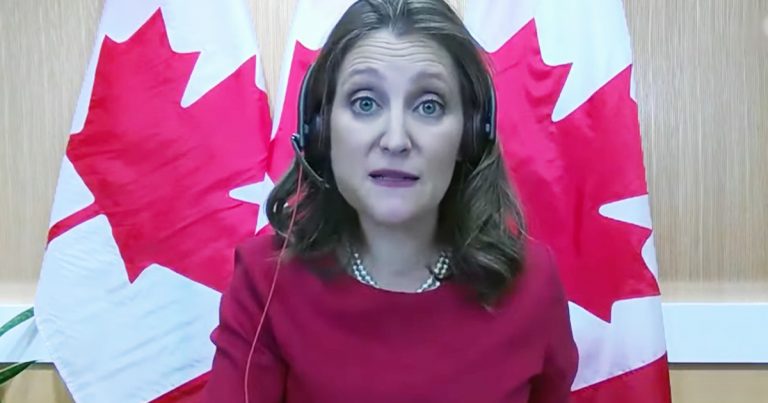
The Canadian Taxpayers Federation (CTF) released a scathing statement on Tuesday following Liberal finance minister Chrystia Freeland’s latest fiscal update. 

CTF federal director Franco Terrazzano said that while tax revenues shrank the deficit minimally, spending remained up across the board at a time when inflation continues to spike. 

The CTF warned the debt is expected to reach $1.2 trillion by the end of this fiscal year.

“Years of borrowing means taxpayers will lose out on nearly $200 billion by 2027 just to pay for interest charges on Canada’s debt,” said Terrazzano in a news release. “That’s money we can’t use to hire more nurses or lower taxes because it’s going to bond fund managers to service the government’s debt.” 

Terrazzano went on to describe government spending as seriously out of control.

“The cost of living is soaring and Canadians should be worried about how the government is going to pay for its unprecedented spending and hundreds of billions of dollars in new debt. The feds need to stop dishing out cash we don’t have and pouring fuel on the inflation fire. Freeland needs to hit the brakes on this government’s runaway spending train.”

Terrazano’s comments were echoed by Conservative MP and finance critic Pierre Poilievre, who called the Liberals “Canada’s most expensive government ever.” 

Poilievre has chided Prime Minister Justin Trudeau in recent days by referring to his spending habits as “JustinFlation.”

“A half-trillion dollars of inflationary deficits mean more money chasing fewer goods driving higher prices. Housing and gas are up a third, so youth can’t afford to get to work or buy a home. And families can’t afford the extra $1000 it will cost to feed themselves next year,” said Poilievre. 

“Instead of reversing this high-cost, high-inflation agenda, today the government announced yet another $71 billion of inflationary spending, costing nearly $5000 for every family in Canada. Worse, they plan to raise taxes on energy, wages and alcohol on January 1st.” 

Among the spending commitments included in the fiscal update were $8.1 billion in pandemic spending as well as $85 million for 2022-2023 to process more resident and temporary resident immigrant applications. 

The fiscal update refers to two recovery models – one that could add $6 billion to the deficit and increase Canada’s debt-to-GDP ratio by nearly 2% and another that could reduce the deficit and debt-to-GDP ratio by roughly the same amounts. 

“The slower recovery scenario would be expected to add about $6 billion to the deficit across the horizon, and increase the federal debt-to-GDP ratio 1.8 percentage points by 2026-27,” the fiscal update read.  “In the faster recovery scenario, the deficit would be reduced by approximately $6 billion, on average across the projection, and the federal debt-to-GDP ratio would decrease 1.9 percentage points by 2026-27.”

Canada’s insignificant role on the world stage

Justin Trudeau told the world that “Canada is back” in 2015. But in the six years since, Canada has been embarrassed by our silly Prime Minister, snubbed by our friends and disrespected by our adversaries. 

In today’s episode of The Candice Malcolm Show, Candice is joined by Conservative MP and top foreign policy expert Garnett Genuis. 

They talk about the strong role Canada’s military plays in NATO and our current mission in Latvia, the stark difference in approach to foreign policy between Liberals and Conservatives, and Trudeau’s passive and ineffective role in dealing with belligerent foreign actors. 

PLUS Candice asks some tough questions about why the Conservatives abandoned their opposition to Bill C-4.

SUBSCRIBE TO THE CANDICE MALCOLM SHOW

MPs finally speak out against New Brunswick allowing grocery stores to require vaccine passports

Three New Brunswick Conservative Members of Parliament are at last speaking out against the New Brunswick government allowing grocery stores the option of barring entry to unvaccinated Canadians.

John Williamson, Rob Moore and Richard Bragdon have all released statements surrounding the New Brunswick government’s ‘winter action plan,’ which came into effect on Dec. 4. The plan authorized grocery stores and other retailers to require vaccine passports for entry.

The three MPs’ remarks came less than a week after True North reached out to Conservative leader Erin O’Toole’s office and Prime Minister Justin Trudeau’s office for comment. At the time, only People’s Party of Canada leader Maxime Bernier responded to condemn the measure.

The MPs’ statements also came after Sobeys and other major retailers in New Brunswick confirmed they would not be opting for the proof-of-vaccination requirement.

True North had reached out to New Brunswick Conservative MP John Williamson’s office on Dec. 3 and again on Dec. 6 but received no comment in response to either request.

Williamson announced Tuesday that he wanted to thank those retailers who had chosen not to request proof of vaccination. He commended, “national and local essential food retailers that continue to serve all New Brunswick customers and aren’t requesting proof of vaccinations as a condition to enter their grocery stores.”

He went on to criticize the vaccine-only measure by stating that “(d)enying people access to essential basic necessities is not defensible in any society, under any circumstance.”

MP Richard Bragdon echoed Williamson in a Facebook post, saying he was “glad to see that Sobey’s and other retailers who provide essential services like groceries, are choosing to not enforce this coercive measure.”

“Choosing to deny individuals the ability to obtain essential services is the last thing we should be doing … The way through our current challenges is not continued division but through coming together with goodwill to support our neighbours.”

The Justice Centre for Constitutional Freedoms, which wrote a warning letter to New Brunswick’s justice minister, called access to food “a fundamental Human Right.”

It remains unclear how many New Brunswick stores have opted for vaccine passports. At least one – Fredericton Boyce Farmers Market – received backlash for the decision.

The market did not respond to True North’s request for comment.

Canada has planted only 8.5 million of the two billion trees Trudeau promised

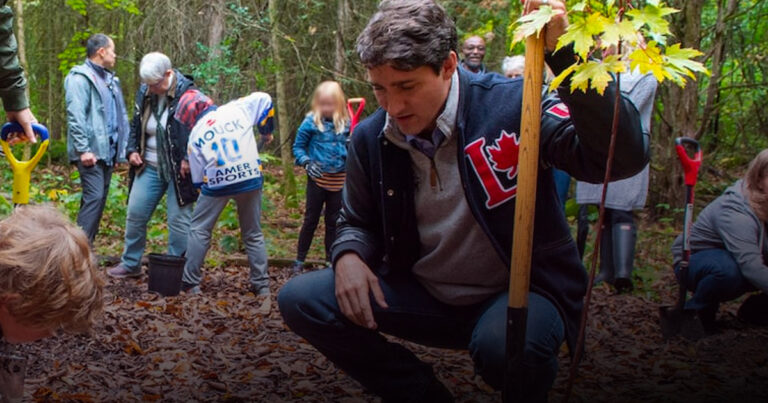
The Canadian government has planted less than half-of-one percent of the two billion trees Prime Minister Justin Trudeau pledged to put in the ground across Canada, according to The Canadian Press. 

Figures obtained through an access to information and privacy (ATIP) request show 8.5 million trees have been planted as of mid-November, representing about 0.4% of what Prime Minister Justin Trudeau committed to. 

Trudeau made the pledge to plant two billion trees by 2030 during the 2019 Canadian election. He repeated the number during the 2020 Speech from the Throne.  

Trudeau argued that planting two billion trees would help Canada meet its climate change targets as well as create 4,300 jobs. During the 2019 election, he pledged to use revenues from the Trans Mountain pipeline to fund the project. 

Natural Resources Canada press secretary Joanna Sivasankaran told The Canadian Press that the department has not fallen behind. 

“There will be about 30 million trees planted by the end of this year,” said Sivasankaran. “Tree planting as part of this program will continue to ramp up.” 

Natural Resources Canada said in its reply to the ATIP request that 120 organizations contacted the department asking to plant trees in February, and that it is “finalizing agreements to support the planting of over 30 million trees across the country, in both rural and urban areas.” 

She said the Canadian government is planning a huge tree planting push this month, where they are requesting new partners to plant an extra 250 to 350 million trees every year. The slow start was based on finding seedlings, which can take two years to grow. 

The ATIP request revealed that 7.6 million of the 8.5 million trees planted since Trudeau made his pledge were in British Columbia. There have been 350,000 trees planted in Quebec, 238,000 in Alberta, 235,000 in New Brunswick, 89,000 in Ontario and 60,400 in Saskatchewan. \

The goal to plant two billion trees by 2030 means 200 million more would have to be planted every year. There are 600 million trees planted in Canada annually. 

NDP MP Charlie Angus said in a tweet that he was disappointed the Canadian government is lagging behind.

“So @justintrudeau has missed every climate target he promised,” said Angus. “This one is a doozy.” 

Toronto Police still catching COVID after suspending unvaccinated members

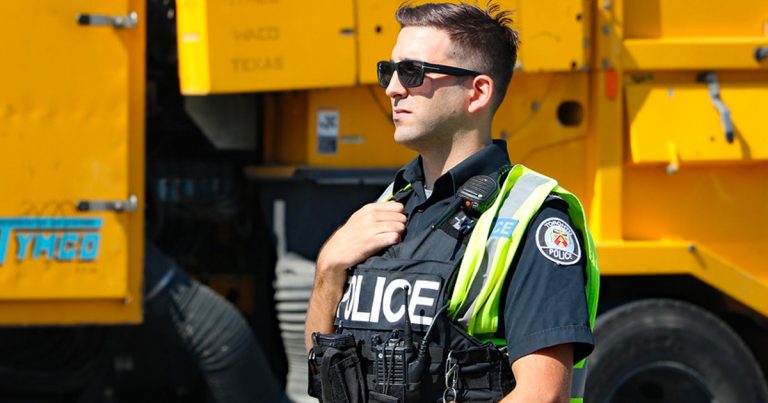
Toronto police officers are still getting sick with COVID even though the service suspended unvaccinated personnel over two weeks ago.

The Toronto Sun reported Saturday that outbreaks had occurred at Traffic Services and 11 Division of the Toronto Police Service (TPS).

True North reached out to both the TPS and Toronto Public Health (TPH) on Tuesday to find out if these numbers had increased. The TPS referred the question to TPH, and the TPH referred it back to the TPS. Neither provided an answer by the time of publication.

Police spokesperson Connie Osborne originally confirmed the cases on Saturday, saying that the service “moved quickly as possible to support our members and have measures in place to prevent further spread,” including requiring “all members of TPS to self-screen for symptoms or possible exposure before reporting for duty.”

Even though these measures are being characterized as new, True North has learned they are the same ones the TPS was using before making vaccination a requirement for duty.

Osborne confirmed in a statement to True North that “self screening was in place before the mandatory vaccination policy and continues to be.”

Asked whether there are any new measures or steps in place to prevent COVID-19, Osborne replied, “our measures remain the same and we continue to follow Public Health guidelines.”

True North also asked how it was that the TPS was experiencing these outbreaks with a reported vaccination rate of 98%. Osborne repeated the mantra that “public health officials…have stated that vaccination against COVID-19 is the most effective way to protect our workplaces and the public from the risks of the virus.”

When asked whether there have been any new COVID cases in the TPS since Saturday, Osborne twice referred inquiries to Toronto Health.  

Toronto Health spokesperson Keisha Mair referred True North back to Toronto Police, claiming “they are best able to address (the) query as it pertains to their operational practices, possible case counts, and workplace vaccination policy. They should be in touch…”

True North received no further response.     

Over 200 TPS members continue to be out of work after being put on unpaid leave for failing to show proof of vaccination on Nov. 30.  

On Dec. 6, around 100 of these suspended officers held a sit-in protest outside the office of their union, the Toronto Police Association (TPA). 

The TPA offered no comment on the sit-in or the latest COVID outbreaks.

Last week, the Vancouver Police Department followed the Calgary Police Service in announcing that it would allow rapid testing as an alternative to mandatory vaccination. Some unvaccinated TPS members have asked why this could not be a possibility in Toronto, especially if vaccinated officers are still being infected.

According to the TPS recruiting page, rapid tests are still being accepted from applicants. Full vaccination is required “when a candidate has been given a conditional offer of employment.”

Former Space Agency engineer charged by RCMP for ties to China oversaw major projects

A former Canadian Space Agency (CSA) engineer who is facing breach of trust charges after working with a Chinese company was found to have worked on several major Canadian projects

RCMP officials are calling the arrest of Wanping Zheng “a matter of foreign actor interference.” 

The 61-year-old Quebec resident is accused of using his position to negotiate satellite installation contracts with Iceland for the Chinese company Spacety in 2018. 

Spacety specializes in high-resolution image satellites. Zheng was found to have worked as a vice-president of international business with the company in June 2020. 

Zheng’s peers at the company had ties with the Chinese Academy of Sciences,  an arm of the communist Chinese government. 

According to his biography on Spacety’s website, Zheng was involved with “the establishment and implementation of a number of major Canadian national aerospace projects” while working for the CSA.

“(Zheng) presided over and participated in large-scale space projects such as the International Space Station, space radar, radar satellite, scientific satellite, and experimental satellite.”

Zheng will be appearing in court on Wednesday for a hearing on his charges. 

According to international policy researcher Akshay Singh, China has planted spies to recruit experts to do its bidding in order to get an economic edge over its competitors. 

“You might think that you’ve got a wonderful job offer from [a] country to do some unique research and they might rely on your current knowledge and expertise,” Singh explained. 

“You don’t mention it to your employer. You collect a paycheck and you move on, and you don’t realize that perhaps what you’ve done is you’ve been recruited by a foreign government to provide materials or act on their behalf.”

Poll shows Canadian parents slow to vaccinate young children

Child COVID-19 vaccination has been slow to catch on among Canadian parents despite polls showing support for vaccinating kids across Canada. 

According to Blacklock’s Reporter, a Department of Health Update On Covid-19 In Canada: Epidemiology And Modeling technical report shows that only 18% of young kids were vaccinated in the first few weeks of opening up vaccination for kids between five and eleven. 

When broken down further, only 1% of eligible kids have been fully vaccinated – that is, have received two shots of an approved COVID-19 vaccine. In total, 17% have received at least one shot. 

According to a national poll commissioned by True North from Dec. 2 to Dec. 4, a majority of Canadians support vaccinating kids against COVID-19. 

Over 77% of Canadians either “strongly support” or “moderately support” vaccinating kids. 

Canadians from the Prairies were the most likely to “oppose” or “strongly oppose” vaccinating children, with 32% being against the idea. Atlantic Canadians showed the most support for the idea, numbering in at 81%. 

When broken down by age group and gender, men aged 55 and older showed the highest level of support for vaccinating kids with 82% backing the idea, while men between the ages of 18 and 34 were the most opposed with 29% against child vaccination. 

Support among women was highest in those over the age of 55 with 81% backing child COVID-19 vaccines. Meanwhile, women between the ages of 35 and 54 were the most opposed to vaccinating children, numbering in at 25%.

The poll surveyed 1,013 Canadian adults online in both English and in French. Its margin of error is +/- 3.1%, 19 times out of 20. Subgroups were also found to have larger margins of error. Results were weighted for accuracy by age, gender, language spoken at home, region and past federal vote using the most recent census data from Statistics Canada. 

As exclusively reported by True North, a number of so-called experts being floated by the media to encourage child COVID-19 vaccination were found to have received research funding from the vaccine manufacturer Pfizer. 

Most recently, outlets including CBC News, Global News and CTV News failed to reveal the research ties between BC pediatrician Dr. Manish Sadarangani and Pfizer while promoting him as an expert on child vaccinations. 

Parliament still giving out Chinese-made masks despite millions awarded to local suppliers

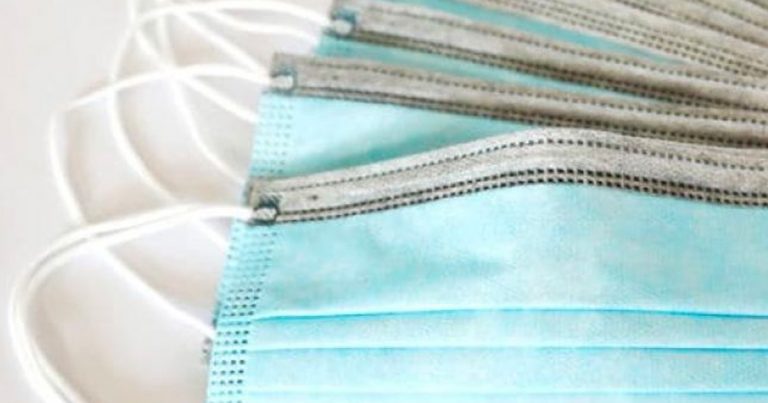
Despite the Canadian government having awarded hundreds of millions of dollars in contracts to North American manufacturers, Parliament Hill has been giving out masks made in China to MPs, their executive assistants and other employees. 

According to La Presse, the masks have been distributed for several weeks.

The president of the manufacturing company Prescientx Barry Hunt told La Presse he is annoyed by the government’s decision to use Chinese-made masks. 

“This is an affront to our country,” said Hunt. “I am completely speechless.”

Hunt, who is also president of the Canadian Association of PPE Manufacturers (CAPPEM), said he is more furious that the 20 companies involved in this collective have been excluded from government contracts for the next few years. 

Public Services and Procurement Canada (PSPC) has entered into long-term contracts with two corporations to make masks. 

PSPC awarded a five-year, $250 million contract to American industrial goods company 3M to produce N95 masks, while Montreal-based mask-manufacturing company Medicom received a 10-year, $382 million contract to make N95 and surgical masks. 

3M and Medicom also received financial support from the Canadian government to expand their facilities. 3M collected $23.3 million meant to upgrade a plant in Brockville, Ontario. Medicom obtained a subsidy of $29 million. 

Hunt said to La Presse that the companies that are part of CAPPEM have not obtained any financial assistance to start up local productions. 

“We have a new personal protective equipment manufacturing industry taking shape in this country, but you can’t get a government contract, loan or grant,” he said. “Why is the government only giving financial aid, taxpayer money, to multinationals like 3M and Medicom?”

CAPPEM could become the main source when it comes to producing masks, according to Hunt. However, the supply has been mismanaged by the Canadian government, which is why stocks ran low when the COVID-19 pandemic hit. 

Conservative MP Pierre Paul-Hus condemned Parliament Hill for using Chinese-made masks. 

“After Canadian companies have invested heavily to produce masks here, it is totally incomprehensible that the Canadian government continues to supply us with falsely-FDA-approved, made-in-China products,” said Paul-Hus. 

The Canadian government paid a professional services company $8.6 million to help them source products from China at the beginning of the pandemic. 

PSPC also signed a contract with Deloitte to manage shipments from Chinese medical supply companies. 

“The department has engaged Deloitte to help officials navigate what has suddenly become the world’s most competitive industry,” said a PSPC memo. “That firm is helping Canada to identify sources of supply that will meet Canadian standards, secure the supply chain and facilitate the export process.”

The office of the Speaker of the House of Commons could not be reached for comment in time for publication. 

Edmonton to teach kindergarteners “anti-racism” curriculum

The Edmonton Public School Board (EPSB) has passed a motion to embed “anti-racism” into the kindergarten-to-grade 6 curriculum. 

According to a Dec. 14 agenda published by the Board of Trustees of Edmonton School Division One Kingsway, a motion by Trustee Julie Kusiek was passed on the matter. 

The motion calls on “the Edmonton Public Schools Board of Trustees (to) affirm advocacy for … anti-racism to be embedded within the K-6 curriculum.” 

According to the board’s website, “anti-racism” means “direct action to acknowledge where privilege exists, raise awareness, advocate for change, and challenge beliefs (such as prejudice, bias and stereotypes) at the personal and institutional level to create and implement action to fight racism for individuals and within an organization, workforce or group.”

“Racism can be perpetuated at the individual, institutional and systemic level and is rooted in historical oppression, white supremacy, and colonialism. Proactive action is required to create anti-racist environments.” 

In the recent past, “anti-racism” has become a lucrative field in its own right, with both public and private institutions adopting anti-racist bureaucracies and programs. 

Anti-racist thought is predicated on the left-wing idea that Western societies are systemically racist, that white people have inherent privileges and that colonial systems need to be dismantled in order to achieve equity. 

Critics of anti-racism and its associated pedagogical lenses – which include critical race theory –  have accused its advocates of endorsing a veiled form of racism under the guise of social justice. 

As exclusively reported by True North, Liberal MP Janica Atwin recently advocated in the House of Commons for Canadian kids to study “critical race theory” upon returning to school. 

“I want Canadian kids to feel good about going back to school and about planning their futures,” Atwin said.” We need them to study engineering, science, sustainable agriculture and critical race theory. We need them to embrace their role in the transition that is under way. I want them to trust in their government and feel comfort in our demonstrated actions.”

While education is a provincial jurisdiction, many school boards including the Toronto District School Board have already implemented critical-race-theory-based policies. 

“School boards in the GTA, many run by woke activists, are already trying to indoctrinate kids as young as kindergarten with this very dangerous CRT philosophy, which is divisive and racist in its selectivity,” said True North columnist Sue-Ann Levy. 

Three Canadian universities cancel in-person exams because of COVID-19

A growing number of universities across Canada have discontinued in-person exams due to rising COVID-19 cases among students. 

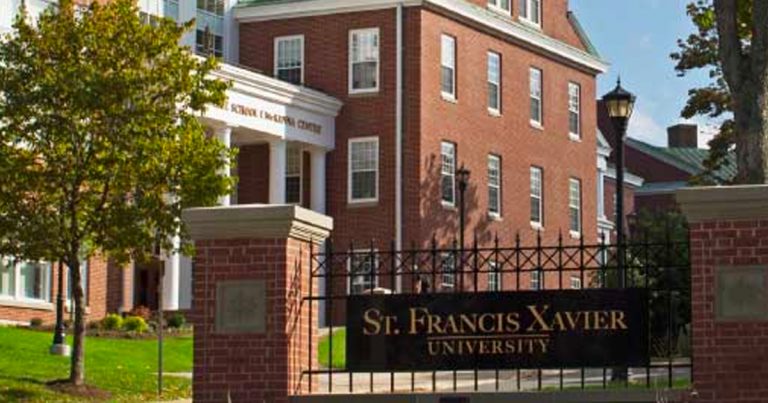
These include Queen’s University in Ontario, the University of Victoria in British Columbia and St. Francis Xavier University in Nova Scotia.

Queen’s University announced on Sunday that “(a)ll remaining in-person exams scheduled for the remainder of the examination period to Dec. 22 will be changed to an alternative delivery format wherever possible. Should an alternative delivery not be possible, then exams will be rescheduled in the new year.”

Queen’s students were told they would be contacted by their departments with more details. The announcement did not apply to online exams, which will “proceed as planned.” 

Exams scheduled for Dec. 13 and 14 would be rescheduled for a later date to provide faculty with time to change to a different format. 

Queen’s announcement included a recommendation from Kingston, Frontenac, Lennox & Addington (KFL&A) Public Health that all students should be tested for COVID-19 before leaving for the winter break “(d)ue to the prevalence of the Omicron variant.” 

Other Canadian universities have taken a similar approach. 

The University of Victoria (UVic) has also cancelled all in-person exams because of increasing COVID-19 cases on campus.

UVic said it made this decision based on advice from public health officials who are concerned about a “new trend” in COVID-19 cases. 

As with Queen’s, Uvic students will be writing exams online or in another format, and  professors will be contacting students about how their exams will be held. 

St. Francis Xavier University cancelled in-person exams because of a Nova-Scotia-wide COVID-19 outbreak as of Friday. 

All contacts close to this outbreak, regardless of vaccine status, have been told to self-isolate until receiving a negative test. 

“For clarity, public health reiterated that in-person exams are safe; however, this new provincewide change will almost assuredly increase the number of students required to isolate and test, affecting their ability to attend an in-person exam,” said St. FX vice-president, academic and provost Timothy Hynes. “Staff and faculty are likely to be impacted as well.”