Unlike the mainstream media, we believe Canadians deserve the full story. Here’s more context:
In the beginning of the video, the RCMP officer repeatedly tells Chief Adam to stay in his car. Adam calls him an “a**hole” and that he’s tired of being harassed by the police. pic.twitter.com/6BFsM1qjTR
When the RCMP officer attempts to arrest what appears to be Chief Adam’s wife, Adam threatens to fight the RCMP officer again, yelling “F**k you, you touch my wife like that…” pic.twitter.com/SCmmRR5OOb
Independent Ontario MPP Randy Hillier has launched an online petition calling on the Ontario government to fully resume the provincial legislature and to end the province’s state of emergency.
The petition calls for “the State of Emergency in Ontario [to] be ended, that all healthcare institutions and business be allowed to open while taking the necessary health precautions to allow for a full economic recovery and to ensure a healthy, prosperous Ontario.”
Hillier was expelled from the Progressive Conservative caucus in 2019 for allegedly making disrespectful remarks directed at a parent of a child with autism during question period. He now serves independently for his riding.
Among the reasons mentioned in support of ending the state of emergency are high unemployment rates, the bankruptcy and closing of small and medium-sized businesses, economic devastation and the curbing of fundamental freedoms.
Hillier stressed that the end to emergency powers does not mean an end to coronavirus public health measures meant to protect Canadians, such as social distancing and frequent handwashing.
“It’s just returning the power to the legislature to make those decisions. If, for example, the experts advise the government on a particular policy, then they should be brought forward and discussed and voted on,” Hillier told True North.
At the time of this article’s publication, Hillier’s petition has received over 500 signatures.
According to Hillier, he was inspired to create the petition after hearing the hardships his constituents and Canadians at-large have had to endure due to the prolonged lockdown.
“I’ve heard from so many constituents the hardship, the injury and the consequences of this state of emergency. The policies that are enacted are preventing people from getting needed medical attention and significant medical attention,” Hillier said.
“I had one case the other day. This person was discharged from a local hospital in such an expeditious way. [He] was discharged from the hospital without the proper home care, without the proper medical attention, without oxygen, which he needed and he passed away that day. That was something that would not have happened in days before COVID.”
When asked whether he saw any inconsistencies in the provincial and federal governments’ approach, Hillier claimed there have been many contradictions.
“There’s endless amount of hypocrisy and contradictions throughout the whole thing and to be fair in the early stages when we had such a level of uncertainty and more unknowns than knowns, you can say that might be reasonable under those conditions,” said Hillier.
“But as times marched on the contradictions didn’t go away – they were just increased.”
An Ontario court has shut down an appeal for bail by a man accused of attempting to join ISIS with his wife.
22-year-old Guelph resident Ikar Mao will have to remain in detention to face his charges, according to Global News.
Mao, who was arrested in December 2019, is being charged with participating in the activity of a terrorist group and leaving Canada to participate in the activity of a terrorist group.
He and his wife were arrested in Turkey while travelling alongside the country’s border with Syria.
Prior to the arrest, Mao went on the social media website Couchsurfing claiming that he and his wife were travelling in the country out of a desire to relocate there.
“I am travelling in Turkey with my wife because we want to move here soon, especially in Sanliurfa, because both Turkish and Arabic are spoken here,” wrote Mao.
Upon being sent back to Canada, Mao was arrested on a terrorism peace bond in late 2019. Court documents of the arrest referenced a “fear of terrorism offence.”
Mao was released shortly after his initial arrest but apprehended again for the two terrorism offences.
According to Public Safety Canada estimates, around 60 suspected terrorists have returned to Canada after fighting for extremist organizations abroad.
The case is currently under a publication ban. Mao’s wife is not facing any charges.
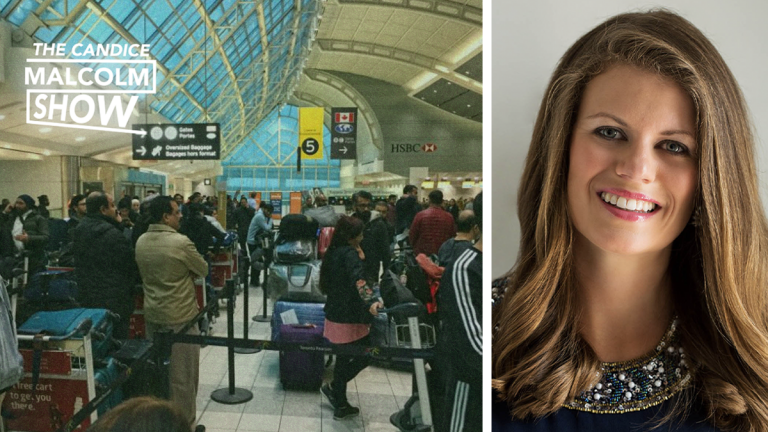
The majority of Canadians want to close the borders and pause immigration into the country until the coronavirus threat has passed and until Canada’s economy has fully recovered, according to a recent scientific poll commissioned by True North.
76% of Canadians polled by ONE, a research company based out of Toronto, strongly agree or moderately agree with the statement: Canada should temporarily pause immigration until a vaccine is developed for coronavirus and the unemployment rate drops down to pre-coronavirus levels.
Unfortunately, the Trudeau government isn’t listening. While they claim our borders are closed, according to the Canadian Border Services Agency – 459,000 new immigrants landed in Canada’s international airports between March 21 and June 2.
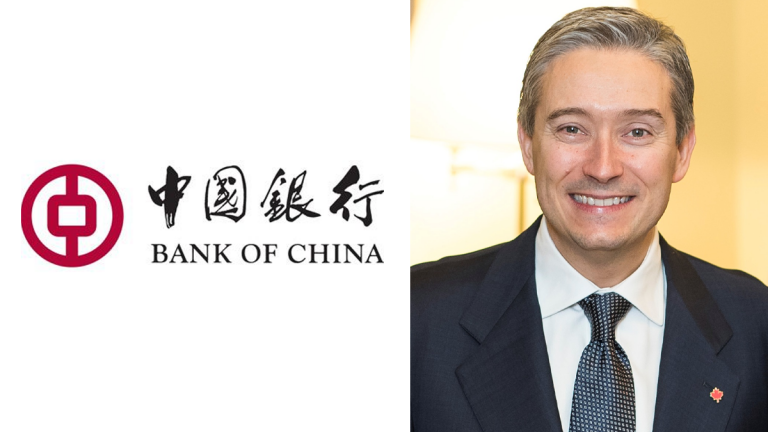
Liberal Foreign Affairs Minister François-Philippe Champagne has two mortgages with the Bank of China valued at a whopping $1.2 million.
The mortgages are on two properties owned by Champagne in London, UK. The apartments were purchased before Champagne was elected to office in 2015, while he worked as an executive for the British engineering corporation Amec Foster Wheeler PLC.
The Bank of China is one of the four largest state-owned banks in mainland China.
According to the Globe and Mail, Champagne claims that he was unable to get a British loan at the time due to having a temporary work permit.
“At the time I purchased these apartments, the Bank of China (UK) Ltd. was one of a very limited number of banks providing residential mortgages for terms of more than 20 years to people residing in the UK on temporary worker visas,” said Champagne.
Champagne also went on to claim that the million-dollar loan had no influence on his work as a cabinet minister.
“Neither mortgages nor any other liabilities have ever had any bearing on my functions as a public office holder.”
Both of the mortgages have been officially disclosed with the Office of the Ethics Commissioner and are public information.
Champagne rents out the two apartments which were originally valued at $683,000 and $1.1-million when purchased.
Conservative MP Garnett Genuis blasted Champagne’s indebtedness to the Chinese bank, claiming that it opens up the minister to potential influence from the Chinese Communist Party.
“I think it is very dangerous for a minister of the Crown to have personal financial dealings like that with state-owned enterprises from authoritarian countries,” said Genuis.
“Whatever the cause of the origin of those deals, it creates a certain degree of personal financial vulnerability to decisions which are ultimately directed by the government of China.”
Critics have accused the minister of being too soft on China. In a video resurfaced from 2017, Champagne told a Chinese broadcaster that China stood out as a “very inclusive society” despite the country’s longstanding record of human rights abuses.
“Canada and I would say China, stands out as a beacon of stability, predictability, a rule-based system, a very inclusive society,” said Champagne on May 9, 2017.
A new obstacle has appeared in Prime Minister Justin Trudeau’s desperate attempt to get Canada a seat at the UN Security Council – Greta Thunberg.
The teenage climate alarmist banded together with several UN ambassadors of small island states to draft a letter chastising Canada for failing to meet its climate commitments, according to The Canadian Press.
“For the young generation who will inherit the consequences of these decisions, it is critical that those who claim to be leading on climate action are held to account for decisions they are making back at home,” claims the letter.
Since last year, Trudeau has directed his ministers and diplomats to campaign for the coveted seat. Canada is currently competing against Norway and Ireland for two revolving positions on the council.
As part of Trudeau’s strategy, he has been courting African, Caribbean and Asian states to garner support in the upcoming vote.
The letter slams Trudeau for failing to meet the Paris climate agreement targets and for its continued investment in fossil fuels.
It also says that if Trudeau hopes to reach the Paris targets, he would cancel the Trans Mountain and Keystone XL pipelines and terminate subsidies to Canada’s oil and gas sector.
Among the signatories of the document are international ambassadors, fellow climate activists and climate scientists.
In a last bid to secure himself a seat on the council, Trudeau recently sent Canada’s ambassador to the UN to New York to plead for support in the upcoming vote.
Trudeau has also taken the matter into his own hands. While the coronavirus pandemic raged on, the prime minister took the time to personally call on 28 different world leaders.
“We absolutely want a seat on the UN security council. It is also important that we spend time on the rebuild and the world that we want post-COVID. We need to keep an eye on the future that we want and how we want to shape it,” said Foreign Affairs Minister François-Philippe Champagne.
“The UN security council is the big table. This is where the most consequential decisions are taken with respect to peace and security around the world. It is the first time in generations the world has been on pause, and I think, before we push play, Canadians want us to play a role on the international scene.”
Prime Minister Justin Trudeau says cabinet can’t predict how large the deficit will become as government spending continues to skyrocket in 2020.
According to Blacklock’s Reporter, Trudeau told reporters that estimating the deficit or revenues for 2020 would be “an exercise in invention.”
“Any predictions we make will be wildly unreliable even from one week to the next,” Trudeau told reporters.
“We’re grappling to understand what exactly the Canadian economy is doing.”
The Trudeau government has yet to present a budget for the 2020-2021 fiscal year as coronavirus-related spending grew so quickly that the parliamentary budget officer lost track of how much money is being spent.
In May Parliamentary Budget Officer Yves Giroux warned that a government debt could reach a record $1 trillion this year.
“Possible, yes. Realistic? Yes. Certainly not unthinkable,” Giroux said.
The latest estimate put the 2020 deficit at $252 billion, nearly five times the previous record of $55.6 billion in 2010.
When asked about the costs of servicing Canada’s debt, Trudeau appeared to dismiss the costs as a non-issue.
“No, no, no,” Trudeau said.
“Interest rates are at historic lows.”
Trudeau’s claim that the cost of servicing public debt is not a concern is opposed by Giroux, who told the Senate finance committee that current deficit spending is unsustainable.
“There will need to be a sharp turn. Temporary measures will have to be temporary,” Giroux said in May.
“These measures have to be temporary and they will have to be allowed to sunset. Otherwise we’d be looking at a level of taxation that’s not been seen for generations in this country.
According to Blacklock’s Report, the Trudeau government borrowed a total of $371.5 billion in March through executive orders.
Historic Canadian statues and street names are under attack by leftist activists.
As protests have flared up across Canada due to outrage over the death of George Floyd, calls for the removal of historical monuments and renaming of places have grown.
Protesters claim that monuments such as the Sir John A. Macdonald statue in Montreal are symbols of Canada’s racist and genocidal past and should be removed from their pedestals.
An online petition is calling on Montreal Mayor Valérie Plante and the city council to remove the statue of Canada’s first prime minister. Organizers of the petition refer to Macdonald as a “racist” and a “white nationalist” and compare the statue to confederate monuments in the US.
“The very fact that this monument exists is an example of the whitewashing of cultural history, and true ‘reconciliation’ does not include the glorification of those that actively pursued Indigenous genocide,” says the petition, which has amassed over 10,000 signatures.
“In the words of art historian and McGill professor Charmaine Nelson: ‘these monuments are not meaningless, insignificant, inanimate objects. Rather, they are being strategically used by white supremacists as a talisman in their tactics of racial hatred.’”
Black Lives Matter activists in Toronto have also set their sights on a statue of Canadian Methodist minister and education advocate Egerton Ryerson. A petition is requesting that Ryerson University topple the statue and take it away from campus grounds.
“Egerton Ryerson, of whom the campus is named after, was a known racist and sexist who aided the Canadian government in the creation of Residential Schools,” the petition reads.
“In conclusion Egerton Ryerson is a symbol of racism, sexism and cultural genocide. His statue needs to be removed Immediately!”
The petition has amassed nearly 5,000 signatures.
Yet another Black Lives Matter-related petition is requesting the City of Toronto rename Dundas Street, due to its namesake Robert Dundas’ “highly problematic” history.
“In the wake of two weeks of protests against police murder and racial injustice, Toronto City Council can take a constructive and symbolic step toward disavowing its historic associations with persons who have actively worked toward preserving systems of racial inequality and exploitation,” said the petition.
“As such, we ask that Toronto City Council begin a public process to rename Dundas Street in the city of Toronto to honour a more appropriate person, place or event.”
Earlier today, one speaker at a Black Lives Matter demonstration in the city also suggested that the statue of British Prime Minister Winston Churchill be removed.
“The British Empire was nothing but rape, genocide, white supremacy, and the promotion of slavery. It is a vile, vile, vile monument right here. When people say that the British Empire was a good thing, what they really mean is that the British Empire was good for the colonizers, the enslavers, and the imperialists,” said a protester.
“It was not at all a good thing for the majority of the planet and the people who do not happen to have white skin. Let us start a campaign to take down racist monuments like that filthy one right around the corner. As a matter of fact, when we’re done here, let’s walk and scream and yell at that horrible statue, that horrible monument.”
Another Canadian university has cut ties with a campus group linked to the Communist Party of China (CCP).
According to the Epoch Times, Brock University’s operating agreement with the Confucius Institute expired at the end of May.
A Brock University statement dated May 1 announced that it would not be renewing an agreement with the Chinese state-influenced group as of the month’s end.
“The Confucius Institute (CI) will be concluding its operations out of Brock University when the current operating agreement expires in May,” claimed a Brock University news briefing.
Brock University joins McMaster, the University of Sherbrooke, the University of British Columbia and others in rejecting partnerships with the institute.
The termination of the agreement means that CI will not be allowed to operate on campus. Prior to termination, CI had a presence at the university for a decade.
While CI maintains it is mainly a cultural group for Chinese diaspora, intelligence agencies have flagged the multinational organization as a tool for the CCP to conduct foreign influence campaigns.
CI groups have been established at hundreds of post-secondary institutions all over the world. In Canada, 10 universities currently have a CI operating on campus.
Prior to Brock’s decision, New Brunswick’s Minister of Education Dominic Cardy had some choice words for the group while announcing the province would be cutting ties with the organization.
Cardy claimed that the institute’s purpose was to put a “friendly, cheerful face for a government that is responsible for more deaths than nearly any other in the history of our species.”
The US has had similar concerns regarding CI and potential foreign interference campaigns.
In 2018, FBI Director Christopher Wray testified before a Senate intelligence committee and indicated that the federal policing arm had taken investigative steps into the campus group.
“We do share concerns about the Confucius Institutes,” said Wray.
“We’ve been watching that development for a while. It’s just one of many tools that they take advantage of. We have seen some decrease recently in their own enthusiasm and commitment to that particular program, but it is something that we’re watching warily and in certain instances have developed appropriate investigative steps.”
The Canada Border Services Agency (CBSA) announced on Tuesday that it had intercepted 65 prohibited firearms from entering into the country. To date, the gun bust is the largest conducted on record.
According to the official CBSA news release, border officials intercepted a shipment of revolvers arriving from the US. The 65 prohibited handguns were hidden among two shipments of starter guns used in races at a Brampton warehouse.
“The shipment was declared as ‘starter guns’ in the accompanying Customs commercial declaration. Officers noticed some anomalies with the Customs declaration and upon examination, they discovered several hard plastic cases containing a total of 45 revolvers,” claimed the CBSA news release.
“A related shipment was examined and resulted in the seizure of 20 additional revolvers. All of the seized firearms are prohibited in Canada, per the Firearms Reference Table.”
The seizure comes after Prime Minister Justin Trudeau pushed through a gun ban on legal firearms owners.
Trudeau bypassed debate in the House of Commons by forcing the bill into law using an Order in Council. The ban blacklisted 1,500 different firearms and gave legal gun owners a two year period to surrender their weapons for “fair compensation.”
The bill was made into law despite widespread opposition among Canadians. Prior to the ban, the largest parliamentary petition to date called on the federal government to put the matter up for debate in the House.
“The use of an Order in Council is an egregious overreach of executive authorities, bypassing the democratic process of the House and the elected representatives of Canadians,” claimed petition E-2341.
“This executive order would strip law-abiding Canadians it has approved through the RCMP Canada Firearms Program, of their legally purchased property.”
Critics have claimed that the gun ban would do very little to stop the threat of gun violence in Canada.
In July 2019, Winnipeg Police Inspector Max Waddel suggested that a gun ban would not curb gun violence.
“The reality is, if criminals want to get their hands on [a gun], they’re going to get their hands on it. [A ban is] not going to do anything. It will come from illegal means again. If people wish to get and claim an illegal gun, they’re going to do it,” Waddell told the Winnipeg Sun.