The government has shut down almost everything and enforcement officers are handing out more fines for those who supposedly violate social distancing measures.
Most Canadians are in support of “flattening the curve,” but do all of these measures actually make sense?
True North’s Anthony Furey says public officials should find ways to smartly facilitate social distancing rather than just shutting everything down.
The Liberal government announced that they signed a new arms deal with the Saudi Arabian government on March 31st.
Foreign Affairs Minister François-Philippe Champagne told Canadians on Thursday that the deal had been reached after making several amendments to a prior contract.
A total of $14 billion worth of light-armoured vehicles are being sent to the repressive Saudi regime.
“I can assure you that this has nothing to do with either COVID or whatever may happen on the oil market,” said Champagne about the deal.
“This is not something that is related to, or any way connected with any other discussions.”
According to Champagne, the deal was negotiated by Liberal Finance Minister Bill Morneau, and 50% of the armoured vehicles have already been delivered.
The authoritarian Saudi monarchy has faced several condemnations over various human rights abuses.
In August 2018, the Canadian government engaged in a diplomatic spat over Saudi Arabia’s human rights record after then-Foreign Affairs Minister Chrystia Freeland expressed concern on Twitter over the arrest of imprisoned blogger Raif Badawi’s sister, Samar Badawi, and others.
In response to the tweet, the Saudi government announced it would be expelling Canadian diplomats and recalling its international students from Canada.
Raif Badawi is among several activists who have been imprisoned for criticizing the Saudi regime. In 2013 he was convicted of apostasy and “insulting Islam” and was sentenced to 10 years in prison and 1000 lashes.
His wife Ensaf Haidar, who lives in Quebec, has been calling on the Canadian government to ensure his safe release.
According to Haidar, Badawi has recently been transferred to a hospital due to deteriorating health.
“I received the news that my husband Raif Badawi had been transferred to [the] hospital again. His health has deteriorated very badly and we have not heard from him for three months. The children and I are so worried about him,” said Haidar in a tweet.
Alberta will be donating excess medical supplies to provinces facing a shortage of essential medical supplies.
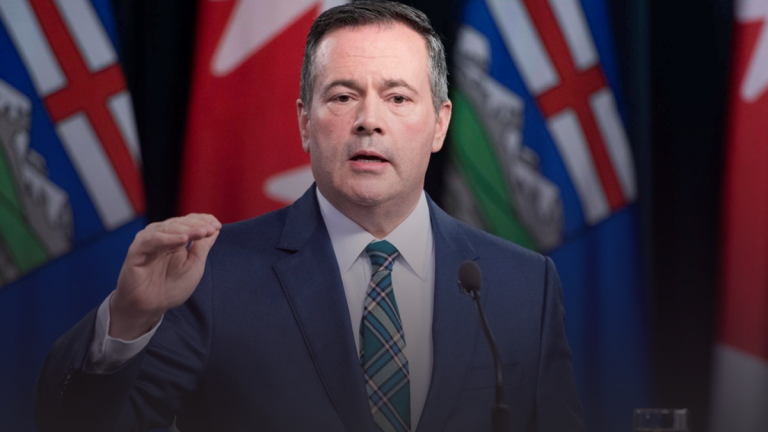
At a press conference on Saturday, Premier Jason Kenney announced that Alberta will be donating excess personal protective equipment and ventilators to Ontario, Quebec and British Columbia.
Kenney made it clear that this donation will not affect Alberta’s ability to respond to the coronavirus pandemic.
“These contributions will in no way undermine our capacity to provide the critical protective equipment and ventilators to Alberta’s medical professionals and to other associated frontline workers,” he said.
“We would not contribute if it in any way impaired our ability to provide for our own health-care needs, but I for one, as an Albertan and as a Canadian, could not in conscience watch us stockpile massive amounts of surplus equipment while we see many of our fellow Canadians, some provinces within days of running out of some of these supplies.”
LIVE: As a result of having ample supplies we need for #COVID19AB, Alberta will be sending some to help British Columbia, Ontario and Quebec address unprecedented demand for personal protective equipment and ventilators. https://t.co/0dWMdhXmE9
Among the supplies donated include 50 ventilators, 750,000 N95 masks, seven million surgical masks, 15 million rubber gloves and 87,000 goggles.
Most of the donated equipment will be going to Ontario.
On Saturday Ontario announced 411 new cases of coronavirus, bringing the total up to 6,648 with 253 deaths.
Kenney told Albertans that the coronavirus has spread at a much slower rate in the province compared to most of the world — a statistic he attributes to residents following public health orders.
As of this week, over 1.5% of Alberta’s population has been tested for coronavirus. This number is among the highest rates of testing per capita in the world.
“So far, our curve more closely resembles countries that have successfully fought the virus, like South Korea, than the sharp upward rise seen in countries like Italy, Spain and the United States,” Kenney said Tuesday.
As of Saturday, Alberta has 1,569 coronavirus cases and 40 deaths. Around half of those diagnosed in the province have already recovered.
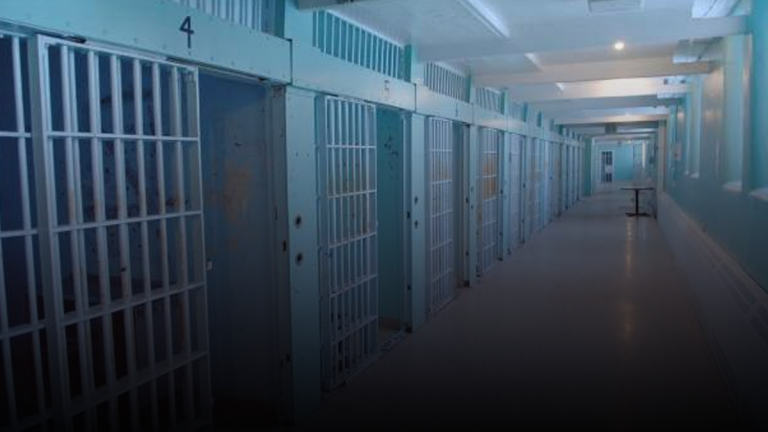
The police have more powers to enforce social distancing measures, convicted criminals are being released into society and the government is single-handedly paralyzing the economy.
How much of our freedom should we be forced to give up to politicians and bureaucrats who think they know what’s best for us?
True North’s Leo Knight asks if there is any logic making the cure worse than the disease.
Lawyer and former Conservative candidate Leslyn Lewis joins True North’s Andrew Lawton to discuss her campaign to lead the Conservative Party of Canada. Lewis is running on a platform based on courage, compassion and common sense.
This is part of The Andrew Lawton Show’s Conservative Leadership Series, featuring in-depth interviews with all of the candidates seeking the Conservative leadership.
Note: This interview was recorded in March, prior to the COVID-19 lockdown, and prior to the Conservative Party of Canada’s suspension of leadership fundraising.
Canadian military intelligence was aware of and monitoring the coronavirus outbreak in Wuhan, China in early January.
According to the CBC, a medical intelligence unit in the Canadian Forces Intelligence Command charged with assessing outbreaks and their impacts on military operations was tracking the progression of COVID-19 in its early stages.
“We can confirm that CFINTCOM started to report on COVID-19 starting January 2020,” said military intelligence spokesperson Lt. Hrayr Karageozia.
It is unclear whether the information intelligence operatives were working with ever made it into medical intelligence briefings or whether the federal government was ever made aware of their work.
“We cannot comment on the content of intelligence reports that we receive or share,” said Karageozia.
By January 9, the Chief Public Health Officer of Canada began tweeting out travel advice about “an outbreak of pneumonia of unknown cause in Wuhan city” shortly after the World Health Organization issued travel warnings in the area.
Prior to the travel advisory, True North had reported on the virus, which was described as an “atypical pneumonia” at the time.
It wasn’t until January 22 that Canada began screening passengers for COVID-19.
Operations by the Canadian unit rely heavily on Five Eyes intelligence reports and information from the US’ National Center for Medical Intelligence (NCMI).
According to US reports, NCMI officials were aware of the viral outbreak in Wuhan as early as November.
An NCMI report at the time allegedly concluded that the outbreak could be a “cataclysmic event.” The briefing was then shared with the Defense Intelligence Agency, the Pentagon’s Joint Staff and the White House, however, the Pentagon denies that such a briefing occurred.
Prime Minister Justin Trudeau has been facing pressure from critics for not having acted sooner to contain the virus.
“I think we all know that this was a situation that we’re adjusting as best we can to. We took the advice of experts, we move forward in significant ways. As we look back at the end of this I’m sure people will say: ‘Oh you could have done this a few days before, or maybe you did this one too quickly and you could have taken a few more days to reflect on it.,’” said Trudeau about his government’s response.
“Every step of the way we make the best decisions we can, given the information we have. And if it’s not exactly right, we fix it and we try and get it better as we move forward.”
Blackberry has published research that exposes how five cyberespionage groups believed to be aligned with the communist Chinese government were able to operate undetected for years.
“This research paints a picture of an espionage effort targeting the very backbone of large organizations’ network infrastructure that is more systemic than has been previously acknowledged,” said Chief Information Security Officer at BlackBerry John McClurg in a news release.
The 46-page report, titled “Decade of the RATs: Cross-Platform APT Espionage Attacks Targeting Linux, Windows and Android,” reveals an organized effort to target Linux operating systems for the purpose of economic, financial and political espionage.
“Behind the scenes at government agencies, universities, and corporations around the world, you’ll find Linux on servers that house sensitive data as well as those that keep critical systems up and running,” writes the report.
Blackberry was able to identify five Advanced Persistent Threat (APT) groups that were sharing hacking software and working together for nearly a decade. According to Blackberry, at least one of the groups is strongly linked to China’s Ministry of State Security.
“Their targets run the gamut of nearly all verticals, and activities range from simple cybercrime to full-blown economic espionage, and from internal monitoring of politically dissenting populations to more traditional military and strategic nation-state espionage. These groups’ collective palette is wide and well-developed, touching nearly every industry sector across a huge geographic area,” reads the report.
China’s espionage and interference extend beyond the cyber world. A 2020 report by the National Intelligence and Security Committee (NISC) warned that the Chinese government has been trying to subvert Canada from within.
According to the NISC, Chinese interference has targeted elected officials, elections, universities and the media in an effort to influence Canada to meet China’s objectives.
“The threat is real, if often hidden. The perpetrators have become more brazen and their activities more entrenched,” states the report.
“Canada has been slow to react to the threat of foreign interference.”
As reported by True North, a Chinese cyberespionage actor attacked Canada and other nations in the “broadest campaign” of recent years, according to US cybersecurity firm FireEye.
The group targeted 75 different entities in a wide array of fields including government, healthcare, defence, media and banking.
A leading public health official told the House of Commons health committee that sending 16 tonnes of personal protective equipment (PPE) to China was “probably not” the best decision.
“I would say the national emergency stockpile is probably the largest failure as far as our response goes to date,” said Ian Culbert, Executive Director of the Public Health Association.
When asked by Conservative MP and committee member Matt Jeneroux whether there could have been better planning regarding the shipment to China, Culbert told the committee that there was “good will” behind the decision.
“In hindsight, was it the best decision? Probably not. But I think it was made in good will with the best information available at the time,” said Culbert.
It was revealed that Global Affairs Canada sent 16 tonnes of PPE to China in February.
Canada’s first case was identified on January 25. When Canada started shipping the equipment to China, Canada already had 5 confirmed cases.
Included in the shipment was valuable equipment like masks and face shields.
“Global pandemics require global co-operation. After all, pandemics know no borders. Co-operation is vital to ensuring the health and safety of people around the world. This includes protecting people here in Canada, as support of this kind can help to slow the spread of the virus,” said Minister François-Philippe Champagne’s deputy director of communications Adam Austen.
“In early February, when the spread of COVID-19 was primarily limited to China, Canada facilitated sending equipment there through the Canadian Red Cross to the Red Cross Society of China.”
Today, Canada faces a shortage of the very same medical supplies shipped off overseas.
The shortage of vital equipment has forced Canada to consider reusing and sterilizing face masks used by front-line medical workers.
“I think it is one of the most important and I think worthwhile lines of pursuit for PPE right now,” said Canada’s Chief Public Health Officer Dr. Theresa Tam.
Climate activists are using the coronavirus crisis as an opportunity to take down Canada’s oil and gas sector – once and for all.
True North’s Anthony Furey says after the pandemic is over and things start getting back to normal, domestic energy will be more important than ever. Canadians need to stand up for Canadian oil and gas.
WATCH True North’s first mini-documentary “Calgary in Crisis: The tragic story of Alberta’s drastic decline” – www.calgaryincrisis.ca
Earlier this week, B.C. Premier John Horgan announced that all returning travellers to B.C. must demonstrate they can self-isolate or they’ll be escorted somewhere and forced into isolation. The Premier did not explain who or how exactly that will be achieved.
Apparently, travellers will have to fill out a form outlining in detail their plans.
At his press conference, Horgan was talking tough. He said, “This is really important and everybody understands: This is not optional. This is not a suggestion.”
However, Horgan did not explain where he thinks he has the legal authority to do that given that YVR and land Ports of Entry are federal jurisdiction.
Meanwhile, prisoners are being released from jail across the country, including in B.C., ostensibly to prevent them from contacting the coronavirus in prison. BC Corrections says it is conducting risk assessments for “non-violent” sentenced offenders for consideration for early release.
“This assessment and ultimate determination on release considers criminal history, sentence length, offence type, and any other relevant information, including risk to public safety,” said BC Corrections in a press release.
So, if I understand this correctly — the B.C. government is threatening to forcibly take into custody travellers whose only sin was not to have already planned self-isolation for a fortnight but are releasing prisoners who are already isolated from the rest of society and have committed crimes, been tried, convicted and sentenced to jail in case they contract the coronavirus in prison.
The Public Safety Minister Bill Blair has asked the federal corrections service to consider doing the same thing.
This seems to have been driven by the Canadian Bar Association who have long complained about the lack of medical care in prisons. In a letter to Blair, the CBA said, “Coupled with the close quarters in these facilities, limited access to hygiene and preventive products, and inability to act on social-distancing recommendations from public health authorities, we believe the current situation may soon become dire.”
Meanwhile some judges have taken it upon themselves to release many accused of violent crimes because they are concerned about the spread of the coronavirus in prisons.
One of the persons released in Toronto was Kaynadid Abshir, 19, charged with attempted murder, aggravated assault and multiple firearms offences. Abshir was the driver of an attempted gangland killing by three shooters armed with nine-millimetre pistols.
The three shooters chased their target to his Toronto house and were even firing into the house when the door the target fled through was open.
Police later recovered 19 shell casings from the scene of the attack. The judge hearing the bail hearing said the only reason the target survived is because the attackers were “not good shots.”
Abshir was released with the judge saying, “greatly elevated risk posed to detainees from the coronavirus, as compared to being at home on house arrest.”
Other judges have taken to citing comments made by the Prime Minister last Tuesday as their reason to release violent criminals. Trudeau said, “We’ve taken measures already in Corrections Canada to ensure that we’re keeping inmates and corrections officers more safe from COVID-19. But we’re still looking at other steps.”
I’m not sure how that translates into let them out, but such is the state of justice in Canada.
Meanwhile back on the Left Coast, the PIVOT Legal Society sent a letter to Vancouver Police Chief Adam Palmer and Mayor Kennedy Stewart demanding reduced police enforcement in the Downtown Eastside (DTES) during the “coronavirus state of emergency.”
The DTES is an open, fetid sewer. It is the world’s largest open-air drug bazaar and the left-wing fools at PIVOT are demanding police scale back enforcement? Meanwhile, elsewhere in Canada other police agencies have begun enforcing so-called social distancing with tickets and threats of arrests.
I should add, the Vancouver Police Department is not among those police agencies, yet at least.
Things are upside down these days with the coronavirus affecting everyone. But realistically, does any of this make sense?