Last month, more than 1 million Canadians lost their jobs as a result of the coronavirus pandemic and the economic shutdown. Young workers and low-wage workers have been hit particularly hard.
Instead of telling young workers to stay home, why not offer them the opportunity to work in the agriculture sector and help protect food security in Canada?
Instead, the government is allowing temporary foreign workers to take these vital jobs away from Canadians. The government claims our borders are closed, but this is far from the truth.
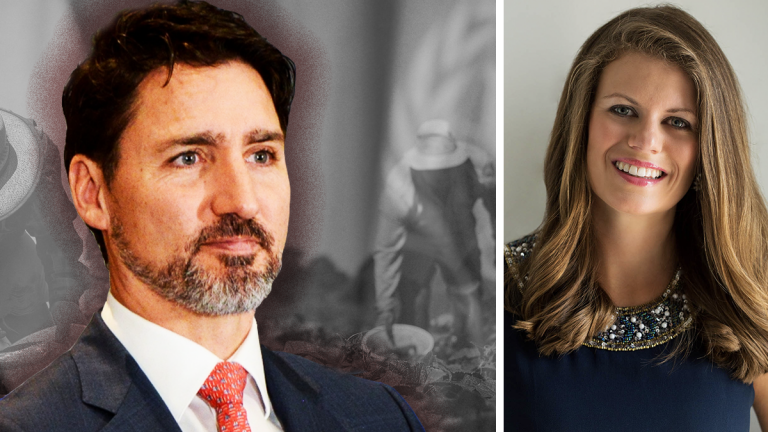
True North’s Candice Malcolm says the government should put Canadians first.
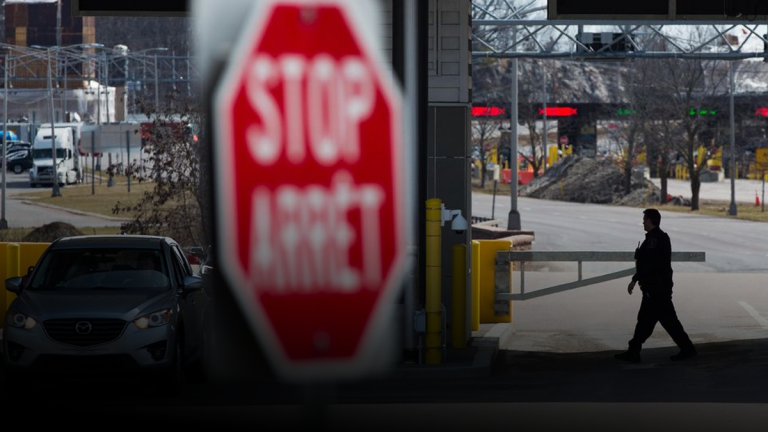
Public health officials have not been present to screen travellers at Canada-U.S. border crossings.
According to Global News, requests by the Customs and Immigration Union (CIU) to have health officials placed at land border crossings to conduct screenings have fallen on deaf ears.
CIU National President Jean-Pierre Fortin has said that there is “zero presence” of public health officials.
“We’re still prepared to do the work and keep Canadians safe, but a little help from Health Canada would be really appreciated,” Fortin told Global News.
When asked why there are no Public Health Agency of Canada (PHAC) officials present at the land crossings, Health Canada failed to address the question but said that they are available to contact if need be.
Meanwhile, PHAC employees have been stationed at airports to inform travellers on social distancing and quarantine measures and assist with CBSA screenings.
According to Fortin, the lack of action by PHAC at land border crossings is putting the health and safety of border officers at risk.
“If one of our officers gets contaminated and can spread the disease, we’re not going to be ahead here,” Fortin told Global News.
CBSA statistics show that land crossings into Canada are nearly four times more frequent than air travel between March 30 and April 5.
“We are continually assessing our operational posture with our colleagues at the Public Health Agency of Canada, including where their screening officers and quarantine officers are needed and best utilized. Should circumstances change, we will revisit,” CBSA spokesperson Rebecca Purdy told Global News.
The federal government has implemented several travel restrictions to stop the spread of the coronavirus.
Among the measures is an emergency order under the Quarantine Act, which requires mandatory isolation for travellers both with and without COVID-19 symptoms.
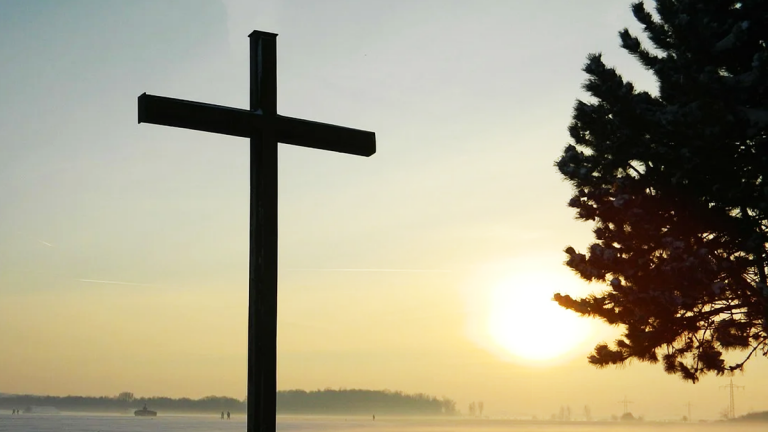
While this weekend is commonly associated with sweets and bunnies, it is the most important – and holiest – time for Christians around the world and here in Canada.
Good Friday marks the day that Jesus Christ, God’s son, was crucified and died a human death.
Although this holiday has “Good” in the name, it’s actually a day full of suffering and pain: Jesus was betrayed, scourged, wore a crown of thorns on his head, carried his own cross to his crucifixion before being nailed to it.
So why is it called “Good Friday?”
On this day, Christians remember and show gratitude for the eternal love and sacrifice of Jesus Christ.
Jesus gave His life so those who believe in Him would have eternal life. His crucifixion was the ultimate act to forgive humanity of its sins and open the gates of heaven.
You see, at just the right time, when we were still powerless, Christ died for the ungodly. Very rarely will anyone die for a righteous person, though for a good person someone might possibly dare to die. But God demonstrates his own love for us in this: While we were still sinners, Christ died for us. Since we have now been justified by his blood, how much more shall we be saved from God’s wrath through him! For if, while we were God’s enemies, we were reconciled to him through the death of his Son, how much more, having been reconciled, shall we be saved through his life! Romans 5:6-10
On Holy Saturday, Christians commemorate the day Jesus lay in His tomb after He died.
On Easter Sunday, Christians celebrate the resurrection of Jesus from the tomb on the third day after his crucifixion. Easter is the most significant day for Christians in Canada and around the world because Jesus Christ fulfilled biblical prophecy and brought salvation.
He is not here; he has risen! Remember how he told you, while he was still with you in Galilee: ‘The Son of Man must be delivered over to the hands of sinners, be crucified and on the third day be raised again.’ Luke 24:6-7
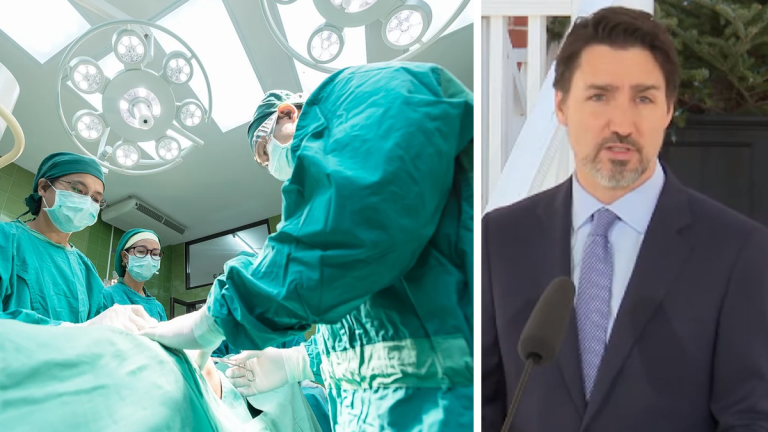
Doctors and nurses across Canada are facing a shortage of medical supplies, including masks, goggles and face shields, according to Blacklock’s Reporter.
The Public Health Agency was “caught flat-footed,” according to President of the Canadian Medical Association Dr. Sandy Buchman, despite the agency being created to respond in a pandemic.
According to Dr. Buchman, doctors and healthcare workers are “scared” and “feel betrayed” because of the lack of supplies available at hospitals across the country.
“They are scared. They are anxious. They feel betrayed. They don’t know what supplies are available,” said Dr. Buchman.
“More than a third of physicians in community care, that is doctors’ offices, walk-in clinics and health hubs, said they believed they would run out of masks, respirators, eye and face shields, goggles and glasses within two days or less – or indeed they had already run out. That was just seven days ago.”
Dr. Buchman made the comments while testifying before the House of Commons health committee. She also told Conservative MP and committee member Robert Kitchen that they were not “adequately prepared” to deal with the scale of the pandemic.
“I don’t think we were adequately prepared or we wouldn’t have found ourselves in this situation,” said Dr. Buchman.
“The rapidity and magnitude of this pandemic wasn’t anticipated, but that’s what you kind of have to prepare for, these crises.”
Doctors and nurses are being forced to ration crucial medical equipment like masks to deal with the equipment shortages plaguing Canadian hospitals.
“…Our nurses are being told to use two surgical masks on a shift basis which can go from eight to twelve hours. That feels like rationing,” president of the Canadian Association of Emergency Physicians Dr. Alan Drummond told the committee.
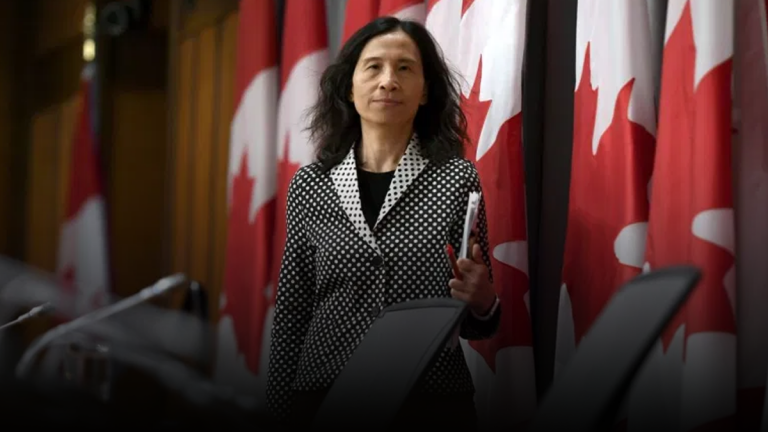
Federal public health officer Dr. Theresa Tam told reporters earlier this week that the government is looking into ways to reuse and sterilize face masks to combat the shortage.
With the world in upheaval over the coronavirus, many people have turned to religion to help them get through it all.
While some have resorted to prayer and introspection, others have taken the stance that faith alone, and not precautions or science, will save them from illness. Many have deliberately flaunted social distancing recommendations, refused to take any additional health precautions or have even continued to promote and attend group religious services.
These attitudes are not only harmful to those individuals but detrimental to society at large — and not just for health reasons. Their actions can result in negative perceptions of religion and religious people.
So where does the idea that faith and religious observance will save you from illness come from?
One of the earliest Biblical sources attributed to this understanding can be found in Exodus 15.26:
And He [Moses] said, If you hearken to the voice of the Lord, your God, and you do what is proper in His eyes, and you listen closely to His commandments and observe all His statutes, all the sicknesses that I have visited upon Egypt I will not visit upon you, for I, the Lord, heal you.
However, a careful reading of the quote shows that it is specifically referring to the sicknesses that afflicted the Egyptians during the exodus, not all illness, as some might suggest. It is an entirely reasonable statement when one keeps in mind the fact that the Israelites likely feared to contract what had afflicted their oppressors and the promises that God made to keep them safe, which may not have been known to all the people as the Bible had not been written yet.
Further, a belief that God will protect religious people from illness creates the following problems:
First, it is just factually untrue; many righteous people have died from illnesses like cancer or heart disease, even though they were strictly observant and faithful to their religion. Given that people of all faiths or no faith die from illness, it would mean that either; none of these people merited healing (there are many examples in the Bible of righteous people getting sick); God does not have the ability to heal people; or that there is no God.
Second, if religious observance were all that was required to stay healthy this would remove our capacity for free will as God’s existence would be undeniable. A simple matter of recording the different health outcomes between religious and non-religious people would be all that was required to demonstrate God’s existence and the requirement for religious practice. This would turn people’s religiosity into a healthcare decision.
Lastly, It would create a situation that allows religious people to look down upon the sick, blaming them for contracting an illness. All sickness would be blamed on a person’s lack of faith or religion. Someone you know got sick? Probably because they were not praying hard enough or did not have enough faith.
So what are religious people to do given the current crisis?
The same thing we’ve always done.
Don’t just read the Bible, but live it.
Be kind and love the stranger.
Check up on your friends and neighbours.
Be considerate of other people’s needs and do not be afraid to help out where and whenever you can.
And finally – yes, pray for the health and recovery of the sick.
Is anyone double-checking Dr. Tam’s work? Is anyone in a position of power pushing back? Is Prime Minister Justin Trudeau seeking a second opinion, like most people would after being given such a harsh diagnosis?
This is not a personal shot at the experience and resume of Dr. Tam, who has authored over 55 peer-reviewed journal publications and is the former assistant deputy minister for infectious disease prevention. It’s just common sense questions that everyone should be asking when dealing with a situation of such colossal magnitude.
On Easter Monday, 103 years ago, thousands of brave Canadians made their country proud for centuries to come.
On April 9, 1917, under heavy German fire from above, brave soldiers of the Canadian Corps fought together with one goal in mind: taking the heavily fortified Vimy Ridge.
Some would call the operation a suicide mission.
The Germans held a superior position and prior attacks by the Allies had led to over 100,000 French casualties, many of whom were still lying dead on the battlefield.
The odds seemed insurmountable, but after only one day of gruelling combat, the four Canadian divisions were able to secure and gain a foothold on the ridge. This was the first time they ever fought together side by side.
By April 12th, after suffering over 3,500 deaths and 7,000 injuries, Canada emerged victorious.
The three-day campaign would forever be remembered as a beacon of Canadian ingenuity and pride.
Men from across Canada stood united in brotherhood and loyalty, ready to die for their loved ones and their country. They offered everything they had to secure a brighter future for us all.
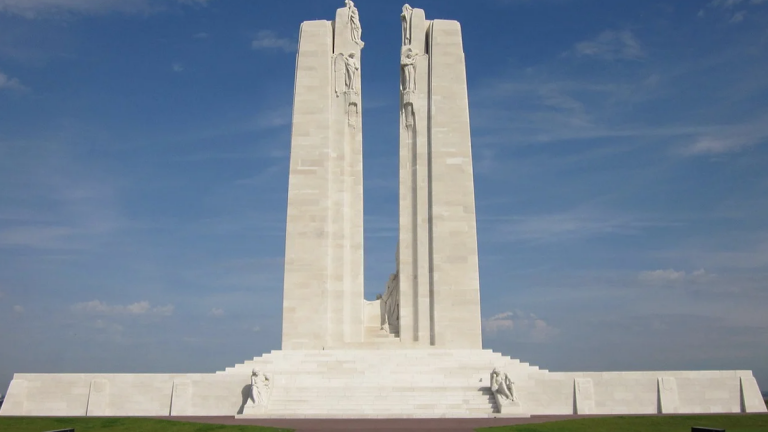
To this day, the Canadian National Vimy Memorial stands tall in France as a memory of the precious lives lost in the First World War.
The spirit of those brave soldiers still lives on in the heart of all Canadians, stirring and calling us to honour their memory.
A new documentary is shining a light on those in the Orthodox Jewish community using the second amendment to protect themselves from the growing threat of anti-Semitism.
In Monsey: The Orthodox Jews defending themselves against anti-Semitism, The Post Millennial explores just how a rise in anti-Semitic violence has effected one quiet New York hamlet.
The documentary takes viewers to Monsey, New York, a small town with a large Hasidic Jewish population.
On December 28 a man with a machete invaded a rabbi’s house in Monsey during a Hanukkah party. Five people were injured in the attack.
The suspect Grafton Thomas is a 37-year-old African-American man who allegedly had a history of anti-Semitic beliefs.
On March 30 Rabbi Josef Neumann died of his injuries as a result of the attack.
The Monsey incident is just one of the growing number of anti-Semitic hate crimes in the area.
The documentary covers both changing attitudes towards guns in the Orthodox community and the fight for gun rights in New York and New Jersey, two of the most restrictive states for firearm owners.
“I’m extremely proud of our team for producing this short but essential documentary about the second amendment and the Orthodox Jewish community. As we grow, we will be producing more work like this as we continue to tell the stories the establishment media won’t tell,” said the Post Millennial owner Matthew Azrieli.
One store owner said there was a large increase in the number of Jewish people looking for guns and concealed carry permits.
“There’s been a huge uptake in concealed carry permits, and there are lawsuits going on in Jersey right now that people are trying to fight to gain back the privileges of their second amendment rights,” said the store owner.
The Jewish community in the area is still reeling from multiple acts of violence against them.
On December 10, two gunmen opened fire in a kosher grocery store in Jersey City, New Jersey, killing three before turning the guns on themselves. The attack is believed to have been motivated by anti-Semitism.
During Hanukkah in 2019, there were at least six attacks on Jewish people in New York City, as well as multiple non-violent incidents in a wave of hate crimes police have deemed “alarming.”
Canada lost over one million jobs in March as the coronavirus pandemic has forced countless employers to either lay off staff or shut their doors completely.
In a report released Thursday, Statistics Canada determined that last month saw the biggest job losses in modern history.
“In March, the number of employed people fell by more than one million (-1,011,000 or -5.3%). The employment rate, or the proportion of people aged 15 and older who were employed, fell 3.3 percentage points to 58.5%. This was the lowest employment rate since April 1997,” wrote StatCan.
“The unemployment rate increased by 2.2 percentage points to 7.8%, the largest one-month increase since comparable data became available in 1976. Unemployment increased by 413,000 (+36.4%), largely due to temporary layoffs.”
“In addition, the number of Canadians who had worked recently and wanted to work, but did not meet the official definition of unemployed, increased by 193,000.”
The current unemployment rate in Canada now stands at 7.8%
Quebec saw the largest increase in unemployment, climbing 3.6% to 8.1% province-wide. British Columbia and Ontario also saw increases of 2.2% and 2.1%, rising to unemployment rates of 7.2% and 7.6%, respectively.
StatCan had to remould its usual definition of unemployment to account for the number of people who are working reduced hours or not looking for work because of the coronavirus pandemic.
The industries which lost the most employees were accommodation and food services; recreation and culture; education services; and retail.
On Thursday, the Parliamentary Budget Officer published its own report predicting that as many 3 million people could be unemployed by fall.
In his daily press conference, Prime Minister Justin Trudeau said the latest job numbers were disappointing but not surprising.
“As stark as those numbers are they aren’t a surprise for a lot of Canadians,” Trudeau said.
“We all knew this was going to be a tough time but that’s no comfort if you’re out of a job.”
Trudeau added that once the worst of the coronavirus pandemic is over the government will lift some public health orders and allow some workers to return to their jobs.
A U.S. counterterrorism report circulated within the RCMP warned that terrorists could use the coronavirus pandemic as an opportunity to attack hospitals, public safety officers and other vulnerable targets.
According to Global News, the U.S. National Counterterrorism Centre (NCTC) report was seen and read by the RCMP’s First Responder Terrorism Awareness Program.
“Pandemics and other natural crises create unprecedented challenges that terrorists could exploit to conduct attacks against an already stressed society, and strained government and public safety system,” claimed the report.
“While most citizens isolate in their homes, public safety personnel, hospitals and establishments, such as supermarkets and pharmacies, serve the largest number of co-located individuals, making them potentially attractive targets.”
The report warns that minority communities and places of worship could be targeted by violent extremists seeking to advance their agendas.
A March 24 white supremacist plot in Kansas City was cited by the report as evidence that extremists could use the pandemic as an opportunity to strike.
36-year-old Timothy Wilson died in a shootout with the FBI who were attempting to arrest him over an alleged plot to bomb a medical centre.
“The RCMP is aware of this report and receives a number of COVID-19 related intelligence reports daily from a variety of sources,” said RCMP spokesperson Catherine Fortin.
“The COVID-19 crisis is bringing uncertainty and financial insecurity to a large portion of the population. However, the frustrations created by this situation in no case justify hatred, threats, and inciting violence.”
On Thursday, Prime Minister Justin Trudeau said during his daily COVID-19 briefing that a return to normalcy in Canada is “a very long way off.”
“Normality as it was before will not come back full-on until we get a vaccine for this… That will be a very long way off,” said Trudeau.
“We will have to remain vigilant for at least a year.”