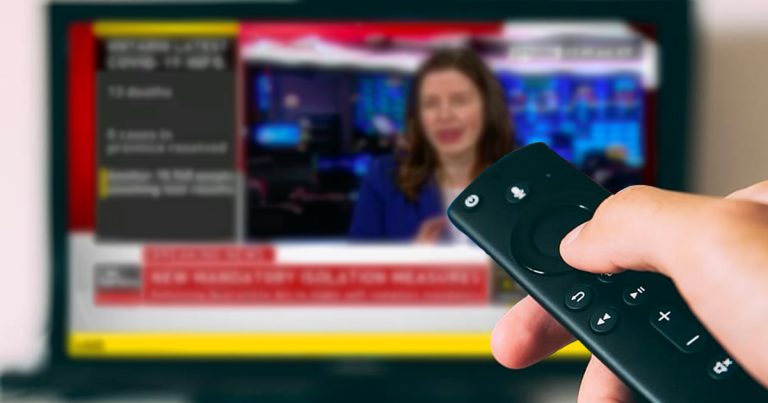
BONOKOSKI: The continuing decline of the traditional media landscape

The newspaper industry, seemingly forever the epicentre of the world’s news gatherers, survived the upstart of radio in the 1920s and the television era of the 1950s, but fell flat on its face when confronting the competition of the Internet.

The Internet has all but delivered a coup de grace on the newspaper business — leading to shrinking budgets, shrinking staff counts, a shrinking number of existing newspapers, and the shrinking number of actual newspaper pages.

As proof that survival may not be in the cards, there are hardly enough pages in today’s daily print newspaper to line the bottom of a birdcage or to wrap a decent fish.

If a local newspaper went on strike back in its heyday, for example, local radio panicked. Its main news source was suddenly dry. It could no longer “rip and read.”

This was the reality of those times.

And now the worst news of today? Legacy journalists are no longer trusted or respected because government bailouts have tainted their reputations.

Journalists and politicians do not meld nicely.

“The Internet has created a world of unlimited choice and been a gift to consumers and innovators,” said the Macdonald-Laurier Institute’s (MLI) Peter Menzies, once a Canadian newspaper executive.

“But Canada’s news industry providers have suffered losses of audience engagement and advertising revenue.”

As Menzies put it, “Canada is on the cusp of making most of its journalists permanently dependent on the federal government. This is evolving directly through tax relief and subsidy funds and indirectly through offshore tech companies compelled by legislation.

“While this may permit some of the legacy news organizations to continue to survive financially, this new connection to politicians is eroding public trust in both government and news organizations.”

This illustrates why a long-term national news media policy is now not just necessary, but vital and urgent, said MLI.

The Canadian Radio-television and Telecommunications Commission (CRTC) has ensured that certain levels of Canadian content (which is heavily subsidized due to low domestic market demand) are carried by licensed broadcasters. 

The CRTC enforces foreign ownership restrictions on currently regulated media – radio and television – through its licensing process. In order to obtain a CRTC licence, a broadcaster must be more than 50% owned by Canadians and its board must be made up of a majority of Canadians. 

“Canada’s news industry has been unable to adapt to technological change,” said Menzies. “In the case of print, the collapse of concentrated ownership led to even greater concentration of ownership, which has resulted in more than $200 million in annual public subsidies and tax credits. Some of these were initially intended as temporary measures to assist companies trying to transition into the digital age. But as companies fail to do so, these subsidies and credits are becoming permanent.”

“Making matters worse, each appears to be oblivious to the impact that it has on the others,” said Menzies. “The CRTC, for instance, is creating an artificial oversupply of news products by forcing many broadcasters to employ reporters and dedicate airtime to news, as if their local radio station is the sole possible vehicle through which people may obtain the information they seek.”

Canada is currently in the process – through Bill C-11 (Online Streaming Act) – of defining the Internet as broadcasting and putting it within the jurisdiction of the CRTC, which will allow it to control citizens’ viewing and listening choices as it does with cable, satellite, and over-the-air broadcasting. 

Bill C-18, meanwhile, intends to divert advertising revenue from Facebook and Google to legacy media and more legislation involving control of speech on the Internet has been promised through an Online Harms Act to patrol citizens’ speech. 

“So long as government appears prepared to sustain legacy news operations through subsidy and dependence on offshore tech company revenue, there will be less room in the market for the revitalization it needs,” wrote Menzies.

“So, while Postmedia newspapers in Calgary, Edmonton, Saskatoon, and Regina are subsidized, none of them have their own reporters in the Parliamentary Press Gallery. Yet Western Standard, which refuses to be dependent on government, does have a reporter in the Parliamentary Press Gallery. Similarly, Blacklock’s Reporter, which has built an independent subscription-based reporting service in Ottawa, must compete against subsidized competition. The same can be said of The Line, which focuses on commentary and prefers to be independent.

True North would be a fourth example.

“This is not good public policy,” concluded Menzies.
LEVY: The mask police are now going after Ottawa students

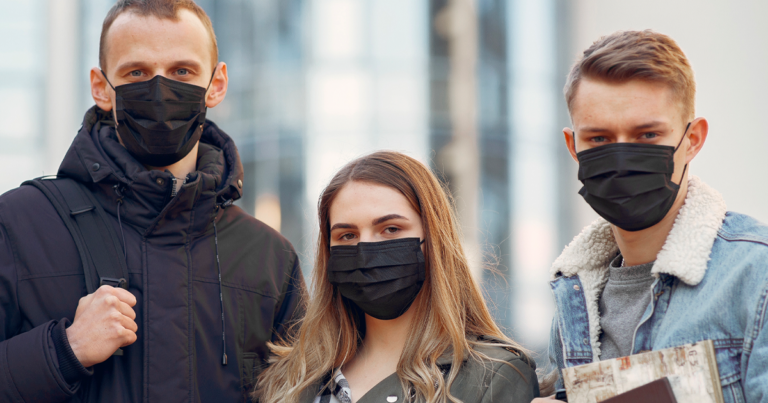
The mask police are back in action at the Ottawa-Carleton District School Board.

Led by mask-obsessed Ottawa doctor and newly elected trustee Nili Kaplan-Mryth, trustees will discuss a motion at a special emergency board meeting Tuesday asking that all students, teachers and staff be required to mask indefinitely.

She has indicated in her motion that not any mask but only expensive surgical or N95 masks will do. 

It seems Kaplan-Mryth is not just obsessed with masks but the out-of-touch elitist thinks the school board and those students/staff affiliated with it have endless pots of money.

Her two-page motion asks that the mask requirement stay in place until Ottawa Public Health deems the flu season over in Ottawa and until the Children’s Hospital of Eastern Ontario (CHEO) pediatric ICU has an occupancy of less than 85% over at least two weeks.

If it passes at Tuesday’s board meeting, the order will commence the next day. Those who defy the order will be subject to rules stipulated under the board’s health and safety policies and codes of conduct. 

No detail as to the mode of punishment is provided in the motion.

Kaplan-Myrth reasons that masks will stop the rise in not just of COVID-19 but in influenza and Respiratory Syncytial Virus (RSV) cases.

She claims that there is “no evidence of harm” to an adult or child’s physical or mental health from wearing masks – completely ignoring the countless articles depicting the social and emotional anxiety that has resulted from extended mask wearing.

She even invokes the Canadian Charter of Rights and Freedoms to support the need for these health protections.

I am not a doctor but it strikes me that extended mask wearing and social distancing has had an impact on one’s immune system – now evidenced by the rise in a variety of viruses at this time of year. I’ve had a bad cold and COVID in the span of six weeks.

Besides, whatever happened to the numerous vaccines we were pushed to take to protect ourselves?

But Kaplan-Myrth ran for the school board, I suspect, for precisely this reason – that is, to inflict her mask obsession on everyone else.

In fact, she appeared on a TVO interview recorded from her office in early September wearing an N95 mask. During the interview, she also launched a blistering attack on anyone who chose to go maskless.

She later complained that the pushback she received for wearing a mask while sitting alone in her office and for her obsession about vaccines came from racists, misogynists and anti-Semites.

It’s clear she’s formed an unholy alliance with the new chairman of the board, transgender trustee and radical leftist Lyra Evans, along with the vice-chairman, Justine Bell – both of whom have tried to put mask mandates back in place over the past year.

The two have authored a letter on the board’s home page indicating Tuesday’s special meeting is urgently needed to discuss the reinstated mask policy.

“The Board of Trustees cares greatly about this community,” they say in their open letter. 

“It is our responsibility to work together and engage in any discussion that can impact student wellbeing, no matter how difficult.”

Long-time trustee Donna Blackburn says it is “very unfortunate” that the new Board is starting off our term with such a “divisive and unnecessary” debate. 

She says people have made it clear to her that they want to focus on kids’ education.

“The Board has no authority to enforce a mask mandate. This will cause turmoil in our schools,” she adds.  “People have vowed that they will switch school boards and some staff will quit.”

Still, the only thing these radical leftists care about is inflicting their neuroses on others and removing free choice.

I feel sorry for students if the motion passes.

The thought of them being stuck wearing N95 masks for six hours a day until Kaplan-Myrth gives the “all clear” is beyond comprehension.

The Daily Brief | Trudeau to testify at Emergencies Act Hearings

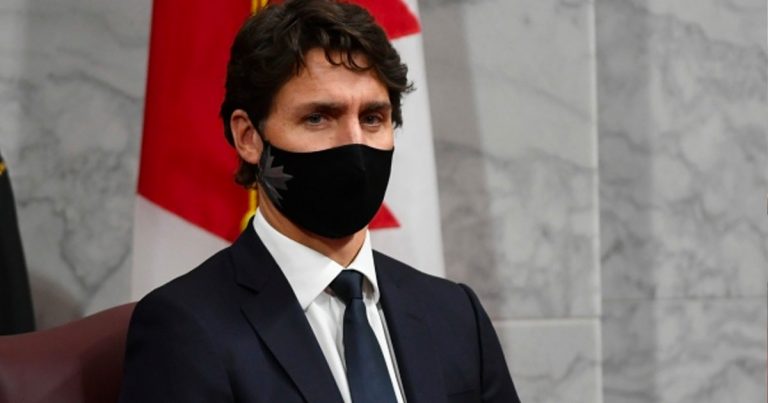
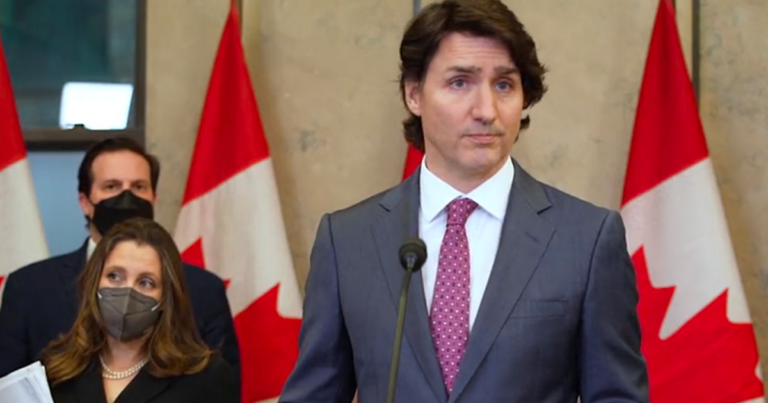
Prime Minister Justin Trudeau and several of his cabinet ministers will appear before the Public Order Emergency Commission this week to justify the government’s use of the Emergencies Act to quash the Freedom Convoy.

Plus, after weeks of empty shelves, over one million bottles of children’s pain medication will arrive in Canada starting this week.

And the Green Party of Canada has elected a new leader…well, sort of.

These stories and more on The Daily Brief with Anthony Furey and Jasmine Moulton.

SUBSCRIBE TO THE DAILY BRIEF

FUREY: Stop trying to appease the “fringe minority” of Covid zealots

Chief Medical Officer of Health Dr. Kieran Moore found himself in hot water this week after videos emerged of him partying maskless days after he made a “strong recommendation” for Ontario residents to mask back up.

Politicians and public health officials getting caught not following their own Covid rules is a common occurrence after more than two years of dealing with heavy-handed government rules and edicts. However, as True North’s Anthony Furey explains, it’s a good thing when they’re caught breaking their own rules.

Anthony says Moore never believed in his “strong recommendation” for masking and was only trying to appease the “fringe minority” of Covid zealots.

Rural crime surges in Saskatchewan: RCMP

Crime is returning to rural Saskatchewan in full force after a pandemic-related lull, municipality leaders were told by the RCMP on Thursday.

While speaking to the Saskatchewan Association of Rural Municipalities (SARM) convention on Thursday, RCMP Assistant Commissioner Rhonda Blackmore said statistics are showing a return to pre-pandemic levels. 

Property crime is on top of the RCMP’s radar when it comes to rural communities and the state of the economy might have something to do with it. 

“With the price of fuel, it’s becoming a hot commodity for thefts,” said Blackmore. 

“We’ve had a report of 61 thefts from fuel tanks and from jerry cans, and additional 12 thefts from actual farm equipment. So a significant number.”

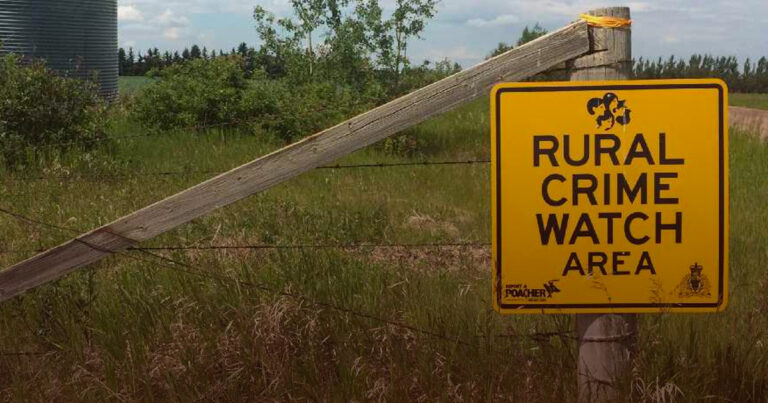
Local communities have taken the matter into their own hands and formed rural crime watch groups. 

According to Edenwold, Saskatchewan councillor Tim Brodt, his community has “quite a big network” of volunteers dedicated to preventing crime. 

SARM President Ray Orb also endorsed the idea, saying that more rural communities need to get onto crime watch programs. 

“We’re working together with the RCMP to try and invigorate the rural crime watch program,” said Orb. 

“No one knows the farms better than the local people.” 

Last year, SARM and the Saskatchewan Urban Municipalities Association banded together to form the Saskatchewan Rural Crime Watch Association. 

With help from the RCMP the group hopes to cut down police response time and help coordinate law enforcement activity. 

Additionally, the Saskatchewan government introduced several laws in 2021 to help tackle property crime, including the Pawned Property Amendment Act to prevent thieves from selling stolen goods. 

GUEST OP-ED: Justin Trudeau’s legacy? Damaged national pride.

Gregory Tobin is the Digital Strategy Director for the Canada Strong & Proud network of pages. Working in graphic design, video editing, social media management and much more. His career has seen him work on numerous political campaigns across the country.

I read about the experience of a Canadian journalist who was shocked by the severe lack of poppies he observed being worn by Canadians this year. 

It’s just one story, sure, but it is a stark example of the change in culture that we’ve experienced in Canada over the last several years. And that change is notable when you compare it to the Canada of 10-20 years ago.

So what happened to us? Seven years of Prime Minister Justin Trudeau happened, to be blunt.

When he was first elected, he seemed to be leading a new era of Canadian politics that would build off the accomplishments of Prime Minister Stephen Harper. 

Canada was in a solid fiscal position, we were well respected in the global field, things were good. Sunny ways and all that.

But then scandals started to happen. We had gaffe after gaffe after gaffe. And then he began to abandon the values that once rallied Canadians to him and his party.

One of the first things he did was call Canada a “postnational state,” which is sort of like saying we’re not really a country, having no defined values or traits. An extremely negative view of our multicultural landscape. And it set the tone for the rest of his tenure.

For our 150th anniversary Trudeau, rather than appear in person at the party on Parliament Hill on New Years, left behind a recorded video while he jetted off for a vacation. Then his government built a barely functioning skating rink and held a fairly normal celebration on July 1st, compared to what it could have been – but he chose not to fully embrace it. 

We’ve also seen Trudeau display a serious lack of respect for our parliamentary traditions. There are many examples, but some notable ones include his refusal to answer any questions from anyone without devolving into a word-salad of buzzwords. Booting out Jody-Wilson Raybould and Jane Philpott from his caucus for disagreeing with him. Appointing Julie Payette as Governor General without any vetting process. Or his recent use of the Emergencies Act to deal with protests against him. 

During the pandemic, he spent two years issuing outlandish spending promises and hiking taxes from his cottage’s front stoop. No committees, no parliamentary oversight, no debate. And all of this has led to out-of-control inflation, crushing the middle class.

In response to our nation’s desire to confront the history of our treatment of Indigenous peoples, Trudeau has chosen the cynical route. He agrees with assessments that this country is a “genocidal” nation while at the same time having trouble saying that China’s brutal oppression of the Uyghurs in China counted as genocide. In 2021 he lowered our flag to half mast and then waited months until Remembrance Day when he was finally forced to raise it again.

He told our veterans that they were asking for too much while also allowing our once well-respected Canadian military to devolve into a revolving door of abuse scandals, low recruitment and outdated equipment. 

We saw him disrespect our late Queen Elizabeth II by having no real plans for her jubilee and refusing to hand out medals. Not to mention the bohemian rhapsody karaoke during the weekend of her funeral.

During all of these scandals, apologies and gaffes, Prime Minister Trudeau has failed to do one crucial thing – he forgot about Canada’s triumphs. 

He refuses to celebrate and live up to the legacy of all the people, events, inventions, moments and symbols that have come before us. Terry Fox, Insulin, The Golden Goal, The Flag and so many more. They are what shape us and make us proud to be Canadian.

Now let me be very clear. It is right and just that Canada acts to make amends for its mistakes and grave failures. And let me be also clear that we’re all human and we all make mistakes, Trudeau included. 

But his job is to do his best to keep this country together and encourage us to feel blessed to live here. And on that score, the Prime Minister gets a failing grade. 

A Leger poll from 2021 found that only 65% of Canadians are proud of our history. That should bother us all. Trust in our institutions is key to them flourishing. And right now, we have a leader at the helm who doesn’t seem to care. 

So after all that, it’s no wonder a lot of people aren’t feeling too enthusiastic these days. Their own Prime Minister isn’t telling that awesome Canadian story we need to hear – the story that encourages us to hand the cadet at the grocery store a toonie and grab a poppy. He’s abandoned the idea of patriotism, and Canadians have noticed. 

We are in desperate need of leadership in this country to reinvigorate pride in Canada – a unique spirit that produces admiration for the best of our past and that seeks to make up for the worst. 

We should all be proud to be Canadian. And we deserve a prime minister who truly believes that.

Gregory Tobin is the Digital Strategy Director for the Canada Strong & Proud network of pages. Working in graphic design, video editing, social media management and much more. His career has seen him work on numerous political campaigns across the country.

The Alberta Roundup | Smith fires Hinshaw and AHS Board

This week on the Alberta Roundup with Rachel Emmanuel, Rachel discusses Premier Danielle Smith’s move to shake up Alberta Health Services (AHS) by firing Deena Hinshaw and 11 members of the AHS board.

And, the premier has been banned from Russia even after critics called Smith a Putin propagandist.

Rachel also covers Alberta NDP leader Rachel Notley’s plans to address the health care crisis.

Finally, the Alberta Parents’ Union is reigniting warnings that a proposal to relocate a program for pregnant teens is unsafe after a boy was stabbed at a school pitched for the relocation.

Tune into the Alberta Roundup now!

SUBSCRIBE TO THE ALBERTA ROUNDUP

Alberta agriculture minister mandated to fight federal fertilizer policies

Alberta Premier Danielle Smith has mandated the province’s Minister of Agriculture and Irrigation Nate Horner to push back against the federal government’s fertilizer emission reduction scheme. 

Included in Horner’s mandate letter are specific instructions to push back against the plan first introduced by the Trudeau government in 2020.

“We must proactively protect Albertans from continued federal government overreach, including hostile economic policies that landlock our provincial resources, that chase billions in investment and thousands of jobs from our province, and that are detrimental to the short-term and long-term prosperity of Albertans,” wrote Smith. 

“Continue to advocate on behalf of Alberta farmers and ranchers by identifying and pushing back on federal programs that hinder the advancement of production or improvement of yields to better supply Albertans and the world with food.”

Smith cited “fertilizer reductions, carbon taxes on fuel and natural gas for farms and equipment, Port of Vancouver access problems” as examples of said policies. 

Alberta is the latest province to fight back against Prime Minister Justin Trudeau’s arbitrary fertilizer targets. 

Earlier this month, Saskatchewan Justice Minister Bronwyn Eyre said her province was worried that the federal Liberals might implement mandates related to fertilizer use on the agricultural-dependent province. 

“We’re concerned that as in so many areas— methane, clean electricity regulations, the carbon tax — it very, very, very quickly becomes not a partnership of equals, not working together but a dictation about compulsory measures, which absolutely harm the province and the ag sector, which is the most sustainable of any ag sector in the world,” said Eyre. 

“We’re concerned about the signals that are being sent about the fertilizer reduction and potential mandates in that area.”

Eyre made the comments in reference to the Saskatchewan First Act which would lessen federal government regulatory meddling. 

Additionally, legislators in Manitoba have moved to call on the federal government to abandon the policy at a time of high fertilizer costs and uncertain food supply. 

Ontario government defends Dr. Moore amidst maskless party controversy

The Ontario government defended Chief Medical Officer of Health Dr. Kieran Moore after social media videos emerged of him partying maskless days after he asked residents to mask back up. 

Moore was attending Toronto Life’s annual “50 Most Influential Torontonians” party at a high-end store on Thursday night. The magazine ranked him 12th “for keeping Covid under control.” 

In a statement sent to various media outlets, an Ontario Ministry of Health spokesperson said that “Dr. Moore evaluates the risk of each situation, including private events.”

“He follows many layers of protection including screening daily for symptoms of any respiratory infection, practicing good hand hygiene, staying up to date on immunizations, masking when necessary and distancing when possible.” 

The spokesperson also said that “Dr. Moore continues to encourage everyone to use their best judgment on when it’s appropriate to wear a mask.”

Moore had issued a strong recommendation that Ontarians mask indoors on Monday, including children as young as 2 years-old, warning of “three major viral threats” – Covid-19, the seasonal flu and Respiratory Syncytial Virus (RSV).

“All three are actively circulating across Ontario in all of our communities and across the western hemisphere contributing to the pressures on our pediatric health-care system. As the risk to Ontarians increases, we must use all of the layers of protection that we have,” Moore said on Monday.

Moore also said Monday that parents should mask up in their own homes when they have the sniffles, in addition to using good hand hygiene and cleaning surfaces.

Moore reiterated his masking plea in a letter to Ontario parents dated the same day as his maskless appearance at Toronto Life’s party. 

The video of Moore received plenty of reactions on Twitter, including some accusing the doctor of hypocrisy. 

True North’s Andrew Lawton suggested the situation was proof that masks were just for “regular people” and not the “influential ones.” 

Meanwhile, Toronto Sun columnist Joe Warmington tweeted out “mask as I say, not as I do” and called Moore’s conduct “pure hypocrisy”.

When asked about the matter, Ontario Premier Doug Ford stated that “masking is a personal choice”.

“If you’re around vulnerable people, you’re around young people, that’s going to be your choice.” 

It should be noted that Moore was not the only public official who was seen flouting the new masking advice.

Toronto mayor John Tory, who was a strong supporter of lockdowns and mandates during the pandemic, was also seen maskless at Toronto Life’s party. 

In response to Tory’s maskless appearance, spokesperson Don Peat told the Toronto Sun that the mayor took his mask off for photos and “like all residents, (Tory) is trying to follow the new provincial public health recommendation where possible.” 

“He has been wearing a mask in some public indoor settings since the recommendation was made — he wore a mask on the TTC last night.”

Day 26 Recap of Emergencies Act hearings | Trudeau invoked the Emergencies Act without recieving a detailed threat assessment

On Day 26 of the Emergencies Act hearings testimonies revealed that Prime Minister Justin Trudeau invoked the Act on the advice of the Clerk of the Privy Council and not based on a detailed threat assessment of the Freedom Convoy by law enforcement authorities.

Clerk of the Privy Council, Janice Charette, was asked by Commission lawyers to describe the document Trudeau signed to adopt the emergency powers. It was titled, Memorandum for the Prime Minister: Invoking the Emergencies Act to End Nation-Wide Protests and Blockades.

The document lays out the history of the Emergencies Act, the legal threshold required for the government to invoke it and Charette’s opinions as to why it was justified. The document was provided to the Prime Minister on February 14th.

The document states, “While the demonstrations started out relatively peaceful, they have grown more complex and have expanded into multiple locations in the country. The movement is considered to be highly organized, well financed and is feeding a general sense of public unrest that could continue to escalate with severe threats to public security, economic stability and international relations…a more detailed threat assessment is being provided under separate cover.”

Commission counsel then asked Charette, “can you tell us about that threat assessment?”

“When we got to this point, it would have been reasonable to expect that we would have been able to include as part of the package going to the Prime Minister, ‘here’s a threat and risk assessment’ – that was not ready by the time this memo was being sent,” Charette told the Commission.

“We have gone back and searched all our records. We have not been able to find that, to the best of my knowledge. There was no written detailed threat assessment provided under separate cover.”

Commission counsel replied, “so this was not actually a threat assessment that was ever produced. It was an aspirational threat assessment, it was one that was supposed to be produced but wasn’t in the end?”

“I think we hoped for it. To the best of my knowledge, to the best of our records, we don’t have a detailed threat assessment written that was provided to the Prime Minister under separate cover.”

The memorandum document reads: “PCO (Privy Council Office) recommends you approve [redacted] declaring a public order emergency under the Emergencies Act.”

You can read the entire document prepared for the Prime Minister on February 14 below.

SSM.NSC_.CAN_.00003224-Memorandum-Invoking-the-Emergencies-Act-to-end-Nation-wide-Protests-and-Blockades

Commission counsel then asked Charette if Cabinet was aware that CSIS had determined that there was no threat to the security of Canada prior to the invocation of the Act.

“Was the cabinet aware that CSIS had assessed that there was no threat to the security of Canada under Section 2 of the CSIS coming out of the protests?” Commission lawyers asked.

“Cabinet was aware that CSIS had not assessed a threat to the security of Canada necessary to trigger their authorities under the CSIS act. To the best of my knowledge, to this day, there was no CSIS investigation of the protest,” Charette replied.

An email between RCMP Commissioner Brenda Lucki and deputy minister of public safety Rob Stewart indicates that Lucki wanted to make it clear that not all tools had been exhausted by the RCMP to deal with the Freedom Convoy prior to the invocation of the Emergencies Act.

Commission counsel asked Charette if Cabinet had been made aware of Lucki’s comments and knew that law enforcement officials felt that existing tools could still be used.

“I think it’s fair to say that cabinet was briefed that there were tools and authorities in many organizations that had not been fully deployed,” Charette said.

Testifying before Charette was the deputy secretary of emergency preparedness Jacquie Bogden.

Under questioning from Convoy lawyer Brenden Miller, Bogden repeatedly refused to answer basic questions about the text of the legislation in the Emergencies Act and the definition of a threat to national security.

Democracy Fund lawyer Alan Honner addressed a separate document prepared for ministers at the February 13 cabinet meeting from the office of the National Security and Intelligence Advisor to the Prime Minister.

The memo reads that the majority of events across the country have been peaceful and the disruption to government activities is “so far minor”.

It also claims under a subsection titled “CSIS” that there were “no concerns at this time.”

SSM.NSC_.CAN_.00000242-NSIA-Remarks-Feb-13-IRG

What happens next?

Hearings resume on Monday, November 21 with the Commissioner and senior members of CSIS. Commissioner Rouleau determined that CSIS testimony would be heard in private to protect intelligence which could harm the security of Canada.

Scheduled to testify next week are senior members of the federal cabinet including Justin Trudeau, Chrystia Freeland, Marco Mendicino and Bill Blair.

True North will continue to provide daily coverage of the ongoing Public Order Emergency Commission.