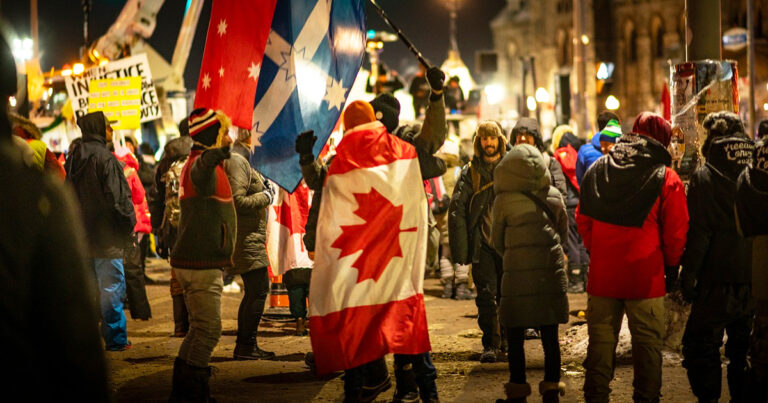
Freedom Convoy spokesperson Benjamin Dichter has published an email he received from Scotiabank’s chief executive officer apologizing for the “frustration and inconvenience” of the account freezes authorized by Justin Trudeau’s Emergencies Act orders. Questions about whose accounts were frozen and who ordered the freezes still remain unanswered. Dichter joins The Andrew Lawton Show live to respond to the apology email. Also, with three days to go until Ontario’s election, New Blue leader Jim Karahalios returns to the show to discuss the ‘New Blueprint’ on which his party is running.
The Trudeau government has voted against a Conservative motion to end Covid restrictions for travellers and revert to pre-pandemic rules.
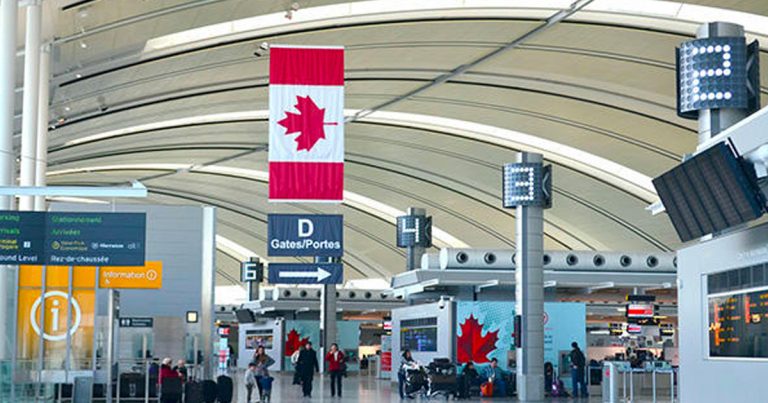
Conservative MP Melissa Lantsman tabled the motion, which stated that “Canadians are currently experiencing unacceptable wait times at Canadian airports, even though airports are still operating at reduced capacity.”
“Canada’s international allies have moved to lift COVID-19 restrictions at airports and other points of entry,” the motion continues. “The Conservative motion calls on the government “to immediately revert to pre-pandemic rules and service levels for travel.”
The motion was defeated on Monday afternoon with 117 voting in favour and 202 voting against. All non-Conservative MPs – except for Liberal MP for Louis-Hebert Joel Lightbound and Independent MP Kevin Vuong – voted against.
Vote result: the motion was defeated. The government still has not shared any justification for their outdated and out-of-step restrictions. #cdnpoli
— Melissa Lantsman (@MelissaLantsman) May 30, 2022
Multiple airline councils have called on the federal government to end its Covid mandates to deal with the ongoing chaos with air travel.
The Canadian Airport Council has called for the federal government to ditch random testing and medical questions to help reduce delays.
“We’re seeing that we clearly cannot have these public health requirements and testing at our borders as we get back to regular travel,” said the interim president of the Canadian Airport Council Pasher Monette.
According to Pasher, additional requirements quadruple the amount of time it takes before a passenger can board a flight.
The International Air Transport Association (IATA) is also demanding that the Trudeau government drop all COVID-19 pandemic travel restrictions to reduce crippling delays at Canadian airports.
“It is clear that people want to travel,” said IATA regional vice-president for the Americas Peter Cerda. “We can therefore ill afford to have passengers subjected to unacceptable wait times both on arrival in the country or on departure.”
“The relevant authorities must urgently consider removing the last remaining travel-related COVID-19 restrictions and work with the industry on policies and processes which will allow passengers to pass through airports with no undue delay.”
After months of harassment and intimidation over her attempts to question critical race theory (CRT) and gender ideology in schools, Oshawa trustee Linda Stone has decided to call it quits.
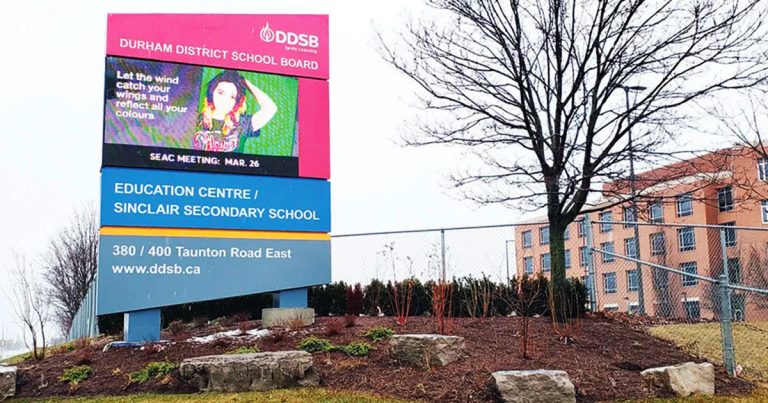
Appointed to the Durham District School Board (DDSB) in 2020, Stone told True North she resigned three weeks ago because the backlash over her positions – particularly the tweets and e-mails – had been “very difficult” on her psyche.
“They (the woke crowd) shut down criticism and call you names,” she said.
Stone first came under fire in January when she questioned certain aspects of the board’s new human rights policy – an 18-page manifesto that contains the usual woke buzzwords and anti-white bias.
She was particularly concerned about the definition of white supremacy.
In the DDSB policy, white supremacy is defined as “a racist ideology based on the belief that white identity is the norm, standard and ideal. It does not refer to extreme hate groups or far right extremists …”
The definition comes straight out of a Critical Race Theory (CRT) playbook.
Stone said she was worried the new HR policy would be used to silence critics just as the Waterloo Region District School Board (WRDSB) did with 20-year teacher Carolyn Burjoski in January.
Burjoski – who was shut down halfway into her deputation to the board about highly sexualized books in elementary school libraries – has since launched a $1.7-million defamation suit against the board and its chair, Scott Piatkowski.
Stone resigned as chair of the DDSB’s governance committee in February but until three weeks ago remained on as trustee. She left the role of chair saying her colleagues had tried to cancel her for vigorously defending free speech.
Those colleagues, Stone said, had informed her that her questions and comments were “offensive and harmful” – even though all she did was urge them to try to see things from another perspective.
“Are we teaching our students to be intolerant of other points of view?” she asked at the time.
After the February board meeting where she stepped down, Stone said the unions took her to task for speaking out on Twitter and in public, particularly with respect to her concerns that girls could feel uncomfortable sharing a gender-neutral washroom with transitioning males.
Stone said she also had an issue with a board edict requiring that parents be kept in the dark over whether a student wants to change their pronouns – unless the student says it is okay.
“Parents should be part of a child making life-changing decisions,” she said.
Among those who criticized Stone for speaking out was Egale (Equality for Gays and Lesbians Everywhere), a once well-respected advocacy organization that is now responsible for providing highly sexualized and age-inappropriate workshops on transphobia and gender ideology to elementary school students.
Stone said Egale sent out e-mails warning her to stop being “transphobic.”
In fact, the publicly funded organization proudly expresses its vision as a Canada and a world “with homophobia, biphobia, transphobia and all other forms of oppression” so that every person can achieve their potential “free from hatred and bias.”
Stone told True North she had five complaints registered against her and that it got to a point where she didn’t want to open her e-mails or go on Twitter.
“You get this feeling in your stomach,” she said. “I was merely asking people to look at the other side (of the argument) instead of just shutting down criticism and calling me names.”
While she has resigned from the board, Stone said that being on the “outside” has allowed her to be so much more engaged with people who believe in the same principles as her.
“Now I feel so much better,” she said.
She also wanted to make it clear that although the woke activists get all the attention, there remain some great people within the DDSB who do great jobs despite the overwhelming influence of the woke agenda.
“Still I want to emphasize that the board does some amazing work and has some great teachers,” she said.
Beleaguered federal NDP leader Jagmeet Singh fled an Ontario election event in Brampton after being confronted by Sikh protesters over the weekend.
Videos of the incident show Singh leaving Brampton West NDP candidate Navjit Kaur’s campaign stop in a hurry as a crowd of demonstrators confront him. Protesters can be heard shouting “don’t sell out” as he was driven away in a black SUV.
“We’ve got questions,” said one protester. “Don’t sell out!”
According to Twitter user Jaskanwal Singh, the event organizers even called the police on a tiny handful of demonstrators wanting to ask questions at the public event.
“The police that the NDP cowards called on us were laughing at the fact(Jagmeet Singh) was hiding during a public meet and greet,” wrote Jaskanwal, “…and laughing at the fact they had to call the police on us for simply peacefully trying to hold a public servant accountable.”
Jaskanwal also blasted the NDP leader for supporting “punishing people” who decided not to be vaccinated against COVID-19.
This is the second time this month where protesters have confronted Singh over his support of Prime Minister Justin Trudeau. Singh also encountered a group of demonstrators during a Peterborough campaign stop for local NDP candidate Jen Deck.
Although the incident was forwarded to police, Peterborough Police Service chief Tim Farquharson has said there are no grounds for criminal charges as a result of the incident.
“Investigators also spoke with the complainants in the matter and pending new information there are no grounds to proceed with criminal charges at this time,” wrote Farquharson. “While the behaviour, actions, and comments are disrespectful and should not be encouraged or condoned, they fail to rise to the threshold of being criminal in nature.”
In March, Singh reached a “confidence and supply agreement” with the Trudeau Liberals. The agreement would see the NDP prop up the minority Trudeau government until 2025 in exchange for policy promises like universal dental care and other priorities.
Singh also had the NDP vote in support of Trudeau’s continuation of the Emergencies Act on Feb. 21, days after the Freedom Convoy protests had been disbursed in Ottawa and a week after all border blockade protests had ended.
Trudeau then unilaterally revoked the act on Feb. 23 after hesitation in the Senate over passing the House of Commons’s ratification.
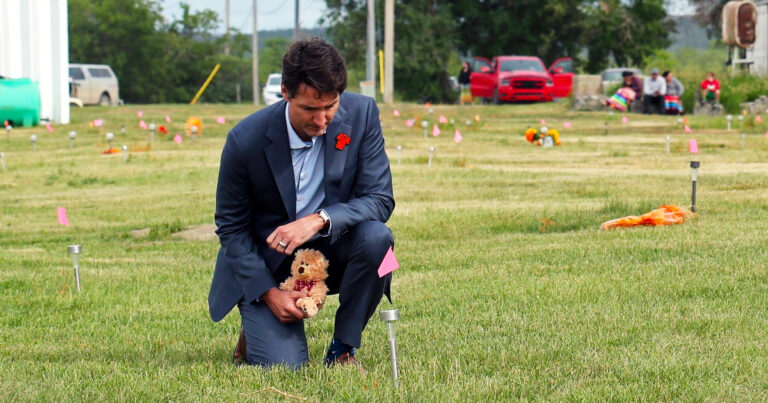
It’s been one year since the Kamloops Indian Band made a shocking allegation — that it had “discovered” 215 unmarked graves that belong to children who had attended the local residential school.
This allegation set off a whirlwind of events: exaggerated headlines, erroneous claims of mass graves, accusations of genocide, international shame and contrition, more discoveries from other bands, genuine remorse and sadness from all Canadians and eager progressives competing over who could use the most hyperbolic anti-Canadian rhetoric.
But is any of this true? Has any of the claims been verified, corroborated or confirmed?
On today’s episode of the Candice Malcolm Show, Candice is joined by professor Tom Flanagan who has been diligently researching this topic for much of his career. His recent research is in direct conflict with the media narrative, and he maintains his position that the story of the unmarked graves is “the greatest fake news story in Canadian history.”
Dr. Flanagan breaks down all the facts of the case, explains everything we know about the school — including the fact that most of the teachers were First Nations — and discusses how this narrative got so removed from the truth. You won’t see a conversation like this anywhere else in the Canadian media.
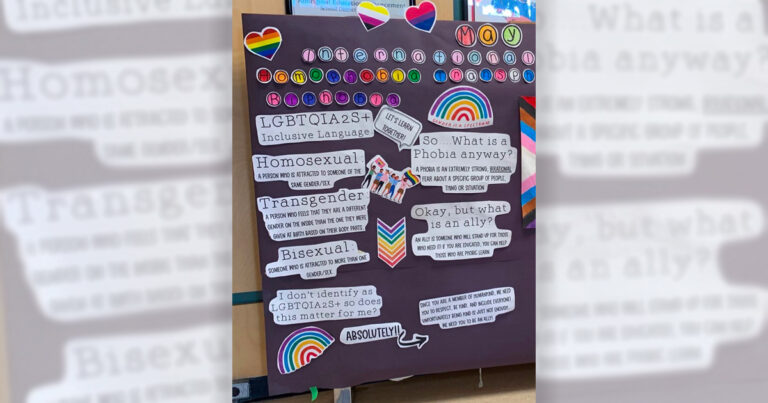
Parents are expressing concern after a British Columbia elementary school put up a board teaching six and seven-year-old kids that “gender is a spectrum,” as well as gender ideology terms.
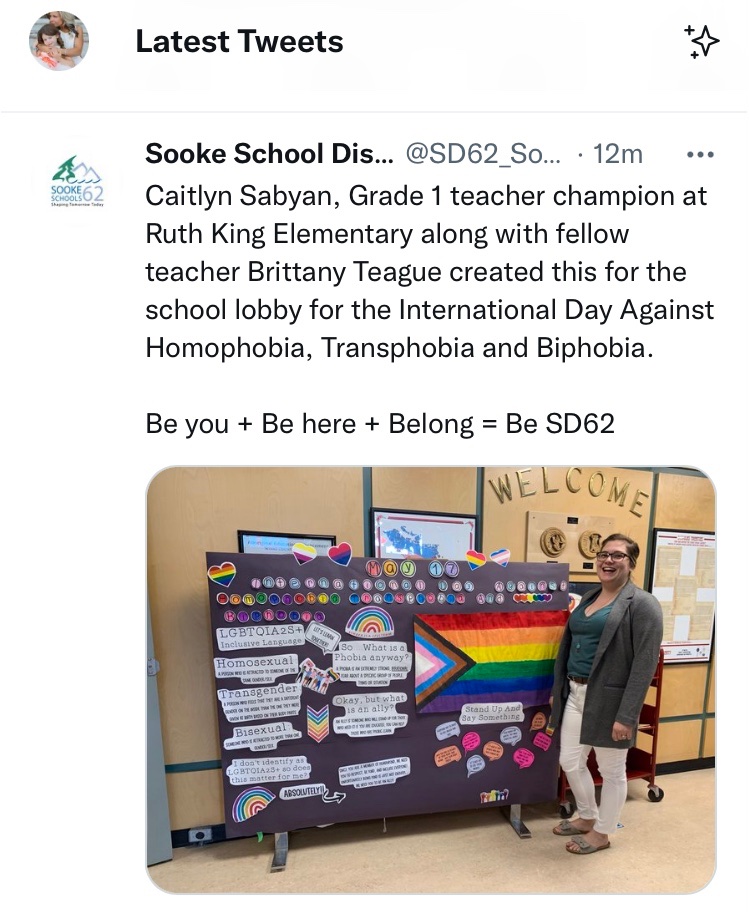
In a now-deleted tweet, the Sooke School District (SD62) school board wrote that a “Grade 1 teacher champion at Ruth King Elementary along with (a) fellow teacher” created the display “for the school lobby for the International Day Against Homophobia, Transphobia and Biphobia.”
The display features various definitions on the terms “homosexual, transgender and bisexual.” One of the features is a rainbow with the message, “gender is a spectrum.”
“Since you are a member of humankind, we need you to respect, be kind, and include everyone! Unfortunately being kids is just not enough… We need you to be an ally!” the board states. “An ally is someone who will stand up for those who need it! If you are educated, you can help those who are phobic learn.”
The school has deleted the tweet and associated message after receiving public backlash. SD62 has since published a statement calling for respectful dialogue online.
“Our online spaces will always be safe for all members of our communities, but especially our students. We all share a digital responsibility to engage and interact respectfully online,” said SD62.
True North spoke with father and activist Chris Elstone, more popularly known as “Billboard Chris” for his travels around North America exposing gender ideology’s effects on children.
“Children are being taught that they all have a gender identity, as though this is settled scientific fact, and that their gender identity may not coincide with their birth sex,” said Elston. “The resource most used for children when learning about gender identity is the Genderbread Person which states that their gender identity is based on their personality, jobs, hobbies, likes, dislikes, roles, and expectations.”
Elston went on to say that the consequences of gender ideology include kids turning to puberty blocking drugs and other medically induced gender-change operations.
“We are teaching children that if they don’t conform to sexist, regressive stereotypes that they must be trans,” he said. “This has resulted in thousands of kids being referred to gender clinics where they are given puberty blocking drugs and cross-sex hormones which together lead to sterility, anorgasmia, and a lifetime dependence on pharmaceuticals.”
In 2019, the issue of gender ideology in schools reached the Ontario Human Rights Tribunal after a family brought a discrimination claim against a teacher with the Ottawa-Carleton District School Board for telling a 6-year-old student that “girls are not real, and boys are not real.”
If Canada survives the century, it will be either a great power or a deep vassal state. This is one of the ten theses outlined in Irvin Studin’s newest book: Canada Must Think for Itself. He joined True North’s Andrew Lawton for a wide-ranging discussion on Canada’s role in the world, the future of our economy, and how we can capitalize off of climate change. Plus, how leveraging the north could kickstart Canada’s post-pandemic recovery.
Almost eight in ten (78%) Canadians believe that the country is in or near recession, according to a new survey.
A Maru Public Opinion poll conducted for Yahoo shows a majority of Canadians have indicated that the economy is on the wrong track.
Over half (52%) said they believe that the country is already in a recession. Half again of those said they believed that Canada would enter a recession in the next three months, putting the number of Canadians concerned about an economic downturn at 78%.
Although many would define a recession as a decline in overall economic activity, economists specifically identify a recession as two or more months in a row with negative GDP growth.
Concerns over the economy entering a recession stem from several economic developments, including the Bank of Canada raising interest rates in an effort to curb inflation. Inflation has reached a high of 6.8% – a number not seen since the Mulroney government 31 years ago.
The rise in prices can be attributed to a multitude of factors including the federal government’s lack of fiscal responsibility. Other factors include commodities like oil and wheat reaching record-high prices.
A majority of Canadians have also seen their wages outpaced by inflation. Wages rose 2.7% over the last two years, compared to 3.4% inflation over the same period of time.
Economic troubles have also led to more Canadians setting tighter restrictions on their personal expenditures as the cost of living rises.
According to the Maru poll, more than half of Canadians (52%) “indicate that they have set stricter priorities and reduced their spending.”
Rising prices have also contributed to a third (32%) of Canadians admitting they are in a poorer financial situation than the month prior. Only 8% of Canadians said their situation was improving from month to month.
In terms of regions, the poll showed Atlantic Canada and the Western provinces especially distressed about economic issues.
While 62% of total Canadians said the economy is headed in the wrong direction, this number went up to 75% for Atlantic Canadians, 77% for respondents from Manitoba and Saskatchewan, and 66% for Albertans.
The poll was conducted by Maru Public Opinion commissioned by Yahoo Canada and involved 1,517 Canadian adults. The margin of error for a poll this size is +/- 2.5%, 19 times out of 20.
An Angus Reid study in May supports these findings, with half of Canadians saying they were struggling to feed their families.
It showed that, overall, Canadians were pessimistic about the economic future of the country. Around 62% said they believe that “the economy is moving on the wrong track” compared to the 30% of respondents who said they believe the country is on the right path.
Affordability has proven to be a key priority for Canadians, with both the Ontario election campaign and the Conservative Party of Canada leadership race defined by policies intending to lower the cost of living.
The parliamentary budget watchdog is warning that a 10% tax on private planes, expensive cars and boats proposed by Finance Minister Chrystia Freeland will lead to a loss of jobs and generate far less revenue than the government estimates.
According to Blacklock’s Reporter, the Parliamentary Budget Office (PBO) slammed the proposed tax in a recent Legislative Costing note, saying that it will cost people jobs once implemented in September.
“It is difficult to determine the extent of job losses but it is quite clear that with such a reduction in sales there would certainly be job losses,” said Budget Officer Yves Giroux.
The Trudeau government claimed the tax would generate $779 million in revenue by 2027, but according to Giroux it would cut sales of luxury aircraft, boats and cars by $2.9 billion.
The PBO has also said it would raise $163 million in one year but at the same time cause a $604 million reduction in sales.
Conservative MP Adam Chambers predicted that revenues would be short $375 million in the next five years due to lost GST on sales.
“It is going to take down substantially the net impact to the government’s coffers, is that a fair assessment?” said Chambers.
“That’s indeed a fair assessment,” responded Giroux. “Because of the reduction in sales there will undoubtedly be a reduction in sales taxes collected, the extent to which is difficult to estimate because it is a niche market obviously.”
Freeland peddled the tax on vehicles and airplanes over $100,000 and boats over $250,000 in the 2021 budget. At the time she claimed it was a way for the wealthy to contribute to pandemic recovery.
“If you have been lucky enough or smart enough or hardworking enough to afford to spend $100,000 on a car or $250,000 on a boat, congratulations! And thank you for contributing a little bit of that good fortune to help heal the wounds of Covid and invest in our future collective prosperity,” wrote Freeland.
Others like the International Association of Machinists and Aerospace Workers also predicted earlier this month that the tax would lead to job losses.
“Are we putting Canadian companies at a disadvantage globally versus competitors? To us the answer is clear: yes,” said general vice-president David Chartrand. “Will this tax generate a loss in sales? Absolutely. Would this translate into job loss? If you’re selling fewer aircraft you’re manufacturing fewer aircraft, you have fewer jobs.”
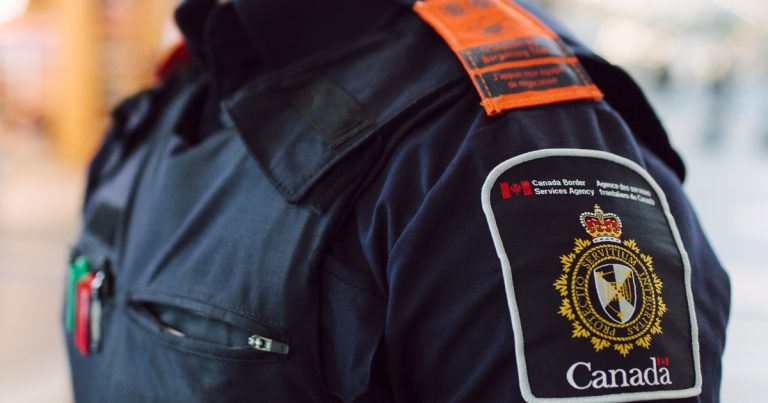
A new Senate bill would allow Canadian Border Service (CBSA) agents to examine the contents of travellers’ smartphones, laptops and other devices under the threshold of “reasonable general concern.”
Bill S-7 aims to amend the Customs Act and the Preclearance Act, altering search protocol for those wishing to enter the country.
The threshold for search according to the bill does not offer a precise definition. This is in contrast to the well-established legal standards police must meet to conduct a search or make an arrest, including “reasonable suspicion” and “reasonable grounds to believe.”
The Canadian Civil Liberties Association (CCLA) has said that the threshold of “reasonable general concern” is “very low and legally novel” and does not adequately protect travellers’ privacy from border officials.
“Introducing such a low standard not only fails to protect individual privacy, but also fails to offer protections against racial and religious profiling that may stem from the excessive discretion such a minimalist standard will provide, and may even exacerbate such profiling,” wrote the CCLA.
Bill S-7 was introduced by Senator Marc Gold on behalf of Minister of Public Safety Marco Mendicino on Mar. 31.
The bill was not introduced to the House of Commons before it appeared in the Senate.
Mendicino stated that “(t)the proposed updates to the legislation will institute clear and stringent standards that must be met before a traveller’s device can be searched, while ensuring that the CBSA can continue to fight serious crimes like child pornography and keep our borders secure.”
A 2017 recommendation from the House of Commons’s standing committee on access to information states that the threshold be “reasonable grounds to suspect” to be required for the search of electronic devices.
In 2020, The Court of Appeal of Alberta ruled that border agents cannot search a person’s cell phone or laptop in the same fashion they do a suitcase or purse. The court ruled that inspecting the “biographical core of personal information” in a “suspicionless and unlimited” way was a violation of the right to be secure against unreasonable search and seizure as protected by Section 8 of the Canadian Charter of Rights and Freedoms.
Currently, a border official may examine a traveller’s digital device if they have concerns regarding admissibility of goods, identity, or failure to comply with Canadian laws. If asked to have their device examined, travellers are obligated to provide the password to access it.
Border officers should then put the device on airplane mode in order to disable incoming or outgoing information and will not have access to social media, banking websites or emails.
According to CBSA data, over 250 million travellers were processed at the border between Nov. 2017 and Dec. 2021. Of these, 33,373 had their devices examined and 12,457 of the examinations resulted in a customs or immigration-related contravention.